English

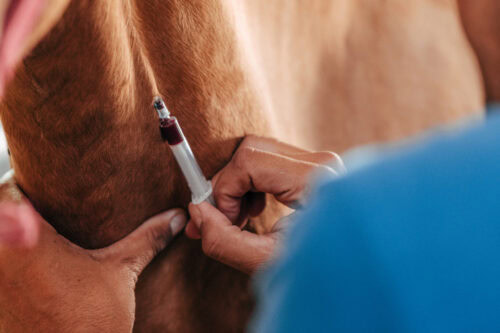
Midazolam is a prescription drug for horses that veterinarians may incorporate into anesthesia, sedation, or emergency protocols. Owners are most likely to encounter this medication when a horse requires a procedure involving controlled muscle relaxation or when a foal needs sedation or seizure management.
A horse’s response to midazolam can vary with age, health status, dose, and other medications administered at the same time. In healthy adult horses, it can cause weakness and loss of coordination, making careful veterinary administration and monitoring essential.
Understanding how midazolam fits into equine care can help owners make informed decisions about procedural safety and recovery. Keep reading to learn how this medication works, when it may be used, and which precautions and side effects horse owners should know.
Midazolam for Horses
Midazolam is a short-acting benzodiazepine used in horses to relax muscles and support anesthesia during surgical and diagnostic procedures.
In adult horses, it is usually combined with other drugs to induce or maintain general anesthesia. It may also be added to selected standing sedation protocols when additional muscle relaxation is needed. [1][2]
Midazolam generally has minimal direct effects on the horse’s heart rate, heart rhythm, blood pressure, and blood flow. However, it does not reliably sedate healthy adult horses when given alone and may instead cause weakness, ataxia (loss of coordination or an unsteady gait), agitation, or recumbency (unexpectedly lying down).
Foals can respond differently and may receive midazolam for sedation, anesthesia, or seizure control. [1]

Available Forms
Midazolam is supplied as an acidic, water-soluble injectable solution that can be administered intravenously or intramuscularly. [5] It is absorbed more reliably than diazepam after intramuscular injection, which may be helpful when intravenous access is difficult. [1]
Midazolam is not specifically approved and labeled for horses in the United States. Veterinarians may use approved human-labeled midazolam products in horses on an extra-label basis under applicable veterinary prescribing requirements. [3][5]
In Canada, Dormazolam® is a veterinary formulation of midazolam labeled and approved for intravenous administration in horses. [4]
What's your top priority with your horse's health?

What's your top priority with your horse's health?
Drug Class: Benzodiazepines
Benzodiazepines are central nervous system depressants that strengthen the effects of gamma-aminobutyric acid, or GABA. Benzodiazepines used in equine anesthesia include:
- Midazolam
- Diazepam
- Zolazepam
- Climazolam
Diazepam and midazolam are the benzodiazepines most commonly combined with ketamine for anesthetic induction in horses. [1]
When given alone at clinical doses, benzodiazepines cause relatively little cardiovascular or respiratory depression. This makes them useful in anesthetic protocols because they can provide muscle relaxation and enhance sedation or anesthesia without significantly impacting heart or lung function.
The effects of these drugs can become stronger when combined with ketamine, opioids, inhalant anesthetics, or other central nervous system depressants. Benzodiazepines do not provide meaningful pain relief, so painful procedures require a separate analgesic plan. [1][2]
Healthy adult horses generally do not become predictably sedated after receiving midazolam alone. Neonatal foals may show more reliable sedation at clinical doses. In adult horses, midazolam can strengthen the effects of other anesthetic drugs. [1][2]
Mechanism of Action
Midazolam enhances the activity of GABA, a chemical messenger that reduces activity in the brain and nervous system. By making GABA-A receptors more responsive to GABA, midazolam reduces nerve activity and promotes skeletal muscle relaxation.
These effects also help control seizures, reduce anxiety, and enhance sedation when midazolam is combined with other drugs. [1]
Uses in Horses
Veterinarians use midazolam in horses mainly for anesthetic induction, maintenance of injectable anesthesia, foal sedation, muscle relaxation, and seizure control. It may also be added to selected standing sedation protocols.
Because no midazolam product is specifically approved and labeled for horses in the United States, all equine use in the US is extra-label and must occur under veterinary direction and applicable federal prescribing requirements. [3][5]
In Canada, veterinarians typically use Dormazolam®, which is approved for equine use under Health Canada prescribing rules. [4]
Induction of General Anesthesia
In adult horses, midazolam is most commonly used with ketamine to induce general anesthesia, a controlled state of unconsciousness in which the horse does not respond to painful procedures. Horses are generally deeply sedated with an alpha-2 agonist before receiving ketamine and midazolam intravenously. [1]
Ketamine produces immobility and unconsciousness but can increase muscle tone and cause rigidity. Midazolam helps counteract these effects, improving muscle relaxation and making endotracheal intubation easier.
Intubation involves placing a breathing tube into the horse’s windpipe to maintain the airway and deliver oxygen and anesthetic gases during anesthesia. Diazepam and midazolam have produced comparable induction quality in appropriately sedated horses. [1]
Maintenance of Anesthesia
Midazolam may be used with ketamine and an alpha-2 agonist as part of total intravenous anesthesia (TIVA), which maintains anesthesia with injectable drugs rather than inhaled gases.
In one equine study, a continuous infusion of midazolam, ketamine, and medetomidine provided effective anesthesia for short procedures, including castration. Cardiovascular effects were generally mild, but horses developed low blood oxygen while breathing room air, so supplemental oxygen was recommended. Mild to moderate ataxia was also observed during recovery. [6]
Midazolam-based TIVA has mainly been studied for short procedures. Longer administration may increase the risk of drug accumulation and delayed recovery. [1][6]
Standing Sedation
Standing sedation allows veterinarians to perform certain procedures while the horse remains conscious, sedated, and standing, without the need for general anesthesia.
Common uses include diagnostic and ophthalmic procedures, dental floating and surgery, minor soft-tissue or laparoscopic surgery, and routine joint injections.
Midazolam may be useful for selected standing procedures, but its potential benefit must be weighed against the risk of instability and recumbency.
It is not usually administered alone to adult horses because it may cause weakness, poor coordination, agitation, or recumbency without producing reliable sedation. A low dose may be added when additional muscle relaxation is needed. [1][7][8]
Sedation & Anesthesia in Foals
Benzodiazepines provide more reliable sedation in neonatal foals than in healthy adult horses. Midazolam or diazepam may be administered intravenously to sedate and safely restrain a foal or combined with ketamine to induce anesthesia without prior sedation. [1]
Benzodiazepine-ketamine combinations should be administered slowly in neonatal foals because sudden respiratory depression can occur. Neonates may also metabolize anesthetic drugs less efficiently, increasing the risk of prolonged or deepening sedation. [1]
Seizure Control
Midazolam may be used for acute seizure control because of its rapid anticonvulsant effects. Diazepam and midazolam are described as drugs of choice for stopping seizure activity in horses. [2]
Administration Routes
Midazolam is most commonly administered by intravenous injection, which provides rapid and predictable effects. This route is generally used for anesthetic induction in adult horses.
Intramuscular administration may be considered for seizure control in foals, but IV administration is the most common route used in horses. [5]
Storage
Storage instructions depend on the product being used and should follow the manufacturer’s label.
Midazolam injection is generally stored at a controlled room temperature of 15 to 30°C and protected from light. It is stable under acidic conditions at approximately pH 3 to 3.6. [5]
Compatibility with other injectable products and fluids depends on the concentration, diluent, temperature, and pH of the mixture. Compatibility should be confirmed before drugs are combined in the same syringe or fluid bag. [5]
Safety Warnings & Precautions
Midazolam should be administered where the horse can be safely restrained and monitored. Adult horses may become unstable before showing useful sedation, so administration to an unrestrained standing horse can create a significant risk of injury. [1]
Respiratory depression may become more pronounced when midazolam is combined with ketamine, opioids, or other anesthetic agents. Neonatal foals are particularly sensitive and should receive these combinations slowly, with oxygen and ventilatory support available. [1]
Anesthetic recovery quality is another concern associated with midazolam use. In horses anesthetized for 60 minutes, induction with midazolam and ketamine was associated with more attempts to stand and poorer recovery scores than induction with propofol and ketamine.
Residual weakness and incoordination related to midazolam were considered possible contributors. [9]
Monitoring
Midazolam is most commonly used directly by veterinary teams during procedures where sedation or anesthesia is required. Horse owners are not likely to administer this medication independently outside of a clinical context.
During sedation and anesthesia, veterinary personnel monitor the horse for: [6]
- Level and depth of sedation or anesthesia
- Degree of muscle relaxation
- Postural stability and ataxia
- Heart rate and rhythm
- Respiratory rate and effort
- Oxygenation
- Blood pressure when indicated
- Response to surgical stimulation
- Quality and duration of anesthetic recovery
When a horse is lying down under total intravenous anesthesia (TIVA), supplemental oxygen is provided whenever possible to help maintain normal blood oxygen levels. [6]
Contraindications
Contraindications refer to circumstances where a drug should be avoided or used with caution.
Midazolam should not be administered to horses with a known hypersensitivity to benzodiazepines. It should be avoided or used cautiously in horses with:
- Severe respiratory depression
- Shock or coma
- Significant liver disease
- Severe debilitation
- Pre-existing ataxia or neurologic instability
- Conditions in which recumbency would create a substantial risk
Because midazolam is metabolized by the liver, impaired liver function may prolong its effects. The potential for weakness and incoordination is also important in horses with neurologic disease or a reduced ability to remain standing. [5]
Side Effects
The most important side effects of midazolam in horses are related to reduced muscle tone and altered central nervous system activity. Possible side effects include: [1][5]
- Ataxia
- Postural sway
- Limb weakness or buckling
- Agitation or excitement
- Head movement or headshaking
- Recumbency
- Prolonged incoordination during recovery
- Respiratory depression when combined with other anesthetics
Acute Toxicity (Overdose)
Excessive midazolam can cause profound weakness, recumbency, or deep sedation, as well as respiratory depression, apnea (a temporary cessation of breathing), or hypotension (low blood pressure).
Treatment is primarily supportive and may include airway management, oxygen supplementation, assisted ventilation, cardiovascular support, and close observation. [1][5]
Flumazenil may be used as an antidote in cases of overdose. This drug blocks benzodiazepine activity at the GABA-A receptor and may be used to reverse excessive or prolonged effects of midazolam. It is generally administered intravenously and adjusted according to the horse’s response.
Reversal may be incomplete or short-lived because the effects of flumazenil may wear off before those of midazolam, requiring continued monitoring. [1]

Drug Interactions
Midazolam has additive effects with other central nervous system depressants. It may also interact with other medications due to how the body processes the medication. Important potential interactions include: [5]
- Inhalant anesthetics: Midazolam may reduce the concentration required to maintain anesthesia.
- Ketamine: The combination improves muscle relaxation but may increase respiratory depression.
- Opioids: Sedative and respiratory-depressant effects may be increased.
- Azole antifungals: Ketoconazole, itraconazole, and fluconazole may increase midazolam concentrations.
- Macrolide antibiotics: Erythromycin and clarithromycin may increase midazolam concentrations.
- Cimetidine: Midazolam concentrations may increase.
- Calcium channel blockers: Diltiazem and verapamil may increase midazolam concentrations.
- Phenobarbital and rifampin: These drugs may reduce midazolam exposure and effects.
The horse’s complete medication history should be reviewed before midazolam is administered, particularly if the horse receives drugs that alter liver metabolism or depress respiratory or cardiovascular function.
Regulatory Status & Legal Considerations
The regulatory status of midazolam differs between the United States and Canada.
No midazolam product is specifically approved and labeled for horses by the United States Food and Drug Administration (FDA). As a result, equine use of an FDA-approved human midazolam product in the United States is extra-label and subject to federal prescribing requirements. [3][5]
In Canada, midazolam is approved for horses and marketed under the trade name Dormazolam®, labeled for intravenous administration. [4] All intramuscular use of midazolam in horses is off-label.
Status in Competition
Under FEI rules, midazolam is classified as a Controlled Medication and is prohibited during the in-competition period. [10] Because of its sedative effects, the presence of midazolam in a horse’s system during competition could influence performance.
Withdrawal times may vary between competition authorities. Clinical judgment is required to ensure midazolam is not administered too close to an event, where it could affect welfare, obscure signs of disease, or aggravate an existing condition.
Always check with the relevant competition organization about withdrawal times before scheduling an anesthetic procedure. The FEI prohibited substances rules and other applicable regulations should be reviewed before the horse competes. [11]
Frequently Asked Questions
Here are some frequently asked questions about midazolam use in horses:
Midazolam is used in horses primarily for muscle relaxation during anesthesia, seizure control, and sedation in foals. In adult horses, veterinarians commonly combine it with ketamine to improve anesthetic induction. It may also support injectable anesthesia or selected standing sedation protocols when additional muscle relaxation is needed. [1][2]
Midazolam does not reliably sedate healthy adult horses when administered alone. It may cause weakness, ataxia, agitation, or unexpected recumbency before producing useful sedation. Veterinarians therefore usually combine it with other sedative or anesthetic drugs in adult horses. [1][2]
Midazolam is combined with ketamine to improve muscle relaxation during anesthetic induction. Ketamine produces immobility and unconsciousness but can increase muscle tone and cause rigidity. Midazolam helps counteract these effects, makes endotracheal intubation easier, and may contribute to a smoother transition into anesthesia. [1]
Midazolam can be added to selected standing sedation protocols when a horse needs additional muscle relaxation. It is not generally used alone for this purpose because an adult horse may become weak or uncoordinated without becoming reliably sedated. The potential benefit must be weighed against the risk of instability, buckling, or recumbency during the procedure. [1][7][8]
Midazolam can be used safely in foals under careful veterinary supervision for sedation, anesthesia, or seizure control. Neonatal foals often respond more predictably to its sedative effects than healthy adult horses. However, foals may metabolize anesthetic drugs less efficiently and can develop sudden respiratory depression, particularly when midazolam is combined with ketamine or other depressant drugs. [1]
Midazolam can help stop acute seizure activity in horses because it has rapid anticonvulsant effects. It is considered one of the benzodiazepines used for emergency seizure control in horses and foals. A seizure is a veterinary emergency, so the horse requires prompt assessment, treatment, and monitoring even if the visible seizure activity stops. [2]
Midazolam is most commonly administered to horses by intravenous injection, especially during anesthetic induction. Its water-soluble formulation can also be given intramuscularly and is absorbed more reliably by that route than diazepam. The appropriate route depends on the horse's age, clinical condition, intended use, and available intravenous access. [1][5]
The amount of midazolam a horse should receive depends on its body weight, age, medical condition, intended procedure, and other medications in the protocol. Small differences in dose can affect muscle relaxation, coordination, respiratory function, and the risk of recumbency. A veterinarian must calculate and administer the appropriate dose for the individual horse.
The most common side effects of midazolam in horses involve reduced muscle tone and altered central nervous system activity. These effects can include ataxia, postural sway, limb weakness, agitation, head movement, recumbency, and prolonged incoordination during recovery. Respiratory depression is a more serious concern when midazolam is combined with ketamine, opioids, or other anesthetic drugs. [1][5]
A veterinarian should be contacted immediately if a horse collapses, has difficulty breathing, stops breathing, develops severe agitation, or becomes unusually difficult to rouse after receiving midazolam. Repeated unsuccessful attempts to stand or an abnormally prolonged and uncoordinated recovery also require urgent attention. These signs may indicate excessive drug effects or a complication involving the horse's airway, breathing, circulation, or recovery from anesthesia.
Horses with a known hypersensitivity to benzodiazepines should not receive midazolam. Veterinarians may also avoid it or use additional caution in horses with severe respiratory depression, shock, coma, significant liver disease, severe debilitation, pre-existing ataxia, or neurologic instability. Midazolam may be unsuitable when weakness or recumbency would place the horse at substantial risk. [5]
A midazolam overdose can cause profound weakness, recumbency, deep sedation, low blood pressure, respiratory depression, or a temporary stop in breathing. Treatment focuses on supporting the airway, breathing, and cardiovascular system while the horse is closely monitored. Flumazenil may be used to reverse excessive benzodiazepine effects, but reversal can be incomplete or wear off before the midazolam does. [1][5]
Midazolam does not provide meaningful pain relief for horses. Its main effects include muscle relaxation, seizure control, anxiety reduction, and support of sedation or anesthesia. Horses undergoing painful procedures need a separate analgesic plan, even when midazolam is part of the anesthetic protocol. [1][2]
Midazolam can interact with several medications, particularly drugs that depress the central nervous system or alter liver metabolism. Ketamine, opioids, and inhalant anesthetics may increase sedative or respiratory effects, while some azole antifungals, macrolide antibiotics, calcium channel blockers, and cimetidine may increase midazolam concentrations. Phenobarbital and rifampin may reduce its exposure and effects, so the veterinarian should review the horse's complete medication history before administration. [5]
Midazolam can contribute to residual weakness and incoordination during recovery from anesthesia. In one study of horses anesthetized for 60 minutes, induction with midazolam and ketamine was associated with more attempts to stand and poorer recovery scores than induction with propofol and ketamine. Recovery quality depends on the complete anesthetic protocol, procedure length, individual horse, and level of monitoring. [9]
Midazolam can be combined with ketamine and an alpha-2 agonist as part of total intravenous anesthesia, or TIVA, for short procedures. This approach maintains anesthesia with injectable medications instead of inhaled gases. Horses receiving midazolam-based TIVA may develop low blood oxygen and recovery ataxia, while longer administration may increase drug accumulation and delay recovery. [1][6]
Midazolam's approval for horses depends on the country. No midazolam product is specifically labeled for horses in the United States, so veterinarians may use an approved human product on an extra-label basis under applicable prescribing requirements. In Canada, Dormazolam® is a marketed veterinary midazolam product labeled for intravenous administration in horses. [3][4]
A horse cannot compete under FEI rules while midazolam is present at a prohibited level because it is classified as a Controlled Medication. No standard FEI detection or withdrawal time is listed, and appropriate timing may vary with the dose, protocol, horse, and competition authority. Owners should consult the treating veterinarian and confirm the current rules with their competition organization before the horse returns to competition. [10][11]
Summary
Midazolam is a short-acting benzodiazepine that veterinarians use in equine anesthesia, sedation, muscle relaxation, and seizure-control protocols.
- Midazolam is commonly combined with ketamine to improve muscle relaxation and facilitate endotracheal intubation during anesthetic induction
- Healthy adult horses may develop weakness, ataxia, agitation, or recumbency when midazolam is administered without other sedatives
- Neonatal foals respond more reliably to the sedative effects of midazolam but may be especially susceptible to respiratory depression
- Veterinary teams monitor postural stability, breathing, oxygenation, cardiovascular function, and recovery quality during treatment
- All equine use of midazolam is extra-label in the United States, while intravenous Dormazolam is approved for horses in Canada
- Midazolam is prohibited during the FEI in-competition period, and withdrawal guidance varies between competition authorities
References
- Doherty. T. et al. Eds. Manual of Equine Anesthesia and Analgesia. 2nd ed. Wiley-Blackwell. 2022.
- Cole. C. et al. Eds. Equine Pharmacology. Wiley-Blackwell. 2015.
- Animal Drugs @ FDA Database. U.S. Food & Drug Administration.
- Drug Product Database. Health Canada. 2019.
- Budde. J. and McCluskey. D. Plumb's Veterinary Drug Handbook. 10th ed. Wiley-Blackwell. 2023.
- Yamashita. K. et al. Anesthetic and Cardiopulmonary Effects of Total Intravenous Anesthesia Using a Midazolam, Ketamine and Medetomidine Drug Combination in Horses. Journal of Veterinary Medical Science. 2007.
- Best. A. et al. A Blinded Crossover Study Design to Evaluate Midazolam as an Adjunct for Equine Standing Sedation for Routine Oral Examinations. Journal of Equine Veterinary Science. 2024.
- Gomes. E. et al. Sedative Effects of Detomidine and Midazolam Combination in Horses. Open Veterinary Journal. 2025.
- Jarrett. M. et al. Recovery of Horses from General Anesthesia after Induction with Propofol and Ketamine versus Midazolam and Ketamine. Journal of the American Veterinary Medical Association. 2018.
- Federation Equestre Internationale. 2026 Equine Prohibited Substances List. Federation Equestre Internationale. 2026.
- Federation Equestre Internationale. FEI List of Detection Times. Federation Equestre Internationale. 2024.