English


Pain in horses is an uncomfortable sensory and emotional experience resulting from tissue damage or the anticipation of tissue damage. It can stem from a variety of causes, such as injuries, diseases, or surgical procedures. [1]
Recognizing signs of pain in horses is a keystone of management. Early recognition and intervention are critical to providing appropriate treatment and preventing minor issues from escalating into serious health problems. [2]
Identifying pain in domesticated animals, such as horses, can be challenging. The distinction between normal and painful behaviors is often subtle, and horses are naturally stoic, frequently masking their discomfort. This makes it difficult for owners and caretakers to detect less obvious signs of pain. [1][3][4]
Regular veterinary evaluations and the use of pain assessment tools can provide insight into a horse’s condition. By staying vigilant and well-informed, owners can more effectively identify signs of pain and ensure timely intervention, thereby supporting their horse’s overall health and comfort.
Recognizing Pain in Horses
Identifying and addressing pain is a key responsibility for owners and caretakers to protect a horse’s quality of life (QoL). Effective pain assessment may extend a horse’s life span, enabling prompt medical intervention for conditions that have a straightforward treatment.
Quality of life encompasses the horse’s overall well-being, including: [5]
- Comfort
- Ability to engage in normal activities
- Emotional health
While it’s impossible to prevent all pain in horses, effective pain management is essential for maintaining their quality of life. By appropriately managing pain, owners can enhance their horse’s comfort, maintain functional abilities, and improve well-being. [3]
For horses in work, pain can significantly affect performance. This is especially true in cases of orthopedic pain and lameness, which can cause severe asymmetry in movement. Recognizing pain allows for timely treatment, which could help maintain or improve the horse’s ability to perform in sports or work. [6][7]
Severe pain is generally easier to identify, but it can be life-threatening if not addressed promptly. It often signals serious underlying conditions that require immediate attention. Early detection of pain, even when subtle, is crucial to prevent minor issues from escalating into critical, life-threatening situations.
Interpreting Pain
Interpreting pain in animals is inherently challenging because they cannot verbally express their discomfort. This difficulty is amplified in prey species like horses, who instinctively hide pain and weakness to avoid appearing vulnerable to predators.
This behavior means that signs of discomfort are often subtle and easily overlooked, complicating detection for owners and caretakers. [1][8][9]
Because of the natural stoicism of horses, the only expression of pain may be subtle changes in behavior or posture, requiring careful observation to detect.
Chronic pain poses additional challenges because it usually develops gradually. Horses may adapt to long-term discomfort by altering their movement patterns and behavior subtly over time. This gradual adaptation can make chronic pain difficult to identify, as overt signs of distress may not be present. [10][11]
This highlights the need for vigilant monitoring and regular veterinary assessments to ensure timely intervention if a horse is experiencing pain. [10][11]
Signs of Pain in Horses
Recognizing pain in horses involves observing both physical and behavioral signs. Indications of pain vary significantly depending on the location, type and severity of discomfort. [8]
For example, a horse that is limping or showing signs of lameness is likely experiencing pain in its foot or leg. In contrast, a horse that is biting at its flank or showing signs of abdominal discomfort might be experiencing colic or other gastrointestinal issues.
Behavioral Changes
Observing behavioral changes in horses can help handlers evaluate whether they are experiencing discomfort. Pain can cause a range of altered behaviors, including: [8][12][13][14]
- Changes in Demeanor: Horses in pain may become more irritable, aggressive, or fearful than usual. They might bite, kick, stomp, or pin their ears back when approached or handled. They may also resist grooming, which can indicate discomfort from touch.
- Social Withdrawal: Horses in pain may isolate themselves from other horses or show less interest in social activities. They might stand apart from the herd or avoid interactions with humans.
- Restlessness: Horses in pain may display restlessness, such as shifting their weight frequently, pawing at the ground, or repeatedly lying down and getting up.
- Changes in Eating or Drinking Habits: A horse experiencing pain might eat or drink less or show a sudden change in feeding behavior. Some horses refuse food entirely.
- Reluctance to Move: Horses in pain may be reluctant to move to avoid worsening their discomfort. They might resist being led, saddled, or ridden, or show a lack of enthusiasm for activities they typically enjoy.
What's your top priority with your horse's health?

Enter your email to receive your store credit
Physical Changes
Recognizing pain in horses also involves observing physical changes. Key indicators include: [2][12][15]
- Lameness or Altered Gait: Horses may limp, favor one leg, or show uneven movement due to pain in the legs, hooves, or joints. They may also exhibit behaviors such as lying down frequently as a way to relieve discomfort or avoid putting weight on painful limbs.
- Changes in Posture: A hunched back or abnormal weight shifting can signal discomfort, often related to spinal, muscular, or abdominal pain.
- Sweating Without Exertion: Unexplained sweating, particularly in localized areas, can indicate internal pain or inflammation.
- Teeth Grinding: Horses may grind their teeth in response to pain, often seen with abdominal discomfort or dental issues. This behavior can indicate discomfort or distress.
Changes in Vital Signs
Vital signs in horses are key indicators of their overall health and well-being, providing essential information for detecting potential issues, such as pain.
Monitoring your horse’s heart rate, respiratory rate, and body temperature can help you track changes in health and assess pain severity. [16]
- Heart Rate (HR): A normal resting heart rate for a horse ranges from 28 to 44 beats per minute (bpm). An elevated heart rate beyond this range can indicate pain or discomfort. A persistent high heart rate may signal severe pain or distress and require prompt veterinary attention.
- Respiratory Rate (RR): A normal resting respiratory rate for a horse is between 10 and 24 breaths per minute. An elevated respiratory rate can indicate pain, especially when accompanied by signs of distress or agitation. Increased respiration may also point to underlying issues such as respiratory distress or a systemic reaction to pain.
- Temperature: Normal body temperature for a horse ranges between 99°F and 101.5°F (37.2°C to 38.6°C). While pain itself usually doesn’t alter body temperature, associated factors like inflammation or infection can. An elevated temperature may suggest an inflammatory or infectious process contributing to the pain, whereas a lower temperature might indicate shock or severe systemic distress.
These physiological measures are easy to assess and offer basic information about a horse’s condition. However, they are not specific to pain, as they can also indicate stress or other conditions. The overlap between physiological responses to pain, stress, and other stimuli can complicate accurate assessment. [3][17]
Acute vs. Chronic Pain
When assessing whether your horse is in pain, it is important to distinguish between acute and chronic pain.
Acute pain occurs suddenly, often as a result of an injury or illness, and is typically short-term. It is usually accompanied by clear and noticeable changes in behavior or physical condition, making it easier to identify and address. [15]
Chronic pain lasts for a longer period, potentially for months or years, and may result from conditions like arthritis or long-term injuries. It develops gradually and can be more challenging to detect due to its subtle onset. [11]
Chronic pain often results in persistent, subtle behavioral changes and a gradual decline in overall well-being, requiring careful observation for effective management.
Detecting Progressive Pain
Identifying pain in horses can be particularly challenging with chronic, low-grade, or slowly progressive pain. Unlike acute pain, which shows sudden and noticeable changes, chronic pain develops gradually and may not immediately disrupt the horse’s daily routines. [5][10]
Chronic diseases can significantly impact a horse’s quality of life, leading to ongoing discomfort and functional impairment. Here is a brief overview of some common chronic conditions in horses: [10][11][18][19][20]
- Arthritis: Osteoarthritis is a degenerative joint disease that causes inflammation and pain in the joints. It leads to stiffness, reduced mobility, and discomfort, particularly in older horses. The condition can significantly impact a horse’s ability to perform and requires long-term management to alleviate symptoms and maintain joint health.
- Dental Pain: Equine Odontoclastic Tooth Resorption and Hypercementosis (EOTRH) is a progressive dental condition where the incisor teeth undergo abnormal resorption and cementum deposition, causing pain and discomfort. Horses affected with dental issues may show signs of difficulty eating, weight loss, and changes in behavior. Regular dental check-ups are important for early detection and management of this condition.
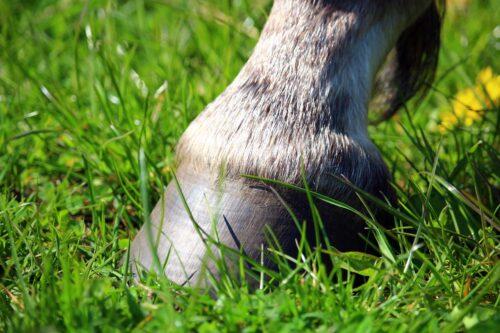
- Chronic Laminitis: Chronic laminitis often follows acute bouts of the condition, leading to changes in hoof growth and structure. This can result in visible rings on the hoof wall. Horses with chronically laminitic feet often experience intermittent lameness due to the ongoing distortion of their hooves.
In all these cases, the chronic nature of the pain often means it is less obvious and harder to manage than acute pain. Horses may mask their discomfort, making it challenging to assess the severity of their pain.
Complications
Being free from disease and pain is essential for maintaining horse welfare. Failing to address pain in horses can lead to significant, long-term complications that can negatively impact Quality of Life (QoL).
Unmanaged pain in horses can cause:
- Ongoing physical discomfort
- Emotional distress
- Behavioral issues
All of these outcomes can lead to chronic discomfort and a decline in overall well-being and happiness. Pain can also result in deteriorating physical health, often due to compensatory movements that may lead to additional injuries or exacerbate existing conditions. [3]
For example, a horse with untreated musculoskeletal pain may develop muscle atrophy, further limiting their mobility and increasing their discomfort. [19][21]
Horses can develop support limb laminitis (SLL) when an injured limb causes the horse to bear excessive weight on the opposite limb. This imbalance can reduce blood flow and increase pain in the overloaded limb. Without prompt treatment, SLL can cause long-term damage and further impair mobility. [22]
Equine Pain Assessment
Recent veterinary research has focused on developing standardized pain assessment tools for horses. Historically, pain evaluation relied on observational signs, which can be subjective and vary greatly between observers. [1][4][17][23]
Subjective pain assessment involves evaluation based on an observer’s interpretation of a horse’s behavior, appearance, and reactions, such as changes in movement, posture, and demeanor.
This method is limited due to the variability in interpreting pain signs and the inherent subjectivity of pain. Horses often mask discomfort, and pain can manifest in diverse ways, making a one-size-fits-all approach difficult.
In contrast, standardized pain assessment tools enhance accuracy and consistency by providing clear criteria for evaluating pain. They reduce observer variability, enable precise identification of pain types, and improve treatment planning and monitoring.
Additionally, these tools enhance communication between veterinarians and owners, supporting effective pain management and monitoring of disease progression.

Pain Faces in Horses
A pain face is a specific, observable facial expression that indicates discomfort or pain in animals, such as horses. This concept is used in pain assessment to recognize and evaluate pain based on visual cues in the animal’s facial expressions. [2][4][15]
The Horse Grimace Scale (HGS) is a standardized tool developed to assess pain in horses through the analysis of their facial expressions. This method offers a more objective alternative to traditional observational techniques. The HGS evaluates several key features, or Facial Action Units (FAUs): [8][24][25]
- Ear Position: Ears may be pinned back or held in an asymmetrical position. This can indicate discomfort or stress, as horses often move their ears to signal pain or agitation.
- Eye Expression: The eyes may appear squinted or narrowed, or exhibit a glassy look. A tense or withdrawn stare can signal pain, as the eyes often reflect changes in emotional or physical state.
- Nostril Flare: Nostrils may flare or appear tense.
- Muzzle Tension: The muzzle might look tight or drawn, with the chin appearing more pronounced. This tension can be an indicator of pain or discomfort, as it often accompanies facial strain.
- Facial Muscles: Muscles around the eyes and mouth may show signs of tension or contraction. Increased muscle activity in these areas can indicate pain, as the horse may be trying to manage or mask discomfort.
- Head Position: The head may be held lower than usual or in an unusual posture. A lowered or awkward head position can suggest that the horse is trying to alleviate pain or discomfort.
The Horse Grimace Scale (HGS) uses a scoring system to assess pain. It rates each Facial Action Unit (FAU) based on its deviation from normal expressions, typically on a scale from 0 to 2 or 0 to 3.
Table 1. Example of a 0 – 3 HGS
| Horse Grimace Scale | |
|---|---|
|
0
|
No noticeable change from normal |
|
1
|
Mild or moderate change |
|
2
|
Severe change |
|
3
|
Extreme change |
The scores for each FAU are combined to provide a comprehensive assessment of the horse’s overall pain level.
Assessment Tools for Colic
Visceral pain scales for horses are designed to assess and quantify the discomfort associated with abdominal pain caused by conditions like colic. These scales help veterinarians evaluate the severity of the pain and guide treatment decisions.
The Equine Acute Abdominal Pain Scale (EAAPS) is a systematic tool used to evaluate and quantify pain levels in horses with acute abdominal conditions. It categorizes pain based on observable behaviors: [23][26]
Table 2. EAAPS 5-point scale
| Equine Acute Abdominal Pain Scale | |
|---|---|
|
0
|
No overt pain behaviors |
|
1
|
Mild behaviors like flank watching or Flehmen response |
|
2
|
Moderate signs such as sternal recumbency, stretching, or restlessness |
|
3
|
Severe behaviors including kicking at the abdomen or pawing |
|
4
|
Very severe actions like attempting to lie down, crouching, or lateral recumbency |
|
5
|
Extreme behaviors such as excessive rolling |
The EAAPS effectively uses typical colic behaviors to assess pain, showing strong agreement and minimal bias among veterinarians. It is a simple one-digit scoring system, is easy to use and does not require extensive training for experienced observers.
Evaluating Chronic Pain
Chronic pain in horses is challenging to evaluate uniformly because it can manifest in various forms, such as musculoskeletal or visceral pain, each requiring different assessment methods.
Composite pain scales (CPS) use multiple pain-associated parameters, including interactive, behavioral, and physiological measures, to evaluate pain in horses. These multifactorial scales use a descriptive rating system for selected items, combining the scores to generate CPS scores. [27]
The Horse Chronic Pain Composite Pain Scale (HCPS) is designed to evaluate and quantify chronic pain in horses. This scale integrates multiple indicators, such as facial expressions and behavioral changes, helping veterinarians better understand and manage long-term discomfort in horses. [28]
A study found that the HCPS is effective in assessing pain in senior horses with mild, chronic conditions such as laminitis, osteoarthritis, and EOTRH, whether facial expression parameters are included or not. Facial expressions proved less sensitive for detecting chronic pain. [28]
Ridden Horse Pain Ethogram (RHPE)
The Ridden Horse Pain Ethogram (RHPE) is a detailed observational tool used by riders, trainers, and veterinarians to identify and assess musculoskeletal pain and lameness in horses during ridden work. It focuses on specific behavioral and physical indicators to provide a comprehensive evaluation of pain. [29][30]
The RHPE includes a list of behavioral and physical indicators, such as head position changes, ear movements, eye expressions, mouth and tongue behaviors, tail movements, gait irregularities, and spontaneous changes in direction. Each indicator is carefully observed and recorded to give a holistic view of the horse’s discomfort or pain.
Pain Management in Horses
If you observe signs of pain in your horse, it is important to consult with your veterinarian to accurately diagnose the source and severity of the pain. A professional assessment is crucial to determine the appropriate treatment plan.
Your veterinarian will ask you to provide information about the horse’s symptoms, including any changes in behavior, movement, posture, appetite, or demeanor. They may conduct a physical examination and recommend diagnostic tests such as blood work, imaging, or other specialized assessments.
Based on the diagnosis, the veterinarian will develop a tailored pain management plan, which may include medications such as NSAIDs, corticosteroids, or other prescribed drugs. Follow the veterinarian’s instructions carefully, ensuring all medications are administered as directed.
In addition to pharmacologic treatments, the veterinarian might suggest non-drug therapies such as acupuncture, chiropractic care, extracorporeal shockwave therapy, massage, topical treatments, and therapeutic exercises to complement the medical treatment and provide additional pain relief.
Nutraceuticals like glucosamine, chondroitin sulfate, MSM, green-lipped mussels, omega-3 fatty acids, and hyaluronic acid are commonly used to manage chronic pain and inflammation, particularly in conditions like osteoarthritis. Weight management, hoof care and dental care also play a role in addressing certain conditions that can cause pain.
Frequently Asked Questions
Here are some frequently asked questions about pain in horses:
To know if your horse is in pain, watch for changes from their normal: reluctance to move or be ridden, reduced appetite, irritability around grooming or saddling, restlessness (pawing, shifting weight, lying down more), or unusual sweating without exercise. Because horses can be subtle, compare today’s behavior to your horse’s typical baseline and involve your veterinarian if anything seems off.
Horses hide signs of pain because, as prey animals, displaying weakness could be risky. This instinctive stoicism means discomfort is often masked behind small changes in posture, expression, or behavior. Knowing that horses hide pain underscores the value of routine observation and recognizing what “normal” looks like for your individual horse.
The difference between acute and chronic pain in horses is timing and progression. Acute pain starts suddenly—after an injury, illness, or surgery—and is usually obvious. Chronic pain develops gradually over weeks or months (e.g., arthritis, laminitis, dental problems), often appearing as subtle, persistent changes because horses adapt to ongoing discomfort.
Treatment and management options for horses in pain begin with a veterinary diagnosis, then a tailored plan. This may include medications (e.g., NSAIDs, other analgesics), rest and controlled exercise, and supportive therapies such as acupuncture, chiropractic care, massage, shockwave, or therapeutic exercises. Ongoing management—hoof care, dental care, weight control, and appropriate nutrition—helps reduce flare-ups and supports long-term comfort.
Summary
Pain in horses is a serious issue affecting their well-being that requires timely detection for effective treatment.
- Horses often mask pain due to their stoic nature, making it difficult to identify subtle signs of discomfort
- Key indicators include behavioral changes like irritability, social withdrawal, and reluctance to move, as well as physical signs such as lameness and altered posture
- Unmanaged pain can lead to decreased quality of life, emotional distress, and further physical issues like additional injuries or supporting limb laminitis
- Standardized pain assessment tools, like the Horse Grimace Scale (HGS), enhance accuracy and consistency, improving pain management and communication between veterinarians and owners
References
- de Grauw, J.C. and van Loon, J.P.A.M., Systematic Pain Assessment in Horses. The Veterinary Journal. 2016. View Summary
- Gleerup, K.B. and Lindegaard, C., Recognition and Quantification of Pain in Horses: A Tutorial Review. Equine Veterinary Education. 2016.
- Hernández-Avalos, I. et al., Nociceptive Pain and Anxiety in Equines: Physiological and Behavioral Alterations. Vet World. 2021. View Summary
- Gleerup, K.B. et al., An Equine Pain Face. Veterinary Anaesthesia and Analgesia. 2015. View Summary
- Long, M. et al., Quality of Life within Horse Welfare Assessment Tools: Informing Decisions for Chronically Ill and Geriatric Horses. Animals (Basel). 2022. View Summary
- Ask, K. et al., Performance of Four Equine Pain Scales and Their Association to Movement Asymmetry in Horses with Induced Orthopedic Pain. Front Vet Sci. 2022. View Summary
- Ellis, K.L. et al., Poor Performance in the Horse: Diagnosing the Non-Orthopaedic Causes. Equine Veterinary Education. 2023.
- Torcivia, C. and McDonnell, S., Equine Discomfort Ethogram. Animals (Basel). 2021. View Summary
- Short, C.E., Fundamentals of Pain Perception in Animals. Applied Animal Behaviour Science. 1998.
- Howard, D.L. et al., Development and Preliminary Validation of an Equine Brief Pain Inventory for Owner Assessment of Chronic Pain Due to Osteoarthritis in Horses. Animals. 2024. View Summary
- Rahmani, V. et al., History, Clinical Findings and Outcome of Horses with Radiographical Signs of Equine Odontoclastic Tooth Resorption and Hypercementosis. Vet Rec. 2019. View Summary
- Bussières, G. et al., Development of a Composite Orthopaedic Pain Scale in Horses. Research in Veterinary Science. 2008. View Summary
- Domańska-Kruppa, N. et al., Advances in the Clinical Diagnostics to Equine Back Pain: A Review of Imaging and Functional Modalities. Animals. 2024. View Summary
- Animals, N.R.C. (US) C. on R. and A. of P. in L., Recognition and Assessment of Pain. In: Recognition and Alleviation of Pain in Laboratory Animals. National Academies Press (US). 2009.
- Gleerup, K.B., Assessing Pain in Horses. In Practice. 2018.
- How to Take Your Horse’s Vital Signs. Penn State Extension.
- National Academies of Sciences, E. et al., New and Emerging Methods, Approaches, and Technologies for Detecting Pain and Its Causes. In: A Review of Methods for Detecting Soreness in Horses. National Academies Press (US). 2021.
- Baker, G., Foot: Laminitis in Horses (Equis). VetLexicon.
- Beasley, B., Laminitis in Horses. Merck Veterinary Manual. 2024.
- Parks, A. and O’Grady, S.E., Chronic Laminitis: Current Treatment Strategies. Veterinary Clinics: Equine Practice. 2003. View Summary
- Story, M.R. et al., Equine Cervical Pain and Dysfunction: Pathology, Diagnosis and Treatment. Animals (Basel). 2021. View Summary
- Virgin, J.E. et al., Incidence of Support Limb Laminitis in Horses Treated with Half Limb, Full Limb or Transfixation Pin Casts: A Retrospective Study of 113 Horses (2000–2009). Equine Veterinary Journal. 2011.
- Maskato, Y. et al., Prospective Feasibility and Revalidation of the Equine Acute Abdominal Pain Scale (EAAPS) in Clinical Cases of Colic in Horses. Animals. 2020. View Summary
- Dalla Costa, E. et al., Development of the Horse Grimace Scale (HGS) as a Pain Assessment Tool in Horses Undergoing Routine Castration.
- Dalla Costa, E. et al., Development of the Horse Grimace Scale (HGS) as a Pain Assessment Tool in Horses Undergoing Routine Castration. PloS One. 2014. View Summary
- Sutton, G.A. et al., A Behaviour-Based Pain Scale for Horses with Acute Colic: Scale Construction. The Veterinary Journal. 2013. View Summary
- Lawson, A.L. et al., Application of an Equine Composite Pain Scale and Its Association with Plasma Adrenocorticotropic Hormone Concentrations and Serum Cortisol Concentrations in Horses with Colic. Equine Veterinary Education. 2020.
- van Loon, J.P.A.M. and Macri, L., Objective Assessment of Chronic Pain in Horses Using the Horse Chronic Pain Scale (HCPS): A Scale-Construction Study. Animals (Basel). 2021.
- Dyson, S., The Ridden Horse Pain Ethogram. Equine Veterinary Education. 2022.
- Dyson, S. and Pollard, D., Application of a Ridden Horse Pain Ethogram and Its Relationship with Gait in a Convenience Sample of 60 Riding Horses. Animals (Basel). 2020. View Summary