English
The Pura Raza Española (PRE), or Pure Spanish Horse, is the official Spanish registry name for a specific type of Andalusian horse. Andalusian is a broader term often used for horses of Spanish or Iberian descent, while PRE specifically to horses that meet the requirements of the official PRE studbook.
To be registered as a PRE, a horse must be the offspring of PRE parents approved as breeding stock and meet the studbook’s identification and parentage requirements. From three years of age, registered PRE horses can undergo a separate assessment for approval as breeding stock. These requirements help distinguish PRE horses from other Andalusian-type horses, particularly in North America where the Andalusian label is often used more broadly.
Bred for centuries as a war horse and royal mount, the PRE is now one of the most recognizable breeds in classical dressage. The breed is known for combining elegance and athleticism with a willing, responsive temperament.
While horse owners are often drawn to PREs for their beauty and athletic ability, these horses have several breed-specific management needs that can influence their long-term health and performance. Keep reading to learn more about the history, characteristics, health problems and nutritional needs of the Pura Raza Española.
Pura Raza Española Horse History
The Pura Raza Española’s story began long before Spain existed as a country, but the modern breed is the product of deliberate, formal regulation. This oversight gives the PRE designation particular significance among Iberian horse breeds.
Origin
Cave paintings on the Iberian Peninsula dating back 20,000 to 30,000 years depict horses that likely contributed to modern Iberian breeds. People on the peninsula appear to have domesticated horses for riding as early as 4,000 BCE. [1]
Genetic analysis of ancient Iberian horse remains supports this timeline. Modern Iberian breeds still carry mitochondrial DNA lineages that trace back to Neolithic and Bronze Age horses native to the region. [2]
Ancient writers also took note of these horses. Homer referenced them in the Iliad, and the Greek cavalry officer Xenophon praised their performance in the Peloponnesian Wars of the fifth century BC.
Carthusian monks began breeding local Spanish horses at the Cartuja de Jerez de la Frontera in the late 15th century, establishing the Carthusian lineage of the PRE. [3] By 1567, King Philip II had established a formal royal breeding program in Córdoba, laying the groundwork for what would eventually become the Pura Raza Española. [4][5]
What's your top priority with your horse's health?

What's your top priority with your horse's health?
Historic Use
Iberian horses contributed to European war-horse populations during the medieval period. In the later Middle Ages, heavier equipment, changing environmental conditions, and battlefield tactics contributed to the breeding of larger horses. [6]
Even as military requirements evolved, Spanish horses remained in high demand within the expanding court culture of early modern Europe and became closely associated with classical riding academies. [7][8]
Spanish monarchs also used these horses as tools of diplomacy, giving valuable animals to other princely courts. [4] More broadly, the export of Spanish breeding stock influenced the development of European breeds, including the Lipizzaner and Lusitano. [9]
The Lipizzaner is one well-known example. The breed was established at Lipica beginning in 1580 using mares and stallions imported from Spain, and it later became the signature breed of the Spanish Riding School. [10][11]
The first recorded modern import of an Andalusian horse to the United States occurred in 1964, and the country’s first Andalusian registry was established in 1966. [12]
Breed Registry
To be registered as a Pura Raza Española, a horse must be the offspring of PRE parents approved for breeding and meet the studbook’s identification and parentage requirements. [13]
After reaching three years of age, a registered PRE can undergo an assessment for Basic Aptitude as Breeding Stock. Horses that pass are approved for breeding, allowing their eligible offspring to be registered in the PRE studbook.
The Real Asociación Nacional de Criadores de Caballos de Pura Raza Española (ANCCE) has managed the official PRE studbook since 2007. Before that, Spain’s Ministry of Agriculture managed it directly for most of the 20th century. [14]
The studbook has been closed since 1912, meaning no outside bloodlines have entered the population in over a century. [14]
Many horses of Spanish descent in the United States have incomplete paperwork or at least one unregistered parent. These horses are excluded from the PRE studbook, even though they may share the same ancestry and look nearly identical.
Organizations such as USPRE and the International Andalusian & Lusitano Horse Association help bridge this gap. They register horses with verified Iberian lineage, regardless of whether the horse has completed ANCCE’s full inspection process. [15]
| Breed Summary | |
|---|---|
| Breed Name | Pura Raza Española |
| Also Known As | PRE; Pure Spanish Horse |
| Breed Type | Registered Andalusian / Iberian horse |
| Origin | Iberian Peninsula; formalized in Córdoba, Spain |
| Breed Registry | Real Asociación Nacional de Criadores de Caballos de Pura Raza Española (ANCCE); official studbook managed since 2007 [13] |
| Population Status | Rare breed; population data unavailable |
| Average Height | 15 – 17 hh |
| Average Weight | 900 – 1,100 lb (408 – 498 kg) |
| Common Coat Colors | Grey, bay, black; buckskin, dun, chestnut, cremello, perlino, and pearl occur less often [16] |
| Conformation | Lean rectangular head, straight or slightly convex profile, long crested neck, short strong back, broad muscular hindquarters, rounded croup, clean proportionate legs |
| Lifespan | 25 – 30 years |
| Price Range | $5,000 – 100,000+ USD |
| Common Uses | Dressage, working equitation, doma vaquera, classical riding, in-hand exhibition, driving |
| Temperament | Noble, sensitive, willing, responsive, trainable |
| Best For | Riders seeking a responsive, trainable horse for dressage, classical riding, working equitation, or driving |
| Common Health Concerns | Genetic bottleneck and inbreeding depression [13][17]; cresty neck, insulin dysregulation, metabolic syndrome, and laminitis risk [18]; melanoma and vitiligo, particularly in grey horses [19] |
Breed Characteristics
Decades of selective breeding under ANCCE’s inspection process have produced a horse with a distinct appearance and way of moving. The PRE phenotype reflects a program that evaluates conformation as rigorously as performance ability.
Conformation
PRE horses typically stand between 15 and 16.3 hands. The head is rectangular and lean, with a straight or slightly convex profile, broad forehead and well-set, expressive ears. [20]
The neck is long and elegant, with a pronounced crest in stallions and a thick, silky mane. Well-defined withers lead into a short, strong back and broad, muscular hindquarters.
The croup is rounded and medium in length, with a low-set, full tail. The legs are clean and proportionate to the body, without excessive bone or coarseness. [20]
ANCCE’s breeding program assesses these features using a formal linear morphological trait index. Conformation is evaluated alongside dressage potential when determining which horses advance as breeding stock. [20][21]
These criteria reflect many of the same structural features considered when evaluating horse conformation more broadly.
Colors
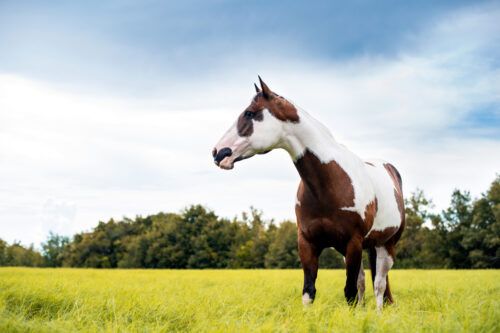
Grey, bay and black make up most of the PRE population, and grey has historically been the breed’s most common color. Genetic analysis links this prevalence to the influence of the Carthusian strain, one of the breed’s most historically significant and heavily inbred bloodlines. [16]
Buckskin, dun, chestnut, cremello, perlino and pearl coat colors also appear in the studbook, although in much smaller numbers. [22]
Temperament
PRE owners commonly describe the breed as noble, sensitive and eager to work. This combination can make the horse forgiving enough for less experienced riders while preserving the responsiveness that rewards advanced, subtle rider aids.
Temperament is not left to chance in this breed. ANCCE’s program includes selection for functional traits and dressage aptitude. [20][21]
This selection reinforces the breed’s reputation for a willing, trainable temperament.
Disciplines
Dressage remains the PRE’s signature discipline. Genetic evaluations of the breed’s dressage performance confirm that selection for this ability has been deliberate and measurable across generations. Breeders track which bloodlines consistently produce horses suited to collected work. [23]
Beyond dressage, PRE horses compete successfully in working equitation, a discipline built around ranch-style maneuvers performed under time pressure.
They also excel at doma vaquera, Spain’s traditional cattle-working style, which demands quick, precise movement. The breed’s natural balance and responsiveness make it well-suited to classical riding, in-hand exhibition work and driving.
Health
A closed studbook preserves a breed’s appearance and temperament with remarkable consistency, but it also involves important genetic trade-offs.
More than a century without new bloodlines has had measurable genetic effects on the PRE population. Owners should also be aware of several management-related health concerns.
Genetic Diseases
The PRE studbook has remained closed since 1912. More than a century of breeding within this closed population has resulted in substantial relatedness and inbreeding across the breed. Genetic analysis of the full PRE population found an average inbreeding coefficient above 7%, with most registered horses carrying at least some measurable inbreeding. [13]
Just seven ancestors account for roughly half of the breed’s genetic makeup, a pattern researchers describe as a genetic bottleneck. Over the past two decades, breeders and ANCCE have worked to slow this trend by considering genetic diversity alongside performance and conformation rather than selecting solely on pedigree reputation. [13]
Inbreeding depression refers to the accumulation of harmful effects associated with breeding closely related animals. Researchers have directly linked it to measurable reductions in body dimensions and other morphological traits within the PRE population. [17]
Buyers and breeders benefit from choosing bloodlines screened for known genetic defects, rather than relying only on pedigree prestige.
Health Problems
Cresty neck, or an accumulation of fat along the top of the neck, occurs often enough in PRE horses that researchers have studied its prevalence and heritability within the breed.
The condition is associated with genetic and management factors in PRE horses. Andalusian horses have also shown lower insulin sensitivity and greater insulin responses compared to Standardbreds, which suggests a breed predisposition to insulin dysregulation and equine metabolic syndrome. [24]
Horses with a persistent cresty neck have a higher risk of laminitis and require closer monitoring of their diet and body condition. [18]
Gray is one of the breed’s most common coat colors, which increases the relevance of melanoma risk. Genetic studies of the PRE population have identified specific hereditary risk factors for both vitiligo and melanoma. [19]
Most melanomas grow slowly and do not affect a horse’s overall health. [19] However, any new or changing mass warrants veterinary evaluation rather than a wait-and-see approach.
Body condition also deserves close attention. The breed’s naturally substantial, muscular build can mask early signs of obesity. Owners may mistake a developing cresty neck for desirable conformation when it is actually a metabolic warning sign.
Care & Management
Routine care helps PRE horses remain healthy, comfortable, and sound. Management should account for the breed’s distinctive movement, Iberian conformation, and thick mane and tail while maintaining consistent preventive care.
Core management practices for PRE horses include: [25]
- Veterinary exams: Schedule regular checkups to monitor soundness, body condition, and overall health, especially when workload, diet, or management changes.
- Vaccinations: Follow a vaccination schedule recommended by your veterinarian based on your horse’s region, travel, exposure risk, and lifestyle.
- Dental care: Routine dental examinations support efficient chewing and help identify dental problems before they affect comfort or body condition.
- Parasite management: Use a strategic deworming plan based on fecal egg counts and veterinary guidance.
- Hoof care: Iberian horses show measurable differences in stride and joint mechanics compared with some other breeds, particularly in patterns of limb flexion and retraction. Work with a farrier experienced with Iberian conformation, as incorrect trimming or shoeing can alter natural movement and increase injury risk over time.
- Exercise and turnout: Routine turnout supports physical and mental health. Turnout does not appear to increase melanoma risk in grey horses because this risk is associated with genetics rather than sun exposure.
PRE horses also require regular, thorough grooming. Their thick manes and tails can trap dirt and debris, potentially irritating the skin if buildup is left unmanaged. Consistent grooming helps maintain skin and coat health while preventing debris from accumulating.
Nutrition
PRE horses descend from animals that survived for generations on sparse Iberian forage. This heritage still influences how the breed responds to a modern diet.
Weight Maintenance
Most PRE horses are easy keepers, meaning they gain weight readily on rich pasture or high-calorie feed.
The PRE’s genetic tendency toward cresty neck and metabolic syndrome makes weight management a health priority, not merely a cosmetic concern. If left unchecked, excess weight can compound the breed’s existing laminitis risk.
Unexplained weight loss usually points to an underlying issue. A PRE horse consuming a properly balanced diet should not struggle to maintain condition. Persistent weight loss warrants a veterinary workup rather than simply adding more feed to the ration.
Sample Diet
The following sample daily diet is intended for a mature PRE horse in normal body condition at maintenance. It provides a forage-based foundation with salt and a concentrated vitamin and mineral supplement.
Table 1. Sample daily diet for a mature 500 kg (1,100 lb) Pura Raza Española horse at maintenance
| Feed | Amount per day |
|---|---|
| Mid-quality hay (10% crude protein) | 22 lb (10 kg) |
| Salt | 30 g (2 tbsp) |
| Omneity® Pellets | 200 g (2 scoops) |
| Diet Analysis | |
| Digestible energy (% of req) | 109% |
| Protein (% of req) | 145% |
| HC (ESC + starch; % diet) | 8.9% |
Most PRE horses can meet their energy and protein requirements on a high-quality forage-based diet. Forage quality and intake should match the horse’s body weight, condition and workload. [26][27]
Hay-only diets generally do not provide adequate levels of all essential nutrients, including vitamins and minerals. [27][28] Feeding a comprehensive vitamin and mineral supplement formulated for forage-based feeding can help ensure your PRE’s dietary needs are being met without adding unnecessary calories, sugars or starches.
Mad Barn’s Omneity® provides complete vitamin and mineral fortification with essential amino acids, yeast and digestive enzymes. This science-backed formula contains no unnecessary fillers and supports hoof strength, muscle function, metabolic health, immune function and coat condition.
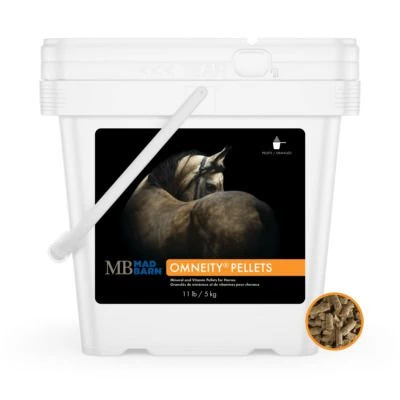
Provide unrestricted access to fresh water and feed plain loose salt daily. Horses in regular work or hot weather may require additional salt and electrolytes to replace minerals lost through sweat and encourage adequate hydration. [27]
Forage
Most PRE horses should consume approximately 1.5 – 2% of their body weight in forage dry matter per day.
For a 1,100 lb (500 kg) horse, this equals approximately 16.5 – 22 lb (7.5 – 10 kg) of forage dry matter, or roughly 18 – 24.5 lb (8 – 11 kg) of hay as fed. [27][28]
Because PRE horses are typically easy keepers and may be prone to cresty necks, insulin dysregulation and laminitis, choose forage with moderate energy and low sugar and starch content. Regularly monitor body condition and neck crest development, particularly when horses have access to rich pasture. [18][27][29]
A mature PRE at maintenance typically does well on mid-quality grass hay harvested at a later stage of maturity. Horses in heavier work may need more nutrient-dense grass hay or a moderate inclusion of alfalfa to support increased energy and protein requirements.
Rich pasture can supply more calories and sugar than an easy keeper needs. Owners may need to limit grazing time or use a grazing muzzle or dry lot to control intake. Slow-feed hay nets can extend eating time while helping manage total forage consumption, but forage should not be restricted below safe minimum intake without guidance from an equine nutritionist or veterinarian.
A forage analysis is the best way to determine the energy, protein, sugar and mineral content of the diet. Testing is particularly valuable for PRE horses with obesity, a cresty neck, insulin dysregulation or a history of laminitis.
Feeding Recommendations
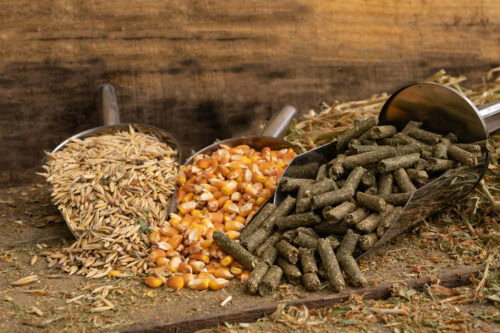
PRE horses at maintenance or in light work generally do not require commercial grain or calorie-dense concentrates. These feeds can contribute unnecessary sugar, starch and energy, increasing the risk of weight gain and metabolic problems. [29]
If a carrier is needed for supplements, use a small serving of soaked beet pulp, hay pellets or chopped forage. Forage cubes and pellets can also provide additional fiber for horses that need more calories without relying on high-starch grain.
PRE horses in demanding dressage, working equitation or driving programs may require additional dietary energy. Increase forage quality or add digestible fiber before introducing grain. If further calories are necessary, a fat supplement can support performance and condition without a large increase in dietary starch.
Older PRE horses may need adjustments if they lose condition or have difficulty chewing long-stem forage. A complete senior feed or soaked forage cubes can provide a softer, fiber-based ration. Schedule regular dental examinations because dental problems can reduce feed intake and nutrient utilization.
Divide supplemental feed into several small meals and introduce all dietary changes gradually. Continue to provide fresh water and plain loose salt at all times, and monitor weight, neck crest and overall condition so the ration can be adjusted before excess fat accumulates.

Nutritional Supplements
Beyond a solid forage foundation, some PRE horses benefit from targeted supplementation based on workload and health status. Mad Barn supplements that may help PRE horses include:
- Omneity® Pellets: A comprehensive vitamin and mineral balancer with organic trace minerals and full B-vitamin fortification, formulated to fill the gaps a forage-only diet typically leaves behind.
- OmegaPrime+: A concentrated source of omega-3 fatty acids that supports healthy inflammatory balance, joint comfort, coat quality, and antioxidant status, without adding extra sugar or starch to the diet.
- Three Amigos: Supplies lysine, methionine, and threonine to support muscle development and topline quality, useful for PRE horses in regular dressage training.
- Visceral+: Supports gastric and hindgut health along with immune function, helpful for horses navigating the demands of training, travel, and competition.
- MSM: Supports joint health and connective tissue strength, a practical addition for PRE horses in consistent schooling or performance work.
For personalized recommendations and a complete review of your horse’s diet, book a free consultation with one of our expert equine nutritionists.
Frequently Asked Questions
Here are some frequently asked questions about the Pura Raza Española breed:
A Pura Raza Española horse is a formally registered and parentage-verified member of the Spanish horse population. To qualify, a horse must have two PRE parents approved as breeding stock and meet the studbook's identification and parentage requirements. Once a registered PRE reaches three years of age, it can undergo a separate assessment for approval as breeding stock.
The difference between a Pura Raza Española and an Andalusian is primarily based on registration requirements. Every Pura Raza Española is considered an Andalusian, but not every Andalusian meets the parentage and registration standards required for the Pura Raza Española designation. This distinction is particularly relevant in North America, where some horses have Spanish ancestry but incomplete registration records.
The Pura Raza Española horse originated on the Iberian Peninsula, where the ancestry of local horses extends back thousands of years. Carthusian monks began maintaining detailed breeding records during the 13th century, and King Philip II established a royal breeding program in Cordoba in 1567. These breeding and record-keeping efforts helped shape the formally regulated breed recognized today.
Pura Raza Española horses were historically bred as war horses, royal mounts, and horses for classical riding. Their balance, agility, responsiveness, and trainable temperament made them valuable throughout European courts and riding academies. Spanish horses also influenced the development of other European breeds, including the Lipizzaner.
Pura Raza Española horses typically stand between 15 and 16.3 hands tall. They generally have a compact, muscular build with a long neck, short strong back, broad quarters, and clean, proportionate legs. Their conformation supports the balance and collected movement for which the breed is known.
Pura Raza Española horses most commonly come in grey, bay, and black. Grey has historically been especially common because of the influence of the Carthusian bloodline. Less common registered colors include chestnut, buckskin, dun, cremello, perlino, and pearl.
The temperament of a Pura Raza Española horse is typically described as noble, sensitive, willing, and responsive. Formal selection for rideability and dressage aptitude has reinforced the breed's reputation for trainability and a strong work ethic. Individual temperament still varies, so training, handling, and an appropriate match between horse and rider remain important.
Pura Raza Española horses can be suitable for beginner riders because they are generally willing, trainable, and responsive. Their sensitivity can make them rewarding partners, but it also means some individuals may react quickly to unclear or unbalanced aids. A beginner should choose a calm, experienced horse and work with a knowledgeable instructor rather than relying on breed alone.
Pura Raza Española horses are best known for dressage and other forms of classical riding. Their natural balance, responsiveness, and aptitude for collected work also suit working equitation, doma vaquera, in-hand exhibitions, and driving. The best discipline for an individual horse depends on its conformation, training, soundness, and temperament.
Health problems that may affect Pura Raza Española horses include cresty neck, metabolic dysfunction, laminitis, and melanoma in grey horses. The breed's closed studbook has also increased genetic relatedness within the population, making careful breeding and health screening important. Routine veterinary care, weight management, and prompt evaluation of new symptoms can help owners address these risks.
A cresty neck is a concern in Pura Raza Española horses because it can indicate excess fat accumulation and an underlying tendency toward insulin dysregulation or equine metabolic syndrome. The breed's muscular neck can make early fat deposits easy to mistake for desirable conformation. Horses with a persistent crest may have an increased risk of laminitis and should have their diet, body condition, and metabolic health assessed.
Grey Pura Raza Española horses are genetically predisposed to melanoma. Many melanomas grow slowly and may never seriously affect the horse's health, but their location and rate of change can influence their significance. Any new, growing, or changing mass should be examined by a veterinarian.
A Pura Raza Española horse should generally receive a forage-first diet suited to its body condition, workload, and metabolic health. Many members of the breed are easy keepers, so mature low-starch hay and careful control of calories from pasture and concentrated feed may help prevent excess weight gain. A vitamin and mineral balancer can fill common nutritional gaps in a forage-based diet without relying on large grain meals.
Preventing a Pura Raza Española horse from becoming overweight requires regular body-condition monitoring and careful management of forage, pasture, and concentrated feed. Slow-feeding hay nets, rationed turnout, or a grazing muzzle may help control intake while preserving forage access and turnout. A persistent neck crest or unexplained weight gain warrants closer evaluation because it may signal metabolic dysfunction rather than simple overfeeding.
Pura Raza Española horses benefit from hoof care that respects their characteristic conformation and movement. Their stride and joint mechanics can differ from those of some other breeds, so incorrect trimming or shoeing may interfere with natural movement and increase strain. A farrier familiar with Iberian horses can help maintain appropriate balance and support long-term soundness.
Summary
The Pura Raza Española is a formally registered Andalusian horse valued for its elegant conformation, responsive temperament and aptitude for classical dressage. Careful weight, metabolic and dietary management can support the breed's long-term health and performance.
- PRE registration requires documented parentage and DNA confirmation; approval as breeding stock requires a separate assessment
- The closed studbook preserves consistent breed type but has reduced genetic diversity
- PRE horses commonly excel in dressage, working equitation, doma vaquera, classical riding and driving
- Cresty neck, insulin dysregulation and excess body condition can increase laminitis risk
- Grey PRE horses should be monitored for new or changing masses due to melanoma risk
- Most PRE horses do well on controlled forage intake, salt and balanced vitamin-mineral supplementation
References
- Pruvost. M. et al. Genotypes of predomestic horses match phenotypes painted in Paleolithic works of cave art. Proceedings of the National Academy of Sciences. 2011.
- Lira. J. et al. Ancient DNA reveals traces of Iberian Neolithic and Bronze Age lineages in modern Iberian horses. Molecular Ecology. 2010.
- Livestock Breeds from the Spanish Official Catalog. Ministry of Agriculture, Fisheries and Food, Spain. 2022.
- Renton. K. Feral Empire: Horse and Human in the Early Modern Iberian World. Cambridge University Press. 2024.
- Gundermann. C. "Iberians are different": On Breed, Power, and Queer Subversion. Humanimalia. 2023.
- Ameen. C. et al. In Search of the 'Great Horse': A Zooarchaeological Assessment of Horses from England (AD 300-1650). International Journal of Osteoarchaeology. 2021.
- Renton. K. Breeding Techniques and Court Influence: Charting a 'Decline' of the Spanish Horse in the Early Modern Period. The Court Historian. 2019.
- Mihók. Z. Economic Analysis of the Horse Sector and Relevant Topics for Its Sustainable Development in the Equestrian Revolution. University of Pannonia. 2016.
- Valera. M. et al. Pedigree analysis in the Andalusian horse: population structure, genetic variability and influence of the Carthusian strain. Livestock Production Science. 2005.
- History of Lipica. Lipica Stud Farm. n.d.
- Borghese. A. The Lipizzaner in Italy. Animal Genetic Resources Information Bulletin. 1992.
- Solé. M. et al. Genetic structure and connectivity analysis in a large domestic livestock meta-population: The case of the Pura Raza Español horses. Journal of Animal Breeding and Genetics. 2018.
- Perdomo-González. D. I. et al. Genetic Structure Analysis of the Pura Raza Español Horse Population through Partial Inbreeding Coefficient Estimation. Animals. 2020.
- ¿Qué es ANCCE?. ANCCE.
- Who We Are. International Andalusian & Lusitano Horse Association.
- Sánchez-Guerrero. M. J. et al. Morphological and genetic diversity of Pura Raza Español horse with regard to the coat colour. Animal Science Journal. 2019.
- Poyato-Bonilla. J. et al. Genetic inbreeding depression load for morphological traits and defects in the Pura Raza Española horse. Genetics Selection Evolution. 2020.
- Sánchez. M. J. et al. Prevalence, risk factors and genetic parameters of cresty neck in Pura Raza Español horses. Equine Veterinary Journal. 2017.
- Sánchez-Guerrero. M. J. et al. Genetic and environmental risk factors for vitiligo and melanoma in Pura Raza Español horses. Equine Veterinary Journal. 2019.
- Morfología de la raza. ANCCE.
- Sánchez-Guerrero. M. J. et al. Designing an early selection morphological linear traits index for dressage in the Pura Raza Español horse. Animal. 2017.
- Libro Genealógico del Caballo de Pura Raza Española. LG PRE ANCCE.
- Sánchez-Guerrero. M. J. et al. Modelling genetic evaluation for dressage in Pura Raza Español horses with focus on the rider effect. Journal of Animal Breeding and Genetics. 2014.
- Bamford. N. J. et al. Postprandial glucose, insulin, and glucagon-like peptide-1 responses of different equine breeds adapted to meals containing micronized maize. Journal of Animal Science. 2015.
- Cano. M. R. et al. Kinematic characteristics of Andalusian, Arabian and Anglo-Arabian horses: a comparative study. Research in Veterinary Science. 2001.
- Jansson. A. and Lindberg. J. E. A forage-only diet alters the metabolic response of horses in training. Animal. 2012.
- Nutrient Requirements of Horses: Sixth Revised Edition. National Academies Press. 2007.
- Richards. N. et al. Nutritional and Non-Nutritional Aspects of Forage. Veterinary Clinics of North America: Equine Practice. 2021. View Summary .
- Bailey. S. R. and Bamford. N. J. Metabolic responses of horses and ponies to high and low glycaemic feeds: implications for laminitis. Animal Production Science. 2013.