English











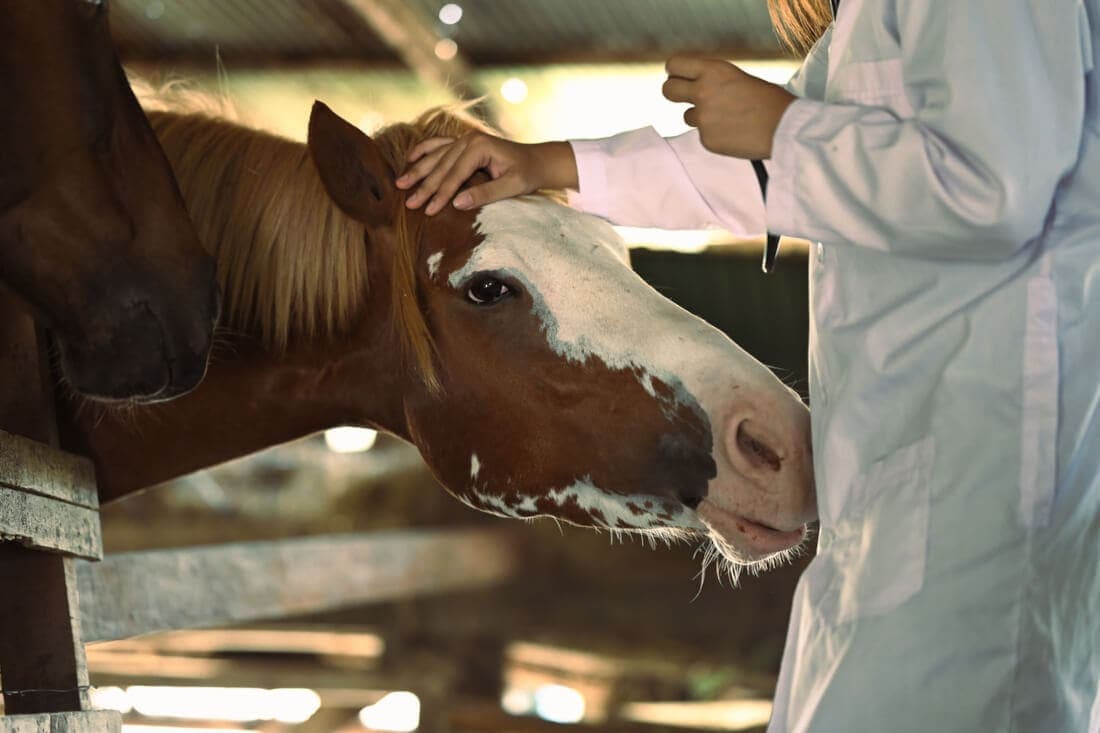
The respiratory system plays a key role in your horse’s athletic performance and overall health, and even minor issues can affect a horse’s comfort, stamina, and ability to perform. Since many respiratory problems are located deep within the nasal passages, throat, or trachea, they are not visible on a routine physical exam.
Respiratory endoscopy, also known as upper airway endoscopy, provides veterinarians with a powerful diagnostic tool to directly visualize these structures and assess how well they function. Respiratory endoscopy is used for horses with abnormal breathing noises, unexplained exercise intolerance, coughing, nasal discharge, or poor performance.
In some cases, problems only become apparent when the horse is working, and a specialized form of the procedure called dynamic or overground endoscopy can be performed during exercise to capture abnormalities that don’t occur at rest.
The procedure is generally safe and well-tolerated, with most horses requiring little to no sedation. This type of endoscopy is fast, provides immediate results, and carries minimal risk, making it one of the most useful diagnostic tools in equine medicine.
By offering a direct view into the horse’s airway, respiratory endoscopy allows veterinarians to make accurate diagnoses, develop targeted treatment plans, and ultimately help horses breathe easier and perform to their full potential.
Respiratory Endoscopy in horses
Respiratory endoscopy uses a small camera passed through the nasal passages to let veterinarians examine the horse’s respiratory tract, including the larynx, trachea, lungs, and guttural pouches. The flexible tip of the endoscope lets them direct the camera into tight crevices or pouches for a thorough assessment.
Veterinarians primarily recommend respiratory endoscopy when they suspect functional issues in the respiratory system. The camera allows them to assess the structure and movement of the airways to make a diagnosis. [1] In some cases, they may perform endoscopy to identify inflammatory or infectious diseases.
Signs of respiratory disease that may warrant an endoscopy include: [2]
- Nasal discharge or nosebleeds
- Labored breathing
- Abnormal respiratory noises, such as wheezing or roaring
- Coughing
- Excessive salivation
- Difficulty eating
- Swelling of the head
- Poor performance
- Exercise intolerance
Depending on the clinical signs and the horse’s history, the veterinarian recommends either a resting (while the horse is standing) or dynamic (during movement) endoscopy.
Reasons a veterinarian may recommend a dynamic endoscopy over a standing endoscopy include: [3]
- Abnormal respiratory noises during exercise
- Monitoring the effect of an abnormality during exercise
- Poor performance with or without respiratory changes
- Pre-purchase examination
- Monitoring the efficacy of a treatment, such as a surgical procedure
Equipment
An endoscope is a long tube with a camera on the end that transmits a visual signal to an eyepiece or screen. [2] Endoscopes should be at least 120 cm (47 in) long for respiratory evaluation. [2]
Endoscopes are flexible and have a mechanism at the end of the tube that allows the veterinarian to manipulate its direction. This helps them aim the camera and enter small passages during their examination. [2]
Most endoscopes also have a channel that allows the veterinarian to infuse water into the inspection area. They can also retrieve fluid from the respiratory tract if necessary. [2]
Some veterinarians use this channel to collect fluid samples for bronchoalveolar lavage or transtracheal wash. Veterinarians can also pass specialized equipment, such as biopsy forceps, through the endoscope channel to collect tissue samples. [2]
A safe area with non-slip footing is recommended for the procedure. Placing the horse in stocks is common for resting endoscopy, while dynamic endoscopy may involve the use of a treadmill, arena, or other exercise surface. [2]
Additional restraint methods like sedation or twitching may be necessary for some horses receiving a standing endoscopy. [2]
What's your top priority with your horse's health?

Enter your email to receive your store credit
Procedure
The procedure for equine respiratory endoscopy varies slightly depending on whether the procedure is resting or dynamic. Both procedures begin by passing the endoscope into the respiratory tract. Depending on the horse, a combination of twitching, sedation, and restraint in stocks may be necessary to complete the procedure. [2]
To pass the endoscope, the veterinarian or their assistant grasps the horse’s nasal cartilage to hold it open. [2] They pass the lubricated tip of the endoscope into the nostril, taking care to avoid hitting the nasal passage walls. [2]
Once the endoscope is around 20 cm (8 in) into the nasal cavity, the assistant pinches the nasal cartilage and endoscope tube together to keep the tube in place. [2]
The veterinarian then begins assessing the respiratory tract. They start by examining the ventral meatus, the lowest of the three nasal passages. Here, they can observe the ethmoid turbinates, a highly vascularized tissue that can be the cause of nosebleeds. [2]
As the assistant passes the tube further into the nose, the veterinarian can observe the following structures: [2]
- Pharynx (throat)
- Guttural pouch openings
- Soft palate
- Larynx (voice box)
- Trachea (windpipe)
While examining each structure, they look for abnormalities such as unusual positioning, masses, injured areas, discharge, or signs of inflammation. [2] They can also examine the function of the larynx by having the assistant temporarily block both nostrils. [2] Releasing the nostrils encourages the horse to breathe deeply, causing the horse to open their larynx. [2]
For horses with difficulty swallowing, the veterinarian may instill a small amount of water near the larynx to observe the horse’s swallowing process. [2]
If there is suspicion of guttural pouch disease, the veterinarian may navigate the endoscope into the guttural pouches. This is a difficult maneuver, as the entrance to the guttural pouches is very small. [1]
The veterinarian typically uses a biopsy instrument with a smaller tip to enter the opening, then uses that instrument as a guidewire to insert the endoscope. [1] While in the guttural pouch, the veterinarian may flush the area with sterile saline and collect a sample for diagnosing inflammatory or infectious disease. [1]
After the veterinarian completes their inspection, the assistant slowly removes the endoscope from the horse’s nostril. The veterinarian takes this opportunity to observe the dorsal and middle nasal passages. [2]
If there is suspicion of nasal passage disorders, they may repeat the endoscopy process using the opposite nostril to ensure both sides of the horse’s nasal passages are examined. [1]
Dynamic Endoscopy
Dynamic endoscopy has a similar process for placing the endoscope, but generally the endoscope is fixed in a particular position to observe the function of a respiratory structure. [2]
Most veterinary teams secure the endoscope to a halter or bridle, with the tip of the endoscope in view of the horse’s larynx. [3][4]
After placing the endoscope, the horse is exercised on a treadmill, racetrack, or arena depending on the scenario. [3]
Preparing your Horse for Respiratory Endoscopy
There is no specific preparation necessary for respiratory endoscopy in horses. If your veterinarian has recommended a dynamic endoscopy, ensure that your horse is in a location where they can exercise safely and perform their normal level of exercise.
For standing endoscopy, have your horse ready for the veterinarian in a well-lit, safe location with non-slip footing.

Interpreting Results
The veterinarian interprets any abnormalities they find on the respiratory endoscopy to make a diagnosis. In many cases, diagnosis or list of potential problems is available immediately after the procedure. Additional diagnostic tests may be necessary for some conditions, such as equine asthma.
Conditions that can typically be diagnosed based only on respiratory endoscopy include:
- Upper airway structural and functional abnormalities
- Progressive ethmoid hematoma
- Guttural pouch disease
- Exercise-induced pulmonary hemorrhage
Foreign bodies in the airway, traumatic injuries, masses or tumors, and areas of inflammation are also visible on endoscopy.
Upper Airway Abnormalities
Respiratory endoscopy is particularly useful for identifying structural or functional abnormalities of the upper respiratory tract.
Examples of upper airway abnormalities in horses include: [3][5]
- Epiglottic entrapment
- Subepiglottic cysts
- Dorsal displacement of the soft palate
- Laryngeal hemiplegia (“roaring”)
- Pharyngeal collapse
- Tracheal collapse
The veterinarian can directly identify these problems by noting the abnormal function or positioning of the tissues. Some of these deficits are characterized using a grading system, such as laryngeal hemiplegia.
The grading system veterinarians use to classify severity of roaring in horses is: [3]
- Grade I: Normal movement of the laryngeal cartilages
- Grade II: Occasional asymmetrical movements
- Grade III: Consistent asymmetrical movement
- Grade IV: Complete lack of laryngeal cartilage movement during breathing
Progressive Ethmoid Hematoma
The ethmoid turbinates are highly vascularized tissues that occasionally form non-cancerous masses called polyps. [2] These masses are very fragile and may bleed profusely if damaged.
Identifying a large red-blue mass on the ethmoid turbinates during endoscopy allows for diagnosis of this condition. [2]
Guttural Pouch Disease
The guttural pouches are extensions of the auditory tube, the tube that regulates pressure in the middle ear. These large pouches contain several nerves and vessels that can become damaged if the horse has guttural pouch disease.
One of the most common guttural pouch conditions is guttural pouch mycosis, a fungal infection. Fungal organisms can erode into the vessels within the guttural pouches, causing severe, life-threatening nosebleeds. [2]
Guttural pouch mycosis can often be identified on endoscopy, but confirming the fungal infection may require additional diagnostic tests.
Exercise-Induced Pulmonary Hemorrhage
Exercise-induced pulmonary hemorrhage (EIPH) is a condition where horses bleed into their respiratory tract after performing high-intensity exercise. [2]
The exact cause of this condition is unknown, but it may be related to high pressure blood flow within the delicate capillaries of the lungs during exercise. [2] This results in rupture of the capillaries, leading to blood in the airway.
Endoscopy after exercise is the primary method for diagnosing EIPH. Based on the amount of blood visible in the airway, veterinarians grade the condition’s severity as follows: [2]
- Grade 0: No blood present
- Grade 1: Flecks of blood or occasional short streams
- Grade 2: One long stream of blood or multiple short streams
- Grade 3: Multiple streams of blood but no blood pooling
- Grade 4: Multiple streams of blood with blood pooling in the lower trachea
Complications
Respiratory endoscopy in horses is a very safe procedure with few complications.
The most common complication is a nosebleed, caused by irritating the sensitive nasal tissues or the ethmoid turbinates with the endoscope. [1] These nosebleeds typically resolve on their own without further intervention.
If the veterinarian examines the guttural pouches, there is a small risk of damaging important nerves or vessels in the area. [1]
This may result in bleeding or temporary neurologic abnormalities due to nerve injury. Severe damage is rare, but may result in a permanent neurologic deficit.
Frequently Asked Questions
Here are some frequently asked questions about respiratory endoscopy for horses:
Respiratory endoscopy, also called upper airway endoscopy, is a diagnostic procedure where a veterinarian uses a flexible camera (endoscope) to look inside a horse's nasal passages, throat (pharynx and larynx), guttural pouches, and upper trachea. This allows direct visualization of structures involved in breathing and helps identify abnormalities.
A veterinarian may recommend endoscopy if your horse has noisy breathing, poor performance, nasal discharge, coughing, or unexplained exercise intolerance. It can also be used to check for infections, airway obstructions, guttural pouch disease, or to confirm diagnoses such as laryngeal hemiplegia ("roaring").
No equine respiratory endoscopy does not hurt. The procedure is generally well-tolerated by horses. The scope may cause mild irritation, sneezing, or coughing when first inserted, but it is not painful. Sedation and topical anesthetics can be used if needed to keep the horse comfortable.
Most horses can return to their normal routine immediately after a respiratory endoscopy procedure. If abnormalities are found, your veterinarian will discuss treatment options, which may include medical management, surgical correction, or further diagnostics.
Yes, equine respiratory endoscopy is a very safe diagnostic tool with minimal risk. Rarely, horses may develop minor nasal irritation or a nosebleed, but serious complications are uncommon.
Summary
Respiratory endoscopy is a safe and effective diagnostic tool that allows veterinarians to directly visualize the horse's upper airway and identify conditions affecting breathing and performance.
- Involves passing a flexible camera through the nostril to examine the nasal passages, pharynx, larynx, guttural pouches, and trachea
- Helps diagnose issues such as upper airway functional abnormalities, guttural pouch disease, and exercise-induced pulmonary hemorrhage
- Can be performed at rest or during exercise (dynamic endoscopy) to detect problems that only occur during work
- Well tolerated by most horses, with minimal sedation required and very low risk of complications
- Provides immediate results, guiding treatment decisions and improving performance outcomes
References
- Costa. L. R. R. and Paradis. M. R. Manual of Clinical Procedures in the Horse. Wiley Blackwell, Hoboken. 2018.
- Fjeldborg. J. et al. Equine Respiratory Endoscopy. CAB International, Oxford. 2024.
- Woodie. B. Upper Airway: Standing Endoscopy Versus Dynamic Endoscopy: A Case-Based Approach to Navigating Appropriate Uses for Each. How to Perform Endoscopy in Equine Practice. AAEP. 2017.
- Smith. J. J. How to Perform Dynamic Respiratory Endoscopy.
- Franklin. S. H. and Allen. K. J. Assessment of Dynamic Upper Respiratory Tract Function in the Equine Athlete. Equine Veterinary Education. 2017.