English







The sacroiliac joint (SIJ) is a large, weight-bearing joint in the horse’s body that connects the sacrum of the spine to the ilium of the pelvis. It absorbs shock and transmits force from the hind limbs into the vertebral column, making it critical for propulsion, collection, and overall athletic performance.
The SIJ is reinforced by a strong network of ligaments that stabilize the pelvis and distribute forces during movement. These anatomical features make the joint difficult to assess clinically and susceptible to subtle dysfunctions that can impair a horse’s performance.
Sacroiliac joint disorders (SID) are increasingly recognized as contributors to lameness, poor performance, and chronic back pain in horses. Diagnosis can be difficult because clinical signs are often vague and inconsistent, although advances in imaging have improved detection.
This article reviews the anatomy and biomechanics of the equine sacroiliac joint, the most common disorders affecting it, and current knowledge on risk factors, clinical signs, diagnostic methods, and treatment approaches.
Sacroiliac Joint Anatomy in Horses
The sacroiliac joint (SIJ) is one of the largest and most important joints in the horse’s body.
The joint is named for the structures it connects: the sacrum of the spine and the ilium of the pelvis. It supports weight bearing and transfers forces from the hind limbs into the vertebral column to drive locomotion. [1][2]
The SIJ is classified as a synovial joint, meaning it contains a joint capsule and fluid-filled cavity that allow limited movement.
Unlike most synovial joints, which are formed between two hyaline cartilage surfaces, the SIJ is unique in that it joins a hyaline surface on the sacrum with a fibrocartilaginous surface on the ilium. [2]
The SIJ is further distinguished by its closely fitting, flattened joint surfaces, which limit mobility and prevent it from carrying the horse’s full body weight like other synovial joints. Its shape varies among horses, ranging from L-shaped to C-shaped, with contours that may be flat or concave–convex. [2][3]
The sacroiliac joint is stabilized by the dorsal, ventral, and interosseous sacroiliac ligaments. These structures are the primary means of maintaining alignment and transmitting the weight of the trunk into the pelvic limbs. [3]

Skeletal Structures
Several bony landmarks form or directly support the sacroiliac joint and surrounding region: [2]
- Pelvis: Composed of the ilium, ischium, and pubis, which unite with the sacrum and coccygeal vertebrae to form the pelvic girdle.
- Sacrum: A triangular bone at the cranial end of the pelvis, consisting of five fused vertebrae that provide the attachment site for the ilium.
- Ilium: The largest pelvic bone, whose wing articulates with the sacrum at the SIJ; key landmarks include the tuber sacrale, tuber coxae, and ischiatic spine.
- Tuber sacrale: The highest point of the pelvis, formed where the ilial wing curves upward and backward; used clinically as a reference point for SIJ symmetry.
- Ischium: The caudal part of the pelvis, with the tuber ischii palpable on either side of the tail; important in weight transfer during locomotion.
- Lumbosacral junction: The articulation between the last lumbar vertebra and the sacrum, which works with the SIJ to coordinate back and hind limb movement.
Ligaments
The pelvis is anchored to the spine by the sacroiliac and sacrosciatic ligaments. [1][2]
Horses have three major sacroiliac (SI) ligaments: [2][3]
- Dorsal SI ligament
- Ventral SI ligament
- Interosseous SI ligament
Compared to small animals, horses have a much more developed SI ligament system that supports stabilization of the pelvis. The tension in these ligaments is influenced by hormones and becomes more relaxed in mares prior to foaling. [2]
Sacroiliac Movement
Compared to other joints in the horse’s body, relatively little is known about the movement of the equine sacroiliac joint (SIJ).
Its location beneath the ilial wing and musculature makes direct assessment in live horses difficult. Based on the tightly interlocking joint surfaces and supporting ligaments, researchers believe that the SIJ allows only very limited motion. [4]
In humans, ridges and grooves on the SIJ surfaces help resist shear forces while permitting small amounts of rotation. Similar surface irregularities have been observed in horses, suggesting that their SIJ may also allow minor joint mobility. [4]
Although movement cannot be directly measured in live horses, current evidence indicates the joint permits small degrees of sliding and pivoting, which help absorb impact and transfer forces efficiently from the hind limbs into the spine. [2]
What's your top priority with your horse's health?

Enter your email to receive your store credit
Sacroiliac Joint Disorders in Horses
Sacroiliac joint disorders (SID) refer to conditions that affect the joint itself or the supporting ligaments. These disorders are increasingly recognized as a cause of poor performance, low-grade lameness, and chronic back pain in horses. [1]
Because the sacroiliac joint is deep within the pelvis and has only limited motion, problems in this region can be difficult to diagnose. Clinical signs are often vague, ranging from shortened stride length and reduced impulsion to behavioral changes such as bucking, refusing fences, or resisting work under saddle. [1][2]
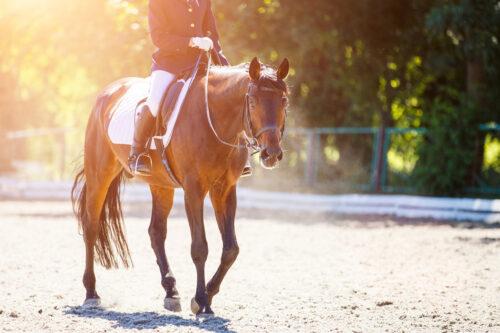
Sacroiliac dysfunction may result from trauma, repetitive strain, overuse injuries, poor conformation, or degenerative changes such as arthritis. Horses competing in dressage, show jumping, and racing are considered at higher risk. [1][3]
Historically, sacroiliac pain was diagnosed only after ruling out other conditions, since clinical signs such as poor performance, lack of impulsion, and mild hind limb lameness are not specific to the SI region. [2]
Post-mortem studies show a high prevalence of pathological changes in the SIJ, many of them degenerative in nature. This suggests SI disorders are common, but it remains unclear how these structural changes translate to pain or clinical signs in the live horse. [2] For this reason, diagnosis of SI disease is still largely based on excluding other potential causes of lameness or back pain. [1]
Examples of SIJ lesions identified in equine post-mortem studies include: [2]
- Irregular enlargement of the joint surfaces
- Osteophyte (bone spur) formation
- Lipping along the joint margins
- Cortical buttressing (bony thickening)
- Cartilage erosion
The most frequently recognized clinical forms of sacroiliac disorder in horses are:
- Arthritis of the SI joint
- Fractures of the sacrum or ilium
- Desmitis (ligament injury) of the sacroiliac region
1) Arthritis
Arthritis is a condition characterized by inflammation within a joint, which can cause pain, stiffness, and reduced mobility. Inflammation due to bone degeneration from wear-and-tear is known as osteoarthritis.
Sacroiliac (SI) arthritis is thought to be the most common disorder in horses showing signs of SI pain or dysfunction. Diagnosing osteoarthritis in this joint is difficult because it lies deep within the pelvis and cannot be directly evaluated. [1]
The SIJ may be predisposed to osteoarthritis due to its small joint capsule, restricted range of motion, and atypical joint surfaces. Degenerative changes are often bilateral, with lesions developing on both sides of the joint. [1]
2) Fractures
Fractures involving the sacroiliac joint most often affect the ilial wing and pelvic region, and may extend across the articular surface of the joint. Stress fractures typically result from repetitive loading and localized strain. [1]
A high prevalence of occult pelvic stress fractures has been reported in Thoroughbred racehorses, usually occurring along the caudal border of the ilium adjacent to the SIJ. [1]
Complete ilial wing fractures are considered the most common type of pelvic fracture in horses. These injuries often cause a depressed tuber sacrale on the affected side, which can sometimes be detected on palpation. [1]
3) Desmitis
Desmitis refers to inflammation or injury of a ligament, which may result from acute overload or chronic repetitive stress. Sacroiliac (SI) desmitis is more common in horses that jump at speed, such as eventers or racehorses. [1]
Injury severity can range from mild fiber disruption to severe tearing, though complete rupture of the SI ligaments is rarely reported. When it does occur, it is usually associated with major trauma such as a horse flipping over backwards or catastrophic musculoskeletal injury during training. [1]
Clinically, SI desmitis often presents as upper hind limb lameness and may contribute to chronic sacroiliac instability. Diagnosis can be challenging, but imaging such as radiographs (X-rays) or ultrasound may provide supportive evidence. [1]
Signs of Sacroiliac Dysfunction in Horses
Sacroiliac dysfunction (SID) can be acute or chronic, with chronic cases being far more common in horses. [2]
Acute SID usually follows traumatic injury, such as a fall or direct impact to the pelvis. Horses may show lameness and sensitivity when the tuber sacrale or soft tissues around the sacroiliac region are palpated. [2]
Chronic SID develops more gradually and is harder to recognize because the signs are often vague and nonspecific. Two clinical presentations are described: [2]
- Soft tissue pain: Seen mainly in performance horses, where pain, poor performance, and reduced hind limb engagement improve with local anesthetic. These cases likely involve pain in the tissues around the joint rather than structural damage to the joint itself.
- Degenerative sacroiliac disease: A more debilitating form thought to involve degenerative joint changes. Horses often show persistent poor performance, abnormal gait patterns, and muscle or bony asymmetry in the croup and pelvis.
Additional clinical signs may include back pain, stiffness, reluctance to engage the hindquarters, altered hind limb action, and unilateral or bilateral lameness. These signs often become more obvious under saddle. [2]
Other possible indicators of SID include: [2]
- Plaiting (hind feet placed almost directly in front of each other when walking)
- Poor-quality canter or frequent breaks in canter
- Resistant behavior under saddle
- Difficulties with lateral movements
- Dragging of hind limb toes
- Worsening of signs after a period of rest
Because the clinical signs are inconsistent and overlap with other conditions, diagnosis of sacroiliac dysfunction remains challenging. [2]
Risk Factors
Chronic sacroiliac dysfunction (SID) is considered common in racehorses and sport horses, but identifying specific risk factors remains challenging. [4]
In one study of 443 horses with spinal disorders, 14% showed clinical and radiological evidence of SID. Degenerative changes have also been documented in non-competitive horses, particularly with advancing age, and horses with greater body weight appear to be more predisposed. [4]
A post-mortem study of 36 Thoroughbred racehorses aged two to nine years found degenerative SIJ changes in every horse examined, graded as mild (8%), moderate (61%), or severe (31%). [4]
Another study of 74 horses with SI region pain reported a higher risk in dressage and show jumping horses compared to those used for racing, eventing, or general-purpose riding. [2][4]
Overall, horses with SIJ pain are more likely to be older, taller, and heavier, while horses in low-level competition show lower rates of disease. [4]
Diagnosing SID in Horses
Because the sacroiliac joint lies deep within the pelvis, direct evaluation has historically been difficult. External palpation cannot assess the joint itself, but advances in diagnostic imaging have made it possible to investigate SIJ disease more effectively. [1][2]
Diagnosis is typically based on a combination of the horse’s history, physical examination, and imaging findings. Chronic SID is usually associated with repetitive strain and overuse rather than a single traumatic event. The most consistent clinical feature is a long-standing, non-progressive history of reduced performance. [5]
Diagnosing SID is based on a process of elimination of other conditions, including: [5]
- Thoracolumbar (back) pathology
- Low-grade lower hind limb lameness
- Thrombosis of the caudal aorta or iliac arteries
- Exertional rhabdomyolysis
- Wobbler’s disease
- Cauda equina neuritis
As noted previously, osteoarthritis is the most common disease affecting the SIJ in horses. Other diagnoses include complete rupture of the SI ligaments, SIJ subluxation (dislocation), and pelvic stress fractures. [5]
Physical Exam & History
Because the sacroiliac joint cannot be directly palpated, diagnosis relies on evaluating the surrounding tissues and observing the horse’s response to handling.
In acute cases, horses may show localized pain when the soft tissues or bony landmarks near the joint are palpated. Swelling over the lumbosacral region and muscle spasms in the area may also be detected. [5]
Pelvic asymmetry can sometimes be seen after acute injury, but this finding is uncommon. [5]
Independent movement of the tuber sacrale during walking or treadmill exercise is a strong indicator of SI subluxation or pelvic fracture. Horses with acute injury may also resist hind limb flexion or rectal palpation in the SI region. [5]
Chronic SI injury is often more subtle. Horses may develop compensatory stiffness and discomfort in the upper hind limb and show mild resistance when the limb is lifted and moved laterally.
In some cases, farriers report that affected horses are reluctant to stand for shoeing because of the added strain on the opposite hind limb. [5]
Diagnostic Imaging
Many standard veterinary imaging techniques are difficult to apply to the sacroiliac joint because the joint is located deep within the pelvis and covered by heavy muscle. Both radiography (X-rays) and linear tomography require general anesthesia and provide only limited diagnostic value. [4]
Nuclear scintigraphy (“bone scan”) is currently considered the most effective imaging method for sacroiliac dysfunction in horses. It allows visualization of activity within the SI region compared to surrounding areas of the pelvis, helping to identify sites of abnormal stress or injury. [2]
Thermography is another diagnostic imaging tool that may be useful to identify muscle strain or inflammation in the SI and croup region.
Thermography may also be useful in identifying acute desmitis of the dorsal SI ligament. However, it has not proven helpful for assessment of chronic SIJ pain in horses. [5]
Nerve Blocks
In lameness examinations, nerve and joint blocks are commonly used to help pinpoint the source of pain. Because the sacroiliac joint lies deep within the pelvis, this approach was historically not possible. Advances in technique have now made sacroiliac blocks more feasible. [2]
Accurate placement of the anesthetic is essential. The sciatic and cranial gluteal nerves lie close to the joint, and misplacement can cause complications such as nerve injury, worsening lameness, or ataxia (loss of coordination). [2]
SIJ Provocation Tests
Several manual tests have been developed to help assess sacroiliac dysfunction in horses. These tests may identify pain in the area, but they do not specifically diagnose SID because other issues, such as fractures of the iliac wing, can give a similar response. [2]
Manual SIJ provocation tests used in equine medicine include: [2]
- Ventral Force Test: Ventral force is applied over the lumbosacral spine in a rhythmic fashion to stress the dorsal SI ligament. Horses without SID show no response, while horses with SI problems show a pain response. In a modified version of this test, force is applied over the spine near the sacrocaudal junction to specifically stress this part of the dorsal SI ligament.
- Manual Compression: The tuber sacrale are pushed together to bend the iliac wing and compress the SIJ. Healthy horses show no response while those with SID show a pain response or may even collapse.
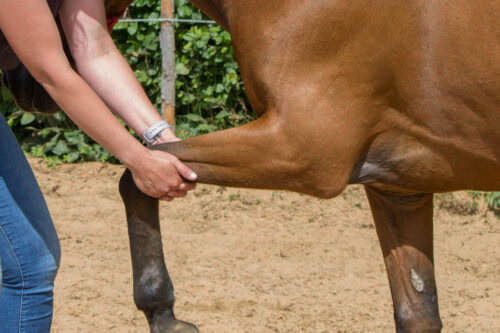
- Sway Test: One hind limb is raised and the horse is gently rocked from side to side to produce movement in the opposing SIJ. Healthy horses tolerate this procedure well but those with SID show a pain response or refuse to pick up the leg on the unaffected side.
- Tuber Coxae Stress Test: Rhythmic ventral force is applied to the tuber coxae to induce SI and lumbosacral joint motion. Unaffected horses respond with smooth vertical motion of the lumbosacral region while SID horses have a noticeable pain response and/or gluteal muscle spasms.
- Lateral Force to the Pelvis: This two-part test is designed to stress the ligaments of the SIJ. In the first part, the tuber sacrale on one side are pushed in one direction while the tail head is pulled in the opposite direction. The second part pulls the tail head and the opposite tuber ischii in opposite directions. In both parts of this test, unaffected horses show no problem, while those with SID show a pain response.

Treatment
In both acute and chronic cases of sacroiliac dysfunction (SID), treatment focuses on managing pain and restoring function. The specific management approach differs depending on whether the condition is recent or long-standing.
Acute SID
Acute sacroiliac dysfunction (SID) refers to cases that occur suddenly, often after a fall, slip, or other traumatic event. Treatment in these situations is focused on reducing inflammation and supporting the body’s natural healing process. [2]
The veterinarian may recommend four to six weeks of strict stall rest, followed by a gradual return to controlled exercise such as hand-walking. Turnout is often restricted until the horse has regained sufficient stability and strength. [2]
During the early stages, systemic NSAIDs are commonly prescribed to control pain and inflammation. As recovery progresses, corticosteroid injections may also be used to reduce inflammation in the joint region. [2]
Chronic SID
Chronic sacroiliac dysfunction (SID) refers to long-term or recurring problems in the joint, usually caused by repetitive strain, poor biomechanics, or gradual degeneration rather than a single traumatic event.
In these cases, management is based on the horse’s clinical presentation and often involves a combination of rest, anti-inflammatory medications, and carefully planned exercise. [2] Working with an equine rehabilitation specialist is recommended to guide long-term recovery.
Reducing pain is important, but complete stall rest is generally avoided. Prolonged immobility can weaken the pelvic and hind-limb muscles, which may worsen instability in the sacroiliac region. [2]
Instead, exercise programs that strengthen the back and hindquarters are recommended. An equine physiotherapist can help design routines to improve stability and restore functional strength. [2]
Because of the depth and inaccessibility of the SIJ, joint injections of local anesthetic or anti-inflammatory medications are not always practical. However, some benefit may be provided by local perfusion of the joint with these medications. [5]
Effective treatment and long-term rehabilitation of SIJ injuries often relies on physical therapies and training programs targeted to the horse’s injury. The goal is to stimulate neuromotor and biomechanical restoration of the joint and surrounding fasciae, muscles, and ligaments. [5]
Prognosis
Follow-up evaluations indicate that horses with SIJ injury generally have a poor prognosis for returning to their previous level of activity.
While some horses may show improvement in performance or lameness, many cannot resume their former level of athletic activity. Most recover enough for comfortable pasture soundness or low levels of exercise. [5]
Horses generally require 6 to 12 months to fully recover from an acute SIJ injury. [2]
Frequently Asked Questions
Here are some frequently asked questions about sacroiliac joint dysfunction in horses:
Sacroiliac joint dysfunction (SID) refers to pain or reduced mobility in the sacroiliac joint, where the pelvis connects to the spine. It can result from arthritis, ligament injury, or fractures.
Common signs of SI issues in horses include back pain, hind limb lameness, poor impulsion, gait changes, difficulty with canter, and resistant behavior under saddle.
SID in horses can develop from repetitive stress, arthritis, pelvic fractures, or ligament injuries. Risk factors include age, heavy body weight, and disciplines such as dressage and show jumping.
Diagnosing SID in horses involves ruling out other conditions through physical exam, imaging (such as scintigraphy), nerve blocks, and response to SIJ provocation tests.
Treatment for SID in horses may include stall rest, NSAIDs, corticosteroid injections, physical therapy, and exercise programs to strengthen supporting muscles. Chronic cases often require long-term management.
Summary
The sacroiliac joint is one of the largest joints in the horse's body. It connects the pelvis to the spine and has a critical role in forward movement (impulsion).
- Due to its anatomical location, the SI joint is one of the least understood joints in the horse
- Technological advances in diagnostic imaging are leading to improved visualization and understanding of the area
- The most common problem affecting the SI joint in horses is osteoarthritis
- Sacroiliac joint dysfunction has a high prevalence among sport horses, especially those in dressage and show-jumping
- Treatment for SID depends on the individual case, but may include NSAIDs, stall rest, and exercise programs to strengthen the SI area
References
- Haussler. K. K. Structural and Biomechanical Aspects of Equine Sacroiliac Joint Function and Their Relationship to Clinical Disease. 50th Annual Convention of the American Association of Equine Practitioners. 2004.
- Jeffcoat. J. B. Equine Neck and Back Pathology. Wiley Blackwell. 2018.
- Stashak. T. S. and Baxter. G. M. Adams and Stashak's Lameness in Horses. 7th edition. Wiley Blackwell, Hoboken. 2020.
- Goff. L. M. et al. Structural and Biomechanical Aspects of Equine Sacroiliac Joint Function and Their Relationship to Clinical Disease. The Veterinary Journal. 2008.
- Ross. M. W. and Dyson. S. J. Diagnosis and Management of Lameness in the Horse. 2nd ed. Elsevier/Saunders, St. Louis, Mo. 2011.