English

The Scandinavian Coldblood Trotter is a distinctive Nordic harness racing breed developed in Norway and Sweden from traditional coldblood working horses.
Unlike lighter trotting breeds bred primarily for speed, Scandinavian Coldblood Trotters retain the strength, durability, and substance of their agricultural ancestors while also being capable harness athletes. Their compact build, sturdy bone, and efficient movement reflect generations of selection for horses that could work, travel, and race in harsh northern climates.
Today, the breed remains closely associated with harness racing throughout Scandinavia, but many horses also transition successfully into driving, trail riding, and recreational homes after their racing careers. Their combination of athleticism, hardiness, and practical temperament continues to appeal to owners looking for a versatile all-around horse.
Read on to learn more about the Scandinavian Coldblood Trotter’s history, characteristics, health considerations, and nutritional needs.
Scandinavian Coldblood Trotter History
The Scandinavian Coldblood Trotter has a distinct history among modern racehorses. Unlike lighter hot-blooded types bred primarily for raw speed, this breed developed from native Nordic coldblood stock that also worked in agriculture and transport.
Over time, breeders in Norway and Sweden selected these horses for speed at the trot while retaining strength, durability, and cold tolerance. [1]
Origin
The breed traces back to old Nordic coldblood horses, especially the Dole horse in Norway and related northern Swedish coldblood stock.
Selective breeding gradually separated the trotting type from heavier farm horses, producing a horse that could move efficiently in harness without losing the substance typical of northern working breeds. [2]
In Norway, the influential stallion Veikle Balder is often cited as a foundation sire of the breed. [1]
The breed is sometimes referred to as the Norwegian-Swedish Coldblooded Trotter (NSCT), reflecting the close genetic and breeding relationship between the Norwegian and Swedish horse populations. [3] Scientific studies on performance, genetic diversity, and health generally examine these horses together rather than treating them as completely separate breeds.
Historic Use
Before becoming a specialized racehorse, the Scandinavian Coldblood Trotter’s ancestors served as all-purpose rural horses used for farm work, transport, and pulling heavy loads over long distances in harsh weather.
As organized trotting sport developed in Scandinavia, breeders increasingly selected horses that could maintain speed at the trot without breaking into a gallop. [2]
That history still shapes the breed today. Compared to lighter racehorses, Scandinavian Coldblood Trotters typically retain more bone, more body mass, and a practical, durable type suited to versatile uses beyond racing.
What's your top priority with your horse's health?

What's your top priority with your horse's health?
Breed Registry
The term Scandinavian Coldblood Trotter serves as an umbrella term for the closely related Norwegian and Swedish Coldblood Trotter populations. The breed is managed through national trotting authorities in Norway and Sweden rather than a single international registry.
Cross-border breeding cooperation has been central to the breed’s development, which is why the horses are commonly grouped in breeding and research literature. [3]
| Breed Summary | |
|---|---|
| Breed Name | Scandinavian Coldblood Trotter |
| Also Known As | Coldblood Trotter; Kallblodstravare |
| Breed Type | Coldblooded harness racing horse |
| Origin | Norway and Sweden (Scandinavia) |
| Breed Registry | Norwegian Trotting Association; Swedish Trotting Association |
| Population Status | Established regional breed; most common in Norway and Sweden |
| Average Height | 14.2 – 15.2 hh |
| Average Weight | 1,000 – 1,200 lb (455 – 545 kg) |
| Common Coat Colors | Bay, black, chestnut, brown, occasional gray |
| Conformation | Compact and muscular, deep chest, strong hindquarters, sturdy legs, durable hooves, athletic harness-racing build |
| Lifespan | 20 – 30 years |
| Price Range | $3,000 – $15,000+ USD |
| Common Uses | Harness racing, driving, pleasure riding, trail riding, forestry and recreational work |
| Temperament | Calm, energetic, willing, hardy, intelligent |
| Best For | Owners seeking a versatile, durable horse for driving, racing, or recreational riding |
| Common Health Concerns | Obesity, insulin resistance, laminitis, osteoarthritis, exercise-related injuries |
Breed Characteristics
The Scandinavian Coldblood Trotter stands apart from other harness breeds because it blends athletic efficiency with the heavier frame of a traditional coldblood horse.
Their appearance and movement are a testament to generations of selection for race performance in a breed that is still closely tied to its working-horse roots.
Conformation
Scandinavian Coldblood Trotters are medium-sized, muscular, compact horses with strong bone, a broad chest, and well-developed hindquarters built to generate power at a trot.
Compared with hot-blooded harness breeds like the Standardbred, the Scandinavian Coldblood Trotter is generally shorter, stockier, and more substantial, with a deeper body that reflects traditional coldblood traits. [1]
Their average height ranges from around 14.2 to 15.2 hands, and their average weight ranges from around 1,000 to 1,200 lb (455 to 545 kg). [1]
Despite their heavier build, Scandinavian Coldblood Trotters are bred specifically for harness racing at the trot, and efficient trotting ability is one of the breed’s defining characteristics.
Their movement is expected to remain balanced, energetic, and coordinated at speed while maintaining the pure two-beat diagonal gait required in trotting races. [1]
Colors
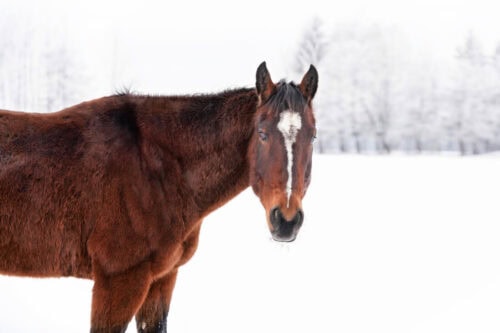
Bay or brown is the most common coat color, with chestnut and black also seen regularly.
As with many native-derived horse populations, color is a secondary breeding priority, with performance, soundness, and overall breed type as the main drivers. [1]
Temperament
The Scandinavian Coldblood Trotter is commonly described as hardy, willing, and trainable, though individual temperament varies.
Because the breeders selectively bred for racing ability, many horses are energetic and work-oriented. Their work ethic helps contribute to their versatility outside the racetrack. [1]
Disciplines
Harness racing is the breed’s defining discipline and remains its primary purpose. In racing, success depends not only on speed but on maintaining the correct gait at speed.
Compared to lighter trotting breeds, Scandinavian Coldblood Trotters typically show a more powerful, ground-covering stride driven by strong hindquarter engagement rather than extreme speed alone. This combination of stamina, traction, and rhythmic gait mechanics reflects the breed’s development from Nordic working horses selected for both pulling power and racing performance.
Like any breed, Scandinavian Coldblood Trotter performance is influenced by a combination of genetics and training. [2]
Outside racing, many Scandinavian Coldblood Trotters transition successfully into pleasure driving, leisure riding, and general all-around homes. Their substance and practical nature appeal to owners seeking a sturdy horse with more athleticism than a heavy draft breed.
Scandinavian Coldblood Trotter Health
The Scandinavian Coldblood Trotter has a relatively small population, but many of the health challenges discussed in the literature are linked to athletic use rather than inherited disorders.
Genetic Diseases
There is no single, widely recognized inherited disease that defines the breed. The main genetic concern in published research is inbreeding management.
Genetic research shows inbreeding in the Scandinavian Coldblood Trotter has increased over time, with genomic measures detecting more inbreeding than pedigree estimates alone. This highlights the importance of using genetic testing before selecting breeding stock. [3]
Scandinavian Coldblood Trotters can carry the DMRT3 mutation, a locomotion-related gene associated with gait coordination, trotting efficiency, and harness racing performance in several horse breeds. Although the breed is not classified as gaited in the same sense as other breeds with this mutation, such as the Tennessee Walking Horse or Paso Fino, DMRT3 still plays an important role in movement mechanics and racing performance. [4]
In Nordic trotters, the mutation has been associated with improved trotting technique and harness racing performance, which likely contributed to its persistence through selective breeding. However, follow-up work suggests the gene does not explain all variation in early career success or overall athletic ability. [5]
Health Problems
Scandinavian Coldblood Trotters are hardy horses, but like other harness racing breeds, they may be predisposed to certain musculoskeletal problems associated with repetitive high-speed training and racing.
The physical demands of harness work place considerable stress on the limbs, joints, and soft tissues over time. As a result, conditions such as lameness, joint pain, tendon strain, and degenerative joint disease may occur, particularly in actively competing horses.
Early recognition and management of gait changes or performance decline are important for maintaining long-term soundness.
Research in related trotting breeds also suggests some developmental orthopedic conditions, including osteochondrosis, may have a heritable component within certain bloodlines. [6] Horses showing persistent lameness, stiffness, or reduced performance should be evaluated by a veterinarian to identify underlying orthopedic issues as early as possible.
Cardiovascular performance is also an important consideration in harness racing breeds. Research evaluating Norwegian–Swedish Coldblooded Trotters and Standardbreds during high-speed treadmill exercise identified clinically relevant cardiac arrhythmias in some horses, suggesting that poor performance or exercise intolerance may have an underlying cardiac component in some cases. [7]
Additional research has established reference echocardiographic values for healthy Norwegian–Swedish Coldblooded Trotters, helping veterinarians assess cardiac structure and function more accurately within the breed. [8]
The long-term effects of early race training and competition remain an area of ongoing research in trotting breeds. Some studies have identified associations between early racing patterns and later career outcomes, while others have not found a clear relationship between early competition and the longevity of a racing career. [9][10]
Management decisions should be based on the individual horse’s physical development, conditioning program, and veterinary guidance rather than any single study alone.
Care and Management
Daily care for the Scandinavian Coldblood Trotter should reflect both their sturdy build and the intended workload. Athletic horses need careful conditioning, regular hoof care, dental exams, vaccination, parasite control, and attention to harness fit.
Athletic horses also benefit from structured plans that include adequate recovery, because poor performance can reflect subtle health issues rather than lack of willingness. [7]
For horses not in race work, management should prioritize joint health and weight management. Regular turnout, free movement, appropriate hoof trimming, and body condition monitoring are especially important when calorie needs drop abruptly after retirement from racing.
A robust basic care program for Scandinavian Coldblood Trotters should include:
- Veterinary Exams: Schedule regular wellness and soundness evaluations; pursue cardiac and metabolic workups when performance drops without an obvious explanation.
- Vaccinations: Follow a vaccination schedule tailored by your veterinarian to regional disease risks and travel exposure.
- Dental Care: Routine dental evaluation supports comfortable chewing and efficient use of forage-based rations.
- Parasite Management: Use a strategic deworming plan based on fecal egg counts and veterinary guidance.
- Hoof Care: Regular farrier care maintains balance under harness and riding loads.
- Exercise and Turnout: Daily movement supports weight control, musculoskeletal health, and behavior, especially for horses transitioning from track fitness to lighter work.
Despite northern hardiness, Scandinavian Coldblood Trotters still require the same preventive care as any other horse. Contact your veterinarian promptly if you notice persistent lameness, exercise intolerance, irregular heart rhythm, or sudden behavior changes during work.
Nutrition
Nutrition for the Scandinavian Coldblood Trotter is often centered around a practical, forage-based feeding program that can be adjusted to match workload and body condition.
As a more substantial trotting breed with coldblood roots, some individuals may be more prone to weight gain when work levels decrease, so feeding programs are typically adapted based on the horse’s condition and activity level rather than housing or environment alone. [1]
Weight Maintenance
Scandinavian Coldblood Trotters kept in lighter work or retirement should be monitored closely for changes in body condition. A sturdy frame can make excess weight less obvious, so hands-on body condition scoring is important.
Horses in regular race training may have considerably different energy and protein requirements than leisure horses, so feeding programs are generally adjusted to reflect workload, fitness demands, and individual condition rather than applying the same diet across all trotters. [1]
Sample Diet
The following sample diet is for a mature Scandinavian Coldblood Trotter at maintenance with an ideal body condition and body weight of 450 kg (990 lb).
| Feed | Maintenance Diet |
|---|---|
| (Amount / Day) | |
| Hay (mid quality; 8% crude protein) | 20 lb (9.1 kg) |
| Salt (plain) | 2 tbsp |
| Omneity® Pellets | 200 g (2 scoops) |
| Diet Analysis | |
| Digestible Energy (% of Req) | 107% |
| Protein (% of Req) | 115% |
| HC (ESC + starch; % Diet) | 8.8% |
Most Scandinavian Coldblood Trotters can meet their energy and protein needs on a high-quality forage-based diet when they are in maintenance or light work.
Because this breed combines the sturdy build of a northern coldblood horse with the athletic demands of a trotter, forage type and intake should be adjusted to the horse’s body weight, body condition, and workload.
Horses in race training or intense conditioning may need more calories and higher-quality protein than those used for pleasure driving, trail riding, or retirement, while easier keepers may do best on lower-calorie forage with careful pasture access.
Hay-only diets can provide adequate fibre and some energy and protein, but they are often low in key vitamins and minerals, including copper, zinc, selenium, and vitamin E. [11][12]
Feeding a concentrated vitamin and mineral supplement helps balance these common gaps without adding unnecessary sugar, starch, or excess calories, which is especially helpful for horses that gain weight easily or are at risk of metabolic issues.
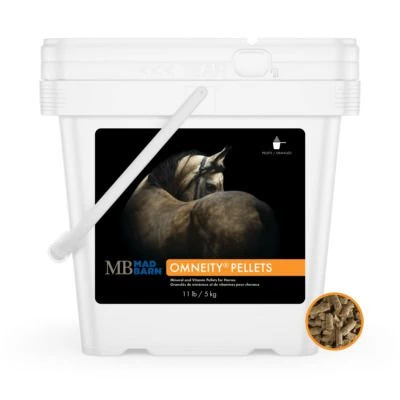
Omneity® is a comprehensive vitamin and mineral supplement that helps balance forage-based diets for Scandinavian Coldblood Trotters. This pelleted supplement supports hoof strength, muscle function, metabolic health, immune function, and coat quality without adding extra sugars or starch, making it well-suited to hardy horses that hold weight easily.
Omneity® also contains amino acids, yeast, and digestive enzymes to support overall health and nutrient utilization.
Fresh, clean water and plain loose salt should also be available at all times, with higher salt intake often needed for horses in training due to losses from sweat.
Forage
Forage should make up the foundation of the Scandinavian Coldblood Trotter’s diet. Most horses do well with daily forage intake around 1.5 – 2% of body weight on a dry matter basis, though the ideal amount depends on workload, body condition, and the calorie density of the hay or pasture. For a 450 kg (990 lb) horse, that works out to roughly 6.8 – 9 kg (13 – 20 lb) of dry matter per day. [12]
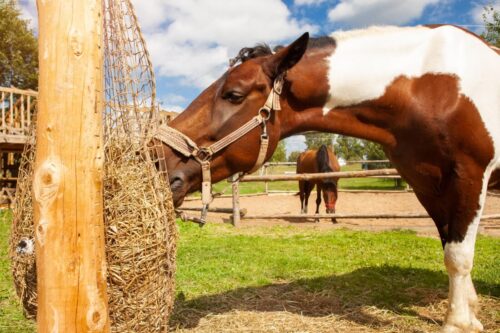
Easy keepers, horses in lighter work, and individuals with a history of obesity, insulin resistance, or laminitis may do better on mature grass hay with lower hydrolyzable carbohydrate (sugar and starch) levels, along with restricted pasture access if spring or lush grazing leads to unwanted weight gain. [11] Slow feeders, grazing muzzles, and dry lot turnout can help control intake while still supporting normal chewing behavior and gut health.
Horses in active race training or heavier work may benefit from higher-quality hay or inclusion of legumes like alfalfa to support increased calorie and protein needs, provided the overall ration remains balanced.
If a horse has trouble maintaining weight, adding highly digestible fiber sources such as beet pulp, hay cubes, or hay pellets can increase forage intake without relying on large grain meals. Senior horses or those with dental problems may also need soaked forage alternatives to maintain adequate fiber consumption.
A forage analysis is recommended to determine nutrient content and build a more accurate feeding plan.
Feeding Recommendations
Most Scandinavian Coldblood Trotters do not require large amounts of commercial grain when they are in maintenance, light work, or post-racing homes. In many cases, a well-balanced forage-based diet with a vitamin and mineral supplement is enough to maintain healthy body condition and support overall health.
Because this breed can be thrifty, adding concentrates without a clear need may increase the risk of excess weight gain, metabolic problems and secondary laminitis. [12][13]
For horses with higher energy demands, low-starch, low-sugar, fiber-based feeds can help meet calorie needs. Soaked beet pulp, hay pellets, forage cubes, and chopped forage can help increase calorie intake while supporting hindgut health.
Horses in harder work that still need more energy may benefit from supplemental fat, such as vegetable oil or other fat supplements, which provide extra calories without adding large starch loads. Sources high in omega-3 fatty acids support joint comfort, coat quality, and overall metabolic health. [14][15][16]
Older horses or those with poor dentition may need softer fiber sources or soaked feeds that are easier to chew and digest.
Regardless of age or workload, all horses should have access to fresh water and plain loose salt every day. Providing approximately 2 tablespoons of plain loose salt daily helps meet sodium requirements and support consistent hydration.

Nutritional Supplements
The most useful supplements for a Scandinavian Coldblood Trotter depend on their diet and workload.
In many cases, the priority is a well-formulated vitamin and mineral supplement or ration balancer rather than an array of performance products. Omega-3 fatty acids, electrolytes, and joint support may be appropriate for some horses, particularly those in regular work, but no supplement can compensate for poor forage quality or an unbalanced ration.
Beneficial supplements for Scandinavian Coldblood Trotters may include:
- Omneity®: A comprehensive vitamin and mineral supplement formulated to balance forage-based diets and support metabolic health, hoof quality, muscle function, and overall condition.
- OmegaPrime+: A concentrated omega-3 supplement that provides DHA and EPA to support normal inflammatory balance, joint comfort, skin health, coat quality, and respiratory function.
- w-3 Oil: An omega-3 enriched fat supplement that provides cool calories to support body condition, skin and coat quality, and overall wellness in working horses.
- Performance XL Electrolytes: A balanced electrolyte supplement formulated to help replace minerals lost through sweat during training, competition, and hot weather.
- MSM: A sulfur-containing joint supplement commonly used to support connective tissue health, joint comfort, and post-exercise recovery.
Submit your Scandinavian Coldblood Trotter’s diet for a free evaluation to determine if their current feeding program is meeting their nutritional needs.
Frequently Asked Questions
Here are some frequently asked questions about Scandinavian Coldblood Trotters:
A Scandinavian Coldblood Trotter is a Nordic harness-racing horse developed in Norway and Sweden from native coldblood horses selected for speed, stamina, and durability at the trot. The breed combines the strength and hardiness of traditional working horses with the athletic movement needed for trotting competition. Although originally bred for harness racing, many also succeed in pleasure driving, riding, and recreational work after their racing careers. Their sturdy build and practical temperament distinguish them from lighter harness breeds such as the Standardbred. [1]
In most practical contexts, the Scandinavian Coldblood Trotter and the Norwegian-Swedish Coldblooded Trotter refer to the same closely related racing populations. Scientific literature commonly groups the Norwegian and Swedish horses together because of their shared breeding history and genetic relationship. The term “Scandinavian Coldblood Trotter” is often used as a broader umbrella name, while “Norwegian-Swedish Coldblooded Trotter” is more common in research publications. [1][3]
Scandinavian Coldblood Trotters are primarily used for harness racing, where they compete at the trot rather than the gallop. Outside racing, many transition successfully into pleasure driving, trail riding, leisure riding, and general recreational homes. Their sturdy build and practical temperament make them appealing for owners seeking a versatile horse with more substance than a Standardbred. Some are also used for light forestry or farm work in Scandinavia. [1]
Scandinavian Coldblood Trotters are medium-sized, muscular horses that typically stand between 14.2 and 16 hands high and weigh roughly 1,000 to 1,300 pounds. Compared to lighter trotting breeds, they tend to have more bone, a deeper body, and a compact frame influenced by their working-horse ancestry. Their strong hindquarters and substantial build help generate power at the trot while maintaining durability under harness work. [1]
Bay and brown are the most common coat colors seen in Scandinavian Coldblood Trotters. Black and chestnut also occur regularly, while gray appears less commonly. Breeding programs traditionally prioritize performance, soundness, and overall breed type more heavily than coat color. [1]
Scandinavian Coldblood Trotters are commonly described as hardy, willing, intelligent, and trainable. Because they were selectively bred for racing performance, many are energetic and work-oriented while still retaining the steadier temperament associated with coldblood breeds. Their willingness and practical nature often make them adaptable to recreational homes after racing. However, individual temperament still depends on genetics, handling, and training. [1]
Some Scandinavian Coldblood Trotters make excellent recreational riding horses, especially after proper retraining from racing careers. Their sturdy build, willingness, and athleticism can make them suitable for trail riding, pleasure riding, and general leisure use. However, the breed was developed primarily for harness racing, so riding suitability varies depending on temperament, soundness, and education. Horses transitioning from racing often benefit from gradual retraining to adapt to ridden work.
Some Scandinavian Coldblood Trotters can maintain weight very efficiently, especially after leaving active race training. Their northern coldblood ancestry contributes to a sturdy frame and efficient metabolism compared to lighter racehorses. Because excess weight may be harder to notice visually on heavily built horses, owners should monitor body condition carefully. Feeding programs should always be adjusted based on workload, forage quality, and individual metabolism rather than assuming all trotters need high-calorie diets. [1]
Scandinavian Coldblood Trotters may be prone to obesity, insulin dysregulation, and laminitis if calorie intake exceeds workload, particularly in retirement or lighter work. Their efficient metabolism and substantial build can increase the risk of excess weight gain when energy intake is not adjusted appropriately. Mature grass hay, controlled pasture access, and careful body condition monitoring may help reduce metabolic risk. Owners should contact a veterinarian if they notice abnormal fat deposits, hoof soreness, or unexplained weight gain. [1]
Current research does not identify a single dominant inherited disease that defines the Scandinavian Coldblood Trotter breed. Instead, published studies focus more heavily on maintaining genetic diversity and managing inbreeding within a relatively small population. Researchers have also studied the DMRT3 gait-related gene, which influences locomotion and trotting performance in harness breeds. However, this mutation alone does not fully explain racing success or overall athletic ability. [3][5][7]
Scandinavian Coldblood Trotters can develop lameness, joint soreness, and exercise-related injuries because of the repetitive physical demands of harness racing. Fast trotting work places substantial stress on the limbs, joints, and soft tissues over time. Some research in related trotters also suggests that growth-related joint conditions such as osteochondrosis may occur in certain lines. Persistent lameness or declining performance should always be evaluated promptly by a veterinarian. [6]
Some Scandinavian Coldblood Trotters may develop exercise-related heart rhythm abnormalities, particularly under intense athletic workloads. Research involving Norwegian-Swedish Coldblooded Trotters identified meaningful irregular heart rhythms in some horses during treadmill testing. Poor performance, exercise intolerance, or delayed recovery should not automatically be blamed on conditioning or training gaps alone. Veterinary evaluation may help identify underlying cardiac concerns. [7]
Most Scandinavian Coldblood Trotters do best on a forage-first diet balanced for vitamins and minerals, with additional calories, protein, and electrolytes added only as workload requires. Horses in maintenance or lighter work often maintain condition well on moderate-quality hay and controlled pasture access. Because many forage-based diets are low in nutrients such as copper, zinc, selenium, and vitamin E, a concentrated vitamin and mineral supplement may help balance nutritional gaps. Fresh water and plain loose salt should also be available at all times.
Most Scandinavian Coldblood Trotters do not require large amounts of grain when they are in maintenance or light work. Many maintain healthy body condition on a properly balanced forage-based diet without significant concentrate feeding. Horses needing additional calories often do better with fibre-based feeds or fat supplementation before large grain meals are introduced. Feeding unnecessary grain may increase the risk of obesity and metabolic problems in easier keepers.
The most useful supplements for Scandinavian Coldblood Trotters depend on workload, forage quality, and overall diet balance. In many cases, the priority is a comprehensive vitamin and mineral supplement such as Omneity® to help balance forage-based diets without adding unnecessary sugar or starch. Horses in heavier work may also benefit from electrolyte supplementation, omega-3 fatty acids, or joint support depending on individual needs. No supplement can compensate for poor-quality forage or an unbalanced feeding program.
Scandinavian Coldblood Trotters commonly range from about $3,000 to $15,000 USD or more depending on age, training, pedigree, racing history, and location. Horses with proven racing performance or specialized driving training may command higher prices. Availability outside Scandinavia is relatively limited, which may increase transport and import costs for international buyers. Ongoing expenses such as feed, farrier care, veterinary care, and training should also be considered before purchase. [1]
Summary
The Scandinavian Coldblood Trotter is a Nordic harness racing breed developed from traditional Scandinavian working horses. Known for their durability, athleticism, and practical temperament, these horses remain popular in harness racing while also excelling in recreational driving and riding homes.
- The breed originated in Norway and Sweden from native coldblood horses selected for trotting performance and strength
- Scandinavian Coldblood Trotters are compact, muscular horses with sturdy bone and efficient trotting mechanics
- Harness racing remains the breed's primary discipline, though many horses transition successfully into pleasure riding and driving
- Common health concerns include lameness, tendon strain, osteoarthritis, obesity, insulin resistance, and exercise-related injuries
- Most horses do well on forage-based diets with balanced vitamin and mineral supplementation to address common nutrient gaps
- Weight management and regular turnout are important because many retired racehorses become easy keepers in lighter work
References
- Norwegian Coldblooded Trotter. Nordic Genetic Resource Center. 2026.
- Velie. B. D. et al. A genome-wide association study for harness racing success in the Norwegian-Swedish coldblooded trotter reveals genes for learning and energy metabolism. BMC Genet. 2018.
- Velie. B. D. et al. Genomic measures of inbreeding in the Norwegian-Swedish Coldblooded Trotter and their associations with known QTL for reproduction and health traits. Genet Sel Evol. 2019. View Summary
- Andersson. L. S. et al. Mutations in DMRT3 affect locomotion in horses and spinal circuit function in mice. Nature. 2012. View Summary
- Jäderkvist. F. K. et al. Lack of significant associations with early career performance suggest no link between the DMRT3 "Gait Keeper" mutation and precocity in coldblooded trotters. PLOS One. 2017.
- Lykkjen. S. et al. Genome-wide association analysis of osteochondrosis of the tibiotarsal joint in Norwegian Standardbred trotters. Equine Vet J. 2010. View Summary
- Slack. J. et al. Cardiac arrhythmias in poorly performing Standardbred and Norwegian-Swedish Coldblooded trotters undergoing high-speed treadmill testing. Vet J. 2021. View Summary
- Fintl. C. et al. Two-dimensional, M-mode and left atrial velocity echocardiographic measurements in healthy Norwegian-Swedish Coldblooded Trotters. J Vet Cardiol. 2020.
- Velie. B. D. et al. Competition lifespan survival analysis in the Norwegian-Swedish Coldblooded Trotter. Equine Vet J. 2019. View Summary
- Revold. T. et al. Prediction of early race starts in Norwegian-Swedish Coldblooded Trotters. Acta Vet Scand. 2010.
- Richards. N. et al. Nutritional and Non-Nutritional Aspects of Forage. Veterinary Clinics of North America: Equine Practice. 2021. View Summary
- Nutrient Requirements of Horses: Sixth Revised Edition. National Academies Press, Washington, D.C. 2007. View Summary
- Cipriano-Salazar. M. et al. The Dietary Components and Feeding Management as Options to Offset Digestive Disturbances in Horses. J Equine Vet Sci. 2019.
- Geor. R. J. Metabolic Predispositions to Laminitis in Horses and Ponies: Obesity, Insulin Resistance and Metabolic Syndromes. Journal of Equine Veterinary Science. 2008.
- Manhart. D. R. et al. Markers of Inflammation in Arthritic Horses Fed Omega-3 Fatty Acids. The Professional Animal Scientist. 2009.
- Richards. T. et al. Effects of Dietary Camelina, Flaxseed, and Canola Oil Supplementation on Transepidermal Water Loss, Skin and Coat Health Parameters, and Plasma Prostaglandin E2, Glycosaminoglycan, and Nitric Oxide Concentrations in Healthy Adult Horses. Journal of Animal Science. 2023. View Summary
- Hess. T. et al. Effects of n-3 Fatty Acid Supplementation on Insulin Sensitivity in Horses. J Equine Vet Sci. 2013.