English

Fenbendazole (Safe-Guard®) is a dewormer used to treat certain gastrointestinal parasites in horses. Although it has long been part of equine parasite control programs, widespread anthelmintic resistance has reduced its effectiveness against some common parasites.
The drug disrupts microtubule formation in target parasites, which interferes with essential cell function, leading to parasite death.
It may be used against several gastrointestinal nematodes, including strongyles and ascarids, but its effectiveness depends on the parasite population and local resistance patterns.
Read on to learn how fenbendazole works in horses, which parasites it targets, its limitations and potential side effects, and its place in a veterinarian-guided parasite-control program.
Fenbendazole for Horses
Fenbendazole is a broad-spectrum benzimidazole anthelmintic, a class of medications used to kill parasitic worms. It is sold for horses under the brand name Safe-Guard® and is also used in other animal species. [1]
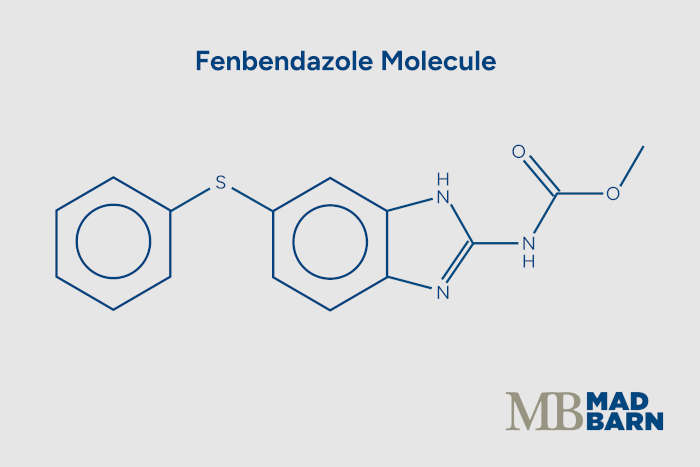
The drug is active against several types of gastrointestinal nematodes. Fenbendazole works by binding to beta-tubulin in parasite cells, which prevents normal microtubule formation and disrupts essential cellular functions.
Fenbendazole is commonly administered orally as a paste or suspension. Its effectiveness depends on the parasite species and whether the parasite population is susceptible to benzimidazole drugs.
Modern parasite control for horses relies less on deworming every horse at fixed intervals and more on targeted treatment of horses based on parasite testing and individual risk.
Fecal egg counts help identify horses that are shedding higher numbers of parasite eggs, while fecal egg count reduction tests show whether a dewormer is still effective on a particular farm. These results help veterinarians decide which horses need treatment and which dewormer to use.
Available Forms
Equine fenbendazole products are available as oral pastes and suspensions administered by mouth. Tablets, top-dressed pellets, and other formulations are marketed for different species and should not be given to horses unless directed by a veterinarian.
Fenbendazole is also included in some medicated feed products intended for production animals. Products formulated for other species may contain additional medications or ingredients that are unsafe for horses. Of particular concern is monensin, an ionophore used in some livestock feeds that is highly toxic to horses. [2] For this reason, horse owners should use only products specifically labeled for horses unless a veterinarian prescribes otherwise.
Brand names of fenbendazole used in horses include: [3][4]
- Panacur®
- Safe-Guard®
These brands also manufacture products for other species, so the brand name alone does not confirm that a product is appropriate for horses. Always check that the specific formulation is labeled for horses and follow the label directions exactly.
What's your top priority with your horse's health?

What's your top priority with your horse's health?
Drug Class: Benzimidazoles
Benzimidazoles are one of several classes of antiparasitic medications used in equine veterinary practice. A veterinarian may select one for a horse as part of a targeted deworming program based on the parasites of concern and local drug efficacy.
Common benzimidazoles used in horses include: [1]
- Fenbendazole
- Oxibendazole
Resistance to commonly used dewormers is widespread, including resistance to benzimidazoles. In a 2025 German field study, only 21.4% of fenbendazole treatments achieved a fecal egg count reduction greater than 95%, and the study classified the strongyle populations tested as resistant to fenbendazole. [5]
This finding helps illustrate the severity of global anthelmintic resistance in horse populations. Owners and caretakers can help reduce resistance patterns by using fecal testing and veterinary oversight to make parasite control decisions for their herd.
Mechanism of Action
Benzimidazole antiparasitics bind preferentially to tubulin in target nematodes, disrupting microtubule formation and cell division. [1]
Tubulin is a structural protein that joins together to form microtubules, hollow components of the cell’s internal structure. Microtubules help maintain cell shape and are also involved in cell division, movement, secretion, nutrient absorption, and cell transport functions. [6]
Although tubulin is also present in mammalian cells, these medications bind more strongly to nematode tubulin, which allows them to affect parasites with minimal effect on mammalian tissue. [1]
Fenbendazole may also inhibit enzymes involved in parasite energy production. Together, these effects impair cellular function and lead to parasite death. [1]
Uses in Horses
Fenbendazole is used to control nematode parasite infestations in horses. Some degree of parasite infestation is normal in healthy horses, and the goal of parasite control is not complete elimination of every individual parasite.
Treatment aims to reduce the risk of disease and limit transmission while also minimizing parasite resistance to important medications.
Seek veterinary guidance based on fecal egg counts and local resistance patterns when choosing a dewormer and treatment schedule. This helps manage parasite burden while reducing the risk of further resistance.
Anthelmintic Spectrum
The parasites and life stages targeted by fenbendazole depend on the product, dose, treatment regimen, and susceptibility of the parasite population. It is not effective against every type or stage of internal parasite in horses.
Equine formulations of fenbendazole are approved by the FDA and Health Canada and are labeled for treating susceptible stages of several parasites, including: [2]
- Large strongyles
- Small strongyles (cyathostomins)
- Pinworms
- Ascarids
Fenbendazole resistance among strongyles is widespread, and there is evidence of emerging resistance among ascarids. Given this, veterinarians consider strongyles resistant unless a fecal egg count reduction test indicates otherwise. If fenbendazole resistance is identified on a farm, strongyles are targeted with a different class of anthelmintic, such as macrocyclic lactones.
Large Strongyles
Large strongyles include Strongylus vulgaris, an important cause of parasitic disease in adult horses. Its larvae migrate through large abdominal arteries, causing inflammation and disrupting blood flow. Severe infection can obstruct blood flow or contribute to life-threatening abdominal inflammation. [7]
Appropriate control has made large strongyle disease less common in horses, but these parasites remain an important target in veterinarian-guided strongyle control programs.
Small Strongyles
Small strongyles, or cyathostomins, are common in horses that graze on pasture. Larvae can encyst in the wall of the large intestine before emerging as they mature.
Disease is uncommon at low burdens, but the simultaneous emergence of large numbers of larvae can cause a condition known as acute larval cyathostominosis. This condition causes severe inflammation of the large intestine and has a reported fatality rate approaching 50%. [7]
Specific fenbendazole regimens have activity against encysted larvae, but widespread benzimidazole resistance limits reliability. [7] The only way to assess if fenbendazole is appropriate for small strongyle infestation is under veterinary guidance based on local resistance patterns.
Pinworms
Oxyuris equi, the equine pinworm, deposits eggs on the skin around the anus. The resulting irritation can cause horses to rub their tails and damage the skin over the hindquarters. Pinworms can affect horses of any age but are more common in young horses. [7]
Pinworm infections are often undetectable on fecal egg counts, so diagnosis and treatment recommendations usually rely on other methods. [7]
Ascarids
Parascaris species are among the most important internal parasites of foals and young horses. Migrating larvae can irritate the respiratory tract, causing cough and nasal discharge. Adult worms can accumulate in the small intestine and cause impaction that may require surgery to resolve. [7]
Fenbendazole is sometimes selected for ascarids in horses because its slower onset may reduce the risk of intestinal obstruction following a rapid die-off of adult parasites. Evidence supporting this practice is limited, so treatment decisions for young horses with a heavy ascarid burden require veterinary judgement. [7]
Administration Routes
Fenbendazole is usually given as an oral paste or suspension.
Some dosing syringes have an adjustable ring on the plunger that corresponds to the horse’s weight. Confirm whether the scale is marked in pounds or kilograms and obtain an accurate estimate of body weight before setting the syringe.
Tablets or other non-equine formulations should only be used when an equine veterinarian has provided a specific reason and administration plan.
Dosage
The volume administered varies with the formulation, route, treatment target, and horse’s body weight. Many oral products provide weight-based markings that correspond to the amount of fenbendazole in the formulation. A commonly labeled dose is approximately 5 mg of fenbendazole per kilogram of body weight. [2]
Some regimens for ascarids or encysted small strongyle larvae use 10 mg/kg. Only use a higher-dose or multi-day regimen when directed by a veterinarian. [2]
Storage
Store fenbendazole according to the manufacturer’s directions. Most products should be kept at room temperature and protected from freezing.
Check the label for product-specific requirements and do not use medication that is expired or has been stored improperly. Keep out of reach from children and animals.
Safety Warnings & Precautions
Fenbendazole has a wide margin of safety, and reported side effects are uncommon when equine products are used as directed. The horse’s age, parasite burden, health status, and previous reactions should still be considered before treatment.
Use only the intended equine product and administer the complete measured dose. A veterinarian should guide treatment for foals, pregnant mares, horses with suspected heavy parasite burdens, and horses that have previously reacted to a dewormer.
Do not substitute feed-through or multi-species products intended for livestock or other animals. Some production-animal feeds and medicated products may contain additional drugs that are unsafe for horses, including ionophores such as monensin. Always confirm the formulation is specifically labeled for equine use before administering it.
Monitoring
Fecal testing is used to monitor parasite egg shedding and evaluate dewormer effectiveness. A fecal egg count can help classify adult horses by strongyle egg shedding, while a fecal egg count reduction test compares counts before and after treatment to evaluate drug efficacy. [7]
These tests help veterinarians decide which horses require additional treatment and identify possible resistance on a farm. However, fecal egg counts do not diagnose parasitic disease, measure the total worm burden, or reliably detect encysted small strongyles, migrating larvae, tapeworms, or pinworms. [7]
Anthelmintic Resistance
Anthelmintic resistance occurs when parasites survive treatment at a dose that would normally be effective and pass that trait to subsequent generations. Once established on a farm, resistance can make a dewormer class unreliable and cannot be reversed by rotating products. [7]
Because resistance patterns vary among farms, a product that works in one herd may not work in another. Fecal egg count reduction testing provides farm-specific evidence and should be repeated at intervals recommended by the veterinarian overseeing the parasite-control program. [7]
Horse owners play an important role in preserving dewormer efficacy. To help ensure parasite sensitivity to deworming medications, owners should never: [7]
- Deworm every horse repeatedly at fixed intervals
- Rotate drug classes randomly
- Administer a dose without measuring the horse’s body weight (i.e., do not guess)
- Use partial doses of dewormer
- Repeat treatment because parasites are suspected
Work with your veterinarian to use fecal egg counts, check treatment efficacy, and target additional treatments to horses that need them.
Contraindications
Contraindications are circumstances in which a medication should be avoided or used with caution.
Fenbendazole is not approved for horses intended for food in the United States. It should also be used cautiously in horses that have had a previous allergic-type reaction after treatment. [2]
Product approvals, withdrawal requirements, and labeling can differ by jurisdiction. Owners should follow the requirements that apply where the horse is kept.
Side Effects
Few side effects have been reported with fenbendazole. Rarely, an allergic-type reaction may occur in response to parasite die-off in the gastrointestinal tract. [2]
Mild diarrhea has been reported in dogs receiving fenbendazole, but this finding does not establish the same effect in horses. [2] Any new signs after deworming, particularly signs of colic or an acute decline, warrant prompt veterinary advice.

Acute Toxicity (Overdose)
Fenbendazole overdose has not been reported in horses. Laboratory-animal studies place the LD50, the dose at which 50% of animals die, at approximately 10 g/kg, about 1,000 times the typical equine dose. [2]
A wide safety margin does not justify giving more product than directed. Excessive or unnecessary dosing increases selection pressure for resistant parasites and may make future treatment less effective.
Drug Interactions
No drug interactions have been reported in horses receiving fenbendazole. [2] However, this does not prove that interactions cannot occur, particularly when evidence is limited or multiple oral products are administered together.
Regulatory Status & Legal Considerations
Equine fenbendazole formulations are approved by the FDA and Health Canada. Approved uses include treatment of susceptible large strongyles, small strongyles, ascarids, and pinworms. [2][3][4]
Approval does not guarantee that a product will be effective against resistant parasites on a particular farm. Use the formulation only for the labeled species and follow all applicable veterinary, product label, and jurisdictional requirements when choosing parasite control for your horse.
Status in Competition
Fenbendazole is not listed as a Banned Substance or Controlled Medication on the FEI Equine Prohibited Substances List. [8] Competition rules can change, and national governing bodies may have additional requirements, so competitors should confirm current regulations before administering any medication close to an event.
Fenbendazole is not generally used to enhance performance, but medication rules can vary among equestrian organizations and may change over time. Check the current rules of the relevant governing body and consult the treating veterinarian before administering any medication close to competition.
Frequently Asked Questions
Here are some frequently asked questions about fenbendazole for horses:
Fenbendazole is a benzimidazole dewormer used to treat susceptible gastrointestinal parasites in horses. Approved uses include large strongyles, small strongyles, pinworms, and ascarids. Its effectiveness depends on the parasite population and the level of benzimidazole resistance on the farm.
Fenbendazole works in horses by binding to tubulin molecules in susceptible parasites and disrupting microtubule formation. This interferes with cell division and other essential cellular functions. Fenbendazole may also inhibit enzymes involved in parasite energy production, ultimately causing the parasites to die.
Fenbendazole treats susceptible large strongyles, small strongyles, pinworms, and ascarids in horses. These parasites affect different parts of the gastrointestinal tract and can cause problems ranging from tail rubbing to intestinal inflammation or obstruction. The drug will only work reliably when the parasites remain susceptible to benzimidazole dewormers.
Fenbendazole can be effective against susceptible strongyles in horses, but resistance is now widespread. This means treatment may fail to reduce strongyle egg shedding adequately on some farms. A fecal egg count reduction test can help determine whether fenbendazole remains effective against the local parasite population.
Routine fecal egg counts help identify which horses are low, moderate, or high strongyle egg shedders. This allows your veterinarian to target additional treatments to horses that need them instead of deworming every horse on the same schedule.
Fenbendazole can have activity against encysted small strongyle larvae when administered using a specific veterinary-directed treatment regimen. However, widespread benzimidazole resistance means it should not automatically be assumed to provide reliable control. A veterinarian can assess the horse's risk and determine whether fenbendazole is an appropriate treatment.
Fenbendazole may treat susceptible ascarids, which are particularly important in foals and young horses. It is sometimes selected because its slower onset of action is thought to reduce the risk of a sudden mass die-off of adult worms, although there is limited evidence supporting this theory. Because ascarid resistance can occur, treatment should be guided by the horse's age, parasite risk, and veterinary recommendations.
Fenbendazole can treat susceptible equine pinworms. Pinworms lay their eggs near the anus, causing irritation that may lead horses to rub their tails and damage the skin around the hindquarters. Persistent signs after treatment may require veterinary evaluation and a review of parasite-control practices.
Fenbendazole resistance is common in equine parasite populations, particularly among small strongyles. Resistance means the drug may no longer remove enough susceptible parasites to provide effective control. Using fenbendazole only when appropriate and checking treatment efficacy can help preserve the usefulness of available dewormers.
Annual fecal testing helps your veterinarian monitor parasite egg shedding within the herd and adjust the deworming program accordingly. It can reduce unnecessary treatment and provide useful information about which horses may need closer parasite control. Choosing your dewormer based on veterinary guidance and fecal egg count results also helps minimize the risk of parasite resistance, which helps ensure ongoing efficacy of important medications. Many parasite species are already resistance to fenbendazole.
Whether fenbendazole worked can be assessed with fecal testing performed under veterinary guidance. A fecal egg count reduction test compares parasite egg shedding before treatment with shedding after treatment to measure the dewormer's efficacy. This testing can identify poor treatment response and help detect resistance on a particular farm.
A second fecal sample may be used for a fecal egg count reduction test. Comparing egg counts before and after treatment helps determine whether the dewormer worked and can identify possible drug resistance.
Fenbendazole is usually administered to horses orally as a paste or liquid placed in the mouth with a syringe. Some equine products have an adjustable plunger that is set according to the horse's weight. Owners should follow the product label and veterinarian's instructions carefully, including checking whether syringe markings are expressed in pounds or kilograms.
The correct fenbendazole dose for a horse is determined by body weight, product concentration, parasite target, and treatment regimen. Different products may contain different concentrations, and some parasites or life stages require a veterinary-directed regimen. Accurate weight estimation and careful label reading are important for avoiding underdosing or unnecessary medication use.
Many equine dewormers are available without a prescription, but the best product depends on the horse, parasite risk, fecal test results, and drug resistance on the farm. Using a dewormer without this context can result in ineffective treatment and contribute to anthelmintic resistance. In addition, feed-through products used for production animals may contain other medications like monensin, which are highly toxic to horses. Your veterinarian is the best resource to help ensure you choose a safe, effective dewormer for your horses while also minimizing the risk of parasite resistance in your herd.
Livestock or dog fenbendazole products should not be given to horses unless specifically directed by a veterinarian. Fenbendazole brands may manufacture different formulations for several animal species, so the brand name alone does not confirm that a product is suitable for horses. Feed-inclusion products may also expose horses to medications such as monensin, which can be highly fatal to horses.
Side effects of fenbendazole in horses are rare and are generally mild when they occur. Allergic-type reactions may occasionally develop in response to parasites dying within the gastrointestinal tract. Any sudden, severe, or persistent signs after treatment warrant prompt veterinary attention.
Colic after fenbendazole treatment may occur in association with a heavy parasite burden or a reaction to dying parasites. Horses with large numbers of ascarids may already be at risk of intestinal obstruction, particularly when adult worms accumulate in the small intestine. A horse showing abdominal pain after deworming should be evaluated promptly by a veterinarian.
Fenbendazole has a wide safety margin, and overdose has not been reported in horses. However, giving more than the recommended amount provides no assurance of better parasite control and may contribute to dewormer resistance. Contact a veterinarian if a horse receives an incorrect amount or develops unexpected signs after treatment.
Fenbendazole may be used in foals when it is appropriate for the parasites being targeted. Ascarids are especially important in young horses because migrating larvae can cause respiratory signs and adult worms can obstruct the small intestine. A veterinarian should determine the treatment strategy based on the foal's age, parasite burden, and local resistance patterns.
Some horses consistently shed more strongyle eggs than others and may need more frequent monitoring or treatment. Young horses may also require additional testing because parasites such as ascarids are more important in this age group.
Fenbendazole use in pregnant mares depends on the specific product, dose, and stage of pregnancy. Owners should check the approved product label and consult a veterinarian before treating a pregnant mare. This helps ensure that the product and treatment regimen are appropriate for the individual horse.
Fenbendazole should not automatically be used for routine deworming on a fixed calendar schedule. Modern parasite control programs use fecal egg counts, horse-specific risk factors, treatment history, and local resistance patterns to guide deworming decisions. Targeted treatment reduces unnecessary drug use while helping preserve dewormer efficacy.
No specific drug interactions between fenbendazole and other medications have been reported in horses. However, oral medications can sometimes interfere with each other's absorption when administered close together, particularly products such as omeprazole, ranitidine, and antacids. A veterinarian can advise on appropriate timing when a horse receives multiple oral medications.
Fenbendazole is not generally considered a performance-enhancing medication, but competition rules may still regulate its use or detectable residues. Requirements can vary among the FEI and national governing organizations. Competitors should check current regulations before administering fenbendazole close to an event.
Fenbendazole for horses should be stored according to the manufacturer's instructions. Most products are kept at room temperature and protected from freezing. The container should remain properly closed and clearly identified as an equine product.
Summary
Fenbendazole is a benzimidazole dewormer used against susceptible gastrointestinal nematodes in horses, but resistance limits its effectiveness on many farms.
- Fenbendazole disrupts microtubule formation and other essential cellular processes in susceptible parasites
- Approved equine formulations target susceptible large and small strongyles, pinworms, and ascarids
- Benzimidazole resistance is widespread among equine small strongyles and may affect other parasite populations
- Fecal egg count reduction testing helps determine whether fenbendazole remains effective on a particular farm
- Modern parasite control combines baseline treatments with targeted additional treatment rather than fixed year-round dosing
- Veterinary guidance, accurate dosing, and farm-specific monitoring help preserve dewormer efficacy
References
- Cole. C. et al. Eds. Equine Pharmacology. 1st ed. Wiley-Blackwell. 2014.
- Plumb. D. C. Plumb's Veterinary Drug Handbook: Pocket. 7th ed. Wiley-Blackwell. 2011.
- Drug Product Database. Health Canada. 2019.
- Animal Drugs @ FDA. U.S. Food and Drug Administration. n.d.
- Döberl. J. et al. Treatment efficacy of pyrantel, fenbendazole and macrocyclic lactones in equine strongyles in Germany using FECRT and the model egg Counts. Journal of Equine Veterinary Science. 2025.
- Claerebout. E. and Lanusse. C. E. Pharmacodynamics: Mechanisms of Anthelmintic Action in Animals. Merck Veterinary Manual. 2025.
- Internal Parasite Control Guidelines. American Association of Equine Practitioners. 2024.
- 2026 Equine Prohibited Substances List. Fédération Equestre Internationale. 2026.