English



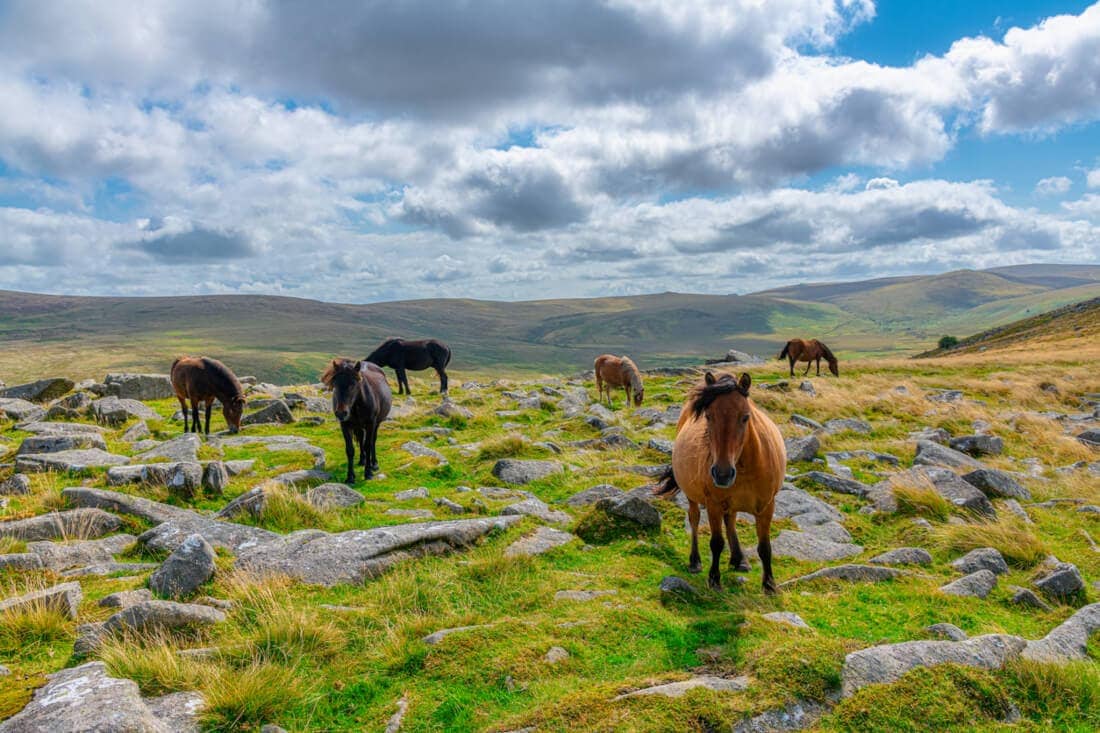
Horses are herbivores with digestive systems finely tuned for a diet of fibrous plants, yet the way they eat in the wild is often different from how many domestic horses are fed today.
Wild or feral horses spend most of their day grazing on a variety of grasses, shrubs, and other natural forage, carefully selecting plants to meet their nutritional needs. In contrast, domestic horses are often provided with concentrated feeds, hay, and supplements that may not fully replicate the diversity and balance found in a natural diet.
Understanding the differences between wild and domestic horse diets is essential for owners, trainers, and caretakers aiming to optimize health, digestion, and performance.
Exploring how feral horses meet their nutritional needs, the challenges domestic horses face with modern feeding practices, and strategies to align domestic feeding with the horse’s natural adaptations can help support gut health, longevity, and overall welfare.
How Do Wild Horse Diets Compare to Domestic Horses?
Horses, whether living freely on the range or managed in pastures and stalls, share the same basic nutritional physiology shaped by their evolution as grazing animals.
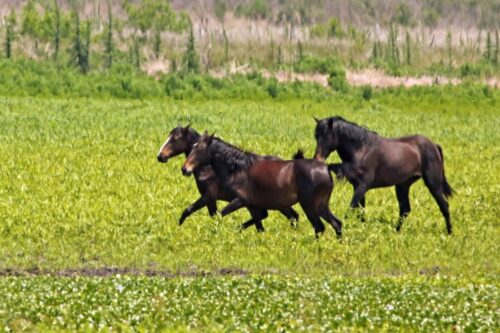
The horses commonly referred to as “wild horses” are more accurately described as feral horses — animals descended from domesticated horses that now live without direct human management.
These horses eat a forage-based diet made up primarily of low-calorie, fibrous grasses. Depending on season and habitat, their diet also includes sedges, shrubs, forbs, and other naturally available plants, with grasses making up the majority of total intake.
The equine digestive system is adapted to extract energy from this type of diet through hindgut fermentation. Horses rely on microbial populations in the cecum and colon to break down structural carbohydrates such as cellulose, releasing volatile fatty acids that serve as a major energy source.
This adaptation is supported by near-continuous forage intake. Feral horses graze for many hours each day, effectively functioning as trickle feeders, which helps maintain steady fermentation, stable gut conditions, and efficient nutrient extraction from low-energy vegetation.
Feral horses live independently of human management and must forage to meet all of their dietary requirements. In contrast, domesticated horses rely on humans to provide and regulate their food sources, often in environments that differ significantly from their natural habitat.
Understanding what feral horses eat provides insight into their survival strategies and can guide more natural, health-conscious feeding practices for domestic horses. Comparing feral and managed diets reveals important differences in nutrition and feeding behavior.
What's your top priority with your horse's health?

Enter your email to receive your store credit
Time Budgets in Feral vs. Domestic Horses
Understanding how horses spend their time throughout the day offers valuable insights into their natural behaviors and overall well being.
A “time budget” refers to how an animal allocates its time across various activities, such as grazing, resting, socializing, and moving. Time budgets are an important consideration because they reflect the natural rhythms and behaviors that support an animal’s physical and mental health.
Figure 1. Wild vs. Domestic Horse Time Budgets [1]

For feral and wild horses, grazing is the dominant activity, and they typically spend 12 to 16 hours per day grazing.
This extended grazing time is interspersed with other behaviors like resting, socializing, and moving to new grazing areas, based on the availability of food, water, and shelter. [2][3][4]
In comparison, the time budgets of domesticated horses are more variable, depending on their management and housing system. On average, domesticated horses spend significantly less time foraging and grazing. [5]
For these horses, providing opportunities for natural foraging behavior can help reduce stress, promote mental stimulation, and support healthy digestion by encouraging slower, more consistent eating.
Research shows domestic horses adopt time budgets similar to feral horses when given the chance, suggesting they will engage in behavior more aligned with their natural adaptations under the right conditions. [3]
Origins & Adaptations of Feral Horses
While the term “wild horse” is commonly used, it’s important to clarify that true wild horses – those that have never been domesticated – are virtually extinct. The only surviving true wild horse species is the Przewalski’s horse, native to the steppes of Mongolia. [6]
All other so-called “wild” horses, such as the Mustangs in North America or Brumbies in Australia, are technically feral or free-ranging horses. These equines are descendants of once-domesticated horses that have returned to a free-roaming lifestyle. [7][8]
Feral horses live in self-sustaining herds, without direct human care or intervention, and adapt to a variety of climates and terrains, from arid deserts to grassy plains. Over generations, they have developed behaviors and dietary habits that allow them to survive in the wild, much like their ancient ancestors. [9]
However, because they originated from domestic stock, their biology remains the same as that of domesticated horses—meaning their nutritional needs, digestive systems, and grazing instincts are fundamentally unchanged.
Environmental Influences on Feral Horse Behavior
Feral horses rely entirely on their environment to meet their nutritional needs. Unlike domestic horses with controlled diets, feral horses adapt to changing conditions, grazing on whatever forage is available depending on the season, terrain, and climate.
Food availability is the main driver of movement in feral horses. When resources are scarce, they travel across large areas to find adequate forage and water. Their home range and grazing patterns are also influenced by topography, weather, predation risk, and herd density. [10][11]
These environmental pressures shape not just what feral horses eat, but how often and how far they move to get it. For horse owners, this underscores the importance of supporting natural behaviours by providing forage-rich diets, encouraging movement, and avoiding overly rich, static feeding routines that can lead to health issues.
Feral Horse Diet & Foraging Patterns
Feral horses, like their wild ancestors, are herbivores that primarily rely on grasses, sedges, and other plant matter for sustenance.
Though not native to the U.S., their grazing habits have significantly impacted local vegetation, particularly in regions like the Great Basin, where ecosystems were not adapted to large herbivores. [12]
The diet of feral horses is shaped by the availability of forage in their environment, which varies depending on the season, geographic location, and which plant species are present.
Primary Components of Feral Horse Diets
Grass forms the foundation of a feral horse’s diet, providing essential nutrients and energy for survival.
Studies have shown that grasses make up around 83 – 88% of a feral horse’s total diet. However, in some populations, the total grass consumption may be closer to 56% of the diet. [7][13][14][15]
In addition to grasses, feral horses also consume shrubs, woody plants, and forbs (flowering plants). Shrubs like sagebrush and forbs are eaten less frequently, but become more important when grasses are less available, especially during the winter months. [16]
Forbs can contain higher levels of phenolic compounds, natural chemicals found in many plants, which horses cannot easily break down or eliminate from their bodies. As a result, horses are less inclined to eat these plants unless necessary. [14]
Hydration
Feral horses, like their domesticated counterparts, require consistent access to fresh, clean water for optimal health. Their daily water intake varies based on factors such as body weight, activity level, environmental conditions, and diet. [14]
Horses have a high water demand. A mature horse at maintenance weighing approximately 500 kg (1,100 lb) consumes between 22 to 34 L (6 to 9 gal) of water per day under thermoneutral conditions. [17][18]
In their natural habitats, feral horses often travel significant distances to locate water sources, and their drinking habits change based on the availability and quality of water. During hot weather, feral horses visit water sources more frequently, sometimes spending up to 73% of the day at or near water sources. [18]
Domestic horses who have constant access to forage may have better water retention compared to those on a typical twice-daily feeding schedule. This observation could explain why feral horses can manage for long periods without drinking, foraging up to 55 km (34 mi) away from water sources. [19]
Domestic Horses Under Human Management
Understanding domestic feeding practices is essential for maintaining health and preventing common issues such as colic, obesity, and metabolic disorders.
Domestic horses live under human care and rely on owners or caretakers for their food, water, and overall management. Unlike feral horses, they do not forage freely and instead consume diets provided according to human schedules.
Their intake often includes hay, pasture, grains, commercial concentrates, and dietary supplements designed to meet energy, growth, or performance needs.
Domestic feeding patterns differ significantly from those of feral horses. Managed horses often eat two to three structured meals per day, rather than grazing almost continuously, and their diets can include high-calorie feeds not found in natural forage.
These differences can affect gut health, behavior, metabolism, and overall welfare. [4][20][21]
Environmental Constraints on Domestic Horse Behavior
Domestic horses live in environments heavily shaped by humans, including barns, pastures, arenas, and paddocks. Space and turnout are often limited compared to the open ranges feral horses occupy. This restriction affects not only movement but also natural behaviors such as grazing, foraging, and social interaction.
Horses confined to smaller areas may develop boredom or stress, sometimes leading to stereotypic behaviors like cribbing, weaving, or stall walking. [#][23]
Human management also dictates daily routines, including feeding schedules, exercise, and handling. While these routines can support training, performance, and safety, they can disrupt natural grazing rhythms and reduce the opportunity for continuous, low-intensity activity.
Social dynamics differ as well; domestic horses are often housed in smaller groups or individually, which can limit natural herd interactions and dominance hierarchies that help regulate behavior and reduce conflict in feral populations. [4][20]
Environmental enrichment, such as varied terrain, grazing opportunities, and social companions, is essential in domestic settings to support both mental and physical health. Without it, horses may experience increased stress, digestive issues, or weight management problems, highlighting the importance of carefully planned management strategies. [24][25]
Dietary Patterns in Domestic Horses
The diet of domesticated horses, especially those kept in stables, differs significantly from that of free-roaming horses. While wild horses spend most of their day grazing and moving, domesticated horses are often confined for longer periods. [17]
Historically, grains like oats, corn, and barley were added to support working horses, such as draft and transportation horses. Over time, concentrates became a standard feeding practice for many horses, especially when access to high-quality forage is limited. [26]
However, high-grain diets can lead to health issues. For example, Thoroughbred racehorses, typically fed grain-heavy diets while confined in stables, are prone to conditions like gastric ulcers, colic, and laminitis.
These issues are associated with minimal access to forage, a lifestyle that doesn’t align with the natural grazing behavior of free-roaming horses. [27]
Rapid fermentation of high-starch grains can disrupt the gut’s natural balance, leading to digestive issues. High-grain diets also lack the fiber necessary for healthy digestion and natural chewing behaviours. [28]
Diet also plays a role in behavior. For instance, feeding grain or concentrate-heavy diets to young horses before weaning can contribute to stereotypic behaviors, such as cribbing or weaving, which are signs of stress, boredom or discomfort. These behaviors are less common in free-ranging horses, who can graze and move naturally. [28]
Primary Components of Domestic Horse Diets
Domestic horses rely on a managed diet that differs substantially from the foraging patterns of feral populations. For most horses, forage remains the primary dietary component, typically supplied as pasture or hay.
Nutritional guidelines recommend that forage make up the majority of the ration, often 1.5–2% of body weight daily, providing the structural fiber needed to support hindgut health and normal digestive function. [29][30]
Alongside forage, many domestic horses consume concentrates or commercially formulated feeds. These products are used strategically to supply additional calories, protein, vitamins, or minerals when forage alone does not meet the horse’s nutritional needs.
While helpful in specific circumstances, concentrates should be fed with care to avoid excessive starch intake and support metabolic and gastrointestinal health.
Domestic diets may also include supplemental ingredients, such as vitamin–mineral balancers, fat sources, or targeted supplements designed to address individual requirements. These additions are best made after completing a forage analysis in the broader context of a horse’s age, workload, and health status to ensure the diet is fully balanced.
Unlike feral horses, who adjust their intake based on natural forage availability, domestic horses depend on their caretakers to provide appropriately balanced rations. This makes diet formulation and regular assessment essential.
By adjusting forage quality, concentrate type, and supplemental nutrients, owners can meet the specific needs of horses across different life stages, workloads, and health conditions.
If you are unsure whether your horse’s diet is meeting all of their needs, a qualified equine nutritionist can help make a complete assessment and individualized plan.
Hydration
Domestic horses need constant access to fresh, clean water to stay healthy, support digestion, and regulate body temperature. Unlike feral horses that travel to find water, domestic horses rely on caretakers to provide reliable sources through buckets or automatic waterers.
Daily water intake depends on body weight, diet, workload, and environmental conditions. A typical 500 kg (1,100 lb) horse drinks roughly 23 to 43 L (6 to 9 gal) per day, with higher needs during hot weather, exercise, or when eating dry feeds like hay. Horses on all-forage diets drink more than those on mixed or pelleted feeds, because they consume more feed to meet their energy needs. [31][32][33]
Forage-Based Diets for Optimal Horse Health
As our understanding of equine health and welfare has expanded, there has been a shift toward forage-based diets for domesticated horses. While many once considered forage alone insufficient for energy needs, studies have shown that horses can perform intense activities on a forage-only diet. [34][35]
Forage-based diets also support greater microbial diversity and stability in the hindgut, promoting better digestive health. Focusing on fiber content can improve welfare by providing a more natural, balanced diet while supporting chewing and foraging behaviors that are important for mental well being.
Implementing a Forage-First Feeding Approach
For horse owners looking to transition toward a forage-based feeding routine, the goal is to mimic the grazing habits of feral horses, ensuring your horse’s diet supports its natural behaviors and promotes optimal health.
Follow these practical tips to make the shift, and if you need more help, book a free consultation with one of our expert equine nutritionists today.

1) Provide Continuous Access to Forage
Offer your horse unlimited access to good quality forage to mimic the natural grazing patterns of wild horses. This helps maintain healthy digestion, promotes natural chewing behaviors, and reduces the risk of behavioral issues.
2) Ensure Constant Water Availability
Always provide fresh, clean water to your horse. Just as feral horses roam in search of water, constant access to abundant water is one of the most important aspects of supporting your horse’s digestive and overall health. [36]
Providing multiple clean water points and monitoring consumption is essential for preventing dehydration and maintaining welfare. Adding 2 tbsp of salt per day to your horse’s ration as well as free-choice access to loose salt further supports hydration and overall digestive health.
3) Balance the Diet
A forage-based diet alone may not meet all of a horse’s nutritional needs, especially if forage quality is inconsistent or the horse has additional demands from growth, reproduction, or exercise.
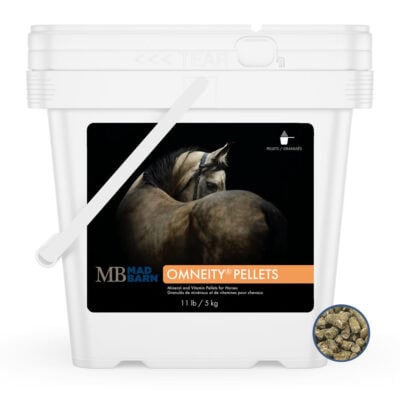
To fill gaps in a forage-based diet, most horses benefit from a ration balancer or complete vitamin and mineral supplement. Mad Barn’s Omneity® is a comprehensive vitamin and mineral blend designed to meet the needs of horses on a hay-based diet, without any added fillers or grain.
4) Provide Environmental Enrichment
Encourage natural behaviors by providing opportunities for your horse to move, socialize, and forage. Enrichment activities like slow-feed hay nets, food puzzles and scatter feeding (scattering hay across a pasture or paddock) can help simulate natural foraging time and reduce boredom, which is essential for mental well being. [37][38]
Applying Feral Feeding Insights to Domestic Horses
Observations of feral horses offer useful context for understanding how grazing behavior, movement, and diet interact to support normal digestive function. While domestic horses live in very different environments, many aspects of their feeding programs can be adjusted to better reflect these natural patterns.
Emphasizing consistent forage intake, adequate hydration, and opportunities for natural behaviors are fundamental to supporting digestive health and overall well being in managed horses.
Frequently Asked Questions
Here are some frequently asked questions about the diets of wild horses:
The main component of a wild horse’s diet is grass. Grasses provide the fiber necessary to support hindgut fermentation, which allows horses to extract energy from structural carbohydrates such as cellulose. While grasses make up the majority of intake, wild horses also consume sedges, shrubs, and forbs when grasses are limited, adjusting their diet based on seasonal availability and habitat.
Wild horses consume a forage-based diet made up primarily of grasses and other naturally available plants, grazing for many hours each day. In contrast, domestic horses typically rely on human-provided diets that may include harvested hay, pasture, and concentrated feeds delivered in scheduled meals. These differences affect feeding frequency, forage diversity, and digestive function, with domestic horses often experiencing shorter feeding periods and higher starch intake than their free-ranging counterparts.
In winter, wild horses graze on available grasses, shrubs, and forbs, turning to more woody plants like sagebrush when grasses are scarce. Their diet adjusts to the environment, enabling them to survive on tougher plants if needed.
No, wild horses are herbivores and do not eat meat. They may chew on woody plants when necessary, but they do not hunt or consume animal products.
A feral horse is a domesticated horse that has reverted to a wild state, living independently of human care or management. Feral horses are descendants of once-domesticated animals that have adapted to living in the wild, often forming self-sustaining herds and surviving in various environments without direct human intervention.
Summary
Wild and domesticated horses share the same nutritional needs but differ significantly in how they obtain and consume food. Wild horses rely on natural foraging of fibrous vegetation, while domesticated horses depend on human-provided diets.
- True wild horses are virtually extinct, and most so-called wild horses, such as Mustangs and Brumbies, are actually feral horses descended from domesticated stock
- Feral horses primarily consume grasses, sedges, and shrubs, adapting their diet based on seasonal and environmental conditions, with grasses making up the majority of their intake
- Feral horses are highly adaptable foragers, traveling long distances to find food and water, with environmental factors influencing their grazing patterns and diet
- Domesticated horses often receive less forage and may consume grain-heavy diets, which can lead to behavioral and health issues like colic and ulcers
- Shifting towards a forage-based diet for domesticated horses can improve their health and behavior, promoting better digestion and mental well being by mimicking the grazing patterns of feral horses
References
- Keeling. L. J. and Gonyou. H. W. Eds. Social Behaviour in Farm Animals. CABI Publ, New York. 2001.
- Boyd. L. E. et al. The 24-Hour Time Budget of Przewalski Horses. Applied Animal Behaviour Science. 1988.
- Carvalho Seabra. J. et al. Time-Budget and Welfare Indicators of Stabled Horses in Three Different Stall Architectures: A Cross-Sectional Study. Journal of Equine Veterinary Science. 2023. View Summary
- Baumgartner. M. et al. Common Feeding Practices Pose A Risk to the Welfare of Horses When Kept on Non-Edible Bedding. Animals. 2020. View Summary
- Ogilvie-Graham. T. S. Time Budget Studies in Stalled Horses. The University of Edinburgh. 1994.
- Turghan. M. A. et al. An Update on Status and Conservation of the Przewalski’s Horse (Equus Ferus Przewalskii): Captive Breeding and Reintroduction Projects. Animals. 2022.
- Petersen. S. L. et al. Feral Equids. Rangeland Wildlife Ecology and Conservation. 2023.
- Ward. L. et al. Review: Challenges and Opportunities in Rising Feral Horse Populations. The Professional Animal Scientist. 2016.
- Mendonça. R. S. et al. Population Characteristics of Feral Horses Impacted by Anthropogenic Factors and Their Management Implications. Frontiers in Ecology and Evolution. Frontiers. 2022.
- Bakaloudis. D. E. et al. Home Range and Habitat Selection of Feral Horses (Equus Ferus f. Caballus) in a Mountainous Environment: A Case Study from Northern Greece. Land. Multidisciplinary Digital Publishing Institute. 2024.
- Hildebrandt. F. et al. Distances Walked by Long Established and Newcomer Horses in an Open Stable System in Northern Germany. Journal of Equine Veterinary Science. 2020. View Summary
- King. S. R. B. and Schoenecker. K. A. Comparison of Methods To Examine Diet of Feral Horses from Noninvasively Collected Fecal Samples. Rangeland Ecology & Management. 2019.
- McInnis. M. L. and Vavra. M. Dietary Relationships Among Feral Horses, Cattle, and Pronghorn in Southeastern Oregon.
- Harvey. A. M. et al. Review of the Foundational Knowledge Required for Assessing Horse Welfare. Animals : an Open Access Journal from MDPI. 2022. View Summary
- Bevan. T. L. Habitat Selection by Feral Horses in the Alberta Foothills. ERA. 2012.
- Davies. K. W. and Boyd. C. S. Ecological Effects of Free-Roaming Horses in North American Rangelands. BioScience. 2019.
- Ralston. S. L. Nutritional Requirements of Horses and Other Equids - Management and Nutrition. Merck Veterinary Manual. 2025.
- Hall. L. K. et al. Feral Horses Influence Both Spatial and Temporal Patterns of Water Use by Native Ungulates in a Semi-Arid Environment. Ecosphere. 2018.
- Freeman. D. E. Effect of Feed Intake on Water Consumption in Horses: Relevance to Maintenance Fluid Therapy. Frontiers in Veterinary Science. 2021. View Summary
- Moore-Colyer. M. et al. Where Are We Now? Feeds, Feeding Systems and Current Knowledge of UK Horse Owners When Feeding Haylage to Their Horses. Animals. 2023. View Summary
- Roig-Pons. M. et al. Impact of Feeding Strategies on the Welfare and Behaviour of Horses in Groups: An Experimental Study. PLOS One. 2025. View Summary
- Sarrafchi. A. and Blokhuis. H. J. Equine Stereotypic Behaviors: Causation, Occurrence, and Prevention. Journal of Veterinary Behavior. 2013.
- Ruet. A. et al. Housing Horses in Individual Boxes Is a Challenge with Regard to Welfare. Animals. 2019. View Summary
- Brauns. M. et al. Physiological and Behavioral Responses of Stabled Horses (Equus Caballus) to Three Types of Environmental Enrichment. Animals. 2025.
- Dahrouge Rosa. B. K. (PDF) Environmental Enrichment for Equines: Advances in the Last Decade. INTERNATIONAL JOURNAL OF AGRICULTURE & BIOLOGY. 2025.
- Harris. P. A. Developments in Equine Nutrition: Comparing the Beginning and End of This Century1. The Journal of Nutrition. 1998.
- Noble. G. K. Horse Husbandry–Nutrition, Management and Welfare. Animals. 2023.
- Freire. R. et al. The Effects of Two Different Amounts of Dietary Grain on the Digestibility of the Diet and Behaviour of Intensively Managed Horses. Applied Animal Behaviour Science. 2009.
- Nutrient Requirements of Horses: Sixth Revised Edition. National Academies Press, Washington, D.C. 2007.
- Hudson. J. M. et al. Feeding Practices Associated with Colic in Horses. Journal of the American Veterinary Medical Association. 2001. View Summary
- Freeman. D. E. Effect of Feed Intake on Water Consumption in Horses: Relevance to Maintenance Fluid Therapy. Frontiers in Veterinary Science. 2021. View Summary
- Pagan. J. D. Water Most Overlooked Nutrient for Horses. Feedsstuffs. 2008.
- Code of Practice for the Care and Handling of Equines. Code of Practice for the Care and Handling of Equines. Equine Canada and the National Farm Animal Care Council. 2013.
- Ermers. C. et al. The Fibre Requirements of Horses and the Consequences and Causes of Failure to Meet Them. Animals. 2023. View Summary
- Muhonen. S. and Julliand. V. Fibre Composition and Maturity of Forage-Based Diets Affects the Fluid Balance, Faecal Water-Holding Capacity and Microbial Ecosystem in French Trotters. Animals. 2023. View Summary
- Williams. S. et al. Water Intake, Faecal Output and Intestinal Motility in Horses Moved from Pasture to a Stabled Management Regime with Controlled Exercise. Equine Veterinary Journal. 2015. View Summary
- Thorne. J. B. et al. Foraging Enrichment for Individually Housed Horses: Practicality and Effects on Behaviour. Applied Animal Behaviour Science. 2005.
- Jørgensen. G. H. M. et al. Effects of Enrichment Items on Activity and Social Interactions in Domestic Horses (Equus Caballus). Applied Animal Behaviour Science. 2011.