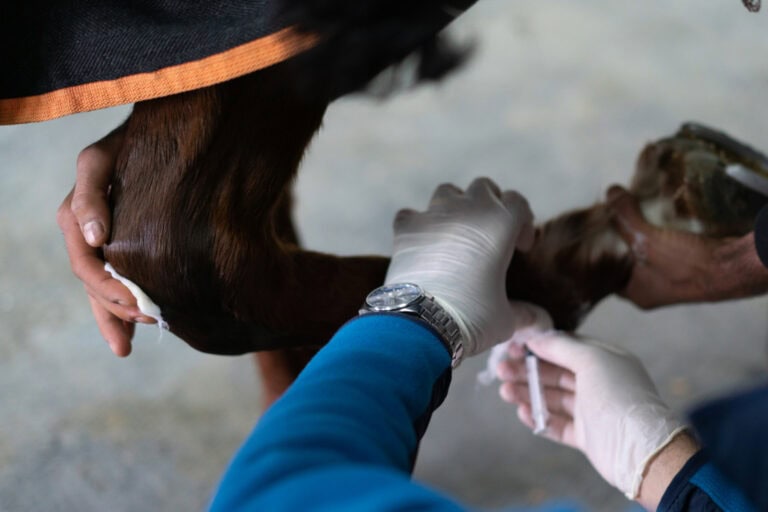
Embryo transfer (ET) is an advanced reproductive technology that allows breeders to produce multiple offspring from a single mare in a given year. This procedure involves taking an embryo from a donor mare, and depositing it in the uterus of...
Artificial insemination (AI) is an increasingly popular method of breeding mares, as it reduces many of the risks of natural service while providing several advantages. Benefits include accessing broader genetics, using stored or transported semen, and eliminating the need to...
Semen collection and evaluation is an important component of standing a stallion at stud. Semen collection for a breeding soundness evaluation allows owners to estimate how many mares their stallion can service in a year, determine overall semen quality, and...
Neonatal isoerythrolysis (NI) is a potentially fatal, but preventable, condition affecting newborn foals. Foals develop NI when they consume colostrum containing antibodies against their blood type, resulting in destruction of their red blood cells. This condition will only occur if...
Melanomas are a type of skin tumor most commonly observed in aging grey horses. Up to 80% of gray horses aged 15 or older develop melanomas during their lifetime. Melanomas in gray horses often appear as benign blemishes and remain...
West Nile virus (WNV) is a mosquito-borne arbovirus known to cause severe illness in humans, birds, and horses. Affected horses can develop inflammation in the brain (encephalitis), as well as neurological symptoms such as head pressing, difficulty swallowing, and poor...
Windpuffs develop due to the accumulation of fluid within the digital sheath, which envelops and protects both the Deep Digital Flexor Tendon (DDFT) and the Superficial Digital Flexor Tendon (SDFT). Although windpuffs are not typically associated with lameness or soreness,...
Primary immunodeficiencies are disorders where some component of the immune system does not develop properly, leaving the horse at risk of infection. Examples of primary immunodeficiencies in horses include severe combined immunodeficiency, foal immunodeficiency syndrome, and selective IgM deficiency.
Dystocia, or difficulty giving birth, is a relatively rare complication in horses occurring in less than 10% of foalings. Dystocia carries significant risks for both the mare and foal, including damage to internal organs, nerves, and blood supply for the...
Lavender Foal Syndrome (LFS), or coat colour dilution lethal (CCDL), is a rare and lethal disorder in Arabian horses and crossbreeds. Foals with LFS are born with neurological problems and a lightened coat colour. Lavender Foal Syndrome is a genetic...
Vitiligo in horses is a disorder that causes patches of skin and hair to lose their normal colour or pigmentation. This condition is not contagious, painful, or life-threatening, but it can be disconcerting to see your horse's skin or hair...
Mare reproductive loss syndrome (MRLS) is an enigmatic condition first described in Kentucky in 2001, when an estimated 3,500 foals were either aborted, stillborn, or died shortly after birth. Research revealed that abortions and foal death was closely associated with...
Fescue toxicosis in horses results from ingestion of fescue grass contaminated with the fungus Neotyphodium coenophialum. The fungus produces ergot alkaloid toxins which cause changes in hormone concentrations and blood flow in pregnant mares grazing contaminated pastures or hay. Nearly...
Endometritis is a condition involving inflammation of the uterine lining, and is a very common cause of infertility in broodmares. Mares with endometritis develop fibrosis and inflammation that prevent embryonic development, resulting in failure to conceive or early embryonic loss....
Placentitis is a common cause of foal loss and neonatal sepsis in horses. Mares with multiple previous foals, older mares, and mares with poor perineal conformation are most at risk of developing placentitis. Most cases of placentitis arise from bacteria...
Ringbone is a degenerative condition that affects the bones and joints in the horse’s lower limbs. It is characterized by the inflammation of surrounding connective tissue, triggering the formation of bony growths around the affected joints. [ref n="2"][ref n="5"] These...
Twin pregnancies in horses are common but carry significant risks for both the mare and the unborn foals. The horse's reproductive system has developed to carry one fetus to term, and the addition of a second fetus results in competition...
Congenital hypothyroidism and dysmaturity (CHD) syndrome is a common manifestation of hypothyroidism in foals, resulting in dysmature foals that are born weak with contracted tendons, poor ossification of the cuboidal bones, and poor muscular development. The basic cause of CHD...
Equine abortion and stillbirth refer to delivery of a non-viable fetus or foal. Most causes of abortion and stillbirth do not affect the mare’s future fertility; however, the loss of the foal can cause significant economic losses for the breeder....
Newborn foals are born with an immature immune system, with limited ability to fight off infections and diseases. To build immunity, neonatal foals must absorb immunoglobulins, also known as antibodies, from their dam’s colostrum within 24 hours after birth. This...
Wood chewing is one of several types of stereotypic behaviors or habits that horses can develop. Stereotypic behaviors, often referred to as stereotypies, are repetitive behavior patterns with no apparent function. They may develop out of boredom or they may...
Bleeding disorders can significantly affect your horse’s performance and overall health. These conditions can be present from birth or develop later in life and are characterized by abnormal bleeding or hemorrhage. Some bleeding disorders, such as exercise-induced pulmonary hemorrhage (EIPH),...
Does my horse need shoes? This is a question frequently asked by horse owners, and the answer varies depending on several factors. Horses wear shoes for various reasons, including providing protection and traction, supporting hoof structure, and improving performance. Some...
Eastern equine encephalitis (EEE), otherwise known as Triple E or sleeping sickness, is a rare and lethal virus in horses that causes inflammation of the brain. EEE is transmitted through mosquito bites and attacks the central nervous system (CNS). It...
Narcolepsy is a neurological and rapid eye movement (REM) sleep disorder. It involves the sudden onset of sleep during the daytime. The condition occurs chronically and throughout life in affected horses unless treatment is provided. Two types of narcolepsies are...
Shivers, or shivering, in horses is a progressive neuromuscular condition characterized by an abnormal, jerky gait while backing up. Horses affected by Shivers exhibit muscle tremors in the pelvic limbs when forced to back up. Clinical signs typically appear in...

Respiratory problems are a common occurrence in horses, sometimes they occur in acute (short-term) bouts or can be chronic illnesses. Some respiratory diseases are communicable to other horses, while others are not contagious and occur due to allergies or environmental...
Shipping horses over long distances can be a daunting but rewarding undertaking. Many breeders, trainers, exporters and equestrians eventually find themselves needing to transport a horse over a long distance via air or land travel. Even settled horse owners may...
No horse owner wants to face the impossible decision of leaving their animal behind in an emergency. While natural disasters can be unpredictable, an emergency preparedness checklist can help horse owners keep their animals safe when disaster strikes. Not having...
Whether you are a seasoned equestrian or a new horse owner, trailering your horse can be a daunting task but does not have to be uncomfortable for you or your horse. Many factors influence equine welfare while trailering. However, the...