Autologous Protein Solution (APS) is a biologic therapy that has emerged as an innovative treatment for managing joint and soft tissue injuries in horses. This biologic therapy uses the horse's own blood to create a concentrated solution of anti-inflammatory proteins...
Sports recovery is an important aspect of equine management, focusing on the horse’s well-being following periods of exercise. During physical exertion, a horse’s muscles, tissues, and cellular structures undergo stress. When well-managed, this leads to adaptations that strengthen and condition...
The sacroiliac joint (SIJ) is one of the largest and most important joints in the horse’s body, yet it is also one of the least understood. Situated deep within the pelvis, the SIJ forms the critical connection between the sacrum...
The Swiss Warmblood is a modern sport horse breed developed in Switzerland for high performance in Olympic disciplines. With athletic ability, good conformation, and a strong work ethic, these horses are ideally suited for show jumping and dressage. The breed...
The Brabant horse, also known as the Belgian Heavy Draft, is a powerful draft breed from Belgium. Renowned for their strength, calm temperament, and distinctive muscular build, Brabants have played a vital role in agriculture and transportation for centuries. And...
The Auxois horse is a rare draft breed native to the Burgundy region of France. Developed for strength, stamina, and a calm temperament, the Auxois has long served as a reliable partner in agriculture, forestry, and transportation. Today, the breed...
The Belgian Warmblood is a sport horse breed with an impressive record of success in international competition. Bred primarily for show jumping, the Belgian Warmblood also excels in dressage and eventing, making these horses a popular choice among competitive riders....
The New Forest Pony is one of several native pony breeds from the British Isles. These ponies get their name from the New Forest of Southern England, where the breed originated. While herds of ponies still graze on the pastures...
Mucous membranes play a critical role in assessing equine health. The most familiar mucous membranes are the gums, but these thin, moist tissues line various body cavities, including the eyes and genitals. In clinical settings and daily management, evaluating mucous...
Most horse owners know that poor air quality in dusty barns can cause coughing, nasal discharge, or laboured breathing in sensitive horses. But what happens when a horse seems worse outdoors—even on fresh green pasture? Just like people, horses can...
Returning to the barn after time away—whether for a vacation, work trip, or personal break—can be both exciting and challenging. Horses thrive on routine, and even short absences can affect their fitness, behavior, and connection with their rider. For riders,...
Keeping a horse barn safe goes beyond caring for the animals—it’s about protecting the people who work there. Every day, barn staff face hazards ranging from poor air quality and heavy lifting to unpredictable animal behavior, slippery surfaces, and machinery...
Running a horse farm—whether it's a small private stable or a large-scale boarding, training, or breeding facility—requires strong organization behind the scenes. One of the most valuable tools in managing horses and daily operations is effective record-keeping. Accurate records help...
Natural horse behaviors like rolling in mud, dust, and manure help protect their skin, but often leaves their coat dirty. Bathing a horse is essential for removing sweat, dirt, bacteria, and buildup that grooming alone can’t handle. Proper baths support...
Horse chestnuts, sometimes called castors or night eyes, are small, rough patches of skin commonly found on a horse's legs. While easily overlooked, these structures have sparked curiosity for centuries due to their mysterious origin and unusual appearance. Leg chestnuts...
Ergots are small, hardened skin growths found on the lower legs of horses. They are easily overlooked due to their position beneath the fetlock where they are usually concealed by surrounding hair. Though commonly mistaken as minor or insignificant, ergots...
Blood work is one of the most valuable diagnostic tools available in equine veterinary medicine. Whether used to assess general health, diagnose illness, monitor chronic conditions, or evaluate performance issues, a simple blood test can reveal a wealth of information...
One of the most informative and widely used diagnostic procedures for evaluating the lower respiratory tract in horses is bronchoalveolar lavage (BAL). This is a minimally invasive technique that allows veterinarians to sample cellular components from deep lung tissue. By...
The New World screwworm (Cochliomyia hominivorax) is a highly destructive parasitic fly that poses a significant threat to equine health and welfare. Unlike typical fly larvae that feed on dead or decaying tissue, screwworm maggots consume living flesh, resulting in...
Respiratory dysfunction is a common and often overlooked issue in horses, with a variety of causes including infections, allergies, environmental irritants, and anatomical abnormalities. Horses depend on efficient lung function to meet the high oxygen demands of their large, athletic...
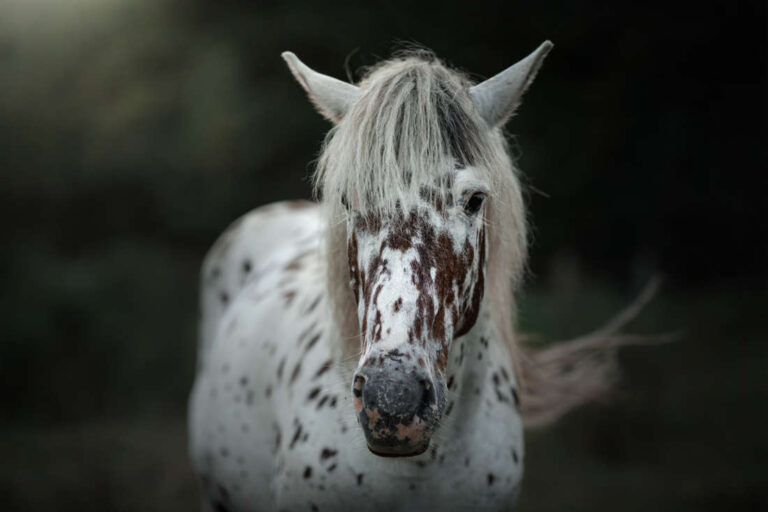
The Pony of the Americas, or POA, is a pony breed from the heartland of the United States. These ponies are known for their unique spotted coloring and versatility. While initially developed as the perfect children's mount, the POA is...
The coffin bone, also known as the distal phalanx or P3, sits at the very tip of the horse's limb, completely encased by the hard hoof wall. Its unique shape provides the foundation for weight-bearing and shock absorption with every...
Equine inhalers are specialized devices used to deliver medication directly into a horse's lungs to help manage respiratory conditions. These devices are similar in design and function to inhalers used by humans, but they have been adapted to suit the...
Breathing is an automatic function that often goes unnoticed, until something goes wrong. Dyspnea, the term for difficult or labored breathing, is a serious clinical sign in horses. It is not a diagnosis itself but a symptom of underlying problems...
It's not unusual to see a small amount of clear, watery discharge coming from your horse's nose—especially after exercise, during cold weather, or when they've been around dust or pollen. Mild discharge is part of the body's natural defense system,...
Inflammatory Airway Disease (IAD) is a common, performance-limiting respiratory condition that affects horses of all breeds and disciplines, particularly young to middle-aged animals in training. Part of the equine asthma spectrum, IAD is characterized by airway inflammation and increased mucus...
Equine nasal strips are non-invasive devices used to support respiratory function in horses during intense physical activity. Made from stiff, spring-loaded plastic with an adhesive backing, these strips are applied externally across the upper part of the horse's nose. Their...
Flaring nostrils in horses are a powerful visual cue that should never be overlooked. Often dismissed as a sign of excitement, exertion, or even just a quirk of a particular horse’s personality, nostril flaring can provide critical insights into a...
Wondering if your horse really needs sunscreen? While most horses have adequate ultraviolet (UV) protection thanks to their coat and skin pigmentation, those with pink skin or extensive white markings may need an extra line of defense. Sunscreen works by...
Emerging equine research is the cornerstone of expanding our understanding of equine health, nutrition, management, and performance. This growing body of research provides valuable insights for veterinarians, equine professionals, and researchers seeking to apply evidence-based approaches in both clinical and...