English



Every year, equine researchers from around the world publish studies that deepen our understanding of horse health, nutrition, behavior, management, and performance. These studies don’t just advance scientific knowledge—they offer practical guidance to veterinarians, trainers, riders, and barn managers, helping them provide better day-to-day care for horses.
In Mad Barn’s annual research roundup, we’ve selected the most interesting and impactful peer-reviewed equine studies published in 2024. Covering breakthroughs in nutrition, exercise physiology, veterinary medicine, and welfare, this summary highlights where the latest science is headed and how it applies directly to real-world horse management.
Whether you’re looking for evidence-based strategies to optimize your horse’s health, improve your competition results, or adopt the latest management practices, Mad Barn’s annual research spotlight tracks progress on emerging trends and supports evidence-informed decision-making across the equine industry.
Equine nutrition research in 2024 highlighted how both diet composition and feeding methods influence digestive health and behavior. As we learn more about the horse’s digestive system, there is increasing interest in how specific feeding strategies impact not only nutrient utilization, but also microbial diversity, metabolic function, and welfare outcomes.
New findings are helping refine practical approaches to feeding that better align with the horse’s physiological needs and natural behaviors, with implications for both health management and performance.
What the hay: predicting equine voluntary forage intake using a meta-analysis approach [1]
Understanding and predicting the amount of feed a horse will willingly consume can help inform dietary recommendations and interventions to best support their health and well being.
Currently, we use very general estimates for the amount of feed horses are expected to voluntarily consume in a day. Estimates are based on a horse’s physiological status and body weight, and do not account for dietary factors that may influence voluntary intake. Mad Barn is proud to collaborate with researchers at the University of Guelph to improve predictions of equine forage intake.
Objective & Methodology
The goal of this study was to analyze what is already known about how much forage horses choose to eat (called voluntary forage dry matter intake, or VFDMI) and summarize what factors affect voluntary intake. The researchers also provided insight into why results vary between studies, and developed equations that can help predict VFDMI for individual horses.
From each study, researchers collected information like how much forage the horses ate, what their diets were made of, and biological details about the horses such as sex, age, breed, weight, and activity level. They looked at forage intake in two ways: the total amount eaten each day (in kilograms) and the amount eaten based on the horse’s body weight (in grams per kilogram of body weight).
Results
The most effective models for predicting how much forage horses eat take several factors into account, such as:
- Quality and type of forage (grass, legume, or a mix)
- Breed category of the animal (horse or pony)
- Management and lifestyle (e.g., whether they have access to pasture)
As expected, horses generally eat more when they are given better quality forage. Also, bigger animals eat more in total, but ponies eat more relative to body size compared to horses. Finally, horses that graze on pasture tend to eat less than those kept in stalls, possibly because grazing takes more time.
Conclusions & Relevance
The researchers created accurate equations to help predict how much forage a horse will eat, which could be useful for horse owners, managers, and nutritionists. The study also confirmed that the horse’s size and the quality of the forage greatly affect how much they eat, so these factors should be considered when planning their diets. These equations fit into a larger objective of Mad Barn’s research to establish a comprehensive mathematical model of equine feed intake, digestion, and metabolism.
Initial Impact of Different Feeding Methods on Feed Intake Time in Stabled Icelandic Horses [2]
Hay nets are feeding devices designed to hold hay securely, allowing horses to eat more slowly by pulling smaller amounts of forage through the netting. Studies show that using hay nets increases the amount of time horses spend consuming their meals. [3] This slower feeding pace can be beneficial for easy keeper horses, who require diligent rationing of feed to avoid unwanted weight gain. For metabolic horses, a slower feeding rate can also reduce insulin levels and support weight loss. [4]
Icelandic horses, known for their compact size and slow metabolism, are particularly susceptible to obesity. For these horses, interventions (like hay nets) that help reduce overall calorie intake while ensuring consistent access to forage are valuable strategies to support optimal health and weight management.
Objective & Methodology
The objective of the study was to determine how different feeding methods influence the rate at which horses consume their forage.
Researchers compared feeding rates across four different feeding methods:
- Hay net
- Hay ball
- Metal manger
- Floor of the stall
Horses were provided with haylage divided into two separate meals over the course of a single day. The time it took the horses to consume the haylage was recorded using a video camera.
Results
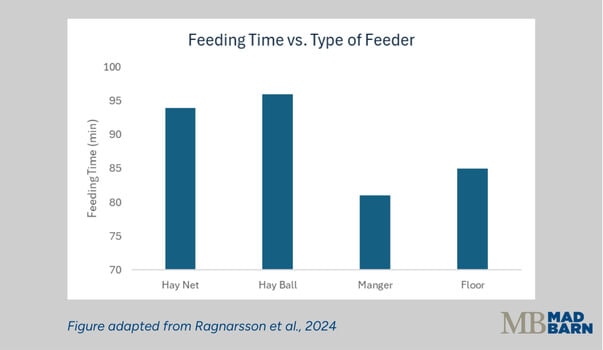
It took horses longer to consume their haylage meals from the hay net (94 minutes) or hay balls (96 minutes) than it did to consume the haylage from a manger (81 minutes) or from the stall floor (85 minutes).
Conclusions & Relevance
This research demonstrates that using a hay net or hay ball can effectively extend the time horses spend foraging, even among easy keepers. Longer foraging periods support weight management and also encourage horses to engage in more natural grazing behaviors, benefiting overall equine welfare.
Simple interventions like these provide practical, accessible ways to optimize feeding strategies for easy keeper breeds, such as Icelandic horses, across various management systems and environments.
Changes in nutritional and hygienic quality due to storage of common native and processed grain cereals intended for horse feeding [5]
The hygienic quality of horse feeds refers to their cleanliness and lack of contaminants such as mold, bacteria, fungi, and dust. Concerns about the hygienic quality of feeds are common among horse owners given the risk of negative effects such as allergies, colic, infertility, and other health issues. [6]
While reputable manufacturers take precautions to ensure the feed they provide is safe, substandard storage conditions throughout the supply chain may lead to low-level contamination in horse feed.
Objective & Methodology
The objective of this study was to evaluate how storage conditions affect the nutritional value and hygienic quality of different grains — oats, corn, and barley — processed as either whole grains or flaked.
The researchers obtained two bags of each feed type from the manufacturer. One bag was opened and sampled for immediate analysis. This bag was then stored open in a typical feed room for 42 days before re-testing. The second bag from the manufacturer stayed closed and stored in the same feed room until it was opened for sampling on the 42nd day.
Results
Overall, oat samples contained 3-5 times more impurities than corn or barley. Impurities were described as:
- Other grains
- Sand
- Dirt
- Manure
Corn samples had the highest number of flawed grains, with more flawed grains in flaked corn than whole corn. Fumonisins, a group of mycotoxins, were only detected in corn, but were below the toxic threshold for horses.
Barley had the greatest number of pest components including moth larvae, meal mites, and booklice. In addition, pesticides were detected in barley, but not in any of the other grain samples.
All of these observations were noted in the control, sealed bags, and did not worsen after 42 days of storage.
Conclusions & Relevance
All three grains showed some signs of impurities or contaminants, including foreign material, mycotoxin residues, and traces of pesticides. However, all detected contaminants were within safe limits for horse health, indicating the grains were safe to feed at the time of purchase.
Importantly, there was no increase in contamination after 42 days of storage, whether the feed bags were stored open or sealed. This suggests that, under typical storage conditions, grains remain safe for consumption throughout a standard storage period.
However, these findings may not apply if storage conditions are less than ideal — for example, in hot or humid environments. This research emphasizes the importance of maintaining proper grain storage conditions to prevent growth or spread of contaminants initially present at purchase.
Microbiota characterization throughout the digestive tract of horses fed a high-fiber vs. a high-starch diet [7]
Research into the microbial populations of the horse’s hindgut suggests benefits to feeding diets high in fiber rather than starch. High-fiber diets support stable microbial populations, which help maintain gut health, while diets high in starch can disrupt these microbial populations and potentially lead to digestive issues. [8][9][10]
Although extensive research has focused on how diet affects the hindgut microbiome, less is known about the impact of high-starch diets on the microbiota throughout the rest of the horse’s digestive tract.
Investigating how starch-rich feeds influence microbial populations in different gut regions could improve our understanding of the links between diet and common health issues such as hindgut acidosis, gut dysbiosis, and colic.
Objective & Methodology
The objective of this study was to determine whether the gut microbiota in distinct compartments of the gastrointestinal tract differed between a high-starch and a high-fiber diet.
19 healthy horses were split into two groups and fed either a high-starch or a high-fiber diet for 129 days. They were slowly adapted to these diets, and for the final 72 days the high-starch group consumed 5.7 grams of starch per kg BW per meal whereas the high-fiber group consumed 0.97 grams of starch per kg BW per meal.
At the end of the study, samples were collected from the following compartments of the gastrointestinal tract:
Small Intestine:
- Duodenum
- Jejunum
- Ileum
Hindgut:
- Cecum
- Sternal flexure
- Pelvic flexure
- Right dorsal colon
- Rectum
Samples were sequenced for DNA to determine differences in composition of the microbiota, diversity of the microbes, and frequency of different microbial types.
Results
The high-starch diet resulted in more pathogenic or potentially harmful species of microbes, such as:
- Enterobacteriaceae in the small intestine
- Streptococcus in the cecum
- Fusobacterium in the sternal flexure
- Succinivibrionaceae in the pelvic flexure and rectum
The high-starch diet also resulted in a smaller core community (the population of microbes that is shared across all horses), and less diversity within the microbial population.
Conclusions & Relevance
Overall, this study shows that high-starch diets impact the microbial community of the hindgut as well as other compartments of the gastrointestinal tract. The changes observed in the microbial populations suggest that high-starch diets can lead to microbial changes known to occur prior to issues such as dysbiosis, inflammatory disease, and acidosis.
The authors concluded that fiber-based diets should be promoted to prevent dysbiosis of the microbial community throughout the digestive tract.
For horse owners, this means prioritizing fiber-rich feeds such as quality forage or beet pulp, rather than relying heavily on grains, to keep the horse’s digestive system balanced and healthy.
Exercise is a critical component of equine health, influencing everything from metabolic function to musculoskeletal strength. In 2024, new studies shed light on the physiological mechanisms that underpin performance, adaptation, and recovery in sport horses.
Research trials explore how exercise impacts muscle development, energy production, and systemic inflammation — offering data-driven insights that can inform training, conditioning, and nutritional strategies in athletic horses.
Dynamic Hematological Responses in Endurance Horses: Unraveling Blood Physiological Markers of Exercise Stress and Recovery [11]
Currently, it is challenging to discern whether changes in blood parameters after exercise are a normal response to fitness training or reflect a problematic response.
Given this, researchers are interested in developing new methods that combine multiple bloodwork measurements, allowing more accurate evaluation of how well performance horses recover from exercise. Such an approach could give trainers a timely and cost-effective tool to refine their training programs and optimize athletic performance in horses.
Objective & Methodology
The objective of this study was to identify more reliable biomarkers for stress and inflammation, helping trainers better evaluate how horses recover after exercise. To achieve this, researchers combined cellular markers of inflammation with measurements of red blood cells and platelets, providing a more complete assessment than looking at individual biomarkers alone.
Twenty-six Arabian horses competing in endurance events were studied to examine blood markers before and after races of varying distances:
- 80 km (50 mi)
- 120 km (75 mi)
- 160 km (100 mi)
The horses were evaluated at the following intervals:
- At rest
- Immediately after racing
- 3 hours after the race
- 3 days after the race
- 7 days after the race
- 14 days after the race
Blood tests in this study looked at indicators such as:
- Neutrophil-to-lymphocyte ratio (NLR): indicates stress or inflammation levels
- Platelet-to-lymphocyte ratio (PLR): another measure related to inflammation and stress response
- Monocyte-to-lymphocyte ratio (MLR): helps evaluate immune system activation
- Eosinophil-to-lymphocyte ratio (ELR): linked to allergic reactions and inflammatory responses
- Red blood cell distribution width-to-platelet ratio (RDW/PLT): reflects variability in red blood cells and platelet count, indicating stress or inflammation
- Hemoglobin-to-red blood cell distribution width ratio (Hb/RDW): relates to oxygen-carrying capacity and red blood cell health
- Hemoglobin-to-platelet ratio (Hb/PLT): reflects oxygen transport and clotting activity
- Systemic inflammation index (SII): overall indicator of inflammation in the body
- Systemic inflammatory response index (SIRI): indicates the body’s general inflammatory response
- Leukocyte shift index (LSI): measures shifts in white blood cell types, reflecting immune or stress responses
- Adaptation intensity index of L. Harkavy (AI): indicates how well the horse’s body adapts to stress or exercise
Results
Several markers — including NLR, PLR, SII, SIRI, MLR, RDW/PLT, and LSI — differed from rest immediately after the race, indicating an acute inflammatory response to exercise.
Other markers, like ELR and AI, changed more gradually and remained elevated for longer periods, suggesting they could be useful indicators for monitoring how well horses recover after exercise.
Conclusions & Relevance
Overall, this study identifies several blood markers that could help horse owners and trainers monitor a horse’s inflammatory response to exercise and track how well they recover afterward, using simple and minimally invasive diagnostic tests.
More research is needed to confirm the utility of these markers in larger sample sizes, and in other sports where monitoring inflammation and supporting recovery are key aspects of performance horse management.
Leucine promotes energy metabolism and stimulates slow-twitch muscle fibers expression through AMPK/mTOR signaling in equine skeletal muscle satellite cells [12]
Branched chain amino acids (BCAAs), including leucine, are frequently supplemented in performance horses, because they are purported to enhance muscle adaptation in response to exercise.
There are two main ways that branched chain amino acids are hypothesized to aid in muscle health:
- As an energy source for muscle cells
- As a stimulant for muscle repair and growth
To date, there has been limited research in horses to support the beneficial effects of BCAAs. Further, the mechanism by which they may provide these benefits has yet to be confirmed.
Objective & Methodology
The authors of this study sought to describe to what extent leucine supports the proliferation of muscle stem cells surrounding slow-twitch muscle fibers, and to determine whether it improves mitochondrial capacity to produce cellular energy.
To examine this, the researchers cultured satellite cells (stem cells) with increasing concentrations of leucine, from 0 to 10 mM for three days. These cultures were prepared with and without inhibitors of proteins that are known to contribute to the mTOR pathway of muscle growth.
They measured abundance of proteins in protein synthesis signaling and mitochondrial pathways, and overall mitochondrial capacity in the cultures.
Results
Cells incubated with 2 mM of leucine had a higher abundance of proteins in muscle synthesis and mitochondrial pathways, and also to greater mitochondrial respiration. Protein synthesis signaling results were diminished when key proteins in the mTOR pathway were inhibited.
Conclusions & Relevance
These results suggest that leucine may have a beneficial effect on protein synthesis and mitochondrial respiration in horse muscle. More research is needed to study these results in situations where leucine is fed to horses (in vivo), rather than in scenarios where leucine is added to cultured cells in a lab environment (in vitro).
Effects of hyperthermia and acidosis on mitochondrial oxidative phosphorylation [13]
During intense exercise, a horse’s muscles generate heat and may experience acidosis — a buildup of acidic byproducts that lower muscle pH. This increase in temperature and acidity can impair muscle energy production and function.
However, regular training can help muscles adapt, making them more resistant to these negative effects and better able to handle the demands of exercise.
Objective & Methodology
Researchers sought to examine whether hyperthermia (high temperatures) and acidosis (low pH) affected energy production of muscle cells in fit and unfit horses.
To test this, they collected muscle samples from Thoroughbred horses before and after 9 weeks of race training. They measured oxidative capacity of the muscle samples, as well as ATP (energy) production in four conditions:
- Normal body temperature (38°C) and neutral pH (pH 7.1)
- Normal body temperature (38°C) and low pH (pH 6.5 from addition of lactic acid)
- High temperature (43°C) and neutral pH (pH 7.1)
- High temperature (43°C) and low pH (pH 6.5)
Results
Before the training program, exposing muscle cells to high temperatures significantly reduced the efficiency of ATP production (the muscle’s energy source), while low pH (acidosis) had only a minor negative effect.
After completing the training program, muscles cells became better adapted to handle high temperatures, reducing the negative impact of extra heat on ATP efficiency. However, the negative impact of acidosis on ATP production became more pronounced after training.
Conclusions & Relevance
These results demonstrate that high temperatures generated in the muscle during exercise may contribute to reduced energy production and fatigue.
However, in fit horses, acidosis (low muscle pH) has an even greater negative effect on muscle efficiency and energy output.
Since proper training helps horses adapt to these temperature and metabolic changes, careful conditioning is essential to minimize the negative impacts of heat and acidosis after intense exercise.
Metabolic health is integral to the horse’s overall well-being, influencing everything from energy metabolism and insulin sensitivity to seasonal hormonal variations. In 2024, research provided fresh insights into managing insulin resistance, refining diagnostic tests for endocrine disorders, and developing practical tools to monitor metabolic responses.
These advances contribute to more effective nutritional interventions, targeted diagnostics, and proactive management strategies to support optimal metabolic function in horses.
Nutraceutical supplement mitigates insulin resistance in horses with a history of insulin dysregulation during a challenge with a high-starch diet [14]
Insulin dysregulation (ID) refers to a metabolic condition in horses where the body’s response to insulin is abnormal, resulting in high circulating insulin levels or reduced effectiveness of insulin in regulating blood sugar. This condition increases a horse’s risk of developing laminitis, which can become severe enough to require veterinary intervention or even euthanasia.
While genetics play a role in determining a horse’s susceptibility to ID, environmental and dietary factors strongly influence its onset and progression. Chronic consumption of diets high in hydrolyzable carbohydrates (sugars and starches) from grain-based feeds or rich forages is well-established as a major contributor to insulin dysregulation.
Most previous studies in horses have focused on how nutraceuticals affect insulin responses following oral glucose challenges, but there remains limited research into their potential therapeutic effects on improving tissue-level insulin sensitivity.
Objective & Methodology
This study aimed to test whether nutraceutical supplementation could help reduce insulin resistance in horses with a history of insulin dysregulation (ID).
The nutraceutical supplement used in the study included:
- Omega-3 fatty acids
- Glutamine (an amino acid)
- Vitamin E (an antioxidant)
- Active yeast (a probiotic)
Sixteen mature horses were divided into two groups: one received a daily placebo, and the other received the nutraceutical supplement. All horses were housed in dry lots, had continuous access to grass hay, and were given a moderately high-starch concentrate feed (0.6 grams of starch per kilogram of body weight per meal) twice daily for four weeks.
To evaluate insulin sensitivity, researchers performed a combined glucose-insulin tolerance test (CGIT) at the start of the study and again after four weeks of supplementation.
Results
Both groups of horses had similar basal insulin levels (blood insulin levels before the meal is fed) after four weeks of feeding. This is a common, simple test used by veterinarians to assess whole-body insulin resistance. However, it is not a suitable test to pick up changes in tissue insulin sensitivity and therefore doesn’t reflect the scope of changes that can occur when feeding a nutraceutical.
Horses that received the nutraceutical supplement showed a 61% improvement in glucose clearance measured during the CGIT, meaning they were able to remove glucose from their bloodstream more efficiently than the placebo group.
They also returned to normal insulin levels faster, while horses in the placebo group continued to have elevated insulin levels (hyperinsulinemia).
However, the horses were still considered insulin resistant based on insulin levels measured at 75 minutes after the start of the test. A longer period of supplementation may have resulted in greater improvement in insulin sensitivity.
Conclusions & Relevance
The study concluded that feeding a high-starch diet decreased insulin sensitivity in horses prone to insulin dysregulation.
However, preventive supplementation with the nutraceutical blend helped to significantly improve glucose clearance, offsetting the negative effects of excessive starch consumption and supporting insulin sensitivity in these horses.
Additional research is needed to clarify how each of the individual nutraceutical ingredients contributed to these beneficial effects.
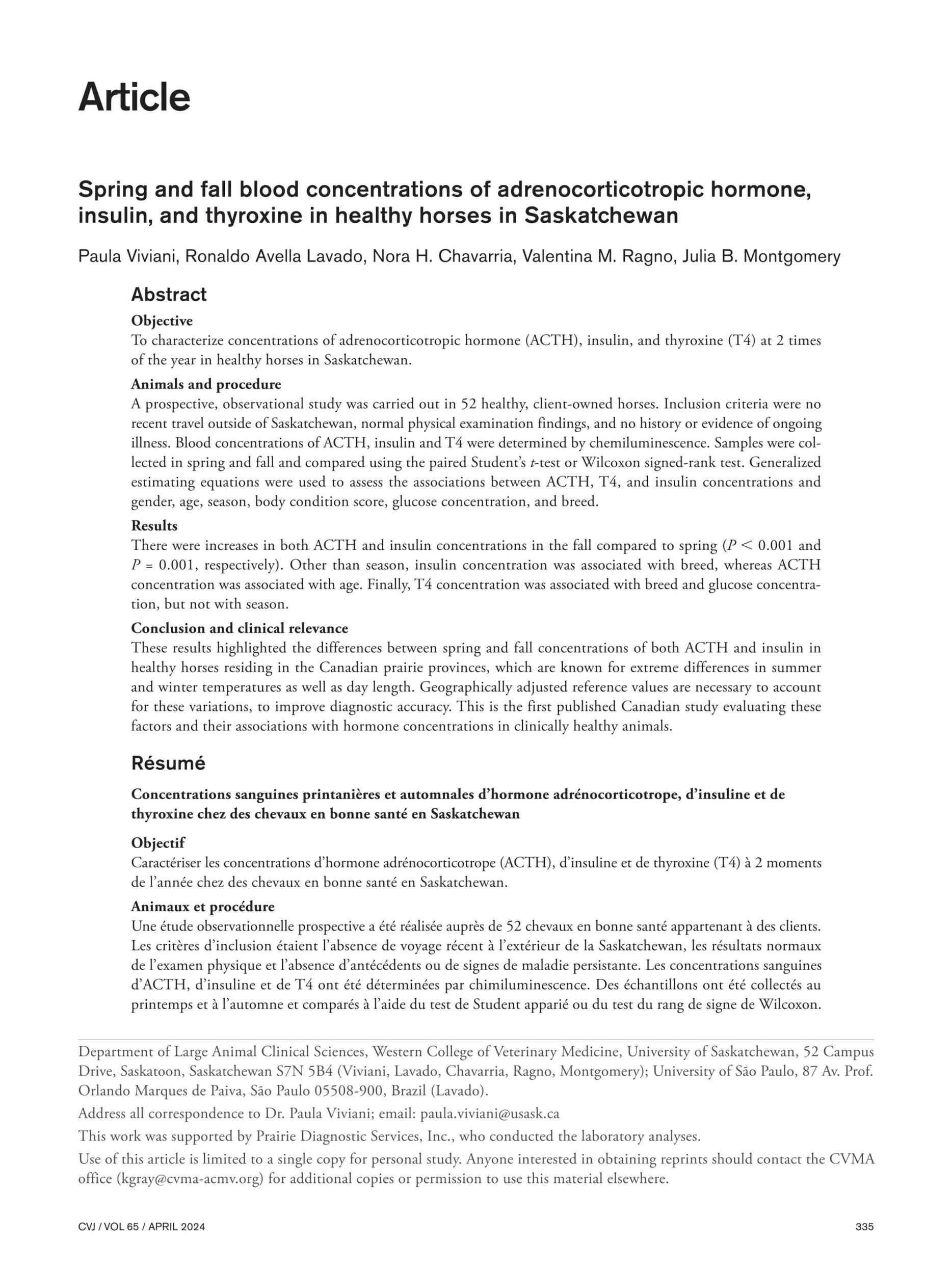
Spring and fall blood concentrations of adrenocorticotropic hormone, insulin, and thyroxine in healthy horses in Saskatchewan [15]
Pituitary pars intermedia dysfunction (PPID, also known as Equine Cushing’s Disease) and equine metabolic syndrome (EMS) are two common endocrine disorders affecting horses. Typical signs of these conditions include lethargy, abnormal shedding patterns, repeated episodes of laminitis, muscle loss, and insulin dysregulation.
Currently, diagnosing PPID and EMS involves measuring specific blood markers such as plasma adrenocorticotropic hormone (ACTH) and serum insulin. However, these diagnostic tests can be influenced by factors like season, climate, and geographic location, complicating accurate diagnosis.
Improving the reliability of these tests could allow for earlier detection, more precise management, and better treatment outcomes for horses with endocrine disorders.
Objective & Methodology
The goal of this study was to investigate how baseline levels of ACTH, insulin, and thyroxine (T4) naturally vary between spring and fall in clinically healthy horses living in Saskatchewan.
Researchers conducted a prospective observational study (a type of study where horses are followed over time without any interventions) involving 52 client-owned horses. To be included, horses had to be between 1 and 20 years old, clinically healthy (confirmed by veterinary examination), have no recent travel outside Saskatchewan, and have no known history of systemic illness or endocrine disorders like EMS or PPID.
Blood samples were collected from each horse in both spring and fall, with all horses sampled over two week periods. Additionally, the researchers evaluated each horse’s body condition score and exercise level. Physical examinations were performed, and the collected blood samples were analyzed for ACTH, insulin, glucose, and T4 concentrations.
Results
ACTH and insulin levels were both higher in horses during the fall compared to the spring. Insulin levels varied depending on the horse’s breed with ponies and pony-crosses having higher insulin levels than other breeds. ACTH levels were not affected by breed but were impacted by age, with horses over 11 years old having higher ACTH levels in fall compared to spring, an observation that was not consistent in horses aged 6 – 10 years.
Additionally, T4 (thyroxine) levels were linked to breed and glucose levels, but were not influenced by the season.
Conclusions & Relevance
This study highlights how seasonal changes in ACTH and insulin levels could affect the diagnosis and management of endocrine conditions such as PPID and EMS, particularly in horses living in the Canadian prairie provinces.
The consistent increase in insulin observed during the fall, across all age groups, points to significant seasonal metabolic shifts. This finding emphasizes the importance of establishing season-specific reference ranges for accurate testing and diagnosis in this region.
Overall, these results underline that geographic location and seasonal variations should be taken into account when interpreting hormone tests, ensuring horses receive accurate diagnoses and appropriate treatment plans.
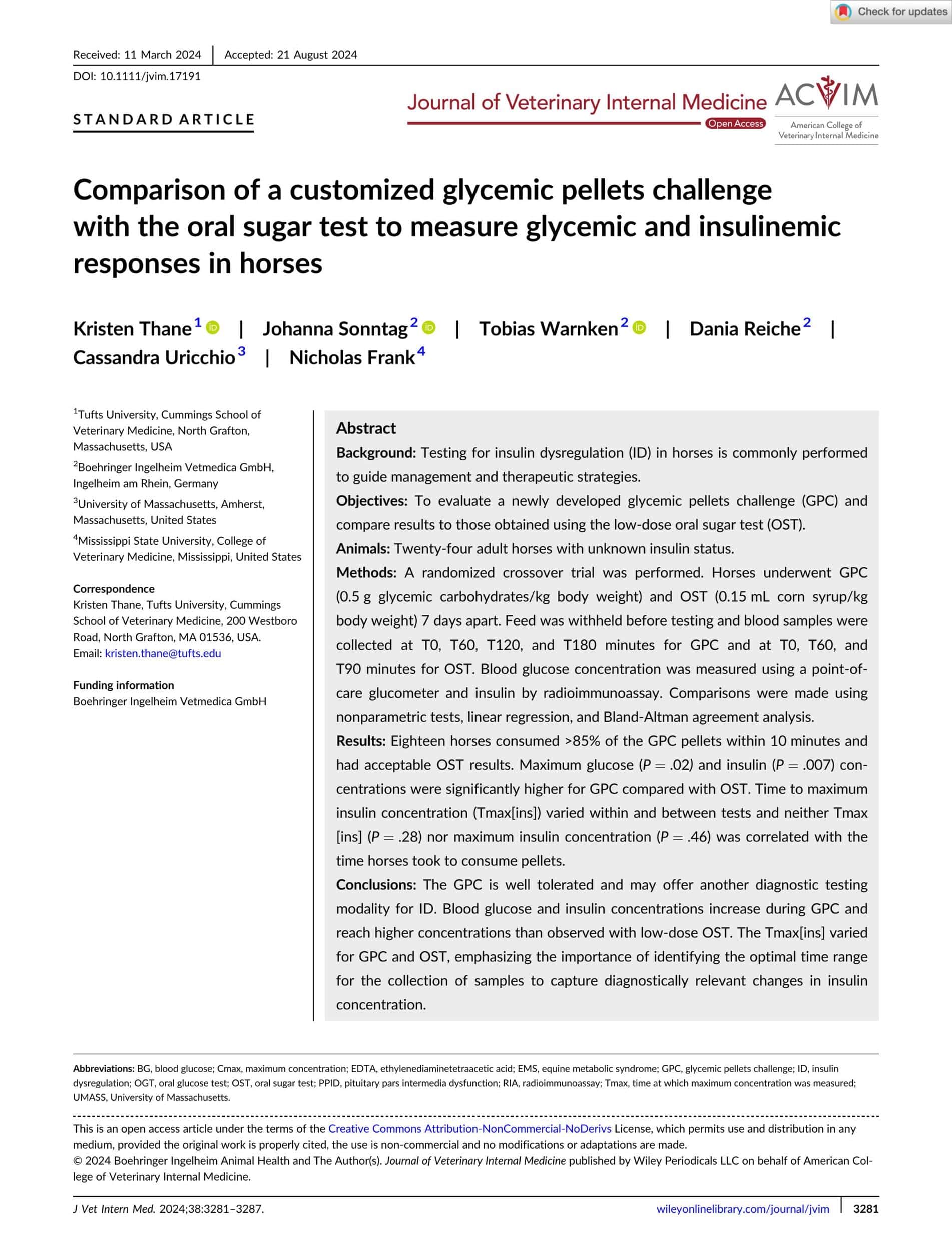
Comparison of a customized glycemic pellets challenge with the oral sugar test to measure glycemic and insulinemic responses in horses [16]
Determining a horse’s insulin status — meaning how effectively insulin controls blood sugar levels — is critical for identifying horses with insulin dysregulation (ID) and managing their risk of laminitis.
To assess insulin status, veterinarians often use dynamic tests, like the oral sugar test (OST) or oral glucose test (OGT). These tests involve administering sugar or glucose orally and then measuring how insulin levels respond. They are particularly useful for identifying horses with insulin dysregulation that might have normal baseline insulin levels but still show clinical signs of equine metabolic syndrome (EMS).
However, these dynamic tests can be challenging or impractical in some situations (e.g., in field conditions or when fasting isn’t possible), making it difficult to establish standard reference ranges or thresholds that apply universally to all horses.
Objective & Methodology
To address these limitations, researchers developed a new test called the glycemic pellet challenge (GPC) as a practical and reliable alternative for evaluating insulin responses in horses. This method was directly compared to the oral sugar test (OST), currently considered the gold standard.
In this study, 24 adult horses with unknown insulin status were enrolled in a randomized crossover trial. Each horse completed both the GPC (consuming pellets containing 0.5 grams of glycemic carbohydrates per kilogram of body weight) and the OST (consuming corn syrup at 0.15 mL per kilogram of body weight), with a one-week break between tests.
Researchers assessed how palatable and well-tolerated the GPC was by recording the amount of pellets eaten, the time horses took to consume the pellets, and any signs of discomfort during the test.
Before each test, horses were fasted, and blood samples were collected at specific time points: at baseline (T0) and at 60, 120, and 180 minutes after the GPC, or at baseline, 60, and 90 minutes after the OST. Blood glucose was measured immediately using a portable glucometer, while insulin levels were analyzed in the laboratory using radioimmunoassay.
Results
Data from 18 horses was used. These horses ate more than 85% of the GPC pellets within 10 minutes which was considered acceptable intake for completing the glucose and insulin assessment and these horses had acceptable responses to the OST.
The GPC test produced higher blood glucose and insulin levels than the OST, likely due to the larger amount of glycemic carbohydrates provided by the pellets.
Variations in the timing of peak insulin levels were not explained by differences in how quickly horses consumed the pellets.
Conclusions & Relevance
The GPC presents a promising new approach for assessing insulin status in horses. The test was well-tolerated, and closely mimics natural feeding behavior and digestion, as opposed to the OST.
However, additional research is needed to refine the GPC for diagnosing ID in horses and to develop specific criteria for interpreting results across various measurement methods.
Moreover, the observed variability in the timing of peak insulin levels (Tmax[ins]) for both the GPC and OST highlights the importance of choosing optimal timing for sample collection. Collecting multiple samples at different time points may help improve diagnostic accuracy by capturing individual differences in insulin response.
Digestive health is essential for maintaining overall well-being and performance in horses. In 2024, new studies expanded our understanding of carbohydrate metabolism in the equine stomach, characterized microbial shifts associated with colic, and explored age-related changes in gut microbiota.
These findings provide key insights into optimizing feeding strategies, managing gastrointestinal conditions, and supporting gut function throughout the horse’s lifespan.
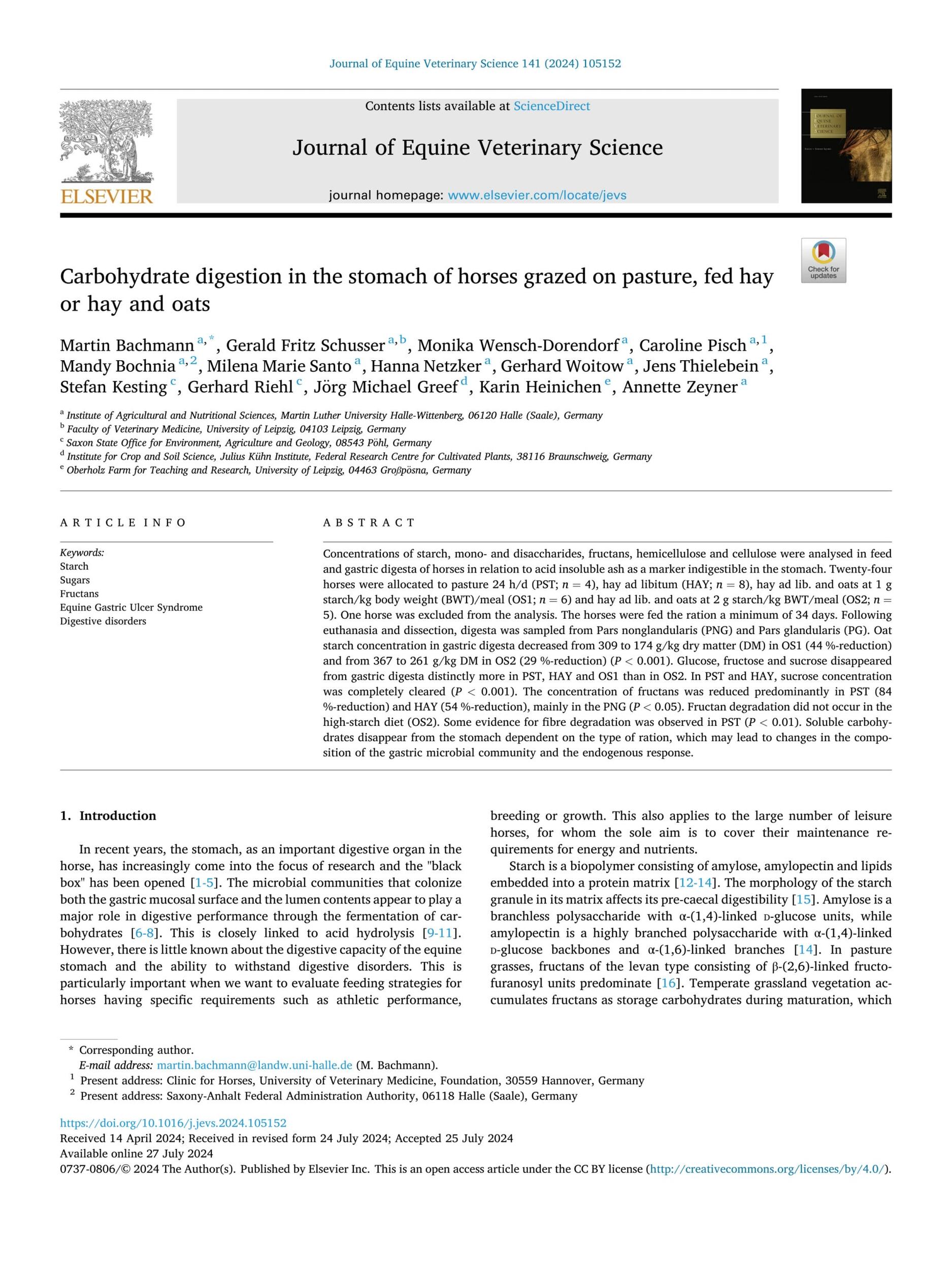
Carbohydrate digestion in the stomach of horses grazed on pasture, fed hay or hay and oats [17]
Previous research has highlighted the importance of microbial populations in equine digestion, particularly regarding how horses process starch and fructans.
Starch, found mainly in cereal grains, is composed of amylose and amylopectin and is primarily broken down (hydrolyzed) in the stomach and small intestine. In contrast, fructans in forage are mostly fermented by microbes in the hindgut.
When horses consume excessive starch, they become more vulnerable to digestive problems such as equine gastric ulcer syndrome (EGUS).
Additionally, high-starch diets can negatively affect insulin sensitivity, increasing the risk of laminitis. Therefore, carefully managing dietary starch and fructan intake is essential for supporting digestive health and preventing metabolic issues in horses.
Objective & Methodology
The objective of this study was to evaluate how different types of carbohydrates (starch, sugars, fructans, and fiber) are broken down in the horse’s stomach. Researchers used acid-insoluble ash as a marker for indigestible material, allowing them to track fiber digestion by comparing the levels in the feed with those found in the stomach contents.
Twenty-four horses were divided into four dietary groups:
- Pasture (PST)
- Free-choice hay (HAY)
- Free-choice hay plus oats providing 1 gram of starch per kg of body weight (OS1)
- Free-choice hay plus oats providing 2 grams of starch per kg of body weight (OS2)
Each diet was fed for at least 34 days. Samples of stomach contents (digesta) were collected from both the upper non-glandular (Pars nonglandularis, PNG) and lower glandular regions (Pars glandularis, PG) of the stomach. Additionally, all feed types were analyzed for nutritional composition.
Results
Starch levels decreased more in horses fed lower levels of starch (OS1) compared to higher levels (OS2), confirming that starch digestion starts in the stomach and that there is an upper limit to how much starch can be digested in the stomach.
Sugars like glucose, fructose, and sucrose initially increased in the stomach, especially in horses fed oats, but their levels dropped significantly by the time they reached the lower part of the stomach. In fact, sucrose was almost completely digested by this stage in some diets.
Fructans underwent microbial fermentation in the stomach of horses on oats (OS1, OS2) and pasture diets, although the degree of breakdown varied. In the groups receiving higher starch (OS1 and OS2), fructans were less digested in the stomach and were likely fermented later in the large intestine.
The pasture-fed horses showed evidence of fiber digestion in the stomach, highlighting that microbial fermentation processes in the stomach are influenced by the specific components of the diet.
Conclusions & Relevance
This study investigated how carbohydrates (starch, sugars, fructans, and fiber) are digested in the horse’s stomach.
The results showed that the stomach plays a key role in breaking down these carbohydrates before they reach the small intestine. Importantly, digestion varied significantly based on the horses’ diet: horses fed oats showed higher starch digestion in the stomach compared to horses fed only pasture or hay.
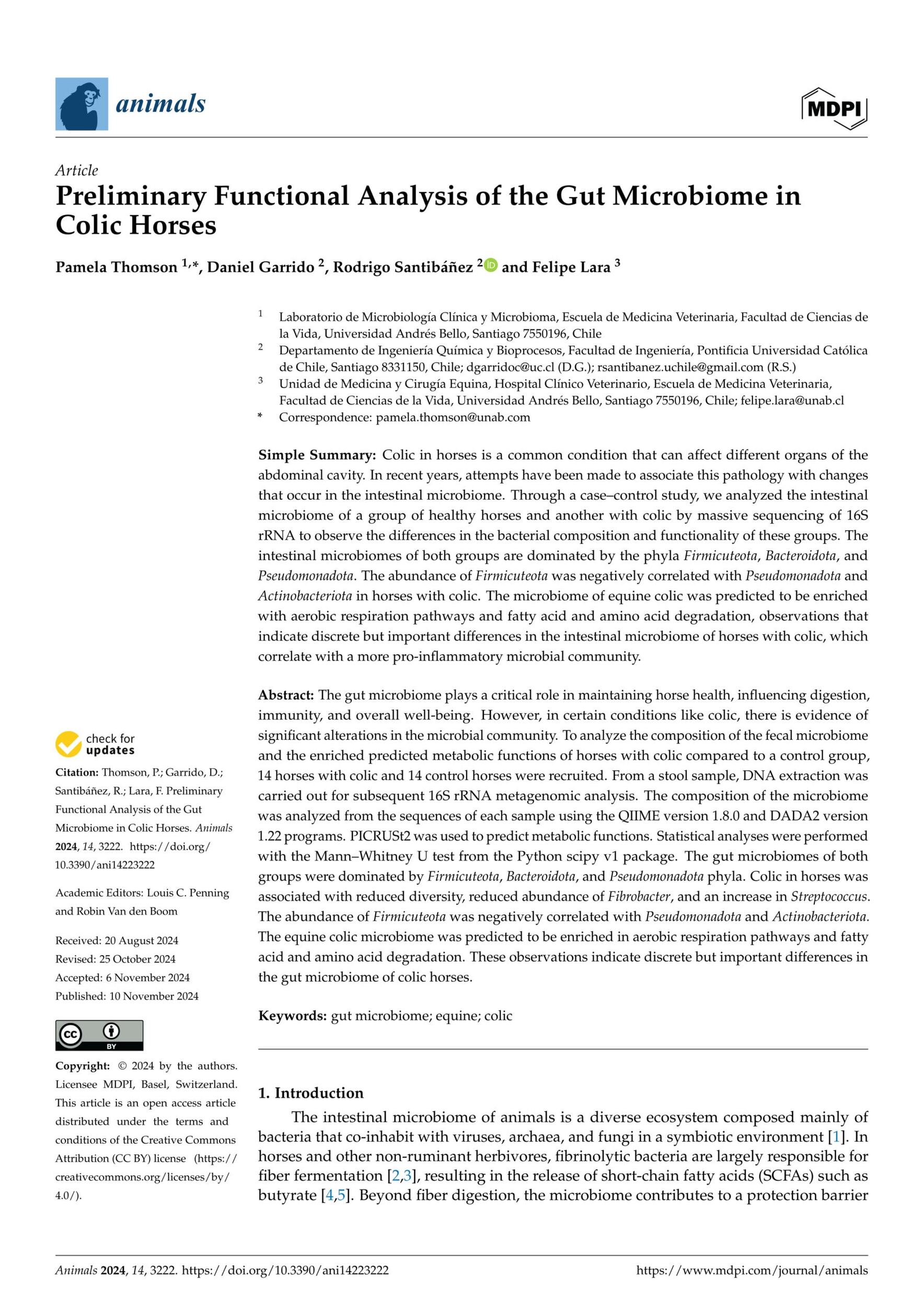
Preliminary functional analysis of the gut microbiome in colic horses [18]
In horses, the hindgut microbiome — the community of beneficial microorganisms living in the cecum and colon — is essential for digesting fiber, producing short-chain fatty acids (SCFAs), and supporting the immune system. The composition of this microbiome can change significantly based on diet and environmental factors.
When the microbial balance becomes disrupted, known as dysbiosis, horses are at increased risk of health problems such as colitis, metabolic syndrome, and colic.
It has been proposed that some forms of colic may result from the microbiome’s inability to adapt effectively to changes in diet or environment, such as high-grain feeds, poor-quality forage, stress, periods without feed (fasting), or the use of antibiotics.
Objective & Methodology
The goal of this study was to compare the intestinal microbiome (gut bacteria) of healthy horses with those experiencing colic. The researchers focused specifically on identifying differences in bacterial populations and predicting which metabolic functions might differ between the two groups.
A total of 28 adult horses were included in the study, split evenly into two groups:
- Healthy horses (no signs of colic)
- Horses experiencing colic involving the large intestine
Researchers collected fecal samples from both groups and extracted DNA to perform detailed 16S rRNA metagenomic analyses, enabling them to study and compare the fecal bacterial communities as well as the metabolic outputs of these populations.
Results
The microbiomes of both healthy and colic-affected horses were primarily composed of bacteria from the phyla Firmicuteota, Bacteroidota, and Pseudomonadota. However, horses experiencing colic had significantly lower microbial diversity, indicating disruption of their normal bacterial populations (gut dysbiosis).
Colic was also associated with:
- A reduced abundance of beneficial fiber-digesting bacteria, particularly Fibrobacter and Solibacillus
- An increased abundance of lactic acid-producing bacteria, especially Streptococcus
These changes suggest a shift in fermentation patterns within the gut, potentially contributing to harmful conditions.
Additionally, predictions of microbial metabolism showed reduced aerobic (oxygen-based) functions and an increase in fatty acid production and breakdown of certain metabolites, further suggesting altered intestinal function in horses with colic.
Conclusions & Relevance
This study identified significant changes in the fecal microbiome of horses with colic, along with notable shifts in predicted metabolic functions. Specifically, horses experiencing colic showed increased microbial activity related to aerobic respiration and the breakdown of fatty acids and amino acids, which has been correlated to a more inflammatory gut environment in other species.
Further research is required to fully understand how these microbial changes influence colic risk, and to develop better strategies for preventing and managing this condition in horses.
Changes of faecal bacterial communities and microbial fibrolytic activity in horses aged from 6 to 30 years old [19]
Starting around age 15, horses commonly experience a decline in body condition and increased vulnerability to disease.
These issues may relate to changes in the large intestine microbiome—particularly affecting fiber digestion and the activity of beneficial gut microbes. The microbiome in the large intestine plays an essential role in digestion, immune health, and energy availability through microbial byproducts like short-chain fatty acids (SCFAs).
Currently, limited research makes it challenging to provide specific dietary and preventive care guidelines tailored to older horses. In humans, aging is known to reduce microbial diversity and increase harmful gut bacteria, but similar studies are not yet widely available for horses.
More equine-specific research is needed to better understand these age-related microbiome changes and their implications for managing senior horses.
Objective & Methodology
This study aimed to compare the fecal microbiome of horses aged 6 to 30 years to understand how gut bacteria and their ability to digest fiber change as horses age. A secondary goal was to determine whether there is a specific age when these microbial changes become most noticeable.
Fifty healthy horses, aged between 6 and 30, were selected from the same management environment and divided into four age groups:
- 6 – 10 years (12 horses)
- 11 – 15 years (11 horses)
- 16 – 20 years (13 horses)
- 21 – 30 years (14 horses)
All horses were fed a consistent diet of free-choice hay and approximately 860 grams (30 oz) of concentrate daily for three weeks before fecal samples were collected.
Each fecal sample was analyzed using bacterial 16S ribosomal RNA (rRNA) sequencing to identify bacterial communities present. Additionally, levels of microbial byproducts, specifically short-chain fatty acids (SCFAs) and lactate, were measured to assess microbial activity.
Results
The study found that the total number and variety of bacterial species in horse fecal samples decreased with age, especially in horses aged 21–30 years. Older horses also showed a shift in the balance between beneficial and potentially harmful bacterial species.
Although the overall levels of short-chain fatty acids (SCFAs) stayed consistent with age, the specific types produced changed: older horses had lower proportions of acetate but higher proportions of butyrate, valerate, and iso-valerate.
Additionally, fecal pH decreased as horses aged, with the largest difference observed between the youngest (6–10 years) and oldest (21–30 years) groups, indicating age-related changes in gut bacterial activity and fermentation processes.
Conclusions & Relevance
These findings suggest that although the overall ability to digest fiber did not decline with age, changes in the gut microbiome may have reduced the efficiency of fiber fermentation. Horses aged 16 to 20 showed greater variation in microbiome characteristics, indicating that some individuals in this age group experienced significant microbial changes.
Understanding these age-related shifts can help guide early interventions — such as dietary modifications or using biotic supplements (prebiotics, probiotics, or postbiotics) — to support a healthy gut microbiome. Establishing what a healthy microbiome looks like in older horses could also enable earlier detection of harmful microbial changes, potentially reducing the risk of age-related health conditions.
Hoof health is critical for equine soundness, comfort, and performance. Research in 2024 investigated how shoeing techniques, hoof conformation, and innovative therapeutic approaches influence hoof biomechanics and lameness risk.
These studies explored how horseshoes affect hoof orientation, the connection between hoof shape and limb health, and the potential role of pulsed electromagnetic field therapy (PEMF) in improving sole depth. Together, these insights offer practical guidance for enhancing hoof management and preventive care strategies.
The influence of different horseshoes and ground substrates on mid-stance hoof orientation at the walk [20]
Therapeutic farriery involves using specially designed horseshoes, often combined with flexible or cushioned ground surfaces, to adjust the hoof’s angle and movement during the horse’s stance. These adjustments can help relieve mechanical stress on structures within the hoof and support healing.
For example, increasing the angle of the dorsal (front) hoof wall reduces strain on the deep digital flexor tendon, but may unintentionally place more load on the heel and increase strain on the suspensory ligament.
A related approach called kinesiotherapic horseshoeing combines modified shoes with deformable (flexible) substrates, aiming to enhance therapeutic effects while limiting unwanted side effects. However, there is currently limited scientific research supporting its effectiveness.
Triaxial accelerometers — sensors commonly used in other fields to precisely measure orientation and movement — have not yet been utilized in equine hoof studies. Applying this technology could offer valuable insights into how different shoeing methods influence hoof orientation and biomechanics.
Objective & Methodology
The goal of this study was to measure how different types of horseshoes and ground surfaces affect the hoof’s orientation relative to the ground. Researchers used a triaxial accelerometer, mounted on the front of the hoof, to quantify changes in hoof angle in the sagittal (front-to-back) and transverse (side-to-side) planes when horses walked.
In a randomized crossover study, six horses were tested wearing various aluminum horseshoes, including regular, egg bar, toe-wide, medial-wide, lateral-wide, and three-degree egg bar designs. Each horse was assessed with each type of horseshoe applied to the front hooves. The horses first underwent stance measurements on a hard surface, then performed walking trials on three different ground surfaces:
- Rubberized bricks
- Coarse-washed sand
- Grass turf
Data collection began once the horses showed a consistent walking gait. Throughout the trials, no changes were made to the hind hooves or hind shoes.
Results
Hoof angles were significantly affected by both the type of horseshoe used and the ground surface. On softer, deformable surfaces, horses showed an increased sagittal (front-to-back) hoof angle, especially when wearing egg bar shoes on turf and sand.
In terms of side-to-side orientation, medial-wide shoes caused the hoof to sink more toward the outside (laterally), while lateral-wide shoes reduced lateral sinking on turf and caused a slight inward (medial) shift on sand.
All shoe types increased the angle of the dorsal (front) hoof wall on turf and sand, with egg bar shoes causing the most notable increase. Additionally, a general lateral shift in hoof orientation was seen at mid-stance across all shoe types, with medial-wide shoes producing the largest lateral shift, and lateral-wide shoes causing the smallest lateral shift, along with a slight medial shift on sand.
Conclusions & Relevance
Changing the type of horseshoes and the ground surface influenced the orientation of the horse’s hoof both front-to-back (dorsal–palmar) and side-to-side (medial–lateral).
When horses walked on soft surfaces, their hooves tended to pitch forward. Differences in hoof orientation between standing still and walking were minimal, but changing horseshoes affected hoof position during walking.
Some shoes, such as the toe-wide type, did not have anticipated effects, like allowing the heel to sink or reducing the hoof angle.
While modified horseshoes did alter hoof position, it remains unclear whether these changes meaningfully affect overall leg health. More research is necessary to determine if these subtle shifts in hoof orientation have clinically important impacts, especially for horses without existing soundness issues.
Investigating associations between horse hoof conformation and presence of lameness [21]
The horse’s hoof plays a key role in locomotion (movement) by supporting body weight, absorbing impact, and protecting sensitive internal structures. The shape and balance of the hoof reflect the forces acting on it; imbalances can signal potential problems such as lameness.
Hoof conformation is influenced by factors such as growth rate, wear patterns, surface type, and diet, all of which directly affect limb biomechanics. Specific aspects of hoof shape — such as the dorsal hoof wall angle and the alignment between the hoof and pastern (hoof-pastern axis) — can influence the horse’s risk of injury.
Proper hoof care and regular trimming are essential to maintain balanced hoof conformation, reduce injury risk, and support long-term soundness.
Objective & Methodology
This study aimed to examine whether two specific hoof measurements — coronet band circumference (CBC) and dorsal hoof wall angle (DHWA) — are associated with limb lameness in horses. The goal was to develop a reliable, scientifically supported method for evaluating lameness risk based on hoof shape and conformation.
A random sample of 73 mature horses, including show jumpers, dressage horses, and horses from riding centers, was assessed. Researchers measured the CBC and DHWA on all four limbs of each horse, with the horse standing neutrally on a flat, rubber-covered surface.
CBC was measured using a flexible measuring tape placed around the coronet band, while DHWA was measured by placing an iPhone 13 Pro against the dorsal (front) hoof wall from a side view, using the “Measure” app, and subtracting the angle obtained from 90°.
Lameness evaluations were performed by observing each horse while ridden and unridden at a walk, trot, and gallop on packed sand footing after at least 15 minutes of warm-up. Observations included the horse walking straight towards and away from the observer, as well as turning both left and right. According to the American Association of Equine Practitioners lameness scale, a horse was considered lame only if lameness was clearly visible at a trot. Lameness was recorded as either present or absent for each limb.
Results
The study identified a clear connection between hoof shape and limb lameness, with 54.1% of the horses showing signs of lameness.
Among show jumping and dressage horses, certain hoof measurements significantly increased lameness risk: limbs with a smaller coronet band circumference combined with a larger dorsal hoof wall angle, or limbs with a larger coronet band circumference and a smaller hoof wall angle.
A smaller circumference and steeper hoof wall angle reflect a more upright hoof shape, making the limb susceptible to higher impact forces. Conversely, a larger circumference paired with a lower hoof wall angle indicates a broken-back hoof-pastern alignment, placing increased strain on structures like the suspensory ligament.
Conclusions & Relevance
This study found a strong relationship between hoof morphometric characteristics (DHWA and CBC) and the presence of lameness. These findings highlight the importance of monitoring hoof shape and implementing early podiatric interventions, such as corrective trimming or shoeing, to prevent lameness from occurring or worsening.
Evaluating the effect of pulsed electromagnetic field (PEMF) therapy on sole depth of the equine hoof: A pilot study [22]
The structure of a horse’s hoof—including the thickness of the sole and the angle of the coffin bone (P3)—is crucial for maintaining soundness. Breed, conformation, and previous injuries can all influence hoof structure. Deviations in sole depth or P3 angle can lead to hoof problems such as bruising, fractures, or laminitis.
Common methods to reduce the impact of thin soles or improper hoof angles involve anti-inflammatory drugs (NSAIDs), therapeutic injections, or corrective farriery. However, these approaches can be expensive and often have limited effectiveness in addressing underlying structural issues.
Pulsed electromagnetic field therapy (PEMF) is an alternative therapeutic approach in equine medicine, commonly used for bone healing, reducing inflammation, and aiding tissue repair. Despite its growing popularity, there is currently limited scientific research evaluating its effectiveness specifically for improving hoof structure and health.
Objective & Methodology
The goal of this study was to determine whether PEMF therapy could improve sole depth in horses.
Ten clinically sound, mature horses were randomly assigned into two groups:
- PEMF group: Horses received a 10-minute PEMF treatment applied to both front hooves, three times per week for 30 days.
- Control group: Horses received no PEMF treatment.
Radiographs (X-rays) were taken before starting treatments and again after the 30-day period. Researchers measured sole depth and the palmar angle (angle of the coffin bone relative to the ground) to evaluate any changes resulting from the therapy.
Results
The study found no significant differences in sole depth or digital cushion depth between control horses and those receiving PEMF treatment at the start of the study.
However, there was a slight trend toward increased sole depth in the right hoof of PEMF-treated horses, averaging an increase of 2.2 ± 1.4 mm over 30 days. In contrast, control horses showed a slight decrease in sole depth during the same period.
No noticeable changes were seen in sole depth near the tip of the coffin bone or in the left hoof. Additionally, PEMF treatment did not significantly improve the palmar angle of the coffin bone (P3) compared to the control group.
Conclusions & Relevance
This pilot study suggests that PEMF therapy may slightly improve sole depth in horses, with a mild trend toward increased sole thickness observed in one front hoof. The findings indicate that PEMF could potentially serve as a non-invasive treatment option for horses with thin soles, although the observed benefits varied between individual horses and were limited to a single hoof.
While the treatment did not significantly improve the palmar angle or overall hoof structure, these preliminary results highlight the importance of conducting additional studies with larger groups of horses and longer treatment periods. Further research is necessary to clearly determine the effectiveness of PEMF therapy for enhancing hoof health and performance in horses.
Joint health is important for the performance, comfort, and longevity of horses, particularly in competitive and athletic disciplines. In 2024, researchers advanced our understanding of the diagnosis and treatment of joint conditions, from identifying molecular biomarkers to detect joint infections to evaluating intra-articular therapies commonly used for osteoarthritis management.
Additionally, new studies clarified the interpretation of imaging findings from MRI and CT scans in performance horses, supporting accurate diagnoses and informed treatment strategies. Together, these findings help refine clinical approaches to preserving joint integrity and optimizing equine health outcomes.
What's your top priority with your horse's health?

Enter your email to receive your store credit
Putative mRNA Biomarkers for the Eradication of Infection in an Equine Experimental Model of Septic Arthritis [23]
Joint infections are a serious health problem that can rapidly lead to cartilage damage, arthritis, and permanent loss of performance capacity in horses. These bacterial infections require aggressive treatment with antibiotics to completely eliminate the infection, preventing further joint damage.
Currently, there are no reliable tests to confirm when a bacterial infection in a horse’s joint has fully cleared, often resulting in unnecessarily prolonged antibiotic treatments. Extended antibiotic use can lead to serious side effects, while insufficient treatment can encourage the development of antibiotic resistance.
Developing a reliable method to accurately detect when a joint infection has resolved is therefore a matter of critical importance for improving veterinary care and protecting horse health.
Objective & Methodology
This study examined whether certain mRNA biomarkers — small fragments of genetic material — in joint fluid could reliably indicate the presence of bacterial joint infections in horses.
Ten horses were divided into two groups: one group had a septic joint infection induced by injection of E.coli, while the other had non-septic synovitis (joint inflammation without infection) induced by injection of the molecule LPS. Joint fluid samples were collected from both an affected and an unaffected joint in each horse.
All horses then received appropriate treatment, and additional joint fluid samples were collected afterward.
Researchers compared the mRNA biomarkers from joint fluid in horses with active bacterial infections to those with non-infectious inflammation and also to samples collected after treatment.
Results
The study identified eight mRNA biomarkers that were at least three times higher in horses with active joint infections compared to those with non-infectious inflammation or those evaluated post-treatment.
Conclusions & Relevance
Identifying clear biomarkers of active joint infections could lead to better treatment outcomes and help avoid unnecessary or prolonged antibiotic use in horses.
While additional research into the application of transcriptomics, the analysis of mRNA biomarkers, is needed in equine medicine, this study provides promising initial evidence for improving how joint infections are diagnosed and treated in the future.
Evidence of the clinical effect of commonly used intra-articular treatments of equine osteoarthritis [24]
Osteoarthritis is a chronic, degenerative joint condition characterized by inflammation, breakdown of cartilage, and changes to the bone structure, leading to pain and reduced mobility. It is very common in horses, accounting for up to 60% of all cases of lameness. [25]
Because of its prevalence, there is considerable interest in finding effective treatments and management strategies, especially among performance horses. Although various treatment options currently exist, their overall effectiveness remains unclear due to a lack of comprehensive clinical research.
Objective & Methodology
This research article provides a systematic review of the most commonly used intra-articular (into the joint) treatments for osteoarthritis in horses. The review focused on the following treatments:
- Hyaluronic Acid (HA): A natural substance found in joint fluid that helps lubricate and cushion joints.
- Glucocorticoids (Steroids): Anti-inflammatory medications commonly injected into joints to reduce inflammation, swelling, and pain.
- Platelet-Rich Plasma (PRP): A concentrated solution of platelets extracted from the horse’s blood, containing growth factors intended to accelerate healing and reduce inflammation.
- Interleukin-1 Receptor Antagonist Protein (IRAP): A biological therapy that blocks inflammatory signals, aiming to reduce joint inflammation and slow cartilage degradation.
- Mesenchymal Stem Cells (MSCs): Specialized stem cells obtained from tissues like bone marrow or fat, injected into joints to help regenerate damaged cartilage and control inflammation.
The researchers identified 22 scientific studies evaluating these treatments and analyzed the combined evidence from those studies to assess their effectiveness.
Results
Based on their analysis of the literature, the researchers concluded that intra-articular glucocorticoids (steroids) provide beneficial short-term improvements in horses with osteoarthritis.
In contrast, the evidence regarding hyaluronic acid injected into the joint was inconsistent, making it difficult to confirm its clinical effectiveness.
Platelet-rich plasma (PRP), interleukin-1 receptor antagonist protein (IRAP), and mesenchymal stem cells (MSCs) each showed promising results in improving lameness, though further research is needed to establish their long-term effectiveness.
Conclusions & Relevance
Of the five treatments reviewed, PRP, IRAP and MSCs currently show the most promise for treating or managing osteoarthritis in horses. These treatments are becoming more widely available in equine practices, and may have significant impacts on equine lameness management in the future.
However, the researchers emphasized that more blinded, randomized, and placebo-controlled studies are necessary to fully understand the efficacy of these treatments.
Magnetic Resonance Imaging, Computed Tomographic and Radiographic Findings in the Metacarpophalangeal Joints of 31 Warmblood Showjumpers in Full Work and Competing Regularly [26]
Magnetic resonance imaging (MRI) and computed tomography (CT) scans are increasingly used in equine veterinary practice, especially for evaluating performance horses. These scans allow for a detailed evaluation of soft tissue structures that veterinarians could not previously perform.
However, interpreting the significance of some MRI and CT findings remains challenging, because not all soft tissue abnormalities found on these scans necessarily cause lameness. Further research is needed to clarify which findings directly impact horse performance and health.
Objective & Methodology
Because little is currently known about normal, non-problematic changes visible on MRI and CT scans, researchers conducted a study to examine the fetlock joints of sound, actively competing show jumping horses.
Thirty-one horses without signs of lameness underwent a thorough lameness examination, as well as MRI and CT scans of their fetlock joints, to document imaging findings.
Results
Common findings on MRI and CT scans in these horses included:
- Thickening of the sagittal ridge, a ridge on the lower part of the cannon bone that interacts with the long pastern
- Thickening of the condyles of the cannon bone, the large smooth surfaces of the cannon bone that help form the fetlock joint
- Thickening of the bone in the proximal phalanx (long pastern)
Conclusions & Relevance
The three imaging findings identified in this study have previously been considered potential causes of lameness. However, the current study’s results indicate that these particular findings can also occur in sound, non-lame horses, suggesting they should be interpreted cautiously when evaluating an MRI or CT scan of a lame horse.
This information allows veterinarians to make more informed assessments of these relatively new diagnostic modalities, to ensure accurate diagnosis and appropriate treatment of the horse.
Healthy muscle function is essential for horses’ performance, strength, and overall well-being. Recent research from 2024 has provided new insights into how muscle metabolism, protein nutrition, and research techniques affect equine muscle health.
Studies explored differences in muscle physiology between breeds, evaluated how balanced protein diets enhance muscle development, and assessed the physiological impacts of repeated muscle biopsies. These findings help inform targeted nutrition, training, and management practices to optimize muscular health and athletic performance in horses.
Baselining physiological parameters in three muscles across three equine breeds. What can we learn from the horse? [27]
Different muscles have unique characteristics of metabolism and function, depending on the specific tasks they perform. Even the same muscle can vary significantly between horse breeds due to differences in genetics and selective breeding.
Because each horse breed has been selectively bred over time to excel at particular tasks—such as racing, endurance, or draft work—it’s expected that their muscular physiology will differ, reflecting the specific demands placed on their muscles.
However, the exact differences in metabolism and muscle characteristics among breeds and specific muscle groups have not yet been fully characterized in horses.
Objective & Methodology
The objective of this study was to compare muscle fiber type, size, and metabolic profile in three different muscles of three different breeds of horses: Friesians, Standardbreds, and Warmbloods.
The muscles analyzed were:
- Pectoralis muscle (PM) – chest muscle
- Vastus lateralis muscle (VL) – thigh muscle
- Semitendinosus muscle (ST) – hindquarter muscle
Researchers collected samples from each muscle in all three breeds and examined them to identify differences in fiber type composition, muscle fiber size, and metabolic activity.
Results
As expected, there were differences between breeds and muscles in fiber type and metabolic profile. When it came to muscle groups, the semitendinosus muscle (ST) showed the least difference between breeds, while the vastus lateralis (VL) showed the most difference across breeds.
Specific findings included:
- Fiber Type: Standardbreds, known for quick bursts of power, had a higher proportion of fast-twitch, oxidative (type IIa) fibers in their chest (PM) and thigh (VL) muscles. Friesians, known for strength and power, had a higher proportion of fast-twitch, less oxidative fibers in their chest (PM) muscles.
- Metabolic Profile: Friesian horses showed increased activity in metabolic processes related to fats and DNA, displaying higher concentrations of specific fats and energy-carrying molecules. They also demonstrated elevated activity in branched-chain and aromatic amino acid metabolism. Standardbred horses exhibited greater activity in xenobiotic (foreign substance) metabolism pathways and more efficient long-chain fat metabolism. Warmblood horses showed increased activity in processes involving energy, proteins, and DNA, and a greater utilization of carnitine compared to Standardbreds.
Conclusions & Relevance
Differences in muscle physiology between horse breeds highlight how muscles have evolved specialized traits to match the tasks each breed was originally developed to perform.
With more research into specific characteristics of each breed, metabolic differences may eventually inform interesting applications such as customized nutrition and training programs, management strategies, and other interventions to ensure optimal health and performance in individual breeds.
Effect of balanced vs. standard protein on muscle mass development in exercising horses [28]
Adequate muscle mass is important for optimal performance in horses, and the type and quality of dietary protein can significantly impact muscle development.
Soybeans are commonly used as a protein source in horse feeds. However, soybean protein does not perfectly match the “ideal” amino acid profile that closely resembles the natural composition of equine muscle, potentially limiting muscle growth and maintenance.
Objective & Methodology
This study aimed to evaluate if feeding exercising horses an ideal protein diet improves markers and measurements of muscle mass.
Twelve mature geldings were divided into two groups. One group was fed a standard soybean-based protein diet, and the other received an ideal protein diet (supplemented with lysine to better match the amino acid profile of horse muscle) for 12 weeks.
Throughout the study, horses followed their assigned diets and performed a light-to-moderate exercise routine five days per week.
Researchers collected urine and fecal samples to measure nitrogen retention, which indicates how effectively horses utilize dietary protein.
Higher nitrogen retention means that more protein is being absorbed and incorporated into body tissues, supporting muscle growth and repair. Lower retention suggests excess nitrogen is being excreted, indicating less efficient protein use.
Muscle tissue samples were analyzed for microscopic changes in muscle size and differences in amino acid levels. Additionally, overall muscle scoring and body measurements were recorded to detect any larger-scale changes in muscle mass.
Results
After 12 weeks, horses fed the standard protein diet retained more nitrogen overall. However, horses fed the balanced protein diet had higher muscle concentrations of key amino acids (arginine, leucine, methionine, phenylalanine, and valine).
Additionally, the balanced protein group showed improved neck muscle development early in the training program and had larger type II muscle fibers in their gluteal muscles by the end of the study.
Conclusions & Relevance
The authors concluded that microscopic changes in muscle fiber size and increased muscle amino acid concentrations indicate improved muscle development. Although these improvements weren’t clearly visible in overall body measurements during the study period, maintaining the diet and exercise regimen for a longer period could potentially result in noticeable muscle gains at the whole-body level.
Local and systemic responses to repeated gluteal muscle microbiopsies in mature sedentary horses [29]
Collecting a muscle biopsy involves puncturing the skin and muscle to obtain a tissue sample. In many equine studies, biopsies are taken repeatedly over time to track changes in muscle biomarkers.
However, it is unclear if repeated biopsies affect the biomarkers being measured. If biopsies themselves alter these markers, it becomes difficult to determine whether observed changes are due to the intervention being studied or simply the result of repeated sampling.
Objective & Methodology
The objective of this study was to determine whether repeated muscle biopsies influence mitochondrial function, antioxidant status, inflammation, and markers of muscle damage.
To evaluate this, researchers collected muscle samples from 26 horses, divided into four groups based on sampling frequency:
- Seven horses had biopsies taken initially and again 24 hours later.
- Six horses had biopsies taken initially and again after six hours.
- Seven horses had biopsies taken initially, then again at six and 12 hours.
- Six horses had biopsies taken initially, and again at six, 12, and 24 hours.
Researchers also collected blood samples from each horse, starting 24 hours before the first biopsy and continuing every six hours for a total of 72 hours.
Results
Some markers of mitochondrial capacity (LEAK respiration and electron transfer capacity of complex II) and mitochondrial volume density (measured by citrate synthase activity) were temporarily affected by repeated muscle sampling. However, mitochondrial capacity markers returned to normal within 12 hours.
Serum creatine kinase activity—a common marker indicating muscle damage—increased six hours after the initial biopsy and remained elevated for at least 48 hours. Other markers related to oxidative capacity, antioxidant status, and inflammation showed no changes due to repeated muscle sampling.
Conclusions & Relevance
Repeated muscle biopsies had minor and short-lived effects on some of the markers studied, and many showed no changes at all. The notable exception was serum creatine kinase, which increased after sampling and remained elevated throughout the study period.
Overall, repeated biopsies do not seem to significantly affect most markers in healthy, unstressed horses. However, caution should be used when interpreting serum creatine kinase data from studies involving serial biopsies, as elevations might reflect sampling-induced muscle damage rather than actual treatment effects.
Respiratory health is essential for equine performance, comfort, and longevity, particularly in athletic and working horses. New research from 2024 offers valuable insights into diagnosing and managing equine respiratory conditions, especially equine asthma. Studies explored the molecular profiles underlying different forms of asthma, highlighting potential for targeted therapies.
Research also showed how seasonal and environmental changes influence respiratory test outcomes, emphasizing the importance of considering these factors during diagnosis. Together, these findings enhance veterinarians’ ability to accurately identify and effectively manage respiratory diseases in horses.
Distinct Molecular Profiles Underpin Mild-To-Moderate Equine Asthma Cytological Profiles [30]
Mild-to-moderate equine asthma (MMEA) is a common cause of poor performance in horses, particularly racehorses. Veterinarians diagnose MMEA using a bronchoalveolar lavage (BAL), a procedure that collects fluid from the horse’s airway to identify the types of cells present.
BAL has the potential to support “precision medicine” by allowing veterinarians to select treatments targeted specifically at the type of inflammation found in an individual horse. However, previous attempts to classify asthma by the predominant cell type in BAL samples have not been successful.
Objective & Methodology
The researchers aimed to determine if horses with mild-to-moderate equine asthma (MMEA) could be grouped into subtypes based on the specific inflammatory proteins present in their airways, rather than relying solely on cell types.
They analyzed bronchoalveolar lavage (BAL) samples, comparing horses without asthma to those with four different asthma classifications previously identified by cell type.
Results
Horses with predominantly neutrophilic inflammation had elevated levels of proteins linked to classical inflammatory pathways. In contrast, horses with higher numbers of mast cells and eosinophils showed proteins indicating allergic-type inflammation.
Conclusions & Relevance
Identifying specific asthma subtypes based on inflammatory proteins may help veterinarians select more targeted treatments. This precision approach could improve treatment effectiveness, lead to better long-term management of equine asthma and support performance in exercising horses.
Influence of climatic changes on respiratory health in a teaching herd of outdoor-housed horses [31]
Bronchoalveolar lavage (BAL) is the primary method used to diagnose equine asthma. During this procedure, a veterinarian injects sterile saline into the horse’s lungs and then retrieves it to examine the cell types present in the fluid.
Because some cases of equine asthma seem related to seasonal, climatic, and temperature variations, researchers have questioned whether environmental conditions could affect BAL test results.
Objective & Methodology
The researchers wanted to identify whether BAL findings were influenced by season and temperature, even in horses without underlying respiratory disease.
To examine this, they performed BAL and took lung tissue biopsies of 17 horses during the spring, summer, and winter. They compared results between the seasons to identify any changes associated with temperature and time of year.
Results
Bronchoalveolar lavage results showed that the percentage of neutrophils was higher in spring compared to summer, while eosinophil levels were higher in winter compared to both spring and summer.
However, these seasonal changes seen in BAL samples were not reflected in the tissue biopsy results.
Conclusions & Relevance
This study suggests that even in healthy horses, the cellular results of a bronchoalveolar lavage may vary based on the horse’s climate. Therefore, interpretation of a BAL requires additional consideration of the timing of the test, to ensure accurate diagnosis. This information could help veterinarians more accurately diagnose equine asthma cases in the future.

Advancements in veterinary science continually improve the standard of care for horses, enhancing diagnosis, treatment, and clinical decision-making. Research from 2024 highlights innovations in assessing anesthesia risks, utilizing artificial intelligence for ophthalmic diagnostics, and applying ultrasonography to colic management in field settings.
These developments equip veterinarians with powerful tools and evidence-based insights, helping to refine treatment protocols, improve patient outcomes, and support informed clinical decisions in everyday equine practice.
Risk assessment in equine anesthesia: a first evaluation of the usability, utility and predictivity of the two-part CHARIOT [32]
General anesthesia is a medical procedure where the horse is fully sedated, unconscious, and unable to feel pain. It is typically used during major surgeries, complex diagnostic procedures, or treatments requiring complete immobilization, such as orthopedic surgery, colic surgery, or certain imaging studies (e.g., MRI or CT scans).
In horses, general anesthesia is a high-risk procedure, with mortality estimates around 1% of anesthetic events. [33]
In other species, risk assessment tools are used to identify patients with a high risk of anesthetic complications. This helps mitigate risks before and during the anesthetic event. Currently, there are no risk assessment tools validated for use in equine medicine.
Objective & Methodology
The researchers wanted to evaluate the efficacy of a risk assessment tool for horses undergoing anesthesia, called the Combined Horse Anesthetic Risk Identification and Optimization Tool (CHARIOT).
This tool combines an anesthetic risk tool developed for human medicine and an additional risk scale that has been proposed in the equine literature, but not validated.
Researchers evaluated 300 horses using the two previously developed scales individually, as well as the combined CHARIOT scale, and compared their assessments with the horse’s pre- and post-anesthetic complications.
Results
All three scores showed an association to mortality rate. However, final analysis determined that the CHARIOT score was not a better predictor of complications or mortality than either of its components.
Conclusions & Relevance
All three scoring systems evaluated were effective at predicting the risk of death in horses undergoing general anesthesia. Veterinarians can use these scores to identify higher-risk cases needing extra monitoring and support during anesthesia.
Further research is needed to develop a practical, reliable tool that accurately predicts anesthetic complications in horses.
Comparison of veterinarians and a deep learning tool in the diagnosis of equine ophthalmic diseases [34]
Equine uveitis is inflammation of the uvea — the middle layer of the eye that includes structures such as the iris and ciliary body. It is the leading cause of blindness in horses and often leads to the surgical removal of affected eyes. Early detection significantly reduces the risk of vision loss and the need for surgery.
The ability to rapidly diagnose uveitis could help preserve vision and avoid surgical intervention in horses who develop this condition. Accurate diagnosis also allows veterinarians to refer these cases to ophthalmology specialists who may be better able to manage complex cases.
Objective & Methodology
The researchers investigated whether a deep learning (artificial intelligence) tool could assist veterinarians in diagnosing equine uveitis. To develop this AI tool, researchers trained it using 2,346 images of horse eyes affected by various eye conditions.
After training, the AI tool was tested using 40 new equine eye images. To assess its effectiveness, the same set of images was also reviewed by 148 veterinarians, allowing researchers to compare the accuracy of the AI tool against veterinary performance.
Results
The AI program successfully identified the correct answer 93% of the time, compared to 76% of the time by equine veterinarians. Veterinarians not in equine specialty practice identified the correct answer 67% of the time.
Conclusions & Relevance
The AI program was at least equivalent to equine veterinarians in diagnosing eye disease based on photos. Therefore, it may be a beneficial tool for veterinarians in the field to use, particularly for veterinarians who are less experienced in equine eye diseases.
Preliminary study to evaluate the use of fast abdominal ultrasonography of horses with colic in first opinion ambulatory practice [35]
Colic is the most common emergency encountered in equine general practice. Rapid determination of whether a horse experiencing colic requires surgery is key, as quick intervention is associated with better survival outcomes.
Abdominal ultrasound is a common component of a colic work-up at referral hospitals, as it allows veterinarians to evaluate the position and integrity of the intestinal tract.
However, abdominal ultrasound is not routinely used in general veterinary practice during initial colic assessments. In contrast to referral hospitals — which are specialized facilities with advanced diagnostic equipment and surgical capabilities — general practices usually handle common health issues and emergencies on-site, and decide whether cases should be sent to referral hospitals for specialized treatment.
Objective & Methodology
This study investigated whether abdominal ultrasound would be a valuable addition to the colic workup for horses in general practice.
From 2018 to 2021, veterinarians used a wireless handheld ultrasound device to perform abdominal ultrasounds on horses experiencing colic. The researchers recorded ultrasound results and tracked outcomes for these cases to determine if ultrasound was useful for identifying serious conditions early.
Results
Of the 135 horses examined, 36% had a significant abnormal finding on abdominal ultrasound, and 38% had reduced motility of the small intestine. Identifying small intestinal distension was the most significant factor in non-survival identified on ultrasound.
Conclusions & Relevance
This study suggests that abdominal ultrasound can be effectively used in equine general practice, and that the findings of these scans can help veterinarians predict outcomes for the horse’s owners. This can help owners make decisions regarding euthanasia or surgical referral.
Equine welfare and behavior are closely connected, influencing both the physical health and emotional well-being of horses. In 2024, emerging research offered fresh insights into effective educational strategies, interpreting equine emotions accurately, assessing traditional handling practices, and evaluating the impact of management systems and training methods.
These studies help bridge the gap between science and practical horsemanship, empowering horse owners and caregivers to make informed, evidence-based decisions that foster improved welfare outcomes and stronger human-horse relationships.
Preliminary evidence supporting the use of equine science podcasts to bridge the gap between scientists and horse enthusiasts to improve welfare [36]
Although extensive equine research is available, scientists and veterinarians often find it challenging to effectively share findings with horse owners and the broader equestrian community. A lack of accessible education can lead to common issues, such as confusion around blanketing practices, feeding strategies, and general horse care.
Recently, educational podcasts have grown in popularity and may offer a new way to effectively communicate equine science to horse owners.
Objective & Methodology
Researchers conducted a survey of 54 listeners of an established equine science podcast to assess how listeners interact with scientific information presented in episodes.
The survey asked listeners how they engaged with the scientific content and whether podcast episodes led them to change their approach to horse care or training. Respondents were also invited to explain any changes they made and their reasons for making those adjustments.
Results
74% of respondents made changes to their management or training principles because of things they learned on the podcast. Of these, 55% had made changes as a result of both the primary discussion on the podcast and additional research it inspired them to do. 98% of respondents were happy with the change(s) they had made.
Conclusions & relevance
Respondents felt the podcast help them make sense of complex research topics in a positive and supportive way. By providing listeners with more information, the podcast empowered them to continue their own research and make evidence-based choices to improve the welfare of their horses through care and management decisions.
Podcasts may present a beneficial and accessible way to connect horse owners with equine science topics.
How well can you tell? Success of human categorisation of horse behavioural responses depicted in media [37]
Interpreting your horse’s emotions is a key aspect of ensuring both equine welfare and human safety. However, humans often struggle to correctly read horse behavior, frequently relying on anthropomorphic explanations—attributing human emotions or intentions to horses—instead of using objective assessments of behavior.
Objective & Methodology
The authors investigated how well respondents could classify a horse’s experience while interacting with humans compared to the interpretations of equine behavior experts.
534 respondents saw 22 videos and 9 photos of horse-human interactions and scored them as positive, likely positive, neutral, likely negative, or negative. Responses for each interaction were compared to expert responses.
Results
Participants’ responses matched expert evaluations only 52.5% of the time. Respondents were better at correctly identifying clearly positive or negative interactions, whereas subtler interactions were harder to interpret accurately.
When interactions were simplified to just “positive” or “negative,” participants agreed with experts 78.5% of the time. Respondents with more horse experience were better at classifying obviously positive or negative interactions, but their performance on subtle or neutral interactions was no better than that of less experienced respondents.
Conclusions & Relevance
Overall, participants were generally able to identify overtly positive and negative interactions between horses and humans, but struggled to pick up on more subtle behavioral signs of positive and negative emotions. Even participants with extensive horse experience struggled to accurately classify these interactions.
When a horse’s emotional state is not appropriately acknowledged, it can lead to welfare issues or unintentional mistreatment. Learning about equine behavior is a lifelong process, and equestrians should continue striving to improve their own understanding of their four-legged partners.
Compliance or confusion? The usefulness of blindfolding horses as a handling technique [38]
Blindfolds are commonly thought to make horses easier to handle in emergency scenarios like barn fire evacuations. However, this popular industry belief has never been officially tested.
Understanding best practices for large animal rescue can improve the odds of successful evacuations while keeping both horses and humans safe.
Objective & Methodology
The researchers tested how blindfolds may influence handling in emergency situations. Horses were put through two tests both blindfolded and unblindfolded: being led from a stall, and being led through an obstacle course.
The obstacle course required them to weave through cones, back up through a chute, walk over a tarp, and walk through a “gate” made of pool noodles that brushed their shoulders and flanks.
Results
In general, blindfolded horses took longer to be led and required more pressure on the lead rope during handling than unblindfolded horses. Blindfolded horses also displayed more avoidant and active refusal behaviors, such as backing up or lifting their head.
The visually frightening “gate” obstacle was easier for blindfolded horses to navigate than unblindfolded horses.
Conclusions & Relevance
Blindfolding made handling slower and more challenging in a majority of situations, meaning it is not an effective method of handling in emergency evacuations.
Blindfolds may help horses navigate certain visually frightening scenarios, but they should only be used in non-emergency settings where time is not a concern.
The impact of restricted grazing systems on the behaviour and welfare of ponies [39]
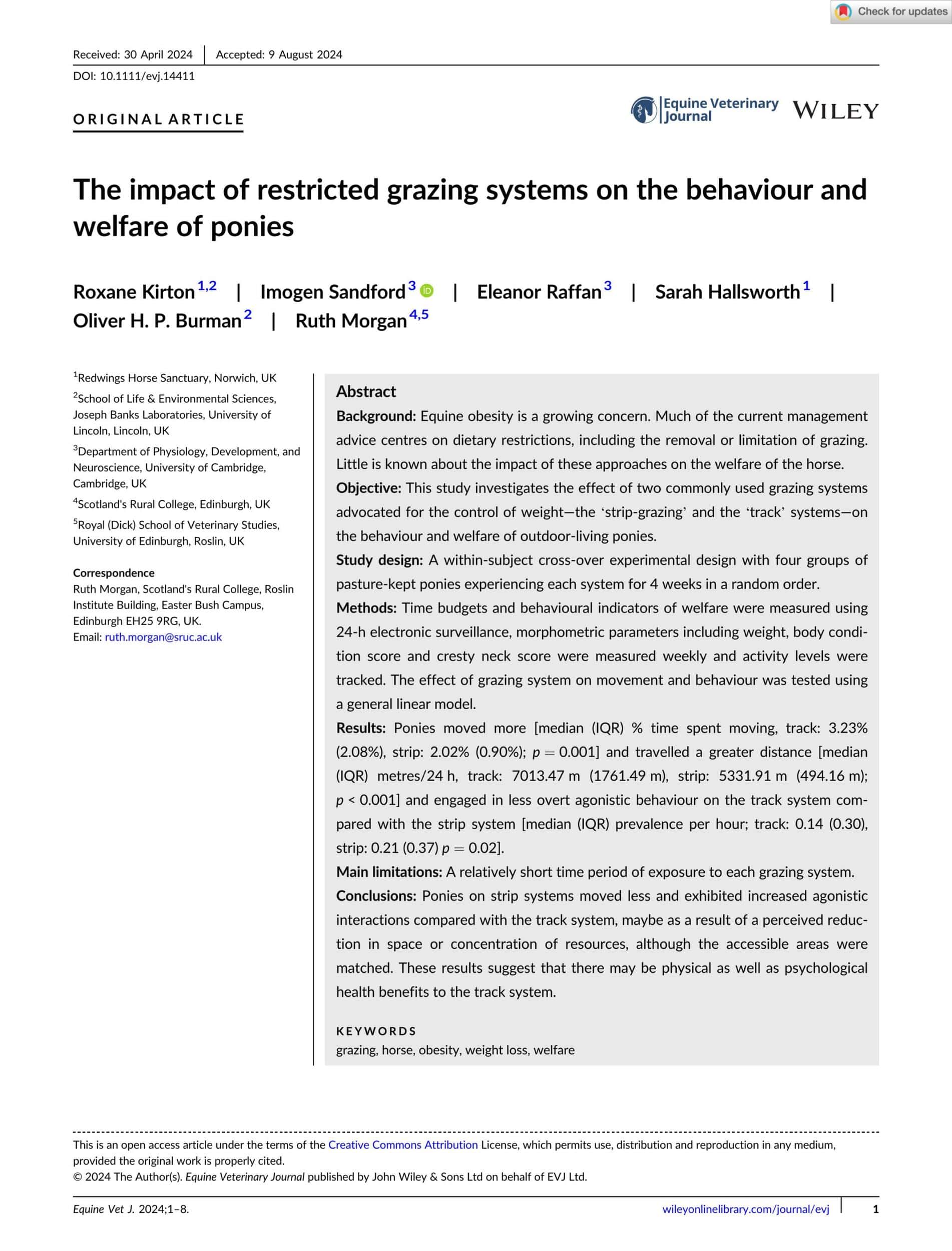
Equine obesity presents many health and welfare concerns, and is very common in the industry. Weight loss programs for horses and ponies often include limiting grazing. However, restricting horses from performing this natural behavior could negatively affect their mental well-being, as well as their expression of other behaviors.
Both strip and track grazing systems are often used to reduce access to grazing opportunities while still offering horses a chance to exhibit natural behaviours. Both systems involve slowly moving the fence line in a pasture to provide expanded access to a grazing area over time, while limiting exposure to lush pasture.
Objective & Methodology
Researchers compared how strip grazing and track grazing systems influence the behavior and grazing patterns of ponies to understand which weight-management system would allow for more expressions of natural behavior.
35 ponies living outside in four pre-existing herds were studied. Each group spent four weeks living on a strip grazing system and four weeks living on a track grazing system in a randomized order. Behavior was assessed for 24 hours once a week, and movement was tracked using GPS data loggers worn on the halter.
Results
Ponies moved more frequently and covered greater distances on the track grazing system, though overall grazing behavior was similar in both systems.
Ponies showed more agonistic (aggressive) interactions in the strip grazing setup compared to the track system, but aggression levels were highest in both systems during the initial week when space was most restricted.
Neither grazing method significantly affected weight loss within the short duration of the study.
Conclusions & Relevance
This study supported previous findings that providing horses with a larger turnout area reduces agonistic (aggressive) interactions.
Although neither system was evaluated long enough to significantly impact weight loss, the behavioral data indicates that track grazing systems encourage more natural behavior and movement compared to strip grazing systems. Therefore, track grazing may offer a more welfare-friendly method for managing weight in horses.
Hyperflexing the horse’s neck: a systematic review and meta-analysis [40]
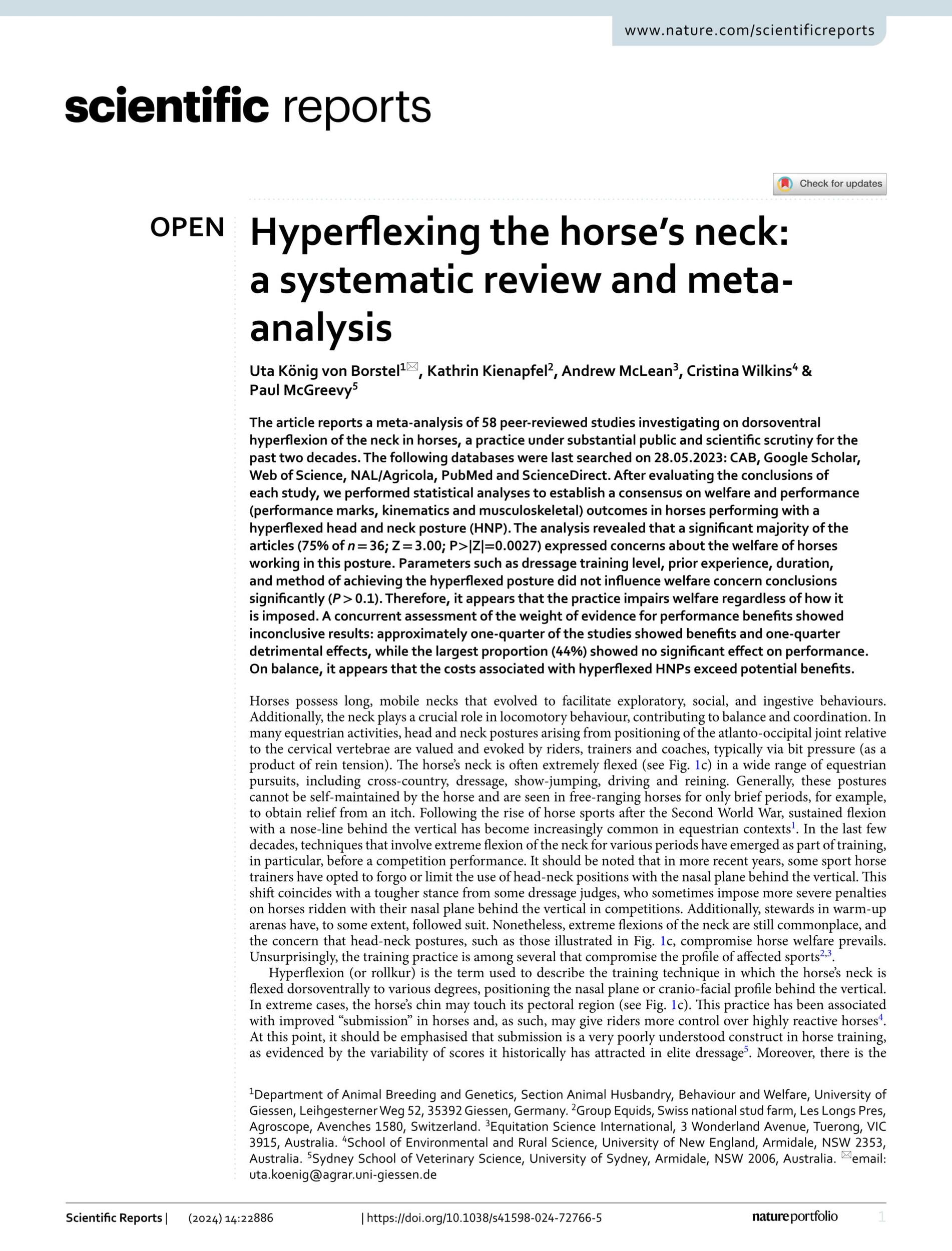
Hyperflexion or “rollkur,” a style of riding where the horse’s nose is angled towards their chest via force from the rider’s reins or restrictive equipment has been a long-standing subject of debate in the equine industry.
Many equestrians acknowledge the negative welfare impacts such a position can have on the horse, but some individuals still claim the position has benefits for the horse.
Objective & Methodology
The authors conducted a systematic review of 58 existing peer-reviewed studies on hyperflexion to draw overall conclusions on the technique from a larger body of work.
Of the sub-topics they reviewed, the most prominent themes explored in the literature were welfare and performance-related impacts of hyperflexion.
Results
75% of studies concluded that equine welfare was negatively affected by hyperflexion, while 22% found no effect, and just 3% (1 study) found a positive effect. The horse’s pre-existing familiarity with hyperflexion, dressage training level, degree of hyperflexion or duration the position was sustained did not have an impact on welfare outcomes in the horses.
65% of studies failed to find any performance benefits of hyperflexion.
Conclusions & Relevance
Looking at the results from multiple studies on the same topic provides stronger evidence to support a conclusion than one individual study. This review highlighted that hyperflexion has negative welfare consequences regardless of any other horse-related factors that people might argue could influence results.
The welfare costs of hyperflexion largely outweigh any potential benefits, which do not have extensive evidence.
Summary
- The research conducted in 2024 has significantly advanced our understanding of equine health, care, and management, addressing key questions and revealing opportunities for future studies.
- While this summary highlights only a selection of the remarkable work performed by researchers worldwide, it showcases their ongoing commitment to enhancing horse welfare.
- It is through research like this that we can deliver evidence-based recommendations, empowering horse owners with innovative tools and knowledge to better support their horses' health, performance, and quality of life.
- You can help spread this valuable knowledge throughout the equine community by sharing this research roundup with other horse owners and industry professionals.
- Looking for more insights? View our roundup of the most interesting equine research studies from 2023.
References
- Leishman. E. M. et al., What the Hay: Predicting Equine Voluntary Forage Intake Using a Meta-Analysis Approach. animal. 2024. doi: 10.1016/j.animal.2024.101266.
- Ragnarsson. S. et al., Initial Impact of Different Feeding Methods on Feed Intake Time in Stabled Icelandic Horses. Animals. 2024.
- Lundqvist. H. and Elisabeth Müller. C., Feeding Time in Horses Provided Roughage in Different Combinations of Haynets and on the Stable Floor. Applied Animal Behaviour Science. 2022.
- Glunk, E. C. et al., The effect of a limit-fed diet and slow-feed hay nets on morphometric measurements and postprandial metabolite and hormone patterns in adult horses. Journal of Animal Science. 2015.
- Khiaosa-ard. R. et al., Changes in Nutritional and Hygienic Quality Due to Storage of Common Native and Processed Grain Cereals Intended for Horse Feeding. Journal of Stored Products Research. 2024.
- Equine Applied and Clinical Nutrition. Elsevier. 2013.
- Raspa. F. et al., Microbiota Characterization throughout the Digestive Tract of Horses Fed a High-Fiber vs. a High-Starch Diet. Frontiers in Veterinary Science. 2024. View Summary
- Destrez. A. et al., Changes of the Hindgut Microbiota Due to High-Starch Diet Can Be Associated with Behavioral Stress Response in Horses. Physiology & Behavior. 2015.
- Harlow. B. E. et al., Effect of Dietary Starch Source and Concentration on Equine Fecal Microbiota. PLOS ONE. 2016. View Summary
- Bulmer. L. S. et al., High-Starch Diets Alter Equine Faecal Microbiota and Increase Behavioural Reactivity. Scientific Reports. 2019. View Summary
- de Siqueira,. R. F. and Fernandes,. W. R., Dynamic Hematological Responses in Endurance Horses: Unraveling Blood Physiological Markers of Exercise Stress and Recovery. International Journal of Equine Science. 2024.
- Xing. J. et al., Leucine Promotes Energy Metabolism and Stimulates Slow-Twitch Muscle Fibers Expression through AMPK/mTOR Signaling in Equine Skeletal Muscle Satellite Cells. Comparative Biochemistry and Physiology Part D: Genomics and Proteomics. 2024.
- Davis. M. S. et al., Effects of Hyperthermia and Acidosis on Mitochondrial Oxidative Phosphorylation. Journal of Applied Physiology. 2024. View Summary
- Loos. C. et al., Nutraceutical Supplement Mitigates Insulin Resistance in Horses with a History of Insulin Dysregulation During a Challenge with a High-Starch Diet. Animals. 2024. View Summary
- Viviani. P. et al., Spring and Fall Blood Concentrations of Adrenocorticotropic Hormone, Insulin, and Thyroxine in Healthy Horses in Saskatchewan. Can Vet J. 2024.
- Thane. K. et al., Comparison of a Customized Glycemic Pellets Challenge with the Oral Sugar Test to Measure Glycemic and Insulinemic Responses in Horses. Journal of Veterinary Internal Medicine. 2024. View Summary
- Bachmann. M. et al., Carbohydrate Digestion in the Stomach of Horses Grazed on Pasture, Fed Hay or Hay and Oats. Journal of Equine Veterinary Science. 2024. View Summary
- Thomson. P. et al., Preliminary Functional Analysis of the Gut Microbiome in Colic Horses. Animals. 2024. View Summary
- Baraille. M. et al., Changes of Faecal Bacterial Communities and Microbial Fibrolytic Activity in Horses Aged from 6 to 30 Years Old. PLOS ONE. 2024. View Summary
- Reilly. P. T. et al., The Influence of Different Horseshoes and Ground Substrates on Mid‐stance Hoof Orientation at the Walk. Equine Veterinary Journal. 2024. View Summary
- Mata. F. et al., Investigating Associations between Horse Hoof Conformation and Presence of Lameness. Animals. 2024. View Summary
- Matz. M. M. et al., Evaluating the Effect of Pulsed Electromagnetic Field (PEMF) Therapy on Sole Depth of the Equine Hoof: A Pilot Study. Journal of Equine Rehabilitation. 2024.
- Koziy. R. V. et al., Putative mRNA Biomarkers for the Eradication of Infection in an Equine Experimental Model of Septic Arthritis. Veterinary Sciences. 2024. View Summary
- Nedergaard. A. et al., Evidence of the Clinical Effect of Commonly Used Intra‐articular Treatments of Equine Osteoarthritis. Equine Veterinary Education. 2024.
- McIlwraith. C. W. et al., The Horse as a Model of Naturally Occurring Osteoarthritis. Bone & Joint Research. 2012.
- Nagy. A. and Dyson. S., Magnetic Resonance Imaging, Computed Tomographic and Radiographic Findings in the Metacarpophalangeal Joints of 31 Warmblood Showjumpers in Full Work and Competing Regularly. Animals. 2024. View Summary
- Vidal Moreno De Vega. C. et al., Baselining Physiological Parameters in Three Muscles across Three Equine Breeds. What Can We Learn from the Horse?. Frontiers in Physiology. 2024. View Summary
- Graham-Thiers. P. M. and Bowen. L. K., Effect of Balanced vs. Standard Protein on Muscle Mass Development in Exercising Horses. Translational Animal Science. 2024. View Summary
- Artman. J. L. et al., Local and Systemic Responses to Repeated Gluteal Muscle Microbiopsies in Mature Sedentary Horses. Journal of Equine Veterinary Science. 2024. View Summary
- Karagianni. A. E. et al., Distinct Molecular Profiles Underpin Mild-To-Moderate Equine Asthma Cytological Profiles. Cells. 2024. View Summary
- Calomeno. S. S. et al., Influence of Climatic Changes on Respiratory Health in a Teaching Herd of Outdoor-Housed Horses. The Veterinary Journal. 2024. View Summary
- Brumund. L. et al., Risk Assessment in Equine Anesthesia: A First Evaluation of the Usability, Utility and Predictivity of the Two-Part CHARIOT. Frontiers in Veterinary Science. 2024. View Summary
- Gozalo-Marcilla. M. et al., Data Collection for the Fourth Multicentre Confidential Enquiry into Perioperative Equine Fatalities (CEPEF4) Study: New Technology and Preliminary Results. Animals. 2021. doi: 10.3390/ani11092549.
- Scharre. A. et al., Comparison of Veterinarians and a Deep Learning Tool in the Diagnosis of Equine Ophthalmic Diseases. Equine Veterinary Journal. 2025. View Summary
- Corrie. S. et al., Preliminary Study to Evaluate the Use of Fast Abdominal Ultrasonography of Horses with Colic in First Opinion Ambulatory Practice. Equine Veterinary Education. 2024.
- Acton. K. et al., Preliminary Evidence Supporting the Use of Equine Science Podcasts to Bridge the Gap between Scientists and Horse Enthusiasts to Improve Horse Welfare. Equine Veterinary Education. 2024.
- Merkies. K. and Trudel. K., How Well Can You Tell? Success of Human Categorisation of Horse Behavioural Responses Depicted in Media. Animal Welfare. 2024.
- Copelin. C. et al., Compliance or Confusion? The Usefulness of Blindfolding Horses as a Handling Technique. Applied Animal Behaviour Science. 2024.
- Kirton. R. et al., The Impact of Restricted Grazing Systems on the Behaviour and Welfare of Ponies. Equine Veterinary Journal. 2024. View Summary
- König Von Borstel. U. et al., Hyperflexing the Horse’s Neck: A Systematic Review and Meta-Analysis. Scientific Reports. 2024. View Summary