English




Butylscopolamine, also Buscopan®, is a medication commonly used in horses to provide rapid relief from abdominal pain associated with spasmodic colic. As an antispasmodic agent, it works by relaxing smooth muscle in the gastrointestinal tract, helping reduce intestinal contractions that contribute to discomfort and cramping.
Because colic remains one of the most frequent and potentially serious health concerns in horses, medications like butylscopolamine play an important role in initial veterinary management. Its fast onset makes it particularly useful in clinical settings, where veterinarians need to quickly assess and stabilize a horse while determining the underlying cause of pain.
Although butylscopolamine can improve comfort and reduce spasms, it does not treat the root cause of colic. Understanding how this drug works, when it is used, and its limitations can help horse owners better interpret veterinary treatment decisions and recognize why further diagnostics and monitoring are often required.
Butylscopolamine for Horses
Butylscopolamine is an anticholinergic agent that acts as a competitive antagonist of acetylcholine at muscarinic receptors. [1][2] By inhibiting parasympathetic activity, it reduces smooth muscle contraction throughout the gastrointestinal tract and other organ systems.
In horses, the parasympathetic nervous system plays a central role in regulating intestinal motility. Acetylcholine released from enteric neurons binds to muscarinic receptors on smooth muscle cells, triggering contraction which moves digesta through the tract. [1]
When this process becomes excessive or uncoordinated, it can lead to spasmodic contractions that are inefficient and painful. Butylscopolamine counteracts this effect by blocking muscarinic receptors, reducing abnormal contraction patterns and helping restore controlled motility. [1]
In equine practice, butylscopolamine is used primarily as a spasmolytic drug for horses, helping relieve abdominal pain associated with gastrointestinal spasms. [1][3]
It is commonly used in cases of spasmodic colic, where excessive or uncoordinated intestinal contractions contribute to clinical signs such as discomfort, restlessness, and reduced appetite.
Because it is a quaternary compound, butylscopolamine has limited penetration into the central nervous system, meaning its effects are largely peripheral.
This characteristic helps minimize central nervous system effects and contributes to its favorable safety profile compared to some other anticholinergic drugs used in veterinary medicine. [1]
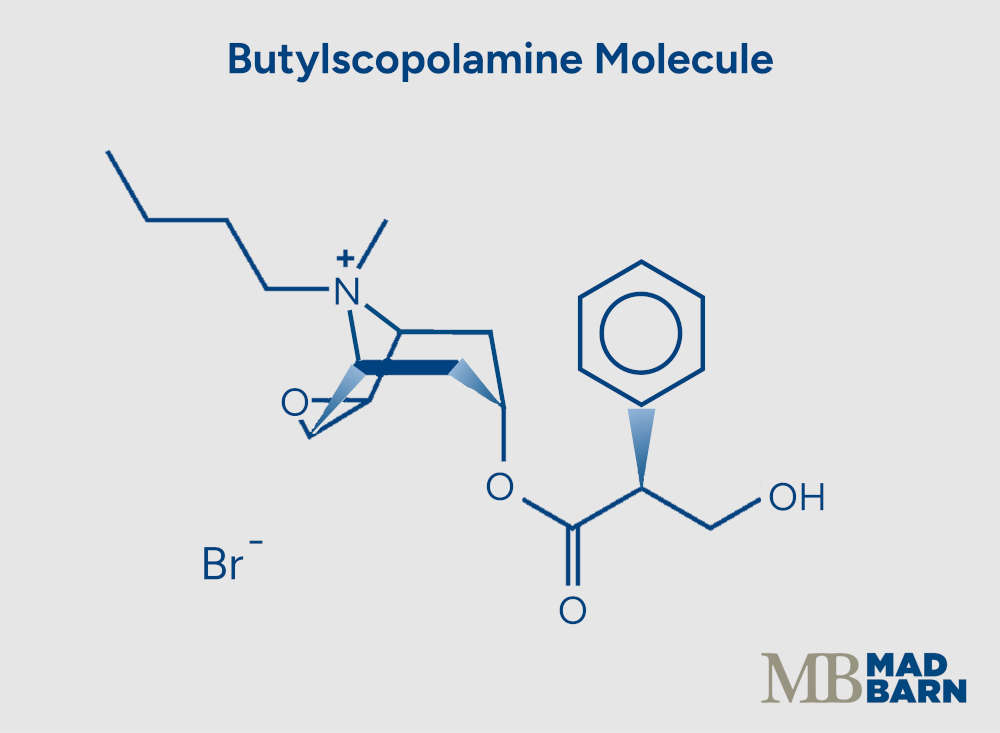
Available Forms
Butylscopolamine is available in an injectable formulation for horses. [1] The most commonly used product is Buscopan® Injectable Solution, which is administered intravenously by a veterinarian. [1][4]
Intravenous administration allows for rapid onset of action, which is particularly important when treating acute abdominal pain such as colic. [1] In clinical practice, this rapid effect allows veterinarians to assess response quickly and determine whether pain is likely due to intestinal spasm or another cause.
The injectable formulation is intended for clinical use and administration by veterinary professionals. This ensures accurate dosing and allows for immediate monitoring of the horse’s response, particularly with respect to cardiovascular effects and overall clinical improvement.
What's your top priority with your horse's health?

Enter your email to receive your store credit
Drug Class: Anticholinergic (Antimuscarinic) Agents
Butylscopolamine belongs to the class of anticholinergic (antimuscarinic) drugs, which block the effects of acetylcholine at muscarinic receptors. [1][2]
Acetylcholine is a key neurotransmitter in the parasympathetic nervous system. It plays a central role in stimulating smooth muscle contraction within the gastrointestinal tract. [1] By binding to muscarinic receptors, it promotes coordinated intestinal movement, secretion, and digestive activity.
Anticholinergic drugs interfere with this process by preventing acetylcholine from binding to its receptors. As a result, they reduce smooth muscle contraction, decrease gastrointestinal motility, and relieve spasms. This makes them particularly useful in conditions where excessive or abnormal contractions contribute to pain.
Butylscopolamine is similar to other anticholinergic agents such as atropine, although its effects tend to be shorter in duration and more targeted to the gastrointestinal tract. [2][5] This shorter window of effect can be advantageous for horses, where prolonged suppression of motility may have downstream health effects.
Mechanism of Action
Butylscopolamine acts as a competitive antagonist at muscarinic acetylcholine receptors. [1][2]
Under normal conditions, parasympathetic stimulation causes acetylcholine to bind to these receptors, triggering contraction of smooth muscle in the gastrointestinal tract.
By blocking this interaction, butylscopolamine promotes relaxation of intestinal smooth muscle, reduces spasmodic contractions, and decreases gastrointestinal tone. [1][3]
These effects help relieve pain associated with intestinal spasms and improve comfort in horses experiencing colic.
In addition to its gastrointestinal effects, blocking these receptors can produce systemic responses such as: [2][5]
- Increased heart rate
- Reduced glandular secretions
- Bronchodilation
These effects reflect the broader role of muscarinic receptors in regulating involuntary functions throughout the body.
Effects on Gastrointestinal Motility
Butylscopolamine has measurable effects on gastrointestinal motility in horses. Studies show that administration of the drug leads to decreased contractile activity in the duodenum, cecum, and colon, although the duration and magnitude of these effects vary by intestinal segment. [6][7]
These findings indicate that butylscopolamine functions primarily as a spasmolytic that transiently suppresses intestinal motility, rather than acting as a prokinetic drug that enhances forward movement. [6]
In some experimental models, the drug increased thresholds for visceral discomfort, suggesting a role in reducing sensitivity to intestinal distension. [6] However, effects on motility were not consistent across all studies, highlighting the complexity of gastrointestinal regulation in horses.
Uses in Horses
Butylscopolamine is approved for use in horses for control of abdominal pain associated with spasmodic colic, flatulent colic, and simple impactions.
Veterinarians may also prescribe it at their discretion to treat choke, to facilitate rectal examinations, and as an alternative to atropine. [1]
Colic
The primary use of butylscopolamine in horses is the treatment of spasmodic colic and associated abdominal pain. [1][3][4]
Spasmodic colic occurs when segments of the intestine contract excessively or in an uncoordinated manner. These contractions can lead to discomfort and clinical signs such as:
- Pawing
- Restlessness
- Flank watching
- Rolling
By relaxing intestinal smooth muscle, butylscopolamine reduces the frequency and intensity of these spasms, helping alleviate pain and improve comfort. [1][3] Its rapid onset of action makes it especially useful during early evaluation and stabilization of colic cases.
It may also be used as supportive therapy in cases of flatulent colic, mild intestinal spasms, and simple impactions. [4] In these situations, reducing intestinal spasm may help improve comfort and support more normal gastrointestinal function.
Facilitating Rectal Examination
Rectal palpation is an essential diagnostic tool in equine medicine, but excessive straining can increase the risk of injury. By reducing rectal pressure and muscle tone, butylscopolamine improves examination conditions and enhances safety for both horse and clinician. [4]
In comparative studies, butylscopolamine was more effective than topical lidocaine in reducing rectal resistance, supporting its use as a practical adjunct during clinical evaluation. [4]
Choke
Butylscopolamine may be used as part of the management of choke in horses, which is characterized by: [8]
- Difficulty swallowing
- Nasal discharge containing feed material
- Coughing
- Signs of distress
By relaxing smooth muscle in the esophagus, butylscopolamine may help reduce spasms and facilitate passage or removal of the obstruction. Its rapid onset of action makes it a useful adjunct in the early stages of treatment, particularly when combined with sedation and lavage under veterinary supervision.
Alternative to Atropine
Butylscopolamine may be used as an alternative to atropine in certain clinical situations where short-term anticholinergic effects are desired.
Both drugs act as anticholinergics, blocking parasympathetic nerve signals that stimulate smooth muscle contraction. However, butylscopolamine has a shorter duration of action and more limited systemic effects compared to atropine, making it better suited for transient gastrointestinal or rectal relaxation. [1]
In horses, atropine is associated with prolonged suppression of intestinal motility and an increased risk of ileus. In contrast, the effects of butylscopolamine are brief, allowing veterinarians to achieve smooth muscle relaxation without significantly disrupting overall gut function. [1]
Bronchodilation (Secondary / Investigational Use)
Butylscopolamine has also been studied for its bronchodilatory effects in horses, particularly in those with chronic airway disease such as heaves. [5] By blocking muscarinic receptors in airway smooth muscle, the drug promotes bronchial relaxation and improved airflow.
In comparative studies with atropine, butylscopolamine produced effective bronchodilation with a shorter duration of action and fewer systemic side effects. [5]
Although butylscopolamine is not labelled for use in cases of respiratory disease, these findings demonstrate the broader physiologic effects of anticholinergic drugs in horses.
Administration Routes
Butylscopolamine is administered intravenously (IV) to horses. [1]
The drug has a rapid onset of action, making it well-suited for acute conditions such as colic. [6] Because its effects are relatively short-lived, repeat dosing may be required depending on the clinical situation and veterinary guidance. [1]
Storage
Butylscopolamine products should be stored according to manufacturer instructions. This typically includes storage at controlled room temperature and protection from excessive heat or light. [1]

Safety Warnings & Precautions
Butylscopolamine is a safe and effective medication when used at the discretion of a licensed veterinarian.
One of the most important considerations when using butylscopolamine is its effect on the cardiovascular system. Reported effects include: [2][3]
- Increased heart rate
- Transient increases in blood pressure
- Changes in cardiac rhythm
In some cases, particularly when combined with drugs such as xylazine, more significant arrhythmias may occur. [3] These effects are related to the drug’s influence on autonomic regulation of the heart.
Monitoring
When administering butylscopolamine, veterinarians typically monitor heart rate, cardiac rhythm, and overall clinical response. Blood pressure and intestinal sounds may also be assessed when indicated. [1][3]
Contraindications
Contraindications refer to circumstances where a drug should be used with caution.
Caution is advised when using butylscopolamine in horses with cardiovascular disease, systemic illness affecting circulation, or conditions where increases in heart rate may be undesirable. [2][3]
Side Effects
Common side effects of butylscopolamine in horses include: [3][4]
- Tachycardia (rapid heart rate)
- Decreased intestinal sounds
- Dry mucous membranes
- Dilated pupils (mydriasis)
These effects are consistent with its anticholinergic mechanism of action.
In comparative studies, butylscopolamine produced fewer systemic side effects than atropine and had a shorter duration of action. [5]
Acute Toxicity (Overdose)
Overdose of butylscopolamine can result in exaggerated anticholinergic effects, including severe tachycardia, marked gastrointestinal hypomotility, dry mucous membranes, and dilated pupils. [1][4]
Veterinary evaluation is recommended if severe or persistent symptoms occur, particularly if cardiovascular signs are pronounced.
Drug Interactions
Butylscopolamine may interact with other medications, particularly those affecting cardiovascular function. The most clinically relevant interaction is with xylazine, which may alter cardiovascular responses and increase the risk of arrhythmias. [3]
Caution is also warranted when combining butylscopolamine with other anticholinergic drugs or medications that affect cardiac conduction. [1]
Regulatory Status & Legal Considerations
Butylscopolamine is FDA and Health Canada approved for use in horses. It is labelled for control of abdominal pain related to spasmodic colic, flatulent colic, and simple impactions. It may also be prescribed in cases of choke, to facilitate rectal examinations, and as an alternative to atropine. [1]
Its bronchodilatory properties have been investigated for management of respiratory disease, but it is not currently labeled for this use. [5]
Status in Competition
Butylscopolamine treatment is regulated by most competitive organizations, including the Fédération Equestre Internationale (FEI). Under FEI rules, substances are classified as either banned or as controlled medications.
Butylscopolamine is listed as a controlled medication on the FEI prohibited substances list, meaning it is a therapeutic drug permitted out of competition but prohibited in competition unless properly declared. [9]
This classification reflects its effects on smooth muscle and gastrointestinal function, which may alter clinical presentation or mask underlying disease if present during competition. [9]
Butylscopolamine may be administered by a veterinarian for legitimate medical purposes. Its use must be carefully timed to ensure compliance with competition regulations.[9]
Withdrawal & Detection Time
The FEI lists a detection time of approximately 24 hours (1 day) following a single intravenous dose. [9]
The withdrawal period includes an appropriate safety margin and is determined by the attending veterinarian based on the individual horse, dosing regimen, and clinical situation. [9]
Work with your veterinarian to determine how much time your horse needs to return to competition after a course of butylscopolamine. Always check the regulations for your sport before starting a new medication for your horse.
Frequently Asked Questions
Here are some frequently asked questions about butylscopolamine use in horses:
Butylscopolamine is used in horses primarily to treat spasmodic colic by relaxing smooth muscle in the gastrointestinal tract and reducing painful intestinal contractions. It is also used during rectal examinations to decrease straining and improve safety, and may be used in cases of choke or as an alternative to atropine in certain clinical situations.
Buscopan® works in horses by blocking acetylcholine receptors in smooth muscle, which reduces nerve stimulation that drives intestinal contractions. This allows butylscopolamine to relax the gut and relieve spasms associated with certain types of colic.
Butylscopolamine works quickly in horses, especially when given intravenously, with effects typically seen within minutes. This rapid onset makes it useful during colic episodes when immediate relief and diagnostic clarity are needed.
Butylscopolamine lasts in horses for a relatively short period, with effects on gut motility typically lasting 30 minutes to 1 hour. Some clinical improvement may persist slightly longer, but the drug itself is fast-acting and short-lived.
Butylscopolamine is not a true painkiller for horses, as it does not directly block pain signals. Instead, butylscopolamine reduces pain indirectly by relieving intestinal muscle spasms that contribute to discomfort in spasmodic colic.
Butylscopolamine is not used for all types of colic in horses, as it is most effective for spasmodic colic involving increased gut contractions. Other forms of colic, such as displacements, require different diagnostic approaches and treatments.
Butylscopolamine affects heart rate in horses by causing a temporary increase due to its anticholinergic effects. This change is expected and is one reason veterinarians monitor heart rate closely after administration during a colic exam.
Butylscopolamine can cause side effects in horses that are usually short-lived, including increased heart rate, reduced gut sounds, dry mucous membranes, and decreased intestinal motility. These effects are typically transient but are important during clinical evaluation.
Buscopan® is generally safe for horses when used under veterinary supervision at appropriate doses. Because butylscopolamine affects both heart rate and gut motility, monitoring is important to ensure safe and effective use.
Butylscopolamine helps during a rectal exam in horses by relaxing smooth muscle and reducing straining. This makes the examination safer and easier to perform while lowering the risk of injury to both the horse and the veterinarian.
Butylscopolamine is given to horses most commonly by intravenous injection, allowing for rapid onset of action. Administration is typically performed by a veterinarian to ensure proper dosing and appropriate use during clinical evaluation.
Butylscopolamine stays in a horse's system for a short period, with detectable levels potentially present for up to 24 hours. However, the pharmacologic effects resolve much sooner, and withdrawal times vary depending on competition regulations.
Butylscopolamine is regulated in competition horses and is not permitted to be present at the time of competition. Withdrawal times for butylscopolamine depend on the governing body, so veterinary guidance is essential before use in a competing horse.
Butylscopolamine can be used with other medications in horses depending on the clinical situation, often alongside analgesics or anti-inflammatory drugs during colic treatment. There have been reports of increased side effects when the medication is administered with xylazine. Always inform your veterinarian of any medications or supplements your horse is currently on before starting a new medication.
Butylscopolamine is not the same as atropine in horses, although both are anticholinergic drugs. Butylscopolamine has a shorter duration of action and fewer systemic effects, making it more suitable for short-term gastrointestinal use.
Butylscopolamine can mask signs of serious colic in horses by reducing pain and intestinal activity. This temporary improvement may make the condition appear less severe, which is why it should only be used as part of a veterinary-directed diagnostic plan.
Butylscopolamine should be given to a horse under veterinary guidance when spasmodic colic is suspected or during procedures like rectal exams. It is not intended for routine use and should only be administered as part of a clinical assessment.
Butylscopolamine is not typically given orally to horses, as it is most effective when administered intravenously. Oral use is uncommon because it does not provide the same rapid and predictable effects needed during colic episodes.
Butylscopolamine reduces gut movement in horses temporarily by relaxing smooth muscle and decreasing intestinal contractions. This effect helps relieve spasms but is short-lived and does not permanently stop normal gut function.
Summary
Butylscopolamine is a fast-acting antispasmodic medication used in horses to relieve abdominal pain associated with colic. It works by reducing intestinal spasms, but does not treat the underlying cause of disease, making it a supportive therapy in veterinary care.
- Functions as an anticholinergic drug that blocks acetylcholine at muscarinic receptors, reducing smooth muscle contraction in the gastrointestinal tract
- Provides rapid relief of abdominal pain associated with spasmodic and flatulent colic, allowing veterinarians to assess the horse more accurately
- Has a short duration of action and primarily peripheral effects, limiting central nervous system involvement and reducing long-term motility suppression
- Commonly used in equine practice to facilitate rectal examinations, support choke management, and serve as a short-acting alternative to atropine
- Can cause systemic effects such as increased heart rate, decreased gut sounds, and reduced secretions, reflecting its impact on the autonomic nervous system
- Requires intravenous administration and close veterinary monitoring to ensure appropriate dosing and to manage potential cardiovascular effects
References
- Plumb. D. C. Plumb's Veterinary Drug Handbook: Desk. John Wiley & Sons. 2018.
- Cole. C. et al. Eds. Equine Pharmacology. 1st ed. Wiley. 2014.
- Morton. A. J. et al. Cardiovascular Effects of N‐butylscopolammonium Bromide and Xylazine in Horses. Equine Veterinary Journal. 2011.
- Luo. T. et al. A Comparison of N-Butylscopolammonium and Lidocaine for Control of Rectal Pressure in Horses. Veterinary Therapeutics. 2006.
- De Lagarde. M. et al. N ‐butylscopolammonium Bromide Causes Fewer Side Effects than Atropine When Assessing Bronchoconstriction Reversibility in Horses with Heaves. Equine Veterinary Journal. 2014.
- Sanchez. L. C. et al. Effect of Acepromazine, Butorphanol, or N-Butylscopolammonium Bromide on Visceral and Somatic Nociception and Duodenal Motility in Conscious Horses. American Journal of Veterinary Research. 2008.
- Gomaa. N. et al. Effect of Buscopan® Compositum on the Motility of the Duodenum, Cecum and Left Ventral Colon in Healthy Conscious Horses Wirkung von Buscopan® Compositum Auf Die Motilität Des Duodenums, Blinddarmes Und Der Linken Ventralen Längslage Des Großen Kolons Bei Gesunden Pferden. Berl. Münch. Tierärztl. Wschr. Schlütersche Verlagsgesellschaft mbH & Co. KG, DE. 2011.
- Hawkins. J. F.Esophageal Obstruction in Large Animals. Merck Veterinary Manual. 2024.
- FEI Clean Sport. FEI. 2025.