English
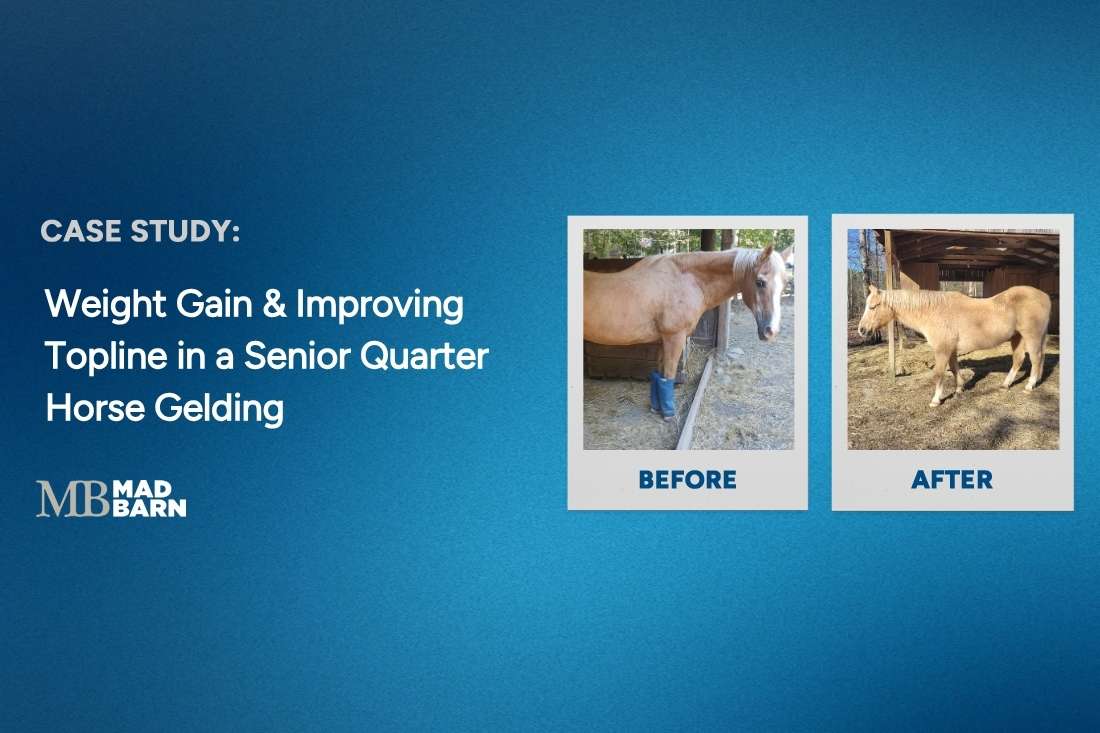
In July 2024, a diet evaluation was requested for a 30-year-old Quarter Horse gelding named Tuff, located in Tennessee, USA.
At the time of evaluation, Tuff was underweight at approximately 950 lb (431 kg). In addition to his body condition, key concerns included digestive function, poor topline musculature, and joint health.
The owner’s primary goals were to improve body condition, support digestive function and topline maintenance, and promote joint health.
Presentation Prior to Diet Intervention
Tuff was described as underweight in his initial diet evaluation. He was not in a structured exercise program.
He also presented with the following special care needs:
- Poor topline muscling
- Digestive health concerns
- Joint issues
The following photo was provided of Tuff in July 2024, prior to his diet evaluation:
 Tuff, July 2024
 Tuff, July 2024
 Tuff, July 2024
Based on this photo, our nutritionists estimated his body condition score at four on the 9-point Henneke scale.
Horse History
At 30 years old, Tuff was enjoying retirement after a career as a trail horse. He lived outdoors with one companion and had free-choice access to both hay and pasture.
His owner reported that Tuff had recently begun quidding long-stem hay, raising concern that he might not be consuming enough nutrients despite continuous access to forage. Evaluations by both a veterinarian and an equine dentist found no significant dental abnormalities beyond expected age-related wear.
To help address these changes, his owner introduced a midday meal containing additional calories and more digestible fiber sources. She was also open to adding further dietary support to promote healthy weight gain and support joint health.
What's your top priority with your horse's health?

What's your top priority with your horse's health?
Weight Issues
Health concerns such as dental changes and digestive dysfunction can contribute to weight loss in horses, even when the diet appears to meet energy requirements on paper.
Increasing forage intake is often the most straightforward way to support weight gain in horses. However, in senior horses like Tuff, dental issues can reduce the ability to chew and utilize long-stem forage, which means free-choice hay and pasture may not provide adequate, accessible calories.
In these cases, incorporating more digestible fiber sources, such as chopped forage, soaked hay, or beet pulp can help improve calorie intake.
Additional calories can also be supplied through energy-dense feeds, including senior feeds, high-fat concentrates, and fat supplements.
Complete feeds and sweet feeds are also commonly used by horse owners to support weight gain. These products typically provide calories from a combination of carbohydrates (sugar and starch), fat, and protein. However, excessive hydrolyzable carbohydrate (HC; sugar + starch) intake can contribute to digestive disturbances, which may hinder weight gain. [1][2][3]
Horses with ongoing digestive challenges may benefit from reducing dietary HC content. Replacing a portion of dietary energy with fat and highly digestible fiber can help support digestive health while still providing sufficient calories.
In Tuff’s case, transitioning to a lower-HC, energy-dense diet with more digestible fiber sources was recommended to support weight gain, improve nutrient utilization, and reduce the risk of digestive upset.
Topline Health
Aging in humans, horses, and many other animals is often accompanied by a gradual loss of muscle mass. [4] While this natural decline cannot be completely prevented, providing a well-balanced diet with adequate protein, essential amino acids, vitamins, and minerals can help support muscle maintenance in senior horses.
Muscle breakdown can contribute further to weight loss in already underweight horses like Tuff as the body mobilizes muscle tissue to meet energy demands.
Meeting nutritional requirements is key to preserving muscle mass. In addition to protein, important nutrients that support muscle health include: [5][6][7][8]
- Zinc, copper, manganese, and selenium: Support antioxidant enzymes and other metabolic processes
- Vitamin E: A key antioxidant that helps protect muscle cells from oxidative damage
- Calcium and magnesium: Play a role in muscle contraction and neuromuscular function
Prior to dietary adjustments, Tuff showed signs of topline muscle loss, likely due to a combination of aging, reduced calorie intake related to difficulty chewing forage, and potential limitations in digestion and nutrient utilization.
Topline loss is characterized by reduced muscle mass along the neck, back, and hindquarters, which can make the spine, withers, and hip bones appear more prominent.
Digestion Function
While digestive health was identified as a concern by Tuff’s owner, no specific clinical signs or diagnosed issues were reported at the time of evaluation.
Weight loss can be associated with compromised digestive function, which may reduce the ability to effectively break down, absorb, and utilize nutrients. Conditions such as gastric ulcers are also linked to discomfort and reduced feed intake, both of which can negatively impact body condition. [9][10][11]
Although Tuff did not have any diagnosed digestive disorders, his limited intake of long-stem forage and inability to maintain weight despite a high-calorie diet suggested that digestive efficiency or gut health may have been contributing factors to his weight loss.
For this reason, digestive support was included in his updated diet to help maintain gastrointestinal health and enhance nutrient utilization, with the goal of promoting healthy weight gain.
Joint Health
Joint concerns are common in horses, particularly in senior individuals like Tuff. Age-related changes in joints can result from alterations in synovial fluid, imbalances between the synthesis and breakdown of cartilage and other joint tissues, and cumulative wear and tear over time. [12]
Because many joint tissues have a limited blood and nutrient supply, damage is often difficult to reverse. For this reason, supporting joint health is an important consideration in aging horses to help maintain comfort and mobility.
Providing a balanced diet, incorporating targeted nutritional support, and maintaining appropriate levels of activity can all contribute to joint health in older horses. Key nutrients involved in supporting joint health include: [13][14]
These nutrients play important roles in enzyme function, connective tissue maintenance, and antioxidant defense to help protect joint structures from oxidative stress. [13][14]
In addition, omega-3 fatty acids, particularly eicosapentaenoic acid (EPA) and docosahexaenoic acid (DHA), have been shown to support joint health in both healthy horses and those with conditions such as arthritis. These fatty acids help regulate inflammation within the joint, which may improve comfort and mobility. [15]
In Tuff’s case, a fat-based calorie source was included to support weight gain while also providing nutritional support for joint health. Mad Barn’s w-3 Oil was selected because it is enriched with DHA, a long-chain omega-3 fatty acid.
This made it a suitable choice to add calories while also helping support joint function and maintain normal inflammatory balance.
Initial Diet
At the time of the initial nutrition consultation in July, Tuff’s daily ration consisted of:
- Free-choice access to hay & pasture
- 12 lb (5.44 kg) – Eqceed Ultra Senior (Tucker Milling)
- 6 lb (2.72 kg) – Alfalfa Cubes (Standlee)
- 1 lb (0.45 kg) – Smart Beet Pellets (Standlee)
- 4 oz – Ultimate Finish 100 (Buckeye)
- 1 oz – GROSTRONG® Minerals (ADM Animal Nutrition)
- 4 oz – Acti-Flex® Senior (Cox Vet Lab)
Overall, the diet appeared to provide adequate energy and protein, despite Tuff’s challenges with maintaining weight. Vitamin and mineral levels were generally sufficient, with the exception of iodine and sodium. Based on estimated values, the hydrolyzable carbohydrate (HC; sugar and starch) content was approximately 11%.
Given that Tuff was underweight and showing signs of quidding, it’s likely that he was unable to effectively consume or utilize all available forage.
Age-related dental changes can make it more difficult to chew long-stem hay, meaning that even when forage is readily available, it may not provide sufficient, accessible calories to support weight maintenance.
Intervention
As part of the nutrition consultation, an updated diet plan was proposed to address the specific concerns related to Tuff’s diet.
Table 1. Summary of Diet Intervention
| Horse Issue | Nutrition Goal | Intervention | Notes |
|---|---|---|---|
| Joint & Topline Health | Improve topline muscle and support joints |
|
|
| Weight Issues | Provide a calorie surplus to improve weight gain |
|
|
| Digestive Function | Address issues that may cause weight loss |
|
|
These changes were recommended to promote weight gain, support topline and health, and improve nutrient absorption.
Balancing the Diet
The primary goals of the dietary adjustments were to reduce HC intake while maintaining caloric intake, provide more accessible fiber sources, and support digestive function.
Horses consuming the manufacturer’s recommended amount of a fortified grain generally meet their vitamin and mineral requirements. However, many commercial grains are high in HC, which can contribute to digestive disturbances.
Maintaining a high calorie intake while reducing HC levels can help support weight gain while minimizing the risk of digestive issues. To achieve this, some of Tuff’s senior feed was replaced with beet pulp.
Mad Barn’s w-3 Oil was added as a weight gain supplement to provide a concentrated source of calories. In addition to providing energy, w-3 oil supplies the omega-3 fatty acid DHA, which supports joint function.
Due to Tuff’s dental challenges, offering chopped hay was recommended to provide a more accessible source of forage and calories.
Although Tuff’s estimated calorie intake exceeded his requirements, he was still unable to maintain weight, suggesting that factors beyond calorie intake alone may have been affecting his condition. In this case, simply adding more calories might not be the most effective strategy.
In situations like this, supporting digestive health can be a practical nutritional approach. For this reason, Visceral+ was recommended to help support gastric and hindgut health as part of a diet designed to promote overall digestive function and nutrient utilization.
Updated Diet
After the consultation, Tuff’s owner implemented the following dietary adjustments. His updated daily diet consisted of:
- Free-choice access to hay & pasture
- 9 lb (4.08 kg) – Eqceed Ultra Senior (Tucker Milling)
- 6 lb (2.72 kg) – Alfalfa Cubes (Standlee)
- 2 lb (0.91 kg) – Smart Beet Pellets (Standlee)
- 4 oz – Ultimate Finish 100 (Buckeye)
- 4 oz – Acti-Flex® Senior (Cox Vet Lab)
- 4 oz (120 mL) – w-3 Oil (Mad Barn)
- 1 scoop (80 grams) – Visceral+ (Mad Barn)
- 1 tablespoon (15 grams) – Iodized salt
Overall, the updated diet maintained Tuff’s high energy, fat, and protein intake while slightly reducing his HC content. It also introduced chopped hay to provide more digestible fiber and included Visceral+ to support digestive function and nutrient absorption.

Outcome
Overall, the dietary adjustments led to a notable improvement in Tuff’s body condition.
Within two months of implementing the new plan, his owner reported visible changes, including improved fill through his flank and ribs that were no longer visible.
The following photos highlight the differences in his condition at six months post-intervention:
 Tuff, Jan 2025
 Tuff, Jan 2025
Discussion
This case highlights some of the common challenges that come with feeding senior horses, especially those experiencing age-related dental changes.
While Tuff’s original diet appeared adequate, his difficulty chewing long-stem forage likely limited how much he could actually consume and utilize. This is an important consideration in older horses, as free-choice forage does not always translate to adequate intake when dental issues are present.
Introducing more accessible fiber sources, such as chopped forage and more beet pulp, helped ensure Tuff could consume enough calories to support weight gain. At the same time, slightly reducing HC intake, while maintaining overall energy intake, allowed for safe weight gain without increasing the risk of digestive upset. Adding a fat-based calorie source also provided a concentrated form of energy to further support his needs.
“I can't tell you how happy I am with (Tuff's) progress after putting him on w-3 and Visceral+! He is starting to fill out in his flank area and his ribs are no longer showing!”
— Feedback From OwnerOverall, this case emphasizes the importance of looking beyond what a diet provides on paper and considering how well the horse can actually consume and use those nutrients. By adjusting forage form and supporting digestive function, Tuff was able to improve his body condition and overall well being.
References
- Raspa. F. et al. A high-starch vs. high-fibre diet: effects on the gut environment of the different intestinal compartments of the horse digestive tract. BMC Vet Res. 2022. View Summary
- Raspa. F. et al. Microbiota characterization throughout the digestive tract of horses fed a high-fiber vs. a high-starch diet. Front. Vet. Sci. 2024. View Summary
- Colombino. E. et al. Gut health of horses: effects of high fibre vs high starch diet on histological and morphometrical parameters. BMC Vet Res. 2022. View Summary
- Siciliano. P. D. Nutrition and feeding of the geriatric horse. Veterinary Clinics of North America: Equine Practice. 2002. View Summary
- Latham. C. M. et al. Complexed trace mineral supplementation alters antioxidant activities and expression in response to trailer stress in yearling horses in training. Sci Rep. 2021. View Summary
- Chung. E. et al. Potential roles of vitamin E in age-related changes in skeletal muscle health. Nutrition Research. 2018.
- Berchtold. M. W. et al. Calcium Ion in Skeletal Muscle: Its Crucial Role for Muscle Function, Plasticity, and Disease. Physiological Reviews. 2000.
- Carvil. P. and Cronin. J. Magnesium and Implications on Muscle Function. Strength & Conditioning Journal. 2010.
- Nieto. J.E. et al. Prevalence of gastric ulcers in endurance horses - a preliminary report. The Veterinary Journal. 2024. View Summary
- Murray. M. J. Equine model of inducing ulceration in alimentary squamous epithelial mucosa. Digestive Diseases and Sciences. 1994. View Summary
- Galinelli. N. et al. High intake of sugars and starch, low number of meals and low roughage intake are associated with Equine Gastric Ulcer Syndrome in a Belgian cohort. Animal Physiology Nutrition. 2021. View Summary
- Hinchcliff. K. W. et al. Equine Exercise Physiology: The Science of Exercise in the Athletic Horse. Saunders Elsevier. 2008.
- Vidal. G. H. et al. Effects of copper and zinc on cathepsin B activity in equine articular chondrocytes. Journal of Animal and Veterinary Advances. 2009.
- Malone. E. D. Managing Chronic Arthritis. Veterinary Clinics: Equine Practice. 2002. View Summary
- Manhart. D. R. et al. Markers of Inflammation in Arthritic Horses Fed Omega-3 Fatty Acids. The Professional Animal Scientist. 2009.