English







Cetirizine, marketed in human medicine under the trade names Zyrtec® and Reactine®, is an antihistamine commonly used in human and small animal medicine. While there is interest in equine applications of antihistamine use, the effects of cetirizine in horses are less well-defined.
With growing demand for managing equine allergic conditions such as hives, insect hypersensitivity, and environmental allergies, cetirizine is increasingly being explored as a potential option in equine care.
Allergic reactions in horses can present as skin irritation, itching, swelling, or respiratory signs, often affecting comfort, performance, and overall well being. While corticosteroids remain a mainstay of treatment, they are not always suitable for long-term use, leading to interest in alternative therapies with fewer systemic effects.
Understanding how cetirizine works, when it may be used, and what limitations exist in horses can help owners and veterinarians make informed decisions about managing allergic conditions.
Cetirizine for Horses
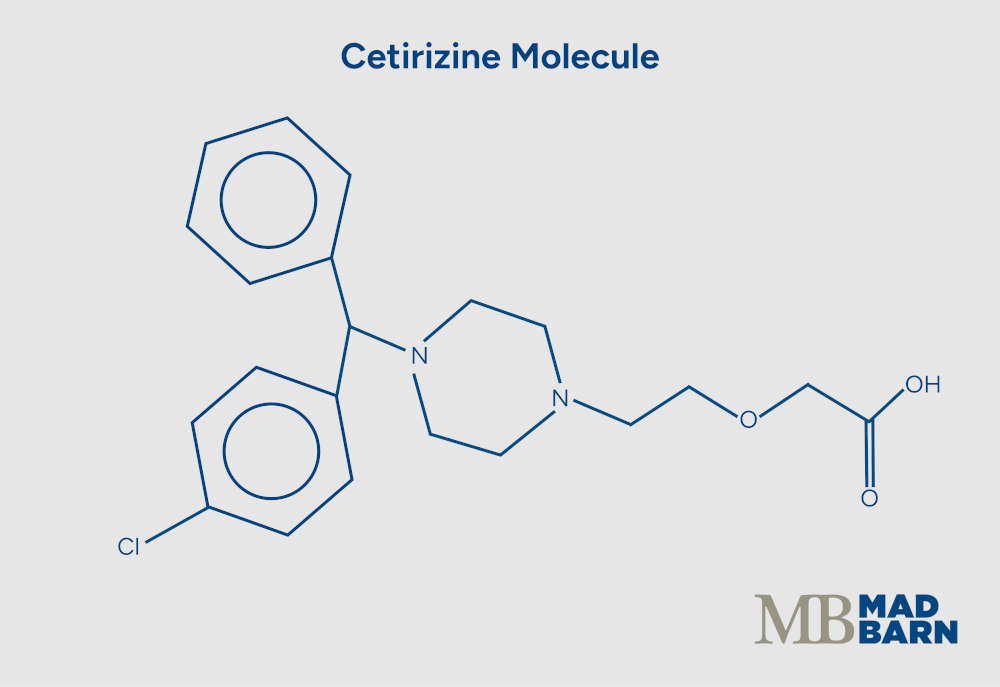
Cetirizine is a selective, second-generation antihistamine used in veterinary medicine to manage allergic reactions and specific immune-mediated conditions. By blocking histamine receptors in the body, it helps to alleviate itching, swelling, and inflammation associated with hypersensitivity disorders.
Historically, treating equine allergies relied on first-generation antihistamines, such as hydroxyzine or diphenhydramine. While effective, these older drugs cross the blood-brain barrier, frequently causing significant sedation and central nervous system (CNS) depression. [1]
In contrast, cetirizine largely remains outside the CNS, providing anti-allergic effects without the heavy sedative side effects that could interfere with a horse’s performance, training, and general welfare. [1]
In horses, cetirizine may be used as part of a broader allergy management plan that may include environmental control, topical therapies, and dietary management. As a heavily regulated substance in equestrian competition, appropriate withdrawal times and veterinary guidance are critical when treating performance horses.
Available Forms
Cetirizine is available over-the-counter under brand names such as Zyrtec® and Reactine®. Over-the counter cetirizine products are labelled for human use and are available in oral formulations, including tablets and syrups.
The use of cetirizine in horses is considered extra-label (off-label), meaning it is not specifically approved for use in this species. [2] Veterinarians are permitted to prescribe cetirizine for equine use at their discretion, and they determine dosages based on the individual horse’s condition.
For equine use, cetirizine may be prepared as a compounded formulation to allow for more precise dosing based on body weight.
Drug Class: Second Generation Antihistamines
Antihistamines are a broad class of drugs designed to block the effects of histamine, a chemical mediator released during allergic reactions. [3] The class is functionally divided into two distinct groups based on their chemical structure and their ability to enter the brain: first-generation and second-generation agents.
First-generation antihistamines (such as hydroxyzine, diphenhydramine, and chlorpheniramine) are highly lipophilic (fat-soluble). [4] This property allows them to easily cross the blood-brain barrier. Once inside the central nervous system, they bind to histamine receptors in the brain, causing varying degrees of sedation, drowsiness, and impaired coordination. [5]
Second-generation antihistamines (such as cetirizine, loratadine, and fexofenadine) were structurally engineered to overcome this limitation. [2] They are highly selective for peripheral H1 receptors located in the skin, respiratory tract, and blood vessels. They possess a much lower capacity to cross the blood-brain barrier. [2]
Cetirizine, specifically, is a metabolite of the first-generation drug hydroxyzine. [2] When a horse consumes hydroxyzine, the liver metabolizes it almost entirely into cetirizine. [4] By administering cetirizine directly, the horse receives anti-allergic benefits without the sedative side effects associated with the parent drug, hydroxyzine. [5]
Other antihistamine drugs used in horses include: [2]
- Hydroxyzine (First-generation)
- Diphenhydramine (First-generation)
- Clemastine (First-generation)
- Fexofenadine (Second-generation, though noted to have poor oral bioavailability in horses)
What's your top priority with your horse's health?

Enter your email to receive your store credit
Mechanism of Action
The pharmacological mechanism of cetirizine centers on competitive inhibition of histamine at specific cellular sites known as H1 receptors. [6]
During an allergic reaction, the equine immune system overreacts to a foreign protein, referred to as an allergen (e.g., insect saliva or pollen). This triggers cross-linking of immunoglobulin E (IgE) antibodies on the surface of mast cells and basophils. [2]
The mast cells degranulate, releasing significant amounts of histamine into the surrounding tissues. When histamine binds to H1 receptors on blood vessels and nerves, it causes vasodilation, fluid leakage (edema and hives), and intense itching (pruritus). [2]
Cetirizine works by selectively binding to these peripheral H1 receptors, physically blocking histamine from attaching and triggering the inflammatory cascade. [2]
Cetirizine also acts as a zwitterion — a molecule containing both positive and negative electrical charges. [2] At normal physiological pH, this zwitterionic structure allows the drug molecule to fold, reducing its polarity. [4]
This unique chemical geometry limits the drug’s penetration into the brain. Additionally, cetirizine is a substrate for P-glycoprotein (P-gp), an active transport pump located in the cells lining the blood-brain barrier. [2] Any cetirizine that manages to enter the central nervous system is rapidly pumped back out into the bloodstream by P-glycoprotein, actively preventing sedation. [2]
Beyond simply blocking histamine, cetirizine also demonstrates mild secondary anti-inflammatory properties. Research shows it can decrease the recruitment of eosinophils (specialized white blood cells involved in late-phase allergic responses) into inflamed tissues and down-regulate the release of specific inflammatory cytokines like interleukin-8 (IL-8). [2]
Uses in Horses
Cetirizine is used in equine veterinary medicine for a variety of hypersensitivity and immune-mediated conditions. Because all use of cetirizine in horses is off-label, veterinarians rely on published pharmacokinetic research, clinical trials, and professional experience to guide treatment.
“Off-label” (or extra-label) use refers to administration of a drug in a manner not explicitly described on the FDA-approved package insert. This includes using the drug in a non-approved species. Veterinary regulations permit licensed veterinarians to prescribe drugs for extra-label use at their professional discretion.
Clinical applications of cetirizine in horses include:
Dermatographism
Often called “skin writing”, dermatographism is an unusual form of urticaria (hives) where minor mechanical pressure, rubbing, or grooming triggers mast cells to release histamine, resulting in rapid, localized swelling and hives. [2]
Eosinophilic Keratitis (EK)
Eosinophilic Keratitis is a painful, immune-mediated inflammatory disease of the equine eye, characterized by corneal ulceration and accumulation of white/pink cellular plaques on the eye’s surface. [7]
The condition is heavily driven by the infiltration of eosinophils and mast cells. [8] Standard treatment for EK involves topical therapies, but the addition of systemic cetirizine has shown significant clinical benefit. [7]
Insect Bite Hypersensitivity (IBH)
Also known as sweet itch, IBH is a seasonal allergic dermatitis caused by a reaction to the saliva of biting midges (Culicoides species). It causes profound itching, leading horses to rub their manes, tails, and bellies until raw. [9]
While histamine is released during midge bites, rigorous clinical trials have demonstrated that cetirizine is generally ineffective as a standalone treatment for IBH. [2]
The failure of cetirizine to relieve sweet itch is due to the complex nature of the disease. IBH is not solely a histamine-driven (Type I) allergy; it heavily involves delayed cell-mediated (Type IV) immune responses, eosinophil infiltration, and other inflammatory cytokines (like IL-31) that antihistamines cannot block. [2]
Effective management of IBH must instead rely on physical barriers (fine-mesh fly sheets) and environmental control (stabling at dawn/dusk). [2]
Trigeminal-Mediated Headshaking (TMHS)
Trigeminal-Mediated Headshaking is a neuropathic disorder where the trigeminal nerve in the horse’s face becomes hypersensitive, causing neuropathic pain that results in involuntary upward tossing of the head. Because the condition is often seasonal, allergic rhinitis was long suspected as a trigger, leading to the frequent off-label use of antihistamines. [10]
However, a robust clinical trial evaluating cetirizine for seasonal headshaking found no significant clinical effect. While 10 horses in the study showed a 50% improvement on cetirizine, 8 horses showed the exact same improvement on a placebo tablet, indicating the drug itself was not the cause of the relief. [2]
While some individual horses may anecdotally respond, cetirizine is not considered a reliable or broadly effective treatment for TMHS. [2]
Recurrent Airway Obstruction (RAO)
Also known as equine asthma or “heaves,” RAO involves chronic lower airway inflammation triggered by environmental dust and mold. [2]
While not a primary treatment, cetirizine is occasionally utilized as an adjunctive therapy. In vitro studies have shown cetirizine can inhibit the release of specific lung-irritating cytokines (IL-8 and GM-CSF) from airway epithelial cells.
This suggests it may have a beneficial modifying effect on bronchial inflammation, though extensive in vivo clinical trials in horses are still lacking. [2]
Administration Routes
Cetirizine is administered exclusively via the oral route in horses. Because the equine hindgut and liver actively metabolize oral medications during digestion, horses require higher relative doses than humans or small animals to achieve the same therapeutic effect.
The administration of cetirizine in horses requires precise calculation based on the animal’s exact body weight to achieve effective blood plasma concentrations. [2]
Cetirizine may be administered with or without food. Mixing crushed tablets or compounded powders into a small amount of feed is an effective delivery method. [2]
While the presence of food in the stomach slightly delays the absorption rate and marginally lowers the peak concentration spike, the total amount of drug absorbed by the body remains the same, providing consistent, steady-state relief. [2]
Cetirizine is commercially available in several formulations. The most recognized human brand names are Zyrtec®, Reactine®, and Allacan®. [2]
Oral Tablets
Tableted formulations are widely available over-the-counter (OTC) for human use, typically in 5 mg and 10 mg film-coated or chewable tablets. [3]
While these are approved by the FDA and Health Canada for humans, there is no FDA-approved cetirizine product specifically labeled for equine use. [2] Therefore, the administration of cetirizine to horses is classified as extra-label (off-label) drug use.
Because a 500 kg (1,100 lb) horse requires a significantly larger dose than a human, achieving a therapeutic dose requires a large volume of tablets. These are typically crushed, suspended in water, and administered via an oral dose syringe or nasogastric tube. [2]
Oral Syrups
Liquid formulations (often concentrated at 1 mg/mL) are available for human pediatric use. While technically usable, the massive volume required for an adult horse makes this formulation impractical for equine use, though it may occasionally be utilized for foals or miniature horses. [2]
Compounded Formulations
Veterinary compounding pharmacies frequently formulate cetirizine into flavored oral pastes, suspensions, and bulk powders concentrated specifically for equine dosing. [3]
These compounded formulations remain off-label but offer improved ease of administration and accurate dosing for horse owners.
Storage
Proper storage is necessary to maintain the stability and efficacy of cetirizine products. Always follow the instructions on the drug product label.
Storage of cetirizine may vary according to the type of formulation: [2]
- Tablets and Powders: Store at controlled room temperature, typically between 20 to 25°C (68 to 77°F).
- Liquid Syrups: May be stored at room temperature or in the refrigerator, depending on the manufacturer’s or compounding pharmacist’s specific label directions. Do not freeze.
All medications must be kept strictly out of reach of children and domestic animals.
Safety Warnings & Precautions
Cetirizine has a wide safety margin and is generally well-tolerated in horses. [2]
While cetirizine is a “non-drowsy” second-generation antihistamine, individual sensitivities exist. A small subset of horses may experience mild lethargy. [2]
The drug should be used with caution in working animals or performance horses immediately prior to tasks requiring coordination or exertion until their individual response to the medication is known.
Monitoring
During treatment with cetirizine, the horse should be monitored by the caretaker for both therapeutic efficacy and potential side effects.
If your horse is starting a course of cetirizine, monitor the following aspects of their condition:
- Clinical Response: Monitor the specific symptoms (e.g. hives) for improvement. If the horse’s condition worsens or fails to improve within 48 hours, consult a veterinarian to reassess the treatment plan.
- Behavioral Changes: Observe the horse for unexpected changes in energy levels, profound lethargy, or behavioral alterations, particularly during the first few days of administration.
- Diagnostic Interference: No specific blood monitoring is required for cetirizine itself. However, because the drug acts as a systemic histamine blocker, it suppresses skin reactions during allergy testing.
Contraindications
Contraindications refer to circumstances where a drug should be avoided or used with caution.
Cetirizine is contraindicated for horses in the following scenarios: [2]
- Hypersensitivity: Do not use in horses with a known allergy or hypersensitivity to cetirizine, its parent drug hydroxyzine, or any inert ingredients within the pharmaceutical formulation.
- Severe Renal Impairment: Cetirizine is not heavily metabolized by the liver; rather, it is excreted primarily unchanged through the kidneys. In horses with compromised kidney function, the drug clears at a much slower rate, leading to systemic accumulation. It should be used with extreme caution and at reduced dosages in animals with kidney disease.
- Pregnancy and Lactation: Comprehensive safety studies evaluating cetirizine’s effects on equine fetal development have not been conducted. It should only be used in pregnant or lactating mares if the veterinarian determines the clinical benefits outweigh the unknown developmental risks.
- Combination Formulations: Human products containing pseudoephedrine (Zyrtec-D) are strictly contraindicated in all veterinary species.

Side Effects
Because cetirizine acts as a substrate for P-glycoprotein efflux pumps, it is largely excluded from the brain, mitigating the side effects typically associated with antihistamines. Side effects are rare, generally mild, and not life-threatening. [2]
Potential side effects include: [2]
- Mild Lethargy: The most commonly reported effect, though far less frequent than with hydroxyzine. Mild sedation or drowsiness may occur, particularly at higher doses.
- Gastrointestinal Upset: Antihistamines can occasionally cause mild gastrointestinal disturbances, which may present in the horse as transient inappetence, increased salivation (drooling/ptyalism), or mild changes in manure consistency.
- Paradoxical Reactions: In highly rare instances, a horse may experience an idiosyncratic adverse reaction to the drug itself. During a 2011 clinical trial, 2 out of 45 horses treated with cetirizine suddenly exhibited a severe aggravation of their dermatitis. The symptoms rapidly resolved when the cetirizine was withdrawn.
Acute Toxicity (Overdose)
Due to its high therapeutic index, acute toxicity resulting from a moderate overdose of cetirizine is rare. However, a massive accidental ingestion can overwhelm the body’s P-glycoprotein transport system, allowing the drug into the central nervous system. [11]
Clinical signs of massive antihistamine toxicosis in animals are dose-dependent and highly variable. They can manifest as two distinct extremes: [5][11]
- Profound Depression: Extreme lethargy, ataxia (incoordination), and unresponsiveness.
- Paradoxical Stimulation: Hyperactivity, severe agitation, tachycardia (dangerously elevated heart rate), tachypnea (rapid breathing), dilated pupils, muscle tremors, and ultimately seizures or coma.
Drug Interactions
Cetirizine’s pharmacokinetic profile creates the potential for significant drug interactions, particularly regarding medications that modulate transport proteins or the central nervous system.
Key interactions include ivermectin and central nervous system depressants.
Ivermectin: Crucial Interaction with Anti-Doping Implications
A highly significant clinical interaction occurs between cetirizine and ivermectin, a standard macrocyclic lactone dewormer used universally in horses. [2]
Ivermectin acts as a potent inhibitor of P-glycoprotein, the active transport pump located in the kidneys that is responsible for excreting cetirizine into the urine. [12]
When ivermectin is administered to a horse, it temporarily blocks these pumps. A pharmacokinetic study demonstrated that administering standard oral ivermectin (0.2 mg/kg) 12 hours prior to a dose of cetirizine resulted in a 60% increase in the total accumulation of cetirizine in the horse’s plasma. [2]
The interaction significantly prolongs the drug’s half-life and maximum concentration. [12] While this does not cause clinical toxicity, it invalidates standard competition withdrawal times.
Concurrent use of ivermectin and cetirizine must be strictly avoided in actively competing horses to prevent inadvertent anti-doping violations. [3]
Central Nervous System Depressants
Although cetirizine has low CNS penetration, co-administering it alongside potent sedatives, tranquilizers, or anesthetics can result in additive depressive effects. [13]
Given this, veterinarians use caution when combining cetirizine with other sedatives including: [13]
- Xylazine
- Detomidine
- Acepromazine
- Diazepam
Regulatory Status & Legal Considerations
Cetirizine is an over-the-counter (OTC) medication available in human pharmacies, but its use in horses is off-label in veterinary medicine. [3]
As per veterinary regulations and federal drug law, off-label applications must be performed by a licensed veterinarian within a valid veterinary-client-patient relationship.
Status in Competition
Because antihistamines alter immune responses and can subtly affect behavior and coordination, their use is strictly regulated across all FEI disciplines to ensure a level playing field and protect equine welfare.
The regulatory classification and required withdrawal times vary depending on the governing body: [14][15][16]
- USEF: Category II.a (Therapeutic medication), meaning it is recognized as a legitimate treatment but is still regulated in competition. Maximum 24-hour dose limits apply.
- RMTC/ARCI: Class 4 therapeutic substance, meaning it is considered a medication with accepted therapeutic use and a lower potential to affect performance than more heavily restricted substances. Required withdrawal time, 48 hours to clear 6.0 ng/mL plasma threshold.
- Equestrian Canada: Conditional medication, meaning it may be used only if specific conditions are met, including following the required withdrawal guidelines before competition. Required withdrawal time, 24 hours (single dose), 48 hours (5-day course). Elimination guidelines apply to both IV and oral routes.
- FEI: Controlled Medication, meaning it may be used for legitimate treatment but must not be present at competition above permitted limits or within the detection period. Required withdrawal time: 96 hours (Detection Time). Withdrawal time may need to be longer as determined by a veterinarian.
Always check the rules for your sport and work with your veterinarian to determine appropriate timing before starting a competition horse on a new medication.
Frequently Asked Questions
Here are some frequently asked questions about cetirizine use in horses:
Cetirizine is sometimes used off-label in horses under veterinary supervision to help manage allergic conditions such as hives, environmental allergies, and mild skin reactions. By blocking histamine receptors, cetirizine may help reduce itching, swelling, and irritation associated with allergic responses. However, response to treatment can vary depending on the underlying cause of the allergy. Because cetirizine is not specifically approved for use in horses and may be regulated in competition, it should only be used under the guidance of a licensed veterinarian.
You should not give your horse over-the-counter Zyrtec-D because it contains pseudoephedrine in addition to cetirizine. Pseudoephedrine is a potent stimulant that may cause dangerous increases in heart rate, arrhythmias, hyperactivity, and even seizures. Only products containing cetirizine as the sole active ingredient should be considered, and use should always be guided by a veterinarian.
Whether cetirizine is a better option than hydroxyzine depends on the horse, the condition being treated, and the veterinarian’s treatment goals. Cetirizine is the active metabolite of hydroxyzine and may provide antihistamine effects with less sedation because it is less likely to cross the blood-brain barrier. However, response can vary between horses, and the choice of antihistamine should be made by a licensed veterinarian. Regulatory status may also differ in competition settings, so horse owners should review applicable medication rules before use.
Cetirizine will not cure Sweet Itch in horses because insect bite hypersensitivity is a complex immune-mediated condition that involves more than histamine release. While cetirizine blocks histamine receptors, IBH is driven largely by other inflammatory pathways, so clinical improvement is often limited. Effective management focuses on strict insect control, including protective fly sheets, environmental management, and reducing exposure to biting insects.
You must stop cetirizine before your horse gets an allergy test because cetirizine blocks histamine receptors and can prevent the normal skin reaction used to interpret results. Intradermal testing relies on visible swelling in response to allergens, and cetirizine can suppress this response, leading to false-negative results. Horses are typically taken off cetirizine for at least two weeks before testing to ensure accurate interpretation.
Cetirizine may help manage hives in horses when histamine release is a primary driver of the reaction, but response can vary depending on the underlying cause and the individual horse. In some cases of acute urticaria, it may reduce swelling and itching. More severe, recurrent, or persistent cases may require additional evaluation and treatment under veterinary supervision. Because cetirizine is used off-label in horses, horse owners should consult a licensed veterinarian before use.
Cetirizine is not labeled for use in horses. However, off-label use under direction of a veterinarian is generally considered safe at appropriate doses. Compared to first-generation antihistamines, cetirizine tends to cause fewer side effects such as sedation. However, safety depends on the individual horse, underlying condition, and correct dosing, so veterinary guidance is essential.
Cetirizine can cause mild side effects in horses, although it is typically well tolerated. Potential side effects include slight sedation, reduced appetite, or changes in behavior, but these are less common compared to first-generation antihistamines. Monitoring is recommended when starting cetirizine to assess individual response.
Cetirizine lasts in horses for approximately 24 hours in terms of antihistamine activity, although this can vary depending on metabolism and dosing. Because of this duration, cetirizine is often administered once or twice daily when used for ongoing allergy management.
Cetirizine is regulated in competition horses and may be permitted depending on the governing body and timing of administration. Because cetirizine falls into a controlled medication category, withdrawal times must be followed carefully, and riders should confirm regulations before use in a competing horse.
Long-term use of cetirizine in horses should only be considered under veterinary guidance. Whether ongoing use is appropriate depends on the horse’s response, the underlying cause of the allergic condition, and the need for additional management strategies alongside medication. Because cetirizine is used off-label in horses and may be subject to competition medication rules, horse owners should consult a licensed veterinarian and review applicable regulatory requirements before use.
Cetirizine is typically given to horses orally in tablet or powder form, often mixed with feed. Because dosing and absorption can vary, veterinarians determine appropriate administration protocols based on the horse's size, condition, and clinical response.
Summary
Cetirizine is a second-generation antihistamine used off-label in horses to manage certain allergic and immune-mediated conditions, though its effectiveness varies depending on the underlying cause.
- Cetirizine works by blocking peripheral histamine receptors, helping reduce itching, swelling, and inflammation associated with allergic reactions while minimizing sedation
- It is most useful in conditions with a strong histamine component, such as dermatographism and eosinophilic keratitis, and may be used alongside other therapies
- Evidence shows cetirizine is not effective as a standalone treatment for complex conditions like insect bite hypersensitivity or trigeminal-mediated headshaking
- Horses require relatively higher doses compared to humans due to differences in metabolism and drug clearance
- Cetirizine is generally well-tolerated, though mild lethargy or gastrointestinal upset may occur in some individuals
- Its use is regulated in competition horses, and interactions with drugs like ivermectin can affect clearance and withdrawal times
References
- Riviere. J. E. and Papich. M. G. Eds. Veterinary Pharmacology and Therapeutics. Tenth edition. John Wiley & Sons Inc, Hoboken, NJ. 2017.
- Plumb's Veterinary Drugs. John Wiley & Sons. 2018.
- Corsico. A. G. et al.Focus on the Cetirizine Use in Clinical Practice: A Reappraisal 30 Years Later. Multidisciplinary Respiratory Medicine. 2019.
- Chen. C.Physicochemical, Pharmacological and Pharmacokinetic Properties of the Zwitterionic Antihistamines Cetirizine and Levocetirizine. Current medicinal chemistry. 2008.
- Cetirizine. RMTC CTS Mongraph Series. 2020.
- Cetirizine. Pubchem.
- Lassaline. M. et al.Eosinophilic Keratitis in 46 Eyes of 27 Horses in the Mid-Atlantic United States (2008-2012). Veterinary ophthalmology. 2013.
- Knickelbein. K. E. et al.Equine Eosinophilic Keratoconjunctivitis in California: Retrospective Study of 47 Eyes from 29 Cases (1993–2017). Veterinary ophthalmology. 2019.
- Cox. A. and Stewart. A. J.Insect Bite Hypersensitivity in Horses: Causes, Diagnosis, Scoring and New Therapies. Animals. 2023.
- Naylor. R. J.Trigeminal-Mediated Headshaking in Horses. Livestock. Mark Allen Group. 2017.
- Murphy. L.Antihistamine Toxicosis: ASPCA Toxicology Brief. ASPCA Animal Poison Control Center. 2001.
- Olsén. L. et al.Cetirizine in Horses: Pharmacokinetics and Effect of Ivermectin Pretreatment. Journal of Veterinary Pharmacology and Therapeutics. 2007.
- Forsythe. L. R. and Gollakner. R. Cetirizine. VCA Animal Hospitals.
- Penalty Guidelines for Violations of Chapter 4 Equine Drugs & Medications Rules. USEF. 2026.
- Therapeutic Medication Rules. ARCI. 2020.
- FEI Clean Sport. FEI. 2025.