English
The presence of horses in folklore reflects the deep relationship between horses and human civilization. As partners in travel, agriculture, warfare, and exploration, horses transformed daily life while inspiring awe thanks to their speed, strength, intelligence, and close connection to people.
Across cultures, horses became symbols of freedom, courage, royalty, and the passage between worlds. They appeared in traditional stories as divine companions, supernatural messengers, protective figures, and dangerous creatures whose legends often carried practical or moral lessons.
Modern knowledge of equine behavior and physiology can help explain some traits that once seemed mysterious. Even so, horse folklore remains a valuable window into cultural beliefs and continues to shape art, literature, religion, and popular culture.
Keep reading to explore horse myths, legends, symbols, and superstitions from around the world, along with the real behaviors that may have inspired some of these enduring beliefs.
Why Horses Became Symbols in Folklore
Few animals have influenced human history as profoundly as the horse. Before the invention of automobiles and modern machinery, horses transformed how people traveled, communicated, farmed, and transported goods. In many societies, owning horses represented wealth, military power, and social status. [1][2]
Unlike many other domesticated animals, horses carried people across vast landscapes, into battle, and on journeys to unfamiliar places. Their role in travel, exploration, and warfare naturally linked them with adventure and the unknown.
Horses also form unusually close relationships with humans. Their ability to learn, communicate through body language, and respond to subtle cues likely contributed to the perception that they possessed exceptional intelligence or even supernatural awareness. [3]
Their speed, endurance, athleticism, and trainability further reinforced this belief. Without modern knowledge of animal behavior and physiology, many cultures interpreted these remarkable abilities as signs of wisdom, divine favor, or spiritual power.
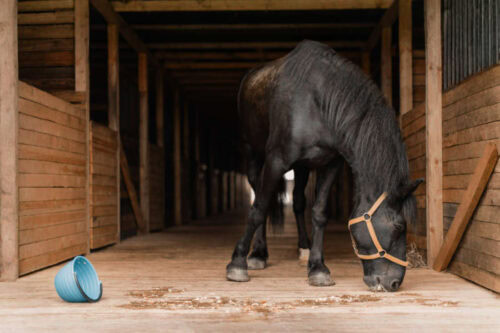
Rare horse coat colors added to their mystique. White horses, black horses, and unusual markings were often associated with gods, spirits, royalty, or supernatural forces because they were uncommon and visually striking. [4]
As a result, horses became powerful symbols in a number of cultures around the world, representing:
- Freedom
- Strength
- Nobility
- Courage
- Fertility
- Royal authority
- The journey between life and death
- Wisdom
- Protection
While these symbolic meanings vary between cultures, they demonstrate how deeply horses became woven into human storytelling.
What's your top priority with your horse's health?

What's your top priority with your horse's health?
Horse Myths & Legends from Around the World
Throughout history, the symbolic roles of horses inspired stories of extraordinary horses that embodied courage, wisdom, danger, divine power, or the connection between the human and spirit worlds. [1]
Pegasus (Ancient Greece)
Perhaps the world’s most famous mythical horse, Pegasus was a magnificent white stallion with wings. According to Greek mythology, Pegasus sprang from the blood of Medusa after she was defeated by Perseus. [5][6]
Pegasus became the companion of the hero Bellerophon and helped him defeat the fire-breathing Chimera before eventually ascending to Mount Olympus.
In some versions of the myth, Bellerophon later tried to ride Pegasus to Olympus himself, but Zeus caused him to fall back to earth. Pegasus continued to Olympus, where he became associated with Zeus and his thunderbolts. [7][8]
Pegasus also has a place in the night sky. The Pegasus constellation is a northern constellation associated with the winged horse of Greek mythology.
Ancient skywatchers often connected familiar star patterns with mythological figures, turning the night sky into a kind of story map. Pegasus became one of these figures, linking the horse’s mythic flight with the heavens. [7][9]
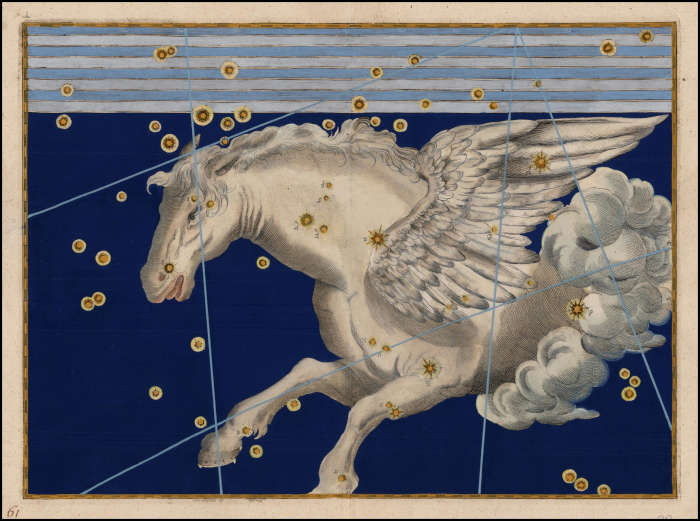
Today, Pegasus is one of the 88 constellations officially recognized by the International Astronomical Union. It is especially known for the Great Square of Pegasus, a large square-shaped pattern of stars that forms part of the constellation and is often used to locate it in the autumn sky. [8][9][11]
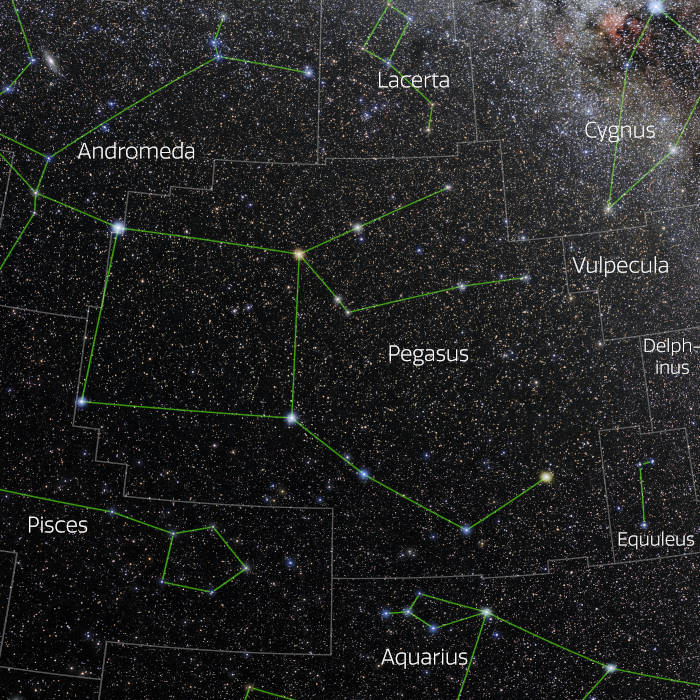
Pegasus represented more than physical strength. His ability to fly symbolized the pursuit of knowledge, artistic inspiration, and the idea that courage and virtue could elevate humans beyond ordinary limitations. His appearance in both mythology and astronomy helped make Pegasus one of the most enduring symbols in Western culture.
The Mares of Diomedes (Ancient Greece)
Greek mythology also includes a darker horse legend in the Mares of Diomedes, a group of dangerous, flesh-eating horses owned by King Diomedes of Thrace. Capturing these mares was one of the labors of Heracles. [13]
Unlike Pegasus, they did not represent inspiration or heroic elevation. Their story emphasized the frightening side of untamed power and the danger of crossing moral or natural boundaries.
The contrast between Pegasus and the Mares of Diomedes shows how Greek mythology used horses to represent both noble aspiration and destructive force.
Poseidon & the Hippocampus (Ancient Greece)
The hippocampus was a mythical creature with the forequarters of a horse and the tail of a fish. In Greek mythology, hippocampi pulled Poseidon’s chariot across the sea. [14]
The name later became associated with seahorses because their curved necks and horse-like heads resemble small horses. Seahorses are now classified in the genus Hippocampus, preserving the connection between horses and the sea found in the ancient myth.
The term hippocampus is also used for a region of the brain involved in memory, learning, and spatial navigation. This brain structure received its name because its curved shape was thought to resemble a seahorse.
Poseidon’s connection to the hippocampus reflects his broader role as a god of both the sea and horses. Although he is best known as the god of the ocean, storms, and earthquakes, Poseidon was also worshiped as Poseidon Hippios, or Poseidon “of horses.”
In some traditions, he was credited with creating the first horse or fathering important mythical horses, further linking horses with water, movement, and divine power. [15][16]
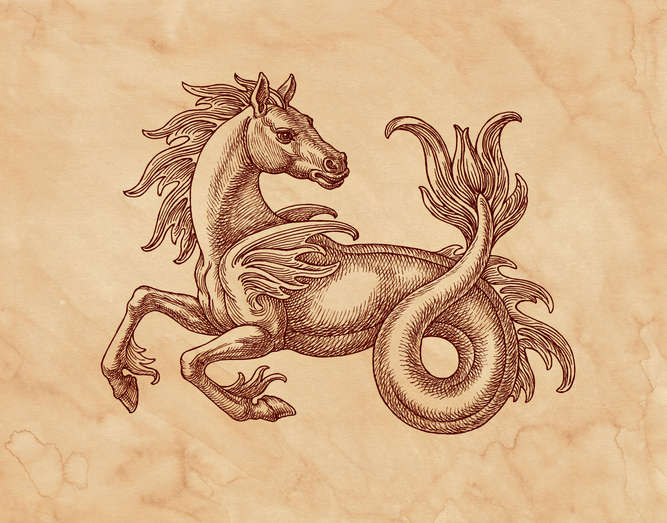
The hippocampus combined Poseidon’s two domains in a single creature. Its horse-like front half represented speed and strength, while its fish-like tail connected it to the sea. This made it a fitting companion for a god associated with oceans, springs, earthquakes, and horses.
Images of the hippocampus continue to appear in architecture, heraldry, fountains, mosaics, and marine art. Its name also survives in modern terms for both seahorses and the hippocampus of the brain.
Sleipnir (Scandinavia)
In Norse mythology, the god Odin rode Sleipnir, an extraordinary gray horse with eight legs. Sleipnir could travel across land, sea, and even between the worlds of the living and the dead.
His eight legs may symbolize exceptional speed or the ability to transcend ordinary physical limits. Sleipnir represented loyalty, wisdom, and passage between realms. [17]
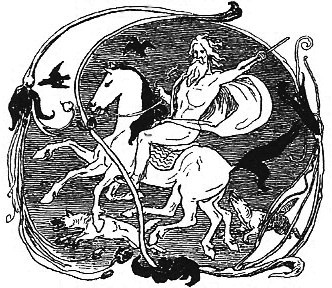
Scholars have proposed several interpretations of Sleipnir’s eight legs. Rather than having a single accepted meaning, they are generally thought to emphasize his supernatural speed and his ability to travel between worlds.
This made Sleipnir a fitting mount for Odin, who journeyed throughout the Norse cosmos in search of wisdom. [19]
The Kelpie (Scotland)
Scottish folklore tells of the kelpie, a supernatural aquatic horse that appeared near rivers and lochs. Kelpies often took the form of beautiful horses to attract unsuspecting travelers. According to legend, anyone who climbed onto a kelpie’s back became trapped as the creature plunged into deep water. [20]
While the kelpie was feared as a supernatural creature, historians believe these stories also served a practical purpose.
The legend likely evolved as a cautionary tale to keep children and travelers away from dangerous rivers and lochs, where fast-moving water and hidden currents posed a real risk of drowning. Like many traditional folktales, the kelpie blended entertainment with a lesson on safety. [21]
The Nuckelavee (Orkney Islands)
One of the most frightening creatures in Scottish folklore, the nuckelavee, was described as a horse-like sea demon that spread disease, drought, and crop failure. [22]
In Orkney tradition, the nuckelavee was associated with the sea and was feared as a force of contamination and disaster. Stories described the creature as grotesque and dangerous, with horse-like features joined to a rider-like upper body. Its breath was said to wither crops, sicken livestock, and bring hardship to coastal communities. [22]
Unlike many mythical horses, the nuckelavee represented destruction rather than protection. Its legend reflected fears that were especially powerful in island and coastal communities, where illness, failed harvests, livestock losses, storms, and poor fishing seasons could threaten survival. In this way, the nuckelavee gave a frightening supernatural form to real anxieties about disease, famine, and the harshness of the sea. [22]
The Pooka (Ireland)
In Irish folklore, the pooka, or puca, is a shapeshifting figure that can appear in several animal forms, including a horse. Some stories describe the pooka as a dark horse that offers wild rides to unsuspecting people before vanishing or leaving the rider shaken. [23]
The pooka reflects broader cultural ideas in Celtic folklore. As a shapeshifter, it represents unpredictability, the strange power of the landscape, and the uneasy relationship between humans and unseen forces. Its horse form reflects how familiar animals could become mysterious when placed in a nighttime or otherworldly setting.
Bai Long Ma (China)
In the classic Chinese novel Journey to the West, Bai Long Ma, or the White Dragon Horse, serves as the loyal mount of the Buddhist monk Xuanzang during his pilgrimage to retrieve sacred Buddhist scriptures. [24]
Originally the son of the Dragon King of the Western Sea, Bai Long Ma was transformed into a horse as punishment for his actions. He later redeemed himself by faithfully carrying Xuanzang across mountains, deserts, and rivers throughout the journey. [25]
More than a means of transportation, Bai Long Ma symbolizes discipline, redemption, perseverance, and spiritual transformation. His story reflects the Buddhist belief that individuals can overcome past mistakes through humility, service, and personal growth.
The Tikbalang (Philippines)
In Philippine folklore, the tikbalang is often described as a tall, horse-headed being associated with forests, mountains, and remote places. Some traditions describe the tikbalang as confusing travelers or leading them away from the path. [26]
The tikbalang broadens horse folklore beyond stories of mounts and magical steeds. Here, horse imagery becomes part of a hybrid forest spirit: strange, unsettling, and tied to wild landscapes where people could become disoriented or lost.
Uchchaihshravas (Hindu Mythology)
According to Hindu mythology, Uchchaihshravas emerged during the Samudra Manthana, or the churning of the cosmic ocean, a legendary event in which the gods and demons worked together to obtain the nectar of immortality. Among the many divine treasures produced during the churning, Uchchaihshravas was regarded as the most magnificent horse. [27]
Typically depicted as a radiant white horse, sometimes with seven heads, Uchchaihshravas was presented to Indra, the king of the gods. Revered as the king of all horses, he symbolizes royalty and divine authority. His emergence from the cosmic ocean also represents the appearance of order, abundance, and sacred power from primordial chaos. [27]
The Unicorn
Although unicorns are often portrayed as magical horses, early descriptions varied considerably, as versions of this myth appeared in a number of different cultures. Some ancient accounts described them as horse-like, while others depicted them with features resembling goats, deer, or donkeys. [28][29]
During the Middle Ages, the unicorn became a powerful symbol of purity, healing, and innocence. Its spiraled horn was believed to neutralize poison and purify water, and the creature frequently appeared in religious art and royal heraldry. Rather than being viewed solely as a fictional animal, the unicorn often represented moral and spiritual ideals.
Modern depictions have largely standardized the unicorn as a graceful white horse with a single spiraled horn, reflecting centuries of artistic and literary tradition rather than the diverse descriptions found in earlier folklore.
Epona (Celtic Mythology)
Epona, while not a mythical equine, was a Celtic goddess of horses, fertility, and prosperity. Revered across much of Gaul and later adopted into the Roman Empire, she was often depicted riding a horse or surrounded by mares and foals. Unlike many deities linked to warfare, Epona symbolized protection, abundance, and the human-horse bond. [30]
Her widespread worship reflects the important role horses played in Celtic society, where they represented wealth, status, travel, and military strength. Today, Epona remains one of the best-known horse deities in European mythology. [31]
Table 1. Horse myths and legends from around the world
| Myth or Figure | Culture or Origin | Description | Symbolic Meaning |
|---|---|---|---|
| Pegasus | Ancient Greece |
|
|
| Mares of Diomedes | Ancient Greece |
|
|
| Sleipnir | Norse mythology |
|
|
| Kelpie | Scotland |
|
|
| Pooka | Ireland |
|
|
| Nuckelavee | Orkney Islands |
|
|
| Hippocampus | Ancient Greece |
|
|
| Unicorn | Ancient and medieval folklore |
|
|
| Bai Long Ma | China |
|
|
| Tikbalang | Philippines |
|
|
| Uchchaihshravas | Hindu mythology |
|
|
| Epona | Celtic mythology |
|
|
Horse Symbols & Superstitions
Beyond myths and legendary creatures, horses inspired countless folk beliefs and symbolic traditions. Many of these customs reflected the horse’s importance in daily life, while others were believed to offer protection, luck, or spiritual guidance.
Although the meanings varied between cultures, these traditions illustrate the deep connection between horses and the communities that depended on them.
Horseshoes
Hanging a horseshoe above a doorway has long been believed to bring good luck and protect a home from misfortune.
Some traditions place the open end upward to “hold” good fortune, while others point it downward to pour blessings onto those entering. The practice likely developed from the widespread belief that iron could ward off evil spirits. [32]
Nightmares & the Night Mare
The word “nightmare” may sound like it refers to a frightening horse, but its origin is different. The “mare” in nightmare comes from an older Germanic word for a harmful spirit or demon, not from the word for a female horse.
In older folklore, this night mare was believed to sit on, ride, or press down on sleepers, causing fear, a feeling of suffocation, and disturbing nocturnal visions. [33][34]
These descriptions closely resemble what is now known as sleep paralysis. During sleep paralysis, a person becomes aware while temporarily unable to move or speak, usually while falling asleep or waking. Episodes can include vivid hallucinations, a sense of an intruder or threatening presence, chest pressure, fear, and feelings of suffocation. [35][36]
Before this experience was understood medically, many cultures explained it through supernatural figures such as demons, witches, incubi, night hags, or the night mare. One early clinical description from the 1600s even referred to the experience as “Incubus or the Night-Mare,” showing how closely folklore and the sleep-paralysis phenomenon were linked. [37][38]
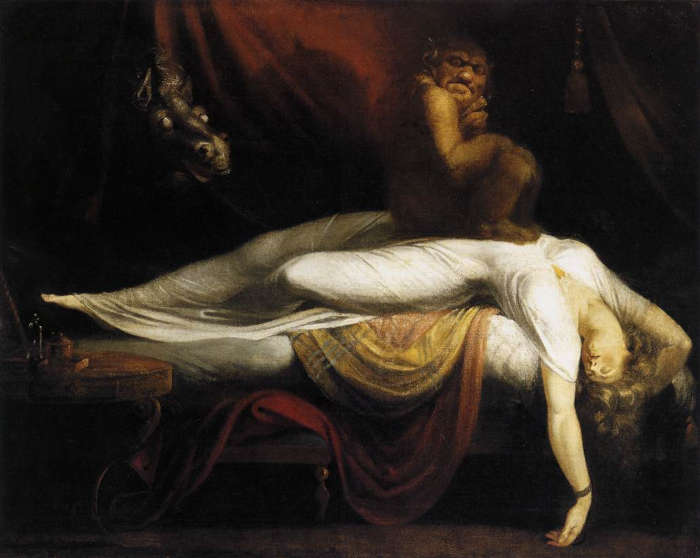
Although the origin of the word is not directly about horses, it later became entangled with horse imagery because “mare” also means a female horse in modern English.
Henry Fuseli’s famous painting The Nightmare, for example, includes both a demonic figure pressing on a sleeper and a ghostly horse, visually playing on this overlap between the old folklore term and the familiar animal.
White & Black Horses
Horse coat color often carried symbolic meaning in folklore. White horses were commonly associated with purity, divine favor, royalty, and messengers between the earthly and spiritual worlds.
In contrast, black horses frequently symbolized mystery, strength, the unknown, or, in some traditions, death and the supernatural. [4]
Hair Whorls & Markings
Natural markings and hair patterns also became the subject of horse superstitions. In some traditions, facial whorls, white markings, or unusual coat features were believed to reveal a horse’s temperament, luck, soundness, or future usefulness.
These beliefs gave owners a way to interpret visible traits before modern knowledge of genetics, behavior, and training was available.
Today, markings and whorls are best understood as natural physical features rather than reliable predictors of personality or performance. Even so, these beliefs remain part of equestrian folklore and show how closely people observed individual horses.
Braided Manes
In parts of Europe, horses’ manes were braided before journeys or battles as protective charms against bad luck or supernatural harm. Some traditions also claimed that mysterious overnight braids were the work of fairies, elves, witches, or night spirits visiting the stable. [2][14][23]
Braiding superstitions have also persisted in more modern equestrian culture. One older belief holds that an odd number of mane braids brings bad luck, so some riders prefer an even number for shows or important events.
At the same time, modern turnout class conventions vary by discipline and region, and many braiding guides recommend an odd number of plaits, often 9, 11, or 13, to suit the horse’s neck and overall appearance. This overlap shows how practical grooming customs and superstition can coexist, even when they point in different directions.
Renaming Horses
Another long-standing barn superstition holds that changing a horse’s name can bring bad luck.
This belief likely reflects the importance people placed on identity, reputation, and continuity, especially when horses were valuable working, racing, or breeding animals. Keeping a horse’s name may have been seen as a way to preserve its history and avoid tempting misfortune.
In modern barns, renaming is usually a personal or practical choice rather than a serious omen. However, many owners still hesitate to change a successful racehorse’s name, a beloved horse’s name, or a name tied to the horse’s past.
Folklore Inspired by Horse Behavior
Not all horse folklore came from myths or legendary creatures. Many traditional beliefs likely developed from observations of normal horse behavior before people understood the biological reasons behind it. Behaviors that seemed mysterious or difficult to explain were often interpreted as signs of supernatural awareness or an ability to sense changes in the environment. [2][3][40]
These examples show how everyday equine behavior could take on symbolic meaning when viewed through the lens of folklore: [40]
- Seeing spirits: Horses that stared into empty spaces or refused to enter certain places were sometimes believed to sense ghosts or other supernatural beings. Today, these behaviors are more likely explained by their exceptional vision, hearing, and sense of smell, which allow horses to detect sights, sounds, and scents that humans may overlook.
- Predicting weather: Horses have long been thought to detect approaching storms. While they cannot predict the future, they may respond to changes in atmospheric pressure, humidity, wind, or distant thunder before humans notice them.
- Rolling before rain: A common saying claims horses roll because rain is coming. In reality, horses usually roll to scratch itchy skin, maintain their coat, relax their muscles, or simply because it feels good.
These interpretations reflect how people tried to make sense of horse behavior using the cultural explanations available to them. [2][41]
Are Folk Stories About Horses True?
Folklore reflects the beliefs and observations of a culture rather than scientific evidence. Modern equine research explains many behaviors once attributed to supernatural abilities through equine sensory biology, physiology, and an improved understanding of learning and behavior.
Behaviors such as shying at unseen objects, reacting before storms, or staring into the distance are now understood as normal responses to environmental stimuli. [40]
Rather than diminishing these stories, science offers another way to appreciate them. Understanding how horses perceive their environment, communicate, and learn helps explain why generations of people viewed them as remarkable animals. Folklore preserves the cultural history surrounding horses, while science reveals the biological adaptations that inspired many enduring beliefs.

The Enduring Legacy of Horse Folklore
Horse folklore preserves a record of the extraordinary role horses have played in human civilization. As partners in transportation, agriculture, warfare, trade, and exploration, horses helped shape daily life while also representing wealth, authority, freedom, and strength.
Their historical importance and close relationships with people made them natural subjects for stories about divine favor, supernatural power, protection, and passage between worlds. [1][2]
Across cultures, mythical horses and horse-like beings reflect both shared human concerns and distinct local traditions. Many equine superstitions may also have emerged from close observation of real horses. Reactions once interpreted as evidence that horses could see spirits or predict storms can now be understood through sensory perception, physiology, learning, and behavior. [3][40]
Scientific explanations do not erase the cultural value of these traditions. Folklore reveals how communities understood the natural world, communicated practical warnings, and expressed their hopes and fears through familiar animals.
Modern research adds another layer by explaining the remarkable adaptations behind behaviors that once appeared supernatural. Together, folklore and science offer a richer understanding of why horses have remained such powerful figures in storytelling, symbolism, art, and popular culture for thousands of years.
Frequently Asked Questions
Here are some frequently asked questions about horse folklore:
Horses are featured in many myths and legends because they played a central role in travel, agriculture, warfare, trade, and exploration throughout human history. Their speed, strength, endurance, intelligence, and close partnership with people made them seem extraordinary. Across cultures, horses came to symbolize freedom, courage, nobility, wisdom, protection, royal authority, and the journey between life and death.
Horses symbolize ideas such as freedom, strength, courage, nobility, fertility, wisdom, protection, and royal authority in folklore. Their ability to carry people across long distances also connected them with adventure, spiritual journeys, and passage between worlds. The precise meaning varies by culture, with some traditions portraying horses as divine companions and others using them to represent danger or destructive power.
Pegasus is often considered the most famous horse in mythology because of his prominent role in Greek legend and lasting influence on art, literature, astronomy, and popular culture. The winged white stallion sprang from Medusa's blood after Perseus defeated her. Pegasus later became the companion of Bellerophon, helped him defeat the Chimera, and eventually ascended to Mount Olympus.
Pegasus symbolizes knowledge, artistic inspiration, courage, virtue, and the ability to rise beyond ordinary limitations. His wings and power of flight gave him meaning beyond physical speed or strength. His appearance in mythology and the night sky helped establish him as one of the most enduring symbols in Western culture.
Pegasus is a real northern constellation officially recognized by the International Astronomical Union. It is named after the winged horse from Greek mythology and is especially recognizable by the Great Square of Pegasus, a large square-shaped pattern of stars. The constellation is commonly used to locate this area of the autumn sky.
The Mares of Diomedes are dangerous, flesh-eating horses from Greek mythology that belonged to King Diomedes of Thrace. Capturing the mares was one of the labors assigned to Heracles. Unlike Pegasus, which represented inspiration and heroic elevation, the mares embodied untamed power, danger, and destructive force.
A hippocampus is a mythical sea creature with the forequarters of a horse and the tail of a fish. In Greek mythology, hippocampi pulled Poseidon's chariot across the sea. Their combined horse and fish features represented the connection between equine strength, the ocean, and divine power.
Poseidon is associated with horses because his divine authority extended beyond the sea to include horses, earthquakes, storms, and springs. He was worshiped as Poseidon Hippios, meaning Poseidon "of horses," and some traditions credited him with creating the first horse or fathering important mythical horses. This connection linked the strength, speed, and movement of horses with Poseidon's power over the natural world.
The hippocampus symbolizes the connection between horses, the sea, and divine power. Its horse-like front half reflected speed, strength, and Poseidon's association with horses, while its fish-like tail tied the creature to the ocean. Images of hippocampi continue to appear in architecture, heraldry, fountains, mosaics, and marine art.
Sleipnir is Odin's extraordinary gray, eight-legged horse in Norse mythology. He could travel across land and sea and move between the worlds of the living and the dead. Sleipnir represented supernatural speed, loyalty, wisdom, and passage between realms.
Sleipnir has eight legs to emphasize abilities beyond those of an ordinary horse, although the feature does not have one universally accepted interpretation. Scholars generally connect the extra legs with supernatural speed and the ability to travel between worlds. These qualities made Sleipnir a fitting mount for Odin as he journeyed through the Norse cosmos in search of wisdom.
A kelpie is a supernatural water horse from Scottish folklore that was said to appear near rivers and lochs. In many stories, it took the form of a beautiful horse, trapped anyone who climbed onto its back, and carried the rider into deep water. Kelpie legends likely served as cautionary tales about fast-moving rivers, hidden currents, and the risk of drowning.
The nuckelavee is a frightening horse-like sea demon from the folklore of Scotland's Orkney Islands. It was described as a grotesque creature with horse-like features joined to a rider-like upper body. Unlike protective or heroic mythical horses, the nuckelavee represented contamination, destruction, and disaster.
The nuckelavee spread disease, drought, crop failure, and hardship in Orkney folklore. Its breath was said to wither crops, sicken livestock, and threaten coastal communities. The legend gave supernatural form to real fears about illness, famine, failed harvests, livestock losses, storms, and poor fishing seasons.
A pooka, or puca, is a shapeshifting figure from Irish folklore that can appear in several animal forms, including a dark horse. Horse-shaped pookas are associated with wild nighttime rides, unsettling encounters, and unpredictable behavior. The figure represents mystery, the strange power of the landscape, and the uneasy relationship between people and unseen forces.
Bai Long Ma, or the White Dragon Horse, is the loyal mount of the Buddhist monk Xuanzang in the Chinese novel Journey to the West. Originally a son of the Dragon King of the Western Sea, he was transformed into a horse as punishment before redeeming himself through faithful service. Bai Long Ma represents discipline, perseverance, redemption, humility, and spiritual transformation.
The Tikbalang is a tall, horse-headed being from Philippine folklore associated with forests, mountains, and remote places. Some traditions describe it as confusing travelers or leading them away from the correct path. The Tikbalang uses horse imagery to represent disorientation, wild landscapes, and the unsettling forces believed to inhabit unfamiliar places.
Uchchaihshravas is a magnificent divine horse that emerged during the churning of the cosmic ocean in Hindu mythology. Typically depicted as a radiant white horse and sometimes shown with seven heads, he became associated with Indra and was revered as the king of all horses. Uchchaihshravas symbolizes royalty, divine authority, prosperity, sacred abundance, and the emergence of order from chaos.
Unicorns are based largely on horses in modern art and storytelling, but older descriptions were more varied. Early accounts portrayed unicorns as horse-like or gave them features resembling goats, deer, or donkeys. Over time, the unicorn became standardized as a graceful white horse with a single spiraled horn and became associated with purity, healing, innocence, and spiritual ideals.
Unicorn horns were believed to have magical powers because medieval traditions associated them with healing and purification. The horn was said to neutralize poison and purify contaminated water. These supposed abilities reinforced the unicorn's wider symbolism of purity, innocence, and spiritual virtue.
Epona is a Celtic goddess associated with horses, fertility, prosperity, protection, and abundance. She was commonly depicted riding a horse or accompanied by mares and foals. Her worship spread across Gaul and into the Roman Empire, reflecting the importance of horses to Celtic wealth, travel, status, and military life.
A white horse often symbolizes purity, divine favor, royalty, spiritual guidance, or a connection between earthly and spiritual worlds. White horses also appear as sacred or authoritative figures in traditions such as the stories of Pegasus, Bai Long Ma, and Uchchaihshravas. Their rarity and visually striking appearance likely helped give them special importance in folklore.
Black horses are associated with mystery because many traditions connected their dramatic appearance with night, the unknown, death, or supernatural forces. In other cultural contexts, they could represent strength, prestige, or power rather than danger. Their meaning therefore depends on the tradition and the role the horse plays within the story.
Horseshoes are considered lucky because many European folk traditions viewed iron as a protective material capable of warding off evil or misfortune. Hanging a horseshoe above a doorway consequently became associated with protection, blessings, and good fortune. Some traditions position the open end upward to hold luck, while others point it downward to pour blessings onto those who enter.
The word nightmare originally referred to a frightening nighttime spirit rather than a female horse. The "mare" in nightmare comes from an older Germanic word for a harmful spirit or demon believed to sit on, ride, or press down on sleeping people. This spirit was blamed for fear, suffocation, disturbing visions, and other terrifying nighttime experiences.
The night mare was not originally a mythical horse, despite the modern meaning of the word "mare." It was a supernatural being believed to torment sleepers by pressing on their bodies and causing frightening visions. The term later became entangled with horse imagery because "mare" also refers to a female horse in modern English.
The horse in Henry Fuseli's painting The Nightmare plays on the overlap between the old folklore term "night mare" and the modern word for a female horse. The painting shows a demonic figure pressing on a sleeping woman while a ghostly horse looks into the scene. This imagery visually connects supernatural explanations for frightening sleep experiences with the familiar equine meaning of "mare."
A horse's facial whorl cannot reliably predict its temperament, performance, soundness, or future usefulness. Some equestrian traditions treated whorls, white markings, and unusual coat features as signs of personality or luck. These features are natural physical characteristics, and a horse should be assessed through its actual behavior, training, health, and management rather than folklore alone.
Renaming a horse is considered bad luck in some long-standing barn superstitions, but there is no evidence that changing a name causes misfortune. The belief may reflect the historical importance of identity, reputation, and continuity when horses were valuable working, racing, or breeding animals. Modern owners may still preserve a familiar or successful horse's name out of tradition, practicality, or respect for its history.
Horses' manes were sometimes braided before journeys or battles as protective charms against bad luck or supernatural harm. In other European traditions, unexplained braids discovered in a mane overnight were attributed to fairies, elves, witches, or night spirits visiting the stable. These beliefs transformed an ordinary grooming practice into a sign of either protection or supernatural activity.
Horses cannot predict storms supernaturally, but they may respond to weather changes before people notice them. Changes in atmospheric pressure, humidity, wind, or distant thunder can influence their behavior. This environmental sensitivity likely contributed to traditional claims that horses could sense approaching storms.
Horses do not necessarily roll because rain is coming, despite the traditional saying that connects rolling with approaching weather. Horses commonly roll to scratch itchy skin, maintain their coats, relax their muscles, or simply because the behavior feels good. A horse rolling before rain may therefore be a coincidence rather than a reliable weather signal.
Horse myths and superstitions reflect cultural beliefs and observations rather than scientific evidence. Modern research explains many supposedly supernatural behaviors through equine sensory abilities, physiology, learning, and normal responses to environmental stimuli. These explanations do not diminish the cultural value of folklore, which records how earlier communities understood horses and the natural world.
Horse folklore still matters because it continues to shape literature, art, film, religion, heraldry, equestrian traditions, and popular culture. Figures such as Pegasus and unicorns remain widely recognized, while horse symbols still appear in logos, military insignia, sports teams, royal processions, and ceremonial traditions. These stories also preserve how earlier cultures understood horses before modern science explained equine behavior and physiology.
Summary
Horse folklore reflects the important role horses have played in human civilization and the symbolic meanings cultures attached to their strength, behavior, and relationship with people.
- Horses became symbols of freedom, strength, nobility, protection, wisdom, and passage between life and death
- Mythical equines such as Pegasus, Sleipnir, the kelpie, and Uchchaihshravas represent distinct cultural ideas about courage, danger, spirituality, and divine authority
- Horse-related traditions include protective horseshoes, symbolic white and black coat colors, and braided manes
- Some legends communicated practical warnings, including the kelpie stories used to discourage people from approaching dangerous waterways
- Exceptional vision, hearing, smell, and sensitivity to environmental changes may explain behaviors once attributed to supernatural awareness
- Horse folklore continues to influence literature, art, heraldry, entertainment, ceremonies, and popular culture
References
- Johns. C. Horses: History, Myth, Art. Harvard University Press. 2006.
- Hausman. G. and Hausman. L. The Mythology of Horses: Horse Legend and Lore Throughout the Ages. Penguin. 2012.
- Merkies. K. and Franzin. O. Enhanced Understanding of Horse–Human Interactions to Optimize Welfare. Animals. 2021.
- Moorehouse. G. W. Superstition Relating to the Color of Horses. The Journal of American Folklore. University of Illinois Press. 1895.
- Rojcewicz. S. J. Flights of Pegasus: Literary History of a Symbol and Its Relevance for Poetry Therapy. Journal of Poetry Therapy. Routledge. 2020.
- Wilk. S. R. Medusa: Solving the Mystery of the Gorgon. Oxford University Press. 2007.
- Atsma. A. J. Pegasus (Pegasos) - Winged Horse of Greek Mythology. Theoi Project. 2017.
- Pegasus. Chandra X-ray Observatory.
- Pegasus. NSF NOIRLab.
- Bayer. J. Pegasus. Public Domain via Wikimedia Commons. 1603.
- The Constellations. International Astronomical Union.
- Pegasus (Annotated). NoirLab. 2024.
- Ogden. D. The Oxford Handbook of Heracles. Oxford University Press. 2021.
- Curran. B. A Field Guide to Irish Fairies Appletree Press. 1997.
- Atsma. A. J. Poseidon - Greek God of the Sea & Earthquakes. Theoi Project.
- Atsma. A. J. Immortal Horses (Hippoi Athanatoi) - Horses of the Gods in Greek Mythology. Theoi Project.
- Woo. P. Y. M. et al. Gods and Monsters: Greek Mythology and Christian References in the Neurosurgical Lexicon. Surgical Neurology International. 2022.
- Frølich. L. Odin Riding Sleipnir. Public Domain via Wikimedia Commons. 1895.
- Einarsdóttir. K. S. The Role of Horses in the Old Norse Sources: Transcending Worlds, Mortality and Reality. Skemman. 2013.
- Bradač. M. M. and Miličević. M. GREEK MYTHOLOGICAL HORSES AND THE WORLD’S BOUNDARY. 2004.
- Miller. S. The Legend, Lore and Spirit of the Water Horse: From Ancient Myth to Celtic Folklore. Cambridge Scholars Publishing. 2025.
- Marwick. E. The Folklore of Orkney and Shetland. Birlinn Ltd. 2020.
- Kotake. M. H. Introduction to the Folklore of Scotland. Tohoku Gakuin University Review: Essays and Studies in English Language and Literature. 2013.
- Wu. C. The Journey to the West, Revised Edition, Volume 1. University of Chicago Press. 2012.
- Ma. S. The Dragon Horse in Journey to the West. Cheiron: The International Journal of Equine and Equestrian History. 2024.
- Ratcliff. L. K. Filipino Folklore. The Journal of American Folklore. University of Illinois Press. 1949.
- Tote. A. V. and Rewade. S. S. The Study of Changing Nature of Horse Imagery in Indian Visual Art. Naad-Nartan Journal of Dance & Music. 2025.
- Alexander. S. Unicorns: The Myths, Legends, & Lore. Adams Media. 2015.
- Lavers. C. The Natural History Of Unicorns. Granta Publications. 2014.
- Waddell. J. Myth and Materiality. Oxbow Books. 2018.
- Linduff. K. M. Epona: A Celt among the Romans. Latomus. Societe d'Etudes Latines de Bruxelles. 1979.
- Kalof. L. The Oxford Handbook of Animal Studies. Oxford University Press. 2017.
- Nightmare. Merriam-Webster.com Dictionary. 2026.
- Harper. D. Etymology of nightmare. Online Etymology Dictionary.
- Farooq. M. and Anjum. F. Sleep Paralysis. StatPearls Publishing. 2026.
- Wróbel-Knybel. P. et al. Characteristics of Sleep Paralysis and Its Association with Anxiety Symptoms, Perceived Stress, PTSD, and Other Variables Related to Lifestyle in Selected High Stress Exposed Professions. International Journal of Environmental Research and Public Health. 2022.
- Cox. A. M. Sleep paralysis and folklore. JRSM Open. 2015.
- Cheyne. J. A. et al. Hypnagogic and hypnopompic hallucinations during sleep paralysis: neurological and cultural construction of the night-mare. Consciousness and Cognition. 1999.
- Fuseli. H. The Nightmare. Public Domain via Wikimedia Commons. 1781.
- Rørvang. M. V. et al. Sensory Abilities of Horses and Their Importance for Equitation Science. Frontiers in Veterinary Science. 2020.