English
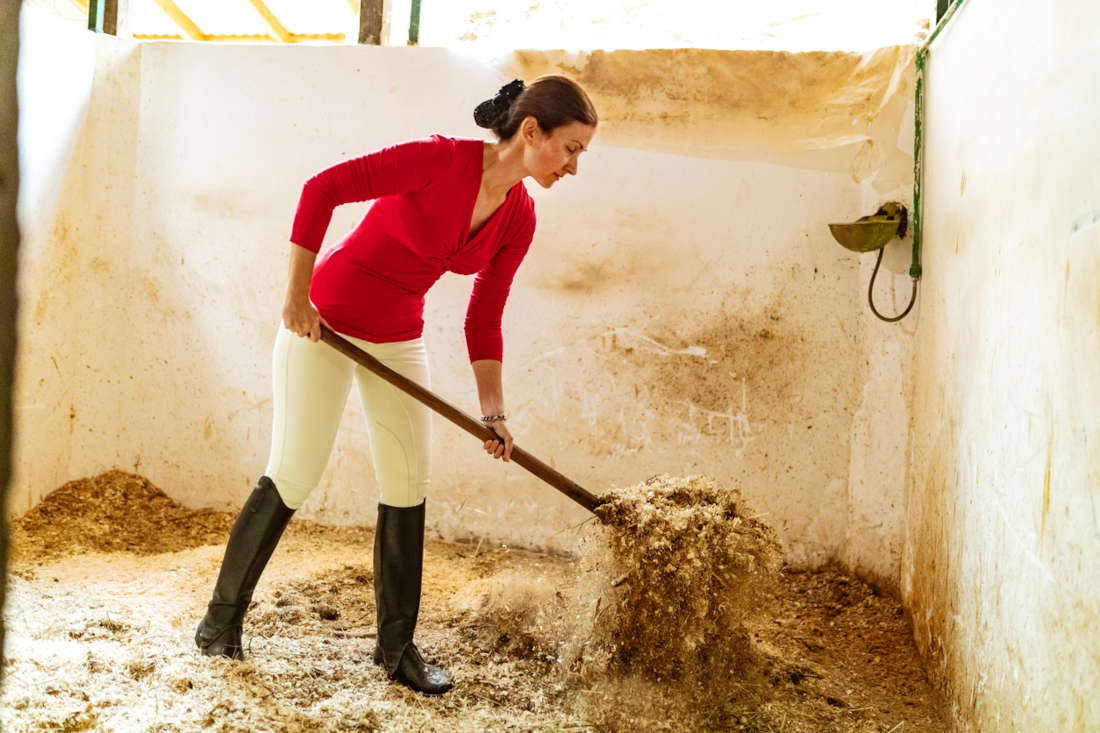
Mucking a horse stall is a routine barn chore that everyone handling horses should know how to perform. Consistent and thorough stall cleaning helps maintain a comfortable and hygienic environment for the horse.
Regular mucking involves removing manure and wet bedding while preserving clean material. This practice is important for keeping your horse’s stall dry and sanitary while limiting moisture, odor and ammonia levels. It also lets you check the stall each day so you can keep track of your horse’s normal manure, urine, eating and drinking habits.
Some horses consistently use one area of the stall, making cleanup straightforward. Others spread manure through the bedding or urinate in several places. Bedding type, flooring, and the amount of time your horse spends indoors also shape the best approach.
Once you understand your horse’s habits and establish a consistent routine, mucking can become a quick, predictable part of daily care.
The Importance of Stall Cleaning for Horses
A horse’s stall should provide a dry, comfortable place to stand, eat and rest. Regular cleaning maintains this environment by removing the manure and urine-soaked bedding that accumulates while a horse is indoors.
Health & Hygiene
Accumulated manure and wet bedding create a damp, contaminated environment that can affect your horse’s health. Regular stall cleaning helps reduce exposure to moisture, bacteria, parasites, and other contaminants.
This is especially important for hoof health, since stalled horses spend long periods standing on bedding. Prolonged exposure to moisture, manure, and urine can soften the hoof horn and promote bacterial growth, increasing the risk of conditions such as thrush. [1][2]
Dirty bedding can also affect the skin and hair coat, particularly when horses lie down in manure or urine-soaked areas. Prolonged contact with moisture and contaminated bedding can irritate the skin and contribute to bacterial or fungal skin infections.
Accumulated manure may also increase exposure to intestinal parasites and other pathogens. Some horses engage in coprophagia, the consumption of feces, which can increase their exposure to organisms present in manure. Regular manure removal helps limit fecal contamination within the stall.
Urine-soaked bedding can also affect stable air quality. As bacteria break down urea in urine, they release ammonia, a gas with a strong, irritating odor.
Elevated ammonia concentrations can irritate the eyes and respiratory tract, particularly in poorly ventilated barns. Dust and other airborne irritants can also affect respiratory health in horses housed indoors. [3][4]
Clean, absorbent bedding helps maintain a dry, sanitary stall environment. Bedding materials differ in their ability to absorb moisture and control ammonia, making bedding selection and regular manure removal important components of stable hygiene. [1][2]
Monitoring Horse Health During Stall Cleaning
Daily cleaning provides an important opportunity to monitor your horse’s health and routine. Over time, you learn how much manure they typically produce, where they urinate, whether they finish their hay and approximately how much water they drink.
Knowing these patterns makes changes in their health or behavior easier to notice. You might observe less manure than usual, a different consistency, an unusually wet or dry stall, uneaten feed or more water left behind than expected.
These changes do not always indicate a health problem. Turnout, weather, feeding and watering routines, and the amount of time spent indoors can all affect what you find in the stall.
Pay attention to a significant or persistent change from your horse’s normal pattern. If a change in routine is accompanied by changes in appetite, drinking, manure production, or behavior, contact your veterinarian to assess your horse’s health.
How Often Should You Muck a Horse Stall?
Most occupied stalls should be mucked at least once a day, although some need more frequent attention. Cleaning frequency depends largely on: [5]
- How much time your horse spends indoors
- Their individual habits
- How quickly the bedding becomes soiled
A horse that spends most of the day turned out may leave relatively little to clean in their stall. A horse kept indoors for longer periods may need additional manure picking or wet bedding removal throughout the day.
Adjust stall cleaning frequency as needed to maintain clean, dry bedding. The goal of routine mucking is to remove manure and wet bedding while preserving clean, dry material. Removing all bedding during each cleaning is generally unnecessary and increases bedding waste.
Daily Mucking vs. Stripping a Stall
Routine mucking typically involves removing manure and urine-soaked bedding while leaving clean bedding in place. Fresh bedding is then added as needed.
Stripping a stall is a more thorough clean-out that removes most or all of the bedding to expose the floor. How often a stall needs stripping depends on the bedding system, flooring and how well daily maintenance keeps it clean and dry.
Stripping also lets you inspect areas normally covered by bedding. You may find damaged or uneven mats, persistent damp spots or other flooring issues that are difficult to see during routine mucking.
A complete clean-out may also be appropriate when the stall is being prepared for a new horse, or when more extensive cleaning and disinfection are needed. If infectious disease is suspected or confirmed, follow the cleaning and disinfection protocol recommended by your veterinarian or facility. [6]
What You Need to Muck a Horse Stall
The right tools make stall cleaning an efficient task and help you separate soiled bedding without discarding more clean material than necessary.
The basic tools for mucking a horse stall include:
- Manure fork: Picks up manure and sifts clean bedding back into the stall
- Wheelbarrow or muck cart: Collects and transports manure and soiled bedding
- Shovel: Removes heavy, urine-soaked bedding that may be difficult to lift with a fork
Choose a manure fork that suits your bedding to make the job easier. Closely spaced tines work well for sifting fine shavings, while straw and coarser bedding are often easier to handle with a larger stable fork.
Depending on your stall setup, you may also find a broom useful for sweeping exposed flooring or tidying the area outside the stall.
Avoid sweeping up while horses are stalled to minimize their dust exposure. This is especially important for horses with existing respiratory sensitivities.
What's your top priority with your horse's health?

What's your top priority with your horse's health?
How to Muck a Horse Stall: 8-Step Guide
The most effective stall cleaning method depends on the bedding, barn setup, and individual horse. No matter which cleaning method you use, following a structured basic system makes the job more efficient and helps you find manure and wet bedding without repeatedly covering the same areas.
1) Move Your Horse Out of the Stall
When possible, begin with your horse turned out or safely secured elsewhere.
An empty stall gives you room to use a manure fork and wheelbarrow without maneuvering around your horse. It also keeps the horse away from forks, shovels and other equipment while you work.
Position your wheelbarrow or muck cart close enough to the stall for easy access without blocking the aisle or creating a hazard for horses and people passing through the barn.
2) Remove the Manure
Start with the manure that is easy to see. Slide the fork underneath each pile and lift it with the surrounding bedding. Gently shake or sift the fork so clean bedding falls back into the stall before placing the manure in the wheelbarrow.
Once the larger piles are gone, work through the stall in sections. Moving in the same general direction each time can help you keep track of which areas you have already cleaned.
Some horses leave their manure in predictable places, while others walk through it or bury smaller pieces in the bedding. In these stalls, gently lifting and sifting the bedding can uncover manure that is not visible from the surface.
Preserve bedding that is still clean and dry. Some bedding will leave the stall with the manure, but careful sifting reduces unnecessary waste.
3) Move Clean Bedding Aside
As you work, move clean bedding away from the area you are mucking. This makes smaller pieces of manure and damp material underneath easier to see. Depending on your bedding system, you might temporarily move clean bedding toward the sides of the stall before spreading it back out.
You do not need to turn over every piece of bedding during every cleaning. Once an area is clean and dry, you can move on to the next section.
4) Find & Remove Wet Bedding
After removing the manure, look for areas where your horse has urinated. Wet bedding may appear darker, heavier or more compacted than the surrounding material. The surface may look dry even when the bedding underneath is saturated, so gently move the upper layers aside when checking wet spots.
Keep digging through the bedding until you reach clean, dry material or the stall floor. Remove the saturated bedding while leaving nearby material that is still usable.
Also remove any soiled hay that has become mixed with manure, urine or wet bedding. Discard contaminated hay to prevent your horse from consuming it.
Many horses develop consistent bathroom habits. Once you learn where your horse usually urinates, finding and removing wet bedding is often one of the quickest parts of the job.
5) Check the Stall Floor
If removing a wet spot exposes the floor, take a moment to look at the area underneath.
Rubber mats should sit relatively flat, without large gaps, raised edges or obvious areas where moisture collects. Dirt or clay floors may become uneven or damp over time, requiring periodic maintenance.
If one part of the stall repeatedly remains wet despite regular mucking, consider other contributing factors, such as:
- Drainage
- Flooring
- The amount and type of bedding
When practical, an especially damp section can be left uncovered for a short period before fresh bedding is spread over it.
6) Spread Out the Bedding
Once the manure and wet bedding are removed, spread clean bedding across the stall. Redistribute the older material first, then add fresh bedding as needed to replace what was removed. Old bedding can remain in use as long as it is clean and dry.
Aim for an even, comfortable surface with enough absorbent material to manage urine until the next cleaning. The amount required varies with the bedding material, flooring, and individual horse.
7) Check the Stall Before Your Horse Returns
Before bringing your horse back, take a quick look around the stall. Make sure all equipment is removed. Check that doors and latches are secure, and look for anything damaged or loosened since the previous cleaning.
Pay particular attention to stall features that can impact your horse’s safety or footing, including:
- Stall mats
- Walls
- Partitions
- Feeders
- Other fixtures your horse can reach
This is also a convenient time to check your horse’s water source and remove contaminated feed.
8) Dispose of Manure & Used Bedding
Manure and soiled bedding need an appropriate storage or disposal area. Many barns use a designated manure pile or composting site away from stalls and other high-traffic areas.
Composting is one option within a broader manure management plan. With appropriate moisture, aeration, and management, manure and bedding gradually break down into compost that may be suitable for use on crops or gardens. [7][8] The rate of decomposition varies with the type and amount of bedding and how the pile is managed. [1]
Manage manure storage to limit odors and reduce the risk of contaminants reaching nearby water sources. Requirements for manure storage, composting, and spreading vary by location, so horse owners should follow applicable local regulations. [2]
Managing Ammonia in Horse Stalls
A strong ammonia smell can indicate that urine-soaked bedding is accumulating in the stall. Urine can soak through and spread underneath bedding that still looks relatively clean and dry, making wet areas easy to miss during routine mucking. [1][9]
If you notice a strong odor, check below the surface for damp or saturated bedding. Remove wet material completely rather than covering it with fresh bedding, which traps moisture without addressing the source.
Owners can add stall-drying or ammonia-control products to their cleaning routines. Follow label directions and use these products alongside regular wet bedding removal, not as a substitute for mucking.

Mucking Different Types of Bedding
The basic approach to mucking a stall is the same for every type of bedding: remove manure and saturated material while preserving bedding that is still clean and dry.
Because each bedding material absorbs moisture and separates from manure in its own way, you may need to adjust your technique depending on the material. [1][10]
Wood Shavings
Owners can usually sift through wood shavings with a manure fork, making them relatively easy to separate from manure.
Lift the manure along with the surrounding shavings and gently shake the fork. Clean material falls through the tines while the manure and larger pieces remain on the fork.
Wet shavings generally become darker, heavier and more compacted as they absorb urine. Once the dry surface bedding is moved aside, the edges of the wet area are often easier to identify.
The size of the shavings can also affect cleaning. Fine shavings may be easier to sift with closely spaced tines, while larger flakes may require a different fork or technique.
Wood Pellets
Wood pellets expand and break apart as they absorb moisture. Once the bed is established, broken-down pellets do not need to be removed unless they are saturated or heavily soiled. [11]
Pelleted bedding products differ in how they are prepared and maintained. Follow the manufacturer’s instructions when setting up a new bed or adding fresh pellets.
Straw
Mucking a stall with straw requires owners to lift and separate the material rather than sift it like shavings.
Use a stable fork to remove manure and heavily soiled straw while moving clean, dry material aside. Check underneath the upper layers because urine-soaked straw may be hidden below bedding that appears relatively clean.
Other Bedding Materials
Hemp, flax, peat, paper products and other materials may also be used for horse bedding. Some can be sifted much like wood shavings, while others are easier to manage by removing individual wet or soiled sections.
If you change bedding materials, your cleaning routine may need to change as well. Pay attention to how the new bedding absorbs urine, separates from manure and performs in your particular stall.
How Much Bedding Does a Horse Need?
For most horse stalls, bedding should be maintained at a depth of 10–15 cm (4–6 inches). However, the amount of bedding required depends on several factors, including:[11]
- Bedding material
- Flooring
- Drainage
- Stall size
- Horse size
- Horse habits
- How much time the horse spends indoors
The amount of bedding used should be sufficient to provide a dry, comfortable surface for standing and lying down while absorbing urine.
Flooring also affects how much bedding is needed. Rubber mats provide additional cushioning and may reduce bedding requirements, depending on drainage and moisture accumulation. [11]
More bedding is not necessarily better. A very deep bed can increase cost and waste, make wet areas harder to find and allow soiled material to remain buried beneath the surface. Too little bedding may provide less cushioning and absorbency, allowing urine to spread across the floor or saturate more of the available material.
Bedding depth also affects resting and sleep behavior. In one study, horses spent approximately twice as long lying down on 15 cm of bedding compared to 5 cm. [12]
Should You Bank Stall Bedding?
Banking involves building bedding up more deeply around the edges of the stall, usually along the walls. This traditional practice is still common in some barns, particularly with straw and deeper bedding systems. [11]
Whether you bank bedding depends on the stall setup, bedding material, and management system. Banks use extra material and can hide manure or moisture along the stall edges.
If you use banks, include them in your regular cleaning routine. Periodically check and turn the bedding along the walls to prevent damp or soiled material from remaining beneath a clean surface.
Stall Cleaning & Biosecurity
Additional precautions may be necessary when cleaning stalls occupied by sick horses or horses suspected of having an infectious disease. Infectious organisms can spread between horses through contaminated materials and equipment, including: [6]
- Manure: Feces from infected horses may contain bacteria, viruses, or parasite eggs that contaminate the stall and surrounding areas.
- Soiled bedding: Bedding contaminated with manure, urine, or other bodily fluids may carry infectious organisms.
- Feed and water buckets: Shared buckets can transfer infectious organisms through contaminated water, feed, or saliva.
- Mucking tools: Pitchforks, shovels, wheelbarrows, and brooms can transfer contaminated material between stalls.
Horses in isolation should have dedicated mucking tools, buckets, and other equipment to prevent the transfer of infectious organisms between stalls. Equipment used for isolated horses should not be shared with healthy horses unless it has been properly cleaned and disinfected. [6]
Cleaning and disinfection are two separate steps in preventing disease transmission. Cleaning physically removes manure, bedding, dirt, and other organic material from contaminated surfaces. Disinfection involves applying a chemical product to kill or inactivate infectious organisms that remain after cleaning.
Organic material can reduce the effectiveness of disinfectants, so surfaces must be thoroughly cleaned before disinfection. The appropriate disinfectant, concentration, and contact time depend on the infectious organism and the surface being treated. [6][13]
When a horse has a suspected or confirmed infectious disease, follow your veterinarian’s recommendations for biosecurity, equipment handling, waste disposal, and stall disinfection.
Frequently Asked Questions
Here are some frequently asked questions about mucking a horse stall:
Most occupied horse stalls should be mucked out at least once a day. Horses that spend long periods indoors or quickly soil their bedding may need additional manure picking or wet bedding removal throughout the day. Adjust the schedule as needed to keep the bedding reasonably clean and dry.
Regular stall cleaning helps provide a dry, comfortable environment for standing, eating and resting. Removing manure and urine-soaked bedding supports hoof hygiene and limits moisture, odors and ammonia. Daily cleaning also makes it easier to notice changes in your horse's manure, urination, appetite and drinking habits.
The basic tools needed to muck out a horse stall are a manure fork, a wheelbarrow or muck cart and a shovel. Choose a fork that suits the bedding, such as closely spaced tines for fine shavings or a larger stable fork for straw. A broom can also help with exposed flooring and the area outside the stall.
The easiest way to muck out a horse stall is to follow the same systematic order each day. Remove visible manure first, move clean bedding aside and then find and remove urine-soaked material. Finish by redistributing the clean bedding, adding fresh material as needed and completing a final safety check.
You do not usually need to remove all the bedding when mucking a stall. Daily cleaning should remove manure and saturated material while preserving bedding that is still clean and dry. Removing most or all of the bedding is reserved for periodic stripping, cleaning between horses or situations requiring more extensive cleaning and disinfection.
You can find wet spots in a horse stall by looking for bedding that is darker, heavier or more compacted than the surrounding material. Move the dry upper layers aside because urine may soak downward and leave saturated bedding beneath a clean-looking surface. Follow the damp material until you reach clean, dry bedding or the stall floor.
The amount of bedding a horse stall needs depends on the material, flooring, drainage, horse size, individual habits and time spent indoors. The bed should provide a dry, comfortable resting surface with enough absorbency to manage urine until the next cleaning. Frequent wet spots, exposed flooring or excessive waste may indicate that the bedding amount or cleaning routine needs adjustment.
You can put too much bedding in a horse stall because a very deep bed may increase cost and waste. Excess bedding can also make wet areas harder to find and allow soiled material to remain buried. Aim for enough bedding to provide comfort and absorbency without making daily cleaning unnecessarily difficult.
The easiest horse bedding to muck out depends on the horse, stall and available tools. Wood shavings can usually be sifted with a manure fork, while straw is generally lifted and separated with a stable fork. Wood pellets can also be spot-cleaned effectively because broken-down pellets may remain in place unless they become saturated or heavily soiled.
How often you should completely strip a horse stall depends on the bedding system, flooring and effectiveness of daily cleaning. Some stalls require periodic full clean-outs, while others remain clean and dry through routine removal of manure and saturated bedding. A complete clean-out may also be appropriate between horses or when extensive cleaning and disinfection are required.
A horse stall may smell like ammonia when urine-soaked bedding has accumulated beneath the surface. Remove the saturated material completely instead of covering it with fresh bedding, which can trap moisture without addressing the source. Good barn ventilation also helps prevent ammonia, moisture and airborne irritants from becoming concentrated around horses.
Whether you should bank bedding in a horse stall depends on the bedding material, stall setup and management system. Banking is common in some barns, particularly with straw and deeper beds, but it uses additional material and can hide manure or moisture. If you use banks, regularly check and turn the bedding along the walls.
You can sometimes muck out a stall with the horse inside, but moving the horse elsewhere is generally safer and more efficient. An empty stall provides more room to handle the manure fork, shovel and wheelbarrow. It also keeps the horse away from equipment while you work.
You can use less bedding by carefully separating manure and wet material from bedding that remains clean and dry. Gently sift shavings so usable material falls back into the stall, and remove only the saturated portions of wet spots. Learning where your horse normally urinates and passes manure can also make daily cleaning more targeted.
Before returning a horse to a freshly mucked stall, confirm that all tools and equipment have been removed. Check doors, latches, mats, walls, partitions, feeders and buckets for damage, loose hardware or sharp edges. This is also a useful time to inspect the water source and remove heavily contaminated feed or hay.
Changes in a horse's stall habits may reflect differences in turnout, weather, feeding, watering or time spent indoors. Less manure than usual, altered manure consistency, an unusually wet or dry stall, uneaten feed or unexpected water consumption can be worth monitoring. Contact your veterinarian if a significant or persistent change occurs alongside altered appetite, drinking, behavior or comfort.
Cleaning a stall when infectious disease is suspected requires appropriate biosecurity measures. Physically remove manure, bedding and other organic material before applying a suitable disinfectant, because cleaning and disinfecting are separate steps. Use dedicated forks, wheelbarrows, buckets and other equipment when directed, and follow the protocol provided by your veterinarian or facility.
Manure and used bedding should be moved to a designated storage, disposal or composting area. Properly managed composting can break down manure and bedding into material that may be suitable as a soil amendment. Locate and manage storage to control odors and reduce the risk of runoff reaching nearby water sources, while following local requirements.
Summary
Regular stall mucking removes manure and wet bedding while maintaining a dry, comfortable environment for your horse. A consistent routine also helps you monitor stall conditions and recognize changes in your horse's habits.
- Most occupied stalls should be mucked at least once daily, with additional cleaning as needed
- A manure fork, wheelbarrow or muck cart, and shovel are the basic tools needed for routine stall cleaning
- Clean bedding should be preserved while manure and urine-saturated material are removed completely
- Cleaning techniques should be adapted to the absorbency and handling characteristics of each bedding material
- Persistent wet spots, strong ammonia odors, or exposed flooring may indicate that bedding depth or stall management needs adjustment
- Biosecurity situations may require dedicated tools, organic material removal, and an appropriate disinfection protocol
References
- Airaksinen. S. et al. Quality of Different Bedding Materials and Their Influence on the Compostability of Horse Manure. Journal of Equine Veterinary Science. 2001.
- Borhan. M. S. et al. Water Absorption Capacity of Flax and Pine Horse Beddings and Gaseous Concentrations in Bedded Stalls. Journal of Equine Veterinary Science. 2014.
- Mönki. J. et al. Effects of Bedding Material on Equine Lower Airway Inflammation: A Comparison of Two Peat Beddings, Wood Pellet, and Straw Pellet. Frontiers in Veterinary Science. 2021.
- Wålinder. R. et al. Installation of Mechanical Ventilation in a Horse Stable: Effects on Air Quality and Human and Equine Airways. Environmental Health and Preventive Medicine. 2011.
- Canadian Food Inspection Agency. National Farm and Facility Level Biosecurity User Guide for the Equine Sector. Government of Canada. 2017.
- Dwyer. R. M. Environmental Disinfection to Control Equine Infectious Diseases. Veterinary Clinics of North America: Equine Practice. 2004.
- Swinker. A. M. et al. Composting Characteristics of Three Bedding Materials. Journal of Equine Veterinary Science. 1998.
- Romano. P. V. et al. Small-Scale Composting of Horse Manure Mixed with Wood Shavings. Compost Science & Utilization. 2006.
- Garlipp. F. et al. Characteristics of Gas Generation (NH3, CH4, N2O, CO2, H2O) From Horse Manure Added to Different Bedding Materials Used in Deep Litter Bedding Systems. Journal of Equine Veterinary Science. 2011.
- Zailani. N. I. M. et al. Assessing the Cost Efficiency and Benefits of Sawdust, Pinewood, and Rubber Wood Shavings as Bedding Materials. Journal of Equine Veterinary Science. 2024.
- Masebo. N. T. et al. A Literature Review on Equine Bedding: Impacts on Horse and Human Welfare, Health, and the Environment. Animals. 2025.
- Suomala. H. M. et al. Greater Bedding Depth Increases Lying and Sleep-Related Behaviour in Stabled Horses. Applied Animal Behaviour Science. 2026.
- Dwyer. R. M. Disinfecting Equine Facilities. Revue Scientifique et Technique (International Office of Epizootics). 1995.