English
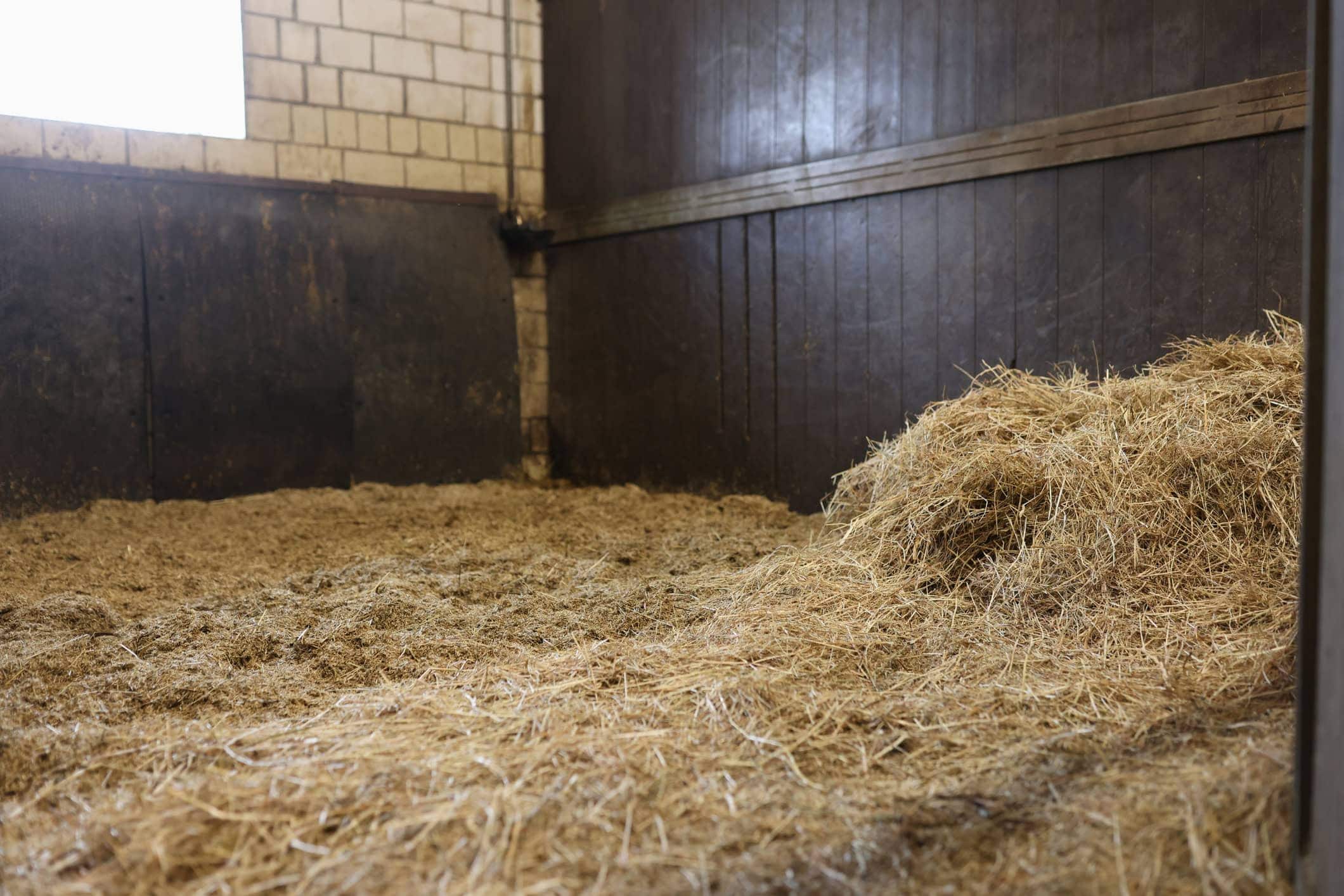
If your horse is eating bedding, it is important to understand why the behavior is occurring. While some horses may occasionally mouth or nibble fresh bedding out of curiosity, regularly eating straw, wood shavings, or other bedding materials is not considered normal feeding behavior.
Bedding consumption is often related to inadequate forage, prolonged confinement, or other management factors. In some cases, it may also be associated with nutritional imbalances, dental disease, digestive disorders, or other underlying medical conditions. [1]
Because some bedding materials can increase the risk of digestive problems or expose horses to harmful substances, persistent bedding consumption should not be ignored.
Identifying the underlying cause is the first step toward helping your horse return to normal feeding behavior and supporting their overall health and well-being.
What Does It Mean When a Horse Eats Bedding?
Horse owners are often concerned when they notice a horse chewing or eating its bedding. Bedding materials vary widely, and while some may be relatively harmless if consumed in small amounts, others are not intended to be eaten and may pose health risks when ingested in larger quantities.
Eating substantial amounts of bedding can increase the amount of poorly digestible material entering the gastrointestinal tract and may contribute to intestinal impaction. Horses that routinely eat bedding from the stall floor may also be more likely to ingest manure or other contaminated material mixed into the bedding.
Common bedding materials used in horse barns include:
- Straw
- Wood shavings
- Wood pellets
- Paper
- Hemp
- Flax
- Peat
- Miscanthus
Some exploration is normal, particularly when a new bedding material is introduced. Horses commonly investigate unfamiliar materials with their lips and mouths. Straw may be more likely to be eaten because it is an edible fibrous plant material with characteristics similar to forage.
The behavior becomes more concerning when a horse repeatedly seeks out bedding, consumes enough to noticeably reduce the stall bed, chooses bedding over hay, or develops changes in appetite, body condition, manure, or comfort.
Bedding consumption is not a medical condition, but it can be an important sign that the horse’s diet, management, or health requires evaluation.
What's your top priority with your horse's health?

What's your top priority with your horse's health?
Why Do Horses Eat Bedding?
There is no single reason why horses eat bedding. The behavior is most often related to forage availability or management, but nutritional imbalances, boredom, confinement, dental problems, digestive disease, and other medical conditions can also contribute.
Table 1. Why horses eat bedding and what to do
| Possible cause | Clues to look for | First steps | When to seek help |
|---|---|---|---|
| Inadequate forage |
|
|
|
| Unpalatable or difficult-to-chew hay |
|
|
|
| Calorie restriction |
|
|
|
| Confinement or limited turnout |
|
|
|
| Nutritional imbalance |
|
|
|
| Dental or medical condition |
|
|
|
| Possible gastric ulcers |
|
|
|
| Pica |
|
|
|
Normal Foraging Behavior
Horses have a strong physiological and behavioral drive to forage. Their digestive system is adapted to the frequent intake of small amounts of fibrous feed, and under natural conditions, horses spend many hours each day grazing and chewing.
When hay or pasture is limited, horses may continue searching for material to chew and consume after their available forage is gone. In a stall, bedding may become one of the few remaining sources of fibrous material within reach.
This does not necessarily mean that bedding consumption is abnormal. Briefly mouthing or sampling bedding can be part of normal exploratory and foraging behavior. However, repeatedly eating or swallowing large amounts is more concerning, particularly if the horse has limited access to appropriate forage.
The type of bedding also affects how likely a horse is to consume it. Straw is an edible fibrous plant material and may be readily eaten by some horses, whereas other bedding materials are less similar to forage and are not intended for consumption.
Hunger or Limited Forage Access
If a horse is regularly eating bedding, one of the first factors to consider is whether they need more forage or more consistent access to forage throughout the day.
A horse may finish its hay quickly or spend long periods without forage. Some horses may also eat less hay when it is overly mature, coarse, dusty, moldy, or otherwise unpalatable. In group housing, some horses may also have limited access to forage because of competition from herdmates.
Horses that spend long periods without forage may begin eating bedding or chewing stall boards, fences, and other available materials. Longer periods without forage are also associated with an increased risk of gastric ulcers.
Increasing forage availability, offering forage more frequently, and using a slow feeder can help extend eating time and reduce long intervals without forage.
For some horses, switching to straw bedding can provide an additional source of fibrous material to chew between forage meals. However, straw bedding should not replace an appropriate forage ration, and horses that consume large amounts may require changes to their feeding program or bedding.
Horses on weight-loss diets can be more likely to eat bedding if calorie restriction also limits forage availability or creates long periods without feed. Even when energy intake needs to be reduced, horses still require adequate fiber and regular opportunities to chew and forage throughout the day.
Weight-loss programs should be based on the horse’s measured body weight and forage dry matter intake. Lower-calorie forage and feeding strategies that extend eating time can help reduce energy intake without unnecessarily shortening forage access. Guidance from a veterinarian or equine nutritionist is recommended when designing a weight-loss program.
Consulting a professional is especially important for horses with:
- Laminitis
- Insulin dysregulation
- Hyperlipemia
- Other metabolic conditions
When appropriate, offering tested lower-calorie hay free-choice, using hay nets or other slow feeders, and using a properly fitted grazing muzzle can help control calorie intake while allowing horses to spend more time eating forage. These strategies can support a balanced, forage-based diet while reducing long periods without forage.
Hay nets and other slow feeders should be introduced safely, kept in good repair, and positioned to minimize the risk of hoof or halter entanglement.
Limited Turnout & Confinement
Horses naturally spend much of the day grazing, exploring, and interacting with other horses. While confined to a stall, horses have fewer opportunities to forage, investigate their surroundings, and express other natural behaviors. [1][2]
During periods of prolonged confinement, some horses may begin chewing or eating bedding as an outlet for boredom. This may become more noticeable during stall rest, injury rehabilitation, poor weather, or other situations that temporarily reduce turnout.
When possible, increasing turnout, providing safe social contact, and extending the time your horse spends eating forage may help reduce bedding consumption.
Environmental enrichment, such as toys or slow feeders, may also benefit some horses, but these strategies work best alongside adequate forage and opportunities to express normal behavior. [1][3]
Nutritional Imbalances
Horse owners often wonder whether eating bedding indicates their horse has a vitamin or mineral deficiency.
While nutritional deficiencies can contribute to abnormal feeding behaviors, bedding consumption does not point to any specific deficiency. Horses more commonly eat bedding because of limited forage access, prolonged confinement, or other management and health factors.
Even so, persistent bedding consumption is a good reason to review the complete diet and confirm that the horse’s nutrient requirements are being met.
Forage should form the foundation of your horse’s diet, but forage alone will not provide all essential vitamins and minerals in the amounts and ratios required by the horse.
A forage-based diet must be balanced with an appropriate vitamin and mineral supplement or ration balancer. This is especially important for horses fed unfortified grains or commercial feeds below the recommended feeding rate.
Nutrient requirements also increase during growth, pregnancy, lactation, and exercise. Growing horses, broodmares, and horses in work need diets formulated to meet these additional demands.
Work with an equine nutritionist to review your horse’s entire diet, including forage, pasture, concentrates, supplements, and treats. A nutritionist can determine whether the ration meets your horse’s individual requirements and recommend changes where needed.
Submit your horse’s diet information online for a free diet evaluation from Mad Barn.
Medical Conditions
Some medical conditions can affect a horse’s appetite, chewing ability, or feeding behavior. For example, dental disease may make long-stem hay uncomfortable to chew, causing some horses to investigate softer or shorter bedding materials instead.
Chronic pain, gastrointestinal disease, parasite burdens, and other illnesses can affect appetite, body condition, and overall feeding behavior. [1][5]
Gastric ulcers are often suspected when horses develop unusual eating behaviors. However, bedding consumption alone is not a sign of Equine Gastric Ulcer Syndrome (EGUS).
Horses with gastric ulcers may also have other clinical signs, including: [6][7]
- Poor appetite
- Mild weight loss
- Recurrent abdominal discomfort
- Poor performance
- Changes in attitude
These signs are not specific to ulcers. Gastroscopy is required to diagnose EGUS. [6][7]
Pica
Pica is the repeated consumption of non-food items or materials. Horses with pica may eat soil, sand, manure, wood, bark, hair, fabric, or other non-food items. This differs from occasionally mouthing or briefly sampling unfamiliar objects out of curiosity. [8]
Pica can be associated with inadequate forage, prolonged confinement, nutritional imbalances, or underlying medical or behavioral conditions. [8]
Because swallowing non-food materials can lead to choke, dental injury, toxicity, or intestinal obstruction, horses with suspected pica should be evaluated by a veterinarian. Potentially harmful materials should be removed while the underlying cause is investigated.
Which Bedding Materials Are Most Commonly Eaten?
The type of bedding a horse eats can influence both the underlying cause of the behavior and the potential health risks. Straw is the bedding most commonly consumed, but horses may also eat wood shavings, pellets, or other bedding materials. [9]
Table 2. Bedding materials, risks, and recommended response
| Bedding material | Likelihood of consumption | Key risks | Recommended response |
|---|---|---|---|
| Straw |
|
|
|
| Horse-safe wood shavings |
|
|
|
| Wood pellets |
|
|
|
| Hemp, flax, or miscanthus |
|
|
|
| Paper or peat |
|
|
|
| Black walnut |
|
|
|
| Treated or unidentified wood |
|
|
|
Straw
Straw is the bedding horses are most likely to eat because it resembles coarse forage. Some sampling is common, particularly when horses are first introduced to fresh straw bedding. Research suggests straw bedding can encourage natural foraging and exploratory behaviors, which are considered indicators of positive welfare in individually housed horses. [1][10][11]
However, straw should not replace an appropriate forage ration. Horses are more likely to consume large amounts when forage is unavailable or restricted, long periods pass between forage meals, or the available hay is unpalatable or difficult to chew. Sudden access to straw bedding may also encourage overeating in horses that are unfamiliar with it.
If a horse consistently eats large amounts of straw bedding, first make sure adequate hay is available before considering a change in bedding. Although straw can be incorporated into some carefully formulated diets, feeding straw as forage requires different considerations than allowing unrestricted access to straw bedding.
Wood Shavings
Pine and other horse-safe wood shavings are generally less palatable than straw, but some horses still chew or swallow them. Because wood shavings are not intended to be eaten, regular consumption may indicate an underlying nutritional, management, or medical issue that should be investigated.
Wood shavings are not a suitable source of fiber for horses. Consuming large amounts of shavings may increase the risk of digestive problems such as impaction, particularly in horses with low water intake.
Only bedding made from horse-safe wood should be used because treated, painted, contaminated, or unidentified wood products may contain harmful substances. [1]
Wood Pellets
Wood pellets intended for equine bedding are typically made from compressed, untreated softwood and are moistened before use so they expand into a soft, absorbent bed.
Compared to straw, horses generally spend less time foraging on wood pellet bedding, making pellet consumption less common. However, some horses may still chew or eat dry or partially expanded pellets.
Only use pellets manufactured specifically for equine bedding and prepare them according to the manufacturer’s instructions. Dry bedding pellets are not intended to be eaten. If your horse consumes large amounts of wood pellets, remove access and contact your veterinarian for guidance.
Other Bedding Types
Hemp, paper, flax, peat, and miscanthus bedding products vary in texture, processing, absorbency, and palatability. While some horses ignore these materials, others may chew or consume them, particularly if the underlying cause of bedding consumption has not been addressed.
Choose bedding products specifically manufactured for horses and follow the manufacturer’s recommendations for use. Bedding should be kept clean, dry, and free from mold or foreign materials. Regardless of the bedding type, it should never be considered a substitute for adequate forage. [10]
Is Eating Bedding Dangerous?
Occasionally nibbling small amounts of clean straw bedding is common and generally less concerning than repeatedly consuming large amounts of bedding. The health risk depends on the type and amount of bedding eaten, the horse’s overall health, and the hygienic quality of the material.
While some horses experience no immediate problems, excessive bedding consumption may increase the risk of digestive complications or exposure to contaminants or toxic materials. Bedding should be clean, dry, and free from mold, foreign material, and other sources of contamination. [12]
Monitor your horse closely for signs of colic or digestive upset, including reduced appetite, fewer or drier manure piles, pawing, flank watching, repeated lying down, rolling, sweating, abdominal distension, or depression. Colic is always a veterinary emergency, regardless of the cause.
Toxicity Risks
Some bedding materials pose a much greater risk than others. Black walnut shavings are toxic to horses and can cause limb swelling, warm hooves, stiffness, colic, and acute laminitis after skin or oral exposure. Avoid bedding made from black walnut or unidentified hardwood mixtures, which may contain black walnut. [13]
Wood that has been treated, painted, stained, glued, or manufactured from construction materials should never be used as horse bedding. Moldy bedding and products from unknown sources may also expose horses to harmful substances or respiratory irritants. [10]
Nutritional Consequences
Even clean, horse-safe bedding cannot replace the nutrients provided by good-quality forage. When horses fill up on bedding, they may eat less hay, reducing their intake of energy, protein, vitamins, and minerals.
This is particularly concerning for horses with elevated nutrient requirements, including growing horses, pregnant or lactating mares, horses in work, older horses, and horses eating carefully managed therapeutic diets. [4][14]
Rather than treating bedding as part of the diet, the goal should be to identify and address why the horse is eating it.
Signs That Bedding Consumption Is a Problem
Bedding consumption deserves closer attention if it becomes persistent, increases over time, or is accompanied by changes in your horse’s health, appetite, or behavior.
Signs that the behavior may require further investigation include:
- Large amounts of bedding disappear between stall cleanings
- Your horse leaves hay behind while eating bedding
- Your horse appears hungry or becomes restless when forage runs out
- Weight loss or declining body condition
- Signs of colic or recurrent digestive upset
- Changes in manure consistency or amount
- Wood fibers or excessive straw in the manure
- Quidding, slow chewing, drooling, or other signs of dental discomfort
- Repetitive behaviors, such as wood chewing, crib-biting, or weaving, develop or worsen
- The behavior begins suddenly or becomes more frequent
Keeping a simple record of forage intake, water consumption, manure output, turnout, and bedding consumption can help identify patterns and provide useful information for your veterinarian or equine nutritionist. Taking photos over several days may also make changes easier to recognize.
When to Call the Veterinarian
Contact your veterinarian promptly if your horse:
- Suddenly begins eating large amounts of bedding
- Shows signs of colic, such as pawing, flank watching, rolling, repeated lying down, or reduced manure output
- Stops eating hay or develops a marked change in appetite
- Loses weight or body condition
- Develops abnormal manure or recurrent digestive problems
- Shows signs of dental discomfort, including quidding, drooling, or slow chewing
- Eats black walnut, treated wood, large amounts of dry bedding pellets, or another potentially toxic material
- Develops fever, depression, stiffness, warm hooves, swelling, or other signs of illness

How to Stop a Horse From Eating Bedding
The most effective way to stop a horse from eating bedding is to identify and address the underlying cause. While changing bedding may reduce the opportunity to eat it, long-term success depends on meeting the horse’s nutritional, behavioral, and medical needs.
Increase Forage Availability
Many horses eat bedding because they spend too much time without forage. Ensuring hay is available for an appropriate length of time throughout the day can help satisfy the horse’s natural drive to forage.
For horses that require calorie restriction, a veterinarian or equine nutritionist can recommend an appropriate forage intake and lower-calorie hay if needed.
Offering forage more frequently, reducing long forage-free periods, and using a properly fitted slow feeder can help extend eating time. If your horse consistently leaves hay behind while eating bedding, evaluate hay quality and rule out dental or other medical problems with your veterinarian.
Review the Diet
An unbalanced diet may contribute to bedding consumption in some horses. Review the complete ration to ensure it provides adequate energy, protein, vitamins, and minerals for your horse’s age, workload, and health status.
Before adding supplements, evaluate the complete feeding program. A forage analysis and consultation with an equine nutritionist can help identify nutritional gaps or imbalances and determine whether supplementation is appropriate.
Make Management Changes
Increasing turnout and providing opportunities for grazing, movement, and social interaction may help reduce bedding consumption, particularly in horses experiencing prolonged confinement.
When appropriate, offering forage in multiple locations and providing suitable enrichment may also encourage more natural feeding behaviors. [14]
For horses on stall rest, ask your veterinarian which forms of movement or enrichment are appropriate during recovery.
Choose Bedding Carefully
If a horse consistently overeats straw, first ensure they have adequate access to good-quality forage throughout the day.
If bedding consumption continues despite appropriate forage and management, switching to a less palatable bedding material, such as paper, hemp, or a horse-safe softwood product, may help reduce the behavior while the underlying cause is addressed. [3][14]
Always choose bedding manufactured for horses and avoid black walnut, treated or painted wood, unidentified wood products, and contaminated materials.
Treat Underlying Medical Conditions
Dental disease, gastrointestinal disorders, chronic pain, parasites, and other medical conditions should be diagnosed and treated by a veterinarian.
If bedding consumption continues after an underlying condition has been managed, reassess the horse’s diet, forage program, and environment.
Preventing Bedding Consumption With Robust Management
Many cases of bedding consumption can be prevented by meeting the horse’s needs for forage, movement, and social interaction.
Feed an appropriate amount of good-quality forage and minimize long periods without access to forage. Keep the complete diet balanced, and provide continuous access to clean water and salt. Together, these practices can help reduce the likelihood of bedding consumption. [4]
Management should also support the horse’s normal feeding behaviors. Offering forage in a way that extends eating time, maintaining regular turnout when possible, and providing safe social contact can help reduce the drive to chew or swallow stall materials.
Horses on weight-loss diets, stall rest, or restricted turnout may need additional planning to maintain appropriate forage access without compromising their health or recovery.
Routine dental and veterinary care can identify problems that affect eating before they become more serious. Monitoring your horse’s feeding habits and addressing changes early can also help prevent occasional bedding sampling from becoming a persistent habit.
If bedding consumption continues despite improved forage access and management, a more detailed review of the horse’s diet, environment, and health is warranted. [5]
Frequently Asked Questions
Here are some frequently asked questions about why horses eat bedding:
A horse may eat bedding because of inadequate forage, long periods without food, limited turnout, or prolonged confinement. Nutritional imbalances, dental problems, digestive disorders, chronic pain, and other medical or behavioral conditions can also contribute. Identifying when the behavior occurs and how much bedding disappears can help determine the most likely cause.
Occasionally mouthing or sampling bedding can be normal, especially when a horse encounters a new material. Eating bedding becomes concerning when the horse repeatedly swallows it, noticeably reduces the stall bed, or chooses it over hay. Changes in appetite, body condition, manure, or comfort are additional signs that the behavior requires investigation.
A horse may eat straw bedding because it resembles coarse forage and is more palatable than most other bedding materials. Regular straw consumption can indicate that the horse is spending too long without forage, finds its hay unpalatable, or cannot comfortably chew the available hay. Large amounts of straw should not be treated as a substitute for an appropriate forage ration.
A horse may eat wood shavings when it is hungry, confined for long periods, or affected by an underlying nutritional or medical problem. Wood shavings are not a suitable source of fiber and are not intended to be swallowed. Repeated consumption should prompt a review of the horse's forage program, diet, management, dental health, and general condition.
A horse should not eat wood pellets used for bedding, even when the pellets are manufactured specifically for equine use. Bedding pellets are normally moistened so they expand into a soft bed, but dry or partially expanded pellets may still attract some horses. Remove access and contact your veterinarian for guidance if your horse consumes a large amount.
Eating bedding can contribute to colic if a horse consumes enough material to disrupt normal digestion or cause an impaction. The risk may be greater with wood products, limited water intake, or an existing digestive problem. Pawing, flank watching, repeated lying down, rolling, sweating, reduced appetite, and decreased manure output require immediate veterinary attention.
Bedding materials containing black walnut, treated wood, painted or stained wood, construction waste, mold, or unidentified contaminants can be toxic or otherwise harmful to horses. Unidentified hardwood mixtures are particularly concerning because they may contain black walnut. Only clean bedding made specifically for horses should be used.
If a horse is exposed to black walnut bedding, remove it from the contaminated area and contact a veterinarian immediately. Black walnut exposure can cause limb swelling, warm hooves, stiffness, colic, and acute laminitis. Do not wait for these signs to appear before seeking veterinary guidance.
Eating bedding does not necessarily mean a horse has a nutritional deficiency. Although an unbalanced diet can contribute to abnormal feeding behavior, inadequate forage and prolonged confinement are more common explanations. A review of the complete ration, including forage, concentrates, supplements, salt, pasture, and treats, is needed to identify genuine nutritional gaps.
Gastric ulcers may affect a horse's appetite or behavior, but eating bedding is not a specific sign of Equine Gastric Ulcer Syndrome. Horses with ulcers may also show poor appetite, mild weight loss, recurrent abdominal discomfort, changes in attitude, or reduced performance, although these signs can have other causes. Gastroscopy is required to diagnose gastric ulcers.
Eating bedding may be considered pica when a horse repeatedly consumes materials that are not normally regarded as feed. A horse with pica may also eat soil, sand, manure, wood, bark, hair, fabric, or other non-food items. Because these materials can cause choking, dental injury, toxicity, or intestinal obstruction, suspected pica warrants veterinary evaluation.
The most effective way to stop a horse from eating bedding is to identify and address the reason for the behavior. Providing appropriate forage access, reducing long forage-free periods, reviewing the complete diet, increasing turnout when possible, and treating medical or dental problems may help. A less palatable horse-safe bedding can reduce access to the preferred material while the underlying cause is being addressed.
Changing bedding may help if a horse continues to overeat a particularly palatable material such as straw. However, switching bedding does not correct hunger, an unbalanced diet, confinement, or an underlying health problem. Ensure that suitable forage is available and investigate the cause rather than relying on a bedding change alone.
A properly fitted slow feeder may help prevent bedding consumption by extending the time a horse spends eating forage. It can be particularly useful when a horse finishes hay quickly and then begins searching the stall for something else to chew. Slow feeders should be introduced carefully, kept in good repair, and designed to minimize hoof or halter entanglement.
Managing bedding eating during weight loss requires controlling calorie intake without creating excessive forage-free time. Measured portions of tested lower-calorie hay, more frequent forage meals, and an appropriate slow feeder may help extend eating time. Horses with insulin dysregulation, laminitis, hyperlipemia, or other metabolic conditions should have their weight-loss program developed with a veterinarian or equine nutritionist.
A horse may eat bedding despite having hay if the hay is coarse, overly mature, dusty, moldy, or otherwise unpalatable. Dental discomfort may also make long-stem hay difficult to chew, causing the horse to seek softer or shorter materials. Leaving hay while actively consuming bedding warrants an assessment of hay quality, dental health, and the horse's overall condition.
Preventing bedding eating involves meeting the horse's needs for forage, movement, and social interaction. Provide an appropriate amount of good-quality forage, minimize long periods without food, balance the complete diet, and maintain access to clean water and salt. Routine dental and veterinary care can also identify health problems that interfere with normal eating.
Call a veterinarian if a horse suddenly begins eating large amounts of bedding, continues despite management changes, or stops eating its normal forage. Veterinary attention is also needed for weight loss, abnormal manure, quidding, drooling, recurrent digestive problems, lethargy, or other changes in health. Suspected exposure to black walnut or another toxic material and any signs of colic require immediate veterinary guidance.
Summary
Horses may eat bedding because of inadequate forage, confinement, nutritional imbalances, dental problems, digestive disease, or other underlying conditions. Persistent consumption warrants changes to feeding and management and may require veterinary evaluation.
- Occasional sampling may be exploratory, but repeatedly swallowing bedding or choosing it over hay is cause for concern
- Straw is commonly consumed because it resembles forage, while wood shavings and pellets may increase the risk of digestive complications when eaten in large amounts
- Black walnut, treated wood, and unidentified wood products can expose horses to toxic substances and require immediate veterinary guidance
- Weight loss, reduced appetite, abnormal manure, dental discomfort, recurrent colic, or sudden behavioral changes warrant veterinary assessment
- Increasing appropriate forage access, balancing the complete diet, improving turnout, and treating underlying medical conditions can help reduce bedding consumption
References
- Baumgartner. M. et al. Common Feeding Practices Pose A Risk to the Welfare of Horses When Kept on Non-Edible Bedding. Animals. 2020. View Summary
- Mateen. A. K. W. et al. Effect of Different Bedding Material on Redirected Behaviour and Vices of Thoroughbred Race Horses Housed in Stalls. Indian Journal of Animal Production and Management. 2024.
- Goodwin. D. et al. Foraging Enrichment for Stabled Horses: Effects on Behaviour and Selection. Equine Veterinary Journal. 2002. View Summary
- Nutrient Requirements of Horses: Sixth Revised Edition. National Academies Press. 2007. View Summary
- Dixon. P. and Dacre. I. A Review of Equine Dental Disorders. The Veterinary Journal. 2005. View Summary
- Vokes. J. et al. Equine Gastric Ulcer Syndrome: An Update on Current Knowledge. Animals. 2023. View Summary
- Sykes. B. W. et al. European College of Equine Internal Medicine Consensus Statement—Equine Gastric Ulcer Syndrome in Adult Horses. Journal of Veterinary Internal Medicine. 2015. View Summary
- Li. Z. et al. A Study of Serum Mineral, Antioxidant Capacity, and Hematobiochemical Parameters in Horses with Pica in China. Journal of Veterinary Behavior. 2020.
- Werhahn. H. et al. Effects of Different Bedding Materials on the Behavior of Horses Housed in Single Stalls. Journal of Equine Veterinary Science. 2010.
- Masebo. N. T. et al. A Literature Review on Equine Bedding: Impacts on Horse and Human Welfare, Health, and the Environment. Animals. 2025. View Summary
- Luštrek. B. et al. Straw-Enriched Bedding Enhances Behavioural Indicators of Positive Welfare but Not Behavioural Synchrony in Individually Housed Horses. Applied Animal Behaviour Science. 2026.
- Jansson. A. et al. Straw as an Alternative to Grass Forage in Horses—Effects on Post-Prandial Metabolic Profile, Energy Intake, Behaviour and Gastric Ulceration. Animals. 2021. View Summary
- Belknap. J. K. Black Walnut Extract: An Inflammatory Model. Veterinary Clinics of North America: Equine Practice. 2010. View Summary
- Ermers. C. et al. The Fibre Requirements of Horses and the Consequences and Causes of Failure to Meet Them. Animals. 2023. View Summary