English
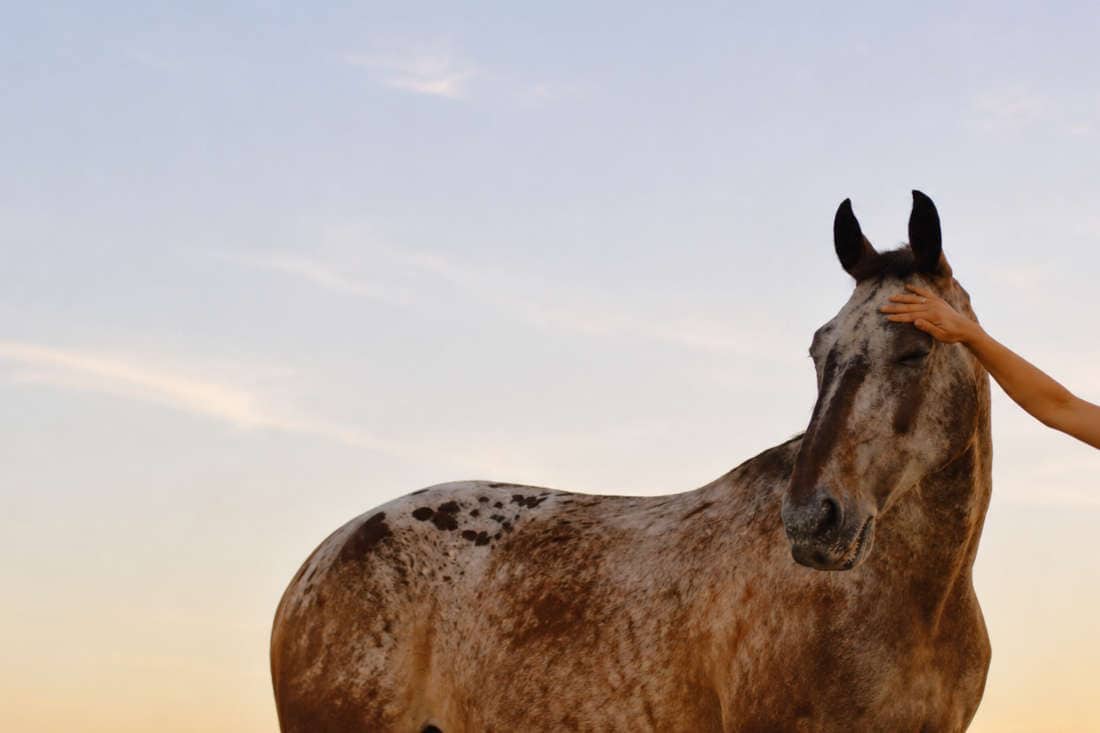
Reiki is a practice some horse owners use to support relaxation and overall well being in their horses. During a session, a practitioner places their hands lightly on or near the horse while maintaining a calm, quiet presence. Owners may incorporate Reiki into their horse’s care during periods of stress, rehabilitation, stall rest, competition, travel, or age-related changes. [1][2]
Sessions typically involve little or no physical contact. Horses may lower their head, rest a hind leg, yawn, lick and chew, or stand calmly. Although these behaviors can be associated with relaxation, they are not unique to Reiki and may occur for many reasons.
Research on Reiki in horses is limited, and more studies are needed to determine whether it provides measurable benefits beyond those associated with a calm environment, gentle handling, and human interaction.
Keep reading to learn how equine Reiki is practiced, why owners use it, what current research suggests, and how to incorporate it safely alongside veterinary care.
What Is Reiki for Horses?
Reiki is a non-invasive energy-based practice in which a practitioner places their hands lightly on or near the body to support relaxation and overall well being. Its methods and effects in horses are not well-studied, and there is limited scientific evidence showing how or whether Reiki produces specific health benefits. [1]
Reiki originated in Japan and is now practiced worldwide with people and animals. During a session, the practitioner does not use massage, joint manipulation, stretching, or other physical therapies.
Instead, the practice is based on the intention of promoting relaxation and supporting the body’s natural healing processes. [3]
Some horse owners incorporate Reiki into their horse’s care alongside conventional veterinary treatment, but it should not replace veterinary diagnosis or care when a horse is ill, injured, or showing signs of pain. [1]
History & Philosophy
Reiki was developed in Japan by Mikao Usui in the early 20th century and has since evolved into several schools and teaching traditions. Practitioner training typically includes meditation, hand positions, and ethical principles, as well as an initiation process often referred to as an attunement. [3]
Reiki philosophy emphasizes mindfulness, compassion, gratitude, and respect for others. Practitioners believe these principles, together with Reiki, support physical, emotional, and spiritual well being. [3]
These beliefs form the foundation of Reiki practice, although they are based on traditional philosophy rather than established scientific evidence.
How Reiki Is Practiced
Reiki practitioners adhere to a philosophy that proposes there is a universal life energy flowing through all living beings. The theory underlying the practice is that this energy can be channeled into a more balanced state that supports the body’s natural healing processes. [3]
During an equine Reiki session, the practitioner may place their hands lightly on the horse or hold them a short distance away without making contact. Some practitioners begin the session from a distance and allow the horse to approach if it chooses. [1]
Sessions are typically held in a familiar, quiet environment with minimal distractions. Depending on the setting, the horse may be loosely held by an experienced handler, remain in a stall, or move freely within a safe, enclosed area. Most sessions last 20 to 60 minutes. [1]
Equine Reiki practitioners often describe behavioral responses to sessions, such as:
- Lowering the head
- Licking and chewing
- Yawning
- Resting a hind leg
- Softening the eyes
- Standing quietly
Proponents of Reiki interpret these behaviors as signs of relaxation. However, these behaviors are not specific to Reiki and may also occur in response to a calm environment, gentle handling, reduced stimulation, or the passage of time. More research is needed to determine whether Reiki has effects beyond these factors.
Although Reiki has been studied in both people and animals, scientific research has not demonstrated the existence of universal life energy or identified a physiological mechanism through which Reiki produces health effects. [1][2][4]
What's your top priority with your horse's health?

What's your top priority with your horse's health?
Why Do Horse Owners Use Reiki?
Horse owners may choose Reiki as a way to provide quiet, low-pressure interaction during periods of physical or emotional stress. Some also value the opportunity to spend uninterrupted, mindful time with their horse.
Common reasons owners incorporate Reiki into their horse’s care include:
- Encouraging relaxation during travel, competition, relocation, or changes in routine
- Providing calm interaction during stall rest
- Supporting horses during rehabilitation alongside veterinary care
- Helping a horse unwind after exercise or a busy day
- Spending quiet time with senior horses or horses receiving palliative care
- Strengthening the horse-owner bond through calm, focused interaction
Some owners report that their horses appear calmer or more relaxed following a Reiki session. However, there is insufficient scientific evidence to conclude that Reiki improves healing, reduces pain, relieves anxiety, or treats specific medical or behavioral conditions.
Scientific Evidence
Research on Reiki in horses remains limited, and there is insufficient evidence to determine whether it provides measurable benefits beyond those associated with a quiet environment, gentle handling, and human interaction.
This does not necessarily mean Reiki has no effect. Rather, the available studies are too few and too small to determine whether Reiki itself is responsible for the changes some owners observe or whether those changes are influenced by other factors.
Research in Horses
Only a small number of studies have investigated Reiki in horses, and the available evidence is not sufficient to draw firm conclusions about its effectiveness.
The current research on equine Reiki has several limitations, including:
- Small sample sizes: Studies with few horses may not represent the wider equine population and are more vulnerable to chance findings
- Short study durations: Brief observation periods make it difficult to determine whether any changes are temporary or sustained
- Differences in practitioners and treatment protocols: Variation in how Reiki is performed makes it difficult to compare results across studies
- Challenges controlling for handling, environment, and horse behavior: Horses may respond to quiet surroundings, familiar people, gentle handling, or the passage of time rather than Reiki itself
- Lack of independent replication: Findings are more reliable when separate research groups can repeat a study and produce similar results
- Limited evidence linking measured changes to meaningful improvements in horse health or welfare: Changes in heart rate or surface temperature do not necessarily show that pain, healing, behavior, or quality of life has improved
One small study found that horses had lower heart rates during Reiki sessions than during control periods, which may indicate a short-term relaxation response. However, heart rates returned to normal shortly after the sessions ended. [3]
Another small study investigated changes in surface body temperature in horses receiving Reiki. Although individual variations were observed, the researchers considered the findings preliminary and recommended further research with larger groups of horses. [5]
Larger, well-designed studies are needed to determine whether the observed effects can be replicated and whether Reiki provides measurable benefits beyond a calm environment and human interaction.
Evidence from Other Species
Research on Reiki has also been conducted in people and companion animals, but the evidence remains limited.
One small placebo-controlled study in dogs reported an improvement in owner-reported pain but found no significant differences in other measures of health and well being. Human studies have produced mixed results, and reviews have noted limitations in study quality and methodology. [6]
Systematic reviews of human research have concluded that the available evidence is inconclusive because of methodological and reporting limitations. The U.S. National Center for Complementary and Integrative Health states that Reiki has not been clearly shown to be effective for any specific health-related purpose. [7][8]
Table 1. Summary of research related to equine Reiki
| Evidence reviewed | Reported finding | Key limitation | Practical takeaway |
|---|---|---|---|
| Horse heart-rate study |
|
|
|
| Horse surface-temperature study |
|
|
|
| Placebo-controlled dog study |
|
|
|
| Human studies and systematic reviews |
|
|
|
| Overall equine evidence |
|
|
|
Potential Benefits
Some owners report that their horses appear calmer, more settled, or easier to handle during or after a Reiki session. Others value the opportunity to spend quiet, focused time with their horse and feel it strengthens the horse-owner bond. [3][1]
A calm Reiki session may be enjoyable for some horses, particularly when it provides a break from training, handling, or other demands. However, the behaviors owners observe may also be influenced by: [9]
- A quiet environment with minimal distractions
- Time to rest without training or handling pressure
- Gentle touch or the presence of a calm person
- Familiarity with the practitioner or setting
- Natural changes in behavior or comfort over time
- Medication, rehabilitation, management changes, or normal recovery
Behaviors such as lowering the head, resting a hind leg, yawning, or standing quietly may be associated with relaxation, but individual behaviors cannot confirm that pain or an underlying health condition has improved. [10]
Owners using Reiki alongside veterinary care should monitor progress using measures relevant to the horse’s original concern. These may include veterinary re-examinations, lameness assessments, appetite, body weight, sleep patterns, training records, or rehabilitation milestones.
Reiki for Horses: Safety Considerations
Reiki involves little or no physical contact and is generally considered low risk when performed by an experienced practitioner. However, the greatest risks are indirect and may include delaying veterinary care, relying on unsupported medical claims, or misinterpreting signs of pain or illness. [8]
To help ensure a safe experience: [1]
- Work with an experienced practitioner who understands equine behavior and safe handling
- Allow the horse to move away or disengage if it chooses
- Do not force or restrain a horse to receive Reiki
- Avoid touching painful, injured, or medically restricted areas unless approved by a veterinarian
- Do not change medications or treatment plans without consulting your veterinarian
- Tell your veterinarian about any complementary practices being used as part of your horse’s care
When to Call the Veterinarian
Reiki should never replace veterinary diagnosis or treatment, particularly when a horse shows signs of illness, injury, or pain.
Prompt veterinary attention is important for conditions such as: [4]
- Signs of colic, including pawing, rolling, flank watching, loss of appetite, or reduced manure production
- Sudden or severe lameness
- Deep or contaminated wounds
- Neurological signs, such as weakness, incoordination, seizures, or difficulty standing
- Fever or signs of systemic illness
- Labored breathing or persistent coughing
- Painful or injured eyes
- Rapid deterioration or severe pain
Reiki may be used alongside appropriate veterinary care if the owner chooses, but it should never delay diagnosis or treatment. [4]

How to Choose an Equine Reiki Practitioner
Training and certification requirements for Reiki practitioners vary because the practice is not formally regulated. Horse owners who choose to use Reiki may want to ask about a practitioner’s training, experience with horses, approach, and the types of claims they make about what Reiki can achieve.
If you are considering Reiki for your horse, look for a practitioner who:
- Has experience working safely around horses
- Understands basic equine behavior and body language
- Respects the horse’s behavior and allows the horse to disengage if it chooses
- Does not force contact, restrain the horse unnecessarily, or work in unsafe conditions
- Describes Reiki as a supportive practice rather than a cure
- Is willing to work alongside your veterinarian and other members of your horse’s care team
- Communicates clearly about session expectations, fees, limitations, and what owners may observe during or after a session
A responsible practitioner should encourage veterinary assessment when a horse shows signs of pain, illness, injury, or behavioral change. Be cautious of practitioners who diagnose disease, discourage veterinary care, guarantee results, or claim Reiki can cure medical conditions.
Using Reiki as Part of Holistic Equine Care
Reiki may provide horses and owners with an opportunity for quiet, low-pressure interaction. Some horses appear relaxed during sessions, showing behaviors such as lowering the head, resting a hind leg, yawning, or standing calmly. These responses can be meaningful to owners, but they are not specific to Reiki and do not confirm that pain, illness, or an underlying condition has improved.
Current research on equine Reiki is limited, with only a small number of studies involving small sample sizes and short observation periods.
Preliminary findings suggest that some horses may experience temporary physiological changes during sessions, but researchers have not established that Reiki produces lasting health benefits or effects beyond those associated with a calm environment, gentle handling, and human interaction.
Owners who choose Reiki should regard it as an optional supportive practice used alongside an appropriate care plan. Changes in comfort, mobility, appetite, behavior, or performance should be assessed using relevant measures, including veterinary examinations, rehabilitation milestones, and daily management records.
Reiki should never delay veterinary attention or replace medications, diagnostic testing, treatment, or emergency care.
A positive session should prioritize the horse’s comfort and freedom to disengage. Choose a practitioner who understands equine behavior, works safely around horses, communicates honestly about the limits of Reiki, and supports collaboration with the horse’s veterinarian and wider care team.
With realistic expectations and appropriate veterinary oversight, Reiki can offer a calm shared experience while keeping the horse’s health, welfare, and individual needs at the center of every decision.
Frequently Asked Questions
Here are some frequently asked questions about Reiki for horses:
Reiki for horses is a non-invasive practice intended to promote relaxation and support overall well-being. During a session, a practitioner maintains a calm presence while placing their hands lightly on or near the horse. Reiki does not involve massage, stretching, joint manipulation, or other forms of physical therapy.
Reiki for horses has not been shown to produce consistent therapeutic benefits in scientific studies. Some owners report that their horses appear calmer or more settled during or after a session, but these changes may also result from a quiet environment, gentle handling, reduced stimulation, or human interaction. More high-quality research is needed to determine whether Reiki itself produces measurable effects.
Reiki is not scientifically proven to treat health or behavioural conditions in horses. A small study found a temporary reduction in heart rate during Reiki sessions, while another reported preliminary changes in surface body temperature. However, the available studies have been small, difficult to replicate, and unable to link these changes to meaningful improvements in equine health or welfare.
Reiki may provide an anxious horse with a calm, low-pressure experience, but it has not been shown to treat anxiety. Quiet surroundings and the presence of a calm person may help some horses settle temporarily. Persistent fear, stress, or behavioural changes should be investigated for possible health, management, environmental, or training-related causes.
Reiki has not been shown to relieve pain in horses or treat the condition causing it. Behaviours such as lowering the head, yawning, resting a hind leg, or standing quietly do not confirm that pain has improved. A veterinarian should assess suspected pain and recommend appropriate treatment, medication, or rehabilitation.
During an equine Reiki session, the practitioner may hold their hands near the horse or make light physical contact. The session is usually conducted in a familiar, quiet setting, and some practitioners allow the horse to approach or move away freely. The horse may lower its head, lick and chew, yawn, rest a hind leg, or stand quietly, although these behaviours are not unique to Reiki.
A Reiki session for horses typically lasts between 20 and 60 minutes. The exact duration depends on the practitioner, the setting, and how the horse responds. A horse should be allowed to disengage or move away rather than being forced or restrained for the full session.
Reiki is generally considered low risk for horses because it involves little or no physical contact. The main risks are indirect, including delayed veterinary care, unsupported medical claims, or the misinterpretation of pain and illness as signs of relaxation. Practitioners should avoid forcing contact or touching painful, injured, or medically restricted areas without veterinary approval.
Reiki can be used alongside veterinary care as an optional supportive practice if the owner chooses. It should not replace veterinary examinations, medication, rehabilitation, or other evidence-based treatments. Owners should tell their veterinarian about complementary practices and monitor progress through relevant measures such as re-examinations, lameness assessments, appetite, body weight, and rehabilitation milestones.
A horse needs veterinary care instead of Reiki when it shows signs of illness, injury, or significant pain. Urgent warning signs include colic symptoms, sudden or severe lameness, deep wounds, fever, laboured breathing, neurological changes, painful eyes, rapid deterioration, or severe pain. Reiki should never delay diagnosis or treatment in these situations.
Choosing an equine Reiki practitioner should begin with finding someone who has experience handling horses safely and respects a horse's choice to disengage. A responsible practitioner will describe Reiki as a supportive practice, explain its limitations, and be willing to work with the horse's veterinarian and care team. Avoid anyone who diagnoses disease, guarantees results, promises cures, discourages veterinary care, or recommends changing treatment without veterinary guidance.
Summary
Equine Reiki is a low-contact practice that some owners use to encourage calm interaction and relaxation. Scientific evidence in horses remains limited, and Reiki should only be used alongside appropriate veterinary care.
- Practitioners place their hands lightly on or near the horse in a familiar, quiet environment
- Owners may incorporate Reiki during stressful events, rehabilitation, stall rest, or age-related changes
- Lowering the head, yawning, licking and chewing, or resting a hind leg may suggest relaxation but are not specific to Reiki
- Small equine studies have reported short-term physiological changes, but the evidence is insufficient to establish health benefits
- Reiki should never delay veterinary attention for signs of illness, injury, pain, or rapid deterioration
- A suitable practitioner should understand equine behavior, respect the horse's choice to disengage, and avoid unsupported medical claims
References
- Fulton. E. and Prasad. K. Animal Reiki: Using Energy to Heal the Animals in Your Life. Ulysses Press. 2006.
- Coates. M. Healing for Horses: The Essential Guide to Using Hands-On Healing Energy with Horses. Rider. 2001.
- Hale. C. E. and Spibey. V. The Effects of Reiki on the Heart Rate of Horses. BSAP Occasional Publication. 2006.
- Senior. N. J. Animal Healing: Hands-On Holistic Techniques. Llewellyn Publications. 2018.
- Lordello. L. et al. Investigação preliminar de variações térmicas na superfície corporal de equinos tratados com Reiki. Revista de Saúde. 2019.
- Barbieri. C. R. Impact of Distant Reiki on Owner Assessment of Health and Wellbeing of Adult Dogs: A Blinded, Placebo-Controlled, Randomized Trial. Journal of the American Holistic Veterinary Medical Association. 2025.
- vanderVaart. S. et al. A Systematic Review of the Therapeutic Effects of Reiki. The Journal of Alternative and Complementary Medicine. 2009.
- Reiki. National Center for Complementary and Integrative Health. 2018.
- Müller-Klein. A. et al. A Relaxed Horse-A Relaxed Client? An Experimental Investigation of the Effects of Therapy Horses' Stress on Clients' Stress, Mood, and Anxiety. Animals. 2024.
- Descovich. K. A. et al. Facial Expression: An Under-Utilised Tool for the Assessment of Welfare in Mammals. ALTEX. 2017.