English

The equine respiratory system is essential for sustaining life and supporting athletic performance by delivering oxygen to the horse’s body. Horses have large, efficient lungs capable of meeting the substantial oxygen demands of exercise.
Within the lungs, branching airways lead to millions of tiny air sacs called alveoli. These structures are surrounded by dense networks of capillaries that allow oxygen and carbon dioxide to move between the lungs and bloodstream. Mucus and specialized immune cells help protect the lungs from inhaled particles and pathogens.
During intense exercise, a horse’s oxygen consumption can increase up to twenty-fold, placing significant demands on the respiratory system. High-intensity exercise can also contribute to conditions such as exercise-induced pulmonary hemorrhage (EIPH), commonly known as bleeding.
Despite their efficiency, horses’ lungs are vulnerable to environmental irritants, infectious agents, and respiratory diseases, including asthma, pneumonia, and pleuropneumonia. These conditions can impair lung function and exercise performance. This article provides a comprehensive review of equine lung anatomy, respiratory function, common disorders, and management and nutritional strategies for maintaining lung health in horses.
Lung Function and Anatomy in Horses
The lungs are paired organs of the equine respiratory system located within the thoracic cavity (chest). Their primary function is to exchange oxygen and carbon dioxide between inhaled air and the bloodstream, a process known as pulmonary gas exchange. [1]
The lungs contain a branching network of airways that deliver air to millions of microscopic air sacs called alveoli, where gas exchange occurs. Oxygen enters the bloodstream and is transported to muscles and other tissues to support energy production, while carbon dioxide produced by these tissues is carried back to the lungs for exhalation.
Efficient airflow and gas exchange are essential for comfortable breathing at rest and meeting the increased oxygen demands of exercise. Airway inflammation, excess mucus, or impaired lung function can increase the effort required to breathe, reduce exercise tolerance, and limit athletic performance.
Maintaining respiratory health also depends on the lungs’ ability to defend against inhaled dust, allergens, pollutants, and infectious agents. These protective mechanisms help preserve normal airway function and prevent damage to the delicate structures responsible for gas exchange.
Lung Anatomy
The lungs are pale pink organs that sit adjacent to the spine and extend downward within the thoracic cavity. The left lung weighs roughly 1,500 grams, while the right lung weighs approximately 1,800 grams.
Each lung consists of two lobes, cranial and caudal, with an additional accessory lobe in the right lung of horses. [1]
Inhaled air flows through the nose, down the trachea, and into two bronchi, one entering each lung. The main bronchus in each lung branches into smaller bronchi that form the bronchial tree—a network of branching tubes that carries air into progressively smaller airways. [1]
The bronchi branch into smaller airways called bronchioles. These are surrounded by smooth muscle that regulates airflow through constriction or dilation of the bronchioles. [1]
Microscopic Anatomy of the Lung
The microscopic anatomy of the equine lung reveals a complex and highly specialized structure designed to facilitate efficient gas exchange. Eventually, the bronchial structures lead to alveoli, which are tiny, balloon-like sacs where oxygen from inhaled air diffuses into the bloodstream and carbon dioxide is released into the alveoli for exhalation.
Like the bronchial tree, the alveoli form clusters of tiny air sacs known as alveolar trees. The lungs contain an extremely large number of alveoli, roughly 10 million, with many times more capillaries. [1][2]
The walls of the alveolar sacs are very thin in horses compared to other animals, providing an efficient surface for gas exchange. [2]
What's your top priority with your horse's health?

What's your top priority with your horse's health?
Immune Function
The respiratory system faces ongoing challenges from inhaled pathogens, such as bacteria and viruses, as well as airborne irritants, allergens, and pollutants. Immune cells are found throughout the respiratory tract, from the upper airways to the alveoli, where they help defend against pathogens and respond to inhaled substances.
The upper airways contain dendritic cells, which are specialized cells that act like messengers, picking up pieces of invaders and showing them to other immune cells so the body knows what to attack. They carry material from invading organisms to the lymph nodes, where the immune system recognizes it and begins to mount a defense. [3]
The bronchi and bronchioles are lined with epithelial cells that have cilia (microscopic hairs) and mucus-secreting goblet cells, which help trap and remove inhaled particles and pathogens. Interspersed immune cells, such as alveolar macrophages, patrol the lung tissue to defend against infections and environmental insults.
In the lungs, macrophages capture inhaled particles and mount a local immune defense. Macrophages are immune cells that act like the body’s cleanup crew by taking in and breaking down harmful germs, dead cells, and debris. They also help alert other immune cells by showing them pieces of the germs they’ve captured so the body can respond more effectively.
Macrophages also secrete inflammatory signals that activate other immune cells, such as neutrophils, which attack and eliminate invading organisms. [3] Neutrophils are white blood cells that quickly attack and destroy bacteria and other invaders by engulfing them or releasing chemicals to kill them.
Together, these processes help activate the adaptive immune response, including the recruitment of T-cells that respond locally to aid in specific immune defenses against invading organisms. [3] Memory T-cells are specialized immune cells that remember germs the body has fought off before.
If the same germ returns, these memory T-cells help the body respond faster and more strongly. Altogether, these coordinated immune defenses protect the respiratory tract from threats in the environment.
By combining rapid responses from innate immune cells (macrophages and neutrophils) with the targeted actions of memory T-cells, the lungs can recognize, attack, and remember harmful invaders.
Effects of Exercise and Training on Lungs
During exercise, the horse’s muscles require more oxygen to produce cellular energy through aerobic metabolism. To meet this increased demand, the horse breathes faster and more deeply, increasing the amount of air moving into and out of the lungs.
Exercise also triggers the horse’s spleen to contract, releasing stored red blood cells into circulation and increasing the blood’s capacity to carry oxygen to working muscles. [4][5]
A horse’s VO2 max is the maximum rate at which its body can take up and use oxygen during exercise. It is an important measure of aerobic fitness and endurance. Trained horses can consume up to 20 times more oxygen during maximal exercise than at rest. [5][6]
Aerobic training can improve VO2 max by increasing the cardiovascular system’s ability to deliver oxygen and the muscles’ capacity to use it for energy production.
As exercise intensity increases, horses also rely more heavily on anaerobic metabolism, which produces energy without directly requiring oxygen but cannot sustain prolonged high-intensity activity.
However, lung function has a limited capacity to adapt to training. Unlike the heart and skeletal muscles, the lungs do not substantially increase in size or ventilatory capacity with regular exercise training. [5][6]
During maximal exercise, the respiratory system can become a limiting factor as oxygen demand exceeds the lungs’ ability to fully oxygenate the blood. This makes healthy airway function particularly important for athletic performance, as inflammation, excess mucus, or restricted airflow can further impair oxygen delivery to working muscles.
Common Respiratory Diseases in Horses
Horses are prone to a range of respiratory diseases that can significantly affect their health, performance, and quality of life.
Among the most important of these conditions are equine asthma, exercise-induced pulmonary hemorrhage (EIPH), pneumonia, and pleuropneumonia, each involving distinct causes, disease processes, and management strategies.
Horses affected by respiratory disease require appropriate treatment and ongoing management to support lung function and respiratory comfort. Some conditions can also limit exercise tolerance and athletic performance, affecting the type and intensity of work a horse can perform.
Management depends on the underlying condition, its severity, and the horse’s intended use. For example, a horse used for high-intensity racing will have different respiratory demands and management needs than a horse used for light recreational riding.
Asthma
Equine asthma is a chronic inflammatory disease of the lower airways that restricts airflow and can make breathing difficult. Like some forms of human asthma, it involves immune reactions often triggered by dust, pollen, and other inhaled irritants.
While horses of any age can be affected, severe asthma is more common in older horses, possibly due to age-related immune changes or repeated exposure to allergens. Genetics also play a role, as a predisposition to the disease can be passed on to offspring. [7][8]
Although the exact causes of equine asthma are not fully understood, the disease involves an exaggerated immune response. In healthy horses, alveolar macrophages help remove inhaled dust, but horses with asthma experience increased airway inflammation, mucus production, and activation of immune cells. [9]
This inflammation and excess mucus can obstruct the airways, while tightening of the muscles surrounding the bronchioles (bronchospasm) further restricts airflow. Over time, thickening of airway muscles and scarring can permanently reduce lung function.
In severe cases, damage to the alveoli can lead to emphysema and long-term breathing difficulties. [10] Although there is no cure, proper treatment and environmental management can improve lung function in affected horses.
Exercise-Induced Pulmonary Hemorrhage (EIPH)
Exercise-induced pulmonary hemorrhage (EIPH) is a condition in which bleeding occurs in the lungs during strenuous exercise.
Horses affected by EIPH are commonly referred to as “bleeders.” The condition is particularly common in racehorses but also affects other performance horses, including eventers and barrel racers. [11]
EIPH occurs when the tiny blood vessels in the lungs (pulmonary capillaries) are damaged due to extreme pressure from increased heart rate, high breathing volume, and other physical impacts on the lung during exercise. [12] These stresses can cause microscopic tears in the fragile capillaries, allowing blood to enter the alveoli and airways.
Poor ventilation in parts of the lung and pressure fluctuations can worsen the damage, further compromising lung function. Most racehorses experience some level of EIPH, often without visible signs. However, heavy bleeding can reduce performance or appear as nosebleeds with blood from the lungs reaching the nostrils. [11]
Pneumonia
Pneumonia is inflammation of the lung tissue, most commonly caused by bacterial, viral, or fungal infections. In some cases, the infection can spread to the pleura (the membranes surrounding the lungs), resulting in pleuropneumonia. [13][14][15]
Examples of bacteria commonly responsible for pneumonia in adult horses include: [13]
- Staphylococcus aureus
- Klebsiella pneumoniae
- Streptococcus zooepidemicus
- Escherichia coli
- Actinobacillus equuli
Foals are particularly susceptible to rattles, a form of bacterial pneumonia caused by Rhodococcus equi.
Respiratory viruses that can predispose horses to pneumonia include: [14]
Horses with pneumonia may develop coughing, fever, weakness, and difficulty breathing. The prognosis depends on the cause of pneumonia, the horse’s age and general health, how quickly treatment begins, and whether complications develop. [14]
Shipping Fever
Shipping fever is a lung infection most often seen in horses undergoing long-distance transport. Stress and prolonged time with the head elevated can weaken immune defenses and contribute to more bacteria and irritants reaching the lower airways.
An estimated 9 – 12% of horses transported over 1,000 km develop shipping fever. [16] Common signs include fever, depression, lethargy, and reduced appetite. [17]
In severe cases, shipping fever can progress to pleuropneumonia, causing inflammation of the pleura and fluid buildup in the space between the lungs and chest wall (pleural cavity). This can make breathing difficult. With treatment, approximately 60% of affected horses return to work. [17]
Management to Support Lung Health
Maintaining healthy lung function in horses requires thoughtful management of their environment and proactive health care practices.
The horse’s respiratory tract is continuously exposed to airborne particles, irritants, and infectious agents.
Dust from hay and bedding, mold spores, and ammonia in poorly ventilated barns can trigger airway inflammation, increasing mucus production and narrowing the airways. This can make breathing more difficult and reduce exercise tolerance.
Respiratory infections present an additional challenge, particularly when horses are housed or transported together. Environmental irritants and infections can affect healthy horses and worsen existing respiratory disease.
Strategies like improving ventilation, reducing dust, providing regular turnout, and vaccinating against infections help protect respiratory health and prevent breathing problems.
Improved Ventilation
Good ventilation is essential for maintaining air quality in barns and riding facilities, particularly for horses that spend much of their time indoors.
Ventilation replaces stale indoor air with fresh outdoor air, helping remove dust, ammonia, and excess moisture that can contribute to condensation and mold growth.
Horse owners can improve air exchange by opening windows and doors and keeping existing vents unobstructed. Fans and mechanical ventilation systems can also help maintain airflow in enclosed facilities.
When building or renovating barns, soffit vents beneath the eaves can provide fresh air inlets, while ridge vents or cupolas allow warm, moist air to escape. Adequate ventilation should be maintained year-round, including during winter when barns are often closed to retain heat.
Reduced Dust
Reducing dust in your horse’s environment helps limit airway irritation and inflammation, supporting more comfortable breathing and lung health. [18][19][20]
Strategies to reduce dust in your barn include:
- Using low-dust bedding such as wood shavings or pellets, or rubber mats instead of straw.
- Storing hay and bedding separately from where horses are housed to reduce dust exposure.
- Dampening floors before sweeping to prevent dust from becoming airborne.
- Improving ventilation with fans or open windows to increase airflow.
- Keeping aisles and storage areas clean by regularly removing loose hay, bedding, and cobwebs.
- Soaking or steaming dusty hay before feeding to reduce airborne particles.
Regular Turnout
Provide horses with regular turnout to increase access to fresh air and reduce exposure to airborne irritants found in barns and stalls.
Outdoor environments generally have lower concentrations of dust from hay and bedding, ammonia from urine and manure, and carbon dioxide exhaled by horses. These substances can accumulate in enclosed barns, particularly when ventilation is inadequate.
Turnout also encourages natural movement and grazing with the head lowered. Movement increases breathing activity, while lowering the head promotes the natural clearance of mucus and trapped particles from the respiratory tract.
Maximizing time outdoors can be particularly beneficial for horses with asthma or other respiratory sensitivities, provided they are not exposed to excessive pollen, dust, or other environmental triggers.
Avoid Mold and Allergens
Exposure to mold spores and airborne allergens can irritate a horse’s airways, trigger coughing, and worsen respiratory conditions such as asthma.
Keep stalls and feed storage areas clean and dry, remove damp bedding regularly, and avoid feeding moldy hay. Horses sensitive to seasonal allergens, such as pollen, also benefit from adjustments to their turnout schedule during periods of high pollen exposure.
Stay Up-To-Date on Vaccines
Vaccinating horses helps protect against contagious respiratory infections, including equine influenza, equine herpesvirus, and bacterial diseases such as strangles.
Vaccination reduces the risk and severity of certain infections that can impair respiratory function. Work with your veterinarian to establish a vaccination schedule based on your horse’s age, health status, travel, and exposure to other horses.
Isolate Sick Horses
Isolating sick horses, even before the cause of illness is confirmed, is an important biosecurity measure that helps prevent contagious respiratory infections from spreading to healthy horses.
Horses showing signs of illness, such as fever, coughing, or nasal discharge, should be separated from other horses and examined by a veterinarian. Use separate water buckets, feed containers, and handling equipment, and care for healthy horses before attending to sick horses.
Maintain quarantine until a veterinarian confirms that the horse can safely return to contact with other horses.
Regular Veterinary Checks
Regular veterinary checks can help catch lung problems early before they become serious. Your veterinarian can listen for abnormal lung sounds, check your horse’s breathing rate at rest, and look for nasal discharge.
They may also ask if you’ve noticed any issues such as coughing, unusual breathing noises during exercise or poor performance.
More advanced diagnostic procedures, such as bronchoalveolar lavage, may be needed to collect fluid samples from the lower airways and assess inflammation or infection. These findings enable veterinarians to diagnose respiratory conditions and develop an appropriate treatment plan.

Nutrition for Respiratory Health
Supporting respiratory health in horses goes beyond environmental management, veterinary care, and exercise planning. It also involves meeting their nutritional requirements, adopting feeding practices that support lung function, and considering additional dietary support.
Providing clean, high-quality hay helps limit exposure to respiratory irritants, while adequate vitamins and minerals support normal immune function and antioxidant defenses.
Functional nutrients, such as omega-3 fatty acids and certain herbs, provide additional support for horses experiencing respiratory challenges.
Choose Safe Hay
Feeding clean, hygienic hay is essential for maintaining healthy respiratory function in horses. Shake hay to check for dust and inspect for brown or grey discoloration, musty odors, or warmth that may indicate mold.
Dusty or moldy hay releases microscopic particles and fungal spores into the air as the horse eats.
These irritants can trigger airway inflammation and interfere with normal respiratory defenses. Susceptible horses, such as those with mild asthma, may develop persistent coughing or reduced exercise performance. [10]
Soaking or steaming hay before feeding can reduce airborne particles for horses with respiratory sensitivities. [21][22][23] Other options include hay pellets, hay cubes, and commercially prepared low-dust or dust-free forage products.
Feeder height also affects respiratory health. Feeding hay at or near ground level allows horses to lower their heads naturally, promoting drainage of mucus and clearance of trapped particles from the respiratory tract.
Meet Vitamin and Mineral Requirements
Meeting a horse’s vitamin and mineral requirements is important for maintaining healthy lung function. Adequate nutrient intake supports normal immune function, respiratory tissue health, and the antioxidant defenses that protect the lungs from oxidative damage.
Both exercise and respiratory diseases can increase oxidative stress and inflammation in the respiratory system. Antioxidant nutrients such as zinc, copper, and selenium play important roles in the function of enzymes that help regulate the body’s response to respiratory stress. [24]
Horses with respiratory disease may have altered antioxidant status, including reduced circulating concentrations of zinc, copper, and selenium. [24]
Similarly, horses with equine herpesvirus-1 (EHV-1) have shown lower circulating zinc and copper concentrations compared to healthy horses. [25] Inadequate dietary intakes of these minerals may further compromise antioxidant defenses and the response to respiratory stress.
Antioxidant vitamins, such as vitamin E and vitamin C, also play important roles in regulating oxidative stress and inflammation. [26]
Meeting requirements for these vitamins and minerals is particularly important for horses undergoing prolonged or intense exercise or experiencing respiratory disease. Higher intakes may be warranted in some cases, depending on the horse’s individual needs. [26]
Mad Barn’s Omneity is a complete vitamin and mineral supplement that helps balance your horse’s diet and meet nutrient requirements to support respiratory health. It contains 100% organic trace minerals, as well as vitamin E and vitamin C, to support antioxidant defenses during periods of respiratory stress.

Supplements for Lung Health in Horses
A variety of nutritional supplements can provide additional support for maintaining healthy lung function in horses.
Ingredients such as DHA, spirulina, jiaogulan, and ginseng support respiratory health through their effects on antioxidant defenses, immune function, and inflammatory responses.
These benefits are particularly relevant for horses experiencing respiratory challenges associated with exercise, allergies, or illness.
DHA
DHA (docosahexaenoic acid) is an omega-3 fatty acid that has been shown to have positive effects on respiratory health in humans, horses, and a number of other species. [27]
When combined with effective management and a low-dust diet, supplementation with a DHA-containing formula led to improvements in cough scores and lung function in horses with lower airway issues. [28]
Mad Barn’s OmegaPrime+ is an extra-strength omega-3 oil that supplies 6 grams of microalgae DHA per serving in a cold-pressed flax oil base.
Its concentrated formulation provides a high dose of DHA in a small amount of oil, making it suitable for horses requiring additional omega-3 support, including easy keepers and horses with limited exercise that do not need extra calories.

Jiaogulan and Spirulina
Jiaogulan and spirulina are commonly used together to support healthy respiratory function in horses.
Jiaogulan is an adaptogenic herb that supports normal bronchodilation and circulation in horses. Spirulina is a blue-green algae containing antioxidant compounds, including phycocyanin, that help regulate immune responses to allergens and histamine release.
Horses affected by seasonal allergies or inflammatory airway disease may experience improved respiratory comfort, lung function, and exercise recovery within a few weeks to a few months of consistent supplementation with jiaogulan and spirulina. [29]
Feeding 2 grams of jiaogulan and 20 grams of spirulina twice daily has been associated with reduced coughing, headshaking, snorting, and sneezing in horses with respiratory sensitivities. [29] These findings are based on equine case reports, and controlled clinical trials are still needed to establish their effectiveness.
Tienchi (Panax notoginseng)
Tienchi (Panax notoginseng) is a species of ginseng traditionally used to support circulation, energy, and endurance. It contains bioactive compounds, including ginsenosides, flavonoids, and polysaccharides, with antioxidant and anti-inflammatory properties.
Research on ginseng has demonstrated effects on inflammatory signaling, including the regulation of pro-inflammatory cytokines, as well as immunomodulatory, antiviral, and antibacterial activity. [30]
Preclinical studies specifically investigating Panax notoginseng have shown that its ginsenosides can help regulate airway inflammation and mucus production. These compounds also support vascular function and circulation, which are important for oxygen delivery to working muscles during exercise.
Research involving American ginseng (Panax quinquefolius) has also demonstrated effects on the immune response to equine herpesvirus-1 (EHV-1) vaccination in horses. [31]
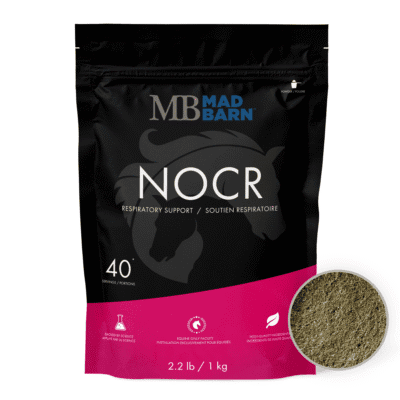
Mad Barn’s NOCR combines Tienchi with spirulina, jiaogulan, and milk thistle to support healthy lung function, circulation, and immune defenses. This formulation provides antioxidant and respiratory support to help horses maintain comfortable breathing, stamina, and exercise performance during training and competition.
Frequently Asked Questions
Here are some frequently asked questions about supporting lung health and respiratory function in horses:
Supporting lung health in horses involves maintaining good barn ventilation, reducing exposure to dust and mold, providing regular turnout, and feeding clean, low-dust forage. Meeting vitamin and mineral requirements supports immune function and antioxidant defenses. Horses with respiratory disease may also benefit from veterinary treatment, environmental management, and nutritional support.
Healthy lung function allows horses to deliver oxygen to working muscles and remove carbon dioxide during exercise. During maximal exercise, oxygen consumption can increase up to 20-fold compared to rest. Restricted airflow, airway inflammation, or impaired gas exchange can reduce exercise tolerance, stamina, and athletic performance.
Regular exercise improves aerobic fitness and VO2 max by increasing the cardiovascular system's ability to deliver oxygen and the muscles' capacity to use it. However, the lungs do not substantially increase in size or capacity with training. Maintaining healthy airways is therefore important for supporting oxygen uptake during intense exercise.
Lung function can be impaired by airway inflammation, excess mucus, bronchoconstriction, infection, or damage to pulmonary tissues. Common causes include equine asthma, pneumonia, and exercise-induced pulmonary hemorrhage (EIPH). Exposure to dust, mold spores, ammonia, and other airborne irritants can also contribute to respiratory problems.
Managing a horse with respiratory issues involves reducing exposure to airborne irritants and working with a veterinarian to treat the underlying condition. Improve barn ventilation, use low-dust bedding, store hay away from stalls, and avoid activities that generate airborne dust near horses. Provide regular turnout to increase access to fresh air and encourage natural movement, which supports mucus clearance from the respiratory tract. Horses with asthma or seasonal allergies may need turnout schedules adjusted to avoid pollen and other environmental triggers. Exercise and management practices should be adapted to the horse's respiratory condition and intended use.
Horses with respiratory sensitivities benefit from clean, low-dust forage that is free from mold. Steaming or soaking hay can reduce airborne particles, and alternatives include hay pellets, hay cubes, and commercially prepared low-dust forage. Feeding at or near ground level also encourages a natural head position that supports respiratory clearance.
Zinc, copper, and selenium support antioxidant enzymes that protect respiratory tissues from oxidative stress. Vitamin E and vitamin C also contribute to antioxidant defenses and normal immune function. Meeting a horse's nutritional requirements is particularly important during intense exercise or respiratory illness, when oxidative stress and inflammation may increase.
Supplements containing DHA, spirulina, jiaogulan, and Tienchi (Panax notoginseng) may provide additional respiratory support. DHA supports normal inflammatory responses, spirulina contributes antioxidant and immune-supporting compounds, and jiaogulan supports normal bronchodilation. Tienchi contains ginsenosides studied for their effects on inflammation and circulation, although direct evidence for respiratory benefits in horses remains limited. These ingredients may complement appropriate nutrition, environmental management, and veterinary care.
Summary
- The lungs are large, intricate organs that contain a network of bronchial and alveolar trees that ultimately deliver oxygen to and remove carbon dioxide from the blood.
- The lungs have specialized immune defenses that help defend against invading pathogens to prevent respiratory diseases.
- While exercise training does not improve lung capacity specifically, it results in adaptations that improve respiratory efficiency, making horses better able to handle heavier workloads.
- Several respiratory diseases can impact lung health, including asthma, Exercise-Induced Pulmonary Hemorrhage (EIPH), pneumonia, and pleuropneumonia.
- Good management practices can help to support lung health, including improving ventilation, reducing dust and mold exposure, providing regular turnout, vaccinating your horse and maintaining biosecurity and frequent vet checks.
- Meeting vitamin and mineral requirements is important for supporting respiratory health both in healthy horses and those with respiratory issues.
- For horses needing more support, supplements like DHA, spirulina, jiaogulan, and ginseng can provide additional respiratory protection.
References
- Goralskyi. L. P. et al., Macro and Microscopic Structure and Morphometric Indices of the Mature Horse Lungs. Theoretical and Applied Veterinary Medicine. 2022.
- Lekeux. P. et al., The Respiratory System: Anatomy, Physiology, and Adaptations to Exercise and Training. The Athletic Horse: principles and practice of equine sports medicine. WB Saunders, Philadelphia. 1994.
- Nicod. L. P., Lung Defences: An Overview. European Respiratory Review. European Respiratory Society. 2005. doi: 10.1183/09059180.05.00009501.
- Franklin. S. H. et al., Respiratory Responses to Exercise in the Horse. Equine Veterinary Journal. 2012. doi: 10.1111/j.2042-3306.2012.00666.x.
- Hopkins. S. R., The Lung at Maximal Exercise: Insights from Comparative Physiology. Clinics in Chest Medicine. Elsevier. 2005. doi: 10.1016/j.ccm.2005.05.003.
- Powers. S. K., Is the Lung Built for Exercise?. Journal of Applied Physiology. American Physiological Society. 2020. doi: 10.1152/japplphysiol.00819.2020.
- Hansen. S. et al., A Review of the Equine Age-Related Changes in the Immune System: Comparisons between Human and Equine Aging, with Focus on Lung-Specific Immune-Aging. Ageing Research Reviews. 2015. doi: 10.1016/j.arr.2014.12.002.
- Mixed Inheritance of Equine Recurrent Airway Obstruction.
- Bowles. K. S. et al., A Novel Model for Equine Recurrent Airway Obstruction. Veterinary Immunology and Immunopathology. 2002. doi: 10.1016/S0165-2427(02)00081-8.
- Couetil. L. et al., Equine Asthma: Current Understanding and Future Directions. Frontiers in Veterinary Science. Frontiers Media SA. 2020.
- Hinchcliff. K. W. et al., Exercise Induced Pulmonary Hemorrhage in Horses: American College of Veterinary Internal Medicine Consensus Statement. Journal of Veterinary Internal Medicine. 2015. doi: 10.1111/jvim.12593.
- Crumley. M. N. et al., Effects of Tidal Volume, Ventilatory Frequency, and Oxygen Insufflation Flow on the Fraction of Inspired Oxygen in Cadaveric Horse Heads Attached to a Lung Model. 2012. doi: 10.2460/ajvr.73.1.134.
- Hallowell. K. L. et al., An Updated Description of Bacterial Pneumonia in Adult Horses and Factors Associated with Death. Journal of Veterinary Internal Medicine. 2024. doi: 10.1111/jvim.17141.
- Gruntman. A. M., Pneumonia, Viral. Clinical Veterinary Advisor: The Horse. Elsevier Health Sciences. 2011.
- Higgins. J. C. and Pusterla. N., Fungal Pneumonia in Horses. Clinical Techniques in Equine Practice. 2006. doi: 10.1053/j.ctep.2006.03.017.
- Maeda. Y. and Oikawa. M., Patterns of Rectal Temperature and Shipping Fever Incidence in Horses Transported Over Long Distances. Front Vet Sci. 2019. View Summary
- Pleuropneumonia (Shipping Fever) in Horses - Horse Owners. Merck Veterinary Manual.
- Vandenput. S. et al., Airborne Dust and Aeroallergen Concentrations in Different Sources of Feed and Bedding for Horses. Veterinary Quarterly. 1997. View Summary
- Auger. E.-J. and Moore-Colyer. M. J. S., The Effect of Management Regime on Airborne Respirable Dust Concentrations in Two Different Types of Horse Stable Design. Journal of Equine Veterinary Science. 2017.
- Olave. C. J. et al., Dust Exposure and Pulmonary Inflammation in Standardbred Racehorses Fed Dry Hay or Haylage: A Pilot Study. The Veterinary Journal. 2021. View Summary
- Blundell. E. L. et al., The effect of steaming and soaking treatments on respirable dust content of hay and the potential environmental polluting impact of the waste water produced. Forages and grazing in horse nutrition. 2012.
- Moore-Colyer. M. J. S., Effects of soaking hay fodder for horses on dust and mineral content. Animal Science. 1996.
- Orard. M. et al., The influence of hay steaming on clinical signs and airway immune response in severe asthmatic horses. BMC Vet Res. 2018. View Summary
- Youssef. M. A. et al., Antioxidant Trace Elements in Serum of Draft Horses with Acute and Chronic Lower Airway Disease. Biological Trace Element Research. 2012. doi: 10.1007/s12011-012-9471-0.
- Yörük. I. et al., Serum Concentration of Copper, Zinc, Iron, and Cobalt and the Copper/Zinc Ratio in Horses with Equine Herpesvirus-1. Biological Trace Element Research. 2007. doi: 10.1007/s12011-007-0023-y.
- Deaton. C. M. et al., Antioxidant Supplementation and Pulmonary Function at Rest and Exercise. Equine Veterinary Journal. 2002. doi: 10.1111/j.2042-3306.2002.tb05392.x.
- Zúñiga-Hernández. J. et al., N-3 PUFAs and Their Specialized pro-Resolving Lipid Mediators on Airway Inflammatory Response: Beneficial Effects in the Prevention and Treatment of Respiratory Diseases. Food & Function. Royal Society of Chemistry. 2022.
- Nogradi. N. et al., Omega-3 Fatty Acid Supplementation Provides an Additional Benefit to a Low-Dust Diet in the Management of Horses with Chronic Lower Airway Inflammatory Disease. Journal of Veterinary Internal Medicine. 2015. doi: 10.1111/jvim.12488.
- Kellon. E., Use of the Herb Gynostemma Pentaphyllum and the Blue-Green Algae Spirulina Platensis in Horses. 2006.
- Alsayari. A. et al., Pharmacological Efficacy of Ginseng against Respiratory Tract Infections. Molecules. Multidisciplinary Digital Publishing Institute. 2021. doi: 10.3390/molecules26134095.
- Pearson. W. et al., Low-Dose Ginseng (Panax Quinquefolium) Modulates the Course and Magnitude of the Antibody Response to Vaccination against Equid Herpesvirus 1 in Horses. Canadian Journal of Veterinary Research. 2007.