English
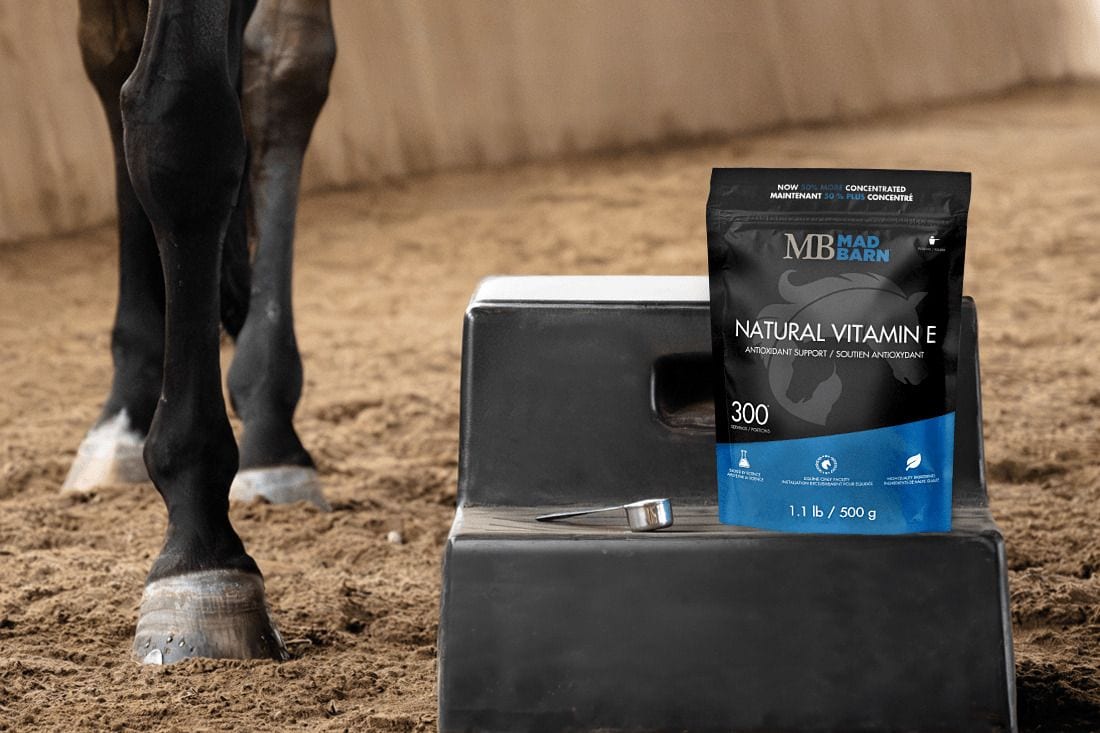
The best vitamin E supplement for horses is one that provides an effective dose of vitamin E in a form that is well absorbed, easy to feed, and appropriate for the rest of the diet.
Ingredient source is one of the most important differences between vitamin E supplements. Natural vitamin E, listed as d-alpha-tocopherol, is better retained in the horse’s body than synthetic vitamin E, listed as dl-alpha-tocopherol. This makes natural vitamin E the preferred form, especially when pasture access is limited or antioxidant demands are increased. [1]
When comparing vitamin E supplements, consider how much vitamin E is supplied per serving and the cost per 1,000 IU. It is also important to check whether the product contains other nutrients, such as selenium, a trace mineral antioxidant that works closely with vitamin E.
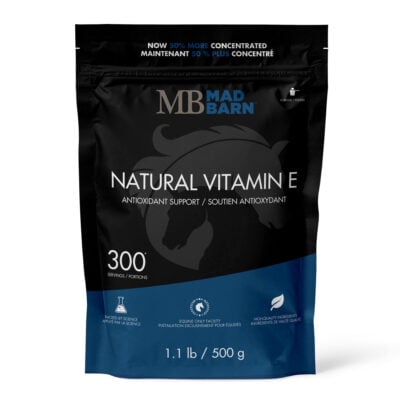
For most horses that need additional vitamin E, Mad Barn’s Natural Vitamin E is the best overall choice. It provides 1,000 IU of natural d-alpha-tocopherol per serving at a low cost per serving, with no added sugar, no unnecessary fillers, and a concentrated powder format that fits easily into most feeding programs.
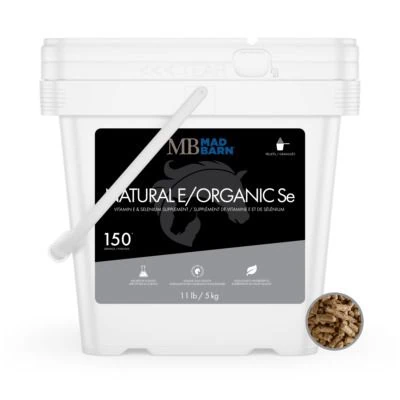
For horses that also need selenium, Mad Barn’s Natural E/Organic Se is a pelleted supplement that provides natural vitamin E together with organic selenium yeast, making it an ideal choice when both nutrients are needed.
Why Horses Need Vitamin E
Vitamin E is an essential fat-soluble antioxidant that helps protect cells from oxidative stress. It supports normal muscle function, nerve health, immune defenses, and post-exercise recovery in horses. [1]
Vitamin E cannot be synthesized by the horse’s body and must be supplied by pasture, feed, forage, or supplements.
Horses grazing lush pasture often receive adequate vitamin E from grass, but intake can vary with season, pasture quality, turnout time, and total forage consumption. [2]
Horses with limited access to lush pasture typically need supplemental vitamin E because hay contains much lower levels than fresh grass. [3]
Some horses may benefit from additional vitamin E because of increased antioxidant demands, including: [4][5][6]
- Performance horses
- Senior horses
- Growing horses
- Breeding horses
- Metabolic horses
- Horses under heavier training or management stress
What's your top priority with your horse's health?

What's your top priority with your horse's health?
Why Hay-Based Diets Are Often Low in Vitamin E
Fresh pasture is the best natural source of vitamin E for horses. Horses grazing good-quality pasture can often meet their vitamin E requirement from pasture grass alone, depending on grass maturity, turnout time, and individual needs.
However, vitamin E is not stable in stored forage. Once grass is cut and dried vitamin E concentrations begin to decline. Losses continue as hay bales are stored, which means hay provides substantially less vitamin E than fresh pasture. Grass hay typically has only 10-15% of the vitamin E content of fresh grass. [7][8]
Table 1. Estimated vitamin E levels in different forage sources
| Forage Source | Vitamin E Concentration | Estimated Intake* | Vitamin E Contribution |
|---|---|---|---|
| Fresh pasture | 45 – 400 IU/kg dry matter | 450 – 4,000 IU/day | Can meet or exceed typical daily vitamin E needs when pasture intake and quality are high |
| Stored hay | 4.5 – 40 IU/kg dry matter | 45 – 400 IU/day | Unlikely to meet vitamin E requirement, even when the horse is consuming adequate forage |
*Estimated intake is based on a 500 kg (1,100 lb) horse consuming 10 kg of forage dry matter per day, equal to 2% of body weight. Actual vitamin E intake depends on body weight, forage intake, pasture quality, hay quality, harvest conditions, storage time, and workload.
For a 500 kg adult horse, the NRC’s daily vitamin E requirement is 500 to 1,000 IU/day, based on 1 to 2 IU/kg body weight. Exercising horses require more vitamin E to support antioxidant function during training and recovery.
Hay-based diets require supplemental vitamin E because stored forage does not provide enough to meet daily requirements. Horses with limited turnout, long winter feeding periods, heavier workloads, senior horses, growing horses, broodmares, and horses with metabolic concerns or increased antioxidant demands have greater need for supplemental vitamin E.
The amount to supplement depends on the complete diet. Forage quality, fortified feeds, ration balancers, other supplements, workload, health status, selenium intake, and blood vitamin E status all influence how much additional vitamin E is needed.
Does My Horse Need a Vitamin E Supplement?
To determine whether your horse needs a vitamin E supplement, compare the horse’s estimated vitamin E requirement with the amount supplied by the current feeding program. This includes vitamin E from forage, pasture, fortified feeds, ration balancers, oils, and other supplements. [5]
A horse’s requirement depends on body weight, workload, life stage, health status, and antioxidant demand. Horses in regular work, growing horses, broodmares, senior horses, and horses with metabolic or neuromuscular concerns often require closer attention to vitamin E intake because their needs can be higher than maintenance requirements. [5][9][10]
A blood test can help evaluate vitamin E status when deficiency is suspected, especially in horses with poor muscle recovery, weakness, neurologic signs, or other health concerns. Bloodwork shows the horse’s current vitamin E status, but it does not show whether the diet is correctly balanced or how much vitamin E the horse is consuming.
A diet evaluation looks at the horse’s complete feeding program, including forage, pasture access, feeds, ration balancers, supplements, workload, and health status.
A nutritionist can estimate total vitamin E intake, compare it with the horse’s requirement, identify nutrient gaps or overlap between products, and determine whether the best option is targeted vitamin E, vitamin E with selenium, or a complete vitamin and mineral supplement.
For help choosing the right option, submit your horse’s diet for a free evaluation by Mad Barn’s equine nutritionists.
Signs Your Horse May Need Vitamin E Support
Low vitamin E status can affect systems with high antioxidant demands, including muscle and nerve tissue.
Horses with inadequate vitamin E intake may need further evaluation when they show signs such as: [11][12]
- Poor exercise recovery
- Unexplained muscle soreness
- Loss of muscle mass
- Weakness
- Poor coordination
- Neurologic changes
These signs are not specific to vitamin E deficiency and can have many possible causes. Work with your veterinarian to determine whether blood testing is appropriate and to interpret the results in context.
Vitamin E testing is sensitive to sample handling because vitamin E can degrade quickly if samples are not processed and stored properly. Results and interpretation can also vary between laboratories, reference ranges, and reporting methods, so bloodwork should be interpreted alongside the horse’s clinical signs, diet history, and full nutrition evaluation. [13][14]
When to Call the Veterinarian
Weakness, poor coordination, muscle soreness, poor exercise recovery, and neurologic signs are not specific to vitamin E deficiency. These signs can also occur with muscle disease, neurologic disorders, metabolic conditions, injury, infection, or other nutritional deficiencies.
Contact your veterinarian if your horse has:
- Stumbling, unsteady movement, or trouble placing the feet normally
- Difficulty rising, backing up, turning, or walking normally
- Sudden weakness, collapse, or reluctance to move
- Muscle soreness that is severe, recurring, or not explained by exercise
- Changes in performance, coordination, balance, or behavior
- Any new or worsening signs that affect movement, strength, or comfort
A veterinarian can assess medical causes of weakness, poor coordination, muscle soreness, or changes in movement. If vitamin E intake is part of the concern, a qualified equine nutritionist can review the full diet and help determine whether targeted vitamin E, vitamin E with selenium, or broader vitamin and mineral support is appropriate.
How Much Vitamin E Does a Horse Need?
The amount of vitamin E a horse needs depends on body weight, life stage, workload, and whether deficiency is suspected.
Vitamin E requirements are expressed in international units, or IU. The National Research Council (NRC) requirement for a mature horse at maintenance is 1 IU/kg body weight per day. For a 500 kg (1,100 lb) horse, this equals 500 IU/day. This is the minimum amount required to avoid vitamin E deficiency. [5]
For adult horses, the nutritionist-recommended adequacy target is 2 IU/kg body weight per day, or 1,000 IU/day for a 500 kg (1,100 lb) horse. This intake level is used to support optimal vitamin E status and the normal antioxidant functions involved in muscle function, immune response, nerve health, and exercise recovery.
Exercise increases vitamin E demand in the horse’s body. Horses in heavy work have higher minimum requirements because exercise contributes to oxidative stress in muscle and other metabolically active tissues.
For a 500 kg horse in heavy work, the minimum requirement is approximately 1,000 IU/day, and an adequacy target is closer to 2,000 IU/day.
Table 2. Estimated vitamin E intake targets for horses by class [5]
| Horse class | Vitamin E intake | Example for a 500 kg (1,100 lb) horse | Notes |
|---|---|---|---|
| Mature horse at maintenance | 1 – 2 IU/kg body weight/day | 500 – 1,000 IU/day | 500 IU/day is the minimum intake needed to prevent overt deficiency in a mature, non-working horse. 1,000 IU/day is the recommended optimal target for supporting adequate vitamin E status. |
| Exercising horse | 2 – 4 IU/kg body weight/day | 1,000 – 2,000 IU/day | Exercise increases oxidative stress in muscle tissue, increasing vitamin E needs during training and recovery. |
| Growing horse | 2 IU/kg body weight/day | 1,000 IU/day | Vitamin E supports antioxidant function during growth, muscle development, and immune system activity. |
| Breeding horse or broodmare | 2 IU/kg body weight/day | 1,000 IU/day | Vitamin E supports antioxidant function during breeding, pregnancy, and lactation. |
| Senior horse | 2 IU/kg body weight/day or higher | 1,000 IU/day or higher | Senior horses require closer attention to vitamin E status, especially when muscle, immune, or nervous system support is a concern. |
Use these values to determine how much vitamin E your horse needs in the diet. The requirement represents the minimum intake needed to prevent deficiency, while the optimal target reflects the intake recommended to support adequate vitamin E status.
Once the intake target is identified, compare it with the vitamin E already supplied by the full ration. Pasture, hay, fortified feeds, ration balancers, and other supplements all contribute to total daily intake. Any additional vitamin E should be calculated based on what is needed to reach the appropriate target.
Horses with low blood vitamin E, poor muscle recovery, neuromuscular disease, or neurological concerns may require higher intakes under veterinary or nutritionist guidance. In these cases, vitamin E intake should be assessed alongside clinical signs, bloodwork, selenium intake, and the complete feeding program.
What to Look for in a Vitamin E Supplement
When choosing a vitamin E supplement, compare products by the amount of vitamin E delivered, the ingredient form used, the concentration of the formula, and the cost per daily serving.
These factors determine whether a supplement can meet your horse’s vitamin E requirement in a cost-effective, easy-to-feed, and nutritionally appropriate way.
Important product details to compare include:
- Vitamin E form: Choose natural vitamin E, listed as d-alpha-tocopherol or d-alpha-tocopheryl acetate, rather than synthetic dl-alpha forms. Natural vitamin E is better retained in the horse’s body and is the preferred form for supporting vitamin E status. [1]
- IU per serving: The label should clearly state how many international units, or IU, are supplied at the recommended feeding rate.
- Concentration: Compare IU per gram, not just IU per scoop. A more concentrated product provides the same vitamin E intake with a smaller serving size and less filler or carrier material.
- Cost per 1,000 IU: Product price alone does not indicate value. Cost per 1,000 IU is the clearest way to compare products with different concentrations and serving sizes.
- Ingredient quality: Added sugar, fillers, and large carriers increase the amount of product fed without contributing to vitamin E intake. For targeted supplementation, a concentrated formula with minimal added ingredients is preferred.
- Selenium content: Selenium can be useful when the total diet is low, but it should not be included unless selenium intake from forage, fortified feeds, ration balancers, and other supplements has been considered. [15][9][16]
- Feeding format: Powder and pelleted products can both be effective. The best format is the one that delivers the required IU consistently and is readily consumed by the horse.
Vitamin E and selenium both support antioxidant defenses, but they are not interchangeable. Vitamin E is a fat-soluble antioxidant, while selenium is a trace mineral required for selenium-dependent antioxidant enzymes.
Some horses need additional vitamin E alone, while others need both vitamin E and selenium. The right choice depends on the horse’s total diet, including forage, fortified feeds, ration balancers, and other supplements.
If selenium intake is already adequate, choose a vitamin E-only product to increase vitamin E without adding another mineral to the ration. If selenium intake is low, choose a product that provides vitamin E with an appropriate selenium source.
A high-quality vitamin E supplement should provide natural vitamin E at an effective dose with an ingredient profile that fits the horse’s diet and an affordable cost per day.
Natural vs. Synthetic Vitamin E for Horses
One of the most important label details to check is whether a supplement provides natural or synthetic vitamin E.
Natural vitamin E is listed on supplement labels as d-alpha-tocopherol or d-alpha-tocopheryl acetate. Synthetic vitamin E is listed as dl-alpha-tocopherol or dl-alpha-tocopheryl acetate.
The difference is the molecular form. Natural vitamin E contains the RRR-alpha-tocopherol isomer, which is the form preferentially recognized and retained by the body. Synthetic vitamin E contains a mixture of eight different isomers. Only one of these is RRR-alpha-tocopherol, while the others are retained less efficiently. [17][18]
This is why natural vitamin E has higher bioavailability than synthetic vitamin E. Synthetic vitamin E still supplies vitamin E activity, but natural vitamin E is preferred when the goal is to efficiently improve or maintain vitamin E status in horses.
Vitamin E Concentration
Vitamin E supplements vary in how much vitamin E they provide per serving, ingredient formulation, and the cost per day.Two products can both provide 1,000 IU of natural vitamin E per serving, while differing in concentration and feeding cost.
This is particularly important for horses receiving higher-dose vitamin E under veterinary guidance, as well as horses with metabolic concerns that require careful control of added sugar and filler ingredients.
For example, both Mad Barn’s Natural Vitamin E and KPP’s Elevate® Maintenance Powder provide 1,000 IU of vitamin E per serving. However, Mad Barn’s formula has a concentration of 600 IU/g, compared to 143 IU/g for Elevate® Maintenance Powder.
This difference reflects the amount of carrier material in the serving. Mad Barn’s Natural Vitamin E is a concentrated vitamin E powder with no fillers, additives, or added sugar. KPP’s Elevate® Maintenance Powder provides 1,000 IU of vitamin E in a 7 g serving that contains approximately 5 g of dextrose.
Concentration affects both serving size and cost. A more concentrated vitamin E powder supplies the same IU amount with less total product, fewer carrier ingredients, and more servings per container. This is most important when the horse needs vitamin E alone without adding extra sugar, minerals, or bulk to the ration.
Additional ingredients can have a functional purpose. Pelleted supplements require ingredients that support pellet quality and palatability. Products that combine vitamin E with selenium include additional nutrient sources when the horse needs both nutrients.
In a vitamin E-only supplement, added sugar or filler does not contribute vitamin E. These ingredients should be considered when comparing cost, serving size, and suitability for the horse’s diet.
Table 3. Comparing Natural Vitamin E Supplements
| Feature | Mad Barn’s Natural Vitamin E | KPP’s Elevate® Maintenance Powder |
|---|---|---|
| Vitamin E form | Natural vitamin E (d-alpha-tocopheryl acetate) |
Natural vitamin E (d-alpha-tocopheryl acetate) |
| Vitamin E per serving | 1,000 IU | 1,000 IU |
| Serving size | 1.67 g | 7 g |
| Concentration | 600 IU/g | 143 IU/g |
| Other ingredients | No fillers, additives, or added sugar | Contains dextrose |
| Cost per 1,000 IU | $0.24 | $0.40 |
For horses that need vitamin E alone, Mad Barn’s Natural Vitamin E provides a more concentrated source of natural vitamin E at a lower cost per 1,000 IU, without added sugar or fillers. If the horse also needs selenium, broader mineral support, or a pelleted format for feeding preference, those features should be evaluated separately as part of the full feeding program.
Natural Vitamin E: Best Overall Vitamin E Supplement
Mad Barn’s Natural Vitamin E is the best overall supplement for horses that need targeted vitamin E supplementation. It provides natural vitamin E in a concentrated powder with no added selenium, sugar, fillers, or other ingredients.
This makes it the ideal choice when the goal is to raise vitamin E intake without changing the rest of your horse’s feeding program. It can be used for horses on hay-based diets, horses with limited pasture access, performance horses, senior horses, breeding horses, and horses with metabolic or neurological concerns.
Each 1.67 g serving provides 1,000 IU of natural vitamin E as d-alpha-tocopheryl acetate, at a concentration of 600 IU per gram.
This palatable, concentrated powder is easy to feed as a daily top-dress. The serving size can also be adjusted for horses that need higher vitamin E intake under veterinary or nutritionist guidance.
Mad Barn’s Natural Vitamin E is also highly affordable for horses that need vitamin E supplementation. At the standard 1,000 IU feeding rate for a 500 kg (1,100 lb) horse, a 500 g bag provides 300 servings at only $0.24 per day. This low cost per serving makes a considerable difference for horses that need vitamin E daily.
Mad Barn’s Natural Vitamin E is ideal for horses that need additional vitamin E without added selenium or broader vitamin and mineral support. In some cases, a different product is more appropriate.
If the diet also requires selenium, choose Mad Barn’s Natural E/Organic Se. If vitamin E is part of a larger diet-balancing need, choose a complete vitamin and mineral supplement such as Mad Barn’s AminoTrace+.
Natural E/Organic Se: Best Vitamin E Supplement with Selenium
Mad Barn’s Natural E/Organic Se is the best choice when a horse needs both vitamin E and selenium, or when a pelleted supplement is preferred. It is best suited for horses with low selenium intake, especially horses eating forage from selenium-deficient regions.
Vitamin E and selenium are closely linked antioxidant nutrients. Vitamin E is a fat-soluble antioxidant that helps protect cell membranes, while selenium is required for selenium-dependent enzymes, including glutathione peroxidase.
Together, these nutrients support antioxidant defenses, immune function, muscle function, nervous system health, and recovery from stress or illness. [19][20]
Forage selenium levels depend on the selenium content of the soil where the forage is grown. Horses eating hay or pasture from selenium-deficient regions are more likely to need selenium supplementation.
In North America, low-selenium areas include coastal regions, the Pacific Northwest, the Great Lakes region, and the Eastern seaboard of Canada and the United States. [21]
Natural E/Organic Se uses selenium yeast, an ingredient that provides organic selenium primarily as selenomethionine, the main selenium-containing amino acid found in plants and yeast.
Compared with inorganic selenium sources such as sodium selenite or selenate, organic selenium is absorbed more efficiently and results in higher selenium concentrations in tissues. This better supports the activity of selenium-dependent proteins, including glutathione peroxidase, an antioxidant enzyme involved in protecting cells from oxidative damage. [22]
Selenium should be added only when the diet requires it. Some horses already receive adequate selenium from forage, fortified feeds, ration balancers, or other supplements. Because selenium intake must be managed carefully, the total diet should be reviewed before adding a selenium-containing product.
Choose Natural E/Organic Se when your horse needs both vitamin E and selenium, when forage or bloodwork suggests selenium is low, or when a pelleted format makes daily feeding easier. If selenium intake is already adequate or high, choose Mad Barn’s Natural Vitamin E for targeted vitamin E support without added selenium.
AminoTrace+: Best Complete Vitamin and Mineral Supplement with Vitamin E
Mad Barn’s AminoTrace+ is the best choice for horses that need a complete vitamin and mineral supplement with natural vitamin E. This is common in forage-based diets or grain rations fed below the recommended amount, where the diet may not supply enough trace minerals, amino acids, or vitamins.
Many complete vitamin and mineral supplements and ration balancers use synthetic vitamin E. AminoTrace+ provides 100% natural vitamin E as d-alpha-tocopherol, the most bioavailable form for horses. Each daily serving supplies 1,250 IU of natural vitamin E, which exceeds the 1,000 IU optimal intake target for a 500 kg (1,100 lb) adult horse at maintenance.
AminoTrace+ also provides organic trace minerals, essential amino acids, vitamins, and antioxidants in a low-NSC formula. This makes it ideal for horses with metabolic concerns, hoof health concerns, muscle support needs, higher antioxidant demands, or forage-based diets that need complete vitamin and mineral support.
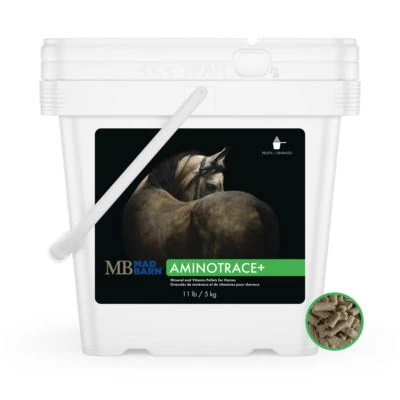
Choose AminoTrace+ when your horse needs vitamin E as part of a complete low-NSC vitamin and mineral supplement. If your horse only needs additional vitamin E, Mad Barn’s Natural Vitamin E is the more targeted choice.
w-3 Oil: Best Fat Supplement with Natural Vitamin E
Mad Barn’s w-3 Oil is another option for horses that could benefit from natural vitamin E as part of a fat and omega-3 supplement. w-3 Oil is a DHA-enriched oil that supplies cool calories, omega-3 fatty acids, and natural vitamin E in a palatable daily top-dress.
At the standard maintenance feeding rate of 100 mL per day for a 500 kg (1,100 lb) horse, w-3 Oil provides 1,500 IU of natural vitamin E, 1,500 mg of DHA, and approximately 0.9 Mcal of digestible energy. This is more than the 1,000 IU optimal vitamin E target for an adult horse at maintenance, while also contributing omega-3 support.
Vitamin E is a fat-soluble vitamin, meaning it is absorbed with dietary fat. Some horse owners prefer to provide vitamin E in an oil-based supplement, or feed vitamin E alongside a fat source, to support normal absorption.
The formula combines plant-based oils, algae-derived DHA, and d-alpha-tocopherol. DHA is a long-chain omega-3 fatty acid that is incorporated into cell membranes, where it helps support normal cell signalling. It is also used to make other compounds that regulate inflammatory responses. [23]
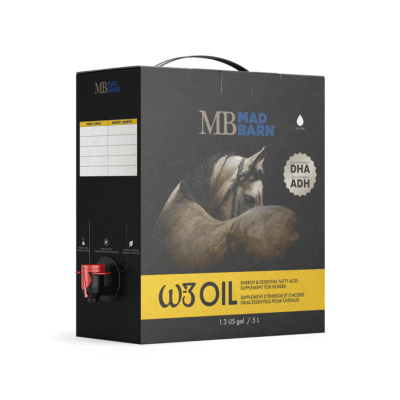
w-3 Oil is ideal for horses that need additional calories without added starch or sugar, including hard keepers, performance horses, and senior horses. It also supports coat quality, joint health, respiratory function, metabolic health, and post-exercise recovery.
Choose w-3 Oil when your horse needs natural vitamin E together with supplemental fat and omega-3 fatty acids. If your horse only needs additional vitamin E without extra calories, Mad Barn’s Natural Vitamin E is the more targeted choice.

How to Choose the Right Vitamin E Product for Your Horse
Mad Barn offers several products that supply natural vitamin E, but each one is designed for a different feeding goal. Consider the horse’s overall diet, selenium intake, and reason for supplementing vitamin E to choose the best option.
Pure Vitamin E Support
Choose Mad Barn’s Natural Vitamin E when your horse needs additional vitamin E without added selenium, calories, or other nutrients.
- Best for horses on hay-based diets, horses with limited pasture access, performance horses, senior horses, and horses with higher antioxidant demands.
- Use when selenium intake is already adequate or when you want vitamin E alone.
- Provides a concentrated powder with no fillers, additives, or added sugar.
- Allows flexible dosing when a horse needs 1,000 IU or 2,000 IU, or a higher intake under veterinary or nutritionist guidance.
Natural Vitamin E with Organic Selenium
Choose Natural E/Organic Se when your horse needs both vitamin E and selenium from a single supplement.
- Best for horses eating forage from selenium-deficient regions or diets confirmed to be low in selenium.
- Use when selenium intake has been reviewed and supplementation is appropriate.
- Provides natural vitamin E with organic selenium yeast in a palatable pelleted format.
- Supports horses that need combined antioxidant nutrient support without switching to a full vitamin and mineral supplement.
Complete Low-NSC Vitamin and Mineral Support
Choose AminoTrace+ when your horse needs a complete vitamin and mineral supplement that also provides natural vitamin E.
- Best for forage-based diets or grain rations fed below the recommended amount.
- Use when the diet may be low in trace minerals, amino acids, vitamins, or antioxidants.
- Provides natural vitamin E together with organic trace minerals, essential amino acids, vitamins, and antioxidants.
- Ideal for horses that need low-NSC support for metabolic health, hoof quality, muscle function, antioxidant status, immune function, or digestive health.
Omega-3 Fat Supplement with Natural Vitamin E
Choose w-3 Oil when your horse needs supplemental fat, omega-3 fatty acids, and natural vitamin E in one product.
- Best for horses that need additional calories without added starch or sugar, including hard keepers, performance horses, and senior horses.
- Use when you want natural vitamin E supplied with dietary fat to support normal absorption.
- Provides DHA-enriched omega-3 support for coat quality, joint health, respiratory function, metabolic health, and post-exercise recovery.
- Not the most targeted option if your horse only needs vitamin E without extra calories.
Table 4. Mad Barn Vitamin E Supplement Comparison
| Product | Best for | Primary role | Why choose it | When NOT to rely on it alone |
|---|---|---|---|---|
| Natural Vitamin E | Horses needing vitamin E alone | Concentrated vitamin E support | Provides natural d-alpha-tocopherol in a concentrated powder with no fillers, no added sugar, and flexible dosing | When the horse also needs selenium, omega-3 fatty acids, calories, or a complete vitamin and mineral program |
| Natural E/Organic Se | Horses needing both vitamin E and selenium, or owners who prefer pellets | Combined antioxidant nutrient support | Provides natural vitamin E with organic selenium yeast in a palatable pelleted format | When selenium intake is already adequate or high |
| AminoTrace+ | Horses needing vitamin E as part of complete diet balance | Complete low-NSC vitamin and mineral support | Provides natural vitamin E with organic trace minerals, essential amino acids, vitamins, and antioxidants | When the horse only needs targeted vitamin E without additional vitamins or minerals |
| w-3 Oil | Horses needing supplemental fat, omega-3 fatty acids, and natural vitamin E | Omega-3 fat supplement with vitamin E | Provides natural vitamin E together with dietary fat and DHA-enriched omega-3 support | When the horse only needs vitamin E without extra calories or added fat |
Final Recommendations
Mad Barn’s Natural Vitamin E is the best overall vitamin E supplement for horses when vitamin E alone is needed. It provides natural d-alpha-tocopherol in a concentrated powder with no fillers, no added sugar, a small 1.67 g serving for 1,000 IU, and flexible dosing.
Natural E + Organic Se is the better choice when the horse needs both vitamin E and selenium, or when a pelleted supplement is preferred.
AminoTrace+ is the better fit when vitamin E support is part of a broader need for complete low-NSC vitamin and mineral balance.
w-3 Oil is the better fit when your horse needs vitamin E in an oil format that also supplies cool calories and omega-3 fatty acids.
The right product depends on what is missing from the horse’s diet. Pasture access, hay quality, workload, selenium intake, fortified feeds, and current supplements all affect whether the horse needs vitamin E alone, vitamin E with selenium, vitamin E with omega-3 fat, or a complete vitamin and mineral supplement.
For help choosing the right option, submit your horse’s diet for a free evaluation by Mad Barn’s equine nutritionists.
A diet review can estimate current vitamin E intake, identify other nutrient gaps, reduce unnecessary overlap between supplements, and guide a feeding program that supports your horse’s health, performance, and long-term wellbeing.
Frequently Asked Questions
Here are some frequently asked questions about choosing a vitamin E supplement for horses:
The best vitamin E supplement for horses is usually a targeted natural vitamin E product when vitamin E is the main nutritional gap. Mad Barn's Natural Vitamin E is the best overall fit for horses that need vitamin E alone because it provides natural d-alpha-tocopherol in a concentrated powder with no fillers, additives, or added sugar. It is especially practical for horses on hay-based diets, horses with limited pasture, performance horses, senior horses, and horses with higher antioxidant demands. If the horse also needs selenium or broader vitamin and mineral support, a different product may be the better choice.
Choosing the right vitamin E product for your horse starts with identifying what is actually missing from the total diet. If the horse needs only vitamin E, a concentrated natural vitamin E supplement is the most direct option. If selenium intake is low or the horse is eating forage from a selenium-deficient region, Natural E + Organic Se may be a better fit. If vitamin E is only one part of a broader diet-balancing need, AminoTrace+ may be the more appropriate foundation product.
Mad Barn's Natural Vitamin E is the best choice when your horse needs targeted vitamin E support without added selenium, sugar, fillers, or extra nutrients. It is a good fit for horses on mostly hay-based diets, horses with limited turnout, performance horses, senior horses, and horses with higher antioxidant demands when vitamin E is the primary concern. Its concentrated powder format allows a small serving size while delivering a clear amount of vitamin E. It is not meant to replace a complete feeding program if the rest of the diet is missing key vitamins, minerals, amino acids, or trace minerals.
A foundation product like AminoTrace+ may be enough when the horse needs vitamin E as part of a complete, low-NSC vitamin and mineral program rather than as a separate targeted supplement. This is most relevant for horses on forage-based diets with several possible nutrient gaps, or horses that also need support for metabolic health, hoof quality, muscle function, antioxidant status, immune function, or digestive health. AminoTrace+ provides natural vitamin E within a broader nutrient profile, so it can be a better first step when the whole diet needs balancing. If bloodwork or diet review shows a specific need for additional vitamin E beyond the foundation program, targeted Natural Vitamin E may still be added separately.
A targeted vitamin E supplement is better when the horse's overall diet is already balanced and vitamin E is the specific nutrient that needs more support. This can happen when selenium intake is adequate, the horse is already receiving appropriate vitamins and minerals, but pasture access is limited or the diet is mostly hay. In that case, Mad Barn Natural Vitamin E gives direct vitamin E support without adding unnecessary nutrients. If the diet has broader gaps, targeted vitamin E alone may not address the underlying feeding issue.
You should choose vitamin E with selenium only when your horse needs both nutrients and total selenium intake has been reviewed. Vitamin E and selenium both support antioxidant defenses, but they are not interchangeable and selenium should not be added blindly. Natural E + Organic Se is the better choice when forage, geography, diet review, or bloodwork suggests selenium may be low. If selenium intake is already adequate or high, Mad Barn's Natural Vitamin E is the safer targeted choice because it supports vitamin E status without adding selenium.
Mad Barn Natural Vitamin E and Natural E + Organic Se overlap because both provide vitamin E support, but they are designed for different situations. Natural Vitamin E is a targeted vitamin E-only supplement, while Natural E + Organic Se combines vitamin E with organic selenium in a pelleted format. Feeding both may create unnecessary overlap unless a nutritionist or veterinarian has identified a reason for additional vitamin E beyond the selenium-containing product. The better choice depends on whether the horse needs vitamin E alone or vitamin E plus selenium.
Natural Vitamin E and AminoTrace+ can overlap because AminoTrace+ already includes vitamin E as part of a broader vitamin and mineral profile. AminoTrace+ is the better choice when the horse needs complete low-NSC diet balance, while Natural Vitamin E is the better choice when vitamin E alone is the main gap. Some horses may need both if a foundation program is appropriate but additional targeted vitamin E is still needed due to limited pasture, workload, health status, or bloodwork results. The decision should be based on total vitamin E intake from pasture, hay, fortified feeds, ration balancers, and supplements.
The most common mistake when choosing a vitamin E supplement for horses is comparing products only by IU per serving. Two products can provide the same IU of vitamin E but differ in form, concentration, serving size, fillers, sugar content, selenium content, and fit within the total diet. Natural vitamin E is generally preferred for efficiently supporting vitamin E status, and a concentrated product can reduce unnecessary bulk in the feed tub. The best choice is the product that matches the horse's actual nutritional gap, not simply the one with the largest scoop or highest-looking label claim.
Natural vitamin E is generally preferred over synthetic vitamin E for horses when the goal is to efficiently support vitamin E status. Natural vitamin E appears on labels as d-alpha-tocopherol or d-alpha-tocopheryl acetate, while synthetic vitamin E appears as dl-alpha-tocopherol or dl-alpha-tocopheryl acetate. Natural vitamin E is more bioavailable and retained more efficiently in the horse's body than synthetic vitamin E. Synthetic vitamin E is not necessarily ineffective, but natural vitamin E is usually the stronger choice for targeted supplementation.
A higher IU vitamin E supplement is not always better because the right amount depends on the horse's total diet and actual need. Vitamin E intake comes from pasture, hay, fortified feeds, ration balancers, oils, and supplements, so the same supplemental amount can mean different total intake for different horses. Horses on hay-based diets or with limited turnout are more likely to need extra support, but the amount should still reflect body weight, workload, forage quality, health status, and bloodwork when available. Product form, concentration, selenium content, and unnecessary additives matter just as much as the IU number.
Natural E + Organic Se is the better choice instead of Natural Vitamin E when your horse needs both vitamin E and selenium, or when a palatable pelleted supplement is preferred. This is most relevant for horses eating forage from selenium-deficient regions or horses whose diet review suggests selenium intake may be low. The product provides natural vitamin E plus organic selenium yeast for combined antioxidant nutrient support. If selenium is already adequate from forage, fortified feeds, ration balancers, or other supplements, Natural Vitamin E is the more appropriate targeted option.
AminoTrace+ is the better choice instead of a vitamin E-only supplement when the horse needs broader nutrition support, not just more vitamin E. This includes horses on forage-based diets that may be missing several key nutrients, as well as horses needing low-NSC support for metabolic concerns, hoof quality, muscle function, antioxidant status, immune function, or digestive health. Vitamin E is important, but it works within a larger network of vitamins, minerals, amino acids, and trace minerals. If the horse only needs extra vitamin E and the rest of the diet is already balanced, Mad Barn Natural Vitamin E is the more direct option.
Most horses on hay-based diets do get enough vitamin E without a supplement because vitamin E declines after grass is cut, dried, baled, and stored. Fresh pasture is the richest natural source, but horses with limited turnout, long winter feeding periods, or mostly hay-based diets may have lower vitamin E intake. That does not mean every hay-fed horse needs the same supplement or amount. The best choice depends on pasture access, forage quality, fortified feeds, ration balancers, selenium intake, workload, and the rest of the feeding program.
Bloodwork can be useful before buying a vitamin E supplement when intake is uncertain, deficiency is suspected, or the horse has signs such as poor muscle recovery, weakness, muscle soreness, poor coordination, or neurologic changes. These signs are not specific to vitamin E deficiency and can have many possible causes, so veterinary evaluation is important when they are sudden, severe, persistent, or worsening. A diet review can also help determine whether the horse needs targeted vitamin E, vitamin E with selenium, or a complete vitamin and mineral program. Supplements can support nutritional status, but they do not replace diagnosis or treatment for medical problems.
Summary
The best vitamin E supplement for your horse depends on their individual needs and overall feeding program. For most horses that require pure vitamin E, Mad Barn’s Natural Vitamin E is the best choice because it provides a concentrated source of natural d-alpha-tocopherol without any fillers or added sugars.
- Vitamin E is an important antioxidant that supports muscle, nerve, immune, and recovery functions
- Horses on hay-based diets or with limited pasture access are more likely to need supplemental vitamin E
- Natural d-alpha vitamin E is generally preferred because it is more bioavailable than synthetic forms
- Mad Barn Natural Vitamin E is the best choice when vitamin E alone is needed
- Natural E/Organic Se is appropriate when selenium supplementation is also needed
- AminoTrace+ is best when vitamin E support is part of a broader diet-balancing program
References
- Finno. C. J. and Valberg. S. J. A Comparative Review of Vitamin E and Associated Equine Disorders. Journal of Veterinary Internal Medicine. 2012. View Summary
- Pagan. J. D. Advances in Equine Nutrition IV. Nottingham University Press. 2009.
- Saastamoinen. M. T. and Harris. P. A. Nutrition of the Exercising Horse. Wageningen Academic Publishers. 2008.
- Khan. I. U. et al. Strategic Approaches to Improve Equine Breeding and Stud Farm Outcomes. Veterinary World. 2025. View Summary
- Nutrient Requirements of Horses: Sixth Revised Edition. The National Academies Press. 2007.
- Petersson. K. H. et al. The Influence of Vitamin E on Immune Function and Response to Vaccination in Older Horses. Journal of Animal Science. 2010. View Summary
- Shastak. Y. et al. A Century of Vitamin E: Early Milestones and Future Directions in Animal Nutrition. Agriculture. 2023.
- Lindqvist. H. Alpha-Tocopherol and Beta-Carotene in Forages and their Utilisation by Dairy Cows in Organic Production. Swedish University of Agricultural Sciences. 2012.
- Baalsrud. K. J. and Overnes. G. Influence of Vitamin E and Selenium Supplement on Antibody Production in Horses. Equine Veterinary Journal. 1986. View Summary
- Avellini. L. et al. Effect of Exercise Training, Selenium and Vitamin E on Some Free Radical Scavengers in Horses (Equus caballus). Comparative Biochemistry and Physiology Part B: Biochemistry and Molecular Biology. 1999. View Summary
- Mohammed. H. O. et al. Vitamin E Deficiency and Risk of Equine Motor Neuron Disease. Acta Veterinaria Scandinavica. 2007. View Summary
- Pitel. M. O. et al. Influence of Specific Management Practices on Blood Selenium, Vitamin E, and Beta-Carotene Concentrations in Horses and Risk of Nutritional Deficiency. Journal of Veterinary Internal Medicine. 2020. View Summary
- Valberg. S. J. Nutritional Myopathies in Horses. Merck Veterinary Manual. 2024.
- Fitzpatrick. M. et al. Quality Assurance Programs for Vitamin A and E in Serum: Are We Doing Enough to Assess Laboratory Performance? Clinical Chemistry and Laboratory Medicine. 2024.
- Muirhead. T. L. et al. The Selenium and Vitamin E Status of Horses in Prince Edward Island. The Canadian Veterinary Journal. 2010. View Summary
- Geor. R. J. et al. Equine Applied and Clinical Nutrition: Health, Welfare and Performance. Saunders Elsevier. 2013.
- Fagan. M. M. et al. Form of Vitamin E Supplementation Affects Oxidative and Inflammatory Response in Exercising Horses. Journal of Equine Veterinary Science. 2020. View Summary
- Finno. C. J. and Valberg. S. J. A Comparative Review of Vitamin E and Associated Equine Disorders. Journal of Veterinary Internal Medicine. 2012. View Summary
- Combs. G. F. Jr. Biomarkers of Selenium Status. Nutrients. 2015.
- Culhuac. E. B. et al. Influence of Dietary Selenium on the Oxidative Stress in Horses. Biological Trace Element Research. 2023. View Summary
- Saha. U. et al. Selenium in Animal Nutrition: Deficiencies in Soils and Forages, Requirements, Supplementation and Toxicity. International Journal of Applied Agricultural Sciences. 2016.
- Calamari. L. et al. Effect of Selenium Source and Dose on Selenium Status of Mature Horses. Journal of Animal Science. 2009. View Summary
- Calder. P. C. Omega-3 Fatty Acids and Inflammatory Processes. Nutrients. 2010.