English
Respiratory health plays a major role in your horse’s comfort, stamina, recovery, and athletic performance. But with so many supplements marketed for breathing support, it can be difficult to know which product offers the most complete support.
The best respiratory supplement for most horses is one that supports more than one pathway involved in breathing comfort and performance. Management, veterinary care, forage quality, dust control, and turnout remain the foundation of respiratory health. Once those factors are addressed, many owners look for dietary support for horses exposed to training, travel, seasonal changes, barn dust, pollen, or other environmental stressors.
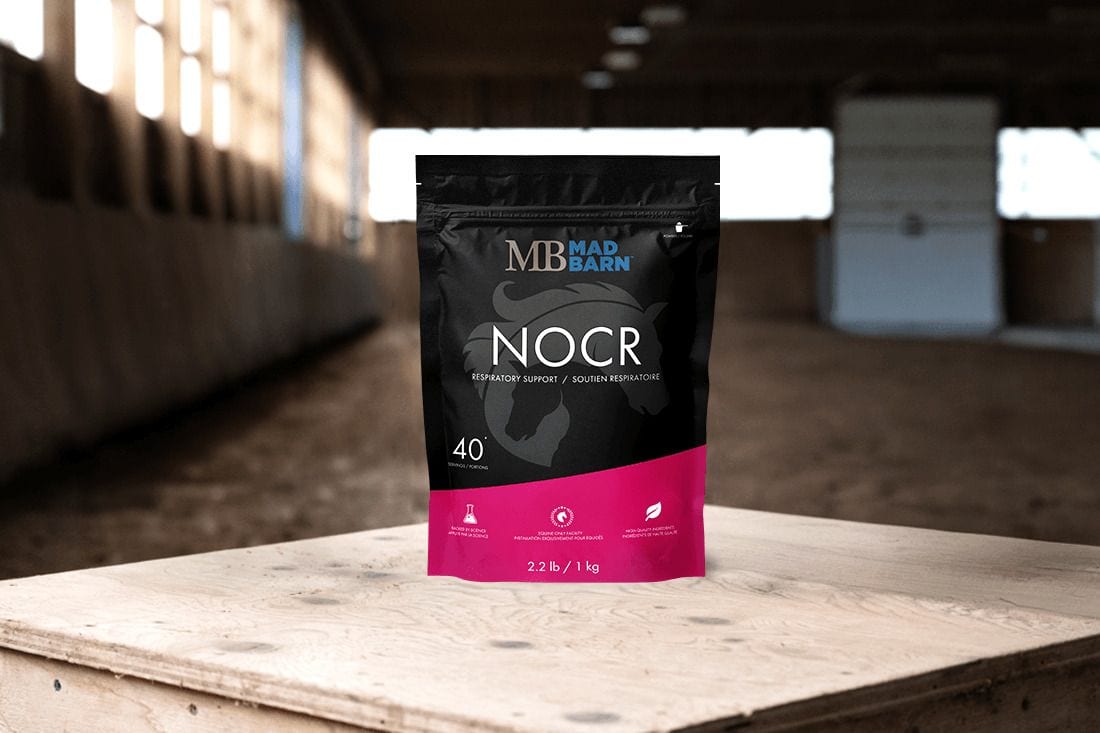
For most horses, Mad Barn’s NOCR is the best overall respiratory supplement because it combines ingredients that support respiratory comfort, oxygen delivery, stamina, recovery, and athletic performance during periods of environmental or exercise stress.
Unlike single-ingredient respiratory supplements, NOCR provides complementary support through multiple pathways. Spirulina contributes antioxidant support and helps maintain normal immune function, while Jiaogulan supports nitric oxide production, circulation, oxygen delivery, and stamina. Together, these ingredients help support breathing comfort and performance during training, travel, and environmental exposure. [1][2]

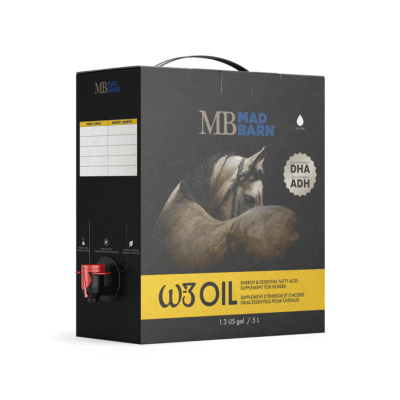
For horses that also need omega-3 support, w-3 Oil can complement a respiratory-friendly feeding program by supplying DHA-rich omega-3 fatty acids and natural vitamin E to support normal inflammatory balance, antioxidant defenses, and recovery.
Does My Horse Need a Respiratory Supplement?
Not every horse needs a respiratory supplement, but many horses can benefit from targeted support depending on their workload, environment, travel schedule, and sensitivity to airborne irritants.
A respiratory supplement may be useful for horses exposed to factors that can challenge breathing comfort, stamina, and recovery, including dusty barns, dry hay, smoke, pollen, frequent hauling, indoor stabling, intense exercise, or competition stress.
These situations can increase demands on the respiratory system, antioxidant defenses, circulation, and recovery capacity. Supplements are most useful when the horse’s basic management needs are already addressed, including clean air, adequate ventilation, low-dust forage, turnout, hydration, balanced nutrition, and appropriate conditioning.
Once these fundamentals are covered, a respiratory supplement may be appropriate if your horse needs help maintaining:
- Breathing comfort during environmental or seasonal challenges
- Stamina and recovery during training or competition
- Antioxidant support during exercise, travel, or airborne irritant exposure
- Circulation and oxygen-utilization support during work
- Overall respiratory wellness as part of a broader management program
For most horses that need comprehensive support, NOCR is the best overall choice because it combines ingredients that support respiratory comfort, antioxidant defenses, circulation, oxygen delivery, stamina, and recovery.
For horses that need more targeted support, single-ingredient options such as Spirulina or Jiaogulan may be useful depending on the horse’s needs. w-3 Oil can also support a respiratory-friendly feeding program by supplying DHA-rich omega-3 fatty acids and natural vitamin E for normal inflammatory balance, antioxidant defenses, and recovery.
Respiratory Health Starts with Management
Respiratory supplements can help support breathing comfort and athletic performance, but they cannot overcome ongoing exposure to poor air quality, dusty forage, inadequate ventilation, or other airborne irritants.
For most horses, the foundation of respiratory support is reducing the amount of dust, mold, ammonia, smoke, pollen, and feed particles they inhale each day.
Good ventilation helps dilute and remove airborne irritants that can accumulate in enclosed barns, especially when horses are stalled for long periods. Increasing turnout time, improving airflow, and avoiding dusty chores while horses are inside can help reduce prolonged exposure to particles that irritate the respiratory tract. [4][5]
Forage management is also important because hay is one of the largest sources of dust exposure for many horses. Dry hay fed indoors can release respirable particles near the horse’s nose while they eat. For sensitive horses, strategies such as choosing cleaner hay, feeding from ground-level positions when appropriate, or soaking or steaming hay may help reduce airborne exposure. [6]
Stable hygiene also affects respiratory comfort. Adequate ventilation, lower-dust bedding, clean feeding areas, dry stalls, and good manure management can help reduce dust and ammonia buildup. [27]
These changes do not replace veterinary care or balanced nutrition, but they make respiratory support more effective by reducing the daily irritant load on the horse’s airways.
What's your top priority with your horse's health?

What's your top priority with your horse's health?
Why Horses May Need Respiratory Support
Even with good management, many horses experience combined respiratory and performance demands from training, travel, competition, indoor stabling, seasonal air quality changes, and ongoing environmental exposure.
During exercise, oxygen demand increases while normal metabolic activity also increases oxidative stress. Horses in regular work rely on efficient oxygen delivery, circulation, antioxidant defenses, stamina, and recovery capacity to maintain comfort and performance. [7]
Frequent hauling, smoke exposure, pollen, dust, and indoor stabling can add further respiratory stress, especially when several factors occur together. In these situations, single-ingredient supplements may provide targeted support, but they may not address the broader demands of respiratory comfort, performance, and recovery. [8]
Common Signs of Respiratory Stress in Horses
Changes in respiratory comfort and performance can be some of the first signs that a horse is struggling with environmental or exercise-related stress. While these issues can have multiple contributing factors, they often reflect increased respiratory demands, airborne irritant exposure, or inadequate recovery support.
Common concerns include: [9][10][11][12]
- Coughing during exercise or feeding: Horses exposed to dust, dry hay, smoke, or other airborne irritants may cough more frequently during exercise, feeding, or indoor stabling with limited ventilation
- Heavy breathing or slower recovery: Horses under respiratory or conditioning stress may take longer to recover after exercise or show increased respiratory effort during work
- Reduced stamina or exercise tolerance: Horses experiencing respiratory strain may fatigue more quickly, struggle to maintain performance, or appear less willing to work during training or competition
- Sensitivity to dust, pollen, or poor air quality: Smoke exposure, seasonal pollen, dusty barns, and poor ventilation may contribute to increased respiratory discomfort in sensitive horses
- Nasal discharge, respiratory noise, or nosebleeds: Changes in breathing patterns, mild nasal discharge, increased respiratory noise, or blood at the nostrils after exercise may occur in horses experiencing respiratory irritation, airway stress, or more significant respiratory strain
These signs should be interpreted in context. Occasional coughing or slower recovery may reflect temporary exposure to dust, weather, or workload, but persistent, worsening, sudden, or bloody respiratory signs should be taken seriously and assessed by a veterinarian.
When to Call the Veterinarian
Respiratory supplements can support healthy function, but they are not a substitute for veterinary evaluation when a horse shows new, persistent, or worsening respiratory signs.
Because coughing, nasal discharge, poor performance, and increased respiratory effort can have many causes, a veterinarian can help determine whether the issue involves the upper airway, lower airway, infection, allergy, conditioning, or another respiratory condition.
Call your veterinarian if your horse shows any of the following signs:
- Persistent or worsening coughing, especially during exercise, feeding, or rest
- Labored breathing, nostril flaring, or increased respiratory effort
- Reduced exercise tolerance, poor recovery, or sudden decline in performance
- Nasal discharge, fever, lethargy, or other signs of illness
- Respiratory noise that is new, worsening, or associated with poor performance
A veterinarian may recommend a physical exam, respiratory assessment, airway imaging, laboratory testing, or management changes depending on the horse’s signs and history. Prompt evaluation is especially important if the horse is struggling to breathe, appears distressed, or has signs that develop suddenly.
Respiratory Demands in Performance Horses
Respiratory health is closely tied to how efficiently a horse can move air, deliver oxygen to working muscles, recover after exertion, and tolerate environmental stressors. During exercise, oxygen demand increases rapidly, and the respiratory and cardiovascular systems must work together to support stamina, performance, and recovery. [13][14][15]
For horses in regular work, respiratory support is not limited to the lungs alone. The respiratory, cardiovascular, muscular, and antioxidant systems all contribute to how well the horse performs, recovers, and adapts to repeated work. When one part of this system is under greater demand, the others often have to work harder as well.
Several factors influence how well a horse maintains respiratory comfort and performance under these conditions: [13][14][15]
- Airway function: Clear, open airways allow air to move efficiently through the respiratory tract during rest and exercise
- Oxygen delivery: Efficient circulation helps transport oxygen from the lungs to working muscles during activity
- Antioxidant defenses: Exercise, travel, and environmental exposure can increase oxidative stress, making antioxidant support important for tissue protection and recovery
- Conditioning and stamina: A well-conditioned horse is better able to meet the increased oxygen demands of work and recover after exercise
- Recovery capacity: Adequate rest, hydration, nutrition, and workload management help the horse return to normal after respiratory and exercise-related stress
Because these systems are connected, respiratory support is most effective when it addresses the broader demands of performance and recovery, not just breathing comfort alone. This is why respiratory supplement strategies often consider antioxidant status, circulation, oxygen utilization, conditioning, and management practices together.
What to Look for in a Respiratory Supplement
Not all respiratory supplements are designed for the same purpose. Some focus mainly on antioxidant support, others target circulation or oxygen delivery, and some provide broader support for horses under combined environmental and exercise-related stress.
The best respiratory supplement is the one that matches the horse’s primary need while supporting the broader systems involved in respiratory comfort, stamina, and recovery.
Many respiratory supplements focus on only one ingredient or mechanism. While single ingredients may provide targeted support in some situations, they often do not address the broader performance and recovery demands associated with respiratory stress.
An effective respiratory supplement should provide: [16][17][18]
- Airway support to help maintain normal respiratory comfort during exercise, travel, or environmental challenges
- Antioxidant support to help protect tissues from oxidative stress associated with training and environmental exposure
- Circulatory support to help maintain oxygen delivery, stamina, and recovery capacity
- Complementary ingredients that support multiple pathways rather than relying on a single mechanism alone
- Nutritional support that works alongside appropriate management practices such as ventilation, forage management, conditioning, hydration, and balanced nutrition
Comprehensive formulas often provide broader support for horses exposed to training demands, travel, dust, smoke, indoor stabling, or seasonal environmental stressors.
NOCR: Best Overall Respiratory Supplement
For horses that need both airway and performance support, Mad Barn’s NOCR is the best overall respiratory supplement.
Many respiratory supplements focus only on breathing comfort. NOCR takes a broader approach by supporting the systems that help horses breathe, deliver oxygen, handle oxidative stress, and recover from work.
This makes it especially useful for horses in regular training, horses exposed to dust or seasonal irritants, horses that travel for competition, and horses that need extra support for stamina and recovery during demanding work.
NOCR combines four complementary ingredients with distinct roles:
- Spirulina to support normal immune and inflammatory responses in the airways [1][2][3]
- Jiaogulan to support nitric oxide production, circulation, and oxygen delivery [18][28][29]
- Tienchi to provide ginsenoside-rich support for vascular function and airway sensitivities [30][31]
- Milk Thistle seed to support antioxidant defenses, immune balance, and normal liver function [32][33][34]
Together, these ingredients make NOCR more than a basic airway supplement. It supports the respiratory, circulatory, immune, and antioxidant pathways that influence how well a horse tolerates training, travel, dust, pollen, and environmental stress.
NOCR may also simplify feeding programs for horses already receiving separate respiratory and performance supplements. Instead of stacking multiple single-ingredient products, owners can use one formula that combines airway support, circulatory support, antioxidant support, and recovery support in the same daily serving.
Customer reviews commonly describe improvements in breathing comfort, stamina, recovery, and overall performance after adding NOCR to the feeding program, particularly in horses exposed to dust, travel, seasonal changes, or regular competition demands.

“NOCR delivers effective respiratory and immune support for equine athletes. It helps maintain healthy airways and oxygen delivery to support physical performance through training, competition, and seasonal challenges.”
— Scott Cieslar, MScFounder & CEO
Respiratory supplements work best when the rest of the management program is addressed. Good ventilation, low-dust forage, appropriate conditioning, hydration, and balanced nutrition should all be part of the plan. For horses with persistent coughing, labored breathing, nasal discharge, fever, or a sudden decline in performance, consult your veterinarian.

Benefits of Spirulina for Respiratory Health
Spirulina is a nutrient-dense blue-green algae used in equine respiratory programs to support normal histamine responses, immune balance, and antioxidant status. [1][2][3]
Dust, pollen, mold, smoke, dry hay, and poor air quality can trigger immune cells in the airways and nasal passages. In sensitive horses, this response can involve histamine release, which contributes to nasal irritation, coughing, headshaking, respiratory discomfort, and reduced tolerance for dusty or high-pollen environments.
Mad Barn’s Spirulina helps support respiratory wellness by providing:
- Histamine response support for horses that react to dust, pollen, mold, smoke, or seasonal air-quality changes
- Immune balance to help maintain normal responses to inhaled environmental triggers
- Respiratory comfort for horses that cough, show nasal irritation, or become more sensitive during seasonal or barn-related exposure
- Antioxidant support for horses under training, travel, competition, or environmental stress
Spirulina is most useful for the immune-reactivity side of respiratory stress: horses that become more sensitive when hay is dusty, pollen counts rise, smoke affects air quality, or indoor ventilation is poor.
However, spirulina does not address every performance-related respiratory demand. It does not provide the same support for nitric oxide production, circulation, oxygen delivery, stamina, and post-exercise recovery offered by more comprehensive formulas such as NOCR.
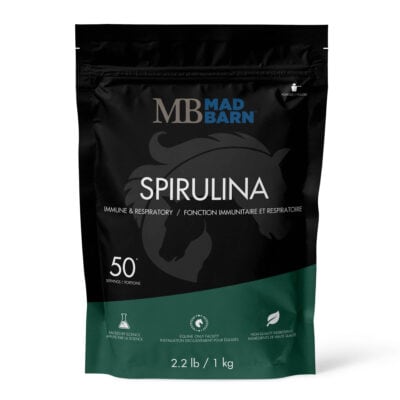
This is why Spirulina can be valuable on its own for histamine and immune support, but is often stronger when paired with Jiaogulan and other ingredients in a broader respiratory-support strategy.

“Spirulina is classified by the World Health Organization as a superfood. In addition to being an excellent source of protein, vitamins, minerals and the antioxidant phycocyanin, it supports a balanced inflammatory response and helps maintain homeostatic immune function, especially in horses with seasonal allergies.”
— Dr. Eleanor Kellon, VMDVeterinary Nutritionist
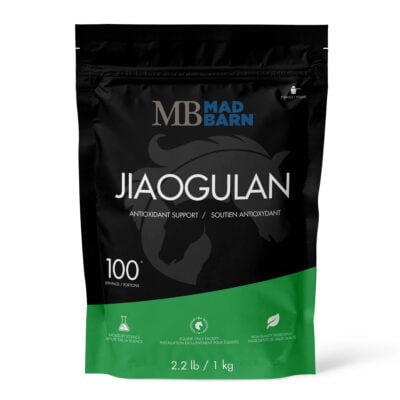
Jiaogulan: Circulation & Oxygen-Delivery Support
Jiaogulan is used in equine nutrition to support circulation, nitric oxide production, oxygen delivery, stamina, and recovery. These effects make it a useful ingredient for horses in regular work, horses with higher performance demands, or horses that need additional support for exercise capacity and recovery.
While spirulina primarily supports antioxidant and immune pathways, jiaogulan contributes complementary support for circulation and oxygen utilization. Together, these pathways may help support breathing comfort, conditioning, and athletic recovery during training, travel, and environmental exposure.
“Jiaogulan is an adaptogen — an herb that supports a balanced stress response in horses. It also helps maintain normal circulation by contributing to nitric oxide production, making it useful for joint, tendon, and hoof health.”
— Dr. Eleanor Kellon, VMDVeterinary Nutritionist
Jiaogulan helps support respiratory performance by providing: [20][21][22]
- Circulation and nitric oxide support that may help maintain oxygen delivery during exercise
- Stamina, conditioning, and athletic recovery support
- Oxygen-utilization support for horses in regular work or competition
- Circulation support with broader overlap for metabolic wellness and peripheral blood flow
Because of these complementary effects, jiaogulan is often used with spirulina as part of a broader respiratory-support strategy.
However, Jiaogulan should not be viewed as a standalone replacement for comprehensive respiratory support. It primarily supports circulation and oxygen-delivery pathways rather than the broader combination of mechanisms addressed by synergistic formulas such as NOCR.
W-3 Oil: DHA Support for Respiratory Programs
Omega-3 fatty acids belong in respiratory-support programs because airway comfort is influenced by inflammatory balance and immune-cell activity. When horses inhale dust, dry hay particles, smoke, pollen, or other airborne irritants, immune cells in the respiratory tract release chemical signals that help coordinate the normal inflammatory response.
Those chemical signals are made from fatty acids stored in cell membranes. When the diet supplies more DHA, immune cells can incorporate this long-chain omega-3 into their membranes and use it to make lipid mediators involved in inflammatory balance and recovery. [35]
This is why DHA is relevant for horses exposed to dust, dry hay, smoke, pollen, indoor stabling, travel, or heavy training demands. In horses with lower-airway inflammation, DHA supplementation has been shown to provide additional benefit when used alongside a low-dust diet. [24][36]
One of the most practical ways to add DHA to your horse’s diet is with Mad Barn’s w-3 Oil. It supplies algae-derived DHA in a palatable oil that can be top-dressed onto the daily ration.
w-3 Oil supports respiratory health by supplying:
- DHA to support normal inflammatory balance in the respiratory tract
- Essential fatty acids used in immune-cell and respiratory tissue membranes
- Natural vitamin E to support antioxidant defenses during training, travel, and environmental stress
- Fat-based calories for horses that need additional energy without increasing grain or starch intake
Fat supplies concentrated calories without adding starch or sugar, making it useful for performance horses, senior horses, and hard keepers that need more energy for body condition, workload, or recovery while maintaining a lower-starch feeding program.

“One of the reasons I recommend w-3 Oil is because of the added DHA. This omega-3 fatty acid provides targeted respiratory and joint support, making it a great option for senior and performance horses.”
— Dr. Fran Rowe, DVMVeterinary Nutritionist
w-3 Oil should not be viewed as a primary respiratory supplement, but it can be added to your horse’s feeding program to provide complementary support. For most horses needing comprehensive support, NOCR remains the better choice because it also supports respiratory comfort, oxygen delivery, stamina, circulation, and recovery.
How to Choose the Right Respiratory Supplement
Respiratory support works best when combined with appropriate management practices such as improving ventilation, reducing dust exposure, maintaining hydration, supporting conditioning, and feeding a balanced diet.
The best supplement strategy depends on whether the horse needs comprehensive support, targeted antioxidant support, circulation support, or additional nutritional support.
Choose NOCR when:
- Your horse needs comprehensive respiratory-performance support rather than a single-ingredient approach
- Your horse is exposed to multiple stressors, such as training, travel, competition, dust, smoke, pollen, or indoor stabling
- You want support for breathing comfort, antioxidant defenses, circulation, oxygen utilization, stamina, and recovery in one formula
- Your horse is in regular work and needs support for performance and recovery during periods of increased demand
- You want a coordinated supplement strategy instead of managing separate Spirulina and Jiaogulan products
Choose Spirulina when:
- Your horse primarily needs antioxidant and immune-support benefits
- Your horse is exposed to dust, smoke, pollen, seasonal changes, or other airborne irritants
- You want daily respiratory wellness support from a single ingredient
- Your horse needs support for recovery from oxidative stress associated with exercise, travel, or environmental exposure
- Your horse does not require broader circulation, oxygen-delivery, stamina, or performance support from a more comprehensive formula
Choose Jiaogulan when:
- Your horse primarily needs circulation, nitric oxide, oxygen-delivery, or stamina support
- Your horse is in regular work and needs support for conditioning and recovery
- You want targeted support for oxygen utilization and peripheral circulation
- Your horse already receives antioxidant support and needs an additional circulation-focused ingredient
- Your horse does not need the broader multi-pathway support provided by NOCR
Choose W-3 Oil when:
- Your horse needs DHA-rich omega-3 support as part of a respiratory management program
- Your horse is exposed to dust, smoke, pollen, dry hay, indoor stabling, travel, or heavy training demands
- You want support for normal inflammatory balance in the respiratory tract
- You want natural vitamin E and omega-3 support for antioxidant defenses and recovery
- Your horse also needs fat-based calories for body condition, workload, or grain replacement
In some horses, more than one type of support may be useful. For example, a horse in heavy work may benefit from comprehensive respiratory-performance support from NOCR alongside DHA-rich omega-3 support from W-3 Oil, especially if additional fat-based calories are useful.
Use the table below to compare the primary role of each option and determine which product best fits your horse’s needs.
Table 1. Respiratory supplement comparison
| Product | Best For | Primary Role | Why Choose It | When Not to Rely on It Alone |
|---|---|---|---|---|
| NOCR |
|
|
|
|
| Spirulina |
|
|
|
|
| Jiaogulan |
|
|
|
|
| w-3 Oil |
|
|
|
|
For most horses needing comprehensive respiratory-performance support, NOCR is the best overall choice because it combines multiple complementary respiratory support pathways into one coordinated formula.
Final Recommendation
Respiratory wellness starts with good management, including ventilation, low-dust forage practices, balanced nutrition, hydration, conditioning, and reducing environmental stressors whenever possible.
For most horses, Mad Barn’s NOCR is the best overall respiratory supplement because it provides synergistic support across multiple complementary pathways involved in respiratory comfort, oxygen utilization, stamina, recovery, and athletic performance.
Rather than relying on a single ingredient or isolated mechanism, NOCR combines antioxidant, circulation, oxygen-delivery, and respiratory-support pathways into one coordinated formula.
Spirulina contributes antioxidant and immune-support benefits that help support respiratory comfort and recovery from oxidative stress, while Jiaogulan supports circulation, nitric oxide production, oxygen delivery, stamina, and conditioning support.
w-3 Oil provides DHA-rich omega-3 fatty acids and natural vitamin E to support normal inflammatory balance, antioxidant defenses, and recovery within a respiratory-friendly feeding program.
Work with Mad Barn’s nutritionists to formulate a respiratory-support diet that considers your horse’s forage, feeds, management, workload, and supplements together. Submit your horse’s diet for a free analysis or get answers to your nutrition questions.
Frequently Asked Questions
Here are some frequently asked questions about respiratory supplements for horses:
The best respiratory supplement for most horses is one that supports more than airway comfort alone. Mad Barn's NOCR is the best overall choice for most horses because it combines antioxidant, circulation, oxygen-utilization, stamina, recovery, and respiratory-support pathways in one formula. This makes it a stronger fit for horses facing multiple demands from training, travel, dust, indoor stabling, smoke, pollen, or competition. Single-ingredient options can be useful, but they are usually more targeted than comprehensive.
NOCR is the best choice when a horse needs broad respiratory-performance support rather than support for only one pathway. It is especially well-suited for horses in regular work, horses exposed to dusty or poorly ventilated environments, horses that travel frequently, and horses needing extra support for stamina and recovery. Its combination of Spirulina and Jiaogulan helps address both antioxidant and circulation-related demands. NOCR still works best alongside good ventilation, low-dust forage, hydration, conditioning, and balanced nutrition.
Spirulina may provide enough respiratory support on its own when the main goal is antioxidant, immune, and daily respiratory wellness. It is a useful option for horses that need targeted support for oxidative stress and environmental exposure but do not have broader performance, stamina, or recovery needs. However, Spirulina does not provide the same circulation, nitric oxide, oxygen-utilization, and coordinated recovery support as NOCR. If the horse is in regular work or dealing with several respiratory and performance stressors at once, a more comprehensive formula may be a better fit.
Jiaogulan is a better choice than Spirulina when the main concern is circulation, nitric oxide support, oxygen delivery, stamina, or athletic recovery. Spirulina primarily supports antioxidant and immune pathways, while Jiaogulan focuses more on circulation and oxygen-utilization pathways. This makes Jiaogulan more targeted for horses that need performance and conditioning support. However, it should not be viewed as a complete replacement for a broader respiratory formula when the horse needs multi-pathway support.
Spirulina and Jiaogulan overlap in that both can be part of a respiratory-support strategy, but they do not play the same role in the horse's body. Spirulina mainly contributes antioxidant and immune-support benefits that help with respiratory wellness and recovery from oxidative stress. Jiaogulan mainly supports circulation, nitric oxide production, oxygen delivery, stamina, and recovery. Because they work through complementary pathways, they may be used together when the horse needs broader support than either ingredient provides alone.
Choosing NOCR instead of feeding Spirulina and Jiaogulan separately can simplify respiratory support while providing coordinated support across multiple pathways. NOCR is a comprehensive option because it combines antioxidant, circulation, oxygen-utilization, breathing comfort, stamina, and recovery support in one formula. Feeding separate ingredients may be appropriate in some targeted situations, but it can also make product selection more complicated. For most horses needing respiratory-performance support, NOCR provides the clearest overall fit.
W-3 Oil is not a primary respiratory supplement for horses in the same way as NOCR. Its role is supportive nutrition within a respiratory-friendly feeding program, especially for horses needing low-starch calories, DHA-rich omega-3 fatty acids, and natural vitamin E. This can help support overall wellness, conditioning, and balanced nutrition without relying heavily on grain-based calories. If direct respiratory-performance support is the main goal, NOCR is the more targeted choice.
A foundation feeding and management strategy may be enough when the horse mainly needs better air quality, low-dust forage, hydration, turnout, conditioning, and balanced nutrition. Respiratory supplements cannot overcome constant exposure to dusty hay, poor ventilation, ammonia, smoke, or other airborne irritants. If management is the primary issue, improving the environment should come before adding more products. Supplements are most useful when these basics are already being addressed and the horse still needs additional support.
Respiratory supplements cannot replace better barn management because airborne irritants are often a major driver of respiratory stress. Ventilation, turnout, clean feeding areas, low-dust bedding, and forage management all help reduce the horse's exposure to dust, mold spores, ammonia, smoke, and pollen. A supplement can support respiratory comfort, stamina, recovery, and antioxidant defenses, but it cannot remove irritants from the horse's environment. The best results usually come from combining product support with practical management changes.
The most common mistake when choosing a respiratory supplement is assuming one ingredient can solve every respiratory or performance concern. Some horses need antioxidant support, some need circulation and oxygen-delivery support, some need better nutrition, and some primarily need cleaner air and lower-dust forage. Choosing a product without identifying the main limitation can lead to disappointing results. A better approach is to work with a veterinarian to rule out underlying health issues, and an equine nutritionist to make a custom diet tailored to the horse's workload, environment, recovery needs, and overall health status.
You should choose a single-ingredient respiratory supplement when the horse has a narrow, clearly defined support need. Spirulina may fit when antioxidant and immune support are the priority, while Jiaogulan may fit when circulation, oxygen delivery, and stamina are the main focus. A comprehensive formula such as NOCR is better when the horse needs support across several connected systems, including respiratory comfort, oxidative stress, circulation, stamina, and recovery. Horses in regular work or exposed to multiple stressors often fit the comprehensive category.
NOCR and w-3 Oil can fit into the same feeding program when the horse needs both respiratory-performance support and supportive nutrition. NOCR provides the more direct respiratory-performance support through antioxidant, circulation, oxygen-utilization, stamina, and recovery pathways. w-3 Oil supports the broader diet with low-starch calories, DHA-rich omega-3 fatty acids, and natural vitamin E. They serve different roles, so the decision depends on whether the horse needs direct respiratory support, nutritional support, or both.
A horse may need respiratory support if they show reduced stamina, slower recovery, coughing during exercise or feeding, heavier breathing, sensitivity to dust or pollen, or performance changes during training and competition. These signs can reflect environmental stress, exercise demands, conditioning issues, or respiratory irritation. Because these concerns can also have medical causes, new, persistent, worsening, or sudden signs should be discussed with a veterinarian. Supplements are best used as part of a broader plan that also addresses management, nutrition, hydration, and conditioning.
You should call a veterinarian instead of relying on a respiratory supplement if your horse has persistent or worsening coughing, labored breathing, nostril flaring, sudden poor performance, nasal discharge, fever, lethargy, or new respiratory noise. These signs can have many causes, including airway disease, infection, allergy, conditioning problems, or other health concerns. A veterinarian can help identify whether the issue involves the upper airway, lower airway, illness, or another condition. Supplements can support healthy function, but they are not a substitute for diagnosis or treatment when clinical signs are significant.
Summary
Respiratory supplements can support breathing comfort, stamina, recovery and performance, but they work best as part of a broader management plan that reduces airborne irritants and supports overall health.
- Good respiratory management starts with ventilation, low-dust forage, clean bedding, turnout, hydration and balanced nutrition
- NOCR is the best overall respiratory supplement because it combines antioxidant, circulation, oxygen-utilization, stamina and recovery support
- Spirulina provides targeted antioxidant and immune-support benefits for horses exposed to exercise, travel, dust, smoke, pollen or seasonal stressors
- Jiaogulan supports circulation, nitric oxide production, oxygen delivery, stamina and recovery in horses with higher performance demands
- W-3 Oil provides low-starch calories, DHA-rich omega-3 fatty acids and natural vitamin E as supportive nutrition within a respiratory-friendly feeding program
- New, persistent or worsening respiratory signs such as coughing, nasal discharge, labored breathing or respiratory noise should be evaluated by a veterinarian
References
- Dartsch. P. C. Phytotherapy Research. Medicinal Chemistry Journal. 2008.
- Nawrocka. D. et al. Spirulina Platensis Improves Mitochondrial Function Impaired by Elevated Oxidative Stress in Adipose-Derived Mesenchymal Stromal Cells (ASCs) and Intestinal Epithelial Cells (IECs), and Enhances Insulin Sensitivity in Equine Metabolic Syndrome (EMS) Horses. Marine Drugs. 2017. View Summary
- Michalak. I. and Marycz. K. Algae as a Promising Feed Additive for Horses. Seaweeds as Plant Fertilizer, Agricultural Biostimulants and Animal Fodder. CRC Press. 2019.
- Sainsebury. D. W.B. Ventilation and environment in relation to equine respiratory disease. Equine Veterinary Journal. 1981.
- Rosenthal. F. S. A Comparison of Total, Respirable, and Real-Time Airborne Particulate Sampling in Horse Barns. Journal of Occupational and Environmental Hygiene. 2006.
- Olave. C. J. et al. Effects of Low-Dust Forages on Dust Exposure, Airway Cytology, and Plasma Omega-3 Concentrations in Thoroughbred Racehorses: A Randomized Clinical Trial. Journal of Veterinary Internal Medicine. 2023.
- Williams. C. A. HORSE SPECIES SYMPOSIUM: The Effect of Oxidative Stress during Exercise in the Horse. Journal of Animal Science. 2016. View Summary
- Mazan. M. Equine Exercise Physiology—Challenges to the Respiratory System. Animal Frontiers: The Review Magazine of Animal Agriculture. 2022. View Summary
- Lascola. K. M. Overview of Respiratory Diseases of Horses. Merck Veterinary Manual. 2025.
- Beard. W. Upper Respiratory Causes of Exercise Intolerance. Veterinary Clinics of North America: Equine Practice. 1996. View Summary
- Davidson. E. J. and Martin. B. B. Diagnosis of Upper Respiratory Tract Diseases in the Performance Horse. Veterinary Clinics: Equine Practice. Elsevier. 2003. View Summary
- Richard. E. A. et al. Laboratory Findings in Respiratory Fluids of the Poorly-Performing Horse. The Veterinary Journal. 2010. View Summary
- Lafortuna. C. L. et al. The Regulation of Respiratory Resistance in Exercising Horses. European Journal of Applied Physiology. 2003. View Summary
- Franklin. S. H. et al. Respiratory Responses to Exercise in the Horse. Equine Veterinary Journal. 2012. View Summary
- Bindi. F. et al. Differences in Redox Biomarkers in Bronchoalveolar Lavage Fluid of Leisure Horses With and Without Severe Equine Asthma: Preliminary Results. Animals. Multidisciplinary Digital Publishing Institute. 2026. View Summary
- Kirschvink. N. et al. Effect of Nutritional Antioxidant Supplementation on Systemic and Pulmonary Antioxidant Status, Airway Inflammation and Lung Function in Heaves-Affected Horses. Equine Veterinary Journal. 2002. View Summary
- Deaton. C. M. et al. Antioxidant Supplementation and Pulmonary Function at Rest and Exercise. Equine Veterinary Journal. 2002. View Summary
- Golestani. N. G. et al. Spirulina Supplementation Regulates Inflammation and Supports Cartilage Health in Adult Sedentary Horses Following Moderate-Intensity Exercise. Journal of Equine Veterinary Science. 2026. View Summary
- Saleeby. J. P. Wonder Herbs: A Guide to Three Adaptogens. Xlibris Corporation. 2006.
- Floyd. A. and Mansmann. R. Equine Podiatry. Elsevier Health Sciences. 2007.
- Kim. Y. H. et al. Gynostemma Pentaphyllum Extract and Gypenoside L Enhance Skeletal Muscle Differentiation and Mitochondrial Metabolism by Activating the PGC-1α Pathway in C2C12 Myotubes. Nutrition Research and Practice. 2022.
- Harris. P. A. What's New in Equine Nutrition (2005-06)?. Brill. 2007.
- Williams. C. A. and Carlucci. S. A. Oral Vitamin E Supplementation on Oxidative Stress, Vitamin and Antioxidant Status in Intensely Exercised Horses. Equine Veterinary Journal. 2006.
- Nogradi. N. et al. Omega-3 Fatty Acid Supplementation Provides an Additional Benefit to a Low-Dust Diet in the Management of Horses with Chronic Lower Airway Inflammatory Disease. Journal of Veterinary Internal Medicine. 2015. View Summary
- Fagan. M. M. et al. Form of Vitamin E Supplementation Affects Oxidative and Inflammatory Response in Exercising Horses. Journal of Equine Veterinary Science. 2020. View Summary
- Mönki. J. and Mykkänen. A. Lipids in Equine Airway Inflammation: An Overview of Current Knowledge. Animals. 2024. View Summary
- Curtis. L. et al. Dust and Ammonia in Horse Stalls with Different Ventilation Rates and Bedding. Aerobiologia. 1996.
- Liou. C. J. et al. Long-Term Oral Administration of Gynostemma Pentaphyllum Extract Attenuates Airway Inflammation and Th2 Cell Activities in Ovalbumin-Sensitized Mice. Food and Chemical Toxicology. 2010.
- Su. C. et al. Progress in the Medicinal Value, Bioactive Compounds, and Pharmacological Activities of Gynostemma Pentaphyllum. Molecules. 2021.
- Loh. Y. C. et al. Mechanisms of Action of Panax Notoginseng Ethanolic Extract for Its Vasodilatory Effects and Partial Characterization of Vasoactive Compounds. Hypertension Research. 2019.
- Xue. K. et al. Panax Notoginseng Saponin R1 Modulates TNF-α/NF-κB Signaling and Attenuates Allergic Airway Inflammation in Asthma. International Immunopharmacology. 2020.
- Giorgi. M. et al. Evaluation of Antioxidant Capacity and Inflammatory Cytokine Gene Expression in Horses Fed Silibinin Complexed with Phospholipid. American Journal of Veterinary Research. 2013.
- Zholobenko. A. et al. Polyphenols from Silybum Marianum Inhibit In Vitro the Oxidant Response of Equine Neutrophils and Myeloperoxidase Activity. Journal of Veterinary Pharmacology and Therapeutics. 2016.
- Choi. Y. H. et al. Silibinin Attenuates Allergic Airway Inflammation in Mice. Biochemical and Biophysical Research Communications. 2012.
- Bodur. M. et al. Immunomodulatory Effects of Omega-3 Fatty Acids: Mechanistic Insights and Health Implications. Molecular Nutrition & Food Research. 2025.
- Dominguez. E. C. et al. A High Docosahexaenoic Acid Diet Alters the Lung Inflammatory Response to Acute Dust Exposure. Nutrients. 2020.