English








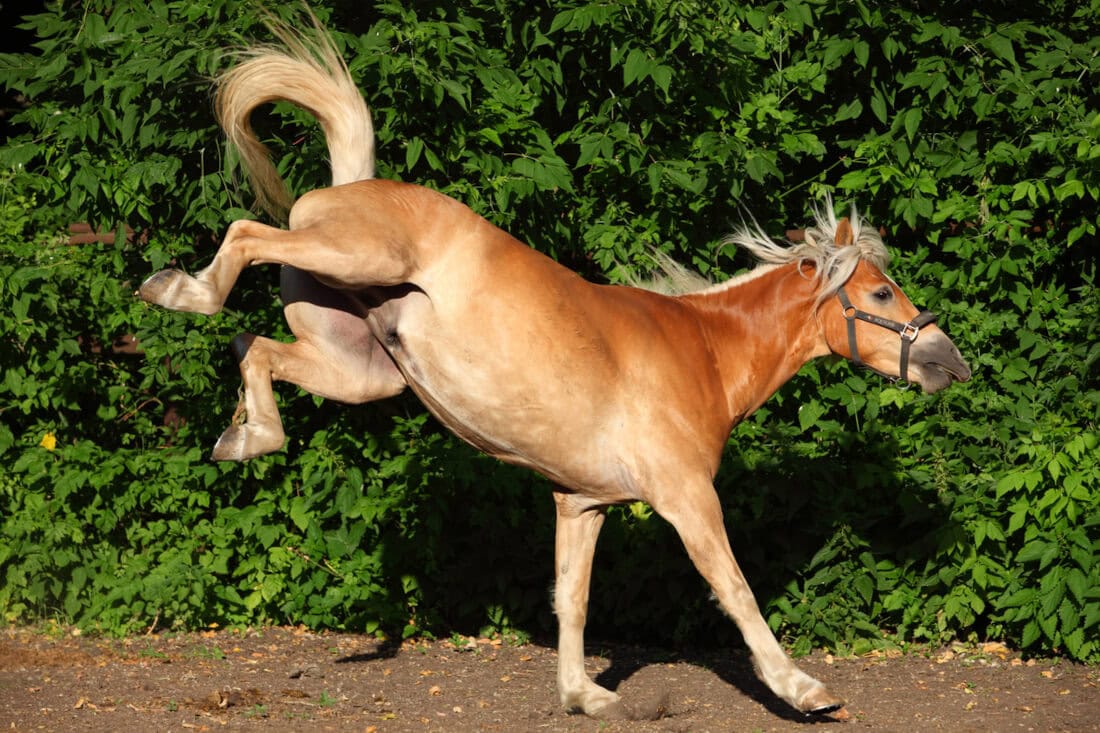
Bucking is a common equine behavior that can range from playful movements in the pasture to potentially dangerous reactions under saddle.
While some bucking reflects playfulness, excitement or excess energy, it can also signal discomfort, fear, or confusion, making it important for riders and handlers to understand what the behavior means.
Horses are prey animals, and bucking is one way they naturally respond to perceived threats or physical discomfort. In some cases, bucking allows a horse to release energy or tension; in others, it may be a response to pain, poor fit of tack, or unclear training cues. [1]
When bucking becomes frequent or occurs during riding, it can increase the risk of injury for both horse and rider. Read on to learn why horses buck, how to recognize the underlying causes, and what steps you can take to prevent and manage bucking safely.
Why Do Horses Buck?
Bucking is a natural reaction in horses, that originated as a way to defend themselves against predators. In the wild, a sudden leap or kick could help a horse shake off an attacker.
While domestic horses no longer face the same predators as feral or wild horses, they still carry the instinct to buck, including under saddle. [1][2]
Horses display bucking in different ways, including: [1][2]
- Basic Bucking: Quick upward and forward jumps, sometimes in a series
- Pronking (Crow-hopping): Upward leaps with little forward motion, stiff legs, and a rounded back
- Bronking: More forceful, forward-moving leaps with a low neck and arched back, often risky for the rider
- Fly Bucking: Upward and forward leaps where the horse keeps its forelegs on the ground and head high
Sometimes, horses learn to buck because it relieves pressure, pain, or confusion, and this repeated reinforcement can make the behavior persistent.
While some horses are intentionally bred and trained to buck for rodeo sports, most domestic riding horses develop bucking as a result of fear, pain and/or confusion.
In events such as saddle bronc and bareback riding, horses are selected for powerful, consistent bucking, and riders are judged on their ability to stay mounted during these displays. In this context, bucking is a desired athletic trait rather than a problem behavior.
Outside of these specialized sports, bucking usually reflects discomfort, confusion, excess energy, or learned avoidance. Identifying the underlying cause is the first step toward addressing bucking safely in riding horses.
What's your top priority with your horse's health?

Enter your email to receive your store credit
Causes of Bucking in Horses
To address bucking effectively, it’s important to understand what’s driving the behavior in the moment. The causes of bucking in horses fall into two categories:
- Physical triggers
- Behavioral triggers
In either case, it’s important to analyze the triggers and find the underlying cause, because bucking behavior can quickly turn into a habit even after the original issue is resolved.
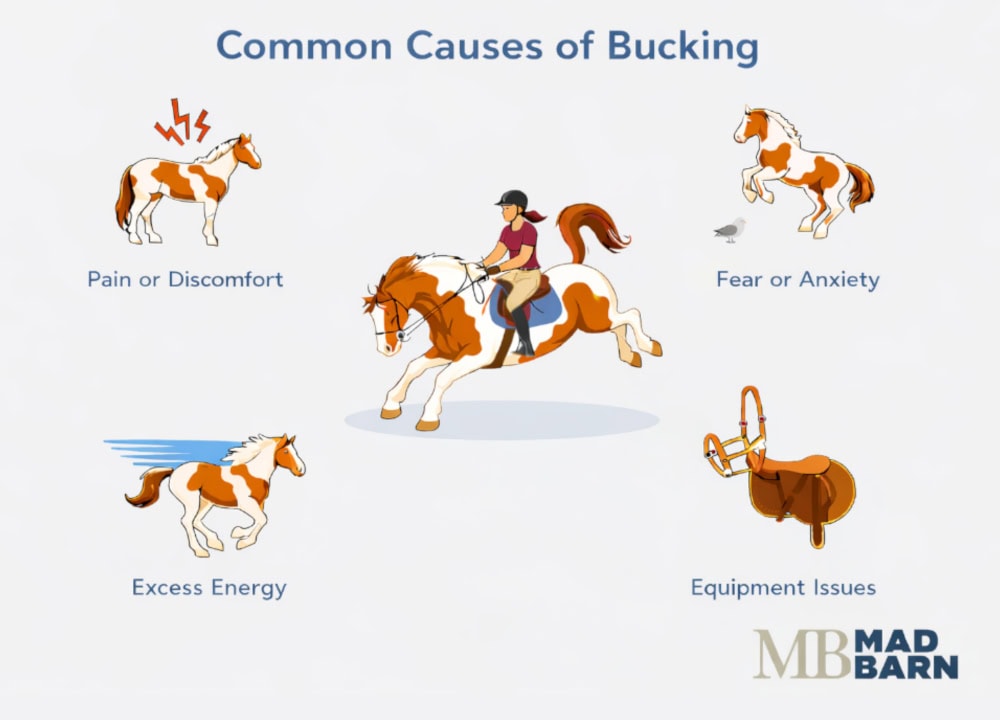
Physical Causes of Bucking
Identifying physical causes of bucking is essential, as this reaction can be a clear signal that a horse is experiencing pain or discomfort.
Regular veterinary checks, farrier visits, and physiotherapy assessments can help pinpoint the underlying issue and prevent repeated evasive behavior.
Pain
Pain in the back, spine, hips, stifles, or hocks is a common trigger for bucking. Horses may also bolt or rear to cope with discomfort. Musculoskeletal issues, such as arthritis or sacroiliac pain, can provoke sudden evasive actions.
Other sources of pain, such as mouth lesions or gastric ulcers, can also contribute to bucking. [1][3][4][5][6]
Pain-related behaviors can quickly become learned habits. If a horse bucks to relieve discomfort and succeeds, they are likely to repeat the behavior. Over time, this reaction may persist even after the original cause of pain is resolved. [2]
Signs that bucking may be caused by pain include:
- Resistance to saddling
- Tail swishing
- Pinned ears
- Tense muscles
- Reluctance to move forward
Subtle signs, like shifting weight or uneven gaits, can also indicate discomfort in horses.
Tack & Equipment Issues
When horses buck in response to tack or equipment, they are often trying to escape or alleviate pain. Ill-fitting saddles, tight girths, or harsh bits can create pressure points that trigger discomfort. [3][7][8]
Repeated exposure to poorly fitted tack may worsen discomfort, turning a temporary reaction into a habitual response. [3][7][8]
Other Health-Related Causes
General health issues, such as gut problems, skin irritations, hormonal imbalances, or dental pain, can trigger sudden bucking.
Even minor discomfort, internal or external, may cause a horse to react sharply under saddle as they try to relieve pressure or escape irritation. [9]
Behavioral Causes of Bucking
Not all bucking is caused by pain or physical discomfort. Many horses develop bucking behaviors due to excitement, fear, confusion, or learned habits. Understanding these behavioral triggers is essential for prevention and safe management. [1][6][10]
Excitement & Playfulness
Young or high-energy horses may buck to release excess energy. Limited turnout, prolonged confinement, or insufficient mental stimulation can lead to restlessness, making playful bucking more likely when the horse finally has an outlet for movement. [11]
While often harmless in a pasture, this energy can become dangerous under saddle if not managed properly.
Fear or Startle Response
Horses are prey animals, which means sudden noises, movements, or unfamiliar objects can trigger an instinctive flight response. Bucking may occur when a horse is startled, anxious, or unsure of their environment.
Recognizing the signs of fear, such as pinned ears, wide eyes, or tense muscles, can help riders anticipate and prevent reactive bucking. [12][13]
Confusion or Mixed Cues
Sometimes, horses buck when they don’t understand what is being asked. Conflicting cues, unclear aids, or exercises that are too advanced can provoke evasive behavior.
A horse may buck to avoid work they perceive as uncomfortable, confusing, or overwhelming. [14]
Learned Behavior
Bucking can become a habit when it is reinforced, intentionally or not. For example, if a horse bucks and succeeds in removing pressure from a saddle, stopping a rider’s cues, or ending an unpleasant exercise, the behavior is strengthened.
This is because behavior is reinforced when it consistently leads to an outcome the horse finds relieving or rewarding. Over time, the horse may continue bucking even when the original trigger is no longer present. [15]
Herd Influence
In some cases, horses may imitate the behavior of others in their herd. If one horse begins to buck or leap, others may follow, particularly in turnout situations. This social influence can reinforce and spread bucking behavior among multiple horses. [16]
Bucking also may occur in response to pressure from other horses, crowding, separation anxiety, or perceived aggression within a group.
Horses that feel threatened, defensive, or uncertain around other horses may react abruptly, especially in busy arenas or during group turnout.
What to Do When Your Horse Bucks
Whether your horse bucks under saddle or on the ground, safety precautions are the first step toward addressing this behavior, followed by identifying the root cause.
Understanding both under-saddle and on-ground bucking is key, as immediate reactions and long-term management differ.
Bucking Under Saddle
Bucking under saddle might signal discomfort, confusion, or excess excitement. The rider’s position and cues, the horse’s physical condition, and environmental factors all influence the intensity of a horse’s behavior.
1) Stay Calm & De-Escalate
Before you can correct bucking, it’s important to secure the safety of yourself, your horse and any other people or animals who may be nearby.
To keep safe while your horse is bucking under saddle:
- Sit deep and relaxed, keeping your heels down and shoulders back
- Avoid leaning forward or pulling harshly on the reins. Sudden tension can escalate the situation
- If the bucking continues, circle the horse at a controlled radius, or safely stop and dismount
- Never punish the horse during a buck; it reinforces fear and may worsen the behavior
2) Assess the Situation
You can assess your horse’s bucking under saddle in a number of ways:
- Identify Triggers: Gait transitions, new exercises, arena distractions, or tack issues.
- Observe Subtle Signs: Tail swishing, ear pinning, back tension, or resistance during movement.
- Document Patterns: Keep a record of patterns for discussion with professionals.
3) Address Pain or Discomfort
Addressing pain or discomfort is key to preventing your horse from bucking under saddle. To avoid causing your horse discomfort while riding:
- Have a veterinarian check for back pain, lameness, ulcers, or dental issues.
- Evaluate saddle fit, girth pressure, and bit comfort.
- Consider body work, stretching, or physiotherapy to address muscle tension or stiffness.
4) Rebuild Confidence
Once any physical issues have been addressed, return to the basics of good horsemanship and conditioning.
- Use clear, consistent cues and reward calm responses.
- Keep training sessions short and manageable.
- Strengthen core and topline gradually to improve balance and reduce fatigue-related bucking.
Bucking on the Ground
Bucking at liberty or during groundwork can be perfectly normal, but it can also signal underlying issues.
Learning to identify problematic bucking is the first step toward addressing a dangerous behavior safely and effectively.
Playful vs. Problematic Bucking
For owners who are concerned about their horses’ bucking, differentiating playful from problematic behavior helps determine whether intervention is needed.
Playful bucking can be identified as energy release after confinement or during turnout, while problematic bucking happens when being led, lunged, or tacked.
Problematic bucking is also often accompanied by defensive movements, like pinned ears, tail swishing, and repeated explosive behavior.
Check for Physical Triggers
Even on the ground, physical discomfort can prompt bucking. Some of these causes include:
- Skin irritation, sores, or insect bites
- Mouth lesions or dental pain
- Digestive upset such as colic, ulcers, and gas
Underlying causes must be addressed before attempting behavioral solutions.
Groundwork Strategies
Effective groundwork can release your horse’s energy safely, reduce tension, and prevent bucking on the ground from becoming a learned behavior.
Horses who live in conditions that do not align with their ethological needs (i.e., confinement and social isolation) are more likely to display unwanted behaviors during human interactions.
Ensuring horses have daily access to turnout and companions is a key step to mitigate bucking during human interactions.
Some useful strategies include: [6][10][17][18][19]
- Use Calm, Consistent Cues: Whether leading, lunging, or otherwise directing groundwork, consistent verbal and body cues help the horse understand what is expected. Avoid sudden corrections or exaggerated movements, which can escalate fear or excitement.
- Reward Relaxation and Attentiveness: Positive reinforcement, such as gentle pats, soft voice, or a brief pause, encourages the horse to stay calm and focused. Reinforcing relaxed responses teaches the horse that calm behavior has rewards.
- Allow Safe Release of Energy: Horses often buck at liberty simply because they have excess energy. Structured outlets, such as a controlled lunge session or arena free-play within safe boundaries, allow the horse to expend energy without putting the rider or handler at risk.
- Break Handling Tasks into Smaller Steps: Some horses buck when being groomed, saddled, or bridled because the task is uncomfortable, overwhelming, or associated with past pain. Introduce each step gradually, reward calm behavior, use pauses, and repeat steps until the horse accepts them confidently. For example, start with brushing, then touching girth areas, then adjusting the saddle pad, progressing only when the horse remains relaxed.
When to Seek Professional Support
When medical causes have been ruled out and you have addressed common equipment, fitness, and management factors, ongoing bucking may point to a training or behavioral issue. In these cases, outside expertise can provide clarity and structure when progress has stalled.
Seek a qualified trainer for habitual bucking, unclear causes, or advanced behavioral interventions. An equine behaviorist might also be a useful option for some horses. Professional support can help you reinforce positive behaviors without harsh corrections.
Signs you may need to seek professional help with your horse’s bucking include:
- Aggressive or Unsafe Behavior: Kicking, rearing, or bolting during handling is a serious risk.
- Repeated Handling Issues: Persistent bucking during grooming, tacking, or lunging may indicate unresolved pain, fear, or learned avoidance.
- Persistent Fear or Confusion: If the horse remains reactive despite careful management, having a fresh pair of eyes on the situation can help identify the underlying cause.
Professional support is particularly valuable for horses with a history of pain-related bucking or habitual evasive behavior. Skilled practitioners can combine body work assessment, groundwork techniques, and behavior modification strategies to address both physical and mental triggers.

Long-Term Management
Preventing bucking from becoming a recurring behavior requires a combination of physical care, training, and environmental management.
Long-term strategies focus not only on reducing the likelihood of bucking but also on improving overall horse well-being and rider safety.
Address Underlying Pain and Discomfort
Even minor physical issues can trigger sudden evasive behavior, making regular monitoring and preventative care essential. Some preventative steps you can take to ensure your horse’s well being include: [6]
- Routine Veterinary Examinations: Check for musculoskeletal problems, dental issues, ulcers, or other internal conditions.
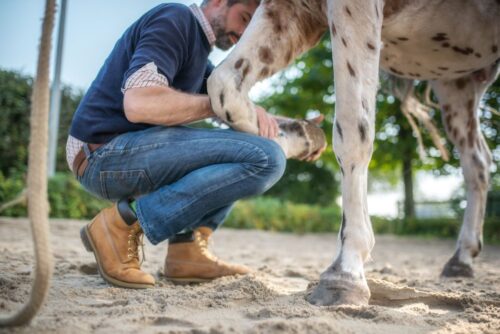
- Farrier Care: Maintain hoof balance and prevent limb discomfort.
- Bodywork and Musculoskeletal Support: Modalities such as physiotherapy, massage, and chiropractic care may help support flexibility, muscle tone, and reduce tension in the back, hips, and neck.
- Skin Care and Insect Protection: Address irritations, sores, or bites that could cause sudden discomfort under saddle or during handling.
Proactively managing pain reduces the risk of learned bucking behaviors persisting over time.
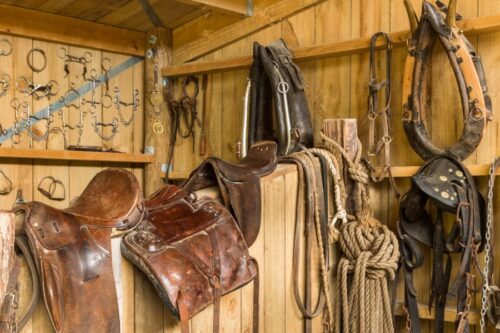
Maintain Proper Tack Fit
Ill-fitting tack is a common contributor to bucking. You can ensure your horse’s tack is properly fitted by checking: [6][14][20]
- Saddle Fit: Evaluate regularly, especially if the horse shows signs of discomfort, muscle atrophy, or soreness. A professional saddle fitter can ensure the saddle distributes weight evenly and without pinching.
- Girth and Billets: Check for tight spots, misalignment, or pressure points that could pinch the horse’s sides or cause uneven weight distribution.
- Bit and Bridle: Ensure bits are comfortable, properly sized, and paired with appropriate headgear. Regular dental care helps prevent mouth pain that can lead to evasive reactions.
Properly fitted and maintained tack ensures your horse can perform comfortably, reduces stress, and minimizes the risk of pain-related bucking behaviors. Replace worn or damaged tack promptly to avoid sudden discomfort during exercise or riding sessions.
Physical Conditioning & Strengthening
A well-conditioned horse is better acclimated to physical activity, which can help reduce tension and discomfort during riding. This may make the horse less likely to display pain-related behaviors, such as bucking. [6][21][22][23][24]
Conditioning your horse and building up their fitness requires:
- Balanced Training: Gradually strengthen your horse’s core, topline, and supporting muscles. Stronger muscles support optimal posture, improve comfort under saddle, and may reduce back or hip discomfort.
- Flexibility Exercises: Stretching maintains suppleness and relieves muscle tension.
- Gradual Progression: Thoughtful progression through a program allows muscles, tendons, and ligaments to adapt safely, especially for horses returning from injury or with chronic musculoskeletal issues.
- Adequate Recovery: Allow your horse enough time to rest between training sessions. You may want to include body work or physiotherapy to target areas of tension or stiffness that could contribute to evasive behaviors.
Effective conditioning doesn’t necessarily prevent playful, fear-driven, or learned bucking, but it can minimize pain-related triggers, helping your horse move more comfortably and respond safely under saddle or during groundwork.
Behavior Modification & Training
Consistent, clear, and positive training is key to stopping unsafe bucking and managing it in the long-term. Training methods to achieve this can include: [10][25]
- Positive Reinforcement: Reward calm, responsive behavior with treats, praise, or a pause after correct responses.
- Gradual Desensitization: Introduce known triggers, such as new environments, objects, or saddle pressure, slowly and safely.
- Stepwise Progression: Break complex tasks into manageable steps to reduce confusion and fear.
- Consistency: Ensure handlers and riders use the same cues to avoid mixed signals.
Avoid punishment while training, as harsh corrections can increase your horse’s fear and defensive bucking. Regular, consistent training helps the horse understand expectations and reduces reactive behaviors over time.
Environmental & Management Strategies
Your horse’s environment can influence energy levels, stress, and overall behavior. A well-managed environment reduces triggers for both playful and defensive bucking.
You can manage your horse’s environment with: [26][27]
- Turnout and Social Interaction: Adequate turnout with compatible herdmates reduces stress and prevents boredom.
- Routine Schedule: Maintain consistent feeding, grooming, and exercise times to reduce anxiety.
- Stress Management: Avoid overcrowded or stressful turnout situations that may trigger herd-influenced bucking.
- Enrichment: Provide toys, obstacles, or varied grazing opportunities to stimulate mental engagement.
- Diet and Nutrition: Ensure high-quality feed and monitor digestive health to minimize discomfort and reactivity.
Frequently Asked Questions
Here are some frequently asked questions about why horses buck:
Bucking in horses can be playful, a way to release energy, or a response to fear, confusion, or physical discomfort. Observing the context and the horse's body language helps identify the cause.
Stay calm, keep your balance, and avoid sudden movements. Avoid punishing the horse for bucking, as this can increase fear. Look for triggers, assess tack and equipment, and address any possible pain. For habitual or unsafe bucking, seek guidance from a qualified trainer or equine behaviorist.
Yes, many horses that buck can be ridden safely once the cause is identified and addressed. Proper training, conditioning, and consistent handling are key. Temporary avoidance of situations that trigger bucking, paired with gradual reintroduction, helps rebuild confidence for both horse and rider.
You can prevent bucking in your horse by ensuring proper tack fit, maintaining physical health, providing consistent training, allowing turnout for energy release, and offering enrichment and a predictable routine. Positive reinforcement and stepwise training help reduce learned evasive behaviors.
Summary
Bucking in horses is a natural behavior that can show playfulness, excitement, fear, pain, or confusion. When horses buck during handling or riding, it can become dangerous for them and nearby humans.
- Physical discomfort from musculoskeletal issues, tack, or health problems is a common cause of bucking and should always be addressed first
- Behavioral triggers of bucking include high energy, fear responses, unclear cues, learned habits, and influence from other horses
- Immediate safety and calm, consistent handling are essential when a horse bucks under saddle or on the ground
- Long-term management depends on proper conditioning, positive training, and clear, consistent cues
- A well-managed environment with turnout, routine care, and enrichment helps prevent bucking and supports overall horse well-being
References
- Dyson. S. and Thomson. K. The Recognition of Pain and Learned Behaviour in Horses Which Buck. Equine Veterinary Education. 2022.
- Romness. N. et al. Associations between Owners’ Reports of Unwanted Ridden Behaviour and In-Hand Behaviour in Horses. Animals. 2020. View Summary
- Fenner. K. et al. Reported Agonistic Behaviours in Domestic Horses Cluster According to Context. Animals. 2024. View Summary
- Story. M. R. et al. Equine Cervical Pain and Dysfunction: Pathology, Diagnosis and Treatment. Animals. 2021. View Summary
- Contino. E. K. The “Misbehaving” Performance Horse: Is It Ever Behavioral?. Journal of Equine Veterinary Science. 2025. View Summary
- O’Connell. E. et al. No More Evasion: Redefining Conflict Behaviour in Human–Horse Interactions. Animals. 2025. View Summary
- Dyson. S. et al. Saddle Fitting, Recognising an Ill-Fitting Saddle and the Consequences of an Ill-Fitting Saddle to Horse and Rider. Equine Veterinary Education. 2015.
- Mackechnie-Guire. R. et al. Relationship Between Saddle and Rider Kinematics, Horse Locomotion, and Thoracolumbar Pressures in Sound Horses. Journal of Equine Veterinary Science. 2018.
- Luthersson. N. et al. Risk Factors for Equine Gastric Ulcer Syndrome Incidence in Adult Icelandic Riding Horses. Animals. 2023. View Summary
- McLean. A. N. and Christensen. J. W. The Application of Learning Theory in Horse Training. Applied Animal Behaviour Science. 2017.
- Freire. R. et al., Effects of Different Forms of Exercise on Post Inhibitory Rebound and Unwanted Behaviour in Stabled Horses. Equine Veterinary Journal. 2009.
- Landsberg. G. M. and Denenberg. S. Behavioral Problems of Horses. Merck Veterinary Manual. 2025.
- Powell. B. B. et al. Behavioral and Physiological Reactions to a Sudden Novel Object in the Weanling Horse: Quantitative Phenotypes for Future GWAS. Genes. 2023. View Summary
- McKenzie. J. et al. Equine Responses to Acceleration and Deceleration Cues May Reflect Their Exposure to Multiple Riders. Animals. 2020. View Summary
- Fenner. K. et al. Reported Agonistic Behaviours in Domestic Horses Cluster According to Context. Animals. 2024. View Summary
- Rørvang. M. V. et al. Social Learning in Horses—Fact or Fiction?. Frontiers in Veterinary Science. 2018. View Summary
- Carroll. S. L. et al. Moving toward Fear-Free Husbandry and Veterinary Care for Horses. Animals. 2022. View Summary
- Carroll. S. L. et al. Understanding and Treating Equine Behavioural Problems. The Veterinary Journal. 2023. View Summary
- Christensen. J. W. et al. Training Methods for Horses: Habituation to a Frightening Stimulus. Equine Veterinary Journal. 2006. View Summary
- Dyson. S. et al. An Investigation of Behaviour during Tacking-up and Mounting in Ridden Sports and Leisure Horses. Equine Veterinary Education. 2022.
- Nadeau. J. Conditioning to Prevent Fatigue, Injury and/or Lameness in the Horse. University of Connecticut. 2025.
- Clayton. H. M. Core Training and Rehabilitation in Horses. The Veterinary Clinics of North America. Equine Practice. 2016. View Summary
- Tabor. G. and Williams. J. Equine Rehabilitation: A Review of Trunk and Hind Limb Muscle Activity and Exercise Selection. Journal of Equine Veterinary Science. 2018.
- Frick. A. Stretching Exercises for Horses: Are They Effective?. Journal of Equine Veterinary Science. 2010.
- Innes. L. and Mcbride. S. Negative versus Positive Reinforcement: An Evaluation of Training Strategies for Rehabilitated Horses. Applied Animal Behaviour Science. 2008.
- Chaya. L. et al. A Note on the Relationship between Time Spent in Turnout and Behaviour during Turnout in Horses (Equus Caballus). Applied Animal Behaviour Science. 2006.
- Roig-Pons. M. et al. Impact of Feeding Strategies on the Welfare and Behaviour of Horses in Groups: An Experimental Study. PLOS One. 2025. View Summary