

 English
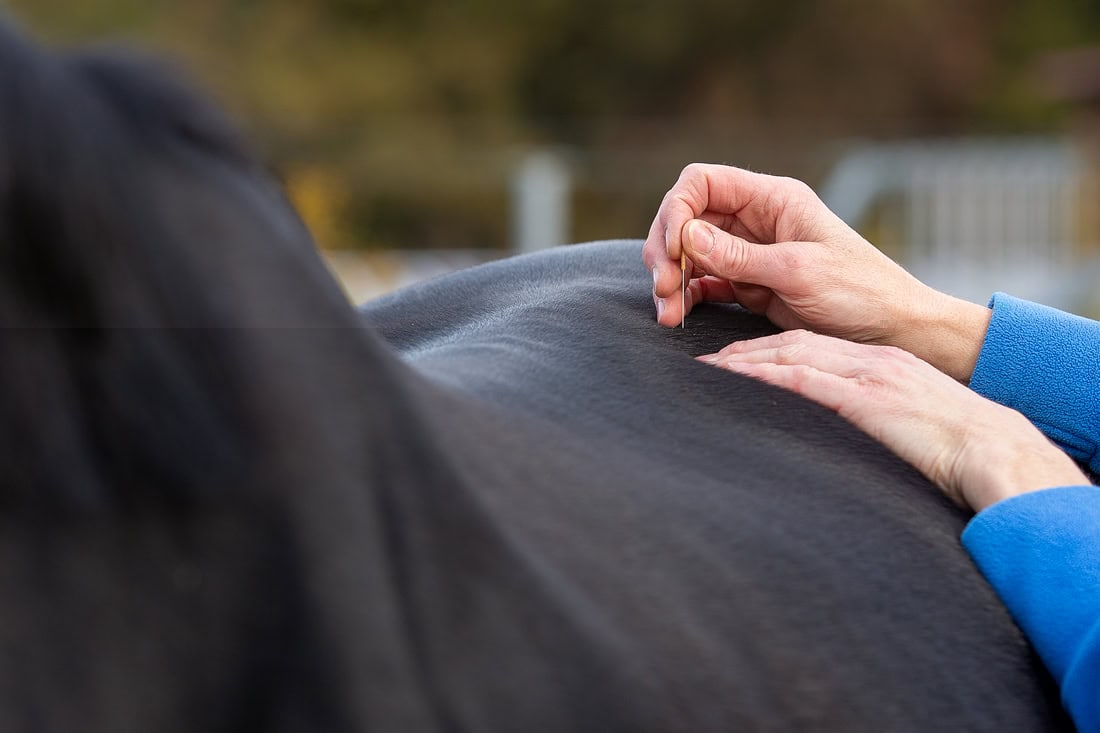
Acupuncture is a therapeutic modality that has been adapted over the centuries to suit various species, including horses. Treatment involves the insertion of fine needles into specific landmarks on the body to provide pain relief or improve function of body systems. [1]
Based on the condition being treated, the practitioner will strategically place needles into various acupuncture points. Most of the landmarks targeted in treatment correspond to nerves involved in pain transmission or movement functions. [1]
Many veterinarians currently use acupuncture to treat lameness, reproductive disorders, neurologic disorders, gastrointestinal disorders, and other conditions in horses. A survey of equine veterinarians found that 20% of veterinarians perform integrative medicine, such as acupuncture. [2]
Scientific investigations into the efficacy of acupuncture in treating horses are limited. The use of acupuncture in treating back pain and cervical stiffness in horses shows the most promise based on current scientific studies.
Acupuncture for Horses
Acupuncture is a component of Traditional Chinese Veterinary Medicine (TCVM) and was first performed around 2696 BCE. [2]
The practice is based on the belief in an energy force known as “Qi” (pronounced “chi”) that flows through the body along channels called meridians. Acupuncture points are situated along these meridians, and the insertion of needles at these points is thought to balance the Qi flow, thereby restoring health.
Modern research has sought to understand acupuncture’s mechanisms within the framework of Western medicine. Studies suggest that acupuncture can stimulate the nervous system, influencing physiological processes such as the release of endorphins, anti-inflammatory responses, and blood circulation.
In the early 1970s, the International Veterinary Acupuncture Society formed, offering training courses in veterinary acupuncture. [2] Several other institutes are now operating, and today acupuncture is a common treatment method in equine veterinary clinics. [2]
Additionally, some veterinary schools now include acupuncture training as part of their coursework. [2]
Acupoints
Acupoints are specific locations on the horse’s body where the veterinarian applies an acupuncture treatment.
The scientific basis for acupoints is under debate, however most of these sites correspond with fascia (sheets of connective tissue) near major nerves throughout the body. [2] Other acupuncture points involve structures such as: [2][3]
- Large nerves under the skin or muscle
- Small nerves within the skin
- Areas where nerves emerge through a small hole in a bone
- Areas where nerves attach to a muscle
- Areas where nerves are closely associated with blood vessels (neurovascular bundles)
Acupoints are traditionally separated into two types: [2]
- Classical Asian meridian points
- Nonmeridian points
Meridian Points
Meridian points have fixed locations on the body and are well-described in many acupuncture textbooks. Each meridian point has a name and specific conditions that it can benefit. [2]
The meridian points are grouped into fourteen meridians, which each extend from one end of the body to the other. [3] There are twelve meridian points named after organ systems that they regulate, a meridian running along the back and a meridian running along the abdomen. [3]
Meridian points can be reactive when there is a disturbance in the body systems, meaning that they are painful when stimulated or constantly painful for the horse. [2] Reactive acupoints often have a higher surface temperature and increased electrical conductivity when stimulated by electroacupuncture. [2]
Nonmeridian Points
Nonmeridian points (ashi) are unique to each horse, depending on the symptoms they are experiencing. These points are highly reactive and sensitive to the touch. [2] Usually, ashi points are only found on one side of the body, whereas reactive meridian points tend to be symmetrical on both sides of the body. [2]
Types of Acupuncture
There are several types of acupuncture available, which all have the goal of stimulating acupoints. [1] The main methods of acupoint stimulation are: [1]
- Dry needling: involves inserting acupuncture needles directly into acupoints
- Electroacupuncture: an enhancement to traditional acupuncture by passing a mild electric current between needles
- Aquapuncture: a technique where a liquid is injected into acupuncture points to prolong the stimulatory effect
Other methods of acupuncture include: [1][4][5]
- Acupressure: Applying pressure to acupoints manually using hands or tools
- Hemoacupuncture: Using needles to create a small area of bleeding
- Laser acupuncture: Using a laser to stimulate acupoints
- Moxibustion: Using herbs held above the acupoint or a placed needle to create an area of local heating
- Surgical stapling or acupressure implants: Using metal implants to provide constant acupressure to an acupoint
- Cupping: Applying suction cups over acupoints
- Pneumoacupuncture: Injection of sterilized air into an acupoint
Dry Needling
Dry needling involves inserting a solid needle into an acupoint. [1] Studies show that dry needling causes immediate changes in neural interaction patterns and local inflammation. [1]
Stimulation over longer periods can activate the opiate system, which triggers the production of natural opioids that reduce pain in the local area. [1]
Electroacupuncture
Electroacupuncture also involves insertion of solid needles, however the veterinarian applies a small electrical charge to the needles to create more intense nerve stimulation and muscle relaxation. [1]
Studies show electroacupuncture can provide pain control in the treated area by triggering the production of opioids and other neurotransmitters, proteins that control nerve function. [1]
Depending on the frequency of the electrical charge, nerves release different neurotransmitters that can have different effects. [3]
Aquapuncture
Aquapuncture uses hollow needles that allow injection of substances into the desired acupoint. [1] Injecting liquids can provide longer-lasting stimulation of the acupoint, due to the increased pressure in the local area caused by the liquid. [1]
This method also allows the veterinarian to combine the effects of medications with acupuncture. For example, veterinarians may inject local anesthetics, such as procaine, or anti-inflammatories, such as steroids, into the area. [1]
Common medications used for aquapuncture include: [1]
- Sterile saline
- Vitamin B12
- Vitamin B1
- Iodine
- Corticosteroids
- Sarapin
- Traumeel
- Procaine
What's your top priority with your horse's health?

Enter your email to receive your store credit
Diagnosis and Treatment
Evaluation of the acupoints allows a practitioner to determine what TCVM diagnosis the patient is experiencing. [3] To evaluate acupoints, veterinarians can palpate acupoints using their fingers, a metal probe, or a plastic tube. [6]
TCVM diagnoses can be influenced by patient sleep/wake cycles, urination patterns, age, sex, and personality, so evaluation of the specific patient in the context of their Western medicine diagnosis is important. [3]
Once the veterinarian establishes the TCVM diagnoses, they must select which acupoints to treat. Acupoints can be selected based on treating the local area, treating a specific organ meridian, or treating ashi points. [3] Most practitioners select between 10-20 acupoints to treat in a single session. [5]
Acupuncture sessions for horses typically take between 15-30 minutes. [3] Most practitioners recommend a session every 1-8 weeks depending on the condition. [3] Some conditions may only require treatments on an as-needed basis. [3]
Effects of Acupuncture
Studies have demonstrated several effects on the tissues after acupuncture treatment in horses.
Effects on Nerves
Acupuncture can have an analgesic (pain control) effect on both the central nervous system, composed of the brain and spinal cord, and the peripheral nervous system, the wide network of nerves throughout the body. [2]
Activation of acupoints stimulates the release of opioids, a group of compounds that act on opioid receptors in nerves, the spinal cord, and the brain. [1] Opioid receptors modulate the body’s perception of pain, with increased activation of these receptors reducing pain sensation.
Acupoints may also activate sensory afferent nerves that emerge from the spinal cord. [1] These nerves regulate sensation throughout the body. The “gate control theory” of pain suggests that activation of these nerves may prevent transmission of pain signals, since the nerves are already activated, leading to reduced pain sensation. [1]
There is also evidence that electroacupuncture can stimulate regeneration of nerves and spinal cord repair. [2] Therefore, electroacupuncture may have treatment applications in peripheral nerve injuries or spinal cord damage. [2]
Effects on Connective Tissue and Fascia
Insertion of an acupuncture needle triggers a local response in the surrounding tissues, particularly fascia. Fascia are large connective tissue sheets that surround structures such as muscles, nerves, and blood vessels beneath the skin. [2]
Fascial tissues have interconnections throughout the entire body, including connections between superficial layers (close to the skin) and layers surrounding internal organs. [2] When fascia responds to an acupuncture needle, the response can extend into multiple areas of the body, even to very distant locations. [2]
Veterinarians performing acupuncture often twist the acupuncture needles to achieve de qi, or “needle grasp”. This process wraps the fascial fibres around the acupuncture needle, disturbing the fibroblasts (cells within the fascia) and propagating the response throughout the entire fascial plane. [2]
Disturbed fibroblasts produce and release growth factors, proteins, and inflammatory mediators which can play a role in promoting healing and pain control. [2]
Scientific Evidence in Horses
Veterinarians use acupuncture to treat a wide variety of equine conditions, ranging from lameness to colic. Some of the most common uses of acupuncture are reviewed below.
Lameness
Many veterinarians use acupuncture as part of their treatment protocol for lameness conditions from skeletal, tendon, or muscular injury. [6] In particular, lameness cases that do not respond completely to Western medicine treatments may benefit from the addition of TCVM in their treatment protocols. [1]
Some veterinarians may also use acupuncture techniques as a component of their diagnostic process, by assessing acupoints for sensitivity. [6] Diagnostic acupoints indicate pain in a specific area of the body, allowing the veterinarian to determine the source of lameness. [6]
Diagnostic Acupoints for Lameness
The following acupoints are assessed in the diagnosis of lameness: [3][6]
| Location of Lameness | Acupoints |
|---|---|
| Foot | LI-18: Above the jugular groove on a line extending from bottom of the horse’s jaw
PC-1: Between the heel bulbs on the front limbs |
| Fetlock | LI-16: In front of the scapula |
| Suspensory ligaments of the front limbs | TH-15: Top of the scapula where the scapular cartilage begins |
| Knee | Hua-tuo-jia-ji at C4: Above and below the fourth vertebra in the neck |
| Hip | BL-54 and Lu-gu: Between the hip and lumbosacral area |
| Stifle | SP-11 and ST-31: Above and below the point of the buttock |
| Hock | GB-27: Near the spine over the horse’s croup |
| Back | Bladder points: Either side of the spine at each space between the ribs |
Diagnostic acupoints may be part of the treatment protocol, however they are usually quite distant from the site of lameness. [6] Treating local acupoints specific to the area of pain is often more beneficial. [6]
There are sets of acupoints that treat the bones, tendons, and muscles of the entire horse at the same time, as well as specific acupoints for treating the front limbs and the hind limbs. [6] The veterinarian combines these “core points” for lameness in designing their treatment protocol, to best target the source of pain. [6]
There are also treatment points for lameness arising from specific regions of the body that may be included. [6]
Acupoints for Treating Lameness
In treating lameness in horses, acupuncture targets these specific acupoints: [3][6]
| Location of Lameness | Acupoints |
|---|---|
| Bones | BL-23: Near the lumbar area of the spine
BL-11: In front of the withers |
| Tendons | GB-34: Between the tibia and fibula
BL-18: Between the 13th and 14th ribs |
| Muscles | BL-20: Near the 17th rib |
| Front limbs | SI-9: Between the triceps and deltoid muscles
SI-3: Near the end of the outer splint bones TH-1: Near the coronary band on the front of the limb PC-9: Between the heel bulbs |
| Hind limbs | BL-54: Between the hip and lumbosacral area
BL-67: Near the coronary band on the back of the limb ST-45: Near the coronary band on the front of the limb KID-1: Between the heel bulbs |
| Knee | PC-6: Near the chestnut |
| Shoulder | SI-9: Between the triceps and deltoid muscles |
| Hip | BL-53: Near the point of the buttock |
| Stifle | ST-36: Near the kneecap |
| Tarsus | BL-60: Between the tibia and the point of the hock |
| Back | Bladder points: Either side of the spine at each space between the ribs |
| Neck | Jing-jia-ji: Along the lower neck
Jiu-wei: Along the upper neck |
Scientific Evidence
Most studies regarding the use of acupuncture in lameness cases focus on diagnosis of lameness conditions. The success of diagnosis varies widely depending on the condition examined. [7] There are also studies examining the efficacy of acupuncture in treating laminitis, navicular disease, neck stiffness, and back pain. [7]
General Lameness
A study examining a group of 102 horses (including both sound and unsound horses) looked at whether sensitivity on lameness acupoints could be used to determine a diagnosis of lameness.
The research showed a statistically significant difference in the number of lame horses that had sensitivity on lameness acupoints compared to the sound horses. [7] From this study, the researchers concluded that acupoint diagnosis was able to accurately identify the presence of lameness 80% of the time. [7]
Foot Pain
Researchers in one study identified sensitivity of the hoof diagnostic points in between 70-80% of horses with acute heel pain, chronic heel pain, or laminitis. [7] They did not find sensitivity in horses with hoof abscesses, hoof bruises, hoof cracks or wounds of the hoof area. [7]
There are conflicting results regarding the success of acupuncture to treat laminitis. One study following 12 horses with laminitis showed a significant decrease in lameness scores after acupuncture treatment. [7]
However, another study showed that 5 horses with laminitis did not have an improvement in lameness scores after electroacupuncture treatment. [7] Neither study had a control group, so the true efficacy of acupuncture as a treatment modality of laminitis is unknown.
There is one study examining the effect of electroacupuncture on treating navicular disease in 5 horses. There was no significant difference in lameness before and after treatment in this study. [7] However, the study population was small and there was no control group, so the true efficacy of treatment is still unknown.
Fetlock Pain
One study showed that 28% of lame horses showing sensitivity at a fetlock joint diagnostic point improved with local anesthesia of the fetlock joint. The remaining 72% of horses were lame due to pain elsewhere in the limb. [7]
Stifle Pain
One study identified 86 horses with sensitivity on acupoints for stifle pain, then performed Western medicine diagnostics on 22 of the affected horses’ stifles. Of these horses, 21 showed changes on ultrasound or X-rays associated with stifle lameness. [7][8]
Another similar study identified that horses showing sensitivity on stifle pain acupoints were significantly more likely to have ultrasound or X-ray findings associated with stifle disease. [9] From their study, they identified that acupuncture diagnosis could successfully identify horses with stifle disease in 87.5% of affected horses. [9]
Back Pain
There are two randomized trials examining the effect of acupuncture on treating back pain in horses.
The first study compared back pain scores in horses treated with electroacupuncture, non-steroidal anti-inflammatory medications (NSAIDs), and no treatment. [7] The study showed that horses treated with electroacupuncture had significantly lower pain scores, even 14 days after the final treatment. [7] This study suggests that electroacupuncture may be superior to NSAID treatment for back pain.
The second study measured horses’ pain threshold before and after either electroacupuncture or no treatment. Horses that received electroacupuncture had significantly lower pain thresholds compared to the control group, again indicating that electroacupuncture may be a successful treatment for back pain in horses. [7]
Neck Pain
Researchers examined the benefit of acupuncture for treating neck stiffness in 18 horses by separating them into a control group and a treatment group. They measured the horses’ ability to bend their neck to the side before and after treatment. [7]
Horses that received acupuncture treatment had significantly improved flexibility of their neck compared to horses that did not receive treatment. [7]
Summary
Overall, there is evidence to suggest that acupuncture diagnostics may be a useful tool in identifying horses with lameness and may be able to identify the location of lameness in some cases. There is also good evidence that acupuncture can treat equine back pain and cervical stiffness.

Gastrointestinal Disorders
Acupuncture may regulate regional blood flow, intestinal motility, and other organ functions within the abdomen, allowing treatment of gastrointestinal conditions. [6] Acupuncture may also alter pain thresholds from abdominal organs, providing an analgesic (pain-relieving) effect. [6]
Similar to lameness cases, there are a series of “core points” used for all gastrointestinal disorders, and points used for treating specific conditions. [6] Most of the points are in the spleen and stomach meridians, which are believed to regulate digestion and processing of food. [6]
Acupoints for Treating Gastrointestinal Disorders
The following acupoints are targeted in the treatment of gastrointestinal disorders in horses: [3][6]
| Disorder | Acupoints |
|---|---|
| General Gut Disorders | ST-36: Near the kneecap
SP-6: Inner aspect of the tibia Qi-hai-shu: Between the spinal muscles near the 16th rib BL-20: Near the 17th rib BL-21: Behind the last rib |
| Diarrhea | GV-1: Between the tail and anus
GV-14: In front of the withers |
| Colic | Jiang-ya: Corner of the nostrils
Er-ding: Base of the ear CV-12: Between the sternum and umbilicus |
Scientific Evidence
There is only one study in horses examining the efficacy of acupuncture in treating gastrointestinal disorders. This study showed that electroacupuncture was ineffective in reducing symptoms of discomfort due to colic. [10]
In other species, studies demonstrate that acupuncture can normalize gastrointestinal motility, which may benefit colic cases in horses. [3] However, this effect has not been confirmed in horses.
Reproductive Disorders
Acupuncture shows potential for managing reproductive health in mares. [6][11] There are anecdotal reports of using acupuncture to treat irregular estrous cycles, anovulatory follicles, endometritis, retained placenta, and agalactia (lack of milk production). [11]
Acupoints for Treating Reproductive Disorders
To treat reproductive issues in horses, the following acupoints are targeted: [3][6]
| Disorder | Acupoints |
|---|---|
| General Reproductive Health | Bai hui: Over the lumbosacral area
Yan-chi: Near the point of the buttock Shen Shu: Near the lumbosacral area BL-23: Near the lumbar area of the spine |
| Breeding Failure Anovulatory Follicles Irregular Estrous Cycles |
LIV-3: On the cannon bone
KID-6: Between the hock joints and the point of the hock |
| Vaginitis Metritis |
GV-14: In front of the withers
LI-4: Between the splint bone and cannon bone CV-1: Between the anus and vulva |
Scientific Evidence
Most studies on the use of acupuncture for reproductive disorders occurred in dairy cattle and humans. [7] The two main equine studies focused on whether acupuncture could increase uterine muscle activity to improve uterine clearance of fluids. [12]
In the first study, 44 mares with a history of uterine fluid underwent acupuncture treatment, then had their uterine fluid evaluated the following day via ultrasound. The mares had reduced uterine fluid, and breeding the mares achieved a high pregnancy rate of 81%. [12] However, there were no control groups in the study, so the true effect of acupuncture compared to other treatments is unknown.
A second study focused on post-breeding endometritis in mares, the accumulation of fluid and inflammation due to semen after breeding. [12] The researchers repeatedly bred and subjected mares to different treatment options to determine which treatments were most effective in preventing post-breeding endometritis.
The study showed that Western medicine treatments were most effective, however the researchers reported that many of the mares were resistant to acupuncture treatment which may have impacted their results. [12]
Overall, there is currently minimal evidence to support the use of acupuncture in equine reproduction due to the limited number of studies.
Neurologic Disorders
Neurologic disorders are conditions affecting the nerves or spinal cord, often resulting in paralysis or reduced function of a body system or structure. Use of acupuncture techniques may stimulate nerve repair, leading to improved nerve function. [6]
The main neurologic disorders treated with acupuncture are sweeney shoulder, laryngeal hemiplegia (“roaring”), and nerve paralysis.
Acupoints for Treating Neurologic Disorders
In horses with neurologic disorders, the following acupuncture points are treated: [3][6]
| Disorder | Acupoints |
|---|---|
| Sweeney Shoulder | GB-21: In front of the shoulder
Bo-lan, SI-13 and Fei-pan: Behind the shoulder |
| Laryngeal hemiplegia | GB-21: In front of the shoulder
LI-18: Above the jugular groove on a line extending from bottom of the horse’s jaw LI-17: In front of the shoulder Hou-shu: Near the windpipe Hou-bi and ST-9: On the lower jaw SI-17: Near the lower jaw, on the neck LI-15: Near the point of the shoulder |
| Nerve paralysis | SI-9: Between the triceps and deltoid muscles
PC-9 and KID-1: Between the heel bulbs BL-54: Between the hip and lumbosacral area |
Scientific Evidence
There is one study on the efficacy of acupuncture in treating laryngeal hemiplegia in horses. In this study, 18 horses underwent electroacupuncture treatment once a week for 3-7 treatments. [7] All horses showed an improvement in their laryngeal hemiplegia severity and reduced respiratory noise. [7]
However, there was no control group, so the true efficacy compared to no treatment is unknown.
Anhidrosis
Cases of anhidrosis, or the inability to sweat, may benefit from acupuncture treatment. There is no scientific evidence to support the efficacy of acupuncture as an anhidrosis treatment, however there are anecdotal reports of improvement. [6] The main acupoints used for treatment are: [6]
- Er-jian: The tip of the ear
- Wei-jian: The tip of the tail
- GV-14: In front of the withers
- HT-7: Near the back of the knee
- Fei-shu: Between the 9th and 10th ribs
Recurrent Airway Obstruction
Treatment of recurrent airway obstruction (equine asthma) using acupuncture also has anecdotal reports of efficacy. There is one study in horses that showed no improvement in symptoms, however only one acupuncture treatment was applied. [6]
Acupoints used for treatment include: [6]
- BL-13: Behind the shoulder
- LU-7: On the front of the front limb
- CV-17, Ding-chuan, CV-22: In the girth and chest area
- Fei-men: In front of the shoulder
Reducing Stress
Studies show that acupuncture treatment can reduce the stress response in horses. [7]
One study showed that aquapuncture treatment using a microdose of acepromazine at the GV-1 acupoint reduced the heart rate of trailered horses compared to untreated horses. [7]
Another study showed that dry needle acupuncture at the GV-1, HT-7, GV-20 and BL-52 acupoints induced a sedation-like response in horses, resulting in failure to respond to the sudden appearance of a scary object. [7]
Side Effects
There are minimal side effects associated with acupuncture treatment in horses. [1] Overall, equine acupuncture is considered safe when performed by a qualified practitioner. [1]
The most common consequence of treatment is retained needle fragments from muscle spasms or movement of the horse during treatment. [1] Usually, these fragments do not cause issues for the horse, but future acupuncture sessions may require selection of different acupoints. [1]
Frequently Asked Questions
Here are some frequently asked questions about acupuncture in horses:
Whether acupuncture actually works varies by condition, and the overall evidence is limited. Studies in horses show the strongest support for back pain and cervical stiffness, mixed or inconclusive findings for laminitis, navicular disease, colic discomfort, and reproductive issues, and an uncontrolled report of improvement in laryngeal hemiplegia. Overall, diagnostics via acupoint sensitivity can aid case workups, but treatment effectiveness varies by problem and study design.
Acupuncture sessions commonly scheduled for horses fall between every 1 and 8 weeks, with timing adjusted to the condition and response to prior visits. Some problems are handled on an as-needed basis once the main course is complete.
Acupoint sensitivity at identifying the presence of lameness in study horses showed about 80 percent accuracy in a cohort that included both sound and lame animals. The difference in acupoint reactions between lame and sound horses reached statistical significance in that work.
Injectables commonly used during aquapuncture in horses include sterile saline, vitamin B12, vitamin B1, iodine, corticosteroids, Sarapin, Traumeel, and procaine. These liquids prolong local stimulation at the selected acupoints and can pair needle placement with medication effects.
Summary
- Acupuncture in horses is the process of stimulating specific acupoints to achieve a desired treatment effect
- Acupuncture may be useful in treating lameness, reproductive disorders, neurologic disorders, gastrointestinal disorders, and others
- More scientific investigation is required to confirm the efficacy of acupuncture treatments
- There are minimal reported side effects from acupuncture treatment
References
- Baxter. G. M., Ed., Adams and Stashak’s lameness in horses, Seventh edition. Hoboken, NJ: Wiley-Blackwell, 2020.
- Le Jeune. S. et al., Acupuncture and Equine Rehabilitation. Veterinary Clinics of North America: Equine Practice. 2016. doi: 10.1016/j.cveq.2015.12.004. View Summary
- Repac. J. et al., Clinical Application of Acupuncture in Equine Practice. Veterinary Clinics of North America: Equine Practice. 2022. doi: 10.1016/j.cveq.2022.07.001. View Summary
- Pellegrini. D. Z. et al., Equine Acupuncture Methods and Applications: A Review. Equine Veterinary Education. 2020. doi: 10.1111/eve.12928.
- Xie. H. and Holyoak. G. R., Ways to Improve Acupuncture Outcomes in Equine Practice. American Journal of Traditional Chinese Veterinary Medicine. 2020. doi: 10.59565/001c.83750.
- Shmalberg. J. and Xie. H., The Clinical Application of Equine Acupuncture. Journal of Equine Veterinary Science. 2009. doi: 10.1016/j.jevs.2009.08.001.
- Huisheng Xie and Holyoak. G. R., Evidence-Based Application of Acupuncture in Equine Practice. American Journal of Traditional Chinese Veterinary Medicine. 2021.
- Michelotto. P. V. et al., Acupuncture Diagnosis in Equine Stifle Disease. Journal of Equine Veterinary Science. 2014. doi: 10.1016/j.jevs.2014.05.001.
- Mariani. L. P. R. et al., Pressuring of Acupoints as a Complement to the Diagnosis of Stifle Diseases in Horses. Journal of Acupuncture and Meridian Studies. 2019. doi: 10.1016/j.jams.2019.06.001. View Summary
- Merritt. A. M. et al., Evaluation of a Method to Experimentally Induce Colic in Horses and the Effects of Acupuncture Applied at the Guan-Yuan-Shu (Similar to BL-21) Acupoint. American Journal of Veterinary Research. 2002. doi: 10.2460/ajvr.2002.63.1006. View Summary
- Schofield. W. A., Use of Acupuncture in Equine Reproduction. Theriogenology. 2008. doi: 10.1016/j.theriogenology.2008.05.001. View Summary
- Holyoak. G. R. and Ma. A., Evidence-Based Application of Acupuncture in Theriogenology. Veterinary Sciences. 2022. doi: 10.3390/vetsci9020053. View Summary
About the Contributors
Dr. Madison Ricard DVM, PhD, DACVP
Dr. Madison Ricard is a board-certified veterinary pathologist who earned her DVM from the University of Calgary Faculty of Veterinary Medicine in 2020, and holds a PhD in Anatomic Pathology from the Western College of Veterinary Medicine in Saskatoon, SK. Madison’s veterinary health and research interests primarily focus on horses, particularly equine reproduction. Currently, her herd consists of several retired show jumpers, a show jumping prospect, and two goats.

Dr. Brittany Kerley M.S., Ph.D.
Dr. Brittany Kerley (Perron) grew up competing in rodeo and showing livestock on the Central Coast of California before attending Oklahoma State University to complete a BSc in Animal Science. In 2019, she received her MS degree from Sul Ross State University, where she studied the digestibility of long-stem forage in horses. During her doctorate program at Clemson University, she continued exploring the role of forage in an equine diet by evaluating grazing behaviors and pasture management techniques. She also completed a Post Doctorate at the University of Kentucky’s Gluck Equine Research Center, focusing on the management of insulin-dysregulated horses with a variety of forage sources.
Dr. Eleanor Kellon VMD
Dr. Eleanor Kellon, VMD is a leading authority in equine nutrition and veterinary medicine, with expertise in metabolic conditions and performance horses. An Honors Graduate of the University of Pennsylvania School of Veterinary Medicine, Dr. Kellon received special training at the New Bolton Center in Large Animal Medicine and Surgery. Dr. Kellon has experience in private practice, including management of a breeding farm and rehabilitation facilities, and has worked extensively with performance horses in various disciplines, including eventing, fox hunting, racing, and showing. As owner of the Equine Cushing's and Insulin Resistance (ECIR) Group, Dr. Kellon serves as an invaluable resource for thousands of horse owners and industry professionals, defining the standard of care for endocrine-challenged horses. An established best-selling author, Dr. Kellon's books include "The Older Horse", "Keeping the Older Horse Young", "Equine Drugs and Vaccines", "Equine Supplements and Nutraceuticals", and "Dr. Kellon's Guide to First Aid for Horses", as well as a compilation of Dr. Kellon's nutrition articles, Guide to Equine Supplements and Nutraceuticals.
Our Editorial Standards
Mad Barn articles are written by qualified contributors and reviewed by subject matter experts for scientific accuracy and practical relevance for horse owners. Our editorial team includes veterinarians, PhD scientists, and experts in equine health, nutrition, behavior, and training.


Omneity® Pellets
All-In-One Vitamin & Mineral Pellet

Visceral+
Advanced Gut Health Supplement

w-3 Oil
DHA-Enriched Fat Supplement
Omneity® Pellets
All-In-One Vitamin & Mineral Pellet

Omneity® Premix
All-In-One Vitamin & Mineral Powder

AminoTrace+
Enhanced Vitamin & Mineral Pellet
Visceral+
Advanced Gut Health Supplement

Optimum Digestive Health
Probiotic & Prebiotic Supplement

Optimum Probiotic
High-Potency 5-Strain Probiotic
Omneity® Pellets
All-In-One Vitamin & Mineral Pellet
AminoTrace+
Enhanced Vitamin & Mineral Pellet

Biotin
Hoof, Skin & Coat Support

w-3 Oil
DHA-Enriched Fat Supplement
Omneity® Pellets
All-In-One Vitamin & Mineral Pellet

3:1 Zinc Copper
Organic Trace Mineral Blend
AminoTrace+
Enhanced Vitamin & Mineral Pellet

Chasteberry
Mood & Hormone Support

MagneChrome
Metabolic Health Formula
Chasteberry
Mood & Hormone Support

Magnesium Oxide
Muscles & Nerve Support
Visceral+
Advanced Gut Health Supplement
Visceral+
Advanced Gut Health Supplement

NOCR
Respiratory & Performance Supplement

Three Amigos
Essential Amino Acid Blend
Three Amigos
Essential Amino Acid Blend
Magnesium Oxide
Muscles & Nerve Support

Acetyl-L-Carnitine
Performance & Muscle Support
NOCR
Respiratory & Performance Supplement
w-3 Oil
DHA-Enriched Fat Supplement

Spirulina
Immune & Respiratory Support

