English

A bronco horse is an untrained, hard-to-ride, or purpose-bred rodeo horse known for its strong tendency to buck. Although the term is closely associated with Western rodeo culture, it describes a horse’s behavior and temperament rather than a specific breed.
Bucking is a natural equine response that may be linked to fear, pain, excitement, or an attempt to dislodge weight from the back. In modern rodeo, breeders selectively produce horses with the athleticism and bucking ability needed for bronc riding events.
Understanding how these horses are bred, handled, and managed can help owners distinguish professional bucking horses from mustangs and saddle horses that buck for other reasons. It also provides important context for discussions about flank straps, rodeo practices, and equine welfare.
Keep reading to learn what defines a bronco horse, why broncos buck, how they are bred and cared for, and what happens when their rodeo careers end.
What Is a Bronco Horse?
A bronco is a horse with a pronounced tendency to buck, particularly when a rider attempts to mount or ride.
The term originally described an unbroken or partially trained range horse that had not yet been taught how to be a riding horse. However, the term persisted long after most working ranches stopped routinely training wild horses for riding.
Today, bronco usually refers to a horse bred and used in rodeo bucking events, but the underlying concept has not changed. A bronco is not a breed; the term describes a horse’s behavior and temperament.
Bronco vs. Mustang vs. Bucking Horse
These three terms are sometimes used interchangeably, but they describe different things. A mustang is a free-roaming horse descended from domesticated horses that escaped or were released and later interbred with ranch and military stock across the American West.
Historically, a bronco was any unbroken or hard-to-ride horse. That could be a captured mustang, a young ranch horse, or an ordinary saddle horse that had not yet learned to accept a rider.
A modern bucking horse is different: breeders have deliberately bred and selected for horses with heightened bucking responses over multiple generations. Very few bucking horses used in professional rodeo today have any wild ancestry. [1]
Table 1. Bronco vs. mustang vs. bucking horse
| Term | What It Means | Defining Characteristic | Modern Context |
|---|---|---|---|
| Bronco | Historically, an unbroken or partially trained range horse; today, commonly used for a horse with a strong tendency to buck | Describes behavior and temperament, not a specific breed or population | Most often associated with horses used in rodeo bucking events |
| Mustang | A feral horse descended from domesticated horses that escaped or were released | Defined by its free-roaming status and ancestry in the American West | A mustang may buck when first handled, but it is not automatically a bronco or professional bucking horse |
| Bucking horse | A horse selectively bred for powerful, consistent bucking ability | Comes from established performance bloodlines developed over multiple generations | Purpose-bred for rodeo; very few professional bucking horses have wild ancestry [1] |
Where the Word “Bronco” Comes From
The term comes from the Spanish word bronco, meaning rough or wild. [2] American English adopted the word in the 19th century to describe an untamed or half-tamed horse of the American Southwest. [3]
Cowboys who specialized in gentling wild or difficult horses were called bronco busters. [4] The practice of breaking a bronco to saddle gave rise to a vocabulary that survives in ranch and rodeo culture today, long after the work itself became less common.
Most working ranches no longer need to break free-roaming horses by hand. Yet the image of a bucking horse and rider remains central to Western identity, coming to life at major rodeos through modern bronc riding events.
What's your top priority with your horse's health?

What's your top priority with your horse's health?
History of Broncos and Bronc Riding
Understanding why broncos buck begins with the history of riding them. Bronc riding started as a practical ranch skill to train horses for riding and working on a ranch, rather than for entertainment.
Wild Mustangs and the American West
In the 19th century, cowboys working cattle across the American West regularly had to catch and start young or free-roaming horses for ranch work. [5]
These horses had never been handled, so starting them under saddle often involved bucking as they tried to remove the unfamiliar weight from their backs. Riding out a bucking bronco was part of the job, not a competitive event.
From Ranch Work to Rodeo Sport
Bronc riding moved from the ranch to the arena in the late 19th and early 20th centuries, when Wild West shows and early rodeos began staging the skill for audiences. [6]
What started as a demonstration of cowboy skill gradually became a standardized, judged competition with its own rules and terminology. Major rodeo organizations, including the Professional Rodeo Cowboys Association and the International Professional Rodeo Association, recognize bronc riding as a competitive sport today.
Riders compete in two distinct bronc riding disciplines. Saddle bronc uses a specialized saddle and a single rein, while bareback uses only a bareback rigging and requires considerable strength and balance. [7]
In both events, a qualified ride lasts eight seconds, and judges score the horse’s bucking performance separately from the rider’s technique. [8]
Why Do Broncos Buck?
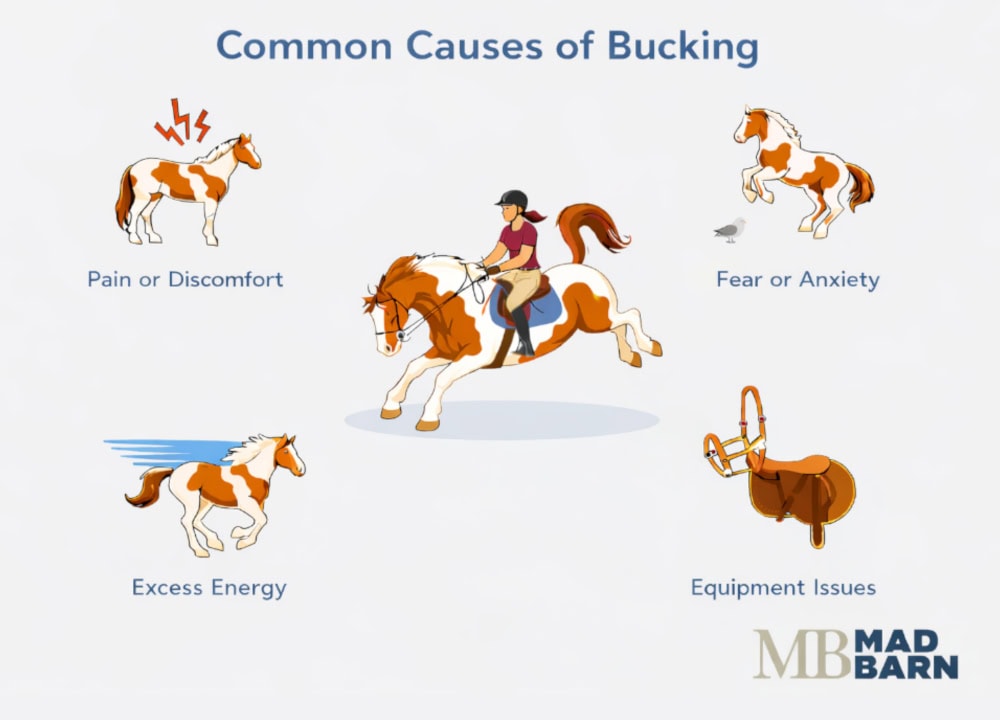
Bucking is what makes a bronco a bronco. The behavior is rooted in a natural survival response, and rodeo bucking horses are bred and handled to elicit it reliably in the arena.
Natural Instinct
Veterinary behavior resources describe bucking as one of the more hazardous behaviors a ridden horse can display, alongside related instinctive responses such as rearing and bolting. [9]
A 2022 veterinary literature review defines a buck as an upward leap in which the hindquarters or all four limbs leave the ground. The review identifies defensive behavior driven by fear as one established cause. [10]
In the wild, a predator may attack by leaping onto a horse’s back and biting at the neck or spine. An explosive kick is one of the few ways a horse can dislodge it. Domestic horses rarely face that threat today, but they retain the underlying defensive instinct even without regular exposure to predators.
A 2020 study found that horses still show clear antipredator responses, including heightened alertness and tight defensive grouping, when they hear vocalizations from predators. [11]
Bucking remains one of the horse’s core defense mechanisms, alongside vigilance and the flight response.
Training alone cannot create the same natural bucking drive. Breeders and stock contractors select horses that already express the instinct powerfully and consistently rather than teaching the horse to buck.
What Triggers Bucking in the Chute?
When a bronco bursts out of the chute, this instinctive response meets a specific set of circumstances. The horse is confined in a narrow space, a rider settles onto its back, and the gate opens suddenly.
For a prey animal, the combination of sudden weight on the back and release from confinement can trigger a defensive, escape-driven response. Bucking is one way that response may appear.
Stock contractors describe the best bucking horses as having an intense drive to kick out as soon as weight lands on their backs, precisely the trait that breeding programs for bucking stock aim to produce. [1]
A horse with little natural inclination to buck will not respond in the same way, regardless of how it is set up in the chute.
What Makes a Horse a Good Bucking Bronco?
Rodeo bucking horses are not difficult or poorly behaved.
They are the product of deliberate selection and training, much as other performance horses are bred for traits such as jumping ability or cow sense.
Selective Breeding for Bucking Ability
Stock contractors maintain established bloodlines of broodmares and stallions chosen specifically for bucking style, power, and consistency.
Producing the athleticism and inclination to buck hard and repeatedly takes generations of careful selection. Not every horse has the ability or desire, so breeders select horses that perform reliably and use them to produce the next generation. [1]
Physical & Temperament Traits
Stock contractors often prefer larger draft-cross horses for bucking stock because their size and conformation can provide the strength and longevity needed to carry a rider through years of explosive movement. [1]
Temperament matters as much as physical build. The best bucking horses tend to be confident, physically robust animals with a strong, consistent bucking response rather than horses that are simply flighty or poorly handled.
The Flank Strap & Rodeo Debate
The flank strap is among the most misunderstood pieces of equipment in bronc riding. It is also central to the ongoing debate about rodeo welfare.
How the Flank Strap Works
A flank strap is a soft, fleece-lined strap placed behind the horse’s rib cage in the flank area, not around the abdomen or genitals, as is sometimes assumed. It has a quick-release buckle, and a pickup rider loosens or removes it immediately after the horse’s performance. [12]
Rodeo industry sources describe the flank strap as a cue that encourages a horse’s natural bucking response without causing injury when fitted and used correctly. [12] Animal welfare groups argue that the same equipment may contribute to stress or discomfort, making it unclear if the horse’s experiences pain during the performance. [13][14]
Because these claims reflect different interpretations of the same event, research on bucking horse behavior is important for evaluating what can and cannot be concluded from observable horse behaviors during their bucking performance.
A peer-reviewed study observed 116 rodeo bucking horses over three seasons at the same commercial rodeo. Researchers tracked the horses’ behavior while they were loaded into the chute and during the holding period before each run.
Horses with more rodeo experience balked less and displayed fewer vigorous, high-arousal behaviors before performing. The researchers interpreted these findings as evidence of habituation to the rodeo environment. [15]
The study also found no relationship between pre-performance behavior and how well a horse bucked after the gate opened. [15]
Researchers noted that the broader question of whether rodeo represents trained performance or distress or the experience of pain remains contested and has historically lacked direct scientific evaluation of the horses’ experiences. [15]
Industry veterinarians describe bucking as an instinctive response that cannot be forced in a horse with no natural inclination to buck. They also maintain that a properly fitted flank strap does not cause injury when used in bronc riding. [12] However, it’s important to note that pain can occur in the absence of injury and more work is needed to better understand how horses experience bronco performances.
Animal welfare organizations continue to raise concerns about flank straps and other rodeo equipment. [13][14] The peer-reviewed evidence available to date indicates that experienced bucking horses habituate to the rodeo atmosphere, but more nuanced understanding of the horse’s experience is not well-studied. This lack of evidence contributes to the ongoing welfare debate about bronco horses.
The Career & Retirement of a Bucking Horse
A bronco’s working life is different from that of most riding horses. Bucking horses are selected for a specific rodeo performance, managed by stock contractors, and brought to events only when scheduled to compete.
Supporters of rodeo often point to this limited arena time, specialized management, and long competitive careers as evidence that bucking horses are treated as valuable equine athletes.
At the same time, a short performance does not answer every welfare question. The horse’s experience also depends on handling, transport, housing, equipment use, exposure to the rodeo environment, and what happens before and after the gate opens.
Short Workload & Long Career
Each qualified ride lasts only eight seconds, so the visible performance is brief. However, a bucking horse’s workday also includes transport, unloading, holding, chute procedures, and recovery after the run.
These parts of the experience are important when evaluating rodeo horse welfare.
Researchers studying bucking horse behavior at a large commercial rodeo tracked the same 116 horses over three rodeo seasons. The fact that the same horses remained in the study population across multiple seasons suggests that many bucking horses have sustained working careers rather than brief, one-time use in the sport. [15]
This continuity supports the industry view that successful bucking horses are managed as valuable performance animals.
However, long-term use does not answer every welfare question. A horse’s experience still depends on handling, transport, housing, equipment fit, chute procedures, recovery, and the quality of day-to-day care.
Some bucking horses continue competing into their teens or twenties, which stock contractors attribute to selective breeding, limited performance time, and attentive care. [1] These long careers reflect the value of proven bucking horses, but longevity alone is not a complete measure of welfare.
Life After Retirement
When a bucking horse’s competitive career ends, the outcome depends on the individual horse, its breeding value, soundness, temperament, and the management practices at the horse’s home barn. Some horses remain with contractors as breeding stock, passing their bucking ability to future generations.
Others may be retired from competition and maintained on ranches rather than sold. One well-known example is a ranch established by a retired rodeo champion specifically for housing former bucking horses, with several stock contractors sending retired animals there. [16]
Retirement practices are relevant because they show that some bucking horses are managed as long-term investments rather than disposable performers. Outcomes vary by horse, contractor, soundness, and breeding value, so retirement should be discussed as part of the broader picture of bucking horse management.

Understanding Bronco Horses
A bronco horse is defined by its behavior rather than its breed. Historically, the term described an unbroken or difficult-to-ride range horse.
In modern rodeo, it usually refers to a purpose-bred equine athlete with a strong, consistent tendency to buck.
Broncos buck because the movement is rooted in an ancient defensive reflex. Sudden weight on the back can trigger the same response a horse would use to dislodge a predator.
In the rodeo arena, confinement in the chute, the rider’s weight, and the sudden opening of the gate combine to activate that response.
Limited competitive exposure and attentive management allow some broncos to remain active for many years. After retirement, they may live on pasture or enter breeding programs that preserve successful bucking bloodlines.
Understanding why broncos buck provides a clearer view of these horses as specialized athletes whose performance depends on natural ability, selective breeding, responsible handling, and appropriate lifelong care.
Frequently Asked Questions
Here are some frequently asked questions about bronco horses and why broncos buck:
A bronco horse is a horse with a pronounced tendency to buck, particularly when a rider mounts or applies pressure to its back. Historically, the term described an unbroken or partially trained range horse. Today, it most often refers to a horse bred and used for rodeo bucking events.
A bronco is not a specific breed of horse. The term describes a horse's behavior, temperament, or role rather than its ancestry. Modern bucking horses can come from different bloodlines, although stock contractors often favor larger draft crosses for their strength, conformation, and longevity.
The difference between a bronco and a bronc is primarily terminology. "Bronco" comes from the Spanish word meaning rough, while "bronc" is the shortened form commonly used in modern rodeo. Both terms can describe an unbroken horse historically or a purpose-bred bucking horse in a rodeo setting.
The difference between a bronco and a mustang is that "bronco" describes behavior, while "mustang" identifies a population of feral horses. Mustangs descend from domesticated horses that escaped or were released and later interbred with other stock. A mustang can be a bronco if it is untrained or inclined to buck, but most professional rodeo broncos are selectively bred domestic horses with little or no wild ancestry.
Most rodeo broncos are not wild horses. Modern bucking horses are generally born and raised in established breeding programs that select for athleticism, bucking ability, and consistency. Although early bronc riding developed from the practice of starting wild or unbroken range horses, very few professional bucking horses today have wild ancestry.
Broncos buck because bucking is a natural defensive behavior that can help a horse remove weight or a potential predator from its back. Domestic horses retain this deeply rooted response even though they rarely encounter predators in everyday life. Rodeo breeders select horses that express the behavior powerfully and consistently, so the behavior is reliable for rodeo performance.
A bronco is triggered to buck by the combined effects of confinement, a rider's weight, and the sudden opening of the chute. The rapid transition from standing in a narrow space to moving freely can activate a powerful defensive and escape-driven response. Horses bred for rodeo are selected for expressing that response strongly when weight is placed on their backs.
A horse cannot be trained to become a successful bucking bronco without a strong natural inclination to buck. Breeding programs identify and develop horses that already show the desired instinct, power, and athletic ability. Handling, conditioning, and rodeo experience can help a horse perform consistently, but the underlying bucking response is not trained.
Not every horse can become a rodeo bronco because bucking ability and willingness to buck vary considerably between individuals. Successful bucking horses need the physical strength, coordination, confidence, and consistent instinct to perform explosively while carrying a rider. Stock contractors develop these traits over generations by breeding proven bucking mares and stallions.
A good bucking horse combines power, athleticism, consistency, and a strong natural desire to kick out when carrying a rider. Stock contractors often prefer physically robust horses with the conformation needed to withstand years of explosive movement. A successful bronco is not simply nervous or difficult to handle; it must perform a repeatable bucking pattern in the arena.
There is minimal scientific evidence that explores whether broncos buck as a result of pain. It is currently thought that bronc horses have a heightened behavioral response to weight on their backs, and this response is heightened through breeding that targets a consistent bucking response. However, bucking in an ordinary riding horse can also be associated with pain, fear, poorly fitted equipment, or learned behavior, so persistent or sudden bucking outside a rodeo setting should not be dismissed as temperament alone. A veterinarian and qualified equine professional should investigate new or unexplained bucking before the horse is ridden again.
A flank strap encourages a bucking horse to extend its hind legs higher and produce a more consistent kicking style. The soft, fleece-lined strap sits behind the rib cage in the flank area rather than around the abdomen or genitals. It has a quick-release buckle and is loosened or removed by a pickup rider immediately after the performance.
A flank strap cannot make a horse buck successfully if the horse does not already have a natural inclination to perform the behavior. It can influence the style and consistency of the kicking motion, but the underlying bucking response comes from the horse. This is why rodeo breeders must selectively produce horses that reliably express the desired instinct and athletic ability.
A properly fitted flank strap is designed to sit in the horse's flank area without causing injury, according to rodeo industry veterinarians. Animal welfare organizations continue to question the use of flank straps and other rodeo equipment, and the broader debate about the horses' experience remains under-researched. Existing research has found that experienced bucking horses show signs of habituation to rodeo procedures, but it does not establish that every aspect of rodeo is harmless or settle the overall welfare debate.
Bucking horses can become accustomed to parts of the rodeo environment through repeated experience. In one study, horses with more rodeo experience balked less and displayed fewer high-arousal behaviors while being loaded and held before their performances. Their calmer pre-performance behavior did not reduce how well they bucked after leaving the chute.
The difference between saddle bronc and bareback riding is the equipment and riding technique used during the event. Saddle bronc riders use a specialized saddle and hold a single rein, while bareback riders hold a rigging strap without a saddle. Both events require the rider to remain on the horse for eight seconds, and judges evaluate the performances of both the rider and the horse.
A bronco horse bucks for up to eight seconds during a qualified rodeo ride. Because each performance is so short and individual horses compete infrequently, their total annual time carrying a rider in the arena may add up to only a few minutes. This limited competitive exposure can contribute to a long working career when paired with appropriate care and conditioning.
A bucking horse can compete for close to a decade or longer, and some remain active into their teens or twenties. Career length depends on the horse's health, soundness, ability, management, and continued willingness to perform. Selective breeding, a relatively light workload, and attentive care can help successful horses remain in competition for many years.
Retired bronco horses may live on dedicated retirement ranches, remain with their stock contractors, or enter breeding programs. Proven mares and stallions can pass their bucking ability to future generations of rodeo stock. Some contractors place retired horses on pasture rather than selling them after their competitive careers end.
Summary
Bronco horses are purpose-bred equine athletes selected for a strong, consistent bucking response. Their breeding, handling, equipment, careers, and retirement all contribute to discussions about rodeo performance and equine welfare.
- A bronco is defined by its bucking behavior and temperament rather than by a specific breed
- Modern bucking horses come from established bloodlines selected for athleticism, power, consistency, and longevity
- Bucking is rooted in a natural defensive response that can be triggered by sudden weight on the horse's back
- A properly fitted flank strap is designed to encourage the horse's natural bucking response, although its welfare implications remain contested
- Research suggests that experienced bucking horses may habituate to the chute and other pre-performance procedures
- After retirement, some bucking horses remain on ranches or enter breeding programs that preserve successful bloodlines
References
- Millen. T. Bucking Horses: Unsung Athletes of the Rodeo World. Horse Journals. 2026.
- Bronco Definition & Meaning. Merriam-Webster.com Dictionary.
- Harper. D. Etymology of Bronco. Online Etymology Dictionary.
- Broncobuster Definition & Meaning. Merriam-Webster.com Dictionary.
- Crossley. T. Rodeo in Washington. HistoryLink.org. 2023.
- La Tray. C. A Brief History of the Rodeo. Smithsonian Magazine. 2022.
- Rodeo 101. Canadian Finals Rodeo.
- Rodeo 101. Wichita Falls PRCA Rodeo.
- Houpt. K. Behavior Problems of Horses. Merck Veterinary Manual. 2025.
- Dyson. S. The Recognition of Pain and Learned Behaviour in Horses Which Buck. Equine Veterinary Education. 2022.
- Janczarek. I. et al. Social Behaviour of Horses in Response to Vocalisations of Predators. Animals. 2020.
- PRCA. Rodeo Equipment. ProRodeo. n.d.
- What Are the Animal Welfare Issues With Rodeos?. RSPCA Knowledgebase. 2024.
- Rodeo. BC SPCA.
- Goldhawk. C. et al. Effect of Animal's Experience and Rodeo Procedures on Behaviour of Bucking Horses at a Large Commercial Rodeo in Canada. Applied Animal Behaviour Science. 2021.
- Partain. K. Early Retirement. Western Horseman. 2007.