English
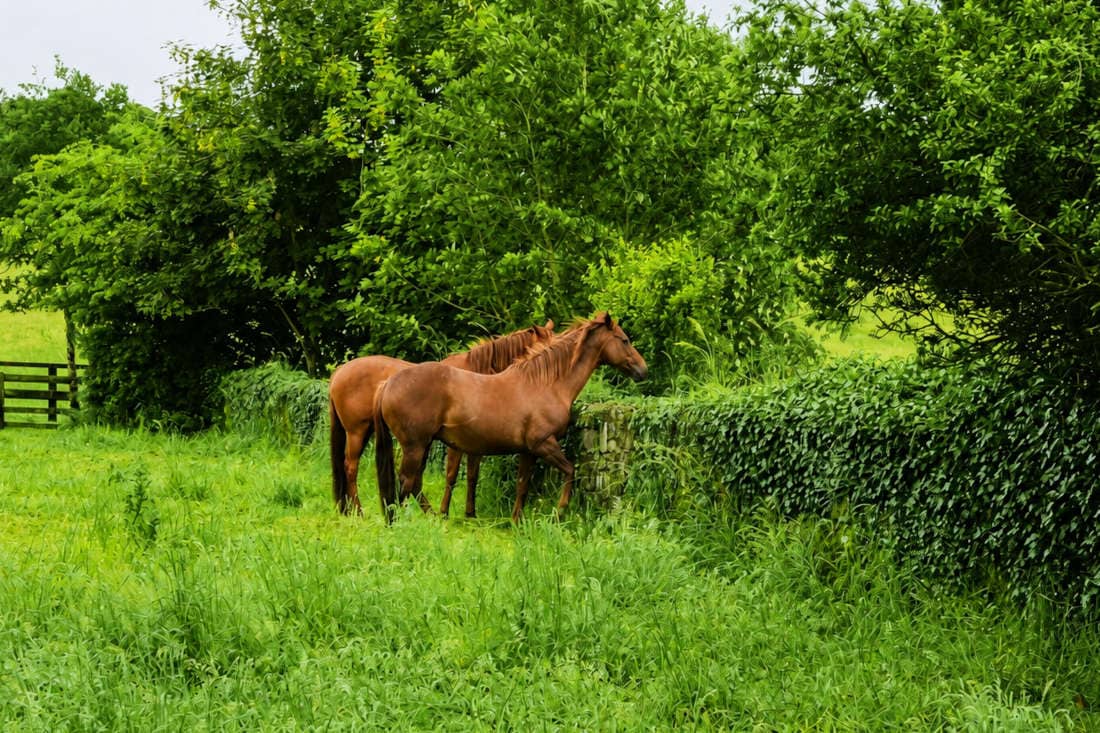
English ivy poisoning in horses occurs when horses consume the leaves, vines, or berries of this common ornamental plant. Although its bitter taste typically discourages horses from eating large amounts, exposure can occur along overgrown fence lines, in wooded paddocks and landscaped areas, or where garden waste has been discarded.
All parts of English ivy contain irritating compounds that can damage tissues in the mouth and digestive tract. Affected horses may develop excessive salivation, reduced appetite, colic, or diarrhea, while weakness and incoordination are less common.
Most cases of English ivy toxicosis in horses are mild to moderate, but suspected ingestion warrants prompt veterinary guidance and removal of the plant from the horse’s environment.
Keep reading to learn how to identify English ivy, recognize signs of poisoning, and understand treatment and prevention.
English Ivy Poisoning in Horses
English ivy (Hedera helix) is a fast-growing evergreen vine widely cultivated as an ornamental ground cover and climbing plant. [1]
Native to Europe, western Asia, and North Africa, it has been introduced throughout North America, Australia, and many other temperate regions, where it has become naturalized and, in some areas, invasive. Its ability to rapidly cover fences, walls, trees, and woodland floors makes it a familiar feature of gardens, parks, and rural landscapes. [1][2]
Although primarily valued for its ornamental appearance, English ivy contains compounds in all parts of the plant that can poison horses if consumed in sufficient quantities. Fortunately, poisoning is relatively uncommon because most horses find English ivy unpalatable due to its bitter taste. [1][2]
Unlike highly poisonous plants that can cause rapid cardiovascular or neurologic collapse, English ivy primarily acts as an irritant. Its toxic compounds damage the lining of the digestive tract and may also irritate the skin and mucous membranes. [3][4]
Most cases of equine English ivy poisoning are mild to moderate, and horses respond well to supportive veterinary care. Severe poisoning is uncommon, and recovery is usually complete when affected horses receive prompt treatment and are prevented from consuming additional plant material. [1][2][4]
Other Names for English Ivy
Common names for English ivy include:
- English ivy
- Common ivy
- Common English ivy
- European ivy
- Ivy
Table 1. English ivy poisoning in horses at-a-glance
| Category | Key Information |
|---|---|
| Definition |
|
| Primary Cause |
|
| Common Causes |
|
| Onset |
|
| Symptoms |
|
| Severity |
|
| Treatment |
|
| Recovery Time |
|
| Prognosis |
|
| Prevention |
|
Identification
English ivy is a woody evergreen perennial vine belonging to the ivy family (Araliaceae). It spreads by creeping across the ground or climbing vertical surfaces such as trees, fences, stone walls, and buildings.
Rather than twining around supports, the vine attaches with numerous short aerial rootlets that produce a sticky adhesive, firmly anchoring it to rough surfaces. [1][2]
 Berries
 Leaves
 Unripe berries
The plant is highly adaptable and grows in both full shade and sunny locations. It is commonly planted as a ground cover but readily escapes cultivation into forests, woodland edges, parks, abandoned properties, and pasture margins.
In many regions, it forms dense mats that suppress native vegetation and may eventually climb into tree canopies. [1][2]
One of English ivy’s defining characteristics is the presence of two distinct leaf forms: [1][2]
- Juvenile growth: Makes up most of the plant during the creeping and climbing stage. Bears dark green, glossy leaves with three to five pointed lobes. The leaves are leathery and waxy, with pale, whitish veins that contrast with the darker green blade. They are arranged alternately along the stem and typically measure 5 to 10 cm (2 to 4 inches) across.
- Adult growth: Develops once the plant reaches maturity and is usually found on flowering stems exposed to more sunlight. These leaves lose their characteristic lobes and become oval, diamond-shaped, or heart-shaped while retaining a thick, leathery texture and glossy appearance.
During late summer and autumn, mature plants produce small clusters of greenish-yellow flowers arranged in rounded umbels at the ends of flowering stems. These are followed by fleshy berries that ripen from green to black, although some cultivated varieties may produce yellow, orange, or cream-colored fruit. [1][2]
English ivy is recognized by its combination of evergreen climbing vines, leathery dark green leaves with pale veins, aerial rootlets, and dense growth. The presence of both lobed juvenile leaves and unlobed adult leaves on the same plant is particularly characteristic and helps distinguish English ivy from many other climbing vines. [1][2]
What's your top priority with your horse's health?

What's your top priority with your horse's health?
Toxicology of English Ivy
All parts of English ivy contain naturally occurring compounds that can irritate the gastrointestinal tract and other tissues following ingestion.
English ivy primarily causes irritation of the gastrointestinal tract and other tissues that come into direct contact with the plant. This helps explain why poisoning is usually mild and severe systemic disease is uncommon. [4]
The principal toxins are triterpenoid saponins, including alpha-hederin and several closely related compounds known as hederacosides. Many of these saponins have hederagenin as their aglycone. These compounds are present throughout the plant, but are generally found in higher concentrations in the berries than in the foliage. [1][3][4]
Saponins, named for their soap-like properties, interact with cholesterol in cell membranes and disrupt the normal structure of cells lining the digestive tract. This damage increases the chance of the intestinal lining “leaking,” allowing fluid into the intestinal tract and triggering local inflammation and irritation.
This can result in generalized gastrointestinal issues, including: [1][3][4]
English ivy also contains several polyacetylene compounds, including falcarinol and related chemicals. These substances are potent irritants that contribute to inflammation of the skin and mucous membranes.
Horses that chew the plant may develop localized irritation around the lips or mouth, while direct contact with the sap may occasionally contribute to skin irritation. [1][4][5][6]
The plant’s naturally bitter taste also helps limit poisoning. Most horses find English ivy unpalatable and avoid consuming large quantities under normal circumstances. As a result, clinically significant poisoning in horses is relatively uncommon despite the plant’s widespread distribution around homes, farms, and wooded areas. [1]
Symptoms of English Ivy Poisoning in Horses
English ivy poisoning generally produces mild to moderate gastrointestinal disease, with clinical signs resulting primarily from irritation of the digestive tract rather than widespread systemic toxicity. Most affected horses recover uneventfully with supportive care.
Clinical signs may include: [5][6]
- Colic
- Diarrhea
- Agitation or excitability
- Weakness
- Incoordination (staggering)
- Skin irritation or blistering around the mouth
- Paralysis in severe cases
Most horses develop gastrointestinal signs first, including diarrhea, mild colic, and excessive salivation. Loss of appetite may occur as irritation of the mouth and digestive tract progresses. Horses experiencing diarrhea may also become dehydrated if fluid losses are significant. [5][6]
Contact with the leaves or sap may also produce localized irritation of the lips, muzzle, or surrounding skin in some horses. [5][6]
When to Call the Veterinarian
Owners should contact a veterinarian whenever a horse is known or suspected to have consumed English ivy, particularly if gastrointestinal signs begin to develop. Early assessment can guide appropriate monitoring and supportive care. [7]
Prompt veterinary assessment is recommended for horses showing: [5][6]
- Persistent diarrhea
- Repeated colic
- Marked hypersalivation
- Reduced appetite
- Weakness
- Dehydration
Evidence of neurologic abnormalities, such as staggering or muscle spasms, also warrants prompt attention. Although severe poisoning is uncommon, early supportive treatment can help prevent dehydration, correct electrolyte disturbances, and reduce the risk of complications. [5][6]
Exposure Risk Factors
English ivy poisoning is primarily associated with ornamental and environmental exposure rather than normal grazing. The plant is widely cultivated as a ground cover and climbing vine around homes, barns, gardens, and public landscapes. Horses may gain access when paddocks border landscaped areas or overgrown fence lines. [1][2]
Unlike many toxic pasture weeds, English ivy is unpalatable. Its leaves contain bitter-tasting saponins that discourage consumption, and most horses avoid the plant when adequate forage is available. Consequently, poisoning is relatively uncommon despite the plant’s widespread distribution. [1]
Chances of exposure increase when horses have limited access to forage or are confined in sparse paddocks. Young horses may be particularly prone to chewing ornamental plants, although clinically significant poisoning remains uncommon.
English ivy is considered invasive throughout many regions of North America. Birds readily consume the berries and disperse the seeds, allowing the vine to establish along woodland edges, fence rows, hedgerows, and pasture margins. If left unmanaged, dense infestations may gradually spread into grazing areas, increasing the likelihood of accidental exposure. [2]
Improper disposal of garden waste can also create a preventable risk. Owners should never discard pruned vines, leaves, or berry-bearing branches into horse paddocks or compost piles accessible to livestock. Although the berries generally contain higher concentrations of saponins than the foliage, all parts of the plant should be considered potentially toxic if consumed in sufficient quantities. [1]
Because horses rarely consume large amounts of English ivy, most exposures involve relatively small quantities and produce only mild clinical disease.
Diagnosis
Diagnosis of English ivy poisoning is based primarily on a history of plant exposure and compatible clinical signs. There is currently no laboratory test that specifically confirms ingestion of Hedera helix, making identification of the plant in the horse’s environment an important part of the diagnostic process.
Owners should inform their veterinarian if the horse has recently had access to ornamental gardens, wooded paddocks, overgrown fence lines, or discarded garden trimmings. Evidence of chewed vines, leaves, or berries can support the diagnosis.
Physical examination typically reveals signs consistent with gastrointestinal irritation, including diarrhea, mild colic, hypersalivation, dehydration, or reduced appetite. Some horses may also exhibit irritation around the lips or muzzle if plant material has remained in contact with the skin.
Differential diagnoses include other toxic plants that cause gastrointestinal irritation, infectious causes of diarrhea, dietary indiscretion, sand enteropathy, and other conditions associated with acute colic. If neurologic abnormalities predominate, other causes of weakness or incoordination are more likely than ivy exposure.

Treatment & Management
There is no specific antidote for English ivy poisoning. Treatment is supportive and focuses on relieving gastrointestinal irritation, correcting dehydration, and preventing complications while the toxins are eliminated from the body.
The first step is to remove the horse from the source of exposure and prevent further access to the plant. Remaining vines or plant material should be identified and removed from areas accessible to horses.
Maintaining hydration is the primary treatment goal. Horses with diarrhea or reduced water intake may require oral or intravenous fluid therapy, depending on the severity of dehydration. Electrolyte supplementation may also be necessary to replace losses associated with gastrointestinal disease.
Most horses require little more than supportive nursing care and close monitoring, with continued access to fresh water and palatable forage. Gastrointestinal disturbances are typically self-limiting and often improve within a short period.
If skin irritation develops around the mouth or muzzle, affected areas may be gently cleansed and monitored for secondary infection. Persistent or extensive dermatitis is uncommon but may require additional veterinary treatment.
Hospitalization is rarely necessary unless dehydration becomes severe or neurologic abnormalities develop. Horses showing weakness, incoordination, or muscle spasms should be monitored closely until clinical signs resolve.
Prognosis
The prognosis is generally good for horses with English ivy poisoning. Most horses consume only small amounts of the plant because of its bitter taste, and the resulting disease is usually mild to moderate. [6]
With prompt supportive care, gastrointestinal signs often resolve within several hours, and complete recovery typically occurs within 24 hours. [6]
More severe disease is uncommon but may occur after ingestion of larger quantities of plant material. Horses that develop significant dehydration or neurologic abnormalities may require more intensive treatment and monitoring, although long-term complications are considered unlikely when appropriate veterinary care is provided. Deaths associated with English ivy poisoning are rare. [6]
Prevention
Preventing English ivy poisoning relies on limiting horses’ access to the plant and maintaining environments that discourage accidental ingestion.
Although most horses naturally avoid English ivy because of its bitter taste, owners should not rely on this behavior alone. The vine should not be allowed to grow within paddocks, along interior fence lines, or anywhere horses can easily browse it. Key prevention measures include:
- Inspect pastures regularly, including nearby hedgerows, woodland edges, and fence lines where English ivy commonly establishes. Because the plant readily spreads by climbing trees and creeping across the ground, remove small infestations before they become established.
- Dispose of garden waste safely. Never discard English ivy in horse enclosures; pruned vines, leaves, and berry-bearing stems remain potentially toxic.
- Maintain adequate forage availability throughout the day to help reduce exploratory chewing of ornamental plants, particularly when pasture growth is limited. A forage-first feeding program can help support this management priority.
- Provide environmental enrichment for confined horses to help reduce boredom-related plant consumption. Appropriate enrichment activities can support this goal.
- Control invasive growth through mechanical removal or appropriate vegetation management. Preventing the vine from spreading into pasture margins is particularly important because dense growth may eventually become accessible to grazing horses.
Although poisoning is relatively uncommon, prompt removal of English ivy from equine environments remains the most effective way to eliminate the risk of toxicosis.
Frequently Asked Questions
Here are some frequently asked questions about English ivy poisoning in horses:
English ivy can poison horses when they consume sufficient amounts of the leaves, vines, or berries. All parts of the plant contain irritating compounds called triterpenoid saponins, with the berries generally containing higher concentrations than the foliage. Most horses avoid English ivy because of its bitter taste, so clinically significant poisoning is relatively uncommon.
The signs of English ivy poisoning in horses most commonly involve irritation of the mouth and digestive tract. Affected horses may develop excessive salivation, reduced appetite, mild colic, diarrhea, weakness, or dehydration. Irritation or blistering may also appear around the lips and muzzle, while incoordination, muscle spasms, and paralysis are uncommon signs associated with more severe poisoning.
English ivy can be identified by its woody evergreen vines, leathery dark green leaves, pale leaf veins, and short aerial rootlets that attach to trees, fences, walls, and other surfaces. Juvenile leaves usually have three to five pointed lobes, while mature flowering stems produce oval, diamond-shaped, or heart-shaped leaves. Mature plants also develop clusters of greenish-yellow flowers followed by berries that commonly ripen from green to black.
All parts of English ivy are potentially toxic to horses, including the leaves, vines, sap, and berries. The berries generally contain higher concentrations of triterpenoid saponins than the foliage, but horses should not be allowed to consume any part of the plant. Direct contact with the sap may also irritate the skin, lips, or other tissues around the mouth.
If a horse eats English ivy, immediately prevent further access to the plant and contact a veterinarian for guidance. Check the area for chewed vines, leaves, or berries, and retain a sample or take clear photographs to help confirm the plant's identity. Monitor the horse closely for salivation, appetite loss, colic, diarrhea, weakness, dehydration, or abnormal coordination.
A veterinarian should be contacted whenever a horse is known or suspected to have consumed English ivy, especially if clinical signs develop. Prompt assessment is particularly important if the horse has persistent diarrhea, repeated colic, marked salivation, reduced appetite, weakness, dehydration, staggering, or muscle spasms. Early supportive care can help correct fluid and electrolyte losses and reduce the risk of complications.
English ivy poisoning is usually mild to moderate in horses because the plant primarily irritates tissues that come into direct contact with it. Severe systemic illness is uncommon, and most horses recover fully with prompt supportive care. Larger ingestions can cause significant dehydration or neurologic abnormalities, however, so any suspected exposure should be taken seriously.
English ivy poisoning is diagnosed primarily from a history of possible exposure, identification of the plant, and compatible clinical signs. There is no specific laboratory test that confirms English ivy ingestion. A veterinarian may also evaluate the horse for other causes of diarrhea, colic, weakness, or incoordination before reaching a diagnosis.
There is no specific antidote for English ivy poisoning in horses. Treatment focuses on supportive care while the irritating compounds are eliminated from the body. Depending on the horse's condition, veterinary management may include fluid therapy, electrolyte replacement, supportive nursing care, and close monitoring for worsening gastrointestinal or neurologic signs.
Recovery from English ivy poisoning is usually rapid when exposure is stopped and supportive care is provided. Gastrointestinal signs often improve within several hours, and complete recovery commonly occurs within 24 hours in mild to moderate cases. Horses with severe dehydration or neurologic abnormalities may need more intensive treatment and a longer monitoring period.
Horses with limited access to forage or those kept in sparse paddocks may be more likely to investigate and chew English ivy. Young horses and confined horses may also explore unfamiliar plants, particularly when bored or when ivy grows within easy reach. Risk increases where the vine has spread along pasture margins, overgrown fences, or wooded boundaries.
English ivy poisoning can be prevented by removing the vine from paddocks, interior fence lines, and other areas accessible to horses. Regularly inspect pasture margins, hedgerows, and wooded boundaries, and dispose of pruned vines, leaves, and berry-bearing stems where livestock cannot reach them. Maintaining adequate forage and providing appropriate enrichment can also reduce exploratory chewing, although access to the plant should still be eliminated.
Summary
English ivy poisoning usually causes mild to moderate mouth and digestive irritation in horses. Most recover fully with prompt supportive care and removal of the plant.
- All parts of English ivy contain irritating compounds that can inflame the mouth, skin, and digestive tract
- Common signs include drooling, reduced appetite, diarrhea, mild colic, and dehydration
- Rare severe cases may cause weakness, incoordination, muscle spasms, or paralysis
- Diagnosis is based on exposure history, clinical signs, and identifying chewed English ivy
- Treatment focuses on stopping ingestion, supporting hydration, replacing electrolytes, and monitoring
- Prevention includes pasture checks, adequate forage, safe garden-waste disposal, and vine removal
References
- Burrows. G. E. and Tyrl. R. J. Toxic Plants of North America. John Wiley & Sons. 2013.
- Hedera helix - Plant Finder. Missouri Botanical Garden.
- Plumlee. K. H. Ed. Clinical Veterinary Toxicology. Mosby. 2004.
- Dalefield. R. Veterinary Toxicology for Australia and New Zealand. Elsevier. 2017.
- English Ivy Poisoning in Horses. HorseDVM. 2026.
- Plants Poisonous to Horses. The British Horse Society. 2026.
- English Ivy. American College of Veterinary Pharmacists. 2023.