English






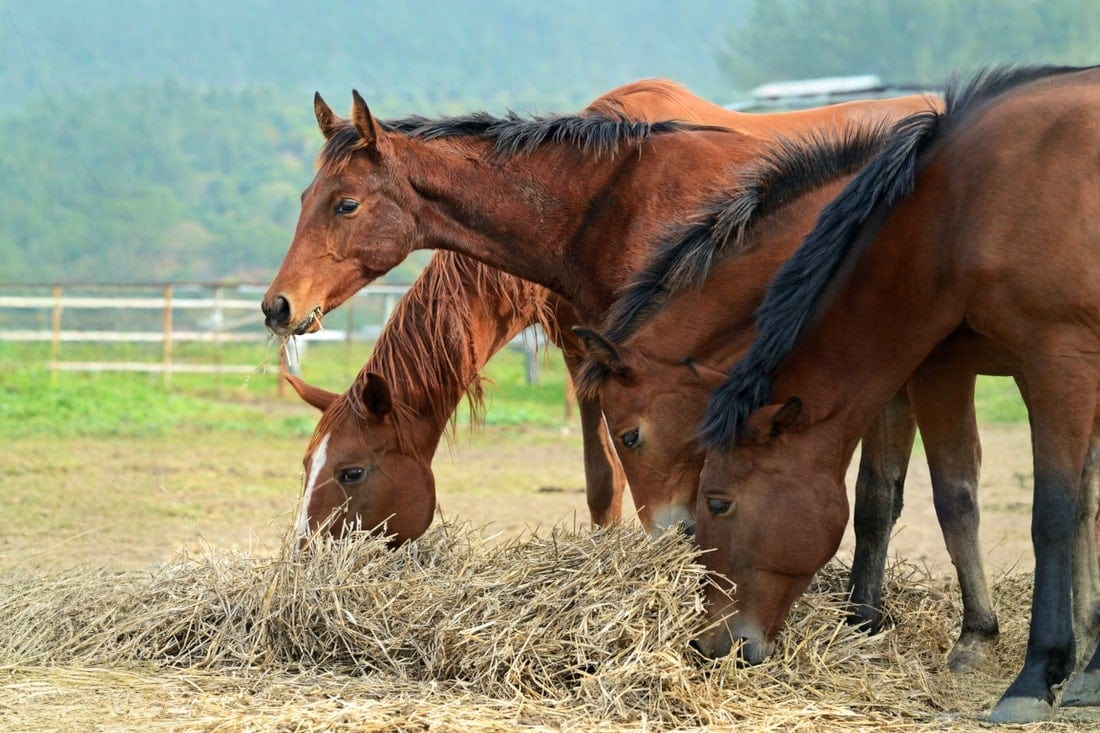
Food is one of the strongest motivators for horses, influencing their daily routines, interactions, and relationships with both humans and other horses. In some herds, mealtimes can lead to unwanted or even dangerous behavior that creates tension or conflict.
Food aggression refers to defensive or threatening actions a horse shows around feed, such as ear pinning, lunging, kicking, or guarding hay piles to keep others away. Although it might seem like a minor behavioral quirk, food-related aggression increases the risk of injury to both handlers and other horses.
Beyond immediate safety concerns, food aggression can also indicate underlying management concerns such as stress, competition for resources, or medical conditions that affect appetite and behavior.
By understanding why horses develop food aggression and how to manage it effectively, owners can create a safer and calmer feeding environment. Addressing the problem early not only reduces risk but also supports better welfare and harmony within the herd.
Food Aggression in Horses
Horses are grazing animals that naturally spend 12–16 hours per day foraging, moving continuously between patches of grass. This steady intake of small meals supports slow, efficient digestion and helps maintain stable blood sugar levels. [1][2][3]
Grazing also provides mental stimulation and fulfills the horse’s need for constant movement, which is essential for overall physical and behavioral health. [4]
Feral horses feed in herds with a social hierarchy that governs access to the best grazing areas. Subordinate horses adjust their foraging times or locations to avoid conflict with dominant members, while dominant horses assert priority over prime patches. [5] This social structure minimizes overt aggression while maintaining natural resource protection.
Understanding food aggression begins with recognizing its biological and behavioral roots, not as an “angry” emotional response or personality trait, but as a survival-driven behavior. As prey animals, horses evolved to guard limited resources, a behavior that can persist in domestic settings. [6]
Anticipatory behavior also contributes to food aggression within domestic herds. Horses quickly learn feeding schedules through circadian patterns, and anticipation can heighten arousal — making them more alert, impatient, or reactive as feeding time approaches. [7]
In settings where natural foraging is restricted, this anticipation can intensify, especially between human feeding cues (e.g., footsteps or grain bins) and the actual delivery of food.
Signs of Food Aggression
Food aggression in horses can present through a range of behaviors, from subtle warning signs to overt acts of physical aggression. [6][8]
These behaviors vary in severity. Common signs include: [6][8]
- Mild signs: pinned ears, tail swishing, tense body posture, or snaking the neck toward others
- Moderate signs: lunging, snapping, or chasing other horses away from a feeding area
- Severe signs: biting, kicking, rearing, or striking when approached during feeding
Often, resource guarding begins as mild, defensive behavior. If these behaviors succeed in deterring other horses or making handlers retreat, they may be reinforced and eventually escalate into more intense aggression. [6][9]
The risk of escalation is greatest when resources are scarce or highly valued. Recognizing early signs allows handlers to intervene before serious aggression develops. [6][9]
What's your top priority with your horse's health?

Enter your email to receive your store credit
Identifying Food Aggression vs. Normal Behavior
Understanding the difference between normal food-related social behaviors and true food aggression is essential for owners and handlers to respond appropriately. For example, a horse pinning its ears or briefly moving another horse away may reflect ordinary herd dynamics. [7][10][11]
On the other hand, consistent, intense, or escalating aggression signals a problem, especially if it endangers handlers or other horses. [7][10][11]
Normal feeding behavior may include:
- Moving eagerly toward feed
- Snorting or pawing lightly out of excitement
- Eating quickly but without threatening others
- Pinned ears
- Moving other horses off food
- Gesturing towards other horses
- Tail swishing
The key distinction lies in intent and persistence. Normal feeding excitement is short-lived and non-threatening, while food aggression tends to be repeated, escalates over time, and is often triggered when a horse perceives their access to food is under threat.
Recognizing the difference early allows owners to prevent injuries, manage herd dynamics effectively, and address aggressive behaviors before they become dangerous.
Causes & Triggers
Food aggression in horses arises from a combination of instinct, environment, past experiences, and health factors, all of which can influence how and why a horse is guarding food.
Instinct
Horses naturally respond to perceived threats by moving away. When escape isn’t possible, most horses take defensive action. These responses are often labeled as aggression, but they are primarily motivated by self-protection.
Known as agonistic behavior, this includes both defensive and aggressive actions. [6]
Even well-fed horses may guard high-value feeds such as grain or treats, reflecting the evolutionary drive to protect essential resources. [9]
Environment
The horse’s surroundings strongly affect the likelihood of food guarding. Environmental triggers can create or amplify competition for feed, which often leads to defensive or aggressive behaviors.
Common environmental factors that contribute to the incidence of food aggression in horses include: [9][12][13][14][15]
- Over-crowding: Limited space increases direct competition. Crowded or undersized stalls, paddocks or other feed areas set the stage for aggressive behavior.
- Limited access: Scarcity, small portions, or highly palatable feed heightens guarding behavior.
- Forced confrontation: Close proximity to other horses can create rivalry, with dominant horses controlling resources and subordinate horses defending their share.
- Over-stimulation: Noise, frequent herd changes, and other stimuli increase arousal, intensifying competition and guarding behaviors.
Understanding these environmental pressures allows owners to adjust feeding practices to reduce conflict and create a calmer, safer environment for all horses.
Past Experiences
A horse’s history strongly influences the development of food aggression. Limiting grazing or access to feed can disrupt natural foraging behaviors, often leading to frustration and rebound behaviors such as increased aggression, rearing, bucking, bolting, or overeating.
Horses that were previously underfed, neglected, or frequently forced to compete for feed are especially prone to developing habitual aggressive behaviors. Over time, these learned patterns can become deeply ingrained, particularly when the horse has learned that defending food reliably results in securing a better outcome. [16][10]
Risks of Food Aggression
Food aggression in horses can create serious safety and welfare concerns for both humans and horses.
Risks to handlers include bites, kicks, or strikes, posing a risk of injury. Even a small nudge from a defensive horse can cause bruises or more serious accidents. [8][13]
Aggressive horses can bully or injure herd mates, restrict access to feed, and create tension within the group. This can lead to nutritional deficiencies or stress-related behaviors in subordinate horses. [14][16]
Guarding food also presents a risk to the aggressive horse. Resource guarding is stressful and can increase irritability or anxiety. In some cases, it can lead to injuries from fights with other horses or accidents when being handled during feeding.
Impact on Health & Welfare
Food aggression affects more than just behavior. It can also influence the physical health and overall welfare of the herd.
Feed deprivation increases stress in horses. For example, one study showed increased levels of stress hormones and signs of immunosuppression in fasting horses compared to fed counterparts. [17]
Horses living with a food-aggressive herd mate are likely to have some of the same physiological responses if they do not have sufficient access to feed.
Horses under persistent stress may also develop stereotypic behaviors such as weaving, cribbing, or pacing. These behaviors are often signs of chronic frustration or anxiety and can indicate that the horse’s environment or management practices need adjustment. [18]
Digestive health may also be affected by agonistic behavior in feeding environments. Horses with irregular access to food or those that eat too quickly due to competition are at greater risk of developing: [19][20][21][22]
Slow, continuous foraging is essential for maintaining gut health in horses. When competition or limited access prevents horses from eating gradually throughout the day, they may experience extended fasting periods and stress-related behaviors.
Feeding strategies that mimic natural grazing patterns can help. Offering free-choice access to forage, using slow-feeders to extend meal time, providing separate feeding spaces, or offering smaller, more frequent meals can reduce competition, support digestive health, and promote calmer behavior around feeding.
Management & Prevention
Managing food aggression in horses involves creating predictable feeding routines and reducing competition for resources.
Feeding Routines
Establishing safe, predictable routines helps prevent aggressive incidents during feeding. Strategies include: [16][23][24]
- Handle with care: Approach horses calmly and avoid positioning yourself between a horse and its food. Horses that show resource-guarding behavior can be tied safely away from other horses and people or left in their stalls before feeding.
- Separate feeding areas: Provide individual feeding spaces to reduce competition and minimize aggressive behavior. When feeding horses turned out together, set up multiple feeding stations throughout the paddock to ensure every horse has access.
- Use hay nets: Extend feeding time with slow-feed hay nets to promote natural grazing patterns, reduce frustration, and lower the risk of aggressive behavior. Consistent forage access helps prevent long periods between meals and reduces competition among horses.
- Monitor and reinforce calm behavior: Offer treats or grain individually when possible, limit hand-feeding in group settings, and reward calm, non-aggressive behavior around food.
- Interact after feeding: Wait until a horse has finished eating before approaching or handling. This helps prevent defensive reactions and supports safer, more positive interactions.
Long-Term Solutions
Long-term strategies aim to build sustainable, calm behavior around feeding. This involves managing routines, reinforcing positive responses, and addressing social dynamics within the herd.
Practical solutions for the long-term management of food aggression in horses include: [25]
- Monitor responses to routines: Maintaining predictable feeding schedules and barn routines supports calm behavior for many horses. Monitoring your horses during feeding time helps detect shifting dynamics early.
- Gradually reintroduce proximity: Safely introduce handling near feed in controlled steps, reducing distance between the handler, the horse and food over time as behavior improves.
- Reinforce desired behavior: Reward cooperative behavior to build trust and reinforce non-aggressive responses.
- Monitor and adjust herd dynamics: Observe social hierarchy and interactions, adjusting feeding arrangements or groupings to reduce competition.
These strategies help reduce stress, lower arousal, and promote safer interactions between horses and handlers. The goal is to manage the environment so the horse is not placed in situations where defensive or aggressive reactions are likely to occur.
Establishing consistent feeding routines and low-stress handling practices minimizes behavioral triggers, decreases the risk of conflict, and supports calm, predictable responses around food.

When to Seek Professional Help
While there are many management strategies available to address aggression and improve herd interactions at feeding time, sometimes professional help is warranted to ensure horse and human safety.
Consider seeking guidance from a professional equine behaviorist or trainer when:
- Aggressive behavior escalates or poses a safety risk to humans or other horses
- There is a sudden onset of aggression in a horse who doesn’t usually have behavior issues
- Owners are unsure how to safely separate or manage horses during feeding
- Training and management strategies are not effectively reducing aggressive behavior
It’s also important to rule out any underlying medical issues that could be related to aggression or other behavior changes. Work with your veterinarian if one of your horses is acting unusually aggressive around food.
Frequently Asked Questions
Here are some frequently asked questions about food aggression in horses:
Food aggression in horses refers to defensive or threatening behavior around feed, such as lunging, biting, kicking, or guarding hay, grain, or treats.
As far as we know, horses don't experience anger in the same way humans do. Food aggression is best viewed as a natural behavior related to increased arousal in anticipation of food, which makes horses more alert, reactive, or defensive.
Yes. Horses that were underfed, neglected, or forced to compete for food in the past are more prone to developing food guarding behaviors.
If your horse's behavior has changed suddenly, consult with your veterinarian to investigate any underlying medical issues. If no medical issues are present, consider working with a professional equine behaviorist or trainer to address emerging issues.
Chronic stress from challenging herd dynamics such as food aggression can impact immunity, digestion, and increase the risk of weight loss, ulcers, colic, or stereotypic behaviors.
Safe approaches to managing equine food aggression include feeding horses separately, using slow feeders, establishing consistent routines, and rewarding calm behavior.
Summary
Food aggression in horses describes defensive or threatening behavior around feed that can endanger handlers, herd mates, and the horse exhibiting the behavior.
- Normal feeding excitement may include eager movement or light pawing, which are not typically signs of aggression.
- Aggressive behavior is characterized by repeated lunging, biting, or guarding feed from others.
- Food aggression can develop due to instinct, learned behavior, competition, stress, or underlying medical issues.
- Crowded environments, limited feed access, and high-value feeds are common triggers for aggressive behavior.
- Effective management involves providing separate feeding areas, maintaining consistent schedules, using slow feeders, supervising distribution of high-value feeds, and reinforcing calm responses.
- Professional evaluation is recommended if aggression escalates, develops suddenly, or does not improve with management strategies.
References
- Kirton. R. et al. The Impact of Restricted Grazing Systems on the Behaviour and Welfare of Ponies. Equine Veterinary Journal. 2025.
- Baumgartner. M. et al. Common Feeding Practices Pose A Risk to the Welfare of Horses When Kept on Non-Edible Bedding. Animals. 2020. View Summary
- Fleurance. G. et al. Diurnal Observations of Feeding Choices in Grazing Horses Correctly Predict Their Daily Diet Composition. Applied Animal Behaviour Science. 2022.
- Krueger. K. et al. Basic Needs in Horses?—A Literature Review. Animals : an Open Access Journal from MDPI. 2021. View Summary
- Waran, N., Ed. The Welfare of Horses. Nachdr. Springer, Dordrecht. 2007.
- Fenner. K. et al. Reported Agonistic Behaviours in Domestic Horses Cluster According to Context. Animals. 2024. View Summary
- Mata. F. et al. Anticipatory Behaviour During the Approach to Feeding Times as a Measure of Horse Welfare. Animals. 2024. View Summary
- Campbell. C. Food Aggression in Equines. Animal Behavior and Welfare Cases. 2023.
- Fureix. C. et al. Exploring Aggression Regulation in Managed Groups of Horses Equus Caballus. Applied Animal Behaviour Science. 2012.
- Dickson. E. C. et al. Evaluating Equine Feeding Behavior Utilizing GrowSafe Systems: A Pilot Study. Translational Animal Science. 2019. View Summary
- Ralston. S. L. Feeding Behavior. The Veterinary Clinics of North America. Equine Practice. 1986. View Summary
- Equine - Codes of Practice for the Care and Handling of Horses. National Farm Care Council. 2013.
- Burla. J.-B. et al. Effects of Feeding Management and Group Composition on Agonistic Behaviour of Group-Housed Horses. Applied Animal Behaviour Science. 2016.
- Cameron. L. et al. Tracking the Track: The Impact of Different Grazing Strategies on Managing Equine Obesity. Animals. 2025. View Summary
- Hartmann. E. et al. Dominance and Leadership: Useful Concepts in Human–Horse Interactions?. Journal of Equine Veterinary Science. 2017.
- Stull. C. Nutrition for Rehabilitating the Starved Horse. Center for Equine Health - School of Veterinary Medicine. 2012.
- Filippo. P. A. D. et al. Effects of Feed Deprivation on Physical and Blood Parameters of Horses. Brazilian Journal of Veterinary Medicine. View Summary
- Sarrafchi. A. and Blokhuis. H. J. Equine Stereotypic Behaviors: Causation, Occurrence, and Prevention. Journal of Veterinary Behavior. 2013.
- Ermers. C. et al. The Fibre Requirements of Horses and the Consequences and Causes of Failure to Meet Them. Animals. 2023. View Summary
- Young. A. Esophageal Obstruction (Choke) in Horses. UC Davis Veterinary Medicine. 2024.
- Chiavaccini. L. and Hassel. D. M. Clinical Features and Prognostic Variables in 109 Horses with Esophageal Obstruction (1992–2009). Journal of Veterinary Internal Medicine. 2010.
- Young. A. Equine Gastric Ulcer Syndrome. UC Davis School of Veterinary Medicine. 2019.
- Roig-Pons. M. et al. Impact of Feeding Strategies on the Welfare and Behaviour of Horses in Groups: An Experimental Study. PLOS One. 2025. View Summary
- Dealing with Horse Food Aggression. FEI. 2022.
- McLean. A. N. and Christensen. J. W. The Application of Learning Theory in Horse Training. Applied Animal Behaviour Science. 2017.