English
Jimsonweed poisoning in horses is caused by ingesting Datura stramonium, an invasive plant containing potent tropane alkaloids. These compounds disrupt normal nerve signaling and can severely impair equine gastrointestinal function.
Exposure is difficult to detect when jimsonweed seeds and plant material are mixed into hay, grain, or chopped forage. Although horses typically avoid the fresh plant, contaminated feed can allow them to consume it unknowingly.
Suspected poisoning requires prompt veterinary attention, particularly when a horse develops colic, reduced gut sounds, abdominal distension, or neurological changes. Severe cases can progress to intestinal stasis and life-threatening complications.
Keep reading to learn how to identify jimsonweed, recognize signs of toxicity, respond to suspected exposure, and reduce the risk through careful pasture and feed management.
Jimsonweed Poisoning in Horses
Jimsonweed, or Datura stramonium, is a toxic annual plant in the nightshade family, Solanaceae. Found in warm and temperate regions worldwide, it is an aggressive, invasive weed that can infest roadsides and paddocks, posing a serious risk to grazing animals. [1][2]
Jimsonweed toxicity is caused by tropane alkaloids, primarily atropine, hyoscyamine, and scopolamine. These toxic compounds are present throughout the plant, with the highest concentrations found in the seeds. Once ingested, the alkaloids interfere with several body systems, causing changes in neurological function and gastrointestinal motility. [1][2]
Poisoning symptoms in horses range from mild to severe and include: [1][2]
- Loss of appetite
- Colic
- Decreased gut sounds
- Marked abdominal distension
- Neurological signs
Most cases of poisoning occur as a result of consuming contaminated feed. Horses generally avoid fresh jimsonweed because of its unpleasant odor and bitter taste.
The risk of poisoning increases when dried plant material is mistakenly incorporated into hay, grain, or bedding. Horses may also consume fresh jimsonweed when it is unintentionally incorporated into chopped forage or when adequate forage is unavailable. [1][3]
Common Names of Jimsonweed
- Thornapple
- Jamestown weed
- Devil’s Trumpet
- Stinkweed
- Mad apple
- Hell’s bells
- Moonflower
Table 1. Jimsonweed poisoning in horses at-a-glance
| Category | Key Information |
|---|---|
| Definition |
|
| Common Causes |
|
| Onset |
|
| Symptoms |
|
| Severity |
|
| Treatment |
|
| Recovery Time |
|
| Prognosis |
|
| Prevention |
|
Identification
Jimsonweed is a fast-growing summer annual that reaches 3 to 5 feet (0.9 to 1.5 m) in height. It thrives in disturbed soils and, due to its invasive nature, frequently grows in areas shared by horses and other livestock.
In agricultural settings, its presence can contaminate grain and forage crops. [2][4][5]
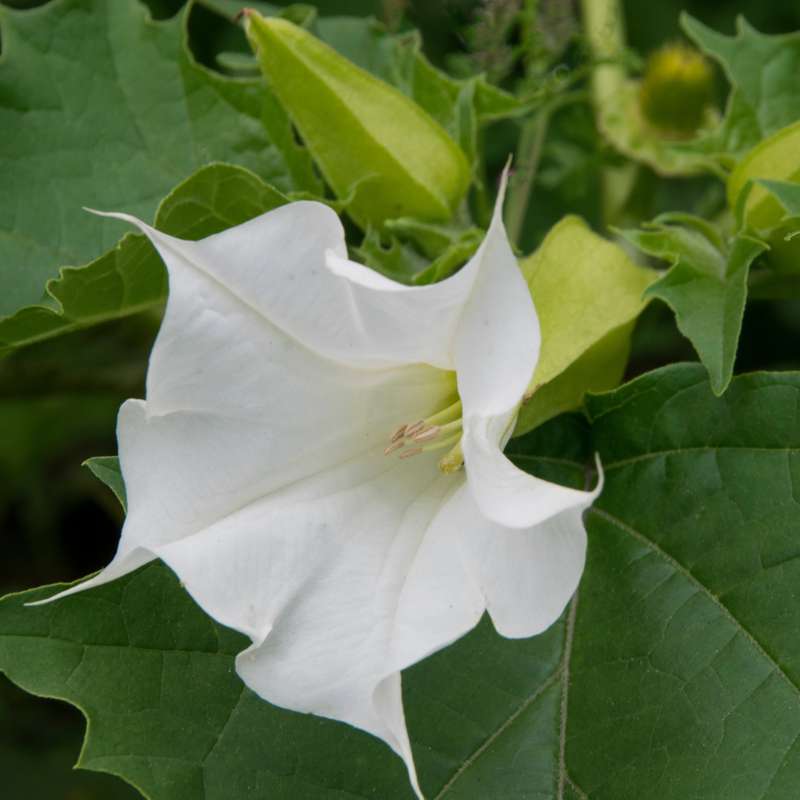 Flower
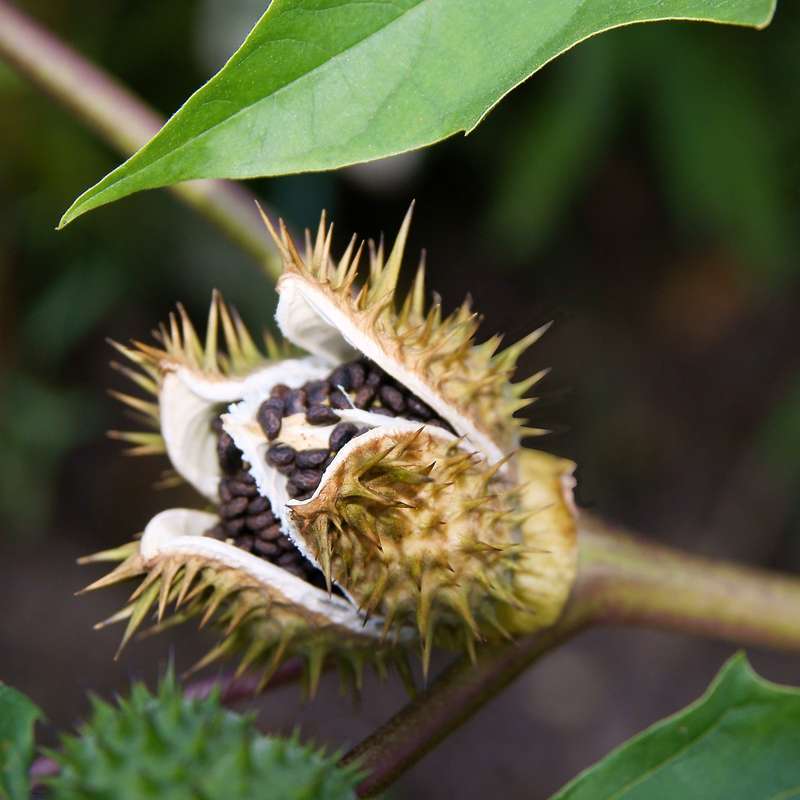 Open seed pod
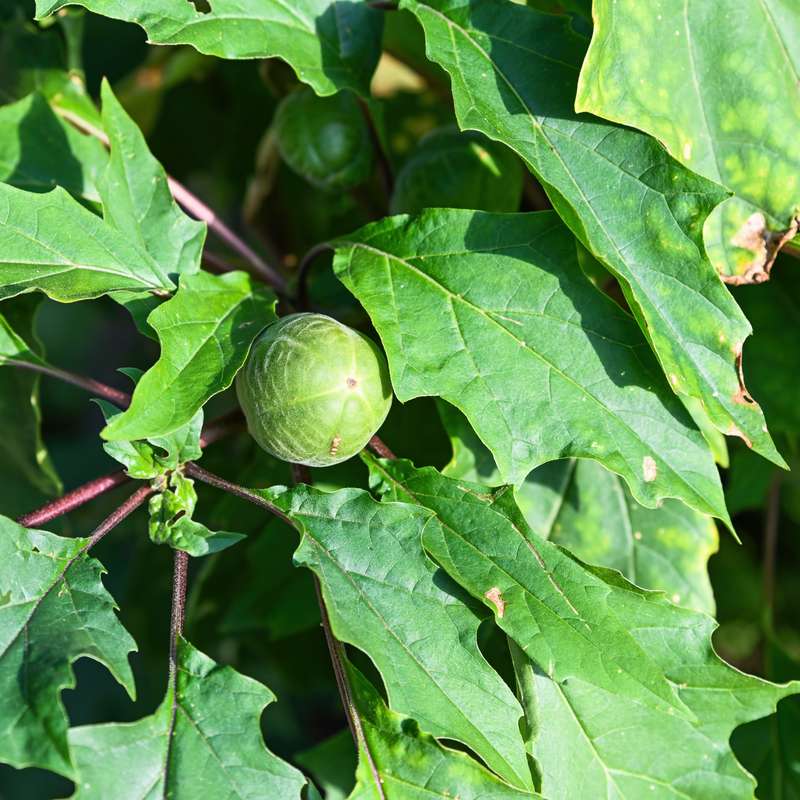 Unripe fruit and leaves
Jimsonweed is identified by the following features: [2][4][5]
- Leaves: Large, alternate, ovate-to-triangular leaves with irregularly toothed margins
- Stems: Sturdy, thick stems that range in color from green to reddish-purple
- Flowers: Showy, trumpet-shaped blossoms (white or purple) that open at night or on overcast days. Individual flowers are short-lived, but the plant blooms continuously throughout the summer
- Seed Pods: Hard, spiny, oval capsules develop after flowering. These prickly pods serve as a key diagnostic feature, growing increasingly prominent as they mature from green to brown before splitting open to release numerous dark seeds
- Scent: The leaves and stems emit a strong, pungent odor when crushed, whereas the flowers possess a sweet, pleasing fragrance
What's your top priority with your horse's health?

What's your top priority with your horse's health?
Toxicology of Jimsonweed
Jimsonweed contains tropane alkaloids, primarily atropine, hyoscyamine, and scopolamine, which are present throughout the plant. The seeds are the most hazardous part of the plant as they contain high levels of toxins. [1][2]
Because of their small size, the seeds easily mix into feed undetected, potentially exposing horses to high concentrations of toxic alkaloids. Alkaloid concentrations vary across plant parts and individual plants. The severity of poisoning does not depend solely on the amount of material consumed. [1][2]
Once ingested, tropane alkaloids interfere with acetylcholine, a neurotransmitter that helps control muscle activity and other body functions. These alkaloids block muscarinic receptors, which normally respond to acetylcholine. [1][6]
This disrupts the parasympathetic nervous system, which helps regulate involuntary functions such as: [1][6]
- Digestion
- Salivation
- Pupil constriction
- Urination
- Heart activity
The resulting effects are collectively known as anticholinergic toxicity. [1][6]
Toxic Effects
In horses, the most severely affected body system following ingestion of jimsonweed is the gastrointestinal tract. Jimsonweed slows intestinal motility, reducing the normal movement of feed and gas through the digestive tract.
This in turn can cause: [1][7][8]
- Decreased or absent gut sounds
- Constipation
- Gas accumulation
- Abdominal distension
In severe cases, intestinal movement may stop altogether, resulting in intestinal atony or paralytic ileus. As the condition progresses, horses may develop gastric dilatation, which can lead to gastric rupture and death. [1][7][8]
Anticholinergic effects are not limited to the gastrointestinal tract. Reduced production of saliva and other mucosal secretions can cause dry oral and nasal mucous membranes.
Tropane alkaloids can also affect the muscles that control pupil size. This can cause enlarged pupils, which may make the horse more sensitive to bright light and interfere with vision. [1][6]
Horses may also develop reduced urination or urinary retention, an increased heart rate, and elevated body temperature. [1][6]
Tropane alkaloids also interfere with muscarinic signaling in the central nervous system, resulting in neurological changes such as: [1][6]
- Agitation
- Hyperactivity
- Incoordination
- Tremors
- In severe cases, seizures
Symptoms of Jimsonweed Poisoning in Horses
Clinical signs of jimsonweed poisoning vary with the amount consumed and the concentration of tropane alkaloids present. While gastrointestinal signs are often the most prominent, multiple body systems may be affected. [1][6]
Possible symptoms of jimsonweed toxicosis in horses include: [1][6][10]
- Reduced appetite or complete refusal of feed
- Colic
- Reduced or absent gut sounds
- Abdominal distension or bloating
- Constipation or failure to pass manure
- Dilated pupils (mydriasis)
- Dry oral and nasal mucous membranes
- Increased heart rate (tachycardia)
- Increased respiratory rate (tachypnea)
- Reduced urination or urinary retention
- Agitation, restlessness or hyperactivity
- Incoordination or staggering
- Muscle tremors
- Elevated body temperature
- Seizures
When to Call the Veterinarian
Owners should seek veterinary assessment if they suspect their horse has eaten jimsonweed, particularly when gastrointestinal or neurological signs are present. Progressive loss of gastrointestinal motility can lead to severe distension, ileus and potentially life-threatening complications. [1][6][10]
Symptoms that require emergency veterinary attention include: [1][6][10]
- Severe or worsening colic
- Marked abdominal distension
- Failure to pass manure
- Seizures
- Collapse
In severe cases, profound gastrointestinal stasis can progress to gastric dilatation and, rarely, gastric rupture. Any suspected contaminated hay, grain or forage should be removed from access while veterinary care is arranged. [6][10]
Exposure Risk Factors
Jimsonweed poisoning in horses is most often associated with accidental contamination of feed rather than consumption of the growing plant.
Important exposure factors include: [1][3][5][6][9]
- Contaminated hay or straw: Dried jimsonweed becomes brittle and can break apart within baled forage, making leaves, stems and seeds difficult to recognize.
- Contaminated grain or feed: Jimsonweed seeds can be accidentally harvested alongside grain and incorporated into feed. Their small size makes contamination difficult to detect, and their high tropane alkaloid content makes seeds a particularly important source of toxicity.
- Contaminated harvested crops: Fresh jimsonweed may also be accidentally incorporated into chopped forage or other harvested crops.
- Poor forage availability: Horses may be more likely to consume normally unpalatable plants when desirable forage is limited.
- Infested turnout or agricultural areas: Jimsonweed readily establishes in disturbed ground. Its presence in areas used by horses or within forage crops increases the likelihood of exposure.
- Seasonal growth: Jimsonweed is a summer annual that emerges during spring and early summer, with seed capsules developing later in the growing season. Mature seed pods present during forage or crop harvest can become an important source of feed contamination.
Drying increases the risk of exposure, as dried plant material is difficult to recognize once mixed into feed and the reduction in the plant’s unpleasant odor makes it more palatable to horses. [1][2]

Diagnosis
Diagnosis of jimsonweed poisoning is based on clinical signs and a history of exposure. Identification of jimsonweed plants, seeds or seed pods in feed or fecal material can provide important supporting evidence.
A veterinarian may use several diagnostic examinations and tests, including: [1]
- Physical examination: Heart rate, respiratory rate, hydration, pupil size, gastrointestinal sounds, urination and manure production are assessed to determine the severity of suspected poisoning.
- Rectal examination: Findings may include gas distension of the cecum or colon, dry mucus-coated feces and a distended bladder.
- Bloodwork: Findings can include neutrophilia and increases in blood glucose, bilirubin and AST, although these changes are not specific to jimsonweed poisoning.
- Urinalysis: Specialized laboratory testing can detect scopolamine and, in some cases, atropine. Atropine may be eliminated more quickly, so failure to detect it does not rule out exposure.
Confirmation of jimsonweed poisoning is not based on a particular test. Veterinarians make a diagnosis when compatible clinical signs occur alongside evidence of exposure and identification of contaminated feed or plant material.
Many of the clinical signs associated with jimsonweed poisoning can also occur with other conditions, which need to be ruled out as part of the diagnostic process.
Treatment & Management
There is currently no antidote for jimsonweed poisoning. Treatment is supportive and focuses on preventing further exposure, maintaining hydration, and managing complications. Horses with severe colic, abdominal distension, ileus or systemic signs may require hospitalization and close monitoring.
Treatment and management may include: [1]
- Removal of the source: The first step in treatment is the prompt removal of contaminated hay, grain, forage or bedding to prevent further exposure.
- Fluid therapy: Intravenous fluids may be administered to maintain hydration, particularly in horses with reduced water intake or impaired gastrointestinal function.
- Temporary feed restriction: The veterinarian may suggest withholding feed until gastrointestinal motility begins to recover.
- Gastric decompression: Nasogastric intubation may be used to relieve accumulated fluid or gas within the stomach and reduce the risk of worsening gastric distension.
- Pain management: Analgesic and anti-inflammatory medications can be administered to reduce abdominal pain.
- Management of neurological signs: Sedation or anticonvulsant therapy may be required in horses exhibiting severe agitation, tremors or seizures.
- Gastrointestinal decontamination: Activated charcoal may be considered when exposure is known to be recent, although severe gastrointestinal stasis or ileus may limit its use.
- Close gastrointestinal monitoring: Gut sounds, abdominal distension, manure production and gastric reflux should be monitored closely, as severe intestinal atony can progress to serious gastrointestinal complications.
Prognosis
The prognosis for jimsonweed poisoning in horses varies widely and depends on: [1]
- Quantity ingested
- Severity of gastrointestinal and neurological complications
- Prompt veterinary intervention
Horses with mild to moderate poisoning generally have a favorable prognosis when the source is removed and supportive care is provided quickly. In these cases, clinical signs often improve over several days, although dilated pupils may persist after other abnormalities have resolved. [1]
Horses that develop severe complications carry a more guarded prognosis. Complications that increase the risk of life-threatening gastric rupture include: [1][7]
- Intestinal stasis
- Persistent ileus
- Marked abdominal distension
- Gastric dilatation
Horses that recover gastrointestinal function are generally expected to make a full recovery without lasting adverse effects. [1][7]
Prevention
With no specific antidote available, prevention remains the most effective way to reduce the risk of jimsonweed poisoning. Consistent pasture, forage and feed management can significantly limit exposure, although the risk cannot be eliminated completely.
Prevention measures may include: [1][4][5]
- Control of jimsonweed in pastures and turnout areas: Jimsonweed should be removed whenever it is identified in horse-accessible areas. Control is particularly important before plants mature and produce seed, as this limits both exposure to the highly toxic seeds and further spread of the weed.
- Maintain adequate forage availability: Horses are less likely to consume jimsonweed and other normally unpalatable toxic plants when sufficient good-quality forage is consistently available. Particular attention is warranted in overgrazed paddocks or other areas where desirable forage is limited.
- Inspect hay and harvested forage: Harvested, purchased and baled forage should be checked for seed capsules, seeds and other recognizable jimsonweed material. Inspection cannot identify every instance of contamination, particularly when dried plant material has fragmented within hay.
- Check grain and feed ingredients: The small size of jimsonweed seeds allows them to become mixed into harvested grain easily. Reliable sourcing from manufacturers with good quality control reduces the risk of contaminated feed reaching horses.
- Monitor forage crops before harvest: Fields intended for hay, silage or other horse feed should be inspected for jimsonweed before cutting or harvesting. Removing plants at this stage helps prevent fresh or dried material from becoming incorporated into the finished feed.
- Remove contaminated feed promptly: Hay, grain, straw, bedding or other feed material should be removed from access as soon as jimsonweed contamination is identified or strongly suspected.
- Follow herbicide restrictions carefully: Where chemical weed control is used, product directions and applicable grazing or harvest restrictions should be followed.
- Educate staff and caretakers: People involved in pasture management, harvesting, feed preparation and horse care should be familiar with the appearance of jimsonweed and the risks associated with contaminated forage and feed.
Frequently Asked Questions
Here are some frequently asked questions about jimsonweed poisoning in horses:
Jimsonweed poisoning in horses is a potentially life-threatening toxicosis caused by ingesting Datura stramonium. The plant contains atropine, hyoscyamine, scopolamine, and other tropane alkaloids that disrupt normal nerve signaling. Poisoning can severely reduce gastrointestinal motility and may also affect the eyes, heart, urinary system, and central nervous system. [1][2]
Jimsonweed can be identified as a fast-growing annual plant with large, irregularly toothed leaves, thick green or reddish-purple stems, and white or purple trumpet-shaped flowers. It typically reaches 3 to 5 ft (0.9 to 1.5 m) in height and often grows in disturbed soil. Its most distinctive feature is a hard, oval seed capsule covered in sharp spines, which turns from green to brown before splitting open. The leaves and stems also produce a strong, unpleasant odor when crushed. [2][4][5]
All parts of jimsonweed are poisonous to horses because tropane alkaloids occur throughout the plant. The seeds are considered the most hazardous part because they contain high concentrations of these toxins and can easily become mixed into grain or forage. Alkaloid concentrations vary between plants and plant parts, so the severity of an exposure cannot be predicted from plant quantity alone. [1][2]
Horses usually become exposed to jimsonweed through contaminated hay, grain, straw, chopped forage, or bedding. Most horses avoid the growing plant because it has a bitter taste and unpleasant odor, but drying makes the material harder to recognize and may reduce its unpalatability. Horses may also eat fresh jimsonweed when it is accidentally incorporated into harvested forage or when desirable forage is scarce. [1][2][3]
Symptoms of jimsonweed poisoning in horses commonly include reduced appetite, colic, decreased or absent gut sounds, constipation, and abdominal distension. Other signs can include dilated pupils, dry oral and nasal tissues, an increased heart rate, reduced urination, agitation, incoordination, tremors, and an elevated body temperature. Severely affected horses may stop passing manure, experience seizures, collapse, or develop dangerous gastrointestinal complications. [1][6][10]
Jimsonweed poisoning causes colic and intestinal stasis because its tropane alkaloids block receptors that normally respond to the neurotransmitter acetylcholine. This interference disrupts the parasympathetic nervous system and slows the muscle activity that moves material through the digestive tract. Gas and intestinal contents can then accumulate, causing constipation, pain, and abdominal distension. In severe cases, intestinal movement may stop completely and lead to gastric dilatation or fatal gastric rupture. [1][6][7][8]
A veterinarian should be called promptly whenever jimsonweed exposure is suspected, especially if a horse shows gastrointestinal or neurological signs. Severe or worsening colic, marked abdominal distension, failure to pass manure, seizures, or collapse require emergency veterinary attention. Rapid assessment is important because progressive loss of gastrointestinal motility can lead to intestinal stasis, gastric dilatation, and other life-threatening complications. [1][6][10]
If jimsonweed is found or strongly suspected in a horse's feed, immediately prevent all horses from accessing the affected hay, grain, forage, straw, or bedding. Contact a veterinarian if any horse may have consumed the contaminated material, even if obvious symptoms have not yet developed. Preserve a sample of the suspected feed or plant material because identifying seeds, pods, or other plant parts may support the diagnosis. Do not return the affected material to use unless its safety has been established.
Jimsonweed poisoning is diagnosed by evaluating the horse's clinical signs together with its possible exposure to the plant. A veterinarian may assess heart and respiratory rates, pupil size, gut sounds, hydration, urination, and manure production, and may also perform rectal, blood, or urine examinations. Specialized urine testing can sometimes detect scopolamine or atropine, while plant material in feed or feces can provide important supporting evidence. No single finding confirms poisoning, so other conditions that cause similar signs may also need to be ruled out. [1]
There is no specific antidote for jimsonweed poisoning in horses. Veterinary treatment is supportive and focuses on stopping further exposure, maintaining hydration, relieving pain, and managing gastrointestinal or neurological complications. Care may include intravenous fluids, gastric decompression, temporary feed restriction, sedation, anticonvulsant medication, or close monitoring of gastrointestinal function. Activated charcoal may be considered after a recent exposure, although severe intestinal stasis can limit its use. [1]
A horse can recover from jimsonweed poisoning, particularly when exposure is recognized early and supportive veterinary care is provided promptly. Horses with mild to moderate poisoning generally have a favorable prognosis, and signs often improve over several days. Dilated pupils may persist after other abnormalities have resolved, but horses that regain normal gastrointestinal function are generally expected to recover without lasting adverse effects. Severe intestinal stasis, persistent ileus, marked abdominal distension, or gastric dilatation results in a more guarded prognosis. [1][7]
Jimsonweed poisoning in horses can be prevented by controlling the plant in turnout areas, maintaining adequate good-quality forage, and inspecting feed sources for contamination. Plants should be removed before they produce mature seed capsules, while fields intended for hay or other horse feed should be checked before harvest. Horse owners should obtain hay and grain from reliable sources, monitor overgrazed or disturbed areas, and remove any suspicious feed promptly. Staff and caretakers should also learn to recognize jimsonweed plants, seed pods, and seeds. [1][4][5]
Dried jimsonweed in hay can still poison a horse because drying does not make its tropane alkaloids harmless. Once dried, the plant becomes brittle, loses some of its unpleasant odor, and may break into pieces that are difficult to distinguish from forage. Spiny seed capsules and small dark seeds are especially concerning because the seeds contain high toxin concentrations. Careful forage inspection can reduce risk, but fragmented contamination may not always be visible. [1][2]
Summary
Jimsonweed poisoning is a potentially life-threatening toxicosis that affects gastrointestinal motility and neurological function in horses. Prompt veterinary care is essential when exposure is suspected.
- Jimsonweed contains atropine, hyoscyamine, and scopolamine, with the highest toxin concentrations in the seeds
- Horses are most often exposed through contaminated hay, grain, or chopped forage
- Signs can include colic, intestinal stasis, abdominal distension, dilated pupils, agitation, incoordination, and seizures
- Diagnosis relies on clinical signs, exposure history, and identification of jimsonweed in feed or gastrointestinal material
- Supportive treatment may include fluids, gastric decompression, pain control, feed restriction, and neurological management
- Prevention involves controlling jimsonweed and inspecting forage, hay, grain, and other feed sources
References
- Hovda. L. R. et al. Eds. Blackwell's Five-Minute Veterinary Consult Clinical Companion: Equine Toxicology. Wiley-Blackwell. 2022.
- Burrows. G. E. and Tyrl. R. J. Toxic Plants of North America. 2nd ed. Wiley-Blackwell. 2013.
- Gerber. R. et al. Confirmed Datura Poisoning in a Horse Most Probably Due to D. ferox in Contaminated Tef Hay. Journal of the South African Veterinary Association. 2006.
- Guide to Poisonous Plants. Colorado State University.
- Guthrie. T. Jimsonweed - a Poisonous Plant That May Be Found in or around Your Horse Pasture. Michigan State University Extension. 2014.
- Binev. R. et al. Clinical and Pathological Studies on Intoxication in Horses from Freshly Cut Jimson Weed (Datura stramonium)-Contaminated Maize Intended for Ensiling. Journal of the South African Veterinary Association. 2006.
- Schulman. M. L. and Bolton. L. A. Datura Seed Intoxication in Two Horses. Journal of the South African Veterinary Association. 1998.
- Soler-Rodríguez. F. et al. Datura stramonium Poisoning in Horses: A Risk Factor for Colic. Veterinary Record. 2006.
- Williams. S. and Scott. P. The Toxicity of Datura stramonium (Thorn Apple) to Horses. New Zealand Veterinary Journal. 1984.
- Gupta. R. C. Ed. Veterinary Toxicology: Basic and Clinical Principles. 2nd ed. Academic Press. 2012.