English

Amikacin for horses is an antibiotic used to treat serious bacterial infections, particularly those caused by aerobic gram-negative bacteria.
In equine practice, amikacin is used for conditions such as neonatal sepsis and pneumonia, septic joints, localized limb infections, and uterine infections. It is also considered in cases where infection is resistant to gentamicin, which highlights the importance of veterinary oversight when selecting antibiotics.
Amikacin can cause serious side effects, including kidney damage, inner-ear toxicity, and neuromuscular blockade. Careful dosing, hydration, monitoring, and veterinary guidance are essential, particularly during systemic treatment.
Most uses of amikacin in horses are extra-label, although intrauterine formulations are approved for certain mares in Canada and the United States. Keep reading to learn how amikacin works, when veterinarians use it, how it is administered, and what owners should know about safety, resistance, and competition rules.
Amikacin for Horses
Amikacin is an aminoglycoside antibiotic used in horses primarily for serious bacterial infections, especially those caused by aerobic gram-negative bacteria. Aminoglycosides are bactericidal antibiotics, meaning they kill susceptible bacteria when adequate drug concentrations are achieved. [1]
Amikacin may be given systemically or delivered directly to an infected area. Veterinarians use it to manage infections such as: [1][2]
- Septicemia (infection in the bloodstream)
- Pneumonia in foals
- Septic joints
- Localized limb infections
- Uterine infections
Its activity against some gentamicin-resistant bacteria makes it valuable for selected serious infections. [1][2]
Like other aminoglycosides, amikacin can damage the kidneys and inner ear and interfere with nerve-to-muscle signaling. Careful drug selection, dosing, and monitoring help reduce these risks and support responsible antibiotic use. [1][2][3]
Amikacin has concentration-dependent activity, which means the drug must reach a particular concentration in the tissues to cause bacterial death. This differs from time-dependent antibiotics, which require a particular concentration over a set period of time.
Amikacin also continues to suppress bacterial growth for a period after its concentration falls below the minimum inhibitory concentration, a property known as the post-antibiotic effect. These features support once-daily systemic dosing in many horses. [1][3]
Available Forms
Amikacin is approved for intrauterine use in horses. [2] All other use is off-label, also known as extra-label. Off-label use refers to circumstances where a drug is prescribed for a different dosage, route, species, or condition than what is listed on the approved label. This practice is permitted under veterinary prescribing regulations and is based on the veterinarian’s professional discretion and clinical experience.
Amikacin is most commonly supplied as amikacin sulfate in injectable and intrauterine formulations. Commercial preparations include injectable solutions containing 50 mg/mL or 250 mg/mL, as well as a 250 mg/mL intrauterine formulation. A 1% topical preparation is also used in equine practice. [2][4]
Veterinary brand names include Amiglyde-V® and AmiMax™ E Solution, both formulated for intrauterine use in mares. Most systemic and other localized uses of amikacin in horses rely on injectable or compounded preparations. [2][8][9]
What's your top priority with your horse's health?

What's your top priority with your horse's health?
Drug Class: Aminoglycoside Antibiotics
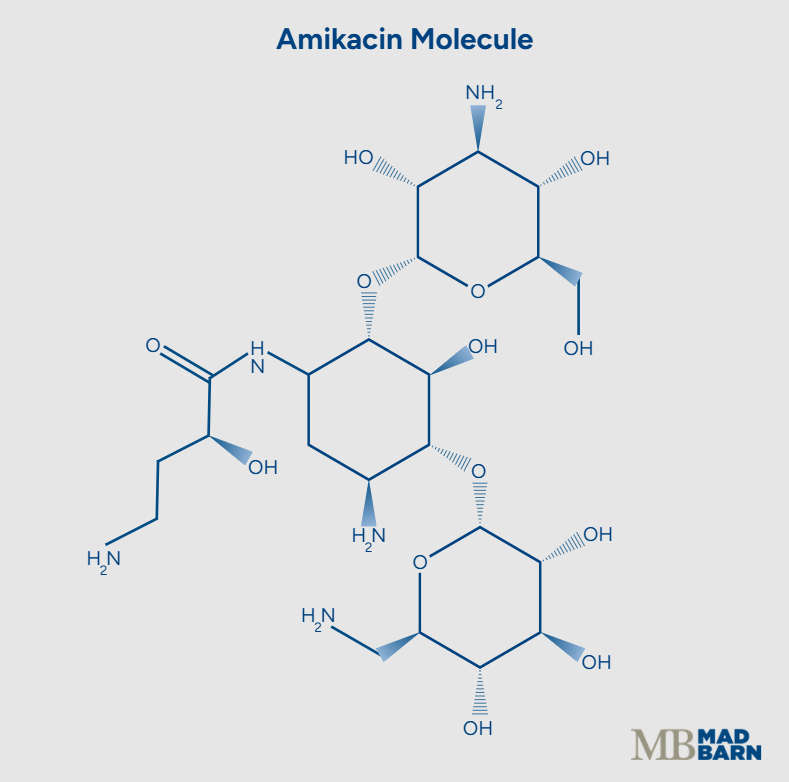
Amikacin is a semisynthetic aminoglycoside derived from kanamycin. It is active primarily against susceptible aerobic gram-negative bacteria and some aerobic gram-positive bacteria, particularly Staphylococcus species. [1][2]
These water-soluble drugs do not readily cross cell membranes and remain mainly in the fluid outside cells. They are poorly absorbed from a healthy gastrointestinal tract and are eliminated primarily through the kidneys. [1][3]
The aminoglycoside class also includes: [1]
- Gentamicin
- Neomycin
- Streptomycin
- Dihydrostreptomycin
- Kanamycin
- Tobramycin
Of these, amikacin and gentamicin are most commonly administered systemically to horses. Older-generation aminoglycosides are used less often because of their toxicity or limited antibacterial activity. [1]
Mechanism of Action
Amikacin kills susceptible bacteria by disrupting protein production. The drug binds to bacterial ribosomes, which interferes with protein synthesis within the cell.
This disruption leads to cell membrane damage, allowing more amikacin to enter and further inhibit protein production. With sufficient interruption of protein synthesis, affected bacteria cannot sustain their life cycle. [1]
The drug relies on oxygen-dependent transport to enter bacteria. It does not work well against bacteria that grow without oxygen and may be less effective in infected sites with: [1][3]
- Low oxygen
- High acidity (low pH)
- Necrosis (sites of tissue death)
- High concentration of dissolved particles
- High calcium concentration
- High magnesium concentration
Uses in Horses
Amikacin is generally reserved for serious infections caused by bacteria known or expected to be susceptible.
Culture and susceptibility testing helps a veterinarian determine whether the drug is likely to work, although treatment may begin before results are available when immediate therapy is necessary. [1][2]
Antibiotic Spectrum
Amikacin has the broadest antibacterial spectrum among the aminoglycosides because it resists many of the bacterial enzymes that inactivate other drugs in this class.
It is primarily effective against aerobic gram-negative bacteria but also has activity against some aerobic gram-positive bacteria, particularly susceptible Staphylococcus species. [2][3]
Susceptible bacteria may include: [2]
- Escherichia coli
- Klebsiella spp.
- Proteus spp.
- Pseudomonas spp.
- Salmonella spp.
- Enterobacter spp.
- Serratia spp.
- Shigella spp.
- Mycoplasma spp.
- Staphylococcus spp.
Some strains of Pseudomonas aeruginosa, Proteus, and Serratia that are resistant to gentamicin remain susceptible to amikacin.
The drug has limited activity against many gram-positive bacteria, and Streptococcus species are often poorly susceptible or resistant. Anaerobic bacteria are resistant because aminoglycosides require oxygen-dependent transport to enter bacterial cells. [2][3][4]
On-Label Uses
In the United States and Canada, amikacin sulfate is approved for intrauterine use in mares not intended for food. [2][8][9]
Intrauterine amikacin may be prescribed for susceptible bacterial infections associated with endometritis or metritis. [1][2]
Off-Label Uses
Most systemic and localized uses of amikacin in horses are extra-label. Extra-label use means using an approved drug in a way that differs from its label, such as for another dose, route, species, or indication, under veterinary direction. [2][4] This practice is permitted under veterinary prescribing regulations.
Neonatal Sepsis & Pneumonia
Amikacin is commonly used in foals with sepsis because gram-negative enteric bacteria such as E. coli, Enterobacter, and Klebsiella frequently cause neonatal infections. It is often combined with a beta-lactam antibiotic, particularly ampicillin, to broaden antimicrobial coverage. [1]
Amikacin may also be used for bacterial pneumonia in foals, including infections associated with septicemia. [1]
Septic Arthritis, Osteomyelitis & Localized Limb Infections
Amikacin may be given systemically for septic arthritis and osteomyelitis, which refer to infection of bone. In these cases, it is administered directly to infected tissues through: [1][4]
- Regional limb perfusion
- Intra-articular injection
- Antibiotic-impregnated polymethylmethacrylate beads
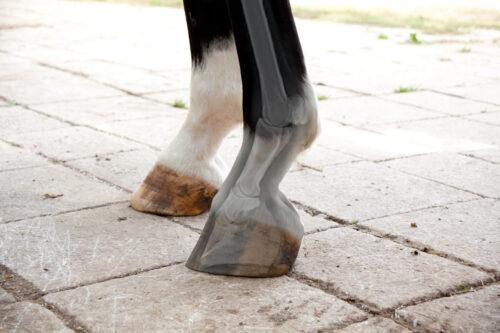
Intravenous regional limb perfusion uses a tourniquet to temporarily isolate part of a limb so a high antibiotic concentration can reach the affected area. The technique can produce high concentrations in joint fluid, bone, and soft tissue, including tissue with poor blood supply or chronic infection. [5]
Regional limb perfusion is usually performed in horses under standing sedation. Local anesthesia may also be used to improve comfort during the procedure without reducing the concentration of amikacin that reaches the joint. [6]
Intra-Articular Treatment
Amikacin has been widely used as an additional treatment for septic joints. This route is extra-label, and research in healthy, non-inflamed equine joints indicates that amikacin can damage cartilage and other joint cells.
Higher doses produced greater inflammatory and cartilage effects in the study model, so veterinarians must weigh local antibacterial goals against the risk of tissue injury. [7]
Ophthalmic Treatment
A compounded 1% amikacin ophthalmic solution may be used for susceptible bacterial eye infections, primarily those caused by gram-negative bacteria.
When an appropriate commercial product is unavailable, sterility, pH, and osmolarity are important considerations for compounded ophthalmic preparations. Osmolarity refers to the concentration of dissolved particles in a solution. [1]
Administration Routes
Amikacin may be administered intravenously for systemic infections or delivered locally by: [1][2][4]
- Intrauterine infusion
- Regional limb perfusion
- Intra-articular injection
- Ophthalmic application
- Antibiotic-impregnated beads
The appropriate route depends on the infection site, the horse’s condition, culture results, and the treatment plan.
Dosage
Dosage depends on the horse’s age, infection, route of administration, kidney function, culture results, and whether amikacin is being used systemically or locally. Foals have a larger proportion of body water outside their cells than adult horses, which changes how amikacin is distributed. Their doses are typically higher, although age, hydration, kidney function, and drug concentrations can affect the dosing interval and treatment plan. [1]
Storage
Amikacin sulfate injection should be stored at room temperature, approximately 15 to 30 °C (59 to 86 °F). Avoid freezing and temperatures above 40 °C (104 °F). Prepared amikacin solutions may gradually become pale yellow without losing potency. [2]
Safety Warnings & Precautions
Adequate hydration and blood flow to the kidneys are important during systemic amikacin treatment. Treatment duration should be limited to what is clinically necessary, and drugs that can damage the kidneys should be avoided or used cautiously. [3][4]
The risk of neuromuscular blockade can increase when aminoglycosides are given with general anesthetics or neuromuscular blocking drugs. Amikacin administration under general anesthesia should be avoided when possible. [1]
Amikacin can cross the placenta. When aminoglycoside treatment is necessary during pregnancy, the veterinarian must weigh the potential benefits against fetal risks. [2]
Monitoring
During amikacin treatment, the veterinarian may monitor the horse’s: [1][2]
- Hydration
- Kidney function
- Serum amikacin concentrations
- Response to treatment
These findings help determine whether the drug should be continued, adjusted, or discontinued. [1][2]
Antibiotic Resistance
Bacteria can resist aminoglycosides through reduced drug uptake, changes that interfere with ribosomal binding, and enzymes that modify or inactivate the antibiotic. Amikacin is less vulnerable to many of these bacterial enzymes than other aminoglycosides, which is why some gentamicin-resistant bacteria remain susceptible. [1][3]
Resistance still limits treatment options. Veterinarians use culture and susceptibility results, appropriate dosing, targeted treatment duration, and clinical monitoring to reduce unnecessary exposure while treating the infection effectively.
Contraindications
Contraindications are circumstances in which a drug should be avoided or used with particular caution.
Amikacin and other aminoglycosides should not be used in animals with a known hypersensitivity to this drug class. [2]
Kidney disease is a major concern because amikacin is filtered from the blood by the kidneys and can accumulate when kidney function is impaired. Aminoglycosides should be avoided when possible in azotemic foals, which have elevated waste products in the blood because of reduced kidney function.
If amikacin is necessary in a horse with impaired kidney function, intensive monitoring and a longer interval between doses may be required. [1][2]
Additional risk factors for toxicity include: [1]
- Dehydration
- Sepsis
- Reduced blood flow to the kidneys
- Prolonged treatment
- Metabolic or electrolyte abnormalities
- Concurrent use of other drugs that can damage the kidneys

Side Effects
Possible side effects of aminoglycosides in horses include: [1][2][3]
- Kidney toxicity: Renal tubular injury that can progress to acute kidney failure
- Ototoxicity: Inner-ear damage affecting hearing or balance that may be irreversible
- Neuromuscular blockade: A rare disruption of communication between nerves and muscles that can cause severe weakness or difficulty breathing
- Injection-site reactions: Pain or inflammation, particularly after intramuscular administration
- Hypersensitivity reactions: An abnormal immune response to the medication
Promptly alert your veterinarian if a horse receiving amikacin develops any of the following signs:
- Appetite loss
- Dullness
- Decreased or otherwise abnormal urine output
- Signs of dehydration
- Muscle weakness
- Incoordination or ataxia
- Head tilt
- Balance or hearing concerns
- Labored breathing
- Swelling at an injection site
Acute Toxicity (Overdose)
Excessive amikacin exposure increases the risk of kidney toxicity, ototoxicity, and neuromuscular blockade. Severe overdose may require dialysis to remove the drug from the blood.
Hemodialysis can lower drug concentrations effectively but is rarely practical in veterinary patients. Peritoneal dialysis may also reduce concentrations but is less effective. [2]
Drug Interactions
Beta-lactam antibiotics can have a beneficial synergistic effect with amikacin, but these drugs can also inactivate aminoglycosides when physically mixed together before administration. They generally should not be combined in the same syringe or intravenous fluid unless compatibility and administration conditions have been confirmed. [1][2]
Drugs that may increase the risk of amikacin toxicity include: [2][3]
- Non-steroidal anti-inflammatory drugs (NSAIDs) and other medications that can harm the kidneys
- Loop or osmotic diuretics, which may increase the risk of kidney damage or hearing and balance problems
- General anesthetics and neuromuscular blocking drugs, which may worsen muscle weakness or breathing difficulty
- Other antimicrobial drugs that can damage the kidneys
Regulatory Status and Legal Considerations
Amikacin sulfate is approved in the United States and Canada for intrauterine use in mares not intended for food. Most other systemic and localized uses in horses are extra-label and require veterinary direction. [2][4][8][9]
Extra-label use allows veterinarians to use an approved drug in a manner that differs from the product label when medically appropriate and permitted by applicable regulations. This can include changes in the dose, route of administration, treatment indication, or patient population.
Because amikacin is an important antimicrobial, veterinary oversight also helps ensure that treatment is appropriate for the infection and supports responsible antibiotic use.
Status in Competition
Amikacin is not listed as a banned substance or controlled medication under the Fédération Équestre Internationale (FEI) Prohibited Substances List. Always check the current rules for your governing organization before starting treatment for a competition horse. [10]
Horses receiving antibiotic treatment should be clinically fit to compete. Medication decisions close to an event should account for the horse’s health and welfare, including whether treatment could mask signs of an underlying condition.
The FEI does not publish a detection time for amikacin. A detection time is an approximate period during which a drug or its metabolites may remain detectable. The treating veterinarian determines an appropriate withdrawal time for the individual horse, treatment protocol, and route of administration, generally with an additional safety margin. [11]
Frequently Asked Questions
Here are some frequently asked questions about amikacin use in horses:
Amikacin is used in horses to treat serious bacterial infections, particularly those caused by susceptible aerobic gram-negative bacteria. Veterinarians may use it for neonatal sepsis, pneumonia, septic arthritis, osteomyelitis, uterine infections, and localized limb infections. It may be administered systemically or delivered directly to the infected area, depending on the location and severity of the infection.
Amikacin works by disrupting protein production in susceptible bacteria. It binds to the 30S portion of the bacterial ribosome, causing the cell to produce abnormal proteins that damage its membrane. Amikacin is bactericidal, meaning it kills susceptible bacteria when an adequate concentration reaches the infection.
Amikacin primarily treats susceptible aerobic gram-negative bacteria, including E. coli, Klebsiella, Proteus, Pseudomonas, Enterobacter, and Serratia species. It can also act against some aerobic gram-positive bacteria, particularly susceptible Staphylococcus species. It has limited activity against many other gram-positive bacteria, and Streptococcus species are often poorly susceptible or resistant.
Amikacin does not effectively treat anaerobic bacteria because these organisms lack the oxygen-dependent process needed to take up the drug. Its activity can also be reduced in acidic, oxygen-poor areas containing pus or dead tissue, such as the inside of an abscess. These limitations may require drainage, removal of damaged tissue, or selection of a different antibiotic under veterinary guidance.
A veterinarian may choose amikacin instead of gentamicin when the suspected or identified bacteria are resistant to gentamicin but remain susceptible to amikacin. Amikacin resists many of the bacterial enzymes that inactivate other aminoglycoside antibiotics. Culture and susceptibility results, infection severity, kidney function, and previous antimicrobial exposure all help guide the choice.
Culture and susceptibility tests help determine whether the bacteria causing an infection are likely to respond to amikacin. This information allows the veterinarian to select an effective antibiotic while limiting unnecessary antimicrobial use and resistance. Treatment may begin before results are available when an infection is severe, but the plan can be adjusted once testing identifies the organism and its susceptibility.
Amikacin can be given intravenously for systemic infections or delivered locally to an infected area. Local administration methods include regional limb perfusion, intra-articular injection, intrauterine infusion, compounded ophthalmic preparations, and antibiotic-impregnated beads. The appropriate route depends on the type, location, and severity of the infection and must be selected by a veterinarian.
The correct amikacin dosage depends on the horse's age, weight, kidney function, hydration, infection, administration route, and culture results. Foals often require a higher dose per kilogram than adult horses because the drug is distributed differently in their larger extracellular fluid volume. A veterinarian may also adjust the interval between doses based on kidney function and measured blood concentrations.
Amikacin is often given once daily because its bacterial killing improves as the peak drug concentration rises relative to the organism's minimum inhibitory concentration. It also has a post-antibiotic effect, allowing it to suppress bacterial growth after blood concentrations fall below that level. The final dosing schedule still depends on the individual horse, infection, kidney function, and route of administration.
Amikacin can be used in foals with septicemia or bacterial pneumonia, particularly when gram-negative enteric bacteria are suspected. It is often combined with a beta-lactam antibiotic such as ampicillin to provide broader bacterial coverage. Septic foals require close veterinary monitoring because sepsis, dehydration, and impaired kidney function can increase the risk of toxicity.
Amikacin can be used as part of the treatment for septic joints in horses. It may be administered systemically, injected into the affected joint, or delivered by regional limb perfusion to achieve high concentrations near the infection. Intra-articular use is extra-label, and higher doses may damage cartilage and other joint cells, so treatment requires careful veterinary selection and monitoring.
Regional limb perfusion with amikacin is a localized treatment that uses a tourniquet to temporarily isolate part of a horse's limb. Amikacin is injected into a vein within the isolated region, allowing a high concentration to reach nearby joints, bone, and soft tissue. The procedure can often be performed in a standing, sedated horse and may be used for serious or difficult-to-reach limb infections.
The main side effect of amikacin in horses is kidney toxicity, which can progress to acute kidney failure in severe cases. Other potential adverse effects include irreversible hearing or balance damage, rare neuromuscular blockade, injection-site reactions, and hypersensitivity. The risk increases with excessive exposure, prolonged treatment, dehydration, impaired kidney function, or concurrent use of other potentially toxic drugs.
Signs of amikacin toxicity that require veterinary attention include marked changes in urination, new balance or hearing abnormalities, severe weakness, collapse, and difficulty breathing. Unexpected pain or swelling after administration, worsening infection, or failure to improve should also be reported promptly. A suspected overdose, collapse, severe weakness, or breathing difficulty is an emergency.
Amikacin requires kidney monitoring because it is eliminated primarily through the kidneys and can injure renal tubular cells. Dehydration, sepsis, poor kidney blood flow, existing kidney impairment, and prolonged treatment can increase this risk. A veterinarian may monitor hydration, kidney values, urinalysis, urine output, and blood amikacin concentrations to determine whether treatment should continue or be adjusted.
Amikacin is generally avoided when possible in horses with kidney disease because reduced kidney function can cause the drug to accumulate and increase toxicity. It is a particular concern in azotemic foals with elevated waste products in their blood. If amikacin is necessary, the horse may require intensive monitoring and longer intervals between doses.
Drugs that can interact with amikacin include NSAIDs, certain diuretics, other kidney-damaging antimicrobials, general anesthetics, and neuromuscular blocking drugs. These combinations may increase the risk of kidney injury, hearing or balance damage, muscle weakness, or breathing difficulty. Beta-lactam antibiotics may improve antibacterial coverage, but they can physically inactivate aminoglycosides if mixed in the same syringe or IV fluid under incompatible conditions.
Amikacin may be used in a pregnant mare only when a veterinarian determines that the expected benefits justify the potential risks. Aminoglycosides can cross the placenta, creating possible fetal safety concerns. The infection's severity, available alternatives, treatment route, and the mare's overall condition should be considered before treatment.
Most systemic and localized uses of amikacin in horses are extra-label, meaning the drug is used in a way that differs from its approved labeling. In the United States and Canada, amikacin sulfate is approved for intrauterine use in mares not intended for food. Other routes and indications require veterinary direction and must comply with applicable prescribing regulations.
A horse receiving amikacin should compete only if it is clinically healthy and fit for competition. Amikacin is not listed as a banned substance or controlled medication under the 2026 FEI rules, but the FEI does not provide a detection time for it. The treating veterinarian must determine an appropriate withdrawal period based on the horse, administration route, treatment protocol, and relevant governing-body rules.
Summary
Amikacin is an aminoglycoside antibiotic used to treat serious bacterial infections in horses, particularly infections caused by susceptible aerobic gram-negative bacteria. Its potential for kidney, inner-ear, and neuromuscular toxicity makes veterinary oversight and monitoring essential.
- Common equine uses include neonatal sepsis, pneumonia, septic arthritis, osteomyelitis, uterine infections, and other localized bacterial infections
- Amikacin may be administered intravenously or locally by regional limb perfusion, intra-articular injection, uterine infusion, ophthalmic application, or antibiotic-impregnated beads
- Culture and susceptibility testing helps confirm whether the infecting bacteria are likely to respond to amikacin
- Kidney toxicity is the primary safety concern, so hydration, kidney function, urine output, and blood drug concentrations may require monitoring
- Most equine uses are extra-label, and owners should follow the veterinarian's dosing, monitoring, and treatment instructions exactly
References
- Cole. C. et al. Eds. Equine Pharmacology. Wiley-Blackwell. 2014.
- Budde. J. A. and McCluskey. D. M. Plumb's Veterinary Drug Handbook. 10th ed. Wiley-Blackwell. 2023.
- Mercer. M. A. Aminoglycosides Use in Animals. Merck Veterinary Manual. 2026.
- OSU VMC Antimicrobial Use Guidelines. The Ohio State University. 2018.
- Cimetti. L. J. et al. How to Perform Intravenous Regional Limb Perfusion Using Amikacin and DMSO. American Association of Equine Practitioners. 2004.
- Mahne. A. T. et al. Clinical and Pharmacokinetic Effects of Regional or General Anaesthesia on Intravenous Regional Limb Perfusion with Amikacin in Horses. Equine Veterinary Journal. 2014.
- Pezzanite. L. et al. Evaluation of Intra-Articular Amikacin Administration in an Equine Non-inflammatory Joint Model to Identify Effective Bactericidal Concentrations While Minimizing Cytotoxicity. Frontiers in Veterinary Science. 2021.
- Animal Drugs @ FDA. U.S. Food and Drug Administration. n.d.
- Drug Product Database Online Query. Government of Canada. 2019.
- 2026 Equine Prohibited Substances List. Fédération Équestre Internationale. 2026.
- FEI List of Detection Times. Fédération Équestre Internationale. 2024.