English
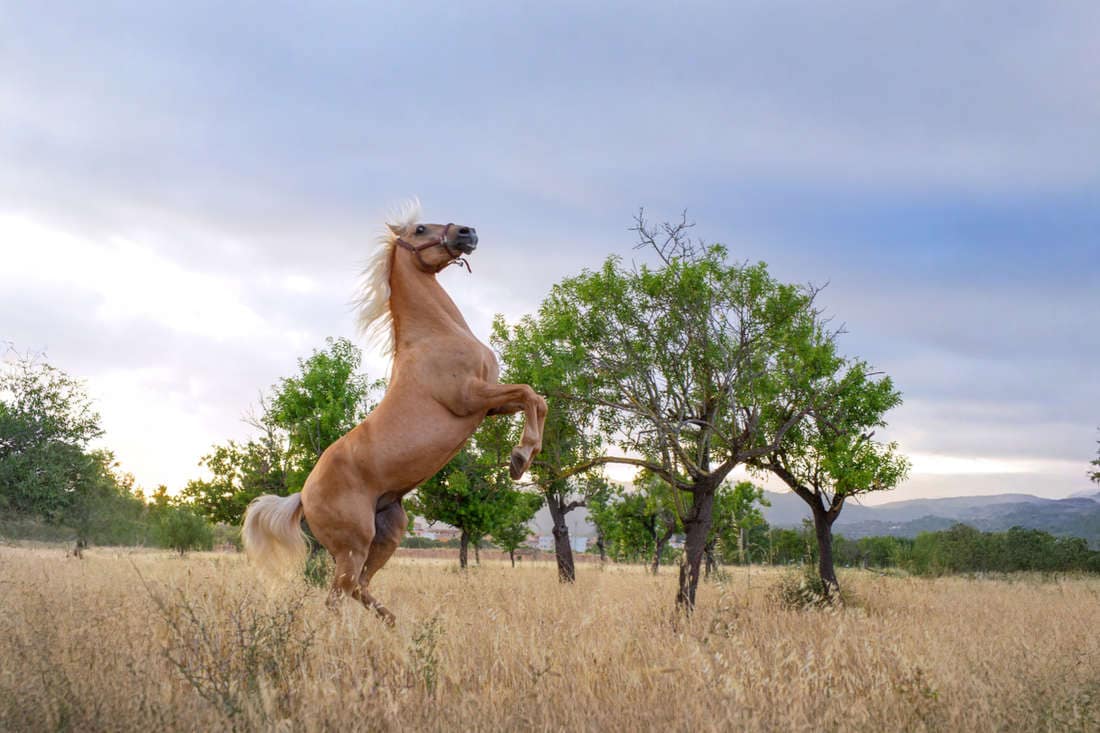
Rearing in horses is one of the most dangerous equine behaviors that can occur during handling or riding. When a horse lifts their front legs off the ground, the rider may lose balance and fall, and the horse may also lose balance and fall backward, putting both horse and rider at risk of serious injury. [1]
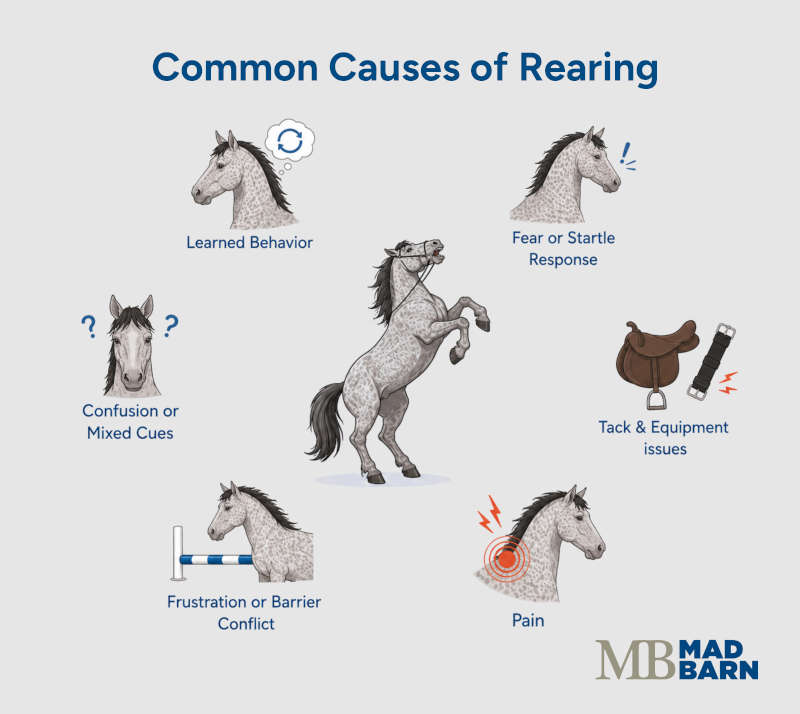
Although rearing is often viewed as a behavioral or training problem, it can also be a sign of underlying issues. Horses may rear in response to pain, fear, frustration, confusion, or conflict with the rider or handler. In many cases, rearing occurs when a horse feels unable to move forward or escape a situation they find uncomfortable. [2][3]
Because rearing can have serious safety consequences, it’s important to identify and address the underlying cause rather than simply trying to suppress the behavior. Keep reading to learn why horses rear, how to recognize common triggers, and what steps you can take to manage and prevent rearing safely.
Rearing in Horses
Rearing is a natural equine behavior in which a horse raises its forehand off the ground, shifting weight onto the hind legs. The behavior can range from a brief lift of the front feet to a near-vertical rear.
As prey animals, horses naturally rely on movement to avoid threats. When forward movement is blocked, some horses may respond by rearing instead. Physical discomfort, poor tack fit, unclear training cues, and stressful situations can all contribute to this behavior as well. [3][4][5]
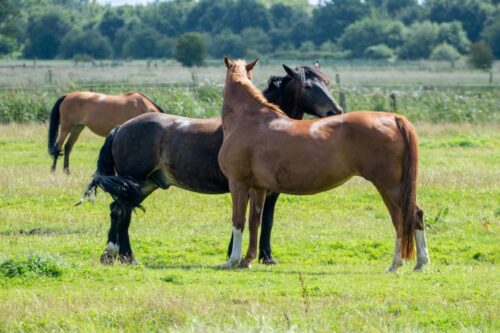
In social settings, horses may rear during play, defensive encounters, and other interactions. Young horses often rear while playing with herd mates, while adult horses may rear during disputes over resources or social status. [1][6][7]
Rearing is a form of behavioral communication that horses use in their natural environment. However, it becomes a concern when it occurs during handling, groundwork, or riding. Unlike bucking, which often involves moving away from discomfort, rearing frequently occurs when a horse feels unable or unwilling to move forward.
Sometimes, horses learn to rear because the behavior successfully removes pressure or allows them to avoid a task. If rearing consistently results in a desired outcome, it can become a learned habit that persists even after the original trigger is resolved. [3][8]
While occasional rearing may occur during play or excitement, repeated rearing during interactions with people usually indicates an underlying physical or behavioral issue that should be investigated.
What's your top priority with your horse's health?

What's your top priority with your horse's health?
Signs Your Horse Is About to Rear
Rearing often occurs when a horse feels trapped, confused, frightened, painful, frustrated, or unable to move forward.
In many cases, the behavior does not happen without warning. However, in some cases subtle changes in posture, tension, and responsiveness may appear before the horse lifts the front feet off the ground.
These early signs are important because they give riders and handlers a chance to stop escalating pressure, redirect the horse safely, and assess what may be causing the reaction.
A horse that repeatedly threatens to rear should not be punished or forced through the problem. Instead, handlers should try to understand the trigger so they can address it with proactive training or further investigation.
Many horses show warning signs before rearing, including:
- Refusing to move forward
- Backing up repeatedly
- Tossing or raising the head
- Tense muscles
- Pinned ears
- Tail swishing
Recognizing these signs can help handlers identify potential problems before the behavior escalates.
When mounted, the warning signs may be more subtle. Signals that may precede rearing while under saddle include:
- Feeling light in the front end
- Hesitation when asked to go forward
- Bracing against the bit
- Swinging the hindquarters
- Resistance to the leg
If these signs appear, the safest response is usually to reduce pressure, create space, and avoid pulling backward on the reins or lead rope. Pulling against a horse that is already thinking about rearing may make the horse feel more trapped and increase the risk of the behavior escalating.
Table 1. Warning signs before a horse rears
| Warning sign | What it may indicate | Suggested response |
|---|---|---|
| Refusing to move forward |
|
|
| Backing up repeatedly |
|
|
| Head tossing or raised head carriage |
|
|
| Tense muscles |
|
|
| Pinned ears |
|
|
| Tail swishing |
|
|
| Pawing |
|
|
| Hesitation or wide-eyed alertness |
|
|
Causes of Rearing in Horses
To address rearing effectively, it’s important to understand what is driving the behavior in the moment. Causes of rearing in horses generally fall into two categories:
- Physical causes
- Behavioral causes
In either case, identifying the trigger and addressing the underlying cause are essential. Rearing can quickly become a learned behavior if it consistently helps the horse avoid pressure, escape an uncomfortable situation, or achieve a desired outcome.
Physical Causes of Rearing
Identifying physical causes of rearing is essential because this reaction can be a sign that your horse is experiencing pain or discomfort.
Regular veterinary examinations, dental care, saddle fit assessments, and routine farrier visits can help identify underlying issues before they contribute to dangerous evasive behaviors.
Pain
Pain is one of the most common causes of conflict behaviors, including rearing, in horses. When moving forward becomes uncomfortable, some horses respond by stopping, backing up, or rearing. [9]
Musculoskeletal conditions affecting the back, neck, limbs, feet, or pelvis are common contributors to pain-related rearing. Conditions such as arthritis, kissing spine, sacroiliac dysfunction, soft tissue injuries, or lameness can make movement uncomfortable and increase resistance during work. [10][11][12]
Pain-related behaviors can quickly become learned habits. If a horse discovers that rearing relieves discomfort or ends an activity they find unpleasant, they may continue displaying the behavior even after the original source of pain has been resolved.
Signs that rearing may be caused by pain include:
- Reluctance to move forward
- Resistance during saddling or mounting
- Pinned ears
- Tail swishing
- Tense muscles
- Changes in performance
- Uneven movement or lameness
Subtle signs, such as stiffness, shortened stride length, or difficulty bending, may also indicate discomfort.
Tack & Equipment Issues
When horses rear in response to tack or equipment, they are often attempting to avoid or escape discomfort. Ill-fitting saddles, excessive girth pressure, restrictive nosebands, or uncomfortable bits can make horses reluctant to move forward and increase resistance during work. [5][9][13]
Some horses rear shortly after mounting, while others react during transitions or when asked to perform specific movements that place pressure on sensitive areas. Repeated exposure to uncomfortable tack can create negative associations with riding and increase the likelihood of defensive behaviors.
Other Health-Related Causes
General health issues may also contribute to rearing behavior. Gastric ulcers, vision problems, neurological disorders, hormonal imbalances, and dental disease can affect a horse’s comfort, confidence, or ability to respond appropriately to their environment. [4]
Horses that feel physically compromised or uncertain about their surroundings may be more likely to react defensively when faced with stressful situations. Sudden changes in behavior, particularly when accompanied by other clinical signs, warrant veterinary evaluation. [5]
When to Call the Veterinarian
Because rearing can be linked to pain, illness, or changes in physical comfort, veterinary evaluation is important when the behavior is new, escalating, or difficult to explain. A horse that suddenly starts rearing should not be treated as simply disobedient until physical causes have been considered.
Call your veterinarian if rearing occurs with clinical signs or escalating risk factors such as:
- Sudden changes in behavior, attitude, or performance
- Signs of lameness, stiffness, back pain, or reluctance to move forward
- Resistance during saddling, mounting, bridling, or specific movements
- Weight loss, poor appetite, colic signs, dental discomfort, or other clinical changes
- Repeated or escalating rearing despite changes in handling, tack, or training
A veterinarian may evaluate your horse for musculoskeletal pain, dental problems, gastric ulcers, neurologic disease, vision changes, or other health concerns. Identifying and addressing physical contributors can improve safety and help prevent rearing from becoming a reinforced response.
If the horse is actively dangerous to handle or ride, stop the activity and seek professional help before continuing. Emergency signs such as severe colic, acute lameness, collapse, neurologic signs, or suspected injury require prompt veterinary attention.
Behavioral Causes of Rearing
Not all rearing is caused by pain or physical discomfort. Many horses rear in response to fear, frustration, confusion, or learned experiences. Understanding these behavioral triggers is essential for prevention and safe management. [14]
Fear or Startle Response
Horses are prey animals, which means unfamiliar or unexpected situations can trigger a fear response. When a horse feels trapped or unable to move away from a perceived threat, rearing may occur as part of a defensive reaction. [15]
Common triggers include:: [16]
- Novel environments
- Loud noises
- Veterinary procedures
- Trailer loading
- Exposure to unfamiliar objects
Recognizing early signs of fear, such as tension, elevated head carriage, wide eyes, or hesitation, can help handlers intervene before the behavior escalates. [16]
Frustration & Barrier Conflict
Rearing commonly occurs when a horse wants to move in one direction but feels physically or mentally restricted from doing so. [15]
This type of conflict can occur during trailer loading, when tied, while being held back from other horses, or when rein pressure prevents forward movement. As frustration builds, some horses may rear in an attempt to overcome the restriction. [17]
Many horses that rear due to frustration will show warning signs beforehand, such as pawing, backing up, head tossing, or muscle tension.
Confusion or Mixed Cues
Some horses rear because they do not understand what is being asked of them. Conflicting signals from the rider or handler can create uncertainty and make it difficult for the horse to find the correct response. [18][19]
For example, a rider may apply leg pressure to encourage forward movement while simultaneously maintaining strong rein contact that restricts forward motion.
When horses cannot identify a solution, they may respond with evasive behaviors such as rearing. Clear, consistent rider aids can help reduce this type of conflict.
Learned Behavior
Rearing can become a habit when it is reinforced, intentionally or not. If a horse rears and experiences release of pressure, the behavior may become more likely to occur in the future.
This is because behaviors are reinforced when they consistently lead to an outcome the horse finds relieving or rewarding. Over time, horses may continue rearing even when the original trigger is no longer present. Understanding equine learning theory can help owners and trainers avoid accidentally reinforcing unsafe responses.
What to Do When Your Horse Rears
Whether your horse rears under saddle or on the ground, safety is always the first priority. Once the immediate situation is under control, the next step is identifying and addressing the underlying cause.
Understanding the context in which rearing occurs is important because the safest response may differ depending on whether the horse is being ridden or handled from the ground.
Rearing Under Saddle
Rearing under saddle can be particularly dangerous because of the risk of the horse losing balance and falling backward. The behavior may be triggered by pain, fear, frustration, confusion, or conflict between the horse and rider.
1) Prioritize Safety
Before attempting to address the behavior, focus on keeping yourself and your horse safe.
If your horse begins showing warning signs of a rear, such as backing up, refusing to move forward, tossing the head, or becoming increasingly tense, try to redirect their attention before the behavior escalates.
If the horse does rear, remain as calm as possible and avoid pulling back on the reins, as this can increase the risk of the horse losing balance. Focus on encouraging the horse to move forward once all four feet are back on the ground. [3][20]
Avoid responding with force or harsh corrections, as these may increase fear, pain, or confusion and make the behavior more difficult to resolve. Instead, focus on identifying and addressing the underlying cause of the rearing with appropriate veterinary care, training, or management. [3][20]
If the situation feels unsafe, dismount when it is safe to do so and seek professional assistance before riding again.
2) Assess the Situation
Identifying patterns can help determine what is triggering the behavior. Consider whether the rearing occurs during specific exercises, in certain environments, around other horses, or after changes in tack, management, or training.
Observing your horse’s body language before and during the behavior may also provide valuable clues. Keeping a record of when and where rearing occurs can help identify recurring patterns.
3) Address Pain or Discomfort
Physical discomfort should always be investigated when a horse begins rearing. A veterinarian can assess for musculoskeletal pain, lameness, dental disease, gastric ulcers, or other health concerns that may contribute to resistance or avoidance behaviors.
Evaluating saddle fit, bit comfort, and overall tack suitability is also an important part of the assessment. Addressing physical causes early may prevent rearing from becoming a learned behavior. [9][17]
4) Rebuild Confidence
Once any physical issues have been addressed, focus on rebuilding the horse’s confidence and understanding through consistent training and clear communication. [21]
Use simple exercises that encourage calm forward movement and reward relaxed responses. Keep training sessions manageable and avoid pushing the horse beyond their current level of understanding or comfort. Many horses benefit from returning to foundational groundwork and basic ridden exercises before progressing to more challenging tasks. [22]

Rearing on the Ground
Rearing can also occur during handling, groundwork, trailer loading, or while being led. In these situations, the behavior often reflects fear, frustration, excitement, or conflict rather than aggression.
Many horses show signs of escalating tension before they rear. Common warning signs include: [4][16]
- Backing up repeatedly
- Pawing
- Head tossing
- Increasing muscle tension
- Vocalizing
- Refusing to move forward
Recognizing these early signals may allow handlers to redirect the horse before the behavior escalates. [4][16]
Even when rearing occurs on the ground, underlying discomfort may be involved. Physical causes should always be ruled out before focusing solely on training solutions.
Groundwork Strategies
Effective groundwork can improve communication, reduce frustration, and help prevent rearing from becoming a learned response.
Useful strategies include: [17][22][23]
- Using calm, consistent cues during handling and training
- Rewarding relaxed, attentive behavior
- Breaking difficult tasks into smaller, achievable steps
- Introducing new environments and challenges gradually
- Ensuring adequate turnout, exercise, and social interaction
Many horses rear when they become overwhelmed, frustrated, or uncertain about what is being asked of them. Clear expectations, gradual progression, and consistent safe handling can help build confidence and reduce conflict during training and daily management.
Managing Rearing in Horses Safely
Rearing in horses is a serious behavior that should always be approached with safety, patience, and curiosity. While it may look like defiance, rearing often reflects pain, fear, frustration, confusion, or a learned response to pressure.
The first step is to look for patterns. Consider when the rearing occurs, what happens immediately before it, and whether the horse shows signs such as refusing to move forward, backing up, bracing, head tossing, pinned ears, or increasing tension.
Pain and discomfort should always be ruled out, especially if the behavior is new, worsening, or associated with changes in performance, attitude, movement, saddling, or handling. Veterinary evaluation, dental care, farrier support, and saddle fit assessment may all be needed before the behavior is treated as a training issue. Addressing physical causes early can improve welfare and reduce the chance that rearing becomes a repeated habit.
Once health and equipment concerns have been addressed, training should focus on calm forward movement, clear communication, and gradual confidence-building. Groundwork, consistent handling, and professional guidance can help rebuild trust and reduce conflict. If a horse is actively dangerous to ride or handle, stop the session and seek help from a qualified veterinarian, trainer, or behavior professional before continuing.
With the right approach, many cases of rearing can be managed more safely. The most effective plan is one that protects the people involved, supports the horse’s physical and emotional comfort, and addresses the underlying cause rather than simply reacting to the behavior itself.
Frequently Asked Questions
Here are some frequently asked questions about why horses rear:
Horses rear when they lift their front hooves off the ground and shift their weight onto the hind legs. This can happen because of pain, fear, frustration, confusion, conflict with the rider or handler, or learned behavior. Rearing often occurs when a horse feels unable or unwilling to move forward, especially if forward movement is uncomfortable or blocked. Although rearing can occur naturally during play or social interactions, repeated rearing during handling or riding usually points to an underlying physical or behavioral issue.
A horse may rear under saddle if they are in pain, confused by the rider's cues, frightened, frustrated, or trying to avoid an uncomfortable situation. Common contributors include back, neck, limb, foot, or pelvic pain, poor saddle fit, uncomfortable tack, strong rein pressure, or unclear signals that ask the horse to go forward while restricting forward movement. Some horses rear shortly after mounting, during transitions, or when asked to perform movements that increase discomfort. Veterinary assessment, tack evaluation, and qualified training support can help identify the cause before the behavior becomes more dangerous.
Rearing is not always a sign of pain, but pain is one of the most important causes to rule out. Horses may also rear because of fear, frustration, confusion, barrier conflict, excitement, or learned avoidance. However, discomfort in the back, neck, limbs, feet, pelvis, teeth, digestive system, or tack area can make forward movement difficult and increase resistance. Because physical causes are common, a horse that rears should be evaluated for pain before the behavior is treated as only a training problem.
Signs that rearing may be caused by pain include reluctance to move forward, resistance during saddling or mounting, pinned ears, tail swishing, tense muscles, changes in performance, uneven movement, or lameness. Some horses also show subtler signs such as stiffness, shortened stride length, difficulty bending, or discomfort during specific movements. Pain-related rearing may appear suddenly or worsen when the horse is asked to work harder. A veterinarian can help assess musculoskeletal pain, dental disease, gastric ulcers, vision changes, neurologic concerns, or other health problems.
Warning signs that a horse may rear include refusing to move forward, backing up repeatedly, tossing or raising the head, tense muscles, pinned ears, tail swishing, pawing, hesitation, or wide-eyed alertness. Some horses may also become vocal, rigid, distracted, or increasingly anxious before the behavior escalates. Recognizing these signs early can help the rider or handler reduce pressure and redirect the horse before a rear occurs. Repeated warning signs should be treated as useful information about pain, fear, confusion, frustration, or training conflict.
If your horse rears while riding, safety should be the first priority. Stay as calm as possible, avoid pulling back on the reins, and wait until all four feet are back on the ground before asking for calm forward movement. Pulling backward can increase the risk of the horse losing balance and falling over. If the situation feels unsafe, dismount when it is safe to do so and get help from a veterinarian, saddle fitter, or qualified equine professional before riding again.
If your horse rears on the ground, focus first on keeping yourself out of the horse's striking or landing area. Rearing during handling, leading, groundwork, tying, or trailer loading often reflects fear, frustration, excitement, conflict, or discomfort rather than simple disobedience. Avoid escalating pressure if the horse is already tense, and look for patterns in when the behavior occurs. Physical discomfort should still be ruled out before focusing only on groundwork or training.
Punishing a horse for rearing is not recommended because forceful corrections can increase fear, pain, confusion, or conflict. Harsh responses may make the horse more reactive and can increase the risk of injury, especially if the horse is already panicked or uncomfortable. A safer approach is to identify why the horse is rearing and address the cause through veterinary care, tack changes, management adjustments, or qualified training support. The goal is to remove the trigger and teach the horse a calmer, safer response.
An ill-fitting saddle or uncomfortable tack can cause rearing if it creates pain, pressure, or negative associations with being ridden. Excessive girth pressure, uncomfortable bits, restrictive nosebands, or unsuitable equipment can make a horse reluctant to move forward. Some horses react during saddling, mounting, transitions, or specific movements that put pressure on sensitive areas. Tack fit, bit comfort, and overall equipment suitability should be assessed when a horse starts rearing or shows new resistance under saddle.
A horse may rear when asked to move forward if forward movement feels painful, frightening, confusing, or physically restricted. This can happen when a rider applies leg pressure while also using strong rein contact that blocks the horse from going forward. It can also occur when the horse is trying to avoid discomfort from tack, lameness, back pain, gastric ulcers, dental disease, or another health issue. Understanding why the horse feels unable to move forward is key to resolving the behavior safely.
A horse may rear during trailer loading because they feel fearful, trapped, frustrated, or uncertain about entering the trailer. Trailer loading can create barrier conflict when the horse wants to avoid the trailer but is also being asked to move forward. Rearing may become more likely if the horse has had stressful loading experiences, feels rushed, or has pain that makes loading uncomfortable. Gradual training, calm handling, and ruling out physical discomfort can help improve loading behavior.
Rearing can become a learned habit if the behavior consistently helps the horse avoid pressure, escape a task, or end an uncomfortable situation. For example, if a horse rears and the rider stops the exercise, or releases pressure in a way the horse finds relieving, the horse may be more likely to repeat the behavior. Addressing rearing early helps prevent an unsafe response from becoming reinforced.
Many horses can stop rearing when the underlying cause is correctly identified and addressed. If pain, tack discomfort, fear, confusion, or poor communication is still present, training alone may not resolve the behavior and can make the horse more stressed. Once physical issues are managed, consistent groundwork, clear cues, calm forward movement, and gradual progression can help rebuild confidence. Horses that rear repeatedly should be handled with support from a veterinarian and a qualified equine professional.
Groundwork can help reduce rearing by improving communication, lowering frustration, and teaching the horse calmer responses to pressure. Useful strategies include using calm, consistent cues, rewarding relaxed and attentive behavior, breaking difficult tasks into smaller steps, and introducing new environments gradually. Many horses benefit from returning to simple, familiar exercises before progressing to harder work. Adequate turnout, exercise, and social interaction can also support better behavior and reduce tension.
Rearing can be more dangerous than bucking because the horse may lose balance and fall backward. This creates a serious risk of injury to both the horse and rider, especially if the horse becomes nearly vertical. Bucking is also dangerous, but it often involves moving away from discomfort, while rearing commonly occurs when the horse feels blocked or unable to move forward. Any repeated rearing should be taken seriously and addressed promptly.
You should call a veterinarian if a horse begins rearing suddenly, shows signs of pain, becomes lame, changes performance, resists saddling or mounting, or continues rearing despite appropriate handling and training changes. Veterinary assessment can help identify musculoskeletal pain, dental disease, gastric ulcers, vision problems, neurologic concerns, or other health issues. Sudden behavior changes are especially important to investigate. Emergency signs such as severe colic, acute lameness, collapse, neurologic signs, or suspected injury require prompt veterinary attention.
You can help prevent rearing from becoming a habit by addressing the trigger before the behavior is repeatedly reinforced. If rearing allows a horse to escape pressure, avoid a task, or end an uncomfortable situation, the horse may learn to repeat it. Regular veterinary care, dental care, saddle fit checks, farrier visits, clear training cues, adequate turnout, and gradual exposure to new challenges can all reduce risk. Calm, consistent handling helps the horse find safer responses when they feel uncertain or frustrated.
Summary
Rearing is when a horse lifts its front legs off the ground and shifts its weight onto the hind legs. It can range from a small lift of the front feet to a near-vertical rear.
- Rearing is dangerous because the horse or rider can lose balance and get seriously hurt
- Horses may rear because they are in pain, scared, confused, frustrated, or unable to move forward
- Warning signs can include stopping, backing up, tossing the head, tensing the body, pinning the ears, or swishing the tail
- Pain, poor saddle fit, dental problems, ulcers, lameness, or other health issues should be ruled out first
- Rearing can become a habit if it helps the horse avoid pressure or escape a difficult situation
- Preventing rearing starts with safety, finding the cause, using clear cues, and rebuilding the horse’s confidence
References
- O’Connell. E. et al. No More Evasion: Redefining Conflict Behaviour in Human–Horse Interactions. Animals. 2025. View Summary
- Romness. N. et al. Associations between Owners’ Reports of Unwanted Ridden Behaviour and In-Hand Behaviour in Horses. Animals. 2020. View Summary
- Fenner. K. et al. Reported Agonistic Behaviours in Domestic Horses Cluster According to Context. Animals. 2024. View Summary
- Contino. E. K. The “Misbehaving” Performance Horse: Is It Ever Behavioral?. Journal of Equine Veterinary Science. 2025. View Summary
- Dyson. S. and Thomson. K. The Recognition of Pain and Learned Behaviour in Horses Which Buck. Equine Veterinary Education. 2022.
- Torres Borda. L. et al. Video Ethogram of Equine Social Behaviour. Animals. 2024. View Summary
- Krueger. K. et al. The Effects of Age, Rank and Neophobia on Social Learning in Horses. Animal Cognition. 2014. View Summary
- McGreevy. P. D. and McLean. A. N. Roles of Learning Theory and Ethology in Equitation. Journal of Veterinary Behavior. 2007.
- Dyson. S. and Pollard. D. Application of a Ridden Horse Pain Ethogram and Its Relationship with Gait in a Convenience Sample of 60 Riding Horses. Animals. 2020. View Summary
- Torcivia. C. and McDonnell. S. Equine Discomfort Ethogram. Animals. 2021. View Summary
- Valberg. S. J. Muscle Disorders in Horses. Merck Veterinary Manual. 2024.
- Pilati. N. et al. Impinging and Overriding Spinous Processes in Horses: A Narrative Review. Animals. 2025. View Summary
- Mellor. D. J. Mouth Pain in Horses: Physiological Foundations, Behavioural Indices, Welfare Implications, and a Suggested Solution. Animals. 2020. View Summary
- Luke. K. L. et al. New Insights into Ridden Horse Behaviour, Horse Welfare and Horse-Related Safety. Applied Animal Behaviour Science. 2022.
- Starling. M. et al. The Contribution of Equitation Science to Minimising Horse-Related Risks to Humans. Animals. 2016. View Summary
- Houpt. K. Behavior Problems of Horses - Behavior. Merck Veterinary Manual. 2025.
- Oberhammer. A. et al. Behind the Bridle: Understanding Facial Expressions in Lesson Horses before and after Riding. Applied Animal Behaviour Science. 2026.
- Pannewitz. L. and Loftus. L. Frustration in Horses: Investigating Expert Opinion on Behavioural Indicators and Causes Using a Delphi Consultation. Applied Animal Behaviour Science. 2023.
- McLean. A. N. and Christensen. J. W. The Application of Learning Theory in Horse Training. Applied Animal Behaviour Science. 2017.
- Waite. K. et al. Quantifying Aggressive Riding Behavior of Youth Barrel Racers and Conflict Behaviors of Their Horses. Journal of Veterinary Behavior. 2018.
- The Human–Horse Relationship: Human Direct and Meta Perceptions of Its Importance for Performance and Welfare in Equestrian Sport Anthrozoös. 2023.
- Acton. L. What Horses Really Want: Unlocking the Secrets to Trust, Cooperation and Reliability. Trafalgar Square Books. 2020.
- Lethbridge. E. A Positive Start: Backing a Horse Using Positive Reinforcement. Animal Behaviour and Welfare Cases. CABI. 2024.