English

Choosing a horse is an important decision for any rider or prospective owner. The right match affects not only your safety and enjoyment, but also the horse’s long-term care and success in your program.
Finding your ideal horse depends on more than breed, color, or athletic potential. A suitable horse should align with your experience level, riding goals, budget, lifestyle, and ability to provide consistent management. Temperament, training, soundness, age, and energy level all play a role in whether a horse is likely to become a safe and rewarding partner.
Taking a thoughtful approach can help prevent common problems such as over-horsing, unexpected care costs, frustration, or safety concerns. Working with knowledgeable professionals, arranging trial rides, and completing a veterinary pre-purchase exam can provide valuable insight before you commit.
Keep reading to learn how to choose a horse based on your goals, experience, preferred discipline, breed considerations, health evaluations, and alternatives to buying.
Finding the Perfect Horse
Choosing the right horse means looking beyond first impressions. A horse may be beautiful, athletic, or well-bred, but the best match is one whose temperament, training, soundness, age, and care needs align with the rider’s goals and ability. [1][2]
A good match should feel safe, manageable, and appropriate for the work the horse is expected to do. This requires evaluating both sides of the partnership: what the rider wants from the horse, and what the horse needs to stay healthy, comfortable, and successful in that role.
Prospective owners should consider their discipline, experience level, budget, available support, and long-term plans before focusing on breed or appearance.
Working with a trainer, instructor, veterinarian, or experienced horse person can help buyers make a more objective decision and avoid common mistakes such as choosing a horse that is too green, sensitive, unsound, or costly to maintain. [3][4]
The perfect horse for any owner is the one whose abilities, personality, and management needs fit realistically within the owner’s skills, resources, and riding goals.
What's your top priority with your horse's health?

What's your top priority with your horse's health?
Which Horse is Best for You?
Before beginning the search for a horse, prospective owners and riders should conduct an honest self-assessment. The right match depends not only on the horse’s traits, but also on the person’s goals, ability, lifestyle, and resources.
A thoughtful evaluation of these elements lays the groundwork for a successful and sustainable partnership. [1][2][3][4]
Riding Discipline & Goals
The intended use of the horse is one of the most important considerations. A horse suitable for amateur dressage will likely not meet the same criteria as one needed for endurance riding or casual trail riding.
Riders should choose a horse based on their primary discipline, whether that is jumping, Western riding, eventing, trail riding, or another field, and think about how to achieve their long-term aspirations. [1][2][3][4]
Potential owners should consider whether they are looking to compete, breed, rehabilitate a rescue, or simply enjoy light riding for pleasure.
Additional factors such as riding frequency, work intensity, and the rider’s size and strength also affect what type of horse is appropriate. A heavier or taller rider, for example, may require a horse with more substantial bone and musculature. [1][2][5]
Experience Level
A rider’s experience significantly influences what kind of horse they can safely and effectively manage. Beginner riders generally benefit from well-schooled, tolerant horses with consistent behavior. In contrast, advanced riders may prefer a younger, greener horse that can be developed over time. [1][2][4][6]
An honest assessment of confidence, competence, and past experience helps avoid dangerous mismatches. Horses are highly perceptive and often respond to the demeanor of their handlers.
Timid riders can inadvertently create nervous or resistant horses, while experienced riders can bring out a spirited horse’s full potential. [1][4][7]
Budget & Maintenance Capacity
Even a modestly priced horse requires significant ongoing costs to keep happy and healthy. Feed, stabling, veterinary care, farriery, dental work, saddle fitting, and emergency expenses must all be accounted for. Some horses, such as those with metabolic conditions or poor hoof conformation, require higher levels of care. [1][2]
Prospective owners should ensure their financial situation aligns with the long-term financial responsibilities of horse ownership. [3][4]
Key Traits to Evaluate in a Horse
Once personal needs and goals are clearly defined, the next step is assessing the horse. Even a horse with excellent conformation and training can be a poor match if its personality, behavior, or energy level clash with the rider’s expectations.
A strong connection between horse and human often depends more on temperament and communication style than on talent or pedigree alone. [1][2][4]
Temperament
Temperament plays a central role in determining how safe, enjoyable, and productive the partnership will be. For less experienced riders or those seeking a reliable long-term companion, temperament often matters more than raw ability.
Key traits to consider include: [1][4][7]
- Calmness and steadiness: These horses are typically forgiving, tolerant of rider error, and less likely to spook. They are well-suited for beginners, therapeutic programs, and relaxed trail riding.
- Responsiveness and sensitivity: These traits are desirable in high-level performance horses, especially in disciplines that reward precision, such as dressage or eventing. However, they require a quiet, skilled rider who can provide clear, consistent cues.
- Willingness to learn: Horses that show curiosity, openness to new challenges, and a desire to engage with humans are often more trainable and adaptable.
- Confidence level: A horse that lacks confidence may become anxious in unfamiliar environments. Spooky, reactive behavior can undermine safety and progress, especially in busy competition or trail settings.
While certain temperament traits are associated with specific breeds, individual differences are more strongly influenced by early handling, socialization, and past experiences. Temperament assessments should be based on direct observation and time spent interacting with the horse. [1][3][8][9]
Energy Level
Horses naturally vary in energy and motivation. Some are forward-moving and eager to work, while others prefer a slower pace. Neither type is inherently better; the right choice depends on the rider’s goals, confidence, and preferences. [1][2][7]
A forward horse can feel too strong or overwhelming for a timid rider, while a dull horse may frustrate someone who enjoys a dynamic ride. Energy level also affects how much physical effort the rider must exert and what disciplines the horse may enjoy. [1][2][7]
Trainability
Trainability refers to how readily a horse learns, responds to cues, and retains training over time. Horses that are attentive, willing to try, and able to stay focused without becoming overwhelmed tend to make more successful partners. [1][2]
Trainable horses are easier to bring along, adapt more readily to new environments, and offer a more enjoyable long-term riding experience. [1][2]
Pedigree & Registration Status
A horse’s pedigree and registration papers can provide useful information, especially for buyers interested in breeding, breed-specific competitions, resale value, or disciplines where bloodlines are closely tracked.
Papers may confirm the horse’s age, breed, parentage, and registry eligibility, and they can sometimes offer insight into likely traits such as size, movement, temperament, or athletic potential.
However, pedigree should not outweigh suitability. A well-bred horse can still be a poor match if its temperament, training, soundness, or care needs do not align with the rider’s goals. Conversely, an unpapered or grade horse may be an excellent partner if it has the right disposition, training foundation, and physical ability for the intended use.
Unpapered horses are often less expensive than registered horses, but buyers should be especially careful to verify key information through direct evaluation. Age, health history, training level, previous use, and soundness should be assessed through observation, seller records when available, professional input, and a veterinary pre-purchase exam.
Breed Characteristics & Considerations
Breed alone does not determine a horse’s personality or potential, but it can provide valuable insight into likely traits such as conformation, movement, energy level, temperament, and health predispositions.
Most modern horse breeds were developed with specific tasks in mind, such as racing, herding cattle, pulling carts, or performing intricate dressage movements. These historic purposes continue to influence how horses behave and perform today. [1][2]
While individual variation within breeds is significant, understanding general breed tendencies helps riders make informed decisions based on their goals, experience, and preferred disciplines. [1][2][3]
Breed alone is usually not the best determining factor when choosing a horse, but it provides a helpful framework for understanding likely tendencies. Individual temperament, handling history, and conformation remain the most important considerations when evaluating suitability for a specific rider and purpose. [1][2][3]
Warmbloods
Warmbloods are among the most popular breeds in English sport disciplines, including: [10]
Bred for a balance of power, elasticity, and rideability, warmbloods are commonly seen across all levels of show jumping, dressage, and eventing. [10]
These horses tend to have uphill conformation, expressive gaits, and a strong work ethic. However, not all warmbloods are suitable for novice riders.
Some lines are bred for high-performance competition and may be too sensitive, forward, or strong for amateur handling. Others are specifically bred with temperament in mind and can be excellent schoolmasters. It is important to consider the bloodlines, training history, and sensitivity level when evaluating a warmblood. [7][10]
Thoroughbreds
Thoroughbreds are renowned for their speed, intelligence, and athleticism. Though originally bred for racing, many off-track Thoroughbreds (OTTBs) are retrained for second careers in eventing, jumping, dressage, or fox hunting. They typically have a lighter build, long legs, and excellent cardiovascular capacity. [11]
Thoroughbreds are often alert and sensitive, requiring calm, consistent handling. While they can be affectionate and eager to work, their high energy and tendency toward nervousness may not suit beginner riders. Patience is essential during the transition from the track to a new life under saddle.
Arabians
Arabians are one of the oldest and most recognizable horse breeds, known for their refined features, arched necks, and spirited movement. They excel in endurance riding and are prized for their intelligence, stamina, and strong bond with humans. [12]
Arabians are often described as people-oriented, but their alertness and sensitivity can make them reactive in the wrong hands. They thrive under experienced handlers who appreciate their complexity and need for mental stimulation. [8][12]
Quarter Horses
As one of the most versatile and popular breeds in North America, the American Quarter Horse is well-known for its steady temperament, muscular build, and strong work ethic. Originally bred for quarter mile racing and cattle work, they are now found in a wide range of disciplines, including Western pleasure, barrel racing, reining, and even English riding. [13]
Quarter Horses are typically calm, easy-going, and quick to learn, making them excellent mounts for beginner to intermediate riders. Their compact conformation and balanced gaits also make them suitable for riders of all ages. [9][13]
Draft Breeds & Crosses
Heavy draft breeds like the Clydesdale, Shire, and Belgian are known for their size, strength, and docile nature. While they are not bred for high-speed or agility-focused sports, they excel in pulling, pleasure driving, and trail riding. Their larger frames and substantial bone may also make them a practical option for taller or heavier riders who need a horse with more size and substance. [14]
When crossed with lighter breeds, they often produce horses with a calm demeanor, good bone, and comfortable gaits. Draft crosses, such as the Irish Draught Sport Horse can be excellent all-around horses for riders who prefer substance and reliability over refinement or speed.
These crosses are also often larger than many light horse types, which may make them suitable for riders seeking a broader build, stronger bone, or a steadier feel under saddle. [14]
Ponies
Ponies are often underestimated because of their size, but they can be exceptionally talented and intelligent. Breeds like the Welsh Pony, Connemara, and Haflinger are commonly used in riding schools and children’s programs, though many are capable of competing successfully against horses in various disciplines. [15]
Ponies are typically hardy, easy keepers, and can be more economical to maintain. However, their cleverness can present training challenges, and they often require handlers who are both firm and fair. [15]
Table 1. Choosing a horse by breed type and rider goal
| Breed or type | Common strengths | Often best suited for | Watch-outs |
|---|---|---|---|
| Warmbloods |
|
|
|
| Thoroughbreds |
|
|
|
| Arabians |
|
|
|
| Quarter Horses |
|
|
|
| Draft breeds and crosses |
|
|
|
| Ponies |
|
|
|
Age & Training Level
The age of a horse plays a crucial role in determining its suitability for a particular rider. Age influences not only a horse’s physical maturity and athletic capacity, but also mental development, training history, and behavioral consistency.
While each stage of life has advantages and drawbacks, the best match depends on the rider’s goals, experience level, and the time they’re able to commit to training.
Young Horses (2 – 7 Years)
Horses in this age range are still developing mentally and physically. While they are often more affordable than fully trained adults, young horses require skilled handling, a solid training plan, and a great deal of patience. They can be unpredictable, highly impressionable, and prone to testing boundaries. [6]
For experienced riders or professionals, young horses offer an opportunity to develop a customized training foundation and potentially shape a high-performance athlete. However, for amateur or novice riders, the risks and demands of starting or continuing a young horse’s education may outweigh the benefits. [6]
Middle-Aged Horses (7 – 14 Years)
This age group is generally the most reliable and rewarding for the majority of riders. Horses in their prime tend to have well-established training, steady temperaments, and full physical maturity. They are typically past the developmental and testing phases that characterize younger horses and are often better equipped to handle new environments, varied routines, and less-than-perfect rider cues. [6]
Middle-aged horses are commonly used in lessons, competitions, and trail riding because of their balance between experience and energy. For many first-time buyers, a middle-aged horse offers the best chance of building a safe, confident partnership. [1][6]
Senior Horses (15+ Years)
Although often overlooked, senior horses can be exceptional partners, especially for riders seeking a gentle teacher or a low-demand riding experience. These horses frequently have a wealth of training and experience and may be ideal for children, beginners, or those returning to riding after a break.
While they may not be suited for the rigors of high-impact competition, many remain sound and active with proper care. Veterinary evaluations are essential to assess long-term health and maintenance needs, but age alone should not disqualify a horse from consideration. [1][2][6]
Table 2. Choosing a horse by age and rider experience
| Horse age | Best suited for | Potential advantages | Potential challenges |
|---|---|---|---|
| 2–7 years |
|
|
|
| 7–14 years |
|
|
|
| 15+ years |
|
|
|
Trial Rides & Pre-Purchase Evaluations
Once a potential match is found, it is important to ride or handle the horse multiple times in different settings before making a purchase decision. This helps confirm whether the initial impression holds up and allows the buyer to observe how the horse responds to varied environments. [3]
Observe the Horse
Pay attention to the horse’s behavior before, during, and after the ride. This gives buyers a clearer picture of the horse’s handling, rideability, and emotional regulation.
- General behavior during grooming, tacking, and leading
- Attitude toward unfamiliar people and environments
- Movement and gaits under saddle
- Response to pressure and rider aids
- Recovery from distraction or nervousness
A calm, willing, and consistent horse is more likely to become a safer and more enjoyable partner.
Veterinary Pre-Purchase Exam
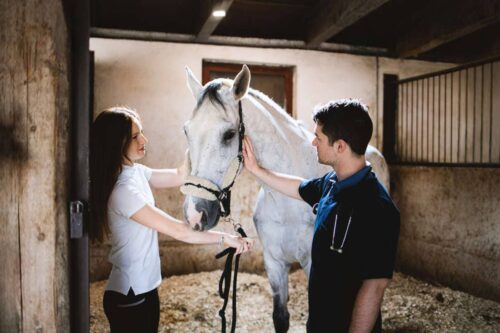
A veterinary exam is non-negotiable, even for lower-priced horses. A pre-purchase examination helps identify health or soundness concerns that may affect the horse’s suitability for the intended use.
During a pre-purchase exam, a veterinarian will assess: [2][16]
- Overall health and soundness
- Lameness or subtle gait irregularities
- Hoof condition and conformation
- Eyes, teeth, heart, lungs, and skin
- Previous injuries or ongoing medical needs
Depending on the intended use, radiographs or additional diagnostics may be warranted. The goal is not to find the perfect horse, but one whose health profile matches the rider’s goals and budget.
Table 3. Pre-purchase horse evaluation checklist
| Evaluation area | What to check | Why it matters |
|---|---|---|
| Handling behavior |
|
|
| Under-saddle behavior |
|
|
| Temperament and recovery |
|
|
| Movement and soundness |
|
|
| Health and conformation |
|
|
| Medical and training history |
|
|
| Seller transparency |
|
|
| Veterinary exam |
|
|
Working With Professionals
A reputable trainer, instructor, or behaviorist can provide objective guidance throughout the search. This support is particularly valuable for new or returning riders who may not yet trust their own instincts. [1][3][4]
Their role may include:
- Clarifying what type of horse is suitable
- Evaluating potential horses
- Watching for signs of poor training or hidden issues
- Providing guidance during trials and negotiation
Working with an experienced professional can help buyers stay focused on suitability, safety, and long-term goals rather than emotion alone.
Common Mistakes to Avoid
Finding the right horse can be an emotional journey, but clear thinking and practical planning are essential. Many horse buyers, especially those new to the process, make avoidable mistakes that result in mismatched partnerships, safety concerns, or long-term financial strain.
Recognizing and avoiding these common pitfalls increases the likelihood of finding a suitable and lasting equine partner.
Committing Too Quickly
It is natural to be drawn to a horse’s appearance or story, but choosing a horse should be grounded in logic, not sentiment. Buyers may be captivated by flashy markings, a pretty face, or a compelling rescue narrative, overlooking critical factors such as temperament, training level, and soundness.
A horse that is appealing to a buyer but lacks the necessary qualities for a safe and functional partnership can lead to disappointment and risk. Emotional attachment should follow a rational evaluation, not precede it. [4]
Over-Horsing
One of the most common and dangerous mistakes is selecting a horse with more energy, sensitivity, or training demands than the rider can reasonably handle. This often happens when buyers choose horses based on potential or competition record rather than rideability and temperament, sometimes referred to as “over-horsing.”
Over-horsing can erode the rider’s confidence, lead to inconsistent handling, and increase the chance of accidents or behavioral regression in the horse. A suitable horse should feel like a partner, not a challenge. [7]
Ignoring Red Flags
Behavioral warning signs, such as persistent rearing, bucking, biting, or trailer loading issues, indicate the horse may require significant training and rehabilitation before they will be reliable riding partners. Sellers may attribute such behaviors to excitement, weather, or lack of work, but repeated or severe issues often indicate deeper training deficits, past trauma, or physical discomfort.
If a horse displays signs of aggression or anxiety during a trial, or if the seller is evasive about its history, potential buyers should proceed with caution or walk away from the opportunity.
Skipping the Vet Check
Forgoing a pre-purchase veterinary examination is a costly gamble, regardless of the horse’s price. Even a seemingly healthy horse may have undiagnosed lameness, dental problems, or chronic conditions that impact long-term use.
A vet check provides an objective assessment of health and soundness, enabling the buyer to make an informed decision. Investing in a thorough evaluation can help prevent future heartache and unexpected expenses. [2][16]

Alternative Options to Buying
Horse ownership is a major commitment in terms of time, finances, and long-term care responsibilities. For some individuals, particularly those new to horses or unsure of their long-term riding plans, full ownership may not be the best initial step. [1][2][3][4]
Fortunately, several alternative arrangements allow riders to gain experience, build relationships with horses, and enjoy riding without taking on the full burden of ownership. [4][17]
Lease Agreements
Leasing a horse provides many of the benefits of ownership, such as regular riding time and relationship-building, without the upfront purchase cost or full maintenance responsibilities.
Lease terms vary widely, from full leases where the rider has exclusive access to partial leases where time is shared with the owner. Leasing is ideal for riders looking to gain consistency in their riding or test the waters before purchasing. [3]
Riding Schools
Accredited riding schools offer structured lessons on well-trained, experienced horses in a safe, supervised environment. This is a particularly effective option for beginners or returning riders who need instruction and access to a variety of horse types. [1][4]
Riding schools often provide the best foundation for future ownership by helping riders develop the skills and confidence needed to manage a horse independently. [1][4]
Co-Ownership
Shared ownership between two or more riders allows individuals to divide the financial and time commitments of horse care. This arrangement can make horse ownership more accessible for people who cannot take on the full cost, schedule, or responsibility alone. [17]
Co-ownership requires clear communication and legal agreements to avoid conflicts. Before entering this type of arrangement, all parties should agree on expenses, riding schedules, veterinary decisions, training plans, insurance, and what happens if one owner wants to sell or end the agreement. [17]
Adoption & Rescue
Rescue organizations rehome horses of all types and backgrounds, including retired riding horses, companion horses, young horses, and horses that need rehabilitation or retraining. Adoption can be a rewarding option for owners who are prepared to make a thoughtful, long-term commitment.
While rewarding, adoption still requires a thorough assessment of suitability and an ongoing commitment to the horse’s welfare. Prospective adopters should ask about the horse’s health history, handling, training level, temperament, and any known limitations.
The adoption process is also usually more involved than buying a horse through a private seller. Reputable rescues require a detailed application, references, facility review, screening process, and adoption agreement before a horse is placed. This can take longer than a standard purchase, but the extra steps help ensure the horse is matched with an appropriate home.
Building a Partnership With Your New Horse
Even with the most carefully chosen horse, a strong relationship does not form overnight. A new environment, unfamiliar routines, and a different rider can all create stress and uncertainty for the horse. Likewise, the rider must adapt to the horse’s unique personality, sensitivities, and preferences. [1][2][4]
Owners should focus on connecting with their new horse from the moment they are brought home. Relationship-building is not about dominance or control. It requires mutual trust, communication, and clear expectations.
How to Help a New Horse Settle In
A structured routine helps the horse settle in and feel safe. Feeding times, turnout schedules, grooming, and training sessions should occur at regular intervals. Repetition creates familiarity, which in turn builds confidence and reduces stress.
New owners can support the transition by focusing on the following priorities: [1][2][3][4]
- Work with a trainer: Even experienced riders benefit from the guidance of a qualified trainer, particularly in the early stages of a new partnership. A fresh perspective can help address small issues before they escalate and ensure that training is progressing in a constructive direction.
- Introduce herd members carefully: New herd introductions should be handled thoughtfully and with supervision. Gradual introductions, safe fencing, and enough space can help reduce conflict while the horses establish their social relationships.
- Make diet changes gradually: Sudden feed changes can increase the risk of digestive upset. Use Mad Barn’s Equine Diet Transition Calculator to plan a gradual transition when changing forage, grain, concentrates, or supplements.
- Introduce new work at a realistic pace: New training expectations, riders, routines, and workloads should be added gradually. Giving the horse time to understand new cues and build fitness can help reduce stress and frustration.
- Spend time outside of chores and training: Quiet time spent grooming, hand-walking, grazing, or simply being near the horse can help build familiarity without adding performance pressure.
- Monitor health and stress: Watch for changes in appetite, manure, body condition, behavior, soundness, or attitude during the transition period. Subtle changes can indicate that the horse is struggling with the new environment, routine, diet, or workload.
- Take your time: Trust is earned gradually. It may take weeks or even months for a new horse to fully relax and respond to a new handler. Avoid rushing the process or expecting immediate results.
- Be realistic: No horse is perfect, and challenges are inevitable. Success comes from setting appropriate goals, adapting as needed, and focusing on steady progress.
The right horse is not flawless. It is one whose personality, care needs, training level, and long-term potential align with your own capacity, style, and aspirations.
Frequently Asked Questions
Here are some frequently asked questions about choosing a horse:
The best age for a first horse is often between 7 and 14 years old. Middle-aged horses are usually physically mature, mentally settled, and experienced enough to be more predictable for novice riders. Younger horses can be appealing, but they often require skilled handling and consistent training that may be difficult for a first-time owner. Senior horses can also be excellent choices when their health, soundness, and workload are appropriate.
Before buying a horse, consider your riding goals, experience level, budget, lifestyle, and long-term care capacity. The right horse should match both what you want to do and what you can safely manage. Temperament, training history, soundness, energy level, and maintenance needs are often more important than appearance, color, or pedigree. It is also helpful to work with a trainer, instructor, veterinarian, or experienced horse person before making a final decision.
A horse is a good match if its temperament, training, energy level, and care needs fit your experience, confidence, and goals. The horse should feel manageable rather than intimidating, and its behavior should remain consistent during handling, grooming, tacking, and riding. Observing and riding the horse more than once can help confirm whether the first impression holds up. A good match should feel like a safe, realistic partner, not a project that depends on everything going perfectly.
The best temperament for a beginner horse is calm, steady, forgiving, and tolerant of rider mistakes. Beginner riders usually benefit from horses that respond consistently without being overly reactive, nervous, or strong. A horse that is willing, confident in new environments, and easy to handle on the ground is usually safer and more enjoyable. Temperament should be assessed through direct observation, not assumed based on breed or seller description alone.
Young horses are generally not the best choice for beginners because they are still developing mentally, physically, and behaviorally. Horses between 2 and 7 years old may be impressionable, unpredictable, and prone to testing boundaries. They often need experienced riders who can provide structure, patience, and a clear training plan. For a novice rider, a young horse can increase the risk of over-horsing, loss of confidence, and inconsistent handling.
A senior horse can be a very good first horse if it is sound, healthy, and suited to the rider's goals. Older horses often have extensive training and experience, which can make them valuable teachers for beginners, children, or riders returning after time away. They may be best suited to lower-intensity riding, pleasure riding, lessons, or trail work rather than demanding competition. A veterinary pre-purchase examination is especially important to understand any long-term maintenance needs.
Horse breeds that may suit beginner riders include American Quarter Horses, some draft crosses, and well-trained ponies or schoolmaster-type horses. Quarter Horses are often valued for their steady temperament, versatility, and trainability, while draft crosses may offer substance and reliability. However, breed should not be the main deciding factor. The individual horse's temperament, training, soundness, and suitability for the rider are more important than breed alone.
Breed matters when choosing a horse because it can provide clues about likely conformation, movement, energy level, temperament, and health tendencies. For example, Thoroughbreds and Arabians are often more sensitive and athletic, while many Quarter Horses and draft crosses are known for steadier temperaments. However, individual variation within every breed is significant. A horse's handling history, training, confidence, soundness, and current behavior should carry more weight than breed reputation.
Being over-horsed means riding or owning a horse with more energy, sensitivity, strength, or training demands than the rider can safely and confidently manage. This often happens when buyers choose a horse based on appearance, athletic potential, or competition record instead of rideability and temperament. Over-horsing can erode confidence, increase safety risks, and create frustration for both horse and rider. A suitable horse should help the rider progress, not leave them feeling consistently anxious or outmatched.
Red flags when buying a horse include persistent rearing, bucking, biting, aggression, severe anxiety, trailer loading problems, or evasive answers from the seller. Repeated behavior issues should not be dismissed without careful investigation, as they may point to pain, fear, training gaps, or past negative experiences. A horse that behaves very differently in different settings, appears difficult to catch or tack up, or needs excessive excuses from the seller may not be a safe choice. If the concerns are serious or repeated, walking away is often the better decision.
You should try a horse more than once before buying it whenever possible. Multiple visits allow you to see whether the horse's behavior remains consistent during handling, grooming, tacking, riding, and recovery after work. It is also helpful to observe the horse in different settings or situations, such as a busy barn, arena, trail environment, or unfamiliar routine. A second or third ride can reveal issues that may not appear during a carefully managed first showing.
A trainer or instructor is strongly recommended when buying a horse, especially for new, returning, or less confident riders. An experienced professional can help evaluate temperament, training, rideability, soundness concerns, and whether the horse truly fits the rider's goals. They can also help buyers avoid emotional decisions, spot red flags, and compare horses more objectively. Professional guidance is particularly valuable when the buyer does not yet have enough experience to judge suitability alone.
A pre-purchase veterinary examination is strongly recommended before buying any horse. A veterinarian can assess overall health, soundness, hoof condition, conformation, teeth, eyes, heart, lungs, skin, and signs of previous injury or ongoing medical needs. Additional diagnostics, such as radiographs, may be useful depending on the horse's intended job and the buyer's risk tolerance. The goal is not to find a perfect horse, but to understand whether the horse's health profile matches your plans and budget.
During a trial ride, watch for how the horse responds to handling, grooming, tacking, mounting, rider aids, distractions, and new situations. A suitable horse should be reasonably consistent, willing, and appropriate for the rider's confidence and skill level. Pay attention to whether the horse feels too strong, too dull, too anxious, or too sensitive for the intended rider. The horse's behavior before and after the ride matters as much as its performance under saddle.
Leasing a horse can be better than buying one when a rider wants regular horse time without the full upfront cost or long-term responsibility of ownership. Lease arrangements vary, but they can provide valuable experience with riding, management, and routine care before committing to a purchase. Leasing is especially useful for riders who are still clarifying their goals, building confidence, or learning what type of horse suits them best. Clear lease terms are important so responsibilities, costs, and access to the horse are understood from the start.
If you cannot afford to buy a horse right now, full ownership is not the only way to enjoy riding and build experience. Leasing, riding lessons at accredited schools, co-ownership, and some adoption arrangements can provide meaningful time with horses without the same upfront purchase cost or full maintenance responsibility. These options can help riders develop confidence, improve their skills, and better understand the realities of horse care. Waiting until your budget and support system are stronger can lead to a better match later.
Rescue horses can be rewarding, but they are not automatically suitable for first-time owners. Some rescue horses may have limited training, unknown histories, health issues, or behavioral challenges that require experienced handling and careful rehabilitation. Others may be well-suited to a new home if their temperament, soundness, and training match the rider's needs. Adoption should involve the same careful assessment, professional guidance, and long-term planning as any horse purchase.
You can help a new horse settle in by providing a predictable routine, calm handling, and consistent expectations from the first days at home. Feeding times, turnout, grooming, and training sessions should be introduced in a structured way so the horse can adjust to the new environment. Building trust takes time, and early interactions should focus on safety, clarity, and confidence rather than rushing progress. Even a well-chosen horse needs patience while adapting to a new barn, rider, and routine.
A horse does not need papers to be a good riding horse. Registration and pedigree can be useful for confirming breed, parentage, age, or eligibility for breed-specific programs, but they do not guarantee temperament, soundness, training, or suitability. For most recreational riders, a horse's behavior, health, experience, and fit for the intended use matter more than registration status. A veterinary pre-purchase exam and careful evaluation are still important whether the horse is registered or unpapered.
An unregistered horse is a horse that does not have official registration papers with a breed registry. This may mean the horse is a grade horse, has unknown parentage, or has known breeding but was never registered. Being unregistered does not mean the horse is lower quality or unsuitable for riding. Buyers should focus on the horse's temperament, soundness, training, age, and suitability for their goals.
Registered or purebred horses are not automatically better than grade horses. Registration can be valuable for confirming pedigree, breed eligibility, resale value, or competition requirements, but it does not guarantee that a horse is safe, sound, well-trained, or suitable for a specific rider. Grade horses can make excellent riding, trail, lesson, and companion horses when their temperament, health, and training match the owner's needs. The best choice depends on the individual horse and the buyer's goals, not papers alone.
Summary
Choosing the right horse requires an honest assessment of the rider’s goals, experience, budget, lifestyle, and long-term care capacity.
- Temperament, energy level, trainability, and handling history are often more important than appearance or breed.
- Different breeds may have general tendencies, but individual personality, training, and suitability should guide the final decision
- Age and training level matter, with young horses requiring experienced handling and older horses often offering more consistency
- Direct observation, professional guidance, and a veterinary pre-purchase exam help reduce the risk of choosing an unsuitable horse
- Leasing, riding schools, or co-ownership can be good alternatives for riders who are not ready for full horse ownership
References
- Court. R. Choosing a Riding Horse. Blue Cross. 2025.
- Textor. J. and Bayle. A. G. Selecting a Horse. Merck Veterinary Manual. 2025.
- Buying A Horse: How To Buy A Horse. The British Horse Society. 2024.
- Malinowski. K. Tips on Buying Your First Horse. Equine Science Center. 2012.
- Jaqueth. A. and Martinson. K. Guidelines for Weight-Carrying Capacity of Horses. UMN Extension. 2025.
- Navarra. K. What Age Horse Should You Buy?. My New Horse. 2024.
- Dressage. H. T. How to Know If You Are Over-Horsed ⋆ How To Dressage. How To Dressage. 2024.
- Breeds. H. Arabian Horses: Majestic Steeds of the Desert - Horse Breeds. 2024.
- Quarab Horses: The Perfect Blend of Arabian and Quarter Horse Traits. Horse Breeds. 2025.
- Official Rules and Regulations of the American Warmblood Registry. American Warmblood. 2025.
- Mawdsley. A. et al. Linear assessment of the Thoroughbred horse: an approach to conformation evaluation. Equine Vet J. 1996. View Summary
- Davenport, H. The Arabian Horse. J Heredity. 1908.
- Official Handbook of Rules and Regulations. American Quarter Horse Association. 2025.
- Salem. P. Breed Profile: The Belgian Draft Horse. FEI. 2021.
- Connemara Breed Standard. Canadian Connemara Pony Society.
- Pre Purchase Veterinary Examination. The British Horse Society. 2025.
- Horses Partnerships and Co-Ownership. Equine Legal Solutions. 2024.