English

Preventing laminitis in horses depends on understanding the specific risk factors that can trigger this painful hoof condition. Laminitis damages the laminae, the sensitive tissues that help support the coffin bone within the hoof, and can lead to serious lameness, long-term hoof changes, and loss of function.
Although laminitis is often discussed as one condition, it can develop through several different pathways. Because the underlying causes vary, prevention is not a single management step.
Reducing risk may involve maintaining a healthy body condition, feeding an appropriate low-NSC diet, managing pasture access, identifying endocrine disease early, responding quickly to illness or injury, and working closely with your veterinarian and farrier.
Keep reading to learn more about the different types of laminitis, key risk factors for each form, and practical strategies horse owners can use to help reduce the risk of laminitis developing.
Preventing Laminitis in Horses
Laminitis is one of the most common and serious hoof conditions affecting horses. This painful disease damages the laminae, the specialized tissues that help suspend and support the coffin bone within the hoof capsule.
In severe cases, laminitis can result in permanent hoof damage, chronic lameness, loss of athletic function, and euthanasia. [1]
There are different forms of laminitis, and each comes with separate risk factors. Many cases are linked to endocrine disorders such as Equine Metabolic Syndrome (EMS) and Pituitary Pars Intermedia Dysfunction (PPID), while others occur as complications of severe illness, infection, or prolonged weight-bearing on one limb after injury. [2][3][4]
Because each form of laminitis has different underlying causes, prevention depends on the horse’s individual risk factors. No prevention plan can eliminate risk entirely, but early recognition, appropriate nutrition and management, and timely veterinary care can help reduce the likelihood of laminitis developing.
Internal Hoof Anatomy & Laminitis
The laminae are interlocking layers of tissue that attach the hoof wall to the coffin bone inside the hoof capsule. These structures help support the horse’s weight and stabilize the coffin bone during movement. [1]
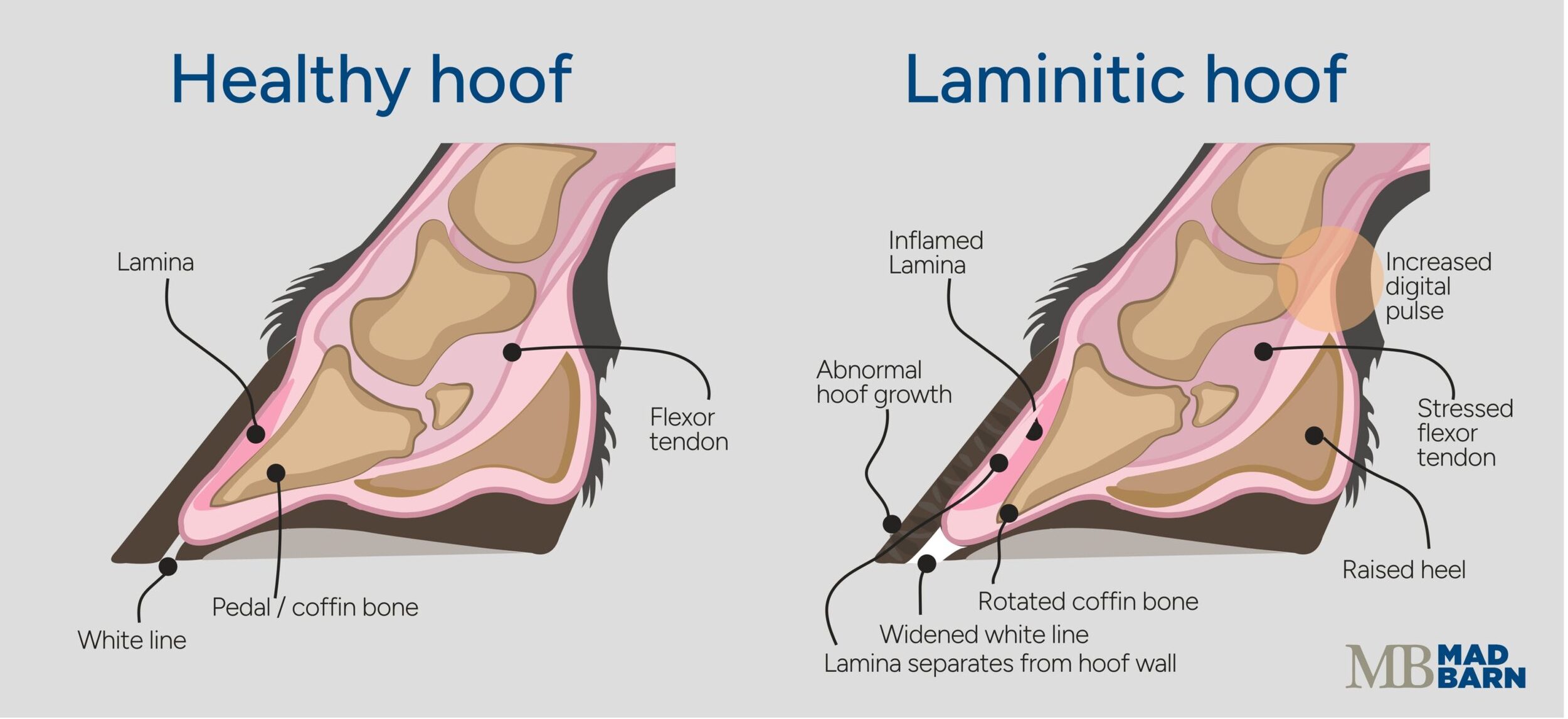 Illustration: Dr. Ana Mesa, PhD
Laminitis occurs when the laminae become damaged, weakening the connection between the hoof wall and the coffin bone. As this attachment fails, the coffin bone may rotate or sink within the hoof capsule, causing pain and impairing normal hoof function. [1]
Laminitis can affect one or more feet, but it most commonly involves the front hooves. The condition may develop suddenly or progress over time, depending on the underlying cause and how quickly treatment is initiated. [1][4]
Early signs of laminitis can include hoof heat, increased digital pulses, reluctance to move, shifting weight between feet, or a characteristic stance in which the horse rocks back onto the hindquarters to reduce pressure on the front feet (sawhorse stance). [4]
 Sawhorse Stance Illustration: Dr. Ana Mesa, PhD
Types of Laminitis
Laminitis can develop through several different pathways, but most cases fall into one of three types of laminitis: [4][5][6]
- Endocrinopathic laminitis: Associated with hormonal and metabolic disorders that affect insulin regulation, including Equine Metabolic Syndrome (EMS) and Pituitary Pars Intermedia Dysfunction (PPID). This is the most common form of laminitis in horses and ponies.
- Sepsis-related laminitis: Develops as a complication of severe systemic illness or inflammation. Common triggers include retained placenta, colitis, severe infections, and some cases of colic.
- Supporting limb laminitis: Occurs when a horse places excessive weight on one limb for an extended period because of injury or severe lameness in the opposite limb. The prolonged overload can damage the supporting foot and lead to laminitis.
Although all three forms damage the laminae and can result in severe pain and hoof dysfunction, the mechanisms that trigger the disease differ significantly. Because the risk factors and triggers differ for each form of laminitis, prevention strategies must be tailored to the underlying cause.
Table 1. Types of laminitis and prevention focus
| Type of laminitis | Common causes or risk factors | Prevention focus |
|---|---|---|
| Endocrinopathic laminitis |
|
|
| Sepsis-related laminitis |
|
|
| Supporting limb laminitis |
|
|
Early Signs of Laminitis
Recognizing early warning signs of laminitis can improve treatment outcomes and may help reduce the severity of hoof damage.
Common early signs include: [7][8]
- Increased digital pulses
- Heat in the hooves
- Reluctance to move
- Frequent shifting of weight between feet
- A shortened or stiff stride
- Standing with the front feet extended in front of the body
- Difficulty turning
- Increased time spent lying down
Early signs of laminitis can be subtle at first, but they should never be dismissed. Even mild changes in movement, stance, hoof temperature, or comfort can progress quickly if the underlying trigger is not addressed.
When to Call the Veterinarian
Laminitis is a veterinary emergency. Contact your veterinarian immediately if your horse develops increased digital pulses, hoof heat, reluctance to move, sudden lameness affecting multiple feet, or a characteristic sawhorse stance.
Veterinary attention is also recommended for horses with known risk factors and suspected signs, including:
- EMS
- PPID
- Severe systemic illness
- Retained placenta
- Grain overload
- Prolonged non-weight-bearing lameness
These horses may require prompt assessment even before obvious hoof pain is present.
A veterinarian can evaluate the horse’s clinical signs, identify possible underlying causes, and recommend treatment or monitoring based on the type of laminitis risk involved. Early diagnosis and intervention may improve outcomes and help reduce the risk of permanent hoof damage.
What's your top priority with your horse's health?

What's your top priority with your horse's health?
How to Prevent Endocrinopathic Laminitis
Endocrinopathic laminitis is the most common form of laminitis in horses and ponies. [9] Because it is closely linked to insulin resistance, prevention focuses on maintaining metabolic health through appropriate nutrition, weight management, exercise, and early identification of endocrine disorders.
Research shows that chronic elevation of insulin levels can damage the laminae, even in the absence of severe illness or injury. [10] For this reason, horses with metabolic risk factors require careful long-term management to reduce their likelihood of developing laminitis.
1) Maintain a Healthy Body Condition
Excess body fat is one of the most important modifiable risk factors for endocrinopathic laminitis. Insulin dysregulation is associated with excess body condition and abnormal fat deposits in horses, increasing their risk of laminar damage. [5][11][12]
Easy keepers, or horses that maintain or gain weight easily on relatively small amounts of feed, may have a higher risk of endocrinopathic laminitis. Monitoring body condition throughout the year can help identify at-risk horses before metabolic changes progress to laminitis. [3]
Maintaining a healthy body condition score through appropriate feeding and exercise can help reduce this risk. Owners should also monitor for regional fat deposits, which may indicate underlying metabolic dysfunction even in horses that do not appear obese overall.
Common areas of concern include: [13][14]
- A cresty neck
- Fat pads behind the shoulders
- Fat accumulation around the tailhead
- Fat deposits above the eyes
Regular weight monitoring using a weight tape, body condition scoring, or photographs can help identify gradual changes before they become problematic.
2) Screen for EMS & PPID
Many horses with endocrine disorders show subtle signs long before laminitis develops. Older horses are particularly susceptible to EMS and PPID, making routine veterinary screening increasingly important with age.
Veterinary examinations and diagnostic testing can help identify EMS, PPID, or insulin resistance before complications occur. [2][15]
Importantly, not all horses with EMS are overweight. Some horses may maintain a normal body condition score while still exhibiting metabolic abnormalities that increase their risk of laminitis. For this reason, body condition should be assessed alongside other risk factors, including regional adiposity, breed predisposition, and metabolic testing. [16]
Early diagnosis allows owners to implement dietary, management, and medical interventions that may help reduce laminitis risk. Testing is particularly important for older horses, easy keepers, horses with abnormal fat deposits, and those with a history of recurrent laminitis.
3) Choose Low-NSC Feeds & Forage
Non-structural carbohydrates (NSCs), also referred to as hydrolyzable carbohydrates (HCs), refer to the sugars and starch present in feed. Most plant-based feeds contain some amount of HCs, and they are highly concentrated in feeds containing cereal grains.
Elevated insulin levels following consumption of high-HC feeds are believed to play a key role in the development of endocrinopathic laminitis. [17] Given this, feeding a low-HC diet is a cornerstone of managing metabolic and other at-risk horses.
Management strategies may include:
- Feeding low-HC hay
- Testing hay to determine HC content before feeding
- Soaking hay when appropriate
- Avoiding sweet feeds and high-starch concentrates
- Choosing low-NSC ration balancers or vitamin-mineral supplements
- Working with an equine nutritionist to balance the diet
Forage should remain the foundation of the diet whenever possible. However, selecting appropriate forage sources is often just as important as limiting concentrate intake when managing laminitis risk.
It is typically recommended to feed no more than 0.1 grams of total NSC per kg of bodyweight per meal. For a 500 kg / 1100 lb horse, this is equivalent to no more than 50 grams of NSC per meal. [18]
Forage and pasture can vary considerably in NSC level. Therefore, forage testing is recommended to help owners make informed feeding decisions for horses at risk of laminitis. A hay analysis provides information on sugar and starch content that cannot be reliably determined by appearance alone.
A hay analysis allows owners to select forage that better supports metabolic health or to decide whether soaking is required to reduce the sugar content of their hay. [19]
4) Manage Pasture Access
Pasture-associated laminitis is one of the most common manifestations of endocrinopathic laminitis in horses with insulin dysregulation. [20]
While pasture can be an important source of nutrition and enrichment, grasses may accumulate high concentrations of sugars under certain environmental conditions, increasing the risk of laminitis in susceptible horses. [20][21]
Management strategies may include: [22][23]
- Using a grazing muzzle
- Providing turnout in a dry lot
- Monitoring seasonal changes in pasture quality
- Restricting grazing time to early morning hours when sugar content is lowest
- Introducing pasture access gradually
Pasture sugar concentrations also fluctuate throughout the day and are influenced by factors such as sunlight, temperature, season, and plant growth. In general, horses at risk of endocrinopathic laminitis should avoid unrestricted grazing during periods when grasses are likely to accumulate high levels of non-structural carbohydrates. [24][25]
Because pasture conditions vary widely, turnout recommendations should be individualized based on the horse’s metabolic status, laminitis history, and local environmental conditions.
5) Encourage Regular Exercise
Regular exercise can improve insulin sensitivity, support weight management, and help maintain metabolic health in horses that are sound enough to work. [26] Even moderate exercise can help improve metabolic function and support a healthy body condition. [27]
Consistent movement also increases calorie expenditure which can support weight loss in overweight EMS horses.
Exercise programs should be tailored to the horse’s age, fitness level, and medical status. Horses with active laminitis should not be exercised unless specifically directed by a veterinarian.
Because endocrinopathic laminitis is often associated with long-term metabolic dysfunction, prevention requires ongoing management rather than a single intervention.
Maintaining a healthy body condition, feeding an appropriate diet, monitoring pasture intake, and addressing underlying endocrine disorders can substantially reduce the risk of laminitis in susceptible horses. [28]
How to Prevent Septic Laminitis
Sepsis-related laminitis develops as a complication of severe systemic illness or inflammatory response. It is most commonly associated with conditions such as retained placenta, colitis, severe infections, and some forms of colic, but can also occur following grain overload. [29]
These conditions can trigger widespread inflammatory responses that damage the laminae. Because this form of laminitis can develop rapidly, prevention focuses on early recognition and treatment of the underlying condition.
1) Seek Prompt Veterinary Care for Serious Illness
Many cases of sepsis-related laminitis occur secondary to medical emergencies. Horses with severe diarrhea, fever, colic, retained placenta, or signs of systemic infection should be evaluated by a veterinarian as soon as possible.
Early diagnosis and treatment may help reduce the inflammatory processes that contribute to laminar damage. Prompt intervention is particularly important because the risk of laminitis can increase even before obvious hoof pain develops.
2) Prevent Grain Overload
Severe grain overload is a well-recognized risk factor for sepsis-related laminitis. Rapid fermentation of excess carbohydrates in the hindgut can disrupt the microbial population, leading to inflammation and the release of toxins that contribute to laminar injury. [6][11][30]
To reduce risk:
- Store grain securely to prevent accidental access
- Introduce dietary changes gradually
- Follow recommended feeding rates
- Divide concentrate meals into smaller feedings when possible
These steps help reduce the chance of sudden dietary disruption, especially in barns where multiple horses have access to feed storage areas.
3) Monitor High-Risk Horses Closely
Horses recovering from severe illness may remain at increased risk of laminitis even after the primary condition begins to improve. Monitoring for early warning signs can help ensure prompt intervention if complications arise.
Owners should watch for:
- Increased digital pulses
- Hoof heat
- Reluctance to move
- Frequent shifting of weight
- Changes in stance or gait
Any concerning changes should be reported to a veterinarian immediately.
4) Work With Your Veterinary Team
In some high-risk cases, veterinarians may recommend additional preventive measures to reduce the likelihood of laminitis developing.
Depending on the underlying condition, these strategies may include: [31][32]
- Supportive hoof care
- Aggressive management of inflammation
- Digital cryotherapy to help reduce laminar injury
Because sepsis-related laminitis is often associated with medical emergencies, prevention depends largely on rapid treatment of the underlying disease. Early veterinary intervention remains one of the most effective ways to reduce the risk of laminitis in these cases.
How to Prevent Supporting Limb Laminitis
Supporting limb laminitis occurs when a horse places excessive weight on one limb for an extended period because of severe lameness or injury in the opposite limb. Horses recovering from fractures, tendon injuries, joint infections, severe wounds, or other conditions that limit normal weight bearing are at greatest risk. [4][33][34]
1) Reduce Excessive Weight Bearing on One Limb
The most effective way to prevent supporting limb laminitis is to minimize prolonged overloading of a single foot. Prompt treatment of the primary injury can help restore more balanced weight-bearing and reduce stress on the supporting limb.
In some cases, veterinarians may recommend hospitalization, sling support, or other interventions to help manage weight distribution during recovery.
2) Provide Appropriate Hoof Support
Supportive hoof care is often an important component of prevention. Therapeutic shoeing, hoof boots, pads, casts, or other supportive devices may help improve comfort and reduce mechanical stress on the supporting foot. [4][35]
The most appropriate approach depends on the horse’s injury, hoof health, and overall recovery plan.
3) Monitor the Supporting Limb
Horses recovering from severe lameness should be monitored closely for signs of developing laminitis in the supporting foot.
Early warning signs may include: [33][4]
- Increased digital pulses
- Hoof heat
- Changes in stance
- Reluctance to move
- New signs of discomfort in the supporting limb
Because supporting limb laminitis can progress quickly, any concerning changes should be reported to a veterinarian promptly.
4) Prioritize Long-Term Comfort
Pain management, supportive bedding, and careful rehabilitation can help encourage more normal movement patterns during recovery. Reducing discomfort may help prevent horses from placing excessive weight on a single limb for prolonged periods. [4][35]
Supporting limb laminitis can be challenging to manage once it develops. Early intervention and careful monitoring of horses recovering from severe injuries remain the most effective prevention strategies. [33]

General Laminitis Prevention Tips
While prevention strategies differ depending on the underlying cause, these management practices can support hoof health and help reduce the risk of laminitis in many horses: [11][22][36][4]
- Maintain a healthy body condition
- Feed a balanced, forage-based diet
- Test hay when managing horses at risk of endocrinopathic laminitis
- Introduce dietary changes gradually
- Schedule regular veterinary examinations
- Work with a qualified farrier to support hoof health
- Monitor horses closely after illness, injury, or major management changes
- Seek prompt veterinary attention if signs of laminitis develop
These general practices are most effective when they are adapted to the individual horse’s health history, diet, workload, and veterinary recommendations.
Reducing Laminitis Risk With Proactive Care
Preventing laminitis in horses begins with recognizing that this condition does not have a single cause or one universal prevention plan. Endocrinopathic, sepsis-related, and supporting limb laminitis all damage the sensitive laminae within the hoof, but they develop through different pathways and require different management priorities.
For many horses, especially easy keepers, ponies, older horses, and those with EMS, PPID, or insulin dysregulation, prevention depends on long-term metabolic management.
Maintaining a healthy body condition, choosing low-NSC feeds and forage, managing pasture access, encouraging appropriate exercise, and screening for endocrine disease can all help reduce the risk of laminitis before clinical signs appear.
Other forms of laminitis require rapid response rather than routine lifestyle management alone. Horses with severe illness, retained placenta, colitis, grain overload, major injury, or prolonged non-weight-bearing lameness need prompt veterinary care and close monitoring, even before obvious hoof pain develops. In these cases, early intervention may help reduce inflammation, mechanical overload, and laminar damage.
No prevention strategy can eliminate laminitis risk completely, but informed management can make a meaningful difference.
By understanding each horse’s individual risk factors and working closely with a veterinarian, farrier, and nutrition professional, owners can support healthier hooves, respond quickly to warning signs, and improve the chances of protecting long-term comfort and soundness.
Frequently Asked Questions
Here are some frequently asked questions about preventing laminitis in horses:
The best way to prevent laminitis in horses is to manage the specific risk factors that make the condition more likely to develop. For many horses, this includes maintaining a healthy body condition, feeding a balanced forage-based diet, choosing low-NSC feeds and forage, managing pasture access, and encouraging appropriate exercise. Horses with Equine Metabolic Syndrome, Pituitary Pars Intermedia Dysfunction, insulin dysregulation, or a previous history of laminitis need especially careful long-term management. Because laminitis can develop through different pathways, prevention should be tailored to the individual horse with support from a veterinarian, farrier, and, when needed, an equine nutritionist.
Laminitis cannot always be prevented, but informed management can significantly reduce risk in many horses. Some cases are linked to long-term metabolic problems, while others develop after severe illness, retained placenta, grain overload, or prolonged weight-bearing on one limb. The most effective prevention plans focus on the horse's individual risk factors rather than relying on one universal strategy. Early recognition, prompt veterinary care, and consistent nutrition and hoof management can help protect long-term comfort and soundness.
The main types of laminitis in horses are endocrinopathic laminitis, sepsis-related laminitis, and supporting limb laminitis. Endocrinopathic laminitis is associated with insulin dysregulation, Equine Metabolic Syndrome, and Pituitary Pars Intermedia Dysfunction, and is the most common form in horses and ponies. Sepsis-related laminitis develops as a complication of severe illness, inflammation, retained placenta, colitis, some cases of colic, or grain overload. Supporting limb laminitis occurs when a horse overloads one limb for a prolonged period because of severe injury or lameness in the opposite limb.
You can tell if your horse may be at risk for laminitis by looking for metabolic, medical, and management-related risk factors. Important warning factors include obesity, insulin dysregulation, Equine Metabolic Syndrome, Pituitary Pars Intermedia Dysfunction, a cresty neck, abnormal fat deposits, or a previous history of laminitis. Horses may also be at risk after retained placenta, severe diarrhea, colic, serious infection, grain overload, or prolonged lameness that causes them to overload one limb. Horses with any of these risk factors should be monitored closely and discussed with a veterinarian.
Overweight horses can get laminitis, especially when insulin resistance is also present. Horses, ponies, and easy keepers that gain weight easily are at higher risk for endocrinopathic laminitis. Regional fat deposits, such as a cresty neck or fat pads around the shoulders, tailhead, or eyes, may also signal metabolic risk. Keeping horses at an appropriate body condition is one of the most important ways to reduce laminitis risk.
A horse can be at risk for laminitis even if they are not obviously obese. Regional fat deposits, a cresty neck, insulin dysregulation, Equine Metabolic Syndrome, Pituitary Pars Intermedia Dysfunction, or a previous history of laminitis may all increase risk even when overall body condition appears acceptable. Some horses also develop laminitis as a complication of severe illness or injury rather than excess weight.
Pasture can contribute to laminitis in at-risk horses, but it does not cause laminitis in every horse. Grasses can accumulate high levels of sugars under certain conditions, which may trigger excessive insulin responses in horses with insulin dysregulation, Equine Metabolic Syndrome, Pituitary Pars Intermedia Dysfunction, or a history of laminitis. Risk is often higher when insulin resistant horses have unrestricted access to pasture during periods when grasses are rich in non-structural carbohydrates. Strategies such as limiting grazing time, using a grazing muzzle, providing dry lot turnout, and introducing pasture gradually can help manage risk.
Pasture is most risky for horses prone to laminitis when grasses are likely to contain higher levels of sugars and other non-structural carbohydrates. Pasture sugar levels fluctuate with sunlight, temperature, season, plant growth, and local environmental conditions. Horses with insulin dysregulation, EMS, PPID, or a previous history of laminitis should not have unrestricted grazing during high-risk periods. Turnout plans should be individualized based on the horse's metabolic status, laminitis history, and local pasture conditions.
A grazing muzzle can help prevent laminitis in some at-risk horses by limiting grass intake while still allowing turnout. Muzzles are most useful for horses that benefit from movement and pasture access but need reduced intake of high-sugar grass. They should be fitted correctly and monitored to ensure the horse can drink, move comfortably, and does not develop rubs or frustration. For some high-risk horses, dry lot turnout or more restricted pasture access may be safer than muzzled grazing.
Hay should be tested for horses at risk of endocrinopathic laminitis because forage sugar and starch levels cannot be judged reliably by appearance. A forage analysis provides useful information about non-structural carbohydrate content, helping owners choose hay that better supports horses with insulin dysregulation or a history of laminitis. Testing is especially valuable for horses with Equine Metabolic Syndrome, Pituitary Pars Intermedia Dysfunction, abnormal fat deposits, or a tendency to gain weight easily. Forage should remain the foundation of the diet whenever possible, but selecting the right forage is an important part of risk management.
Horses prone to laminitis should generally eat a balanced forage-based diet that supports metabolic health without excessive sugar or starch intake. For many at-risk horses, this means low-NSC hay, limited or no high-starch concentrates, and a ration balancer or vitamin-mineral supplement when needed to complete the diet. Hay testing can help determine whether the forage is appropriate, and soaking hay may be useful in some situations. Diet changes should be individualized with veterinary or nutrition guidance, especially for horses with EMS, PPID, insulin dysregulation, or previous laminitis.
Grain overload can cause laminitis by disrupting normal hindgut function and triggering inflammatory processes that damage the laminae. Sudden consumption of large amounts of grain can rapidly ferment in the hindgut, disturb the microbial population, and contribute to toxin release. This type of laminitis is associated with severe systemic inflammation and can develop quickly. Securing grain storage, introducing diet changes gradually, following feeding recommendations, and dividing concentrate meals into smaller feedings can help reduce risk.
Exercise can help prevent laminitis in horses that are sound enough to work by improving insulin sensitivity, supporting weight management, and promoting metabolic health. Even moderate, consistent movement may help horses maintain a healthier body condition and reduce some metabolic abnormalities linked to insulin dysregulation. Exercise plans should be tailored to the horse's age, fitness level, soundness, and medical status. Horses with active laminitis should not be exercised unless a veterinarian specifically recommends it.
Horses with EMS or PPID should be evaluated for laminitis risk because both conditions are associated with endocrine and metabolic changes that can affect insulin regulation. Veterinary examinations and diagnostic testing can help identify EMS, PPID, or insulin dysregulation before laminitis develops. Testing is especially important for older horses, easy keepers, horses with abnormal fat deposits, and horses with recurrent or previous laminitis. Early diagnosis allows management, dietary, and medical strategies to be put in place before hoof damage occurs.
The early signs of laminitis can include hoof heat, stronger digital pulses, reluctance to move, and frequent shifting of weight between feet. Some horses develop a shortened or stiff stride, have difficulty turning, spend more time lying down, or stand with the front feet stretched forward to reduce pressure on the hooves. Laminitis most often affects the front feet, but it can involve one or more hooves. Any horse showing these signs should be evaluated by a veterinarian as soon as possible because laminitis can progress quickly.
You should call a veterinarian immediately if your horse shows signs of laminitis, including increased digital pulses, hoof heat, reluctance to move, sudden lameness in multiple feet, or a laminitic stance. Laminitis is a veterinary emergency because early intervention may improve outcomes and reduce the risk of permanent hoof damage. Veterinary attention is also important for horses with known risk factors such as Equine Metabolic Syndrome, Pituitary Pars Intermedia Dysfunction, retained placenta, grain overload, severe illness, or prolonged non-weight-bearing lameness. Prompt care is especially important because laminitis can progress before severe hoof pain becomes obvious.
Laminitis can develop after severe illness or infection when systemic inflammation damages the laminae. This form, often called sepsis-related laminitis, may occur with retained placenta, colitis, severe diarrhea, severe infections, some cases of colic, or grain overload. Horses recovering from serious illness should be monitored for hoof heat, increased digital pulses, reluctance to move, shifting weight, or changes in stance and gait. Prompt treatment of the underlying illness is one of the most important ways to reduce the risk of this type of laminitis.
Retained placenta can lead to laminitis in mares by contributing to severe systemic inflammation and illness after foaling. When fetal membranes are not expelled normally, the mare may develop complications that increase the risk of sepsis-related laminitis. Veterinary care is urgent because laminitis risk can rise before obvious hoof pain appears. Close monitoring, prompt treatment, and preventive support from the veterinary team are essential for mares with retained placenta.
Supporting limb laminitis is a form of laminitis that develops when a horse places excessive weight on one limb for an extended period. This usually happens because of severe injury or lameness in the opposite limb, such as a fracture, tendon injury, joint infection, or serious wound. Prolonged overload can damage the supporting foot and lead to laminitis. Prevention focuses on prompt treatment of the primary injury, appropriate hoof support, pain management, supportive bedding, and close veterinary monitoring.
Supporting limb laminitis can be prevented after an injury by reducing prolonged overload on the opposite limb as much as possible. Prompt treatment of the primary injury, appropriate pain control, supportive bedding, careful rehabilitation, and veterinary monitoring can help encourage more balanced weight-bearing. Some horses may need therapeutic shoeing, hoof boots, pads, casts, or other supportive devices to reduce mechanical stress on the supporting foot. Severe cases may require more intensive interventions, such as hospitalization or sling support, depending on the horse's condition.
Hoof care can help prevent laminitis-related complications by supporting comfort, balance, and healthy hoof mechanics, especially in horses with known risk factors. Regular farrier care helps maintain hoof balance and may reduce mechanical stress on compromised or overloaded feet. Horses recovering from severe injury may need therapeutic shoeing, pads, hoof boots, casts, or other support selected by the veterinary and farrier team. Hoof care cannot replace metabolic or medical management, but it is an important part of a complete prevention plan.
Digital cryotherapy may be used to help prevent laminitis in some high-risk medical cases under veterinary direction. Cooling the feet can help reduce laminar injury in horses at risk of sepsis-related laminitis, such as those with severe systemic illness or inflammation. This is not a general at-home prevention strategy for every horse at risk of laminitis. It should be used as part of a veterinary plan when the horse's condition and risk level justify it.
The most common mistake when trying to prevent laminitis is treating it as one condition with one prevention strategy. Endocrinopathic laminitis, sepsis-related laminitis, and supporting limb laminitis have different triggers and require different management priorities. A horse with insulin dysregulation may need long-term diet, body condition, exercise, and pasture management, while a horse with severe illness or injury needs rapid veterinary intervention and close monitoring. The best prevention plan starts by identifying why that individual horse is at risk.
Summary
Laminitis is a serious hoof condition that can cause permanent damage to the laminae and coffin bone if not recognized and treated promptly.
- Most cases of laminitis fall into one of three categories: endocrinopathic, sepsis-related, or supporting limb laminitis
- Endocrinopathic laminitis is the most common form and is closely associated with insulin dysregulation, EMS, PPID, obesity, and pasture-associated risk factors
- Maintaining a healthy body condition, feeding a low-NSC diet, testing forage, and managing pasture access can help reduce the risk of endocrinopathic laminitis
- Prevention of sepsis-related laminitis depends on rapid treatment of severe illness, infection, colic, retained placenta, and grain overload
- Supporting limb laminitis prevention focuses on managing lameness, reducing excessive weight-bearing, and providing appropriate hoof support during recovery
- Early recognition of laminitis and prompt veterinary intervention can improve outcomes and help minimize long-term hoof damage
References
- Hood. D. M. Laminitis in the Horse. Veterinary Clinics of North America: Equine Practice. 1999. View Summary
- Kirkwood. N. C. et al. Pituitary Pars Intermedia Dysfunction (PPID) in Horses. Veterinary Sciences. 2022. View Summary
- Frank. N. and Tadros. E. M. Insulin Dysregulation. Equine Veterinary Journal. 2014. View Summary
- Baxter. G. M. Supporting Limb Laminitis. Equine Laminitis. John Wiley & Sons, Ltd. 2017.
- Johnson. P. J. et al. Endocrinopathic Laminitis in the Horse. Clinical Techniques in Equine Practice. 2004.
- Sloet van Oldruitenborgh‐Oosterbaan. M. M. Laminitis in the Horse: A Review. Veterinary Quarterly. Taylor & Francis. 1999. View Summary
- Beasley. B. Laminitis in Horses - Musculoskeletal System. Merck Veterinary Manual. 2024.
- Mitchell. C. F. et al. The Management of Equine Acute Laminitis. Veterinary Medicine : Research and Reports. 2014. View Summary
- Patterson-Kane. J. C. et al. Paradigm Shifts in Understanding Equine Laminitis. The Veterinary Journal. 2018. View Summary
- Baskerville. C. L. et al. The Effect of Insulin on Equine Lamellar Basal Epithelial Cells Mediated by the Insulin-like Growth Factor-1 Receptor. PeerJ. 2018. View Summary
- King. C. and Mansmann. R. A. Preventing Laminitis in Horses: Dietary Strategies for Horse Owners. Clinical Techniques in Equine Practice. 2004.
- Geor. R. J. and Harris. P. Dietary Management of Obesity and Insulin Resistance: Countering Risk for Laminitis. Veterinary Clinics: Equine Practice. Elsevier. 2009. View Summary
- Frank. N. et al. Physical Characteristics, Blood Hormone Concentrations, and Plasma Lipid Concentrations in Obese Horses with Insulin Resistance. 2006. View Summary
- Reynolds. A. et al. Adipose Tissue Dysfunction in Obese Horses with Equine Metabolic Syndrome. Equine Veterinary Journal. 2019. View Summary
- Herbst. A. C. et al. Owner-Reported Health and Disease in U.S. Senior Horses. Equine Veterinary Journal. 2025. View Summary
- Bertin. F. R. et al. Recommendations for the Diagnosis and Management of Equine Metabolic Syndrome (EMS) and Insulin Dysregulation. Equine Endocrinology Group. 2024.
- Geor. R. J. Nutrition and Exercise in the Management of Horses and Ponies at High Risk for Laminitis. Journal of Equine Veterinary Science. 2010.
- Kerley. B. S. et al. Identifying Insulinemic Responses of ID Horses Offered Varying Levels of NSC and Meal-Sizes. Journal of Equine Veterinary Science. 2025. View Summary
- Watts. K. A. Forage and Pasture Management for Laminitic Horses. Clinical Techniques in Equine Practice. 2004.
- Geor. R. J. Pasture-Associated Laminitis. Veterinary Clinics of North America: Equine Practice. 2009. View Summary
- Carter. R. A. et al. Prediction of Incipient Pasture-Associated Laminitis from Hyperinsulinaemia, Hyperleptinaemia and Generalised and Localised Obesity in a Cohort of Ponies. Equine Veterinary Journal. 2009. View Summary
- Harris. P. et al. Countermeasures for Pasture-Associated Laminitis in Ponies and Horses12. The Journal of Nutrition. 2006. View Summary
- Watts. K. Pasture Management to Minimize the Risk of Equine Laminitis. Veterinary Clinics: Equine Practice. Elsevier. 2010. View Summary
- McIntosh. B. J. Circadian and Seasonal Variation in Pasture Nonstructural Carbohydrates and the Physiological Response of Grazing Horses. Virginia Tech. 2006.
- Frank. N. et al. Association of Season and Pasture Grazing with Blood Hormone and Metabolite Concentrations in Horses with Presumed Pituitary Pars Intermedia Dysfunction. Journal of Veterinary Internal Medicine. 2010.
- Pratt-Phillips. S. Effect of Exercise Conditioning on Countering the Effects of Obesity and Insulin Resistance in Horses-A Review. Animals. 2024. View Summary
- Liburt. N. R. et al. The Effect of Exercise Training on Insulin Sensitivity and Fat and Muscle Tissue Cytokine Profiles of Old and Young Standardbred Mares. Journal of Equine Veterinary Science. 2011.
- Galinelli. N. C. et al. Nutritional Considerations for the Management of Equine Pituitary Pars Intermedia Dysfunction. Equine Veterinary Education. 2023.
- Leise. B. S. and Fugler. L. A. Laminitis Updates: Sepsis/Systemic Inflammatory Response Syndrome-Associated Laminitis. Veterinary Clinics of North America: Equine Practice. 2021. View Summary
- Pollitt. C. C. and Visser. M. B. Carbohydrate Alimentary Overload Laminitis. Veterinary Clinics: Equine Practice. Elsevier. 2010. View Summary
- Lavado. R. A. et al. Continuous Digital Hypothermia for Prevention and Treatment of Equine Acute Laminitis: A Practical Review. Veterinary Journal. London, England : 1997. 2023. View Summary
- Ciamillo. S. et al. The Efficacy of Different Digital Hypothermia Methods for Cooling the Equine Hoof Lamellae under Clinically Relevant Conditions. Equine Veterinary Education. 2024.
- van Eps. A. et al. Supporting Limb Laminitis.. Vet Clin North Am Equine Pract. 2010.
- Virgin. J. E. et al. Incidence of Support Limb Laminitis in Horses Treated with Half Limb, Full Limb or Transfixation Pin Casts: A Retrospective Study of 113 Horses (2000–2009). Equine Veterinary Journal. 2011. View Summary
- Morrison. S. Chronic Laminitis: Foot Management. Veterinary Clinics: Equine Practice. Elsevier. 2010. View Summary
- Parson. C. S. et al. Risk Factors for Development of Acute Laminitis in Horses during Hospitalization: 73 Cases (1997–2004). Journal of the American Veterinary Medical Association. 2007.