English
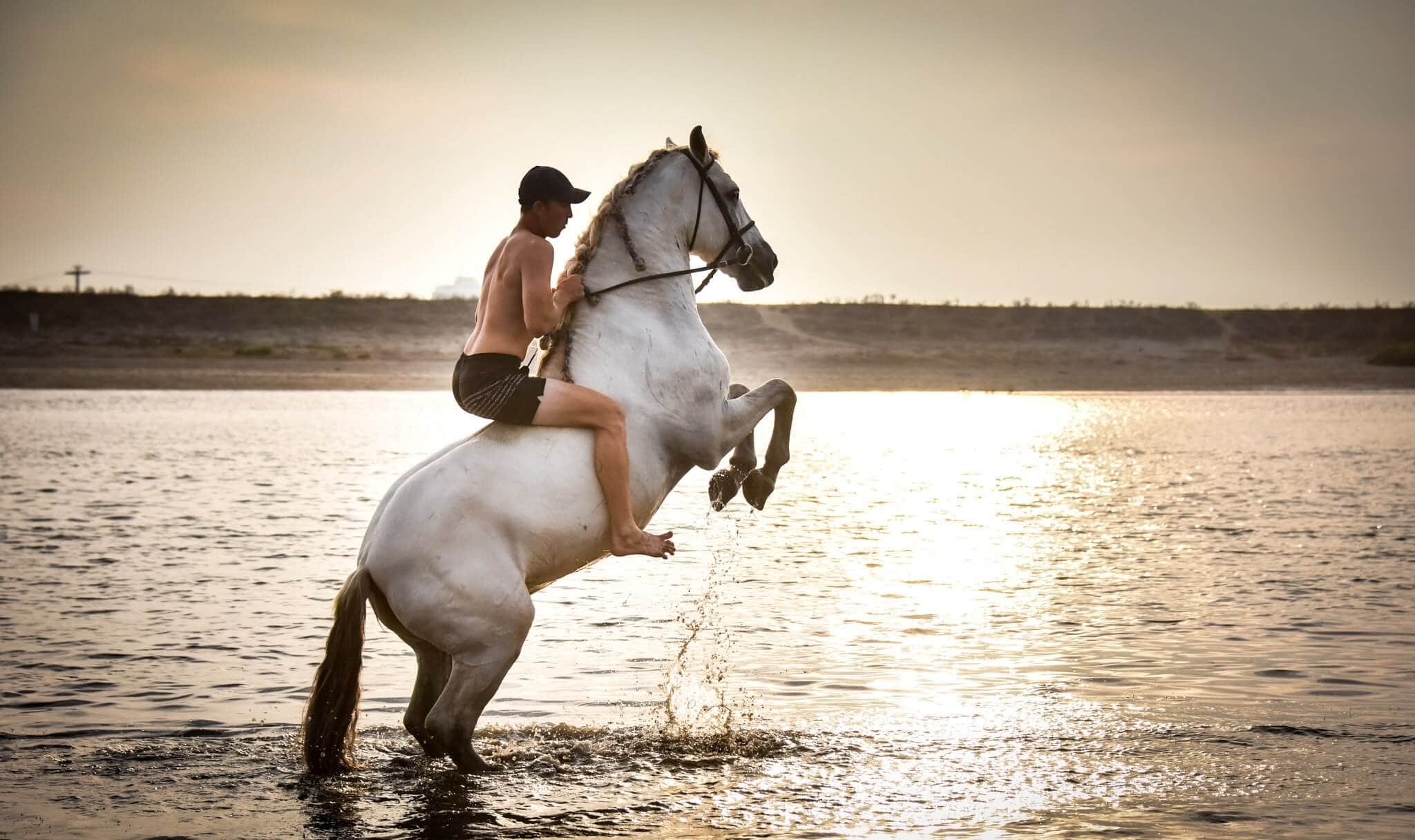
Steve Paulson’s equestrian career has spanned numerous disciplines and countries. Along the way, he explored nearly every corner of the equestrian world, from working with off-track Thoroughbreds and playing professional polo to competing in upper-level eventing and Grand Prix dressage.
Today, Steve runs a dressage training facility near his hometown of San Diego, California, where he is developing several upper-level horses for international competition.
His diverse equestrian experiences have shaped his unique approach to training and understanding horses as individuals. As a result, his program differs from many traditional high-performance operations, emphasizing liberty work, ample pasture turnout, and cross-training as essential parts of his horses’ daily routines.
That philosophy has since shaped his growing interest in equine nutrition and its significant impact on performance.
Steve Paulson: From Weekly Riding Lessons to Professional Polo
Steve’s introduction to horses began with a Christmas gift. “Nobody in my family was involved with horses,” Steve says. “For Christmas, I got to go trail riding, and my parents saw how much I loved it. So, I started taking lessons once a week, then I asked to ride more, and it became twice-a-week lessons.”
His early riding experience eventually led him to polo, where he discovered an entirely different side of equestrian sport.
“Polo was really important to me as a young boy because, while I loved horses, the competition and sense of community in polo were just as exciting,” Steve says. “I played on my high school’s interscholastic team, and going to tournaments and competing regularly really pushed me further into the horse world.”
At 16, Steve bought his first horse, Marley, a 3-year-old off-track Thoroughbred mare who became the most influential horse of his career. “She was my favorite horse,” Steve says. “I was a little afraid of her at first because I was 16 and had this 3-year-old fresh-off-the-track Thoroughbred. I remember thinking, ‘What am I doing?’”
Working with professional polo player Carlos Galindo helped Steve learn the fundamentals of training Marley and other young horses. He later played professional polo himself.
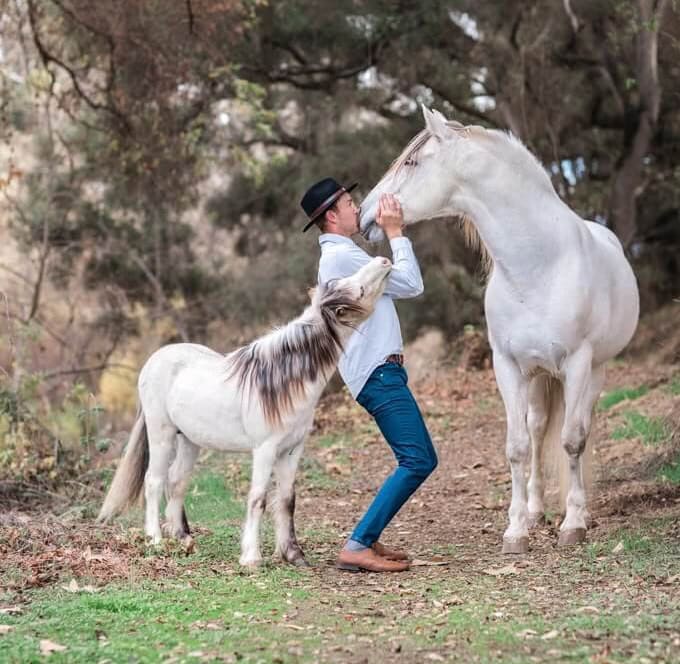
Eventually, the financial demands of maintaining multiple horses and traveling to competitions prompted him to reconsider his career. “I sold all the other polo horses, but kept Marley,” Steve says.
He began testing a new discipline with Marley soon after. They began jumping, and their success with this new skill led them to eventing.
From Two-Star Eventing to the Cavalia Spotlight
Steve’s partnership with Marley continued to evolve as he began working with five-star eventer Tamie Smith in Temecula, California.
Steve and Marley progressed through the eventing levels and eventually competed at the two-star level, but a frightening cross-country moment made him reconsider their future in the sport.
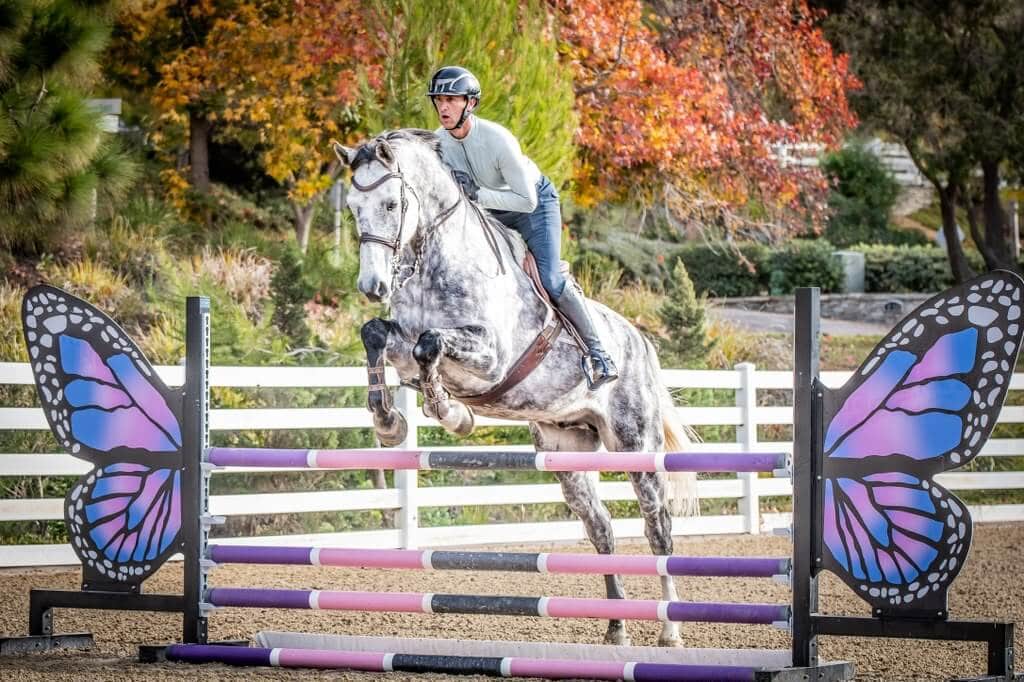
“Marley caught her front leg on a jump going into the water at Woodside Horse Trials, and it was terrifying,” Steve says. “I was a little afraid as well, to be honest, and I didn’t want to put her in a position where I wasn’t confident or where she wasn’t going to be comfortable anymore.”
The incident opened the door to a much different kind of training. Steve began experimenting with dressage, bareback riding and bridleless work, developing new ways to interact with Marley outside conventional competition.
Around that time, a friend named Rebecca, who was performing with Cavalia, contacted Steve about an upcoming audition in California.
“She said she could get me an audition with Cavalia if I sent her a video,” Steve says. “So Marley and I made this little hillbilly video in my backyard, jumping around bareback and bridleless, standing on her and doing all this weird stuff.”
But his unconventional audition worked.

“Three weeks later, I was on tour with Cavalia. That honestly changed everything for me.”
— Steve PaulsonMad Barn High Performance Athlete
How Cavalia Introduced Steve to Liberty Training
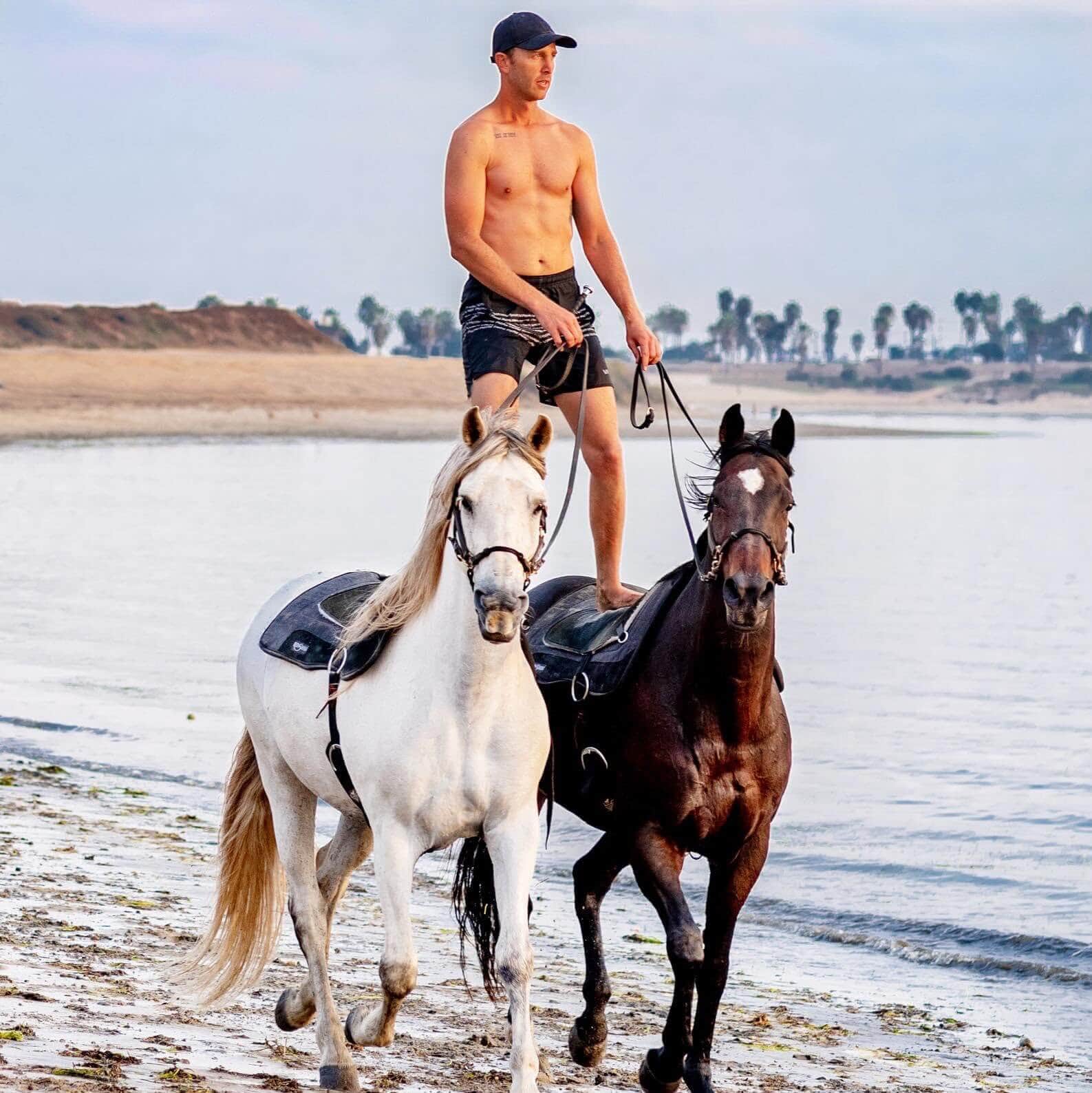
Joining Cavalia exposed Steve to a completely different approach to working with horses: liberty training. Rather than relying primarily on physical riding aids, liberty work challenged him to develop communication and connection that encouraged horses to participate willingly.
“It was learning how to have a connection with a horse without force,” Steve says. “In polo and eventing, you’re often physically involved with the horse through the reins or your legs. At liberty, you’re teaching the horse to want to be with you and want to think differently.”
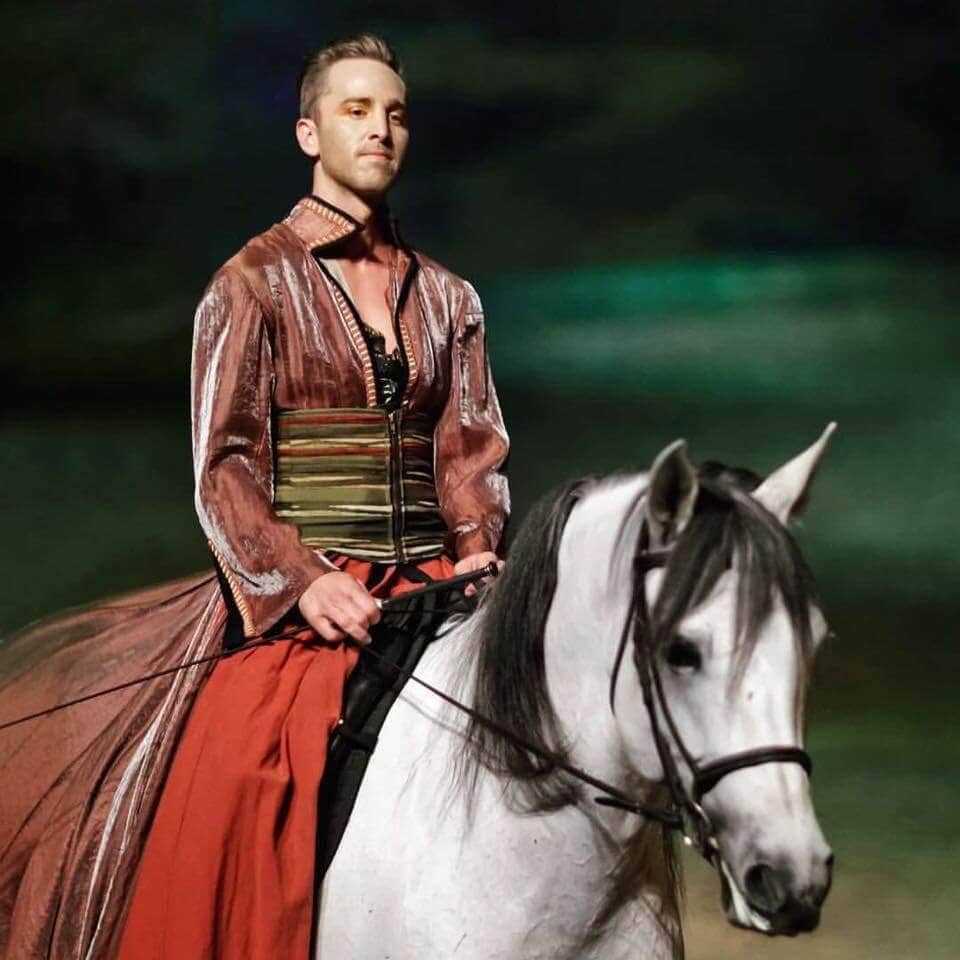
During his two years with Cavalia, Steve also began riding Andalusian stallions trained in advanced dressage movements, introducing him to a discipline he had previously found uninteresting.
“I was never into dressage,” Steve says. “But once I discovered flying changes, pirouettes, piaffe and passage, it lit a little fire in me. I thought, ‘This is actually really cool.’”
His international touring schedule with Cavalia took him to major cities around the world, including Vancouver, Portland, Miami, and Dallas. However, Steve wanted to continue expanding his skills beyond performing a set routine and searched for a new way to expand on his existing career. That search took him to Europe, where he explored the equestrian entertainment and film industries.
He spent time working with British horse trainer and performer Ben Atkinson, learning more about stunt work and preparing horses for film. He also participated in productions such as Cavalluna and visited training programs throughout Europe.
Those experiences would later influence the training program and facility Steve created for himself.
“I spent about a year and a half going back and forth to Ben's farm and traveling around Europe. I got to see so many different trainers and facilities. I was always paying attention to what I liked, what I didn't like, and who I thought did the best job.”
— Steve PaulsonMad Barn High Performance Athlete
Finding His Way to Grand Prix Dressage
When COVID disrupted the international equestrian performance industry, Steve returned to his Southern California roots, bringing home Marley, a retired Cavalia horse, and another horse he owned. Back home, he continued exploring dressage without feeling any particular need to compete.
“I decided I didn’t need a score to define my riding career,” Steve says. “I would go to the barn every day whether there was competition or no competition coming up because I just loved being with the horses.”
Soon after, an unexpected invitation from Olympic dressage rider Guenter Seidel introduced Steve to yet another side of equestrian sports.
“He called and asked if I could help ride a couple of tricky horses for a few months,” Steve says. “That really introduced me to the bigger warmblood dressage world. The power some of those horses have was exciting to me.”
The opportunity exposed Steve to powerful warmbloods and the demands of competitive upper-level dressage.
What began as another learning opportunity eventually grew into a more serious competitive ambition. Today, Steve has about seven upper-level dressage horses in his program and hopes to compete them internationally while maintaining the philosophies that have shaped his riding career.
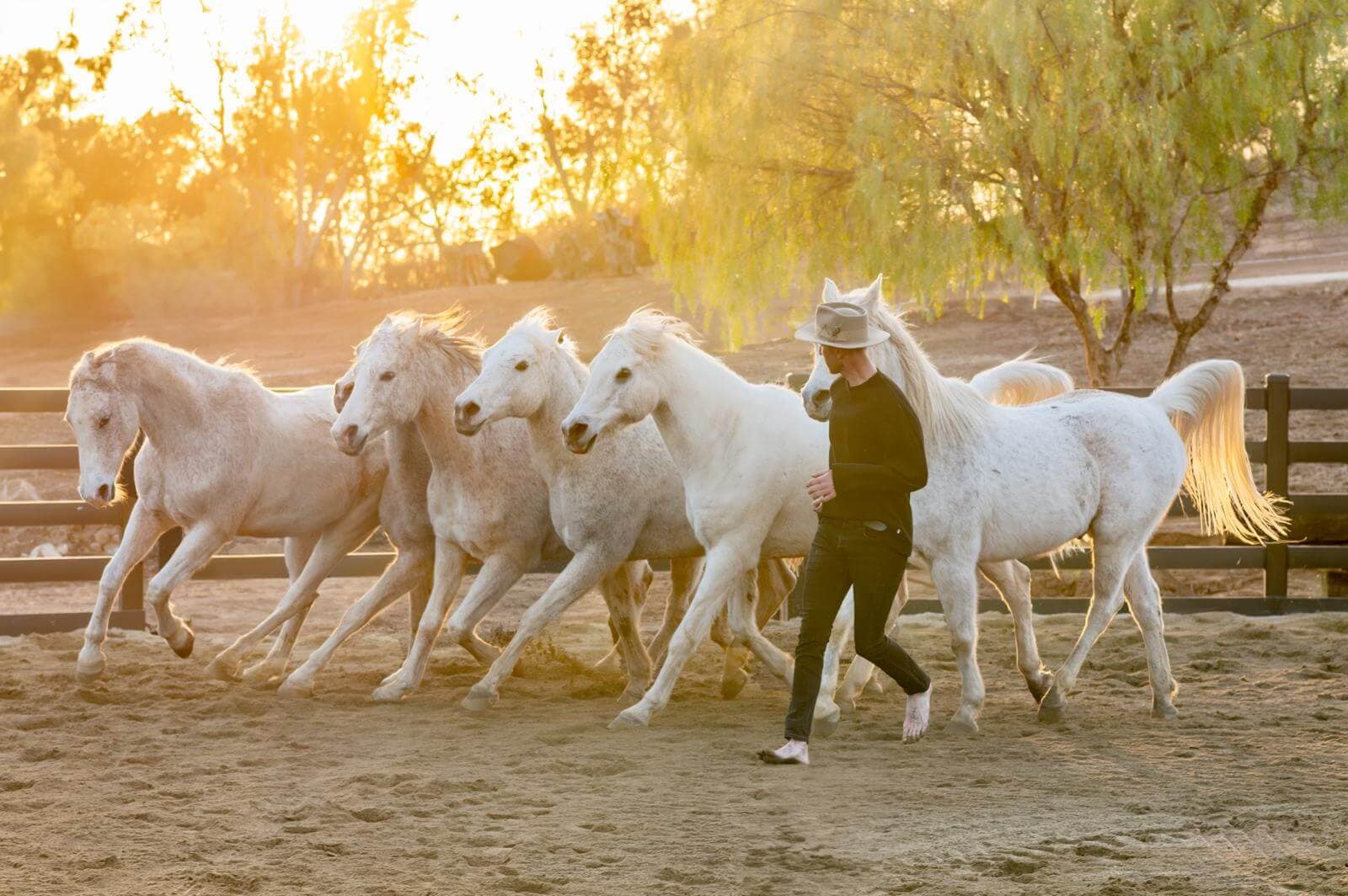
Years of visiting equestrian facilities across Europe and beyond helped Steve develop and realize his vision for his own farm. While hiking with his dogs near San Diego, he discovered approximately seven acres of undeveloped land that was exactly what he wanted.
“I was hiking all over these neighborhoods and I found this really cool piece of land,” Steve says. “I found out who owned it and begged her to sell it to me.”
About two years ago, Steve finally fulfilled his longtime dream of owning a horse property. Drawing inspiration from his favorite equestrian facilities throughout Europe and beyond, he designed and built his ideal facility. His priorities included large stalls, grass pastures, and a layout that allows horses to remain connected to their surroundings and one another.
“All my stalls are quite large, and the horses can go out every day. Every stall opens into a pasture, so if a horse is finished being outside and wants to come back in with his buddies, he can. They can really be horses that way.”
— Steve PaulsonMad Barn High Performance Athlete
His ranch now houses approximately 40 horses, with an additional waiting list. Despite the program’s growth, Steve remains focused on each horse as an individual.
A Different Approach to Training & Managing Upper-Level Dressage Horses
Steve’s training philosophy reflects lessons from nearly every discipline he has experienced. Rather than limiting his dressage horses to repetitive arena sessions, he builds variety into their weekly routines through liberty, trail riding, jumping, cavaletti work, and turnout.
“I usually give the horses Sunday off, and Monday is liberty day,” Steve says. “That’s my check-in with them. They can buck, play, and express themselves, and I can see how fresh they are and how they’re feeling.”
More structured dressage work generally follows on Tuesday and Wednesday, while Thursday brings another opportunity for a different activity, like trail riding. Friday may involve a more demanding workout, followed by another lighter day on Saturday. The schedule allows Steve to observe how each horse responds physically and mentally before adjusting the training.
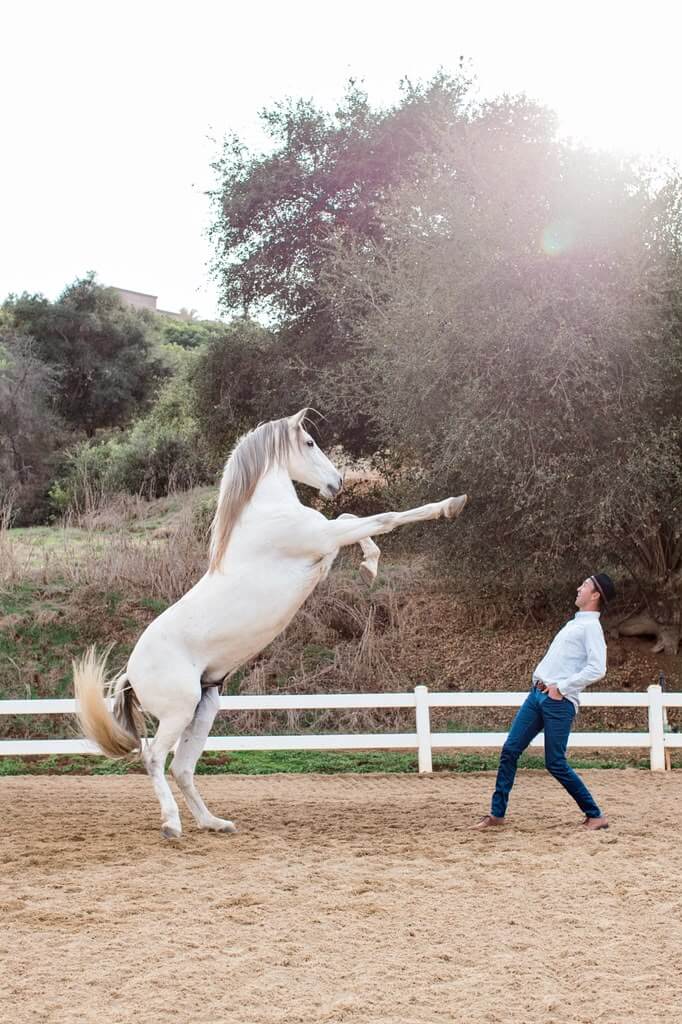
“I’m always listening to what they’re telling me,” Steve says. “Early in the week, I can see how they’re feeling and address what they need for the week.”
He also believes high-performance horses benefit from opportunities to move freely rather than being overly protected from normal equine activities. That philosophy extends even to his Grand Prix horses, who still enjoy liberty work, trail rides, and pasture time alongside upper-level training.
“The more high-performance horses move, the better. They become softer to ride and less likely to lose their minds than when they're mostly kept in their stalls. You have to be smart about which horses go together and how you manage them, but I don't want to bubble-wrap them.”
— Steve PaulsonMad Barn High Performance Athlete
Why a Supplement Skeptic Turned to Mad Barn
Despite his extensive experience with horses, Steve admits he was never particularly enthusiastic about supplements. His nutritional approach centered on quality forage, suitable feed, hay testing, turnout, and providing basic nutrients.
“I believed in good nutrition, but I never really believed in supplements,” Steve says. “I’d tried joint supplements and all kinds of different products over the years, and I never noticed anything that made me think, ‘This is really worth it.’”
His perspective shifted when an assistant started using a supplement with a particularly reactive horse in the program. Steve initially believed the horse’s behavior would require more training rather than additional nutritional support, but after approximately a month, he noticed a considerable change. “The horse was suddenly so much more relaxed, rideable, and easy to teach,” Steve says. “I couldn’t believe it.”
Steve used Mad Barn’s Visceral+, an advanced gastric and hindgut supplement formulated to support digestive health and comfort. It contains amino acids and lecithin to support the stomach’s protective lining, along with probiotics, prebiotics, and yeast to maintain a healthy hindgut microbiome and normal digestive function.
The positive results observed prompted him to try Visceral+ with other horses in his program experiencing tension and spookiness. The experience made him question whether some behaviors traditionally attributed to training problems might also stem from underlying physical discomfort, especially in the gut.

The changes Steve observed encouraged him to reconsider how the right nutritional support might complement his existing training and management practices.
“I work with a lot of problem horses, and it makes me wonder how many times a horse might have had something going on in his stomach or hindgut that was making him reactive. Maybe he was trying to communicate that he wasn't comfortable.”
— Steve PaulsonMad Barn High Performance Athlete
Developing Individual Nutrition Programs With Mad Barn
Steve’s growing interest in nutrition has led him to work more closely with Mad Barn, particularly with equine nutritionist Jessica Artman, MSc.
Jessica holds a master’s degree in animal science, specializing in equine exercise physiology and nutrition, and brings experience as both a competitive rider and researcher.
Approximately five horses in Steve’s program are receiving Visceral+, with plans to evaluate additional horses and their individual nutritional needs in the near future.
Rather than taking a one-size-fits-all approach, Steve wants to understand how targeted nutritional support can complement his existing management practices and meet each horse’s unique needs.
That individualized approach is especially important in a barn housing horses with varying training levels, temperaments, workloads, and nutritional needs. Steve also values Mad Barn’s knowledgeable professionals, who guide him in making more informed feeding decisions.
“My nutritionist Jess is willing to come out, physically look at all my horses, and help come up with a plan that works for each of them,” Steve says. “I think that’s a game changer. Now I can better recognize when a horse’s behavior, body condition, or performance might indicate a need for additional nutritional support.”
Steve has also noticed changes in other horses in his program that previously struggled with body condition. Some were naturally nervous or struggled to keep weight on despite receiving substantial amounts of feed. After introducing Visceral+ to several of those horses, Steve observed improvements in body condition, topline, and overall temperament.
“We had some hard keepers, and after putting them on it, they just blossomed,” Steve says. “Their toplines got better, and they put on so much more weight that we were actually able to lower their feed amounts.”
The experience reinforced the importance of examining each horse’s overall comfort and nutritional needs rather than simply increasing grain to address poor body condition.
“I think that's what's exciting about Mad Barn. There are so many products that you can customize for the individual horse. So often, we put every horse in the barn on the same feed and the same supplements, but they're all different with unique needs.”
— Steve PaulsonMad Barn High Performance Athlete
DeVille: From a Challenging Jumper to a More Relaxed Grand Prix Dressage Partner
One of Steve’s most significant current partnerships is with DeVille, a horse he originally purchased as a jumper training project. “He’d bucked off his owner a few times,” Steve says. “I bought him thinking I could work with him and make him more rideable. So, I started doing some dressage with him.”
When Guenter Seidel saw DeVille, he recognized potential that went well beyond improving the horse’s jumping career. “Guenter told me, ‘I think this is a big-time horse,’ and said DeVille reminded him of his first Olympic horse,” Steve says.
Instead of selling DeVille, Steve decided to continue developing him for dressage. About four years later, their partnership reached a major milestone when DeVille earned a 71% score in a Grand Prix test.
Despite his talent, DeVille still struggled with tension, spookiness and tightness through his back. “DeVille is the only horse that’s ever bucked me off,” Steve says. “He gets so tight in his back, and he was so spooky that I could barely get him around the ring.”
After borrowing Visceral+ from his assistant and adding it to DeVille’s feeding program as a test, Steve soon noticed a change in his demeanor and rideability.
“I've never felt a change like that before in DeVille. He was such an intense horse, and the Visceral+ made a huge difference in how he felt in his body.”
— Steve PaulsonMad Barn High Performance Athlete
Macbeth: Less Spookiness & Better Body Condition
Another horse who has shown noticeable changes in Steve’s program is Macbeth, a talented 9-year-old dressage horse who arrived from Europe a year and a half ago. He progressed rapidly under Steve’s training program and recently completed his first Grand Prix.
“He’s an exceptionally talented horse,” Steve says. “When we got him, he’d never shown above Second Level, and now he’s already done his first Grand Prix.”
Despite that talent, Macbeth struggled with spookiness and tension. “He was spooking at every flower,” Steve says. “Our ring is open and beautiful, and there aren’t really any spooky corners. I kept thinking, ‘There is no reason for you to be this spooky and intense here.’”
Macbeth also tended to become short through his neck and tight in his body, making it difficult for Steve to develop a relaxed, forward connection.
After adding Visceral+ to his nutrition program, Steve noticed changes in how Macbeth responded during training.
“He’s been able to soften, and I’ve been able to let him out and trust that he’s going to take me forward in a positive way,” Steve says. “We’re not fighting unnecessary ghosts in the corners anymore.”
The changes were not limited to rideability. Steve also noticed an improvement in Macbeth’s overall body condition. “He’s a tall horse, but he always looked very light and feminine,” Steve says. “Now he’s finally getting fuller-looking in his body.”
Letting the Horse Guide the Program
Steve’s career has continually evolved since his initial introduction to horses. Each experience has reinforced his belief that horses perform best when people understand their individual needs.
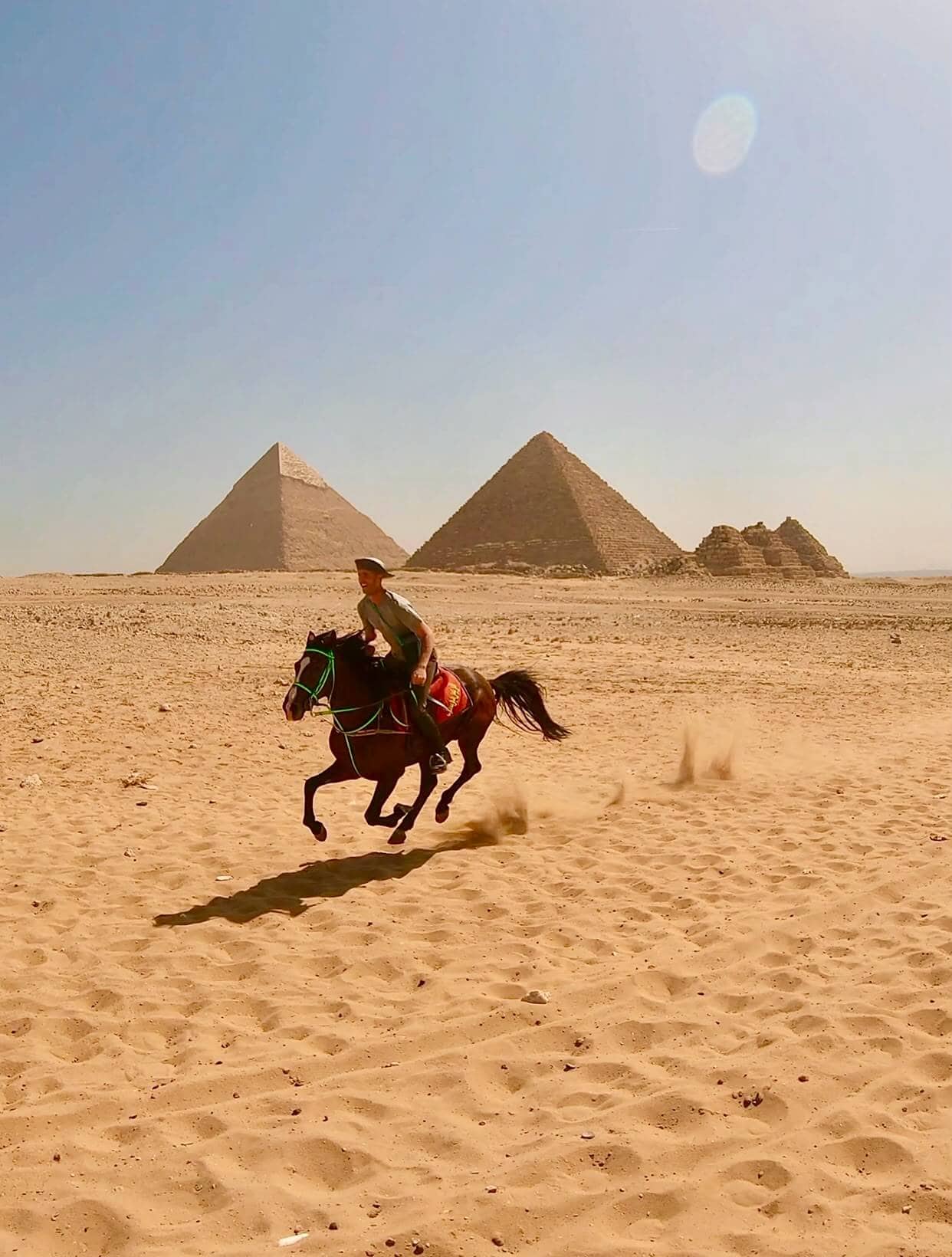
Today, that philosophy influences everything from his facility design and training schedule to his approach to feeding and nutrition. His experiences with DeVille and Macbeth have encouraged him to look beyond training when addressing spookiness and body condition.
“DeVille can do a Grand Prix test, and the next day he’s out playing at liberty, or enjoying bucking, rearing and just being crazy in the pasture,” Steve says. “It’s about strong>allowing horses to be horses while still keeping them healthy, comfortable, and sound.”
With support from Mad Barn, Steve hopes to continue refining his nutrition program while developing horses for international dressage competition.
“What I love about Mad Barn is how they help find the right nutritional balance for each horse. All horses are individuals, and having someone who can help us understand what each one needs is really important.”
— Steve PaulsonMad Barn High Performance Athlete