English

Gastric ulcers and hindgut acidosis in horses can look very similar from the outside. Both may contribute to colic, changes in behavior, poor performance, reduced appetite, or inconsistent manure. But inside the horse’s digestive tract, they involve very different problems.
When a horse shows signs of digestive discomfort, many owners first suspect gastric ulcers. However, in some horses, the underlying issue may be further along the digestive tract, where changes in hindgut fermentation can disrupt microbial balance, lower pH, and affect overall gut function.
This distinction is important because gastric ulcers and hindgut acidosis develop for different reasons and require different management strategies. In some cases, both the stomach and hindgut may be involved, making accurate diagnosis, appropriate feeding changes, and long-term digestive support essential.
This article explains the key differences between ulcers and hindgut acidosis in horses, including how each condition develops, why their symptoms overlap, how veterinarians identify the source of the problem, and what nutrition and management strategies can support digestive health across the entire gastrointestinal tract.
Difference Between Gastric Ulcers & Hindgut Acidosis in Horses
Horse owners tend to associate any signs of digestive discomfort in their horse with gastric ulcers before considering other conditions.
Ulcers are common, well-known, and widely discussed in equestrian communities, but they aren’t the only gut issue that can cause colic, behavior changes, poor performance, and other signs of digestive issues. In many cases, the true cause of these symptoms isn’t in the stomach at all.
Hindgut acidosis is a less obvious but equally concerning digestive disorder that is easy to mistake for ulcers because there is significant overlap between symptoms. These two conditions affect different parts of the digestive tract and require different treatment and management strategies.
Treating a hindgut problem as though it were a stomach issue (and vice versa) can allow the underlying digestive imbalance to persist or worsen.
Identifying whether a horse’s digestive issues involve gastric ulcers, hindgut acidosis, or both is key to resolving chronic gut problems, improving performance, and supporting long-term digestive health.
Table 1: Comparison of ulcers vs. hindgut acidosis in horses
| Category | Ulcers | Hindgut Acidosis |
|---|---|---|
| What It Is | Damage to the lining of the digestive tract | Disruption of hindgut fermentation and pH balance |
| Primary Locations | Stomach, and in some cases the hindgut | Cecum and large colon |
| Underlying Cause |
|
|
| Key Dietary Risk Factors |
|
|
| Timing of Symptoms | Variable; may occur around feeding or exercise | Often several hours after eating |
| Manure Changes | May be normal or inconsistent | Loose manure, diarrhea, gas |
| Common Signs |
|
|
| Primary Management Focus | Protecting and healing the gut lining | Stabilizing hindgut pH and microbial balance |
| Response to Ulcer Treatments | Symptoms often improve, but rebound can occur if underlying factors aren’t addressed | Usually minimal or no improvement |
| Response to Hindgut Support | May not resolve ulcer-related damage | Often improves when fermentation is stabilized |
Equine Digestive System
The equine digestive system is complex and highly sensitive to feeding and management. While it is often discussed as a single system, it contains two main sections: the foregut and the hindgut. Digestive disorders in these areas behave differently and require different treatment and management approaches.
The foregut includes the stomach and small intestine, where feed is broken down by stomach acid and digestive enzymes. The stomach is where ulcers in horses most commonly develop, particularly when horses experience long periods without forage or consume diets high in starch. [1][2]
The hindgut includes the cecum and large colon, where fiber is fermented by billions of microbes. This fermentation process is critical for energy production and overall gut health, but it is highly sensitive to excess starch and sugar.
When undigested carbohydrates reach the hindgut, microbial balance can be disrupted, pH can drop, and hindgut acidosis may develop. In some cases, inflammation or ulceration of the hindgut lining may also occur. [3]
Because the foregut and hindgut function so differently, digestive issues in horses often require targeted nutritional strategies. Identifying where a digestive problem originates is the first step toward effective treatment and long-term digestive health.
What's your top priority with your horse's health?

What's your top priority with your horse's health?
Ulcers in Horses
Ulcers in horses occur when the lining of the digestive tract becomes damaged by acid, inflammation, or reduced protective mechanisms. While gastric ulcers in the stomach are the most commonly recognized, ulceration can also occur in other areas of the digestive tract, including the hindgut.
Gastric ulcers develop in the stomach, where horses produce acid continuously, even when they are not eating. When forage intake is limited or meals are spaced too far apart, stomach acid can damage the stomach lining.
High-starch diets, along with stress, intensive training, transport, and certain medications, further increase ulcer risk. [4][5][6][7][8]
Signs of ulcers in horses can be subtle and inconsistent. These may include: [6][7]
- Changes in appetite
- Poor body condition
- Irritability
- Girthiness
- Mild or recurrent colic
- Decreased performance
Because these signs are not unique to ulcers, diagnosis is often suspected based on clinical signs rather than confirmed testing. [6][7]
Unlike hindgut acidosis, which is driven by fermentation imbalance, ulcers involve direct damage to the digestive lining.
Treatment typically focuses on reducing acid exposure and supporting tissue healing. Identifying the location of ulceration is important, as ulcers in different parts of the digestive tract may require different management strategies.
Hindgut Acidosis in Horses
About three hours after a horse eats, feed reaches the hindgut, which includes the cecum and large colon. This is where fiber is fermented by beneficial bacteria, producing energy and important nutrients such as vitamins.
A healthy hindgut maintains a slightly acidic but stable pH that supports fiber-digesting microbes and normal digestive function. [3][9][10]
Hindgut acidosis develops when a horse’s diet contains excessive starch or sugar. Undigested carbohydrates can spill into the hindgut, where they are rapidly fermented into volatile fatty acids. This increases acid production, lowers hindgut pH, disrupts microbial balance, and can damage the gut lining. [10][11][12][13]
Over time, this process may contribute to hindgut acidosis in horses, leading to: [10][11][12][13]
- Discomfort
- Colic
- Reduced appetite
- Loose manure
- Inflammation
- Increased risk of laminitis
Because the hindgut plays a central role in fiber digestion, changes in this environment can affect more than manure quality alone. Even modest drops in hindgut pH may reduce microbial efficiency and contribute to changes in digestive comfort, appetite, and overall gut function, especially in horses that regularly consume high-starch meals.
Symptoms of Digestive Issues
Ulcers and hindgut acidosis can be difficult to distinguish based on outward signs alone. Both conditions can affect appetite, behavior, manure quality, comfort, and performance, but these signs do not confirm where the problem is occurring in the digestive tract.
This is why digestive symptoms should be treated as a reason to investigate further, not as a diagnosis. A horse that is girthy, irritable, off feed, loose in the manure, or inconsistent under saddle may have gastric ulcers, hindgut dysfunction, another gastrointestinal disorder, or more than one issue occurring at the same time. [6][7][8]
Veterinary evaluation is especially important when signs are persistent, recurrent, severe, or only improve temporarily with dietary changes or ulcer treatment. Your veterinarian can help determine whether further diagnostics, such as gastroscopy, bloodwork, fecal testing, or imaging, are needed to identify the source of the problem.
Signs that may warrant further investigation include: [8]
- Intermittent colic
- Changes in behavior or attitude
- Reduced appetite
- Poor performance
- Sensitivity during grooming or saddling
- Manure changes such as loose stool or diarrhea
Because these signs are non-specific, the next step is to identify whether the issue is most likely related to the stomach, the hindgut, another body system, or a combination of factors. This distinction guides more appropriate treatment, feeding changes, and long-term digestive support.
Why Ulcers and Hindgut Acidosis Require Different Treatment
Gastric ulcers and hindgut acidosis can produce similar outward signs, but they are driven by different processes within the digestive tract. This means that a management plan that helps one condition may not fully address the other.
Ulcer treatment strategies typically focus on reducing acid exposure, protecting the stomach lining, and supporting tissue healing. However, these approaches do not directly correct microbial imbalance or excess fermentation in the hindgut.
Similarly, nutritional strategies designed to support hindgut health do not replace veterinary treatment for confirmed gastric ulceration or address acid-related damage in the stomach. [14]
This is why persistent or recurrent digestive signs should be evaluated with the help of a veterinarian. In some horses, the problem may involve the stomach, the hindgut, or multiple areas of the gastrointestinal tract. Identifying the most likely source of discomfort helps guide appropriate treatment, feeding changes, and long-term digestive support. [14]
Table 2. Key differences in diagnosis and treatment for gastric ulcers vs hindgut acidosis
| Condition | How it is typically diagnosed | Main treatment focus | What treatment usually includes |
|---|---|---|---|
| Gastric ulcers |
|
|
|
| Hindgut acidosis |
|
|
|
Diagnosing Digestive Disorders in Horses
Because ulcers and hindgut acidosis often present with similar signs, identifying the underlying cause of a digestive issue usually requires veterinary involvement. Changes in appetite, behavior, performance, or manure can offer helpful clues, but these signs alone cannot confirm which part of the digestive tract is affected.
Gastroscopy remains the gold standard for diagnosing gastric ulcers, as it allows direct visualization of both the squamous and glandular regions of the stomach.
It is currently the only way to confirm the presence, severity, and location of gastric ulceration. However, gastroscopy does not assess the hindgut, so a scoping does not rule out hindgut-related disease. [14][15][16][17]
There is no single test to definitively diagnose hindgut acidosis or hindgut ulceration. Instead, veterinarians rely on a combination of: [14]
- Diet history
- Clinical signs
- Manure quality
- Bloodwork
- The horse’s response to targeted dietary and management changes
In some cases, additional tools such as fecal analysis or imaging may be used to help rule out other causes of gastrointestinal discomfort. [14]
Working with a veterinarian and, when appropriate, an equine nutritionist allows for a comprehensive evaluation of: [7][11][18]
- Feeding practices
- Starch intake
- Forage access
- Medication use
- Management stressors
This team-based approach supports more accurate diagnosis and enables targeted strategies that address the underlying issue rather than treating symptoms alone. [7][11][18]
When to Call the Veterinarian
Digestive signs associated with ulcers and hindgut acidosis can overlap with many other gastrointestinal and metabolic disorders, making veterinary evaluation important whenever symptoms become persistent, severe, or recurrent.
Because horses with digestive discomfort often show vague behavioral or performance changes before more obvious clinical signs develop, early intervention can help identify the underlying issue before complications worsen.
Contact your veterinarian if your horse shows:
- Recurrent or persistent colic
- Ongoing loose manure or diarrhea
- Reduced appetite or unexplained weight loss
- Behavior changes, irritability, or sensitivity during grooming or saddling
- Declining performance or exercise intolerance
- Signs that only improve temporarily with dietary changes or ulcer treatment
- Repeated digestive issues during training, travel, or stressful management changes
Prompt veterinary attention is especially important if your horse develops severe colic signs, persistent diarrhea, fever, dehydration, or signs of laminitis, as these may indicate a more serious gastrointestinal disturbance requiring immediate care.
Supporting the Whole Digestive Tract
Digestive challenges in horses are rarely limited to one area of the gut. Stomach issues are common in both performance and pleasure horses, and factors such as stall confinement, inconsistent access to forage, grain-based diets, training demands, and frequent transport can place stress on the entire digestive system. [4][7][8][16]
Rather than feeding your horse for one condition, digestive management should aim to reduce risk factors and support normal function across the entire gastrointestinal tract.
Forage & Management
Supporting whole-gut health starts with sound feeding and management practices. Consistent access to forage helps buffer stomach acid and supports normal hindgut fermentation, while limiting excessive starch and sugar reduces the amount of undigested carbohydrate reaching the hindgut.
Feeding smaller, more frequent meals can further reduce digestive stress by avoiding large spikes in acid production and fermentation. [4][7][11][16]
Management practices also play an important role. Minimizing long periods without feed, maintaining consistent routines, and making dietary changes gradually all help protect gut stability.
Horses undergoing training, travel, or changes in workload may benefit from additional attention to forage intake and meal timing, as stress can impact both gut function and microbial balance. [7][8][16]
These foundational strategies support digestive health across the entire gastrointestinal tract and are critical regardless of whether ulcers, hindgut acidosis, or both are suspected.

Supplementary Support for Whole-Gut Health
Targeted support from gut supplements can complement good management by helping maintain normal digestive function, microbial balance, and gut barrier integrity. [11]
For horses with ongoing digestive sensitivity, the goal is to support the entire gastrointestinal tract, not just one region of the gut. This means combining consistent forage access, appropriate starch and sugar intake, veterinary guidance when needed, and nutritional support that matches the horse’s main digestive concerns.
Visceral+ is Mad Barn’s most comprehensive formula for horses that need both gastric and hindgut support. It is designed to support the natural protective barriers of the digestive tract, including the stomach lining, intestinal lining, and hindgut environment. [11]
Visceral+ provides science-backed nutrients that help maintain normal mucin production, support healthy digestive tissue, and promote microbial balance. Its formula includes amino acids, phospholipids, yeast, herbs, prebiotics, and probiotics selected to support digestive function across the stomach and hindgut.
This makes Visceral+ a strong choice for horses showing signs of whole-gut sensitivity, including changes in appetite, manure quality, behaviour, or performance during training, travel, competition, or other management stressors.
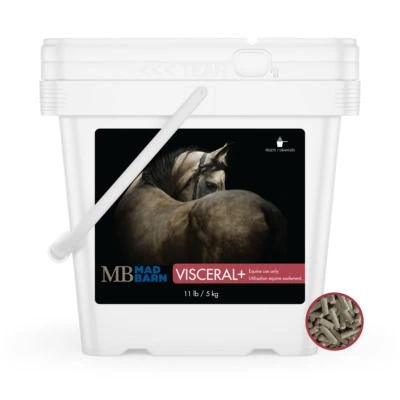
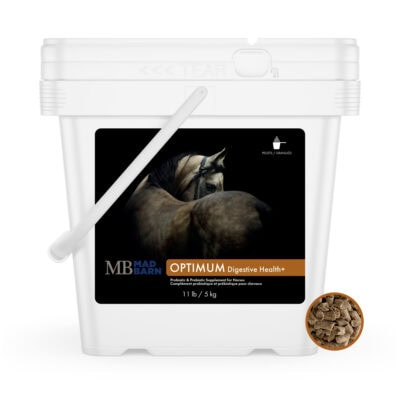
Optimum Digestive Health is a hindgut-focused formula for horses that need help maintaining microbial balance, fibre fermentation, immune function, and consistent manure quality. [11]
It contains probiotics, prebiotics, yeast, digestive enzymes, immune nucleotides, and toxin binders designed to help maintain a healthy hindgut microbiome, support feed efficiency, and promote normal immune defenses.
This type of support may be especially useful during dietary changes, training stress, travel, environmental challenges, or feeding programs that include higher levels of starch and sugar. By supporting beneficial microbes and normal fermentation, Optimum Digestive Health helps maintain digestive stability in the hindgut.
While supplements can play an important supportive role, they cannot replace appropriate nutrition, management, or veterinary care.
Horses with persistent, recurrent, or severe digestive signs should be evaluated by a veterinarian to determine whether gastric ulcers, hindgut dysfunction, another health issue, or multiple factors are involved.
A whole-gut approach focuses on reducing underlying risk factors while using targeted nutritional support to help maintain digestive balance, comfort, and long-term gastrointestinal health. [4][7][11][16]
Frequently Asked Questions
Here are some frequently asked questions about the difference between ulcers and hindgut acidosis in horses:
The difference between gastric ulcers and hindgut acidosis in horses is that ulcers involve damage to the digestive lining, while hindgut acidosis is a fermentation and pH imbalance in the cecum and large colon. Gastric ulcers usually develop in the stomach when continuous acid exposure overwhelms the stomach's protective barriers. Hindgut acidosis develops when excess starch or sugar reaches the hindgut and is rapidly fermented, lowering pH and disrupting microbial balance. Because these conditions affect different parts of the digestive tract, they do not respond to the same treatment or feeding strategy.
Hindgut acidosis is a digestive disorder where excess starch or sugar reaches the hindgut and is rapidly fermented into volatile fatty acids. This process lowers hindgut pH, and disrupts the microbial population that normally supports fiber digestion. As the imbalance worsens, horses may develop discomfort, loose manure, colic, inflammation, and a higher risk of laminitis. It is a hindgut problem rather than a stomach acid problem.
The main risk factors for gastric ulcers and hindgut acidosis differ, even though some feeding and management issues overlap. Gastric ulcers are commonly linked to limited forage intake, long gaps between meals, stress, intensive training, transport, high-starch diets, and certain medications. Hindgut acidosis is more strongly associated with excess starch and sugar intake, especially from large grain meals that allow undigested carbohydrate to spill into the hindgut. In practice, horses exposed to inconsistent forage access and high-starch feeding may be at risk for both conditions at the same time.
How you tell whether your horse's signs are more consistent with ulcers or hindgut acidosis depends on the overall pattern rather than one symptom alone. Both conditions can cause colic, reduced appetite, irritability, poor performance, and behavior changes, which is why they are often confused. Hindgut acidosis is more likely to be associated with loose manure, diarrhea, gas, and signs that appear several hours after eating, while gastric ulcers may be more linked to girthiness, appetite changes, and discomfort around feeding or exercise. These clues are helpful, but they are not specific enough to confirm a diagnosis without veterinary evaluation.
A horse can have ulcers and hindgut acidosis at the same time, especially when the diet or management program places stress on the whole digestive tract. High-starch diets, inconsistent forage access, and intensive training demands can contribute to problems in both the foregut and hindgut. When both issues are present, the signs can be even harder to interpret because treatments may only improve part of the problem. That is why partial improvement with one approach does not always mean the underlying issue has been fully resolved.
Gastric ulcers are diagnosed in horses with gastroscopy, which is considered the gold standard. This procedure allows a veterinarian to directly examine the stomach lining and confirm whether ulcers are present, where they are located, and how severe they are. Gastroscopy is currently the only way to definitively diagnose gastric ulceration. It is important to remember that a normal scope does not rule out hindgut disease, because the hindgut is not examined during gastroscopy.
Veterinarians identify hindgut acidosis or hindgut ulcers by combining clinical clues rather than relying on a single definitive test. They may assess diet history, starch intake, forage access, manure quality, bloodwork, medication use, and the horse's response to targeted feeding or management changes. In some cases, fecal testing or imaging may be used to help rule out other causes of digestive discomfort. This broader workup is important because hindgut problems can mimic other gastrointestinal or metabolic conditions.
Gastric ulcer treatment does not fix hindgut acidosis because the two conditions are driven by different processes in different parts of the gut. Ulcer treatment focuses on reducing acid exposure and supporting healing of damaged stomach tissue. Hindgut acidosis requires a strategy that restores microbial balance and reduces excess fermentation from starch and sugar overflow. If a horse is treated only for ulcers when the hindgut is the real problem, symptoms may improve only temporarily or not at all.
Hindgut ulcers are treated in horses by addressing the underlying causes and supporting hindgut health rather than using stomach-focused ulcer therapy alone. Management usually involves reviewing starch and sugar intake, improving forage access, correcting feeding practices, and evaluating medication history with a veterinarian. Because hindgut ulceration is not diagnosed or managed the same way as gastric ulceration, acid-suppressing approaches used for stomach ulcers are not enough on their own. Horses with suspected hindgut ulceration need a targeted plan based on veterinary assessment and diet review.
You should call the veterinarian for suspected ulcers or hindgut acidosis when digestive signs are persistent, severe, or keep coming back. Recurrent colic, ongoing loose manure or diarrhea, reduced appetite, unexplained weight loss, behavior changes, declining performance, or signs that only improve briefly with diet changes all warrant a veterinary workup. Prompt veterinary attention is especially important if your horse develops severe colic, dehydration, fever, persistent diarrhea, or signs of laminitis. Early evaluation can help identify whether the problem is in the stomach, hindgut, or both.
You can reduce the risk of both gastric ulcers and hindgut acidosis by managing the horse for whole-gut health rather than focusing on only one section of the digestive tract. Consistent access to forage helps buffer stomach acid and also supports normal hindgut fermentation, while limiting excess starch and sugar reduces the risk of carbohydrate overflow into the hindgut. Smaller, more frequent meals, gradual diet changes, and stable daily routines can further reduce digestive stress. Horses in training, travel, or other stressful situations often need even closer attention to meal timing, forage intake, and overall diet balance.
Summary
Ulcers and hindgut acidosis are different digestive conditions with different underlying causes. Treating them the same way often leads to poor results.
- Many of the symptoms overlap, including colic, behavior changes, poor performance, appetite changes, and manure issues, making it difficult to identify the source based on signs alone.
- Horses are often affected by both ulcers and hindgut imbalance at the same time, particularly when exposed to high-starch diets, inconsistent forage access, or stress.
- Ulcers involve damage to the gut lining, while hindgut acidosis is driven by fermentation imbalance and low pH, so treatments for one do not necessarily help the other.
- Accurate diagnosis and long-term improvement depend on proper feeding, management, and veterinary guidance rather than trial-and-error treatment.
References
- Share. E. et al. The Gastrointestinal Tract of the Horse. The Ohio State University. 2022.
- Digestive Anatomy and Physiology of the Horse. Iowa State University Extension and Outreach Equine Science.
- Dicks. L. M. T. et al. The Equine Gastro-Intestinal Tract: An Overview of the Microbiota, Disease and Treatment. Livestock Science. 2014.
- Jassim. R. A. M. A. and Andrews. F. M. The Bacterial Community of the Horse Gastrointestinal Tract and Its Relation to Fermentative Acidosis, Laminitis, Colic, and Stomach Ulcers. Veterinary Clinics: Equine Practice. 2009. View Summary
- Galinelli. N. et al. High Intake of Sugars and Starch, Low Number of Meals and Low Roughage Intake Are Associated with Equine Gastric Ulcer Syndrome in a Belgian Cohort. Journal of Animal Physiology and Animal Nutrition. 2021. View Summary
- Hepburn. R. Gastric Ulcers in Horses (Equis). Vetlexicon.
- Andrews. F. M. Gastric Ulcers in Horses - Digestive System. Merck Veterinary Manual. 2024.
- Nikitina. D. Functional Disorders of the Gastrointestinal Tract of Horses Under the Influence of Chronic Stress. Scientific and Technical Bulletin оf State Scientific Research Control Institute of Veterinary Medical Products and Fodder Additives аnd Institute of Animal Biology. 2025.
- Ermers. C. et al. The Fibre Requirements of Horses and the Consequences and Causes of Failure to Meet Them. Animals. 2023. View Summary
- Bowen. M. et al. Modification of Equine Fecal pH by Dietary Supplementation: A Pilot Study. Social Science Research Network. 2023.
- Johnson. A. C. B. and Rossow. H. A. Effects of Two Equine Digestive Aid Supplements on Hindgut Health. Translational Animal Science. 2018. View Summary
- Raspa. F. et al. Microbiota Characterization throughout the Digestive Tract of Horses Fed a High-Fiber vs. a High-Starch Diet. Frontiers in Veterinary Science. Frontiers. 2024. View Summary
- Raspa. F. et al. A Fibre‐ vs. Cereal Grain‐based Diet: Which Is Better for Horse Welfare? Effects on Intestinal Permeability, Muscle Characteristics and Oxidative Status in Horses Reared for Meat Production. Journal of Animal Physiology and Animal Nutrition. 2022. View Summary
- Marqués, F.J. Gastric Ulcers. Western College of Veterinary Medicine. 2021.
- Archer. D. et al. Gastrointestinal Endoscopy in Horses (Equis). Vetlexicon.
- Vokes. J. et al. Equine Gastric Ulcer Syndrome: An Update on Current Knowledge. Animals. 2023. View Summary
- Lensing. R. and Barton. A. K. Update on Diagnosis, Nonpharmacological Treatment and Prevention of Equine Gastric Ulcer Syndrome (EGUS). Equine Veterinary Education. 2025.
- Reduce Your Horse's Gastric Ulcer Risk. AAEP. 2021.