English

Doxycycline for horses is an oral antibiotic that veterinarians may prescribe for certain bacterial infections, including some tick-borne, respiratory, reproductive, and eye infections. Its use is off-label in horses and requires veterinary oversight.
Doxycycline may be appropriate in some cases, but its use is associated with important risks. Oral treatment may disrupt the hindgut microbiota and contribute to diarrhea or colitis, while injectable administration can cause severe and potentially fatal reactions in horses.
Keep reading to learn how doxycycline works, when veterinarians may prescribe it, how it is administered, and what owners should know about side effects, drug interactions, antibiotic resistance, and competition rules.
Doxycycline for Horses
Doxycycline is an oral antibiotic used in horses for certain bacterial infections. Because doxycycline is active against certain intracellular and tick-associated organisms, veterinarians may consider it for some respiratory, reproductive, eye, and tick-borne infections. [1]
Doxycycline should only be used when a bacterial infection is suspected or confirmed and the bacteria involved are expected to respond to this drug. When selecting an antibiotic, veterinarians consider multiple factors including: [2][3]
- If the drug can reach the site of infection
- If target bacteria are likely to respond
- The risk of side effects
- The horse’s age, overall health, and use of other medications
Doxycycline use in horses is off-label because no systemic veterinary-labeled doxycycline products are approved specifically for horses. Off-label use means a veterinarian prescribes an approved drug in a way that differs from the label directions, such as for a different species, condition, dose, route, or duration. [1]
Doxycycline is a prescription-only medication and may only be legally obtained and administered under the direction of a licensed veterinarian. Antibiotic resistance is a serious concern in veterinary medicine.
Giving antibiotics without veterinary oversight is not safe and can contribute to resistant bacteria, making future infections harder to treat in the same horse and across the wider horse population. Resistant bacteria can also affect other animals and, in some cases, people, which is why antibiotics should only be used when prescribed by a veterinarian and when they are likely to be effective.
Available Forms
There are currently no equine-labeled formulations of doxycycline. Veterinarians prescribe human formulations for horses in an off-label manner.
Off-label, also known as extra-label, use means a veterinarian prescribes an approved medication in a way that differs from the product label. This may include use in a different species, for a different condition, at a different dose, by a different route, or for a different duration than listed on the label.
Off-label prescribing is permitted in veterinary medicine because approved treatment options are limited for many species and conditions. In horses, a veterinarian may determine that doxycycline is appropriate when no suitable equine-labeled option is available and the expected benefits outweigh the risks.
In human medicine, doxycycline has been marketed under trade names including:
- Vibramycin®
- Doryx®
- Monodox®
- Acticlate®
Doxycycline is used exclusively by mouth in horses. Although injectable formulations exist, doxycycline should not be administered to horses by any injectable route because of severe safety concerns. [3][4]
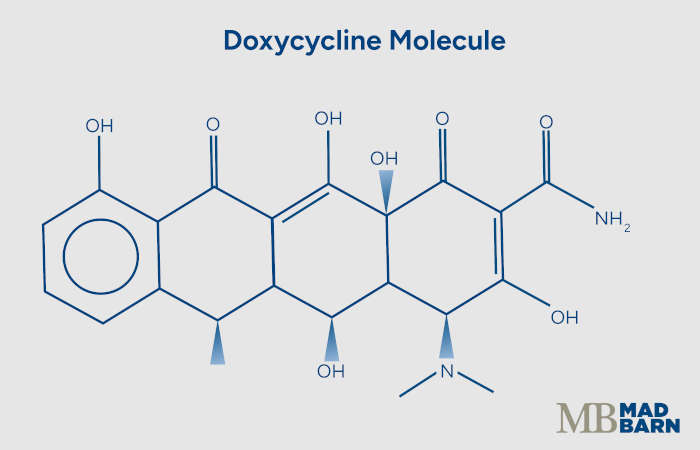
Drug Class: Tetracycline Antibiotics
Doxycycline is a semisynthetic tetracycline antibiotic. It is structurally related to tetracycline but is more lipid (fat) soluble than older tetracyclines, which contributes to wider tissue distribution. In horses, doxycycline may be used as an oral alternative to oxytetracycline when a longer course of antibiotic treatment is needed. [1][3]
The tetracycline class includes naturally occurring drugs, such as oxytetracycline and chlortetracycline, and semisynthetic derivatives, such as doxycycline and minocycline. Doxycycline and minocycline are considered long-acting tetracyclines. [2]
Tetracyclines are broad-spectrum antibiotics, meaning they can act against many gram-positive and gram-negative bacteria. Doxycycline has activity against many aerobic bacteria in both groups, but it does not work against all bacteria.
For example, it is ineffective against Proteus spp. and Pseudomonas spp., and its activity against anaerobic bacteria, including Clostridium spp., is inconsistent. [4]
In equine practice, tetracyclines are especially important for infections caused by organisms such as Anaplasma spp. and Neorickettsia risticii, the organism associated with Potomac Horse Fever, because resistance is reported to be uncommon. [3]
Mechanism of Action
Doxycycline works by blocking bacterial protein synthesis. Without those proteins, target bacteria cannot grow and multiply effectively. [2]
The drug works by entering bacterial cells and accumulating inside them, allowing it to interfere with protein production. The horse’s own cells are less affected because they do not accumulate doxycycline in the same way. [2]
At usual therapeutic concentrations, doxycycline is bacteriostatic rather than bactericidal, meaning it inhibits bacterial growth instead of directly killing bacteria. Given this, treatment success depends partly on an effective immune response. At high concentrations, tetracyclines may become bactericidal against some organisms. [2]
Doxycycline is a time-dependent antibiotic. Its effect depends on how long drug levels remain above the minimum inhibitory concentration (MIC), the lowest concentration needed to inhibit the target bacteria in laboratory testing. The dosing interval and the organism’s susceptibility both influence whether doxycycline is likely to work. [4]
Doxycycline and minocycline may also reduce the activity of enzymes involved in inflammation and collagen breakdown. These effects are sometimes discussed in relation to signs and complications of Lyme disease.
These effects underscore the importance of veterinary oversight in weighing the risks of doxycycline use against the potential benefits for any given case. [2][3][5]
Uses in Horses
Doxycycline is used off-label in horses for selected infections caused by susceptible organisms, particularly intracellular or tick-associated pathogens. It is not appropriate for every infection, and equine absorption after oral administration can vary. [3][4]
Veterinarians may prescribe doxycycline for selected cases of the following infections when the organisms are expected to be susceptible: [3][6][4][2][1]
- Anaplasmosis (ehrlichiosis)
- Potomac Horse Fever
- Equine proliferative enteropathy
- Lyme disease
- Leptospirosis
- Chlamydial diseases
- Lower respiratory disease in foals caused by beta-hemolytic Streptococcus spp. or Rhodococcus equi (rattles)
It’s important to note that a confirmed diagnosis of any of the above conditions does not mean doxycycline is the appropriate treatment. The horse’s medical history, infection site, local resistance patterns and susceptibility results help veterinarians determine which drug to use on a case-by-case basis.
Antibiotic Spectrum
Doxycycline is a broad-spectrum tetracycline with activity against several categories of bacteria and atypical organisms. Like other tetracyclines, it is generally bacteriostatic, meaning it inhibits bacterial growth rather than directly killing bacteria. [1][2][4]
Doxycycline may be active against some Staphylococcus and Streptococcus strains, although resistance remains a concern. Known resistant species include: [1][2][4]
- E. coli
- Klebsiella spp.
- Bacteroides spp.
- Enterobacter spp.
- Proteus spp.
- Pseudomonas aeruginosa
Culture and susceptibility testing are preferred whenever possible, especially for serious, persistent, recurrent, nonresponsive, or hospital-associated infections. Testing helps confirm whether doxycycline is an appropriate choice and supports responsible antimicrobial use.
Administration Routes
Doxycycline is administered orally to horses. It should not be administered intravenously, intramuscularly, or by another injectable route because injected doxycycline poses severe safety risks in horses. [3][4]
Some sources suggest doxycycline is better absorbed when feed is withheld for at least eight hours before and two hours after dosing, when possible. Owners should follow the treating veterinarian’s directions for giving oral medication and timing each dose around meals. [5]
Because doxycycline use in horses is off-label, dosing is based on veterinary guidance, published protocols, the suspected organism, and the individual horse. Owners should give doxycycline only as prescribed and follow the directions for the specific horse being treated.
Storage
Doxycycline tablets and capsules should be stored in tight, light-resistant containers at room temperature below 30°C (86°F).
According to the labeling for some monohydrate products, reconstituted oral suspension is stable for 14 days at room temperature. [1]
Compounded doxycycline suspensions require extra caution. They should be refrigerated, protected from light, and used within seven days. Doxycycline mixed with water or food may lose more than 10% of its potency after 24 hours. [1]
Safety Warnings & Precautions
The most important safety warning is that doxycycline must not be injected into horses. Studies of intravenous doxycycline in horses and ponies documented severe cardiovascular effects, discomfort, collapse, and death. [7]
Oral doxycycline also requires caution. Horses are particularly sensitive to antibiotic-associated disruption of the hindgut microbiota. Even when diarrhea does not occur, antibiotic treatment can alter fecal microbial diversity and composition.
Because the equine hindgut microbiota contributes to fiber fermentation, colonization resistance, toxin neutralization, and mucosal health, microbial disruption may have clinical consequences. [8]
Risk factors for side effects of doxycycline in horses include: [1][2]
- Pre-existing or underlying medical conditions
- Stress
- Hospitalization
- Recent general anesthesia, surgery, or injury
- Dehydration
- Other medications that affect gastrointestinal function or immune response
Use in pregnant mares, lactating mares, and foals requires careful consideration. Tetracyclines cross the placenta, are distributed into milk, and can affect developing teeth and bone. [1]
Veterinarians must weigh the risk of prescribing tetracyclines to these classes of horse against the medical benefit.
Monitoring
Monitoring during doxycycline therapy should focus on the horse’s clinical response and gastrointestinal tolerance, as well as signs of other side effects.
Caretakers should watch for: [1]
- Improvement or progression of the infection being treated
- Changes in appetite or water intake
- Changes in manure consistency or frequency
- Fever, lethargy, colic signs, or worsening systemic illness
- Photosensitivity or skin changes in lightly pigmented areas
- Signs of an allergic reaction, such as swelling, hives, breathing difficulty, or sudden deterioration
For prolonged courses, occasional complete blood count (CBC) and liver function testing may be suggested. Additional laboratory monitoring may be appropriate for horses with systemic illness, suspected liver or kidney compromise, or concurrent medications that increase the risk of side effects. [1]
Antibiotic Resistance
Using doxycycline when it is not indicated, administering it inconsistently, or stopping treatment without veterinary direction can select for resistant bacteria. Culture and susceptibility testing support responsible antibiotic selection, particularly when an infection is serious, recurrent, or not responding as expected.
Contraindications
Contraindications are circumstances in which a drug should be avoided or used with particular caution.
Doxycycline is contraindicated in horses with known hypersensitivity to doxycycline or other tetracycline antibiotics. [1]
Doxycycline should never be administered intravenously to horses. Intravenous use has been associated with severe cardiovascular reactions, including collapse and death. Based on current evidence, all injectable use is contraindicated in horses. [1][3][7]
Doxycycline should be used cautiously in pregnant mares because tetracyclines can affect developing bone and deciduous (baby) teeth.
Doxycycline is considered less likely to cause these effects than more water-soluble tetracyclines, such as tetracycline or oxytetracycline, but use during pregnancy still requires a veterinarian’s risk-benefit assessment. [1]
Caution is also warranted in young, growing horses because tetracyclines can be incorporated into developing bone and teeth. [3]
Side Effects
Horses are highly sensitive to oral antibiotics because of the rich microbial population in their hindgut. Antibiotic-associated diarrhea is a recognized concern, and doxycycline has been associated with diarrhea and colitis in some reports. [5][8]
Other potential side effects include: [3][1][8]
- Decreased appetite or gastrointestinal upset
- Disruption of the normal intestinal microbiota
- Hypersensitivity reactions, which are rarely reported in horses
- Photosensitivity or phototoxicity, particularly on exposed, nonpigmented skin
- Tooth or bone effects in young animals
- Possible liver or kidney concerns, based primarily on reports in other species
Long-term tetracycline therapy may also promote the overgrowth of non-susceptible bacteria or fungi. [1]
Acute Toxicity (Overdose)
Specific information about oral doxycycline overdose in horses is limited. Excessive dosing may increase the risk of gastrointestinal effects, including diarrhea, colitis, appetite loss, and disruption of the intestinal microbiota. [5]
Acute toxicity from injection is a separate and severe concern. Intravenous doxycycline has caused rapid cardiovascular toxicity, collapse, and death in horses. [7]
Signs that may indicate an adverse reaction, worsening infection, or another problem requiring prompt veterinary assessment include: [3]
- Diarrhea or watery manure
- Colic signs
- Loss of appetite
- Fever or lethargy
- Swelling, hives, or breathing difficulty
- Neurologic signs
- Sudden worsening or lack of improvement
Drug Interactions
Doxycycline can interact with certain medications, supplements, and mineral-containing products. These interactions may reduce doxycycline absorption or increase the risk of side effects.
Important interaction considerations include: [2]
- Mineral-containing products: Calcium, magnesium, aluminum, and iron can bind to tetracyclines in the digestive tract and reduce absorption. Sources include certain antacids, kaolin products, iron supplements, and mineral supplements.
- Anticonvulsant medications: Drugs such as phenobarbital and phenytoin may cause doxycycline or minocycline to leave the body more quickly, potentially reducing drug exposure.
- Medications affecting the kidneys or liver: Doxycycline should be used cautiously with other drugs that may affect these organs, especially in horses that are already ill or compromised.
- Steroids and immunosuppressive drugs: Combining tetracyclines with glucocorticoids may contribute to weight loss, especially in animals that are not eating well. Immunosuppressive medications may also make it harder for the horse’s immune system to help clear an infection during bacteriostatic antibiotic treatment.
Because interactions can be clinically important, owners should tell their veterinarian about all medications, supplements, and treatments the horse is receiving before starting doxycycline.
Regulatory Status & Legal Considerations
Doxycycline is a prescription-only medication used off-label in horses. It may only be legally obtained and administered under the direction of a licensed veterinarian.
There are currently no systemic doxycycline products labeled specifically for horses. However, extra-label use, also called off-label use, is permitted in veterinary medicine when a licensed veterinarian determines that an approved drug is appropriate for an animal in a way that differs from the product label.
Off-label prescribing is allowed because approved treatment options are limited for many animal species and conditions. In the United States, extra-label drug use must occur on the lawful order of a licensed veterinarian within a valid veterinarian-client-patient relationship.
In Canada, extra-label drug use is also recognized as part of veterinary practice, but veterinarians are responsible for considering safety, effectiveness, animal welfare, public health, and any applicable withdrawal requirements.
Status in Competition
Antimicrobials are not included on the Fédération Equestre Internationale (FEI) Equine Prohibited Substances List. [9] However, some national equestrian federations include antibiotics on their prohibited substance lists for animal-welfare reasons. These rules help ensure horses with infections have appropriate time to rest and reduce the risk of disease transmission at competitions.
The FEI List of Detection Times does not provide an official detection time for doxycycline. Detection time is not the same as withdrawal time. The treating veterinarian must determine an appropriate withdrawal time using clinical judgment and an added safety margin for factors such as the horse’s size, metabolism, fitness, recent illness, and route of administration. [10]
Horses treated with doxycycline should return to competition only when the underlying infection has resolved sufficiently and the horse is clinically fit. Medication decisions close to competition should not compromise the horse’s welfare or mask signs of illness or injury that could worsen with exercise. [10]
Owners and riders should check the rules of the relevant governing authority before competing a horse that is receiving doxycycline.
Frequently Asked Questions
Here are some frequently asked questions about doxycycline use in horses:
Doxycycline is used in horses to treat selected bacterial infections caused by susceptible organisms. Veterinarians may consider it for anaplasmosis, Potomac Horse Fever, Lyme disease, leptospirosis, equine proliferative enteropathy, chlamydial disease, and certain respiratory infections in foals. The infection's location, the likely bacteria, and the drug's ability to reach the affected tissue all influence whether doxycycline is appropriate.
Doxycycline is not specifically approved as a systemic veterinary drug for horses. Veterinarians prescribe human doxycycline formulations to horses in an off-label manner when medically appropriate. Off-label use requires veterinary oversight because the dose, formulation, administration schedule, and treatment duration must be determined for the individual horse.
Doxycycline works in horses by interfering with the production of proteins that susceptible bacteria need to grow and multiply. At usual therapeutic concentrations, it is bacteriostatic, meaning it inhibits bacterial growth rather than directly killing the bacteria. An effective immune response therefore contributes to the horse's ability to clear the infection.
Doxycycline does not treat every bacterial infection in horses. Some bacteria are naturally resistant or commonly develop resistance to tetracyclines, including many strains of E. coli, Klebsiella spp., Enterobacter spp., Proteus spp., and Pseudomonas aeruginosa. The drug should only be used when the suspected or confirmed organism is likely to be susceptible.
A veterinarian may perform culture and susceptibility testing to determine whether the bacteria causing an infection are likely to respond to doxycycline. Testing is particularly valuable for serious, persistent, recurrent, nonresponsive, or hospital-associated infections. The results can help the veterinarian select an effective antibiotic while avoiding unnecessary antimicrobial use.
Oral doxycycline can be used safely in some horses under veterinary supervision, but it is not risk-free. Important concerns include diarrhea, colitis, appetite changes, gastrointestinal upset, and disruption of the normal hindgut microbiota. Safety depends on the horse's age, health, concurrent medications, and response to treatment.
Doxycycline is given to horses by mouth using a veterinarian-prescribed tablet, capsule, oral suspension, or compounded oral preparation. Owners should follow the prescription label and administration instructions exactly. The medication should never be given by an injectable route to a horse.
Doxycycline must not be given intravenously to horses. Intravenous administration has caused severe cardiovascular reactions, discomfort, collapse, and death in horses and ponies. Injectable doxycycline should be considered contraindicated in horses, regardless of whether an injectable human formulation is available.
Doxycycline should only be crushed or mixed with feed when this method is consistent with the veterinarian's instructions and the prescribed formulation. Feed may reduce oral absorption, and doxycycline mixed with water or food can lose potency during storage. Owners should prepare and administer each dose exactly as directed rather than premixing doses for later use.
Minerals and supplements can interfere with doxycycline absorption in horses. Calcium, magnesium, aluminum, and iron may bind to tetracyclines in the digestive tract and reduce the amount of medication absorbed. Owners should tell the veterinarian about all feeds, mineral products, supplements, antacids, and medications the horse receives so dose timing can be managed appropriately.
How long a horse takes doxycycline depends on the infection, the suspected organism, the horse's clinical response, and the risk of adverse effects. Some infections require relatively short courses, while conditions such as Lyme disease may involve longer treatment. The prescribing veterinarian should determine the duration, and owners should not stop, extend, or adjust treatment without veterinary guidance.
Doxycycline may be used to treat Lyme disease in horses because it is active against susceptible Borrelia burgdorferi organisms and can be given orally for an extended course. Treatment success can depend on drug exposure, treatment duration, and the individual horse. A positive Lyme test alone does not establish active clinical disease, so a veterinarian must interpret test results alongside the horse's signs and medical history.
Possible side effects of doxycycline in horses include decreased appetite, gastrointestinal upset, diarrhea, colitis, photosensitivity, allergic reactions, and changes to the normal intestinal microbiota. Long-term tetracycline treatment may also encourage the overgrowth of nonsusceptible bacteria or fungi. Young horses may face additional concerns because tetracyclines can affect developing teeth and bone.
Doxycycline can cause diarrhea or colitis in horses by disrupting the microbial population of the hindgut. Horses rely on this microbiota for fiber fermentation, protection against harmful organisms, and intestinal health. Even horses that do not develop diarrhea may experience temporary changes in fecal microbial diversity during treatment.
If a horse develops diarrhea while taking doxycycline, contact the treating veterinarian promptly. Antibiotic-associated diarrhea and colitis can become medically serious in horses, particularly when accompanied by fever, depression, loss of appetite, dehydration, or colic signs. The veterinarian may need to reassess the medication and provide diagnostic testing or supportive care.
A horse taking doxycycline should be monitored for improvement in the infection as well as changes in appetite, water intake, manure, attitude, and comfort. Warning signs include watery manure, colic, fever, lethargy, hives, swelling, breathing difficulty, skin changes, or sudden deterioration. A lack of improvement or worsening illness also warrants prompt veterinary reassessment.
Foals can receive doxycycline for selected infections when it is prescribed by a veterinarian. Potential uses include certain lower respiratory infections caused by susceptible Streptococcus or Rhodococcus equi organisms. Because drug absorption and the risk of effects on developing teeth and bone may differ from those in adult horses, treatment requires individualized veterinary judgment.
Pregnant or nursing mares may receive doxycycline only after a veterinarian weighs the expected benefit against the potential risks. Tetracyclines can cross the placenta, enter milk, and affect developing teeth and bone. Doxycycline may be less likely to cause these developmental effects than some older tetracyclines, but its use still requires caution.
Horses at higher risk of doxycycline complications may include those that are systemically ill, dehydrated, stressed, hospitalized, recently anesthetized, or recovering from surgery or trauma. Risk may also be increased by existing liver or kidney concerns or by medications that affect gastrointestinal function or immune response. These horses may require closer clinical and laboratory monitoring during treatment.
Doxycycline can interact with medications and products that affect its absorption, elimination, or potential side effects. Mineral-containing products can reduce absorption, while some anticonvulsants may cause the drug to leave the body more quickly. Drugs that affect the kidneys, liver, gastrointestinal tract, or immune response may also change treatment risk, so the veterinarian should receive a complete list of everything the horse is taking.
Doxycycline tablets and capsules should be stored in tight, light-resistant containers at room temperature below 30°C unless the product label states otherwise. Some reconstituted commercial suspensions may remain stable for up to 14 days, while compounded suspensions generally require refrigeration, protection from light, and use within seven days. Owners should follow the pharmacy's storage and expiration instructions because stability varies by formulation.
Whether a horse can compete while taking doxycycline depends on the rules of the applicable competition authority and the horse's medical condition. The FEI does not list antimicrobials as prohibited substances, but other national organizations may regulate antibiotic use for animal-welfare reasons. Doxycycline has no official FEI detection time, so the treating veterinarian must determine an appropriate withdrawal period and confirm that the infection has resolved sufficiently for the horse to compete safely.
Summary
Doxycycline is an oral tetracycline antibiotic prescribed off-label for selected bacterial infections in horses. Veterinary oversight is essential because treatment can disrupt the hindgut microbiota, interact with other products, and cause fatal reactions if injected.
- Doxycycline may be prescribed for susceptible tick-borne, respiratory, reproductive, eye, and intracellular infections
- Culture and susceptibility testing can help veterinarians determine whether doxycycline is appropriate for the bacteria involved
- Doxycycline must be administered orally and should never be given by an injectable route in horses
- Potential side effects include appetite loss, gastrointestinal upset, diarrhea, colitis, photosensitivity, and hypersensitivity reactions
- Calcium, magnesium, aluminum, iron, and other mineral-containing products may reduce doxycycline absorption
- Owners should follow veterinary dosing instructions and check applicable competition rules before a treated horse competes
References
- Budde. J. A. and McCluskey. D. M. Plumb's Veterinary Drug Handbook, 10th Edition. Wiley Blackwell. 2023.
- Mercer. M. A. Tetracyclines Use in Animals. Merck Veterinary Manual. 2022.
- Cole. C. et al. Eds. Equine Pharmacology. Wiley Blackwell. 2015.
- The Ohio State University College of Veterinary Medicine. OSU VMC Antimicrobial Use Guidelines. The Ohio State University. 2018.
- Davis. J. L. et al. Pharmacokinetics and Tissue Distribution of Doxycycline after Oral Administration of Single and Multiple Doses in Horses. American Journal of Veterinary Research. 2006. View Summary
- Caol. S. et al. In Vitro Susceptibility of Borrelia burgdorferi Isolates to Three Antibiotics Commonly Used for Treating Equine Lyme Disease. BMC Veterinary Research. 2017. View Summary
- Riond. J.-L. et al. Cardiovascular Effects and Fatalities Associated with Intravenous Administration of Doxycycline to Horses and Ponies. Equine Veterinary Journal. 1992. View Summary
- Chapuis. R. J. J. et al. Characterisation of Faecal Microbiota in Horses Medicated with Oral Doxycycline Hyclate. Equine Veterinary Journal. 2023. View Summary
- 2026 Equine Prohibited Substances List. 2026.
- FEI List of Detection Times. 2024.