English
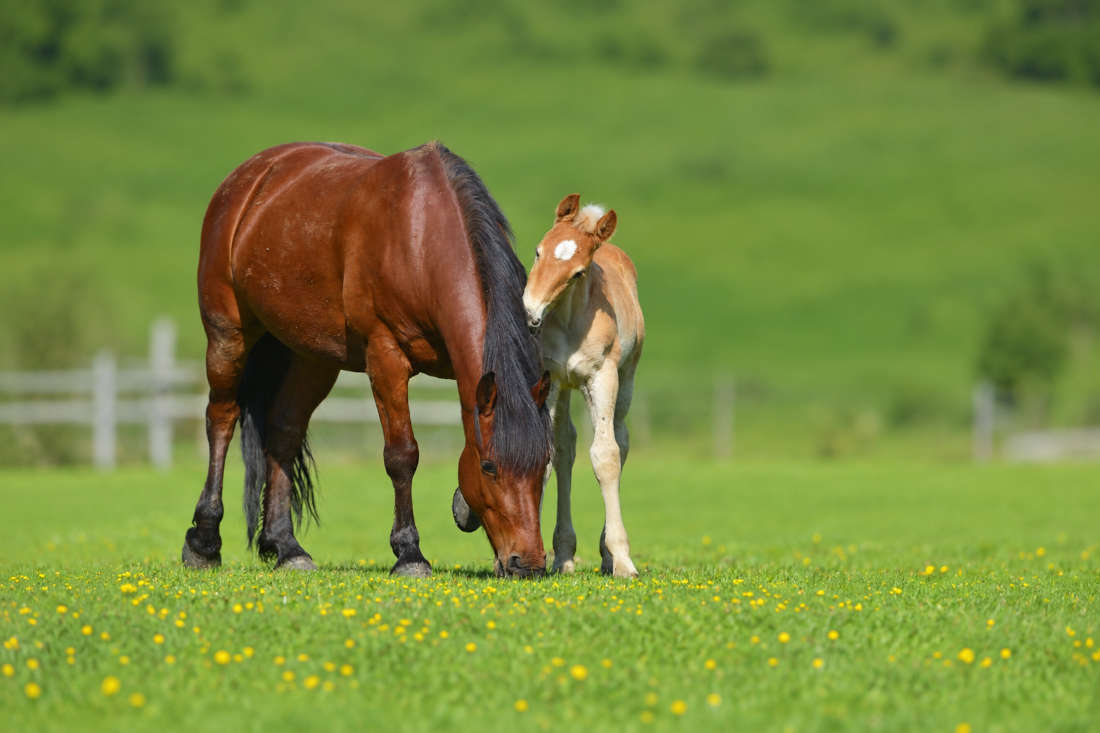
Vaccination helps protect foals from infectious diseases during the critical first year of life. Newborn foals receive temporary immunity from certain diseases through antibodies in their dam’s colostrum, but this protection gradually declines in the months following first nursing.
As maternal antibody levels decline, foals become more vulnerable to diseases such as tetanus, West Nile virus, rabies, and equine influenza. A well-planned vaccination program is timed to provide protection as maternal immunity decreases and the foal develops its own immune response.
Vaccine timing for your horses is complex, as it must account for maternal antibody interference, the foal’s developing immune response, and individual disease risks.
Read on to learn more about vaccine schedules for foals, including the difference between core and risk-based vaccines, timing considerations, and other factors veterinarians consider when deciding which vaccines are required for growing horses.
Vaccinations for Foals
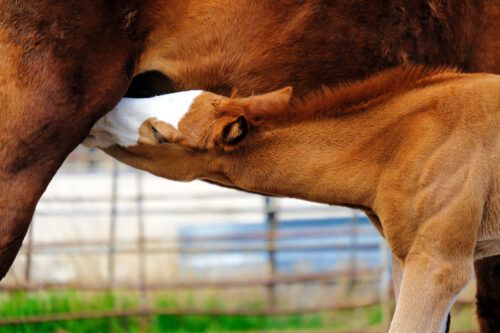
Foals are born with little immune protection of their own. Their initial defenses come from the mare’s first milk, called colostrum, which contains antibodies from the mare’s bloodstream.
Antibodies are proteins made by the immune system that recognize and bind to specific disease-causing organisms. The antibodies passed from the mare help protect the foal against diseases she has been exposed to or vaccinated against while the foal’s own immune system develops.
Maternal antibodies have a relatively short lifespan after the foal consumes them. Antibody levels in the foal’s bloodstream decline steadily, with the foal losing half the total number every 25 to 40 days. [1]
In addition, while maternal antibodies provide immunity to certain diseases, they do not train the foal’s own immune system to recognize and respond to those pathogens.
For these reasons, vaccination programs for foals must: [1]
- Begin early enough to provide protection as maternal antibody concentrations decline
- Provide broad coverage against relevant diseases
- Use appropriate timing and booster protocols to promote an adequate immune response
What's your top priority with your horse's health?

What's your top priority with your horse's health?
Foal Vaccination Schedule
Veterinarians consider various factors when making vaccine recommendations for foals. Most vaccine schedules start with the guidelines from the American Association of Equine Practitioners.
Always work with a veterinarian to develop a vaccination program for your herd and circumstances.
Foal vaccination programs protect against several infectious diseases with different transmission routes and clinical effects. Core vaccines are recommended for all horses in North America because they protect against severe diseases that are widespread across the continent. Risk-based vaccines are selected according to geographic exposure, management, travel, and breeding considerations.
The schedules below follow guidance from the American Association of Equine Practitioners (AAEP) for foals and weanlings. [2] Work with a veterinarian to develop a vaccination program for your herd and circumstances.
Eastern & Western Equine Encephalitis
Eastern and Western equine encephalitis (EEE and WEE) are mosquito-borne viral diseases that affect the brain and spinal cord and can cause severe neurologic disease and death. [3]
Vaccine type: Core
Dam vaccination status: The same schedule applies to foals and weanlings from unvaccinated dams and from dams vaccinated within two months of delivery.
Foal schedule: Three-dose series. [2]
- First dose: 4 to 6 months of age
- Second dose: 4 to 6 weeks later
- Third dose: 10 to 12 months of age
- Revaccinate annually after 1 year of age
West Nile Virus
West Nile virus (WNV) is a mosquito-borne viral infection that can cause weakness, incoordination, muscle tremors, and other neurologic signs. [4]
Vaccine type: Core
Dam vaccination status: The same schedule applies to foals and weanlings from unvaccinated dams and from dams vaccinated within two months of delivery.
Foal schedule: Three-dose series. [2]
- First dose: 4 to 6 months of age
- Second dose: 4 to 6 weeks later
- Third dose: 10 to 12 months of age
- Revaccinate annually after 1 year of age
Rabies
Rabies is a fatal viral infection of the nervous system that is usually transmitted through the bite or saliva of an infected animal. [5]
Vaccine type: Core
Unvaccinated dams: One-dose schedule for foals and weanlings. [2]
- One dose at 4 to 6 months of age
- Revaccinate annually after 1 year of age
Vaccinated dams: Two-dose series for foals and weanlings from dams vaccinated within two months of delivery. [2]
- First dose: 4 to 6 months of age
- Second dose: 4 to 6 weeks later
- Revaccinate annually after 1 year of age
Tetanus
Tetanus is a potentially fatal neurologic disease caused by a toxin produced by Clostridium tetani. These bacteria commonly enter the body through wounds. [6]
Vaccine type: Core
Unvaccinated dams: Three-dose series for foals and weanlings. [2]
- First dose: 3 to 4 months of age
- Second dose: 4 to 6 weeks later
- Third dose: 10 to 12 months of age
- Revaccinate annually after 1 year of age
Vaccinated dams: Three-dose series for foals and weanlings from dams vaccinated within two months of delivery. [2]
- First dose: 4 to 6 months of age
- Second dose: 4 to 6 weeks later
- Third dose: 10 to 12 months of age
- Revaccinate annually after 1 year of age
Anthrax
Anthrax is an often-fatal bacterial disease caused by Bacillus anthracis, a spore-forming organism that can persist in the environment. [7]
Vaccine type: Risk-based
Dam vaccination status: The schedule applies to foals and weanlings from unvaccinated dams. Anthrax vaccination is not recommended for pregnant mares.
Foal schedule: Two-dose series. [2]
- No age-based guidelines are available
- Give two doses, 2 to 3 weeks apart
Botulism
Botulism is a toxin-mediated disease that causes progressive muscle weakness and paralysis. Young foals can develop a form known as shaker foal syndrome. [8]
Vaccine type: Risk-based
Unvaccinated dams: Three-dose series for foals and weanlings. [2]
- First dose: 1 to 3 months of age
- Second dose: 4 weeks later
- Third dose: 4 weeks after the second dose
Vaccinated dams: Three-dose series for foals and weanlings from dams vaccinated within two months of delivery. [2]
- First dose: 2 to 3 months of age
- Second dose: 4 weeks later
- Third dose: 4 weeks after the second dose
Equine Herpesvirus
Equine herpesvirus types 1 and 4 (often called “rhino”) commonly cause respiratory disease. EHV-1 can also cause abortion, neurologic disease, and neonatal foal death. [9]
Vaccine type: Risk-based
Dam vaccination status: The same schedule applies to foals and weanlings from unvaccinated dams and from dams vaccinated within two months of delivery.
Foal schedule: Three-dose series. [2]
- First dose: 4 to 6 months of age
- Second dose: 4 to 6 weeks later
- Third dose: 10 to 12 months of age
- Revaccinate every 6 months
Equine Viral Arteritis
Equine viral arteritis (EVA) is a viral disease that can cause respiratory illness, abortion, and severe disease in young foals. Infected stallions can become long-term carriers. [10]
Vaccine type: Risk-based
Dam vaccination status: The same schedule applies to colts from unvaccinated dams and from dams vaccinated within two months of delivery.
Foal schedule: For colts only. [2]
- Confirm a negative EVA test before vaccination
- One dose at 6 to 12 months of age
- Revaccinate annually after 1 year of age
Equine Influenza
Equine influenza (“flu”) is a highly contagious viral respiratory infection that spreads rapidly between horses and commonly causes fever, coughing, and nasal discharge. [11]
Vaccine type: Risk-based
Dam vaccination status: The same schedules apply to foals and weanlings from unvaccinated dams and from dams vaccinated within two months of delivery.
Inactivated vaccine: Two- or three-dose series. [2]
- First dose: 4 to 6 months of age
- Second dose: 3 to 4 weeks later
- Third dose, when included in the series: 3 to 4 weeks after the second dose
Modified-live vaccine: One-dose schedule. [2]
- One dose at 11 months of age or older
Booster schedule: Revaccinate every 6 to 12 months according to risk. [2]
Leptospirosis
Leptospirosis is a bacterial infection associated with reproductive loss, kidney disease, and recurrent uveitis in horses. [12]
Vaccine type: Risk-based
Dam vaccination status: The same schedule applies to foals and weanlings from unvaccinated dams and from dams vaccinated within two months of delivery.
Foal schedule: Two-dose series. [2]
- First dose: 6 months of age
- Second dose: 3 to 4 weeks later
- Revaccinate annually after 1 year of age
Potomac Horse Fever
Potomac horse fever (PHF) is an infectious disease caused by Neorickettsia risticii that can produce fever, laminitis, colic, and diarrhea. [13]
Vaccine type: Risk-based
Dam vaccination status: The same schedule applies to foals and weanlings from unvaccinated dams and from dams vaccinated within two months of delivery.
Foal schedule: Two-dose series. [2]
- First dose: 5 months of age
- Second dose: 3 to 4 weeks later
Strangles
Strangles is a highly contagious bacterial disease caused by Streptococcus equi equi that typically produces fever and abscessation of lymph nodes in the upper respiratory tract. [14]
Vaccine type: Risk-based
Dam vaccination status: The same schedules apply to foals and weanlings from unvaccinated dams and from dams vaccinated within two months of delivery.
Killed vaccine: Three-dose series. [2]
- First dose: 4 to 6 months of age
- Second dose: 3 weeks later
- Third dose: 3 weeks after the second dose
Modified-live vaccine: Two-dose series. [2]
- First dose: 9 months of age
- Second dose: 3 to 4 weeks later
Booster schedule: Revaccinate annually after 1 year of age. [2]
Venezuelan Equine Encephalitis
Venezuelan equine encephalitis (VEE) is caused by a virus in the same family has EEE and WEE, and results in similar disease. It’s more common in Central America and the Caribbean, but outbreaks occasionally extend into subtropical regions of the United States like Southern Florida. [3]
Vaccine type: Risk-based
Dam vaccination status: The same schedule applies to foals and weanlings from unvaccinated dams and from dams vaccinated within two months of delivery.
Foal schedule: Two-dose series. [2]
- First dose: 4 to 6 months of age
- Second dose: 3 to 4 weeks later
- Revaccinate annually after 1 year of age
Rotavirus
Rotavirus is a major cause of viral diarrhea in young foals. [15]
Vaccination recipient: Pregnant mares, rather than foals
Vaccination purpose: Increase protective antibodies transferred to the foal through colostrum
Vaccination Schedule Summary
The table below summarizes the initial vaccination series and booster schedules, including differences based on the dam’s vaccination status and the vaccine formulation.
Table 1. AAEP vaccine schedule guidance for foals and weanlings [2]
| Vaccine | Vaccination Schedule |
|---|---|
| Core Vaccines | |
| Eastern & Western equine encephalitis |
|
| West Nile virus |
|
| Rabies |
|
| Tetanus |
|
| Risk-Based Vaccines | |
| Anthrax |
|
| Botulism |
|
| Equine herpesvirus |
|
| Equine viral arteritis |
|
| Equine influenza |
|
| Leptospirosis |
|
| Potomac horse fever |
|
| Strangles |
|
| Venezuelan equine encephalitis |
|
| Maternal Vaccination | |
| Rotavirus |
|
Dam vaccination status: Vaccinated dam refers to a mare vaccinated within two months of delivery. Unless noted otherwise, the same schedule applies to foals and weanlings from vaccinated and unvaccinated dams. [2]
Vaccination & the Equine Immune System
The horse’s immune system responds to a wide range of disease-causing agents, referred to as pathogens. Vaccines act on the adaptive immune system, which targets specific pathogens the body has encountered before. [16]
When a pathogen enters the body, immune cells recognize it as foreign material. Some immune cells process the pathogen and display fragments called antigens on their outer surfaces. Antigens are like fingerprints presented on the outer cell membrane that identify the pathogen to the immune system. [16]
B cells are immune cells that recognize specific foreign substances, called antigens. When activated, they produce antibodies that bind to their target antigen, helping neutralize the pathogen or marking it for removal by other parts of the immune system.
Some antibodies remain in circulation after the infection has resolved, while memory B cells persist and can respond rapidly if the same pathogen enters the body again. [16] This allows the immune system to mount a faster and stronger response upon subsequent exposure.
Vaccines introduce antigens to stimulate this immune response. The antigens used in vaccines prompt the horse’s body to produce antibodies against the target without requiring natural exposure to the disease. [16]
Depending on the vaccine and the animal’s response, protection can last for months or years. Booster doses reinforce this protection and help maintain an adequate immune response.
Challenges with Foal Vaccination
Vaccination schedules for foals are more complex than those for adult horses because veterinarians must account for multiple dynamic variables in each case.
Factors veterinarians consider when developing a schedule for foals include: [1]
- Whether and when the dam was vaccinated
- Potential interference from maternal antibodies
- The foal’s developing immune function
- Geographic and lifestyle-related disease risks
Maternal Vaccination
Vaccinating broodmares shortly before their due date helps ensure their colostrum contains a high concentration of antibodies for the newborn foal. Administering booster doses at least four weeks before birth allows time for the mare to produce antibodies and transfer them into the colostrum. [1]
Because of this maternal antibody protection, foals from adequately vaccinated mares often do not receive their first vaccines until 4 to 6 months of age. [1]
Maternal Antibody Interference
Maternal antibodies acquired through colostrum can recognize and neutralize vaccine antigens before the foal’s developing immune system responds to them.
As a result, the timing of initial vaccination is important. Maternal antibody levels must decline enough for the vaccine to stimulate an effective immune response in the foal. Otherwise, the vaccine may not protect the foal from future exposure to the disease. [1]
Maternal immunity typically lasts for up to 4 to 6 months after birth. Most vaccination programs begin at around 4 months of age and include several boosters before the foal reaches 1 year. [1] If maternal antibodies neutralize the antigen in the first dose, it is more likely the foal will develop an effective response after later doses are given.
Estimating maternal immunity in the foal is not straightforward, since testing maternal antibody levels before vaccination is unreliable. Even antibody levels below the detection threshold of serologic tests may interfere with vaccination. [1]
Due to this, veterinarians use a timed booster series to establish protection as maternal immunity wanes.
Reduced Immune Function
Foals produce fewer antibodies in response to vaccination than adult horses, even without maternal antibody interference. As a result, a single dose may produce a weaker response in a foal than in an adult horse. [17]
Starting at around 3 months of age, the foal’s immune system gradually matures, gaining the ability to produce antibodies in response to an antigen. Multiple booster doses give the developing immune system repeated opportunities to build adequate antibody protection.
Risk Assessment
As with adult horses, a foal’s geographic location and lifestyle affect vaccine selection. Some diseases are more prevalent in particular areas, making vaccination part of the local standard of care. [1]
Diseases that have regional risk factors for horses include: [12]
- Anthrax
- Botulism
- Potomac horse fever
- Leptospirosis
- Venezuelan equine encephalitis
Lifestyle is also relevant because some foals encounter more infectious disease exposure than others. For example, a foal that frequently travels to shows or equine events faces greater exposure to equine influenza than one who is kept home during the first year of life.
Lifestyle-based vaccines for horses include: [12]
Foals can also be more vulnerable to certain diseases than adult horses. Rotavirus, for example, does not typically affect adult horses but can cause severe outbreaks of diarrhea in newborn foals. Farms at high risk of rotavirus may need to include the vaccine in their vaccination program. [1]

Balancing Maternal Factors With Foal Risk
Foal vaccination schedules are designed around a changing period of immunity. Maternal antibodies provide important early protection but can also interfere with vaccination, so the timing and repetition of vaccine doses are critical for establishing the foal’s own immune response.
Most foals begin core vaccinations during the first several months of life, with additional vaccines selected according to regional disease exposure, travel, management, and other individual risks. The mare’s vaccination history can also affect the timing of the primary series.
Work with your veterinarian to establish a vaccination schedule before maternal immunity declines. Keeping accurate records and completing the recommended booster series helps maintain protection as the foal grows.
By staying up to date with your growing foal’s preventive wellness needs, you can help ensure they grow, thrive and meet their full potential.
Frequently Asked Questions
Here are some frequently asked questions about foal vaccinations:
Most foals born to properly vaccinated mares receive their first vaccinations between 4 and 6 months of age. Maternal antibodies from colostrum provide early protection but can interfere with vaccine effectiveness when concentrations remain high. The exact timing should be determined with a veterinarian based on the mare's vaccination history, the foal's colostrum intake, and disease risk.
Foals need vaccinations to develop their own protection against serious infectious diseases as maternal antibodies decline. These antibodies provide only temporary immunity and do not train the foal's immune system to recognize specific diseases in the future. Vaccination helps bridge this period of vulnerability and supports longer-lasting immunity.
Maternal antibodies can affect foal vaccinations by neutralizing vaccine antigens before the foal's immune system responds to them. This interference is one reason most vaccination programs begin when maternal immunity starts declining at approximately 4 to 6 months of age. A series of vaccinations helps increase the likelihood that the foal develops an effective immune response as maternal antibodies wane.
Vaccinating a pregnant mare helps protect her foal by increasing the antibodies available in her colostrum. Booster vaccinations administered at least four weeks before foaling allow time for the mare to produce these antibodies and transfer them into her first milk. The foal must consume adequate colostrum after birth to receive this temporary protection.
Foals from unvaccinated mares may need a different vaccination schedule because they are less likely to receive strong maternal antibody protection through colostrum. Some vaccines may be started earlier or administered using a different initial series. A veterinarian should assess the foal's circumstances and create a schedule based on age, exposure risk, and the mare's vaccination history.
The core vaccines foals generally need protect against tetanus, Eastern and Western equine encephalomyelitis, West Nile virus, and rabies. These diseases are considered serious risks because they may be widespread, cause severe or fatal illness, or threaten human health. Most core vaccines require an initial series during the foal's first year, followed by regular revaccination.
Risk-based vaccines a foal might need include protection against anthrax, botulism, equine herpesvirus, equine influenza, equine viral arteritis, leptospirosis, Potomac horse fever, strangles, and Venezuelan equine encephalitis. Rotavirus vaccination may also be considered on farms where newborn foals face a high risk of outbreaks. The appropriate vaccines depend on geographic location, farm history, travel, contact with other horses, and other management factors.
Travel can affect which vaccines a foal should receive because contact with unfamiliar horses increases exposure to contagious respiratory diseases. Foals that attend shows, sales, or other equine events may have a greater risk of equine influenza and equine herpesvirus than foals that remain at home. A veterinarian can determine whether these or other risk-based vaccines should be added to the vaccination program.
The number of vaccine doses a foal needs depends on the vaccine, the foal's age, and the mare's vaccination history. Many vaccines require an initial series of two or three doses administered several weeks apart, with an additional booster later in the first year. Completing the full series is important because one dose may not produce adequate immunity in a young foal.
Foals need multiple vaccine boosters because maternal antibodies may block an early vaccine dose and their developing immune systems produce weaker responses than those of adult horses. Repeated doses increase the likelihood that at least one vaccination stimulates immunity after maternal antibody levels have declined. Boosters also strengthen and extend the foal's protection against disease.
Foals can be vaccinated before 4 months of age in certain high-risk situations or when specific vaccine guidelines call for an earlier start. Foals born to unvaccinated mares, orphan foals, and foals that received inadequate colostrum may require an adjusted schedule. Early vaccination decisions should be made with a veterinarian because vaccine timing varies by disease and individual circumstances.
Antibody testing cannot reliably determine the ideal time to vaccinate a foal. Even maternal antibody levels below the detection limit of serologic tests may interfere with the foal's response to vaccination. Veterinarians therefore rely on properly timed vaccine series and boosters rather than a single antibody test to establish protection.
A foal that misses a vaccine booster may not develop the intended level of protection from the initial vaccination series. The appropriate response depends on the vaccine and how much time has passed since the previous dose. A veterinarian may recommend continuing the schedule or repeating part of the series to establish adequate immunity.
Vaccines are generally safe for foals when selected and administered according to veterinary recommendations. Mild reactions can include temporary swelling at the injection site, a low-grade fever, or brief lethargy, while serious adverse reactions are uncommon. Contact a veterinarian if a reaction is severe, sudden, or persistent.
The best vaccination program for a foal is one tailored to the foal's age, maternal antibody status, geographic location, lifestyle, and exposure risk. Core vaccines provide baseline protection, while risk-based vaccines address threats associated with the farm, region, travel, or intended use. Working with a veterinarian helps ensure that each vaccine and booster is administered at an appropriate time.
Summary
Vaccinating foals helps protect them against serious infectious diseases as maternal antibodies decline. Timing and vaccine selection should reflect the foal's immune development and individual disease risks.
- Foals born to vaccinated mares typically begin core vaccinations at 4 to 6 months of age
- Maternal antibodies provide early protection but can interfere with vaccine effectiveness
- Most vaccines require a two- or three-dose primary series followed by regular boosters
- Core vaccines protect against tetanus, Eastern and Western equine encephalitis, West Nile virus, and rabies
- Risk-based vaccines depend on the foal's location, lifestyle, and likely disease exposure
- A veterinarian can adapt the schedule for foals from unvaccinated mares or those with inadequate colostrum intake
References
- McKinnon. A. et al. Ed. Equine Reproduction, 2nd Edition. Wiley-Blackwell. 2011.
- Foal Vaccination Chart. American Association of Equine Practitioners. 2020.
- Mackay. R. J. and de Tonnere. D. Equine Arboviral Encephalomyelitis. Merck Veterinary Manual. 2025.
- Long. M. West Nile Encephalomyelitis in Horses. Merck Veterinary Manual. 2026.
- Rupprecht. C. Rabies in Horses. Merck Veterinary Manual. 2024.
- Stämpfli. H. Tetanus in Horses. Merck Veterinary Manual. 2024.
- Hugh-Jones. M. Anthrax in Horses. Merck Veterinary Manual. 2026.
- Stämpfli. H. Botulism in Horses. Merck Veterinary Manual. 2026.
- Lascola. K. Equine Herpesvirus Infection. Merck Veterinary Manual. 2025.
- Balasuriya. U. Equine Viral Arteritis. Merck Veterinary Manual. 2026.
- Lascola. K. Equine Influenza. Merck Veterinary Manual. 2024.
- Divers. T. Leptospirosis in Horses. Merck Veterinary Manual. 2026.
- Stewart. A. Potomac Horse Fever. Merck Veterinary Manual. 2024.
- Lascola. K. Strangles in Horses. Merck Veterinary Manual. 2024.
- Stewart. A. Viral Diarrhea in Foals. Merck Veterinary Manual. 2024.
- Reed. S. et al. Equine Internal Medicine, 3rd Edition. Saunders Elsevier. 2009.
- Ryan. C. and Giguère. S. Equine Neonates Have Attenuated Humoral and Cell-Mediated Immune Responses to a Killed Adjuvanted Vaccine Compared to Adult Horses. Clinical and Vaccine Immunology. 2010.