English

Iron, zinc and copper are essential trace minerals in the horse’s diet. Although required in small amounts, these nutrients have wide-ranging effects on equine health including oxygen transport, immune function, antioxidant defense and cellular energy production. [1]
Equine diets need to supply adequate amounts of these minerals while maintaining the correct balance. A practical target used in ration balancing is approximately 4 : 3 : 1 of iron to zinc to copper. Maintaining this ratio supports hoof quality, connective tissue integrity, coat pigmentation, exercise performance and overall metabolic health.
Trace mineral balance is important because iron, zinc and copper interact during absorption and metabolism. High iron intake can interfere with zinc and copper absorption, increasing the risk of a functional deficiency even when total dietary intake appears adequate.
Most horses already consume more than enough iron from forage, but many are low in zinc and copper. For this reason, correctly balancing the diet usually means supplementing zinc and copper while avoiding feeds and supplements with added iron.
Some horses benefit from a complete vitamin and mineral supplement to fill broader micronutrient gaps, while others need more targeted zinc and copper support based on forage analysis. Continue reading to learn how to evaluate the iron zinc copper ratio in your horse’s diet and why it matters for long-term health and performance.
Iron : Zinc : Copper Ratio in Equine Diets
Equine nutritionists evaluate iron, zinc and copper together in equine diets because high iron intake can reduce the availability of copper and zinc. [2] The iron : zinc : copper ratio measures how much of each mineral is supplied by the total diet, including forage, grain, supplements, water and soil contamination.
A good ratio is close to iron : zinc : copper = 4 : 3 : 1. This means the diet provides about 4 times as much iron as copper, and about 3 times as much zinc as copper.
A poor ratio usually means iron is too high compared to zinc and copper. For example, 8 : 3 : 1 or 12 : 3 : 1 means the horse is getting much more iron than zinc and copper. This is common when horses are fed high-iron forage or when the diet does not provide enough zinc and copper in relation to iron intake.
This ratio is not a formal nutritional requirement for horses, a toxicity threshold, or a diagnostic test. [1] It is a ration-balancing benchmark used by nutritionists to identify diets where iron is high relative to zinc and copper.
Horses with an imbalanced iron : zinc : copper ratio are likely to benefit from trace mineral supplementation to improve dietary balance. The goal is to supply enough zinc and copper to balance iron present in the diet. Where possible, horses on high-iron forages should also be switched to lower-iron forages, and all horses should avoid feeds and supplements with added iron. [1][3]
Nutrient Requirements in the Equine Diet
Nutrient requirements for horses are established by the National Research Council (NRC) based on research into nutrient intake, absorption, losses, and the amounts needed to support normal body function. Requirements are estimated based on body weight, dry matter intake, physiological status and workload.
For adult horses at maintenance, the NRC estimates requirements at 40 mg iron, 40 mg zinc and 10 mg copper per kg of dietary dry matter. [1]
For a 500 kg (1,100 lb) horse consuming 10 kg (22 lb) of dry matter per day, this equals approximately 400 mg iron, 400 mg zinc, and 100 mg copper per day. This corresponds to a requirement ratio of 4 : 4 : 1. [1]
Table 1. Iron, copper and zinc requirements for a 500 kg (1,100 lb) mature horse at maintenance
| Mineral | Dietary Concentration | Daily Requirement |
|---|---|---|
| Iron | 40 mg/kg DM | 400 mg/day |
| Zinc | 40 mg/kg DM | 400 mg/day |
| Copper | 10 mg/kg DM | 100 mg/day |
All three minerals play essential roles in the horse’s body, but they are not equally likely to be low in the diet. Most horses do not need added iron. Hay and pasture often supply several times more iron than the horse requires, and iron intake can also come from soil contamination, water, fortified feeds, and supplements.
Zinc and copper are more often low or poorly balanced relative to iron, especially in forage-only diets. [1][3] It is not unusual for a forage-only ration to calculate closer to 20 : 3 : 1 or even higher when a horse is consuming high-iron hay.
The goal is not to remove all iron from the diet; that is neither possible nor desirable. The goal is to avoid unnecessary added iron and ensure zinc and copper are supplied in adequate amounts relative to the horse’s total iron intake.
This is why forage analysis is important. Testing your horse’s hay to determine its mineral profile shows whether the diet needs more zinc, more copper, less added iron, or a different balancing strategy.
Copper and zinc are essential trace minerals required to support multiple physiological functions. Zinc supports hoof horn quality, skin integrity, immune function, tissue repair, and antioxidant enzyme activity. Copper supports coat pigment, collagen formation, connective tissue strength, iron metabolism, and antioxidant defenses. [1]
Low copper and zinc intake, or poor balance relative to iron, can contribute to weak hoof quality, slow hoof growth, coat fading, reduced pigment expression, poor skin quality, and weaker connective tissue support over time.
The issue is that many horses do not receive enough zinc and copper to begin with. When dietary iron is also high, the horse may absorb and use less of the copper and zinc supplied by the diet. This is why trace mineral balance matters, not just the amount of each mineral listed on a forage report or feed tag.
How Iron Impacts Zinc & Copper Availability
Minerals supplied in the diet must be absorbed before the horse’s body can use them. During digestion, minerals are released from forage and feed particles and dissolve in digestive fluids. They must then cross the intestinal lining and enter circulation before they can be transported to tissues.
Iron, zinc and copper are all divalent metals, meaning they can exist in forms with a 2+ charge. Several intestinal transport systems handle divalent metals. One of these is DMT1, or divalent metal transporter 1. Research in intestinal cell models shows that DMT1 is involved in the active transport of iron, copper and zinc. [2]
When iron intake is high, more of the shared absorption pathways are used up by iron ions. This can reduce the amount of zinc and copper absorbed from the diet.
This does not mean iron is “bad” for horses. Horses need iron for oxygen transport, cellular energy production and other physiological processes. The issue is excess iron relative to zinc and copper, not iron intake alone.
In horses, high dietary iron has been shown to decrease zinc status. In other species, high dietary iron can also reduce copper status, supporting the concern that excess iron may interfere with the availability of both minerals. [1][4][5]
This matters most when zinc and copper are already low or marginal in the diet. In these cases, high iron can make poor trace mineral balance worse by reducing the amount of zinc and copper the horse absorbs and uses.
Poor trace mineral balance is most likely to affect slow-turnover tissues such as hooves, hair coat, skin, tendons and ligaments. Over time, this may contribute to poor hoof quality, slow hoof growth, coat fading, reduced pigment expression, poor skin quality or weaker connective tissue support.
This is why equine diets should be assessed for both mineral levels relative to requirements and mineral balance, such as the iron : zinc : copper ratio. [1][3]
What's your top priority with your horse's health?

What's your top priority with your horse's health?
Functions of Iron, Zinc & Copper in Horses
Iron, zinc and copper each have specific roles in the body. Understanding these roles helps explain why a mineral imbalance can affect multiple systems at the same time.
Iron
Iron is best known for its role in oxygen transport. Most of the iron in the horse’s body is found in hemoglobin, the protein in red blood cells that binds oxygen in the lungs and delivers it to tissues. Iron is also found in myoglobin in muscle and in enzymes involved in mitochondrial energy production. [1]
Iron is essential for normal metabolism, exercise capacity and tissue oxygenation. However, feeding extra iron does not increase oxygen-carrying capacity in horses that are not iron deficient. Red blood cell production is regulated by oxygen demand, iron status, hormones and overall health, not simply by how much iron is added to the diet.
Iron deficiency due to low dietary intake is uncommon in adult horses. Most horses consume enough iron from forage alone, and many consume several times their requirement. [1][3]
When anemia occurs in adult horses, it is more often related to chronic disease, inflammation, blood loss, parasitism, gastric ulcers or another medical problem. Iron should not be supplemented simply because a horse is tired, underperforming or anemic unless advised by a veterinarian.
Unlike some minerals, iron is not actively excreted in large amounts. Horses regulate absorption to some extent, but generally speaking, absorbed iron is stored and recycled. When intake remains excessive for long periods, iron can accumulate in tissues, particularly the liver. [6]
Chronic iron overload causing haemochromatosis and hepatopathy has been reported in horses and one donkey exposed to high-iron water sources. [7]
Iron deficiency has been reported in foals under specific management conditions, such as stabling without access to soil. Due to rapid growth, young foals have expanding blood volume, so their iron needs differ from those of mature horses. [8]
For adult horses, routine iron supplementation is usually unnecessary and may worsen trace mineral balance, especially when forage already supplies adequate or excessive iron.
Zinc
Zinc is an essential trace mineral involved in enzyme activity, protein synthesis, antioxidant defense, immune regulation, DNA and RNA metabolism, wound healing, skin integrity, hoof growth and reproductive function. [1][9]
Zinc is required for normal cell division and tissue repair. This makes it especially important for tissues that are constantly growing or renewing, including the hoof wall, skin, hair coat and intestinal lining.
Zinc is often discussed in relation to hoof growth because it supports keratinization. Keratin is the main structural protein in the hoof wall, skin and hair. If zinc intake or availability is poor, tissues such as hooves and skin may be affected before deeper systemic problems are obvious.
Poor zinc status has been associated with:
- Weak hoof horns
- Slow hoof growth
- Poor skin quality
- Delayed wound healing
- Reduced immune function
Because hoof horn grows slowly, changes in zinc status may take several months to show up in the hoof wall.
Zinc also contributes to antioxidant defense through zinc-dependent enzymes, including copper-zinc superoxide dismutase. These enzymes help protect cells from oxidative damage during normal metabolism, immune responses, exercise and tissue repair. [1]
Zinc also interacts closely with copper. Diets containing very high levels of zinc can impair copper absorption and contribute to secondary copper deficiency, especially in growing horses. This is one reason zinc should not be added without also evaluating copper and iron. [1]
Copper
Copper is an essential trace mineral required for connective tissue formation, iron metabolism, antioxidant defense, coat pigment and normal skeletal development.
It acts as a cofactor for several enzymes, including lysyl oxidase, which helps cross-link collagen and elastin. These proteins give strength and elasticity to tendons, ligaments, cartilage, bone matrix and blood vessels. [1]
Copper is also involved in normal coat pigment through copper-dependent enzymes required for melanin production. Low copper status can contribute to dull, faded or sun-bleached coats, although coat color alone should never be used to diagnose a deficiency.
Copper is especially important for growing horses because of its role in cartilage and bone development. In one study, copper supplementation of mares and foals reduced the prevalence of cartilage lesions in foals, supporting the importance of adequate copper during growth. [10]
Copper also supports normal iron metabolism in the body. It is needed for enzymes involved in iron transport, which is one reason copper deficiency can affect red blood cell production even when iron intake is adequate.
Copper also works with zinc in copper/zinc superoxide dismutase, an antioxidant enzyme that helps neutralize reactive oxygen species.
In exercising horses, copper and zinc status is relevant to antioxidant defense, even though enzyme activity may not respond quickly to short-term supplementation. [11]
Effects of High Iron Diets
High-iron diets can affect horses in two main ways. First, excess iron in the digestive tract can interfere with the absorption of other trace minerals, especially zinc and copper. Second, long-term high iron intake can increase the horse’s total iron into excess, particularly when horses live in regions where forage, soil, or water are known to contain high iron levels.
High iron intake has been shown to reduce zinc status in ponies. In rats, high dietary iron combined with ascorbic acid (vitamin C) impaired copper status in both copper-deficient and copper-adequate animals. While species differences matter, these findings support the concern that high iron intake can reduce zinc and copper availability in horses. [4][5]
Forage alone typically does not meet daily zinc and copper requirements of horses. However, even when forage has “adequate” zinc or copper, this should still be interpreted in context. If iron is very high, the functional need for zinc and copper may be higher than the minimum requirement suggests. A horse may appear to meet the NRC requirement for zinc or copper while still having a poorly balanced trace mineral profile.
The horse’s body does regulate iron absorption. When iron stores rise, the liver produces more hepcidin, a hormone that reduces the movement of iron from intestinal cells into circulation. Hepcidin acts on ferroportin, the transport protein that allows iron to leave intestinal cells and enter the bloodstream. [6]
This regulatory system helps protect the horse from rapid iron accumulation, but it does not prevent mineral competition in the gut. Even if the horse absorbs only a portion of the iron consumed, high iron in the intestinal contents can still compete with zinc and copper before absorption occurs.
This makes high iron intake different from clinical iron toxicity. A horse can have a high-iron diet without obvious toxicity while still having a trace mineral imbalance that reduces zinc and copper availability.
Over time, horses exposed to high iron levels through forage, water, fortified feeds, red mineral blocks, or blood-building supplements may store more iron in the body. Horses do not actively excrete large amounts of iron unless there is blood loss, so absorbed iron is stored and recycled rather than cleared through urine or manure.
The main storage site is the liver, where iron is stored as ferritin and hemosiderin. When iron levels exceed the liver’s storage capacity, excess iron can contribute to oxidative damage, inflammation, elevated liver enzymes, and liver tissue injury. Chronic iron overload causing haemochromatosis and hepatopathy has been reported in horses and donkeys exposed to high-iron water sources. [7]
For horses consuming high-iron forage, the first step is to avoid unnecessary added iron in feeds or supplements. The next step is to supply zinc and copper in amounts that correct the total dietary balance, not just meet the minimum requirement.
Signs of Iron, Zinc & Copper Imbalance
Trace mineral imbalances can be difficult to recognize because the signs are often non-specific.
Hoof cracks, coat fading, poor skin quality, and slow healing can involve zinc and copper, but they can also be caused by low protein intake, inadequate amino acids, poor hoof care, parasites, PPID, insulin resistance, chronic inflammation, or environmental stress.
Signs that may suggest zinc and copper imbalance include:
- Dull, faded, frizzy, or sun-bleached coat
- Weak, brittle, cracked, or slow-growing hooves
- Thin soles or poor hoof wall integrity
- Delayed wound healing
- Poor skin quality or recurrent skin irritation
- Reduced immune resilience
- Poor growth or developmental concerns in young horses
- Suboptimal connective tissue strength
These signs should not be used as a diagnosis. Mineral status is best evaluated by reviewing the whole diet, beginning with forage analysis.
Blood values for trace minerals can be useful in some clinical contexts, but they do not always reflect long-term dietary intake or tissue status.
Sources of Iron in Equine Diets
Horses consume iron from several sources, including forage, pasture, soil, water, grains, fortified feeds and mineral supplements. Trace amounts of iron are also present in many feed ingredients, and even iron contamination in table salt can contribute to total iron intake.
Forage is usually the largest single source of iron because hay and pasture make up most of the horse’s dry matter intake. A forage that contains moderate iron can still contribute a large amount of iron when the horse eats several kilograms per day.
By comparison, a supplement may contain trace iron from its ingredients but contribute very little total iron if it is fed in small amounts. For this reason, iron intake depends on both the iron concentration of the feed and the amount consumed.
Iron content in forage varies with soil type, plant species, growing conditions, harvest method and the amount of soil or dust contamination. Hay that is dusty or harvested close to the ground may test higher in iron because soil particles are rich in iron.
On a forage analysis report, a high ash value (> 10%) together with elevated iron levels may suggest soil contamination rather than naturally high iron content in the forage. If iron levels appear unusually high, consider submitting a second sample for analysis to confirm the results.
Water can also be a significant source, particularly on farms using wells, surface water or groundwater with visible orange staining. High iron in drinking water has been identified as a source of chronic iron overload in equids. [7]
Table 2. Common Iron Sources in Horse Diets
| Iron Source | Contribution to Total Iron Intake |
|---|---|
| Hay and pasture | Usually the largest source because forage is fed in kilograms per day. A horse eating 10 kg of hay dry matter consumes 1,500 mg iron from hay testing at 150 ppm, or 3,000 mg iron from hay testing at 300 ppm. |
| Soil contamination | Soil and dust contain iron and can raise the iron result on a forage analysis. Hay harvested close to the ground or visibly dusty hay may test higher because of soil particles mixed with the forage. Horses may consume soil while grazing. |
| Well water or groundwater | Can contribute to iron intake, especially when water leaves orange-brown staining in buckets, tanks, pipes or troughs. Water iron should be tested when staining is present. |
| Fortified feeds | Can add significant iron when fed in large amounts. Check both the ingredient list for added iron sources and guaranteed analysis for iron level. |
| Red mineral blocks | May contain added iron, often from iron oxide. These products can add unnecessary iron to diets already supplied by forage, soil and water. |
| Blood-building supplements | Often contain added iron salts. These should not be used unless iron deficiency is confirmed by appropriate veterinary testing. |
How to Calculate the Iron : Zinc : Copper Ratio
You can calculate your horse’s Iron : Zinc : Copper ratio by adding up how much of these trace minerals are supplied by the total diet. This includes hay, pasture, concentrates, ration balancers, supplements, mineral blocks, and salt.
For help calculating your horse’s Iron : Zinc : Copper ratio, submit a Mad Barn diet evaluation. One of our nutritionists will review your horse’s ration and calculate the mineral balance for free.
You can also order a forage analysis through Mad Barn to receive a detailed nutrition report with mineral levels in your horse’s hay or pasture and diet-balancing recommendations.
1) Start with Forage
Forage is usually the largest source of iron because hay and pasture make up most of the horse’s daily intake. A forage analysis is the most accurate way to determine how much iron, zinc and copper your horse is getting from hay or pasture.
The next step is to estimate how much forage your horse eats each day. If hay is rationed, weigh the hay offered and subtract any hay left uneaten.
If hay or pasture is offered free-choice, estimate dry matter intake from body weight. A horse at maintenance commonly consumes about 2% of body weight in dry matter per day. For a 500 kg (1,100 lb) horse, this is about 10 kg (22 lb) of dry matter daily. [1]
Horses in work, growing horses, lactating mares, hard keepers, or horses in cold weather may consume up to 2.5% of their body weight. Easy keepers or horses on restricted diets may be limited to about 1.5% of body weight in dry matter per day. [1]
For horses on pasture, intake is harder to accurately measure. As a practical estimate, assume about 0.1% of body weight per hour of active grazing on available pasture.
For a 500 kg (1,100 lb) horse, this is about 0.5 kg dry matter per hour. A horse turned out for 6 hours may consume roughly 3 kg (6.6 lb) of pasture dry matter, while a horse turned out for 12 hours may consume closer to 6 kg (13 lb).
This estimate should be adjusted for pasture quality, grazing muzzle use, sparse pasture, weather, body condition, and workload.
Mineral values on forage reports are commonly listed as ppm, which is the same as mg/kg on a dry matter basis.
You can use this formula to estimate iron intake from forage:
For example, a horse eating 10 kg of hay dry matter from hay testing at 300 ppm iron would consume:
Repeat this calculation for zinc and copper. If the horse eats both hay and pasture, calculate each type of forage separately and add them together before moving on to feeds and supplements.
2) Add Feeds & Supplements
Next, list every feed and supplement the horse receives, including the actual amount fed per day. This includes concentrates, ration balancers, vitamin and mineral supplements, hoof supplements, salt, mineral blocks, and any other top-dressed products.
For each product, use the feeding rate and the mineral values from the label or product analysis to calculate how much iron, zinc and copper it contributes. If a product is listed in ppm or mg/kg, use the same formula:
If a label lists minerals as mg per serving, add those values directly to the total daily intake.
This calculation is only as accurate as the information available. Many products contain trace iron from their ingredients, even when iron is not added as a separate ingredient. Some labels do not disclose iron, so the iron contribution from those products may be missed.
This is where the Mad Barn Feed Bank can be useful. Mad Barn has independent analysis data for many feeds and supplements, including iron levels reported in ppm. This gives a more accurate estimate than relying on the label alone.
3) Calculate the Daily Totals
After calculating each source, add up the total daily intake of iron, zinc and copper.
The totals should include iron, zinc and copper from:
- All forage sources
- All feeds, ration balancers, and concentrates
- All vitamin and mineral supplements
Once total daily intake is known for each of these trace minerals, you can convert the values into a ratio by dividing iron and zinc values by the copper value.
Example Calculation
For this example calculation, assume a horse is on a forage-only diet with tested hay. The horse consumes 10 kg (22 lb) of hay dry matter per day. The forage analysis reports:
- Iron: 300 ppm
- Zinc: 25 ppm
- Copper: 8 ppm
Based on this analysis, the horse’s daily trace mineral intake from hay would be:
- Iron: 300 ppm × 10 kg = 3,000 mg/day
- Zinc: 25 ppm × 10 kg = 250 mg/day
- Copper: 8 ppm × 10 kg = 80 mg/day
To convert these values into an Iron : Zinc : Copper ratio, divide each value by copper:
- Iron: 3,000 mg ÷ 80 mg = 37.5
- Zinc: 250 mg ÷ 80 mg = 3.1
- Copper: 80 mg ÷ 80 mg = 1
Based on this calculation, the hay-only ratio is approximately:
In this example, zinc and copper are close to a 3 : 1 relationship, but iron is extremely high relative to copper. The next step is to review all iron sources and add zinc and copper in calculated amounts based on the full diet.
In some cases, horses on high-iron hay may benefit most from switching to hay with lower iron content. If that is not possible, the practical approach is to avoid added iron, feed a complete vitamin and mineral supplement, and provide additional copper and zinc as needed to correct the dietary balance.
How to Balance Iron, Zinc & Copper
Once you know the iron : zinc : copper ratio of your horse’s diet, the goal is to correctly balance the diet without adding unnecessary iron or excess calories.
For most horses, this means doing three things:
- Avoid added iron
- Meet the horse’s daily zinc and copper requirements
- Adjust zinc and copper upward when iron is high
1) Remove Unnecessary Added Iron
Most adult horses do not need feeds or supplements with added iron. Since most forage already supplies adequate or high iron, avoid products that add more iron to the ration.
Review the ingredient lists of feeds, supplements and mineral products for added iron sources, including iron oxide, ferrous sulfate, ferrous fumarate, ferrous gluconate and iron proteinate.
Products that commonly add unnecessary iron in a horse’s diet include:
- Blood-building supplements
- Performance supplements with added iron
- Red mineral blocks
- Fortified feed
Iron-containing products may be appropriate in specific veterinary cases, but they should not be used routinely for tiredness, poor performance, dull coat or anemia without confirming iron deficiency.
2) Replace High-Iron Forage When Possible
If your horse’s hay or pasture is the main source of excess iron, the ideal correction is to switch to forage with lower iron content. This is not always practical, but it should be considered when forage iron is very high or when the horse has hoof, coat, metabolic or liver concerns.
When other forage is not available, the diet should be balanced around the forage being fed. This usually means avoiding added iron and supplying more zinc and copper to improve the mineral relationship.
3) Use a Complete Vitamin & Mineral Supplement
Many forage-based diets are not only imbalanced in iron, zinc and copper. They may also be low in selenium, vitamin E, iodine, vitamin A, vitamin D, B-vitamins or other micronutrients depending on the forage and feeding program.
A complete vitamin and mineral supplement is usually the most appropriate way to correct these gaps because it adds vitamins and minerals without substantially increasing calories, starch or sugar. This is important for easy keepers, metabolic horses and horses that already maintain good body condition on forage alone.
Increasing grain or complete feed can raise vitamin and mineral intake, but only if the product is fed at the manufacturer’s recommended rate. Many horses do not need that much feed. Feeding more can add unnecessary calories while still failing to correct a high iron : zinc : copper ratio.
A concentrated vitamin and mineral supplement separates micronutrient balancing from calorie intake. This allows the diet to supply required minerals and vitamins without using grain as the main delivery method.
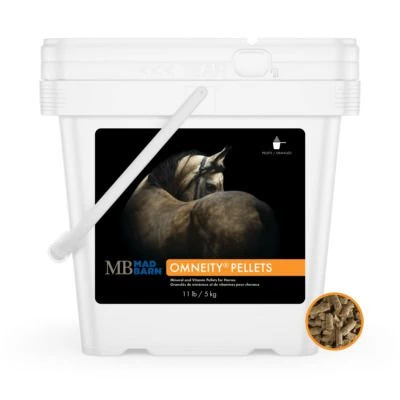
For most horses, Mad Barn’s Omneity® is the best overall vitamin and mineral supplement for balancing forage-based diets. It provides comprehensive nutrient coverage, uses 100% organic trace minerals, supplies higher levels of copper and zinc than many standard supplements, and includes biotin to support hoof health.
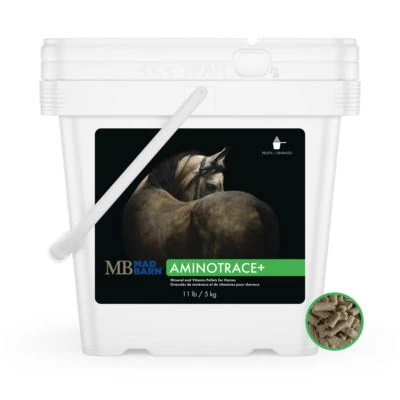
For horses on high-iron hay, Mad Barn’s AminoTrace+ is the better choice. It is formulated with enhanced copper and zinc levels to help balance diets where iron is high relative to these minerals, making it especially useful for horses with high-iron forage, metabolic concerns, or a history of hoof quality issues.
4) Add Zinc & Copper Together
If iron is very high relative to zinc and copper, additional zinc and copper may be needed beyond a standard vitamin and mineral supplement.
Zinc and copper in your horse’s diet should usually be adjusted together. Adding zinc alone can reduce copper availability if zinc intake becomes excessive. Adding copper alone can leave zinc low relative to both copper and iron.
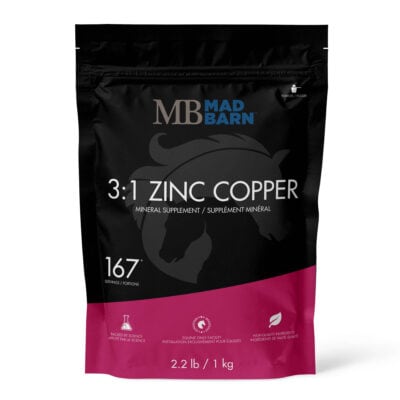
Mad Barn’s 3:1 Zinc Copper is designed for horses that need targeted trace mineral support. It provides zinc and copper proteinate in a 3 : 1 ratio to help correct diets where these minerals are low or poorly balanced relative to iron.
3:1 Zinc Copper uses organic trace minerals, which are bound to amino acids rather than supplied as simple inorganic salts. This can improve mineral availability because organic forms do not compete directly with iron for the same intestinal transport pathways and are less likely to form insoluble complexes in the gut.
A targeted zinc and copper supplement is most useful when forage analysis shows high iron, low zinc, low copper, or an iron : zinc : copper ratio that remains poorly balanced after adding a complete vitamin and mineral supplement.
5) Recheck the Diet When Forage Changes
Your horse’s iron : zinc : copper ratio can change significantly when hay changes. A new cutting, supplier, field or pasture season may have a different mineral profile, even if the forage looks similar.
Recheck the diet whenever forage changes, a new fortified feed is added, or supplements are changed. This is especially important for horses on carefully balanced mineral programs or horses with hoof, coat, metabolic or performance concerns.

Field Study: Balancing High-Iron Hay
In a 16-week field study conducted in Florida, 16 mature Friesian geldings were evaluated after the owner reported hoof cracks and progressive sun-bleaching across the herd.
The horses were maintained on free-choice grass hay and pasture, approximately 1.5 kg (3.3 lb) of a pelleted complete feed per day, and free-choice Himalayan salt. [12]
The diet had several important gaps:
- High iron forage: The hay contained 353 ppm iron and the pasture contained 376 ppm iron, both above the Equi-Analytical grass hay database average of 220 ppm. [12][13]
- Imbalanced mineral ratios: The control diet supplied 3,578 mg iron, 514 mg zinc and 193 mg copper per day, producing an Iron : Zinc : Copper ratio of approximately 18.5 : 2.7 : 1. [12]
- Underfortified grain ration: The complete feed was fed below the manufacturer’s recommended rate. At this intake, it would not provide enough vitamins and trace minerals to fully balance the diet, even if it contributed useful calories and protein.
- No supplemental biotin: The control diet provided no added biotin, a nutrient commonly used to support hoof horn quality and growth. [12]
- Additional vitamin deficiencies: The control diet was also below NRC targets for several nutrients, including cobalt, vitamin A, vitamin D, vitamin E, thiamine and riboflavin. [12]
These deficiencies explain why increasing the complete feed would not fully correct the ration. Feeding more complete feed would increase vitamin and mineral intake, but it would also increase calorie intake and still leave iron high relative to zinc and copper.
For many horses, especially easy keepers, the better strategy is to balance the diet with a concentrated vitamin and mineral supplement that does not add significant calories to the ration.
In the field study, horses continued to receive the same forage and complete feed, but the diet was balanced with 120 grams of Mad Barn’s Omneity® Premix, a comprehensive vitamin and mineral supplement.
Because of the elevated iron content of the horses’ forage, an additional 6 grams of Mad Barn’s 3:1 Zinc Copper supplement was added to improve the iron : zinc : copper ratio.
This improved the zinc-to-copper ratio from 2.66 to 3.18 and reduced the iron-to-copper ratio from 18.51 to 8.83, even though total iron intake remained high. [12]
After 16 weeks, horses fed the balanced diet had 22% faster hoof growth than unsupplemented horses. Average hoof growth was 3.77 cm in the balanced group compared to 3.10 cm in the control group over the measurement period. [12]
Table 3. Selected Diet Changes in the Field Study
| Diet Factor | Control Diet | Balanced Diet |
|---|---|---|
| Omneity® Premix | 0 g/day | 120 g/day |
| 3:1 Zinc Copper | 0 g/day | 6 g/day |
| Iron | 3,578 mg/day | 3,633 mg/day |
| Zinc | 514 mg/day | 1,307 mg/day |
| Copper | 193 mg/day | 412 mg/day |
| Zinc : Copper | 2.66 : 1 | 3.18 : 1 |
| Iron : Copper | 18.51 : 1 | 8.83 : 1 |
| Biotin | 0 mg/day | 20 mg/day |
The Florida field study provides a practical example of how high-iron forage can be managed in a real feeding program. The horses in the control and balanced groups lived in the same environment, consumed the same high-iron forage, and were managed under similar conditions.
The key difference was that the balanced group received a forage-based vitamin and mineral program with additional zinc and copper support, resulting in improvements in hoof quality and growth. [12]
Frequently Asked Questions
Here are some frequently asked questions about the iron, zinc and copper ratio in horses:
The ideal iron, zinc and copper ratio for horses is commonly balanced close to 4 : 3 : 1. This means the diet supplies about four parts iron and three parts zinc for every one part copper. This ratio is not a formal nutrient requirement or diagnostic test, but it is a practical ration-balancing benchmark used to identify diets where iron is high relative to zinc and copper. [1]
The iron, zinc and copper ratio matters because these trace minerals interact during absorption and metabolism. When iron intake is high, it can interfere with the availability of zinc and copper, increasing the risk of a functional deficiency even when total intake appears adequate. Poor balance may affect slow-turnover tissues such as hooves, hair coat, skin, tendons and ligaments over time. [1][2][3]
Most adult horses do not need added iron because forage usually supplies enough, and often more than enough, iron. Hay, pasture, soil contamination, water, fortified feeds and supplements can all contribute to total iron intake. Routine iron supplementation may worsen trace mineral balance, especially when zinc and copper are already low relative to iron. Iron should only be supplemented in specific cases under veterinary guidance.
Too much iron can affect zinc and copper absorption because these minerals share some intestinal transport pathways. When iron is present in high amounts in the digestive tract, it can reduce the amount of zinc and copper absorbed from the same diet. This is most concerning when zinc and copper are already low or marginal in the ration. High iron intake is different from clinical iron toxicity, but it can still create a trace mineral imbalance.
Signs of low zinc or copper in horses may include weak or slow-growing hooves, hoof cracks, dull or faded coat, poor skin quality, delayed wound healing and reduced immune resilience. These signs are not specific to mineral imbalance and can also be related to protein intake, hoof care, parasites, PPID, insulin dysregulation, inflammation or environmental stress. Mineral status is best evaluated by reviewing the full diet, starting with forage analysis. Blood testing may be useful in some clinical situations, but it does not always reflect long-term dietary intake or tissue status.
You can calculate your horse's iron, zinc and copper ratio by adding the total daily intake of each mineral from forage, feeds, ration balancers, supplements, mineral blocks and salt. If mineral values are listed in ppm or mg/kg, multiply the ppm by the kilograms of dry matter consumed to estimate milligrams per day. After adding the daily totals, divide iron and zinc by the copper value to convert them into a ratio. A forage analysis is the most accurate starting point because forage is usually the largest source of iron.
A high iron, zinc and copper ratio means iron is elevated relative to zinc and copper in the total diet. For example, a ratio such as 12 : 3 : 1 or 20 : 3 : 1 suggests the horse is getting much more iron than zinc and copper. This does not automatically mean the horse has iron toxicity, but it does indicate poor trace mineral balance. The usual correction is to avoid added iron and provide enough zinc and copper to balance the ration.
The main sources of iron in a horse's diet are hay, pasture, soil contamination, water, fortified feeds, mineral products and supplements. Forage is often the largest source because horses eat several kilograms of hay or pasture dry matter every day. Dusty hay, forage harvested close to the ground and high-iron water can significantly increase total iron intake. Red mineral blocks and blood-building supplements may also add unnecessary iron.
Testing your horse's hay for iron, zinc and copper is one of the best ways to understand the trace mineral balance of the diet. A forage analysis shows how much of each mineral is supplied by the main feed source and whether the ration needs more zinc, more copper, less added iron or a different balancing strategy. This is especially useful when horses have hoof, coat, metabolic, liver or performance concerns. If forage iron appears unusually high, a high ash value may suggest soil contamination, and a second sample may help confirm the result.
Balancing high-iron hay for your horse usually starts with avoiding unnecessary added iron from feeds, supplements and mineral blocks. If possible, switching to lower-iron forage is the most direct correction when hay or pasture is the main source of excess iron. When changing forage is not practical, the diet should be balanced around the forage being fed by meeting zinc and copper requirements and increasing them as needed relative to iron. A complete vitamin and mineral supplement may be needed, with additional zinc and copper support in some cases.
A complete vitamin and mineral supplement is often better than feeding more grain when the goal is to correct trace mineral balance without adding unnecessary calories. Many horses do not need the full recommended feeding rate of a fortified feed, especially easy keepers or metabolic horses. Feeding less than the recommended amount may leave vitamin and mineral gaps, while feeding more may increase calories without fully correcting a high iron : zinc : copper ratio. A concentrated supplement like Mad Barn's Omneity® separates micronutrient balancing from calorie intake.
The difference between Omneity® Pellets, AminoTrace+ and 3:1 Zinc Copper is their role in the diet-balancing strategy. Omneity® is the best overall vitamin and mineral supplement for many forage-based diets because it provides broad nutrient coverage, organic trace minerals and biotin. AminoTrace+ is the better choice for horses on high-iron hay, especially when metabolic concerns or hoof quality issues are part of the picture. 3:1 Zinc Copper is a targeted supplement for horses that need additional zinc and copper beyond a standard vitamin and mineral program.
Zinc and copper should usually be supplemented together because adding one without considering the other can create a new imbalance. Very high zinc intake can impair copper absorption, while adding copper alone may leave zinc low relative to both copper and iron. This is why zinc, copper and iron should be evaluated as part of the whole diet rather than as isolated nutrients. Targeted zinc and copper supplementation is most useful when forage analysis shows high iron, low zinc, low copper or a poor ratio that remains after adding a complete vitamin and mineral supplement. Mad Barn's 3:1 Zinc Copper is formulated with bioavailable minerals in an optimal ratio to help fill gaps beyond what is supplied in a complete vitamin and mineral.
Iron supplements are unlikely to help a tired or underperforming adult horse unless iron deficiency has been confirmed. Iron deficiency from low dietary intake is uncommon in adult horses because forage usually supplies adequate iron. Anemia or poor performance is more often related to chronic disease, inflammation, blood loss, parasites, gastric ulcers or another medical issue. A veterinarian should evaluate tiredness, poor performance or anemia before iron is added to the diet.
You should recheck your horse's trace mineral balance whenever hay, pasture, fortified feed or supplements change. A new cutting, supplier, field or pasture season can have a different mineral profile even when the forage looks similar. Rechecking is especially important for horses on carefully balanced mineral programs or horses with hoof, coat, metabolic or performance concerns. Updating the ration helps keep zinc and copper properly balanced relative to total iron intake.
Summary
Iron, zinc and copper are essential trace minerals that support oxygen transport, immune function, antioxidant defense, connective tissue health, hoof quality and coat pigment. Because these minerals interact during absorption and metabolism, the total diet should be evaluated for both mineral intake and trace mineral balance.
- Iron supports oxygen transport and cellular energy production, but most adult horses already receive adequate iron from forage
- Zinc supports hoof horn quality, skin integrity, immune function, tissue repair and antioxidant enzyme activity
- Copper supports connective tissue formation, coat pigment, iron metabolism, antioxidant defenses and skeletal development
- High iron intake can reduce zinc and copper availability, especially when these minerals are already low or marginal in the diet
- The iron : zinc : copper ratio is a practical ration-balancing benchmark used to assess whether iron is high relative to zinc and copper
- Forage analysis is the best starting point for evaluating trace mineral balance because hay and pasture are often the largest iron sources
References
- Nutrient Requirements of Horses: Sixth Revised Edition. National Academies Press. 2007.
- Espinoza. A. et al. Iron, copper, and zinc transport: inhibition of divalent metal transporter 1 (DMT1) and human copper transporter 1 (hCTR1) by shRNA. Biological Trace Element Research. 2012.
- Latham. C. M. et al. A survey of North American horse diets: What are we missing? Journal of Equine Veterinary Science. 2023.
- Lawrence. L. A. et al. Influence of dietary iron on growth, tissue mineral composition, apparent phosphorus absorption and chemical and mechanical properties of bone in ponies. Proceedings of the 10th Equine Nutrition and Physiology Symposium. 1987.
- Johnson. M. A. and Murphy. C. L. Adverse effects of high dietary iron and ascorbic acid on copper status in copper-deficient and copper-adequate rats. The American Journal of Clinical Nutrition. 1988.
- Satué. K. et al. Changes of Hepcidin, Ferritin and Iron Levels in Cycling Purebred Spanish Mares. Animals. 2023.
- Theelen. M. J. P. et al. Chronic iron overload causing haemochromatosis and hepatopathy in 21 horses and one donkey. Equine Veterinary Journal. 2019.
- Brommer. H. and van Oldruitenborgh-Oosterbaan. M. M. S. Iron deficiency in stabled Dutch warmblood foals. Journal of Veterinary Internal Medicine. 2001.
- van Bömmel-Wegmann. S. et al. Zinc Status of Horses and Ponies: Relevance of Health, Horse Type, Sex, Age, and Test Material. Veterinary Sciences. 2023.
- Knight. D. A. et al. The effects of copper supplementation on the prevalence of cartilage lesions in foals. Equine Veterinary Journal. 1990.
- Wagner. E. L. et al. Copper, zinc-superoxide dismutase activity in exercising horses fed two forms of trace mineral supplements. Journal of Equine Veterinary Science. 2010.
- Mad Barn Research Department. High-iron forage diet balancing field study in mature Friesian geldings. Internal unpublished data. 2024-2025.
- Equi-Analytical Feed Composition Library. Dairy One. 2026.
- Pearson. E. G. and Andreasen. C. B. Effect of oral administration of excessive iron in adult ponies. Journal of the American Veterinary Medical Association. 2001.