English
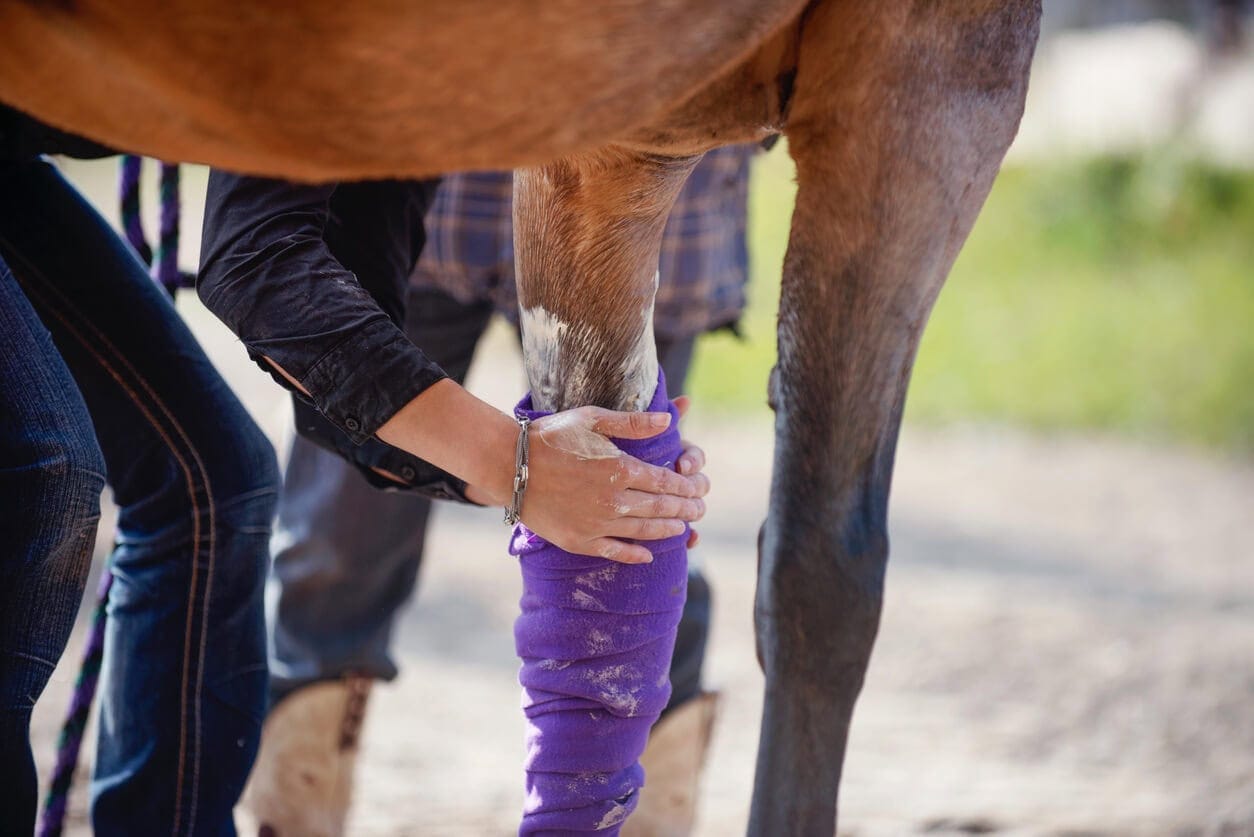
Leg poultices have been used in equine care for centuries to cool and soothe horses’ legs. These formulations are intended to address conditions such as swelling, bruising, and “stocking up“, a term describing the accumulation of fluid in a horse’s lower legs due to inactivity.
Traditionally, poultices were crafted from natural ingredients like clay, herbs, and plant materials and applied to horses’ legs in an attempt to draw out heat and toxins and reduce swelling. In contemporary equine practice, poultices are still used, but scientific evidence for many claimed benefits remains limited. Modern poultices are made with ingredients such as kaolin clay, Epsom salts, and herbal extracts to achieve desired therapeutic effects.
Horse owners interested in using leg poultices should understand the limitations of these therapies and the correct way to use them. Steps include monitoring the treated area for adverse reactions, consulting a veterinarian for serious injuries or persistent swelling, and incorporating light exercise when appropriate to improve limb circulation.
This article explores the types of leg poultices, their applications, and the step-by-step methods for applying and removing them from your horse’s legs.
Leg Poultices for Horses
A leg poultice is a moist preparation, often clay or Epsom-salt based, used for managing swelling, inflammation, or other issues in a horse’s limbs. Applied directly to the skin, leg poultices are used for: [1]
- Cooling the leg: Moist poultices can temporarily cool the skin as water evaporates, which may support post-exercise comfort.
- Soothing soreness: By cooling the skin, poultices may provide temporary relief from soreness involving muscles and tendons.
- Supporting circulation: In cases like “stocking up,” where fluid collects in the lower legs due to inactivity or circulation issues, poultices are sometimes used to encourage blood flow.
- Addressing inflammation: Traditionally, poultices were believed to have drawing properties that helped reduce fluid buildup, swelling, and pressure within the affected area.
Leg poultices are commonly used by horse owners for managing leg soreness and swelling, but they should never replace veterinary assessment or treatment of an injury.
Swelling and Stocking Up
“Stocking up” is a common term for stagnation edema which is temporary swelling of a horse’s lower legs, often resulting from inactivity or prolonged confinement in a stall. This swelling occurs as fluid accumulates in the tissues of the legs, usually due to reduced circulation caused by limited movement.
While stocking up is not typically painful for the horse, it can lead to noticeable discomfort and stiffness, especially if the condition persists or is accompanied by underlying health concerns.
One method sometimes used for managing stocking up is the application of poultices. These topical applications are purported to cool the skin, which may have therapeutic benefits.
However, poultices have not been shown to draw excess fluid out of underlying tissues or stimulate blood flow. Poultices are sometimes used alongside other management strategies that address the root causes of stocking up.
Preventing and managing stocking up involves several measures. Ensuring the horse has opportunities for free movement during turnout can improve circulation and minimize fluid pooling in the legs. Additionally, monitoring the horse’s diet may be appropriate when nutritional imbalances contribute to swelling.
By combining appropriate management practices, horse owners can manage stocking up and support their horse’s comfort. [2][3]
Types of Leg Poultices
Poultices include various types of topical applications used to address equine leg conditions, such as inflammation, swelling, and soreness. Selecting the appropriate type of poultice is important for safe use, and horse owners should consult with a veterinarian and follow the manufacturer’s instructions. Kinds of leg poultices include: [4][5][6][7]
- Clay-based poultices: Clay-based poultices often contain kaolin or bentonite clay, which have absorbent properties. They form a moist layer that can cool the skin as water evaporates and are commonly applied to the legs after strenuous activity.
- Epsom salt poultices: Epsom salt, or magnesium sulfate, is used in poultices intended to relieve swelling and discomfort. Evidence for anti-inflammatory and antiseptic effects when applied to intact skin is limited. They can be prepared at home by dissolving Epsom salts in warm water and mixing with a binding agent like glycerin or clay to achieve the desired consistency.
- Pre-Made Poultice Pads: Premade poultices offer a less messy alternative; pre-made poultice pads are infused with active ingredients and can be easily applied and secured with a bandage. While they may be more expensive than traditional poultices, they are an option for horse owners seeking a ready-made product.
- Herbal poultices: These poultices use herbs such as Achillea millefolium (yarrow), Equisetum (horsetail), and Symphytum (comfrey), which are included for their proposed anti-inflammatory and soothing effects. They are often used to treat bruises, skin issues, and general soreness. These poultices can be prepared by boiling herbs and securing them with a bandage.
How to Apply & Remove a Leg Poultice
Proper application and removal are important for safe use of a leg poultice. The required materials for applying and removing a poultice include:
- Poultice material (e.g., clay, Epsom salts, or pre-made pads)
- Clean water and a bucket
- Mild soap
- Plastic wrap or brown paper bag
- Stable bandages or standing wraps
- Scissors
- Clean towel
Application Process
Applying a poultice to a horse’s leg requires preparation and attention to the manufacturer’s instructions. The following steps describe the application process:
- Prepare the horse’s leg: The first step involves thoroughly cleaning the leg to remove any dirt, debris, or sweat that could interfere with the poultice’s adherence. This can be done using a soft brush or damp cloth.
- Mix the poultice: For powdered or clay-based poultices, the product must be mixed with water to achieve a paste-like consistency. The water should be added gradually, ensuring the mixture is neither too runny nor too thick. (If using a pre-made poultice, this step can be skipped.)
- Apply the poultice: The prepared poultice should be spread generously over the affected area of the leg. The application should be even, covering the affected area. For pre-made poultice pads, these should be moistened as per the manufacturer’s instructions and placed directly onto the horse’s leg.
- Wrap the poultice: To retain the poultice’s moisture and ensure it remains in place, it should be covered with plastic wrap or brown paper. The poultice should be secured without being overly tight, as excessive pressure could restrict circulation, leading to possible complications.
- Leave in place: The poultice should be left in place according to the manufacturer’s instructions or as directed by a veterinarian. Afterward, the poultice can be gently removed, and the leg cleaned again to complete the process.

Removal Process
Proper poultice removal helps ensure the horse’s leg remains clean, free of residue, and ready for evaluation. Careful attention to each step helps prevent irritation.
Removing the poultice properly requires the horse owner to:
- Unwrap the leg: The bandage securing the poultice is gently cut away using scissors designed for equine care to prevent accidental injury. Once the bandage is removed, the plastic wrap or brown paper layer is peeled off with care, avoiding any pulling on the horse’s skin or hair.
- Clean the leg: The leg should be rinsed thoroughly with clean, lukewarm water to remove all traces of the poultice. A hose or a sponge with a bucket of water can be used for more controlled cleaning. Special attention is given to folds in the skin to ensure no residue remains, as leftover poultice can cause irritation or attract dirt and bacteria leading to possible complications.
- Assess the Leg: After cleaning, the horse’s leg should be carefully inspected for any signs of irritation such as redness or increased sensitivity, potentially caused by the poultice or wrapping process. The swelling or inflammation is evaluated to determine improvement. Based on the assessment, the next steps are decided, whether to reapply the poultice, or leave the leg unwrapped to promote natural healing.
Tips for Effective Leg Poulticing
Using a poultice safely requires following product instructions and monitoring the horse’s legs. The following precautions can help reduce risks:
- Avoid overuse: Prolonged or excessive application of poultices can dry out the skin or lead to irritation. To reduce this risk, limit use to the recommended duration specified on the product or as advised by a veterinarian.
- Monitor for any reactions: Regularly check the treated area for signs of adverse reactions, such as redness, swelling, or discomfort. These symptoms may indicate that the horse is sensitive to the poultice ingredients or that the wrapping was too tight. If any reaction occurs, discontinue use and promptly consult a veterinarian.
- Use appropriate bandaging: Not all poultices require wrapping. If a bandage is used, apply adequate padding and ensure even pressure without wrinkles or excessive tightness. Check the bandage regularly for slipping or signs of pressure. Covering a poultice with plastic wrap can also reduce evaporative cooling by preventing moisture from escaping.
- Keep supplies ready: A first aid kit can be used to store supplies for injuries and poultice applications. Ensure your kit includes poultice materials, bandages, padding, plastic wrap or brown paper, scissors, and a clean sponge or cloth for easy application and removal.
- Keep in contact with a veterinarian: For serious injuries, persistent swelling, heat, or lameness, veterinary assessment is recommended. A veterinarian can provide tailored guidance on using poultices as part of a broader treatment plan. Avoid applying poultices to open wounds unless directed by a veterinarian.
- Incorporate movement: Light exercise can be used alongside poulticing when appropriate. Movement improves circulation and helps prevent fluid buildup, which is particularly beneficial for horses prone to conditions like stocking up. A short hand-walk or turnout can help limit fluid pooling when the horse is fit to exercise.
Frequently Asked Questions
Here are some frequently asked questions about leg poultices for horses:
Leg poultices are moist preparations, often clay- or Epsom salt-based, applied directly to a horse's legs to help manage swelling, inflammation, and discomfort. Clay-based poultices provide a cooling effect as moisture evaporates from the skin, which can temporarily relieve discomfort in affected areas. Although some poultices are marketed as drawing out heat and fluid, evidence that they remove inflammation or fluid from deeper tissues is limited.
Leg poultices are commonly used to manage mild swelling and soreness, particularly after strenuous exercise or in horses experiencing fluid buildup in the lower limbs due to inactivity. They may also be incorporated into a veterinary rehabilitation plan following an injury. However, new or unexplained swelling, heat, pain, or lameness should be evaluated by a veterinarian to determine the underlying cause before treatment.
Leg poultices are generally well tolerated when applied according to product instructions, but improper use can cause complications. Prolonged application can dry out or irritate the skin, while certain ingredients may cause sensitivity or allergic reactions. Tight bandaging over a poultice can also restrict circulation or cause pressure injuries. To minimize risks, follow the manufacturer's instructions, avoid applying products to open wounds unless specifically indicated, and monitor the treated area for redness, irritation, or increased swelling. Poultices should not replace veterinary treatment for injuries, persistent swelling, or lameness.
Summary
Leg poultices are used in equine care to help manage inflammation, swelling, discomfort, and a variety of other conditions affecting the limbs.
- Poultices are applied after injuries or intense physical activity to help manage swelling and soreness.
- Different types of poultices are available, including clay-based and herbal formulations. Product selection and application should account for the horse's condition and the manufacturer's instructions.
- Poultices should not be used as a substitute for veterinary care, particularly when a horse has persistent swelling, lameness, or signs of injury.
- Consult a veterinarian to determine an appropriate treatment plan based on the horse's condition and individual requirements.
References
- Ovincy. C. et al., Clay Therapy in Wound Healing: A Brief Review of the Literature. Journal of Wound Management and Research. 2024.
- Stewart. D. J., Swelling in Horses’ Lower Legs Is Pretty Common and Usually Happens If Horses Move Less than Normal - like Standing in a Yard or Stable at Night..
- Thal. D. Stocking Up, Stagnation Edema. Horse Side Vet Guide.
- Cointreau. M. Equine Herbs & Healing: An Earth Lodge Guide to Horse Wellness. Earth Lodge 2005.
- Poultice For Horses: Everything You Need To Know - Animals Log. 2023.
- How To Apply Poultice To A Horse. 2023.
- Poultice for Horses: How to Reduce Swelling in Legs.