English
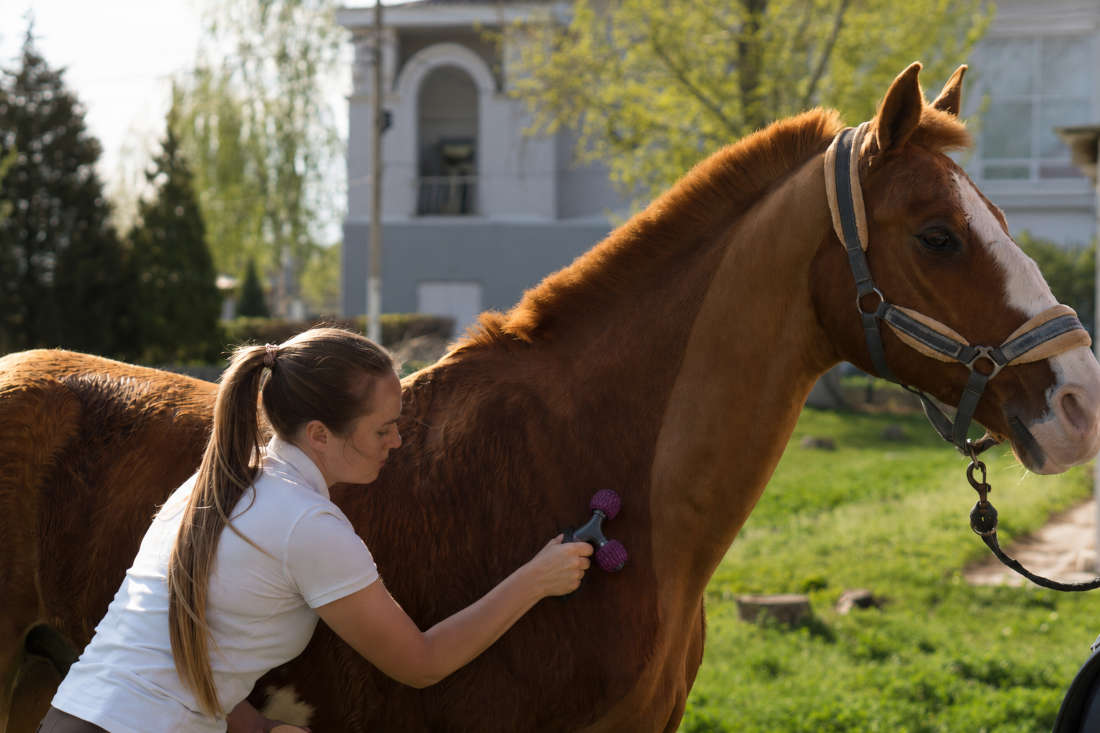
Massage tools for horses are increasingly used as adjuncts to post-exercise recovery in training and conditioning programs. These tools include massage rollers, massage guns, and vibrating or heated devices that help equine athletes relax, relieve temporary muscle stiffness, and improve comfort.
Like other soft-tissue therapies for horses, massage rollers and guns are designed to apply controlled pressure or repetitive pulses to muscles and connective tissues. They are commonly used after workouts, though some owners also incorporate gentle rolling into warm-up routines.
Research on massage devices in horses remains limited. Studies in humans suggest modest reductions in muscle soreness and short-term improvements in flexibility, but there is limited evidence of improvements in athletic performance.
Keep reading to learn about the different types of massage devices for horses, what research suggests about their effectiveness, and how to use them safely, including appropriate pressure, session duration, and areas to avoid.
What Are Massage Tools for Horses?
Massage tools for horses are handheld or powered devices used to apply pressure, vibration, or heat to muscles and other soft tissues. Horse owners can use basic tools, such as manual rollers, on their own horses, while qualified equine massage therapists and physiotherapists may use specialized devices as part of their treatments.
Similar to manual massage, these tools are used during both warm-up and recovery to address muscle tension, improve mobility, and reduce temporary soreness. [1][2] Massage tools are commonly applied to large muscle groups in the horse’s neck, shoulders, back, and hindquarters.
Unlike hands-on massage, these devices provide consistent pressure or stimulation, and their intensity can be adjusted based on the horse’s response. [1][2] However, using a massage device can limit the handler’s ability to feel changes in muscle tension or sensitivity, making it more difficult to identify areas of discomfort during treatment.
There are a number of different types of massage tools available for horses, including: [1][2]
- Smooth manual rollers: Handheld foam or rubber rollers with a smooth surface that distributes pressure across a broad area. Massage rollers are typically used over large muscle groups rather than on targeted areas.
- Textured rollers: Rollers with raised bumps, ridges, or knobs that concentrate pressure over smaller treatment areas. These devices provide more localized stimulation than smooth rollers and require careful pressure control.
- Vibrating rollers and massage guns: Battery-powered devices that apply mechanical vibration or percussive pressure to muscles. Most have adjustable intensity settings that allow horse owners to increase or decrease the intensity.
- Heated massage devices: Tools that combine massage pressure with heat to warm soft tissues during massage. Heat can help increase circulation and loosen tight muscles.
What's your top priority with your horse's health?

What's your top priority with your horse's health?
Massage Rollers
Massage rollers are handheld or mechanical tools designed to apply controlled pressure to a horse’s soft tissues, including muscles and connective tissue.
They typically have smooth or textured rolling surfaces that are moved across large muscle groups on the horse’s body. The handler controls the pressure, speed, and direction of each movement. [1][2]
Massage rollers are used to help stimulate local circulation and promote muscle relaxation before or after exercise. Smooth rollers distribute pressure over larger treatment areas, while textured rollers can be used to apply concentrated stimulation to specific pressure points on the body.
Although generally less intense than massage guns, excessive pressure or use over sensitive areas can cause discomfort and tissue irritation. [1][2]
Variations of massage rollers also incorporate vibration or heat to provide additional soft-tissue stimulation during treatment.
Massage Guns
In addition to foam rollers and other rolling massage tools, some horse owners and rehabilitation professionals use percussion therapy devices, commonly called massage guns. These handheld devices deliver rapid, repetitive pulses to soft tissues, providing deeper and more localized stimulation than standard foam rollers. [4]
Massage guns may help temporarily reduce muscle tension, stimulate circulation, and promote relaxation when used appropriately. However, because they deliver greater force and intensity than manual rollers, improper use carries a higher risk of discomfort and tissue irritation. [5]
Table 1. Common types of massage tools for horses and their intended uses
| Massage Device | How It Works | Common Uses | Best Suited For |
|---|---|---|---|
| Manual Foam Rollers |
|
|
|
| Textured Rollers |
|
|
|
| Vibrating Rollers |
|
|
|
| Percussive Massage Guns |
|
|
|
| Heated Massage Devices |
|
|
|
Benefits of Massage Tools for Horses
Massage tools are commonly used before or after exercise to relieve temporary muscle stiffness, promote relaxation, and support workout recovery.
The potential benefits of massage tools for horses include: [1][2][10]
- Monitoring Muscle Tone: Regular massage sessions give horse owners an opportunity to bond with their horses, inspect their bodies, and recognize changes in muscle tone or sensitivity. This may help horse owners notice early signs associated with conditions such as Lyme disease or Equine Protozoal Myeloencephalitis (EPM).
- Increased Blood Flow: Applying mechanical pressure to muscles may stimulate local circulation. Blood flow delivers oxygen and nutrients needed for tissue repair while helping remove waste products that build up during exercise. [10]
- Lymphatic Drainage: Using rollers on horses may encourage movement of lymphatic fluid, which helps regulate tissue fluid balance and supports the clearance of excess fluid, proteins, cellular debris, and inflammatory byproducts from tissues. This can reduce swelling and support comfort after work. [10] Supporting this fluid movement is beneficial after intense exercise, travel, or prolonged stabling, when swelling can occur.
- Muscle Relaxation: Massage rollers help reduce muscle tightness, particularly in areas such as the back, shoulders, and hindquarters. This promotes muscle relaxation during or after ridden work or groundwork.
- Range of Motion: Massage rollers can indirectly support improved range of motion by reducing muscle stiffness. This effect is typically temporary but can be useful in athletic horses as part of a warm-up or post-exercise routine.
Post-Exercise Recovery
During exercise, muscles experience increased metabolic activity, causing metabolic byproducts to accumulate within muscle cells. In high-intensity work, muscles rely more on anaerobic metabolism, increasing lactate and hydrogen ion production. [10]
As hydrogen ions accumulate, muscle acidity increases, a process called acidosis. This interferes with normal muscle contractions and, together with the depletion of energy stores, contributes to muscle fatigue and temporary decreases in strength, coordination, stamina, and performance. [9][10]
In the post-exercise recovery period, the body restores energy stores and clears metabolic byproducts. Circulation delivers oxygen and nutrients to muscle tissue and transports metabolic byproducts away from working muscles.
Massage rollers may help stimulate local circulation during recovery, potentially supporting the clearance of metabolic byproducts and helping reduce post-exercise inflammation and discomfort. However, direct evidence that massage accelerates waste clearance or reduces inflammation in horses remains limited. [1][2]
Muscle Adaptation
High-intensity exercise also activates more muscle fibers, particularly fast-twitch (type II) fibers. This can cause microscopic damage to structures within muscle fibers, including sarcomeres, triggering a temporary inflammatory response. Inflammation is part of normal muscle repair but can contribute to stiffness, soreness, and reduced flexibility following exercise. [9][10]
During recovery, the body repairs this damage by rebuilding and reinforcing muscle fibers. With adequate rest, hydration, and nutrition, repeated cycles of exercise and recovery allow the muscles to adapt by becoming stronger, more efficient, and more resistant to fatigue. These adaptations support improved stamina, coordination, and athletic performance over time. [9]
Without sufficient recovery between exercise sessions, these repair processes may be incomplete. Further training can: [9][10]
- Increase the risk of injury
- Reduce performance consistency
- Contribute to ongoing muscle stiffness and soreness
Massage rollers and guns may support muscle recovery by relieving muscle tension and reducing stiffness or stress that can interfere with a horse’s ability to work comfortably.
Although massage does not directly improve physiological adaptations to exercise, these benefits may indirectly support more consistent training and better performance, allowing horses to improve their conditioning over time.
Research on Massage Tools for Horses
Research on the use of massage devices for horses remains limited. Most evidence on the effects of roller-based soft-tissue techniques comes from human studies on foam rolling, or self-myofascial release, and related soft-tissue therapies. [1][2][11]
Research on foam rolling in humans suggests these tools may offer small improvements in flexibility and recovery, particularly when used before or after exercise. Pre-exercise rolling showed slight increases in range of motion and minor improvements in sprint performance. In contrast, post-exercise rolling helped reduce the decline in performance following fatigue and supported recovery of muscle function. [11]
Foam rolling is also consistently associated with reductions in muscle soreness after exercise in the human literature. Studies evaluating delayed-onset muscle soreness (DOMS) report that rolling can reduce discomfort and limit decreases in performance following muscle fatigue, suggesting a role in post-exercise recovery. [11]
One of the most consistent findings across multiple human studies is that foam rolling can help improve short-term range of motion. This suggests horses may also experience temporary improvements in flexibility and comfort after massage rollers are applied. However, these effects are generally modest and depend on application pressure, duration, and the muscle groups targeted. [1][11]
While massage can improve comfort and flexibility, research shows limited and inconsistent effects on athletic performance. Most studies report little to no meaningful improvement in strength, power, or overall athletic output, suggesting massage devices are unlikely to enhance performance on their own. [11]
For this reason, massage devices are best used as supportive tools within a well-rounded recovery program for horses. [1][11]
How to Use Massage Tools on Horses
Using massage rollers and guns effectively requires a thoughtful, horse-specific approach. While these tools are simple to apply, how and when they are used plays a significant role in their impact on recovery and overall comfort.
Applying too much pressure, using them at the wrong time, or ignoring the horse’s response can limit their benefits or lead to unnecessary discomfort. A consistent, controlled application combined with careful observation helps ensure massage tools support your horse’s recovery. [1][2][12]
When to Use Massage Tools on Horses
Massage tools are most commonly used after exercise as part of a cool-down routine. Allow the horse to cool down normally before beginning massage. Light use before work can also help reduce stiffness, but aggressive pressure should be avoided. In rehabilitation settings, owners should follow veterinary or professional guidance when using massage devices. [1][12]
How to Use Massage Rollers for Horses
To use massage rollers, begin with light, consistent pressure and apply the roller in slow, controlled passes over large muscle groups. Focus on soft tissue areas such as the neck, shoulders, back muscles, and hindquarters, adjusting pressure based on the horse’s response. Make several slow passes over each area before moving to another muscle group. Avoid rolling directly over joints, the spine, or any areas showing signs of injury, swelling, or sensitivity. [1][12]
If the horse continues to resist or shows signs of pain, discontinue use and consult a veterinarian or qualified equine professional. [1]
How to Use Massage Guns and Powered Devices
Massage guns deliver more concentrated force than manual rollers and should be used by qualified equine professionals. Begin at the lowest intensity setting and apply the device over large muscle groups, keeping the massage head moving rather than holding it against one area. Avoid direct application over joints, the spine, tendons, or bony areas.
Vibrating rollers can be used similarly to manual rollers, starting with the lowest vibration setting. For heated devices, begin with a low temperature and monitor the horse for signs of discomfort or skin irritation. Follow the manufacturer’s instructions for each device.
Massage Session Duration
Start using rollers on your horse in short sessions, especially if the tool is new to their routine. A 5- to 15-minute session is usually enough for gentle, controlled work over major muscle groups. Focus on controlled, deliberate application rather than intensity or duration. [1][12]
For horses that are new to rollers, begin at the shorter end of this range and gradually increase session length only if the horse remains relaxed and comfortable. It’s preferable to use light pressure for a brief period than to continue rolling once the horse begins to show signs of tension, avoidance, or irritation.
Session length can vary depending on the size of the area being treated, the horse’s sensitivity, and whether rollers are being used before or after exercise. Shorter sessions may be appropriate before work, while slightly longer sessions may be useful after exercise as part of a cool-down and recovery routine.
For massage guns and other powered devices, session duration should follow the manufacturer’s instructions and guidance from a qualified equine professional.
Monitoring the Horse’s Response
Monitor the horse’s body language closely for positive signs of relaxation, such as lowered head carriage or softening of posture. Also watch for signs of discomfort, including tension or avoidance. Adjust technique accordingly to maintain a positive response. [1][2]
Table 2. Signs a horse is responding positively or negatively to massage tools
| Positive Responses | Possible Signs of Discomfort |
|---|---|
|
|
Reading your horse’s response is one of the most important parts of using massage tools safely. A horse who becomes tense, reactive, or evasive may be communicating that the pressure is too intense, the area is sensitive, or the session has gone on too long.
If discomfort persists despite reducing pressure or changing technique, stop the session and reassess before continuing. Massage tools should support relaxation and comfort, not create resistance or mask signs of pain that may require professional evaluation.

Precautions When Using Massage Tools
Massage tools, including rollers and massage guns, should not replace a proper cool-down after intense exercise. These devices are best used once the horse has returned to its baseline physiological state. [2]
Massage devices may not be appropriate for all horses. Avoid use or seek professional guidance if your horse: [2]
- Has areas affected by acute injury, inflammation, or swelling
- Shows signs of lameness
- Has skin conditions, wounds, or heightened sensitivity
- Shows signs of resistance or discomfort during use
Additional Precautions for Massage Guns
Unlike foam rollers, percussion therapy devices concentrate force over smaller areas and may affect deeper muscle tissue.
This can increase sensitivity, particularly over the back, shoulders, hindquarters, or areas with existing soreness. Improper use may also aggravate inflammation, bruising, muscle guarding, or underlying musculoskeletal issues. [6][7][8]
Research on massage guns and percussion therapy in horses remains limited. Additional studies are needed to evaluate their long-term safety, effectiveness, and appropriate application in equine athletes.
For this reason, equine massage guns are best used by qualified professionals, such as veterinarians, rehabilitation practitioners, or experienced equine bodyworkers with knowledge of equine anatomy and safe application techniques.
Horse owners should avoid using massage guns:
- Directly over joints, the spine, tendons, or bony areas
- On horses with acute injury, swelling, heat, or unexplained pain
- At high-intensity settings without professional guidance
- On sensitive or reactive horses that show signs of discomfort
Limitations & Risks for Horses
Massage devices may temporarily relieve muscle tension and discomfort, but they are not a treatment for underlying injuries or musculoskeletal conditions that require veterinary care. Improper use, such as excessive pressure or use over sore or injured muscles and tissues, can increase discomfort or worsen underlying issues. Temporary relief of symptoms may also mask deeper problems, including lameness. [1][12]
Massage rollers and guns are best suited for general comfort, relaxation, and routine post-exercise maintenance. They are not intended to diagnose or treat injuries, correct training problems, or resolve persistent pain.
Using massage devices too aggressively can also create new discomfort. Applying excessive pressure or high-intensity stimulation over bony areas, joints, the spine, inflamed tissues, or sensitive regions can cause the horse to brace, move away, or become more reactive. This is especially important for horses with a history of back pain, muscle disorders, skin sensitivity, recent injury, or unexplained changes in performance.
For these reasons, massage rollers and guns should be used conservatively and only on appropriate soft tissue areas. The goal is to support relaxation and comfort, not to force a release or work through resistance. Any sign of worsening discomfort, repeated avoidance, or unusual sensitivity should be taken seriously.
When to Call the Veterinarian
Contact your veterinarian if your horse shows signs of pain, lameness, swelling, heat, or sensitivity that do not resolve with rest or that worsen after massage. Veterinary evaluation is also recommended if the horse has a sudden change in performance, reluctance to move forward, difficulty bending, bucking, head tossing, back soreness, or resistance that is unusual for that horse.
You should also seek veterinary guidance before using massage guns or rollers on horses recovering from injury, surgery, illness, or a diagnosed musculoskeletal condition.
In these cases, massage tools may still have a place in a rehabilitation plan, but they should only be used as directed by a veterinarian or qualified equine rehabilitation professional.
Massage Tools in a Recovery Program
Post-exercise recovery involves restoring energy stores, replacing fluid and electrolyte losses, and repairing muscle tissue. Adequate energy, protein, and essential amino acids are important to support muscle repair and recovery in athletic horses.
Hydration is also critically important after exercise, and electrolyte supplementation may be needed to replace losses from heavy sweating. Adequate rest between workouts allows time for muscle recovery and adaptation. [13]
Training structure also influences how effectively horses recover between exercise sessions. Gradually increasing conditioning demands, proper warm-up and cool-down routines, regular turnout, adequate sleep, and scheduling recovery days help reduce excessive fatigue and support long-term soundness.
Massage rollers and guns, like other equine recovery therapies, may help relieve temporary muscle tension and stiffness between workouts. These devices can be used alongside stretching, light exercise, and cooling methods to support muscle comfort and recovery. [14]
Because horses vary in workload, fitness level, age, and sensitivity, recovery programs should be individualized. Monitoring the horse’s muscle soreness, stiffness, performance, and willingness to work can help owners assess recovery between sessions. Tracking body condition over time can also help determine whether nutritional intake is appropriate for the horse’s workload.
Frequently Asked Questions
Here are some frequently asked questions about using massage tools, including massage rollers and guns, for equine recovery and therapy:
Massage tools are handheld or powered devices used to apply controlled pressure, vibration, or percussive stimulation to a horse's soft tissues, including muscles and connective tissue. These include massage rollers, massage guns, and heated or vibrating devices. They are most often used after exercise to support recovery, though some owners also use gentle rolling before work as part of a warm-up routine. Massage tools are commonly applied to areas of tension such as the back, shoulders, and hindquarters. Unlike manual massage, they offer more consistent, repeatable pressure or stimulation that can be adjusted based on the horse's response. [1][2]
The main potential benefits of massage tools for horses include relaxation, local circulation, temporary muscle comfort, and short-term flexibility. Massage rollers and guns may help influence soft tissue tension, neuromuscular responses, and fluid movement after exercise, which can help some horses feel looser and more comfortable. These effects are generally modest and short-term rather than dramatic or permanent.
Massage rollers and guns differ from hands-on massage in how they are applied and how intense they tend to be. Traditional massage relies on a practitioner's hands to assess and manipulate tissue, while rollers provide more consistent pressure over larger areas. Massage guns deliver rapid, high-frequency pulses that usually create deeper and more intense stimulation than rollers. Stretching and other manual therapies are also different because they focus more on joint mobility and flexibility than direct pressure on muscle tissue. [1][2][3]
Massage tools are most often used after exercise as part of a recovery routine, once the horse has cooled down. Light use of massage rollers before work may also help reduce stiffness, but aggressive pressure should be avoided during warm-up. In rehabilitation settings, massage devices should be used under veterinary or professional guidance.
Massage rollers can be used over large soft-tissue areas such as the neck, shoulders, back muscles, and hindquarters. These are common targets for gentle, controlled rolling. Massage guns can also be applied to large muscle groups by qualified professionals, but require greater caution because they deliver more concentrated force. Avoid direct application over joints, the spine, tendons, or bony areas. Pressure and intensity should always be adjusted based on the horse's response.
A manual massage roller session should usually last about 5 to 15 minutes when done gently over major muscle groups. Start with short sessions, especially if the horse is new to roller therapy. Longer or more intense sessions are not necessarily better and may increase the chance of discomfort. Controlled, deliberate application matters more than duration. For massage guns and other powered devices, session duration should follow the manufacturer's instructions and guidance from a qualified equine professional.
Massage rollers can be used safely by applying light, consistent pressure in slow, controlled passes over large muscle groups. Massage guns should be used by qualified equine professionals, starting at the lowest intensity setting. Avoid applying massage devices directly over joints, the spine, or any area with swelling, injury, heat, or marked sensitivity. Owners should watch the horse's body language throughout the session and stop if the horse continues to resist or appears painful. Safe use depends on a horse-specific approach rather than a fixed routine. [1][2][7]
Signs that a horse is responding well to massage include lowered head carriage, a softer posture, quiet standing, and a relaxed facial expression. Behaviors such as licking or chewing and reduced muscle tension may also indicate relaxation. Signs of discomfort include pinned ears, tail swishing, bracing, moving away from pressure, head tossing, or visible agitation. Watching these signals closely helps owners decide whether to continue, lighten pressure, or stop.
Massage rollers and guns may help horses as supportive recovery tools, but their effects are generally modest and temporary. Direct research in horses is limited, so much of the evidence comes from human foam rolling studies and related soft-tissue research. That evidence suggests rollers may help with short-term flexibility, post-exercise comfort, and reducing soreness after fatigue. Research specifically evaluating massage guns in horses is also limited.
Massage tools are unlikely to improve performance in a major or consistent way on their own. Research shows limited and inconsistent effects on strength, power, and overall athletic output. However, relieving muscle tension and stiffness may help horses work more comfortably and maintain consistent training, indirectly supporting performance and conditioning over time.
Massage rollers and guns may temporarily relieve muscle tension and discomfort, but they are not treatments for underlying injuries or musculoskeletal conditions that require veterinary care. They may support day-to-day comfort, but they do not correct underlying lameness or resolve persistent pain. Temporary relief can also mask symptoms of conditions that need proper diagnosis and treatment.
Massage rollers and guns should be avoided when a horse has an acute injury, inflammation, swelling, wounds, skin problems, lameness, marked sensitivity, or clear discomfort during use. Massage tools should not replace a proper cool-down after intense exercise and are best used once the horse has returned to its normal physiological state. Excessive pressure or stimulation over sore or injured tissue may worsen discomfort. In questionable cases, seek veterinary or professional guidance. [1][2][7]
Summary
Massage tools are handheld or mechanical devices used to apply gentle pressure to a horse’s soft tissues, including muscles and fascia. They are typically used over large muscle areas such as the neck, shoulders, back muscles, and hindquarters.
- The primary benefits of massage rollers and guns are short-term improvements in muscle relaxation, circulation, and comfort, rather than long-term changes in performance.
- Massage rollers and guns are most effective when incorporated into a broader equine management strategy that includes proper conditioning, balanced nutrition, and adequate recovery time.
- While not a substitute for veterinary care or foundational training practices, rollers can serve as a useful adjunct tool for maintaining muscle health and supporting overall performance.
- As with any recovery method, individual response varies, and careful observation is essential.
References
- Haussler. K. K. The Role of Manual Therapies in Equine Pain Management. Veterinary Clinics of North America: Equine Practice. 2010.
- Jastrzębska. E. et al. Effect of Massage on Stress Indicators in Recreational Horses—A Pilot Study. Animals : an Open Access Journal from MDPI. 2025.
- Haussler. K. K. Review of Manual Therapy Techniques in Equine Practice. Journal of Equine Veterinary Science. 2009.
- Ferreira. R.M. et al. The Effects of Massage Guns on Performance and Recovery: A Systematic Review. Journal of Functional Morphology and Kinesiology. 2023.
- Haussler. K.K. The role of manual therapies in equine pain management. Veterinary Clinics of North America: Equine Practice. 2010.
- Bergh. A. et al. A Systematic Review of Complementary and Alternative Veterinary Medicine in Sport and Companion Animals: Soft Tissue Mobilization. Animals. 2022.
- Chen. J. et al. Rhabdomyolysis After the Use of Percussion Massage Gun: A Case Report. Physical Therapy. 2021.
- Sulkowski. K. et al. Case Report: Vertebral Artery Dissection After Use of Handheld Massage Gun. Clinical Practice and Cases in Emergency Medicine. 2022.
- Reis. I. L. et al. Equine Musculoskeletal Pathologies: Clinical Approaches and Therapeutical Perspectives—A Review. Veterinary Sciences. 2024.
- Hiney, K. Physical Conditioning of Horses. Oklahoma State University. 2017.
- Wiewelhove. T. et al. A Meta-Analysis of the Effects of Foam Rolling on Performance and Recovery. Frontiers in Physiology. 2019.
- Weerapong. P. et al. The Mechanisms of Massage and Effects on Performance, Muscle Recovery and Injury Prevention. Sports Medicine. Auckland, N.Z. 2005.
- Wang. L. et al. From Food Supplements to Functional Foods: Emerging Perspectives on Post-Exercise Recovery Nutrition. Nutrients. 2024.
- Johnson. S. A. Current Equine Rehabilitation and Physical Therapies. Today's Veterinary Practice. 2024.