English

Morphine is a potent opioid used in equine veterinary medicine to manage moderate to severe pain.
Veterinarians may use it for horses undergoing surgery or treatment for traumatic injuries and other painful conditions when nonsteroidal anti-inflammatory drugs (NSAIDs) or other medications do not provide adequate relief on their own.
In horses, morphine is most commonly administered in a hospital setting. It is usually part of a multimodal pain management plan that may also include NSAIDs, local anesthetics, and sedatives.
Understanding how veterinarians use morphine can help horse owners discuss the medication’s benefits, risks, and limitations. This guide covers the uses, administration, potential side effects, and competition status of morphine for horses.
Morphine for Horses
Morphine is an opioid used for pain control and as an adjunct to sedation in horses. [1] It is one of the most potent analgesic (pain killer) drugs available in equine practice and is generally reserved for situations involving moderate to severe pain, surgery, trauma, or procedures where additional pain control is needed.
After systemic administration, morphine acts rapidly. Its effects are relatively short-lived, lasting only 30 – 60 minutes depending on the dosing route and clinical situation. [2]
Epidural (spinal) administration can provide substantially longer analgesia because the drug acts directly on opioid receptors within the spinal cord.
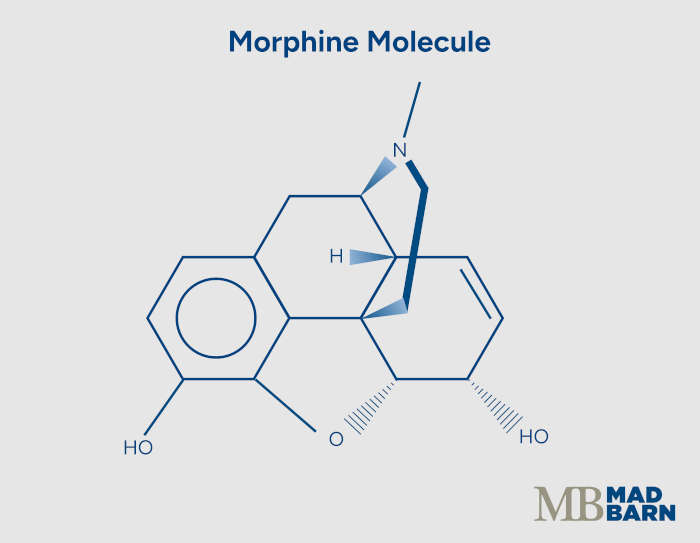
Morphine is a tightly regulated medication because of its potential for misuse in humans. As a potent opioid, it is highly addictive with a relatively low safety margin, which classifies it as a high-risk substance in human medicine.
As a result, morphine is a controlled substance in many countries, including Canada and the United States. Its use, storage and handling are subject to strict legal requirements.
For veterinarians and horse owners, this means morphine is only available through authorized medical channels and must be handled according to applicable controlled substance regulations.
What's your top priority with your horse's health?

What's your top priority with your horse's health?
Available Forms
There are no morphine formulations labeled for equine use in Canada or the United States. [3][4] Veterinarians may prescribe human formulations off-label, also known as extra-label use.
Off-label use means a medication is prescribed for a species, condition, dose, or route that is not included on its approved label. This is a permitted practice under veterinary prescribing regulations. In these cases, veterinarians use their clinical experience, professional judgement and supporting evidence to determine dosing and administration protocols.
Available human formulations include: [5]
- Sterile injectable solutions
- Long-acting injectable formulations
- Oral tablets, capsules, and solutions
Oral morphine has limited efficacy in veterinary species due to poor absorption and a high rate of liver metabolism. [5] Given this, injectable formulations are used most often in veterinary patients.
Drug Class: Opioids
Opioids bind to receptors in the horse’s brain, spinal cord, and other tissues. There are three types of opioid receptors: mu, delta, and kappa.
Binding of opioids to the receptors decreases signaling in nerves, reducing transmission of pain stimuli. These effects can also produce sedation. [1]
Other opioids used in veterinary medicine include: [1]
- Butorphanol
- Hydromorphone
- Fentanyl
- Methadone
- Buprenorphine
Mechanism of Action
Morphine is a mu-opioid receptor agonist. These receptors are found in the brain, spinal cord, gastrointestinal tract, adrenal glands, and other tissues. [1]
When morphine activates a mu receptor, inhibitory proteins within the cell reduce the electrical activity needed to transmit a stimulus such as pain or touch. As a result, fewer pain signals reach the brain, producing analgesia (lack of pain sensation). [1]
Pain signals normally travel from affected tissues through peripheral nerves to the spinal cord and brain. By acting at opioid receptors in the central nervous system, morphine interrupts this signaling pathway, providing pain relief. [1]
Uses in Horses
Morphine is used primarily to control severe, acute pain in horses. Veterinarians commonly combine it with other analgesics, including NSAIDs and local anesthetics, as part of a multimodal pain-management plan.
In equine practice, opioids are most often used for standing sedation, as premedication for general anesthesia, and for epidural analgesia. [1]
Standing Sedation
Morphine is sometimes used in combination with a sedative as part of standing sedation protocols for equine medical procedures.
When given alone, opioids can cause hyperexcitability in horses. In contrast, when combined with certain sedatives, they strengthen sedation and allow veterinarians to use lower doses of each medication, reducing the risk of dose-related adverse effects. [1]
General Anesthesia
Veterinary teams may include morphine in general anesthetic protocols. For a horse in severe pain, morphine is sometimes given before urgent procedures to improve comfort and make induction of anesthesia safer for the horse and handlers. [1]
Procedures in which morphine may be used for pain control include: [6]
- Colic surgery
- Orthopedic procedures involving joints or tendons
- Fracture stabilization
- Castration
- Surgical repair of large wounds
Morphine may also reduce the amount of additional anesthetic medication needed during a procedure. By maintaining analgesia as the horse returns to consciousness, it can support a calmer recovery and reduce the number of premature attempts to stand. [1]
Epidural Analgesia
Epidural administration delivers medication into the space surrounding the spinal cord, allowing it to act directly on spinal opioid receptors. Veterinarians may use this route for painful reproductive procedures, including: [1]
- Dystocia (difficulty foaling)
- Uterine prolapse
- Rectovaginal tears
- Vaginal lacerations
- Ovariectomy
Effects of epidural morphine last longer than intramuscular administration. Analgesia from this route lasts 8 – 16 hours in horses compared to 30 – 60 minutes for intramuscular injection. [1]
Administration Routes
Morphine can be administered to horses by multiple routes, including: [5]
- Intravenous (into a vein)
- Intramuscular (into a muscle)
- Subcutaneous (under the skin)
- Epidural (into the space surrounding the spinal cord)
- Intra-articular (into a joint)
The intravenous, intramuscular, and epidural routes are most commonly used in horses. [5] For sedation and general anesthesia, veterinarians often choose intravenous administration because it takes effect more quickly than intramuscular administration.
Since morphine is used off-label in horses, there is no established dosing or administration protocol for equine use of this medication.
The appropriate morphine dose depends on: [5]
- The horse’s health status and other individual factors
- The degree of pain control or sedation required
- The procedure being performed
- Other medications given at the same time
Veterinarians balance these factors to provide effective analgesia or sedation while limiting side effects. An opioid antagonist such as naloxone can reverse morphine’s effects if a horse develops severe adverse effects or excessive sedation. [5]
Storage
Store morphine products according to the manufacturer’s instructions. Morphine is typically kept at room temperature and protected from light. [5]
Prolonged exposure to bright light may darken the solution and affect product quality. As a controlled substance, morphine should be kept in secure, locked storage with access limited to authorized personnel and inventory carefully documented.
In horses, morphine is typically stored and administered by veterinarians or veterinary hospitals rather than kept routinely by horse owners. Store all medications out of reach of animals and children.
Safety Warnings & Precautions
Morphine can be used safely when a veterinarian selects an appropriate dose and monitors the horse closely. Because it can affect breathing, gastrointestinal motility, and behavior, it is usually administered in a clinical setting where veterinary staff can identify and manage side effects.
As a controlled substance, morphine is subject to strict requirements for prescribing, storage, record keeping, dispensing, and disposal. Access is limited to authorized medical and pharmaceutical professionals, and veterinary practices must take steps to prevent diversion, loss, or unauthorized use.
Horse owners should not handle, store, or administer morphine unless specifically directed to do so by a licensed veterinarian.
Monitoring
Morphine is usually administered to horses in a clinical or hospital setting.
During relevant procedures where morphine is in use, veterinary teams assess the horse’s degree of pain control and sedation. To make this assessment, they monitor the following: [5]
- Respiratory rate and depth
- Blood pressure
- Heart rate
- Reactivity/sensation
- Changes in gastrointestinal motility, including signs of colic or reduced fecal output
Veterinary monitoring helps balance effective pain relief against the risk of side effects. The same risks also influence whether morphine is appropriate for a particular horse, especially when other health conditions increase the likelihood of complications.
Contraindications
Contraindications are circumstances in which a drug should be avoided or used with caution.
Opioid receptors are found throughout the horse’s body, so administration can affect numerous organ systems. As such, horses with certain underlying conditions are at a higher risk of side effects or complications from opioid use.
Conditions associated with greater risk include: [5]
- Known hypersensitivity to opioids
- Kidney or adrenal disease
- Advanced age or severe debilitation
- Toxin-associated diarrhea
- Head injury
- Respiratory disease
- Very young age
- Severe abdominal pain, unless morphine is being given before surgical intervention

Side Effects
The principal side effects of morphine in horses are respiratory depression and reduced gastrointestinal motility, which can progress to ileus, a condition in which normal movement of the intestines slows or stops.
Signs of side effects include:
- Slow or shallow breathing
- Reduced fecal output
- Colic-like signs
These effects occur because opioid activity reduces signaling that supports breathing and intestinal movement. [5] This is why veterinary teams monitor these functions closely during treatment.
Morphine can also cause excitation when given without another sedative. Affected horses may pace, vocalize, rear, or kick. Combining opiates with a sedative helps limit this response. [1]
Acute Toxicity (Overdose)
An excessive dose can intensify morphine’s side effects, particularly respiratory depression and excitation. In severe cases, extreme respiratory depression can lead to a complete cessation of breathing, which is fatal without medical intervention.
Signs of morphine overdose in horses include: [5]
- Very slow breathing or cessation of breathing
- Muscle tremors
- Seizures
- Collapse
Naloxone is the principal reversal agent for opioid overdose. More than one dose of naloxone may be needed to fully reverse an overdose as its effects can wear off while morphine remains active. Antiseizure medication or mechanical ventilation may also be necessary until the horse is stable. [5]
Drug Interactions
Other medications can intensify morphine’s effects or alter how either drug works. Reported interactions include: [5]
- Central nervous system depressants: Antihistamines, barbiturates, tranquilizers, and acepromazine may increase sedation and respiratory depression
- Diuretics: Opioids may reduce the effects of diuretics such as furosemide
- Skeletal muscle relaxants: Morphine may increase muscle relaxation and weakness
- Antidepressants: Morphine and antidepressants may intensify each other’s effects and increase the risk of adverse reactions
- Warfarin: Opioids may increase warfarin activity
Regulatory Status & Legal Considerations
There are no morphine products specifically approved for horses in Canada or the United States. [3][4] Veterinarians may prescribe human formulations off-label at their professional discretion. Off-label use of medication is permitted within a valid veterinary-client-patient relationship according to veterinary prescribing regulations.
Due to its high potential for human misuse and dependence, morphine is a controlled drug in many countries, including Canada and the United States. [7]
Veterinarians must maintain detailed records of the morphine they acquire, administer, dispense, and dispose of. In equine practice, morphine is usually administered in a hospital or clinical setting where the horse can be monitored.
Status in Competition
Morphine is banned under the FEI Prohibited Substances rules because its analgesic and central nervous system effects can alter performance and mask pain. [8] A horse receiving morphine should not compete until the medication and its metabolites have cleared sufficiently to meet the rules of the relevant governing body.
There is no universal withdrawal period. Detection times vary with the dose, route, frequency of administration, individual horse, testing method, and competition rules.
Owners and trainers should review current medication-control regulations and work with their veterinarian before returning a treated horse to competition.
Frequently Asked Questions
Here are some frequently asked questions about morphine for horses:
Morphine is used to control moderate to severe pain in horses, particularly when other pain medications do not provide adequate relief on their own. Veterinarians may include it in protocols for colic surgery, orthopedic procedures, fracture stabilization, castration, large wound repair, and traumatic injuries. It is typically combined with other medications as part of a multimodal pain management plan.
Morphine works in horses by binding primarily to mu opioid receptors in the brain, spinal cord, gastrointestinal tract, and other tissues. Activating these receptors reduces the transmission of pain signals before they are perceived by the brain. This produces potent pain relief, but it does not treat the injury or disease causing the pain.
Morphine has a rapid onset of action in horses, especially when administered intravenously. Its effects generally last approximately 30 to 60 minutes when used for sedation or systemic pain control. The onset and duration can vary with the administration route, clinical situation, dose selected by the veterinarian, and other medications used at the same time.
Morphine is not available in a veterinary-approved formulation specifically for horses in North America. Veterinarians can use human morphine products off-label based on clinical experience, published research, and the needs of the individual patient. Off-label medication use is a recognized practice in veterinary medicine and should only occur under veterinary direction.
Morphine can be administered to horses intravenously, intramuscularly, subcutaneously, epidurally, or into a joint. Intravenous, intramuscular, and epidural administration are the most common routes in equine practice. Veterinarians often prefer intravenous administration during sedation or general anesthesia because it takes effect more quickly than an intramuscular injection.
Oral morphine is generally not the preferred option for horses because it has limited effectiveness in veterinary species. The medication may be poorly absorbed and is extensively processed by the liver before reaching systemic circulation. Injectable morphine is therefore more commonly used when a veterinarian determines that opioid pain relief is appropriate.
Morphine can be combined with other pain medications as part of a multimodal pain management plan. Veterinarians may use it alongside NSAIDs, local anesthetics, and sedatives that control pain or improve restraint through different mechanisms. This approach can improve overall pain control while allowing lower doses of individual medications to be used.
Morphine can contribute to sedation in horses, but it is not usually used as a reliable sedative by itself. Opioids administered alone may cause hyperexcitability, including pacing, vocalizing, rearing, or kicking. Veterinarians commonly combine morphine with another sedative to improve sedation and reduce the risk of opioid-related excitement.
Morphine may be used during equine anesthesia to provide pain relief and help calm horses experiencing severe pain before surgery. It can also reduce the amount of additional anesthetic medication required during a procedure. By maintaining better pain control, morphine may support a calmer recovery and reduce the number of attempts a horse makes to stand after anesthesia.
Epidural morphine can provide approximately 8 to 16 hours of pain relief in horses. The medication is injected into the epidural space surrounding the spinal cord, allowing it to act directly on opioid receptors involved in pain transmission. Veterinarians may use epidural analgesia for painful procedures involving the hindquarters or reproductive tract, including difficult births.
The main side effects of morphine in horses are respiratory depression, reduced gastrointestinal motility, and excitation. Affected horses may breathe slowly, produce less manure, show colic-like discomfort, or become restless and difficult to handle. Veterinary teams monitor horses closely so they can recognize and manage these effects promptly.
Morphine can cause colic-like signs or reduced manure production because opioid activity can slow intestinal movement. This effect is especially important in horses with gastrointestinal disease or those already at risk of ileus. Veterinarians weigh the need for strong pain relief against this risk and monitor gastrointestinal motility and fecal output during treatment.
Morphine requires particular caution in horses with severe abdominal pain because it can reduce gastrointestinal motility and potentially complicate patient assessment. Severe abdominal pain is listed as a contraindication unless morphine is being used before surgical intervention. The veterinarian must evaluate the cause of the pain, the horse's condition, and the planned treatment before deciding whether morphine is appropriate.
Horses may not be suitable candidates for morphine if they have respiratory disease, kidney disease, adrenal disease, a head injury, toxin-associated diarrhea, or a known opioid hypersensitivity. Additional caution is required in very young, geriatric, severely debilitated, or critically ill horses. A veterinarian must assess these risks alongside the horse's need for pain control.
Horses receiving morphine are monitored for the quality of pain relief, depth of sedation, and signs of excitation. Veterinary teams may evaluate respiratory rate and depth, blood pressure, heart rate, reactivity, gastrointestinal motility, and fecal output. Monitoring is especially important because respiratory depression and reduced intestinal movement can become serious if they are not recognized.
Signs of a morphine overdose in horses can include very slow or absent breathing, muscle tremors, seizures, and collapse. Excessive doses may also intensify opioid-related excitement and other adverse effects. These signs require immediate veterinary treatment and respiratory support may be necessary.
The effects of morphine can be reversed with an opioid antagonist such as naloxone. Veterinarians may administer naloxone when a horse develops excessive sedation, respiratory depression, or other serious opioid effects. Multiple doses can be required, and additional treatment such as anti-seizure medication or mechanical breathing support may be needed in an overdose.
Morphine can interact with sedatives, antihistamines, barbiturates, tranquilizers, muscle relaxants, antidepressants, diuretics, and warfarin. Some combinations can increase sedation, respiratory depression, muscle weakness, or other adverse effects, while opioids may reduce the effectiveness of certain diuretics. The veterinarian should review all medications the horse has received before incorporating morphine into a treatment plan.
Horse owners generally do not administer morphine at home because it is a controlled drug with significant monitoring requirements and a risk of serious side effects. Regulations may restrict whether veterinarians can dispense opioids for owner administration. Morphine is typically given in a hospital or clinical setting where its use can be documented and the horse can be closely monitored.
Morphine is prohibited during equestrian competition because it can mask pain and affect the central nervous system. A horse receiving morphine may appear able to perform despite an injury or medical condition that would otherwise limit athletic activity. Owners and veterinarians must consult the current rules of the relevant governing organization and allow an appropriate withdrawal period before competition.
Summary
Morphine is a potent opioid analgesic that veterinarians use for moderate to severe pain in horses, particularly during surgery and treatment of serious injuries. It is usually administered in a clinical setting as part of a multimodal pain-management plan.
- Morphine provides potent analgesia for severe acute pain in horses
- Veterinarians commonly combine it with sedatives, NSAIDs, or local anesthetics
- Potential side effects include respiratory depression, excitation, and reduced gastrointestinal motility
- Veterinary monitoring is essential because morphine can affect breathing, behavior, and intestinal function
- Morphine is prohibited in equestrian competition, and return-to-competition timing must follow current governing-body rules
References
- Doherty. T. et al. Eds. Manual of Equine Anesthesia and Analgesia. 2nd ed. Wiley. 2022.
- Cole. C. et al. Eds. Equine Pharmacology. 1st ed. Wiley-Blackwell. 2014.
- Drug Product Database. Health Canada. 2019.
- Animal Drugs @ FDA. U.S. Food and Drug Administration.
- Plumb. D. C. Plumb's Veterinary Drug Handbook. 7th ed. PharmaVet, distributed by John Wiley & Sons. 2011.
- Auer. J. A. et al. Eds. Equine Surgery. 5th ed. Saunders/Elsevier. 2019.
- Drug Scheduling. U.S. Drug Enforcement Administration.
- 2026 Equine Prohibited Substances List. Fédération Equestre Internationale (FEI). 2026.