English

Trazodone is a prescription medication used to reduce anxiety and promote calm behavior in horses. It alters serotonin signaling in the brain and may be included in a broader management plan when a horse’s behavior could interfere with safe handling, veterinary care, or recovery.
All trazodone use in horses is off-label because no veterinary-approved formulations are available in North America. Veterinarians may prescribe a human-approved product for situations such as stall rest, hospitalization, transportation, medical procedures, or farrier visits.
Some horses may develop excessive sedation, excitement, tremors, or uncoordinated movement. Trazodone can also interact with other medications, particularly drugs that affect serotonin or are processed by the liver. Careful veterinary oversight is necessary to determine an appropriate dose, monitor the horse’s response, and reduce the risk of side effects.
Trazodone for Horses
Trazodone is a medication that alters serotonin signaling in the horse’s brain, leading to calming and sedative effects. Veterinarians may include it in a broader management plan when anxiety, stress, or excessive movement could interfere with care or recovery.
Unlike injectable sedatives commonly used for short veterinary procedures, trazodone is given orally and may be used when a horse needs behavioral modification over a longer period. This can be useful during situations such as prolonged confinement or hospitalization, where repeated heavy sedation would not necessarily be practical or desirable. [1][2]
Trazodone is absorbed from the gastrointestinal tract after oral administration, and its effects can persist for several hours. Some horses develop excessive sedation, incoordination, excitement, or other side effects, and repeated use may become less effective in some individuals.
For this reason, veterinarians adjust treatment according to the horse’s response rather than expecting a uniform effect. [3][1][2]
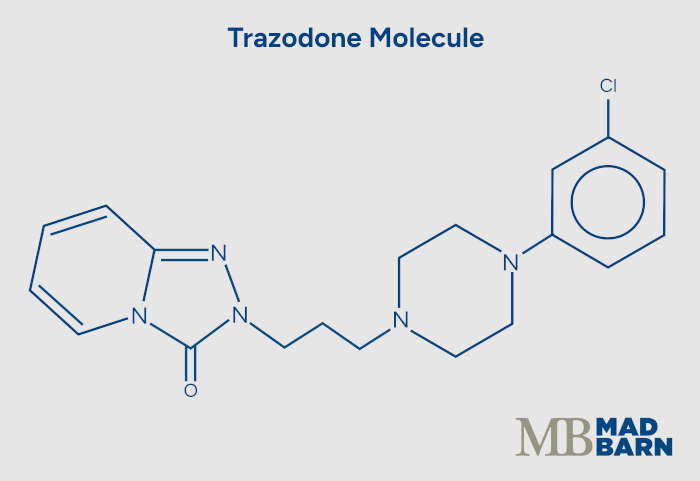
Available Forms
There are no veterinary-approved trazodone products in North America. [4][5] Veterinarians may prescribe a human-approved product for a horse through off-label use.
This means the medication is used in a species or manner not included on its approved label, a common practice in veterinary medicine when an appropriate species-specific product is unavailable.
Brand names for human trazodone products include: [4]
- Desyrel®
- Oleptro®
- Trazorel®
- Trittico®
Trazodone is typically supplied as an oral tablet. A veterinarian may direct an owner to add the tablets to feed or dissolve them in water for administration by oral syringe.
What's your top priority with your horse's health?

What's your top priority with your horse's health?
Drug Class: Serotonin Modulators
Trazodone is a serotonin antagonist and reuptake inhibitor (SARI), a type of serotonin-modulating antidepressant. [6] It is the main medication from this class used in veterinary medicine.
Other antidepressants used in veterinary patients include: [7]
- Fluoxetine
- Sertraline
- Amitriptyline
- Clomipramine
Mechanism of Action
Serotonin is a neurotransmitter involved in regulating mood, appetite, stress responses, and sleep. [8] When a neuron releases serotonin, the neurotransmitter enters the synapse, the small space between nerve cells, and binds to serotonin receptors on nearby cells. Serotonin is then cleared from the synapse in part by being transported back into the neuron that released it, a process known as reuptake. [8]
Trazodone modifies serotonin signaling through two main mechanisms, which is why it is classified as a SARI. First, it inhibits the serotonin transporter responsible for reuptake. This slows the removal of serotonin from the synapse, allowing serotonin to remain available for longer and increasing its opportunity to interact with serotonin receptors. [9]
Second, trazodone blocks specific serotonin receptors, particularly 5-HT2 receptors. This means that although more serotonin remains available in the synapse, its effects are not increased equally across all serotonin pathways. Instead, trazodone reduces signaling through the receptors it blocks while allowing serotonin to continue acting at other receptor types. [9]
This combination distinguishes trazodone from selective serotonin reuptake inhibitors (SSRIs). SSRIs primarily increase serotonin availability by inhibiting reuptake, whereas trazodone both inhibits reuptake and directly blocks selected serotonin receptors.
Trazodone also blocks other receptors involved in alertness and arousal, including histamine H1 and alpha-1 adrenergic receptors. These effects contribute to drowsiness, reduced arousal, and sedation.
In horses, oral trazodone has been shown to produce measurable sedation and reduced spontaneous activity, although the contribution of each individual receptor effect to these behavioral changes has not been fully established.
Uses in Horses
Trazodone is used in veterinary medicine to manage anxiety, fear, and stress-related behavior. Most of the available evidence for veterinary use comes from canine studies. [10] Research in horses remains limited. [3]
All trazodone use in horses is off-label. In equine medicine, trazodone is most often considered for supporting horses that become anxious, highly active, or difficult to manage during stall rest or hospitalization. [1][2]
Small studies in healthy horses found that oral trazodone produced variable degrees of sedation and, at the higher dose studied, reduced step frequency. [1][11] A separate clinical report described improvement in undesirable behaviors associated with confinement, but some horses experienced excessive sedation and two appeared to develop tolerance during longer-term use. [2]
Behaviors reported in horses treated during confinement included:
- Stall walking, circling, pacing, and weaving
- Kicking stall walls
- Rearing
- Other dangerous or disruptive behavior
A veterinarian may also consider trazodone as part of a plan for hospitalization, transportation stress, medical procedures, farrier visits, or other situations in which anxiety affects safe handling. Evidence for these uses in horses is still developing.
Administration Routes
Trazodone tablets are given orally to horses . Depending on the veterinarian’s instructions, they may be mixed into feed or dissolved in water and administered by oral syringe. [10][2] Corn syrup or another veterinarian-approved flavoring may improve palatability. [2]
There is no established dose for horses because no veterinary trazodone product is approved for this species. A veterinarian determines the dose and dosing interval using the horse’s condition, response, concurrent medications, and available research.
The prescribed dose may need adjustment if the horse is excessively sedated or does not respond as expected. Some horses may also become less responsive to the drug over time. [2]
Storage
Store trazodone tablets at room temperature in a tightly closed container and protect them from direct light. [10] Follow the storage directions on the dispensing label.
Safety Warnings & Precautions
Available studies suggest that trazodone is generally well-tolerated by horses, but the evidence supporting its use is minimal. The frequency of side effects and safety of long-term use are not well-established.
Because sedation and incoordination can affect a horse’s reactions and balance, handling and turnout plans during treatment should reflect the individual horse’s response. Follow the veterinarian’s directions for activity, confinement, and supervision while the horse is receiving trazodone.
Monitoring
Owners should monitor the horse’s behavior, alertness, coordination, appetite, and response to treatment. The intended response is calmer behavior without excessive sedation or unsafe incoordination.
Report unexpected excitement, marked sedation, tremors, unsteady movement, or persistent stress-related behavior to the prescribing veterinarian. These signs may indicate that the treatment plan or dose requires reassessment.
Contraindications
Contraindications refer to circumstances where a drug should be avoided or used with caution.
Trazodone should not be used in horses with a known sensitivity or allergy to the drug. It should also be avoided or used cautiously in horses with severe heart, liver, or kidney disease. [10]
The prescribing veterinarian should review the horse’s medical history and current medications before treatment begins.

Side Effects
The frequency of trazodone side effects in horses is unknown. Reported effects have generally been mild or have resolved after the dose was adjusted, but data about horses is limited. [10][2]
Potential side effects include: [10][2]
- Excessive sedation
- Excitement or other behavioral changes
- Muscle tremors
- Uncoordinated movement (ataxia)
Acute Toxicity (Overdose)
An overdose of trazodone can cause excessive effects on the central nervous system and serotonin signaling. One of the more serious potential complications is serotonin syndrome, which occurs when serotonin activity becomes excessively high. The risk may also increase when trazodone is given with other medications that affect serotonin. [10]
Signs of trazodone toxicity or serotonin syndrome may include: [10]
- Increased body temperature
- Seizures
- Diarrhea
- Difficulty breathing
- Uncoordinated movement
- Disorientation
Suspected trazodone overdose requires prompt veterinary assessment, particularly if neurologic, respiratory, or severe gastrointestinal signs develop.
Drug Interactions
Combining trazodone with other antidepressants or serotonin-modulating drugs can increase the risk of serotonin syndrome. Veterinary oversight is essential when these drugs are used together.
Trazodone is metabolized in the liver by enzymes that process many medications. Drugs that may interact with trazodone or affect its metabolism by the liver include: [10]
- Other antidepressants
- Antifungal medications
- Digoxin
- Macrolide antibiotics, such as erythromycin
- Phenothiazine sedatives, such as acepromazine
Trazodone may also increase the risk of gastrointestinal bleeding or ulceration when combined with non-steroidal anti-inflammatory drugs (NSAIDs). [10] These medications include:
- Phenylbutazone (bute)
- Flunixin meglumine (Banamine®)
- Firocoxib (Equioxx®, Prevequine®, or Previcox®)
- Aspirin
Regulatory Status & Legal Considerations
There are no veterinary-approved trazodone formulations in North America. [4][5] Veterinarians prescribe human-approved trazodone products to horses off-label, meaning the drug is being used in a species or manner not included on the approved human label.
Off-label use of an approved human drug in animals is permitted under federal law when it is ordered by a licensed veterinarian within a valid veterinarian-client-patient relationship. The veterinarian is responsible for determining whether trazodone is appropriate for the individual horse, selecting the dose and treatment plan, and providing follow-up if adverse effects or treatment failure occur.
Because there is no equine product label to follow, dosing and duration are based on veterinary judgment, the horse’s response, and the limited evidence available in this species. Horse owners should use trazodone only as prescribed, follow the dispensing label exactly, and consult the prescribing veterinarian before changing the dose, frequency, or treatment plan.
Status in Competition
Trazodone is listed as a Banned Substance under FEI rules, including outside competition. A horse receiving trazodone is not eligible to compete under Fédération Équestre Internationale (FEI) rules. [12]
The FEI does not publish a detection or withdrawal time for trazodone. [13] Because trazodone is classified as a Banned Substance rather than a Controlled Medication, it must not be present in the horse at any time. Owners of competition horses should work with their veterinarian to determine an appropriate period between discontinuing trazodone and returning to FEI competition.
Rules differ among competition organizations and can change. Consult the current rules of the relevant governing body and speak with the prescribing veterinarian before giving trazodone to a competition horse. The FEI prohibited substances guide provides additional context on how banned substances and controlled medications are classified.
Frequently Asked Questions
Here are some frequently asked questions about trazodone for horses:
Trazodone is used in horses to help manage anxiety, stress, and associated behavioral problems. A veterinarian may prescribe it for stall rest, hospitalization, transportation, medical procedures, farriery, handling, or other stressful situations. Its calming and sedative effects may make an anxious horse easier to manage while supporting a treatment or recovery plan.
Trazodone works in horses by altering serotonin signaling in the brain and nervous system. It blocks the serotonin transporter involved in serotonin reuptake and inhibits certain 5-HT2A serotonin receptors associated with anxiety and other effects. These actions can reduce anxiety, promote calmer behavior, and cause varying degrees of sedation.
Trazodone can sedate horses, although the degree of sedation varies between individuals and may depend on the dose. Studies have found that orally administered trazodone can reduce walking and promote calmer behavior in horses. The goal is generally for the horse to be calm without becoming excessively sedated or uncoordinated.
Trazodone may help a horse cope with stall rest by reducing anxiety, activity, and disruptive behavior. It has been used to manage stall walking, circling, pacing, weaving, kicking, rearing, and other behaviors that can interfere with safe confinement. The horse's response should be monitored closely so the veterinarian can adjust the treatment plan if necessary.
Trazodone may be used under veterinary direction to reduce anxiety associated with transporting a horse. Its suitability depends on the individual horse, the expected stress, and any other medications or health conditions involved. Because sedation and coordination changes are possible, a veterinarian should determine whether trazodone is appropriate before travel.
Trazodone may be considered for horses that experience anxiety during veterinary procedures, farriery, or handling. It can provide calming or sedative effects as part of a veterinarian-directed management plan. Research on these uses in horses remains limited, so the medication's effects should be assessed for each individual horse.
Trazodone is generally given to horses orally using tablets prescribed by a veterinarian. The tablets may be added to feed or dissolved in water and administered with an oral syringe. Corn syrup or another flavoring may be used to improve palatability when directed by the veterinarian.
The appropriate amount of trazodone for a horse must be determined by a veterinarian because there is no standardized, veterinary-approved equine dose. Veterinarians consider available research, clinical experience, the reason for treatment, and the individual horse's response. The dose may need to be adjusted if the horse is excessively sedated, remains anxious, or becomes less responsive to the medication over time.
How long trazodone affects a horse can vary with the individual, dose, administration schedule, and other medications being used. The available equine research is limited, so there is no single duration that applies to every horse. A veterinarian can develop a treatment schedule and modify it based on the horse's behavioral and sedative response.
Some horses can develop a tolerance to trazodone over time, causing the medication to become less effective. Signs may include the return of pacing, weaving, circling, stall walking, or other anxiety-related behaviors despite continued treatment. Owners should discuss declining effectiveness with their veterinarian rather than changing the dose themselves.
Possible side effects of trazodone in horses include excessive sedation, excitement or other behavioral changes, muscle tremors, and uncoordinated movement known as ataxia. The frequency of these effects is unknown because trazodone has not been extensively studied in horses. Recognized side effects appear to be generally mild and may resolve after a veterinarian adjusts the dose.
A horse taking trazodone should be monitored for changes in alertness, coordination, activity, and anxiety-related behavior. The horse should appear calmer without becoming excessively sedated, unstable, or unusually excited. Persistent anxiety, pacing, weaving, circling, tremors, or uncoordinated movement should be reported to the prescribing veterinarian.
Trazodone appears to have a relatively favorable safety profile in horses, but equine studies remain limited. More research is needed to establish the frequency and severity of adverse effects and the consequences of long-term use. Veterinary supervision is important because safety depends on the horse's health, dose, response, and other medications.
Trazodone should not be used in horses that are sensitive or allergic to the medication. It should also be avoided in horses with severe heart, liver, or kidney disease. A veterinarian should review the horse's medical history and current medications before prescribing it.
Trazodone can contribute to serotonin syndrome when excessive serotonin activity develops in the nervous system. Possible signs include increased body temperature, seizures, diarrhea, difficulty breathing, ataxia, and disorientation. Trazodone is unlikely to cause this syndrome when used alone, but the risk may increase when it is combined with other medications that affect serotonin.
Trazodone can interact with antidepressants and other medications that affect serotonin, potentially increasing the risk of serotonin syndrome. It may also interact with antifungal drugs, digoxin, macrolide antibiotics such as erythromycin, and phenothiazine sedatives such as acepromazine. Owners should give the veterinarian a complete list of the horse's medications before trazodone is started, stopped, or combined with another drug.
Combining trazodone with non-steroidal anti-inflammatory drugs may increase the risk of gastrointestinal bleeding and ulceration. This concern applies to commonly used equine NSAIDs such as phenylbutazone, flunixin meglumine, firocoxib, and aspirin. A veterinarian should assess the risks before trazodone is used with any of these medications.
Trazodone is not available in a veterinary-approved formulation for horses in North America. Veterinarians may prescribe a human-approved trazodone product for a horse in an off-label manner, which is a common practice in veterinary medicine. Horse owners should discuss the potential benefits and risks of off-label use with the prescribing veterinarian.
Trazodone is a prescription medication when used in horses. A veterinarian must determine whether it is appropriate, select a dose, and establish a treatment schedule for the individual horse. Owners should not administer human trazodone products to a horse without veterinary direction.
Trazodone is classified as a Banned Substance under the FEI Equine Prohibited Substances List. It is prohibited both during and outside competition under FEI rules, so a horse receiving trazodone is not eligible to compete under those rules. Other competition organizations may have different requirements, and owners should check the applicable regulations before administering the medication.
Summary
Trazodone is a prescription serotonin-modulating medication that veterinarians may use off-label to manage anxiety, stress, and excessive activity in horses. Research in horses is limited, and treatment must be individualized and monitored.
- Trazodone can have calming and sedative effects by altering serotonin signaling in the nervous system
- Veterinarians may prescribe it during stall rest, hospitalization, transportation, medical procedures, or other stressful situations
- Potential side effects include excessive sedation, behavioral changes, muscle tremors, and uncoordinated movement
- Drug interactions can increase the risk of serotonin syndrome, altered drug metabolism, or gastrointestinal bleeding
- Trazodone is an FEI Banned Substance and may not be used in horses competing under FEI rules
References
- Moss. A. L. et al. Investigation of the Effects of Orally Administered Trazodone on Intraocular Pressure, Pupil Diameter, Physical Examination Variables, and Sedation Level in Healthy Equids. American Journal of Veterinary Research. 2021.
- Davis. J. L. et al. Pharmacokinetics, Pharmacodynamics and Clinical Use of Trazodone and Its Active Metabolite m-Chlorophenylpiperazine in the Horse. Journal of Veterinary Pharmacology and Therapeutics. 2018.
- Doherty. T. et al. Ed. Manual of Equine Anesthesia and Analgesia. 2nd ed. John Wiley & Sons. 2022.
- Drug Product Database. Health Canada. 2019.
- Animal Drugs @ FDA. Food and Drug Administration.
- Sheffler. Z. M. et al. Antidepressants. StatPearls Publishing. 2026.
- Castel. A. Psychotropic Agents for Treatment of Animals. Merck Veterinary Manual. 2025.
- Bamalan. O. A. et al. Physiology, Serotonin. StatPearls Publishing. 2023.
- Fagiolini. A. et al. Rediscovering Trazodone for the Treatment of Major Depressive Disorder. CNS Drugs. 2012.
- Plumb. D. C. Plumb's Veterinary Drug Handbook. 7th ed. PharmaVet; distributed by John Wiley & Sons. 2011.
- Hobbs. K.J. et al. The Effects of Orally Administered Trazodone on Ambulation and Recumbency in Healthy Horses. Journal of Veterinary Internal Medicine. 2023.
- 2026 Prohibited Substances List. Fédération Equestre Internationale. 2026.
- FEI List of Detection Times. Fédération Equestre Internationale. 2024.