English
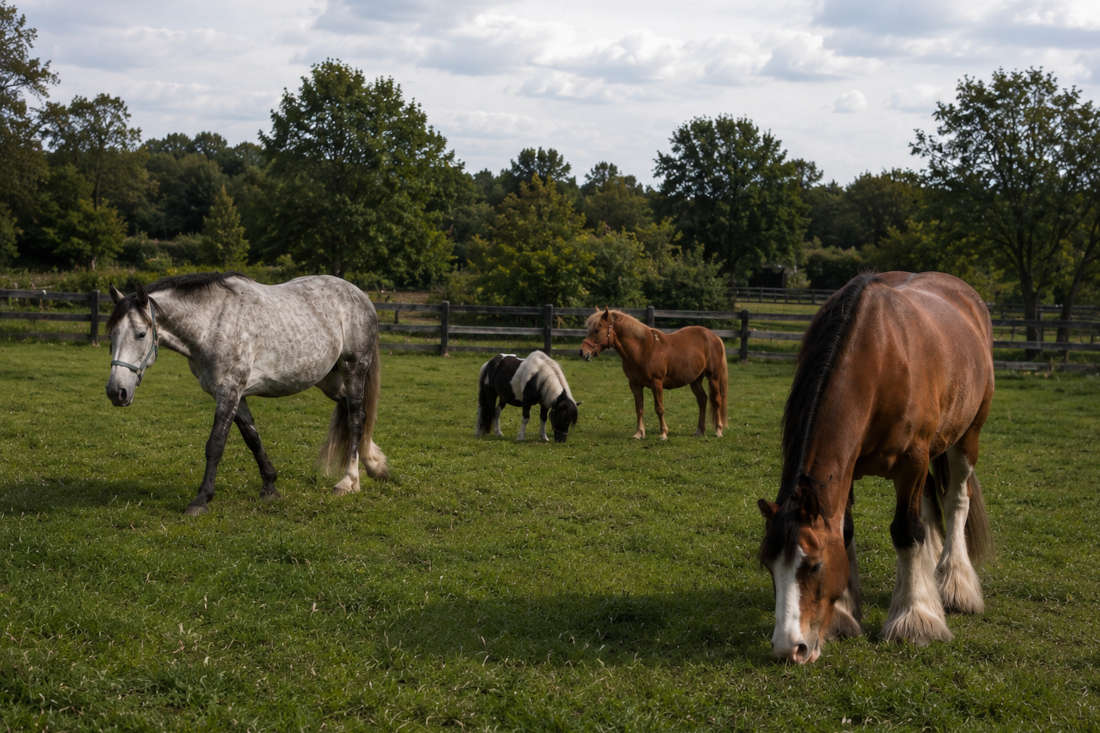
There are many types of horses, each with distinct characteristics, abilities, and histories. Horses can be classified by ancestry, size, build, movement, and intended use, and one horse may fit several categories at once.
Horse type is broader than horse breed. A breed is a defined population with documented ancestry and a recognized studbook, while a type groups horses that share certain characteristics regardless of registry or pedigree.
These classifications can provide useful context for a horse’s athletic ability, housing needs, nutrition requirements, and suitability for different disciplines.
Keep reading to explore the different types of horses, how they are classified, and what these distinctions can mean for their care and management.
What Are the Different Types of Horses?
Horses are classified using several frameworks, each of which describes a different aspect of the animal. The resulting categories are generally referred to as horse ‘types.’
One framework considers ancestry and temperament. Another sorts horses by size. A third considers conformation and gait, and a fourth groups horses by the discipline or job they perform. [1][2][3][4][5]
A single horse can belong to more than one category. A Hanoverian, for example, is a warmblood by ancestry, a horse rather than a pony by size, a light horse by build, and a sport horse by use. [2]
Understanding these overlapping systems makes it easier to describe horses accurately and research appropriate care practices for an individual animal.
What's your top priority with your horse's health?

What's your top priority with your horse's health?
Horse Type vs. Horse Breed
A horse breed is a recognized population of horses with a common origin and inherited characteristics that distinguish it from other populations. Breed organizations maintain studbooks or registries and establish rules governing ancestry, identification and, in some breeds, conformation or performance.
Registered horses of the same breed can live in different regions or countries but still share documented ancestry and be evaluated according to the same breed standard. [6]
A type is a broader category based on shared traits rather than documented ancestry. Calling a horse a “light horse” or a “sport horse” does not identify its registry. Instead, it describes a general build, temperament, or purpose shared by many breeds. [6][7]
Breed and type provide different information, and knowing both gives a more complete picture of an individual horse. Some breed registries use open or closed studbooks to determine which horses qualify for registration. [6][7]
Table 1. Types of horses at-a-glance
| Classification method | Horse types included | What it describes | Examples |
|---|---|---|---|
| Genetic origin |
|
|
|
| Size |
|
|
|
| Body and movement |
|
|
|
| Use and discipline |
|
|
|
| Living status |
|
|
|
Horse Types by Genetic Origin or Blood Type
Equestrians have long used the terms hot-blooded, warmblood, and cold-blooded to describe a horse’s ancestry, build, and general temperament. Despite their names, these terms do not refer to body temperature or circulatory function. [6][7]
These categories broadly reflect lineages shaped by different environments and breeding goals, including lighter horses selected for speed and endurance and heavier northern European horses selected for strength. [6][7]
Hot-Blooded Horses
Hot-blooded horses are typically light-framed, quick, and sensitive, with athletic builds shaped by centuries of breeding for speed and endurance. The Arabian, Akhal-Teke, and Thoroughbred are among the best-known examples, and many other breeds carry substantial hot-blooded ancestry. [8][6][7]
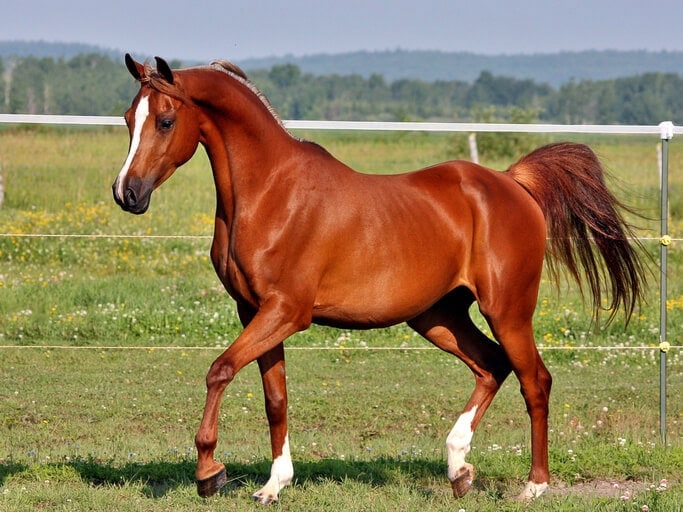
Physically, hot-blooded horses tend to have thin skin, fine coats, long legs, and lean frames. Their sensitivity and quick reflexes can make them highly responsive under saddle, although these traits may also make some individuals more reactive to their surroundings. [6][7]
Hot-blooded breeds are not all the same, and different breeds may be suited to different types of athletic work. A study comparing trained Arabian and Thoroughbred horses found that Thoroughbreds reached a higher maximum oxygen use and ran faster before fatigue, while Arabians relied more heavily on fat for fuel during lower-intensity exercise. [8]
These differences reflect the athletic specializations within hot-blooded breeds. Thoroughbreds are especially associated with shorter, faster races, while Arabians are well known for success in long-distance endurance events. [8]
Warmblood Horses
Warmbloods occupy the middle of the traditional blood-type spectrum. Breeders developed warmblood horses by crossing lighter, hot-blooded stock with heavier horses, aiming to combine athletic ability with a calmer, more manageable temperament. [1][6][7]
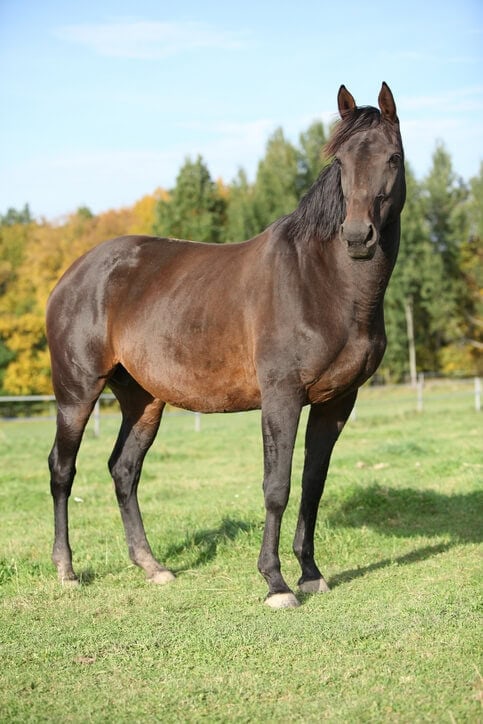
Most modern warmblood breeds trace to European studbooks, including the Hanoverian, Dutch Warmblood, Holsteiner, and Trakehner. [6][7]
Many warmblood registries use open or partially open studbooks, meaning the registry can approve horses for breeding based on performance and conformation testing rather than closed bloodlines alone. This selection has shaped warmbloods for sport disciplines such as dressage, show jumping, and eventing. [1]
Genetic research on Swedish Warmbloods supports this history of selection for sport traits. Researchers found areas of the genome with reduced diversity compared with a pony breed, suggesting that breeders have consistently selected for certain traits over time. Genetic regions examined in the study included genes associated with behavior, physical ability, and fertility. [1]
This establishes warmbloods as more than simply a middle category between hot-blooded and cold-blooded horses. They are purpose-bred sport horses, and decades of selection for rideability, athleticism, and performance have left a measurable genetic signature. [1]
Cold-Blooded Horses
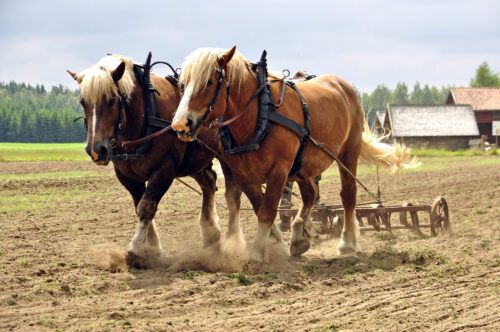
Cold-blooded horses, more commonly called draft horses, are the heaviest and most powerfully built of the three traditional blood types. Breeds such as the Shire, Clydesdale, Percheron, and Belgian were developed for pulling plows, hauling loads, and performing other demanding work. [9][6][7]
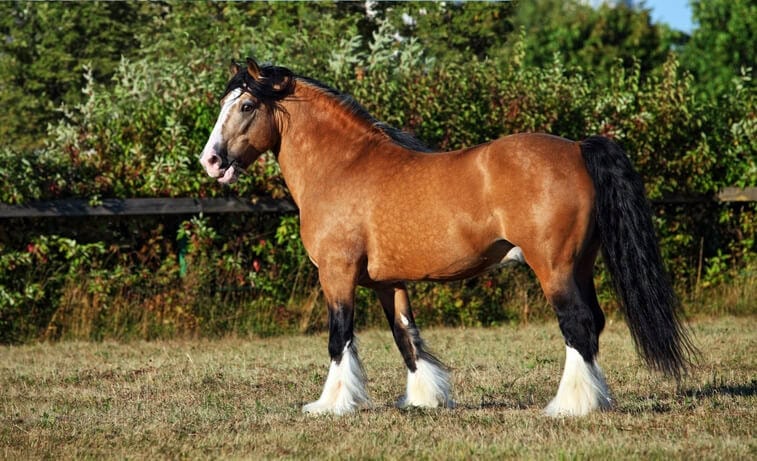
Draft breeds typically carry more muscle mass and heavier bone than light-horse breeds. They are also known for the calm, steady temperaments suited to controlled, powerful work rather than rapid reactions. Their muscle fibers reflect some of these functional differences. [9][6][7]
Research comparing muscle-fiber types across several breeds supports these functional differences. In one study of Belgian, Standardbred, Thoroughbred, Quarter Horse, and Welsh pony fillies, the draft-type Belgian horses had the highest proportion of white muscle fibers, which are suited to short bursts of powerful force. Thoroughbreds, by comparison, had more fast oxidative fibers associated with sustained speed work. [9]
These findings help explain why cold-blooded horses are traditionally associated with strength and pulling power, while lighter breeds are more closely associated with speed and endurance. Their body type, temperament, and muscle characteristics all reflect the work they were historically bred to do. [9]
Horse Types by Size
Size classifications rely primarily on height at the withers rather than genetics or ancestry alone. This makes size one of the more objective ways to group horses, although breed standards and naming conventions can create exceptions. [6][7]
Horses
In many equestrian contexts, an equine standing taller than 14.2 hands (about 58 in or 147 cm) is classified as a horse rather than a pony. [10]
This category includes most breeds people picture when they hear the word “horse,” from Thoroughbreds and Quarter Horses to draft breeds that stand many hands taller. However, height is not the only factor, and some registries classify animals according to breed standards rather than a universal cutoff. [6]
Ponies
Ponies are commonly defined using a height cutoff of 14.2 hands or under at maturity, although rules vary among registries and competitions. Some animals within horse breeds may measure within pony range, while some members of pony breeds may approach or exceed the usual cutoff. [10]

Beyond height, ponies typically share several related traits. They often have proportionally shorter legs, thicker coats, dense bone, and a higher strength-to-body-weight ratio than full-sized horses. These features may reflect their historical development in harsh climates and rugged terrain, where a smaller, hardier build offered an advantage.
Research on the LCORL gene, a major genetic locus associated with body size, found that its expression correlates closely with mature height across equine breeds. This locus also contributes to the biological variation surrounding the 148-cm cutoff for classifying a pony. [2] These findings suggest that a single genetic region can have a substantial influence on whether a horse matures within pony or full-sized horse height ranges.
Miniature Horses
Miniature Horses stand at or below pony height, often well below it. Registry height limits vary, but commonly fall between 34 and 38 in at the withers. Despite their height, registries classify Miniature Horses separately from ponies. The distinction is based on breed standards and body proportions rather than height alone. [11]
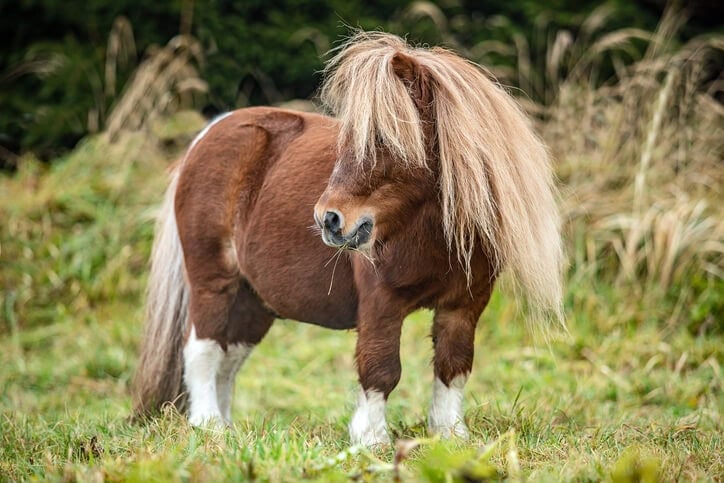
Miniature Horse registries generally seek the proportions of a full-sized horse in a smaller frame rather than the stockier build associated with breeds such as the Shetland Pony. [11]
The American Miniature Horse and the Falabella of Argentina are among the best-known miniature breeds. Both were developed through selective breeding for small size over many generations. [11]
Because of their small size, Miniature Horses are rarely ridden by adults. Instead, they are commonly used for driving, in-hand showing, therapy work, and companionship.
Their small frames also bring specific health considerations. Dental crowding is common because a miniature skull accommodates the same complement of teeth as a full-sized horse in considerably less space. Miniature breeds may also have a risk of metabolic issues similar to those seen in ponies. [12]
Routine dental care and careful management of pasture access and calorie intake help support the health of Miniature Horses. [12]
Horse Types by Body Type & Movement
Body-type classifications describe a horse’s conformation and movement, which influence the kind of work for which the horse may be physically suited. These categories overlap with blood type and size, but focus more specifically on physical build and gait pattern than on ancestry or height. [6][7]
Light Horses
Light horse describes a riding-type conformation suited to speed, agility, and efficient movement under saddle rather than raw pulling power. Breeds that fall into this category include: [6][7]
Light horses generally have finer bone, smaller frames, and builds that allow them to carry a rider efficiently across varied gaits and disciplines. [6][7]
Heavy Horses
Heavy horses, also described as cold-blooded horses, are built for load-bearing and pulling work rather than speed. [6][7]
Their conformation reflects this purpose. Draft horses commonly have broad chests, powerful hindquarters, substantial bone, and large, sturdy hooves that help support and distribute their weight. [6][7]
Strength and stability are defining features of the heavy-horse build, while speed and agility are generally less pronounced than in lighter riding breeds. [9][6][7]
Gaited Horses
Gaited horses naturally perform one or more alternative gaits in addition to, or instead of, the standard walk, trot, and canter. [3][4]
Some of the best-known breeds among the gaited type include: [4]
This ability is strongly associated with a mutation in the DMRT3 gene, sometimes called the “gait keeper” mutation, which affects the neural circuits that coordinate limb movement. [3][4]
Horses carrying this mutation may perform alternative gaits, including smooth four-beat ambling gaits that reduce the vertical motion experienced by the rider compared with a standard trot. [3][4]
Horse Types by Use & Discipline
Horses are also grouped by the work or sport for which they are bred and trained. This use-based system cuts across blood type, size, and body type because a single discipline can include many types of horses. [6][7]
Sport Horses
Sport horse generally refers to horses developed or selected for the Olympic disciplines of dressage, show jumping, and eventing. Most sport horses are warmbloods chosen for rideability, jumping technique, and expressive, ground-covering gaits. [1][6][7]
A study comparing the gluteal muscles of dressage-trained Warmbloods with Quarter Horses trained for reining and ranch work found that the Warmbloods had a naturally higher percentage of slow-twitch oxidative muscle fibers. These fibers are associated with sustained, controlled effort rather than explosive bursts of speed. [13]
This difference suggests that horses bred and trained for different jobs can have distinct physiological characteristics. Dressage horses may benefit from a higher proportion of slow-twitch fibers to support rhythm, suppleness, and sustained collection. [13]
Working & Ranch Horses
Working and ranch horses are selected for the quick, athletic movements required to handle cattle, including rapid acceleration, sharp turns, and sudden stops. The Quarter Horse is the defining breed in this category and is widely used in disciplines such as reining, cutting, and roping. [7]
In a study examining equine muscle fibers, Quarter Horses trained for reining and working cow events had a much higher percentage of fast-twitch fibers than dressage-trained Warmbloods. This reflects the demands of short, explosive efforts rather than sustained rhythmic movement. [13]
The researchers also found that fit Quarter Horses and fit Warmbloods had similar muscle oxidative capacity despite the substantial difference in fiber type. This finding suggests that training can influence a working horse’s fitness alongside its underlying breed characteristics. [13]
Driving & Harness Horses
Driving and harness horses pull a cart, carriage, or sulky rather than carrying a rider. Standardbreds, the dominant harness-racing breed, compete at either the trot or pace, while many other breeds participate in pleasure and competitive driving. [4][6][7]
Harness racing also has a genetic connection to the gaited-horse category. Research tracing the DMRT3 mutation across horse populations found it at a particularly high frequency in breeds used for harness racing. The mutation helps these horses maintain specialized gaits at speed rather than breaking into a canter under exertion. [3][4]
Racing Horses
Racing horses are bred and trained for speed over a set distance, whether competing on the flat, over jumps, or in sprints. [6][7]
Thoroughbreds dominate flat and jump racing worldwide. Quarter Horses can reach exceptional sprint speeds over short distances, while Arabians and other endurance breeds race over much longer distances at steadier speeds. [8][14][6][7]
Cardiovascular characteristics may help distinguish elite racehorses from the general population. An echocardiographic study of nearly 500 race-fit Thoroughbreds found that horses competing over longer jump-racing distances had measurably larger left ventricles than horses racing over shorter flat distances. Greater ventricular mass and function were also associated with better race ratings within each group. [14]
These findings indicate that cardiac size and function are associated with performance, although the cardiovascular demands differ among racing disciplines and distances. [14]
Pleasure & Trail Horses
Pleasure and trail horses form a broad, informal category encompassing horses used mainly for recreational riding rather than competition. [6][7]
This group spans nearly every breed, size, and blood type because suitability as a calm, reliable trail partner depends more on training, temperament, and soundness than on any single physical classification. [6][7]
Breeds commonly associated with this role include the Quarter Horse, Morgan, and many gaited breeds, which are often valued for steady temperaments and comfortable movement over varied terrain. [3][4][6][7]
Sure-footedness, willingness to navigate unfamiliar sights and sounds, and sufficient stamina for time under saddle are particularly valuable for trail riding. Pleasure and trail riding impose fewer specialized performance demands than racing or dressage, making this category a broad entry point for owners matching a horse to their riding goals.
Wild & Feral Horse Types
Some categories separate domestic horses from horses living outside direct human management, distinguishing wild and feral populations. [15][16]
Wild Horses
A wild horse, in the strict biological sense, descends from ancestors that were not part of modern domestic horse populations. Today, Przewalski’s horse of the Central Asian steppe is the only surviving population commonly recognized within this category. [15]
Genomic research comparing Przewalski’s horses with domesticated horses found that the two lineages diverged from a common ancestor approximately 45,000 years ago, with some gene flow continuing after the split. [15]
The study identified Przewalski’s horses as a genetically distinct lineage rather than a population that recently escaped domestic life. [15]
Feral Horses
Feral horses descend from domesticated ancestors but now live and reproduce with little or no direct human care. [16]
The mustangs of the western United States and the brumbies of Australia are among the best-known examples. Both descend from horses brought by settlers that later escaped or were released. [16]
Feral horse populations have grown substantially in some regions since protective legislation took effect during the twentieth century, creating complex population-management challenges.
A review of feral horse populations in the United States found that numbers had more than tripled on western rangelands since the 1970s. This discovery raised concerns about vegetation, herd health, population size, and the maintenance of genetic diversity within managed herds. [16]
Unlike Przewalski’s horses, feral populations retain close genetic ties to the domestic breeds from which they descended. [15][16]
Determining Your Horse’s Type
Most horses belong to several categories at the same time. A horse might be a warmblood by ancestry, a horse rather than a pony by size, a light horse by body type, and a sport horse by career. [6][7]
Determining where your horse fits can help inform decisions about training, competition goals, and nutrition, particularly for grade horses or crossbreds without complete records.
Conformation & Phenotype
Visual assessment is the most accessible way to estimate a horse’s likely type. Leg length, neck set, body proportions, and overall build can provide useful clues about ancestry and body type, even when paperwork is unavailable. [17]
A horse with fine bone, a lean frame, and a refined head may carry substantial hot-blooded ancestry, while one with heavy bone, a thick neck, and a broad frame may show stronger cold-blooded influence. [7][17]
Movement provides another useful clue. A horse that naturally performs a smooth alternative gait rather than trotting may carry the gait-associated DMRT3 gene. [3][4]
Visual assessments are less precise than documented pedigrees or validated genetic testing, but they can offer a reasonable starting point when considered alongside the horse’s age, height, and known history.
Pedigree & Registry Records
Breed registries and studbooks formalize ancestry through documented pedigrees. Many registries also record performance results and conformation-inspection scores.
These records can confirm a horse’s breed and help identify the blood-type and body-type categories commonly associated with it. However, individual horses can vary from breed averages.
Some registries also track inspection scores for conformation, movement, and jumping ability. These records may provide a more detailed picture of likely performance type than pedigree alone. For horses with incomplete paperwork, breed associations may be able to trace partial lineage through available parentage records.
Genetic Testing
For horses without full pedigree documentation, DNA testing may provide additional information about parentage, inherited traits, or possible breed ancestry. [3][4]
The scope and reliability of these tests depend on the panel and its reference database. Parentage testing can be highly accurate when samples from potential parents are available, while breed-composition estimates should be interpreted more cautiously.
Most panels analyze a hair or blood sample against genetic markers or reference populations and return results based on the specific test performed.
Genetic testing does not replace a documented studbook pedigree, but it can offer useful clues about an unregistered horse’s ancestry and identify certain inherited health risks covered by the selected panel.
Nutrition Considerations Across Horse Types
A horse’s type can have practical implications for feeding. Size, ancestry, workload, growth stage, and individual metabolism all influence energy and nutrient requirements. As a result, owners should tailor feeding programs to the individual horse rather than base a feeding program on type alone.
Easy Keepers vs. Hard Keepers by Type
Draft breeds and ponies are commonly considered easy keepers, meaning they often maintain or gain weight on relatively little feed. This tendency may reflect generations of a breed’s adaptation to limited forage. However, this efficiency can increase the risk of obesity and metabolic problems when calorie intake exceeds requirements. [18][19][20]
A large study of native UK pony and cob breeds found that nearly one in four animals met the study criteria for equine metabolic syndrome. Obesity and a sedentary lifestyle were the strongest modifiable risk factors identified. [5]
Hot-blooded horses are often considered harder keepers and may require a more energy-dense diet to maintain body condition, particularly during training or competition. However, metabolic efficiency varies among individuals, even within the same breed or type.
Feeding an Easy Keeper
Easy keepers require fewer calories than many other horses, but their protein, vitamin, and mineral requirements remain similar to those of horses of the same body weight and workload. Their diets should limit excess energy without creating nutrient deficiencies or leaving the horse without forage for long periods. [21]
A forage-based diet using mature, lower-calorie grass hay is generally appropriate. Forage analysis can help owners select hay with suitable energy, sugar, and starch levels, particularly for horses with insulin dysregulation or a history of laminitis. Concentrates and grain are rarely necessary unless the horse’s workload increases its energy requirements. [19]
Pasture intake may require careful management because easy keepers can consume substantial calories during unrestricted grazing. Limiting grazing time, using a properly fitted grazing muzzle, or providing access to a suitable dry lot can help control intake. Hay nets and other slow feeders can extend eating time when forage portions are restricted. [19]
Owners should regularly monitor body weight, body condition score, and neck fat, adjusting forage and pasture access as needed. Introduce calorie restriction gradually, and keep forage intake at safe levels. Because restricted diets may not supply adequate protein, vitamins, and minerals, a concentrated ration balancer or appropriate supplement may be needed to balance the diet. [20]
Feeding a Hard Keeper
Hard keepers have higher calorie requirements and may struggle to maintain an appropriate body condition. Their feeding programs should account for current weight, body condition, workload, and life stage. Regular monitoring helps owners identify weight loss early and adjust the diet as energy demands change. [21][22]
A forage-first diet is generally the best starting point. Hard keepers may benefit from free-choice access to good-quality forage, which provides a continuous supply of fiber and calories while supporting digestive health and natural feeding behavior. Hard keepers on hay-only diets should generally receive at least 2% of their body weight in forage daily. [21][23][24][25]
If grass hay alone does not provide enough energy, adding some alfalfa can increase the diet’s calorie and protein content. Horses that need additional calories may also benefit from low-starch, fiber-rich feeds, such as unmolassed beet pulp, or calorie-dense fat sources, such as oil. These options can support weight gain without relying heavily on grain or other high-starch concentrates. [26][27][28][29][30]
The complete diet should provide adequate protein and balanced vitamins and minerals, as well as constant access to fresh water and salt. Horses with dental problems may consume forage more easily when it is chopped or offered as soaked hay cubes or pellets. Any increase in feed should be introduced gradually, with body condition and weight monitored over time. [21][31][32][33]

Growth & Development Needs by Type
Larger breeds and fast-growing young horses face nutritional considerations related to their rate of development. Bone and cartilage in a growing foal require time to mature, and excessive energy intake may promote growth faster than the developing skeleton can accommodate.
A controlled feeding study raised one group of foals on a high nutrient allowance and another on a more moderate allowance, then monitored joint health through the first year of life. Feeding level alone did not reliably predict which foals developed orthopedic lesions, but rapid growth was associated with lesion development regardless of feeding group. [34]
For owners of large or fast-maturing breeds, the findings reinforce the importance of supporting steady, controlled growth rather than attempting to maximize growth rate. [34]
Supporting Performance & Working Horses
Sport, racing, and working horses in regular training have greater energy, electrolyte, and antioxidant requirements than horses performing light or no work. Meeting these needs begins with a balanced forage-based diet, with additional energy and nutrients provided according to workload and individual condition. [21]
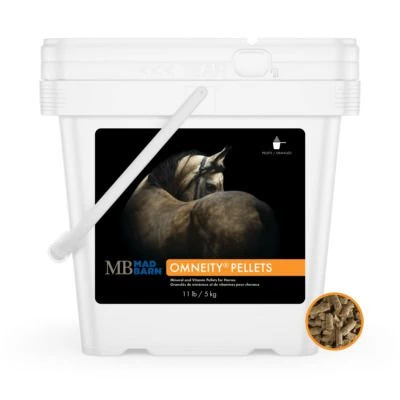
Mad Barn’s Omneity® vitamin and mineral supplement is formulated to fill common nutrient gaps in forage-based diets and support coat quality, hoof health, and overall well-being across horse types.
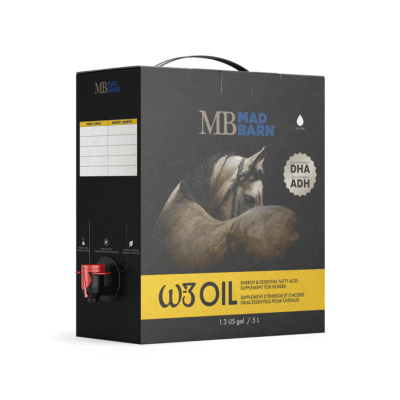
For horses in harder work, an omega-rich fat source such as w-3 Oil can provide additional concentrated energy and omega-3 fatty acids to support normal inflammatory regulation and connective-tissue health. [21][29]
Because every horse has individual metabolic needs, working with an equine nutritionist can help owners fine-tune the feeding program for the horse in front of them rather than relying on type alone.
Frequently Asked Questions
Here are some frequently asked questions about types of horses:
The main types of horses can be classified by ancestry and temperament, size, body type and movement, or use. Ancestry classifications include hot-blooded, warmblood, and cold-blooded horses, while size classifications distinguish horses, ponies, and miniature horses. Horses can also be grouped as light, heavy, or gaited types and by roles such as sport, ranch work, driving, racing, or trail riding.
The difference between a horse breed and a horse type is that a breed has a documented studbook and defined standards maintained by a registry. A type is a broader category based on characteristics such as ancestry, size, build, movement, or use. Different breeds can belong to the same type, and knowing both labels provides a more complete description of a horse.
The difference between hot-blooded, warmblood, and cold-blooded horses involves their ancestry, build, and general temperament, not their body temperature. Hot-blooded horses are typically light, quick, sensitive, and suited to speed or endurance, while cold-blooded horses are generally heavier, stronger, and steadier. Warmbloods combine hot-blooded athleticism with traits from heavier horses, producing a middleweight type commonly selected for rideability and sport.
A horse is considered a warmblood when it descends from breeding programs that combined hot-blooded horses with heavier, cold-blooded stock. The goal was to produce an athletic horse with a calmer, more workable temperament. Many warmblood registries approve breeding horses through evaluations of performance, movement, and conformation rather than relying only on a completely closed bloodline.
The difference between a light horse and a draft horse is primarily their build and intended work. Light horses have finer bone and lighter frames suited to carrying riders, moving quickly, and performing agile maneuvers. Draft horses have heavier bone, greater muscle mass, strong backs, and sturdy hooves suited to pulling and hauling.
A horse is generally considered a pony if it measures 14.2 hands, or approximately 58 inches or 147 centimeters, or less at maturity. This classification is based mainly on height rather than documented ancestry. Ponies also commonly have shorter legs, thicker coats, dense bone, and a relatively stocky, hardy build.
Miniature horses are generally classified separately from ponies, despite standing below the usual pony height cutoff. Their registries select for balanced, horse-like proportions in a very small frame rather than the stockier proportions associated with many pony breeds. Miniature horses are commonly used for driving, in-hand showing, therapy work, and companionship rather than being ridden by adults.
A gaited horse is a horse that can naturally perform one or more smooth, four-beat ambling gaits in addition to the standard walk, trot, and canter. This ability is associated with a genetic mutation that affects the spinal circuits controlling stride patterns. Tennessee Walking Horses, Icelandic Horses, Paso Finos, and Rocky Mountain Horses are well-known gaited breeds.
A horse can belong to several types at the same time because each classification system describes a different characteristic. For example, a Hanoverian can be a warmblood by ancestry, a horse by height, a light horse by build, and a sport horse by use. These overlapping labels help owners describe a horse more accurately and understand its likely care, training, and performance needs.
You can determine your horse's type by examining its height, conformation, movement, pedigree, and primary use. Fine bone and a lean frame may suggest hot-blooded ancestry, while heavy bone, a thick neck, and a broad body may indicate cold-blooded influence. Registry records can confirm documented ancestry, while genetic testing may provide useful estimates for horses with incomplete pedigrees.
Different types of horses can have different nutritional needs because body size, metabolism, growth rate, and workload all influence energy requirements. Ponies and many draft horses are often easy keepers that gain weight readily, while some hot-blooded performance horses require more dietary energy to maintain condition. Feeding decisions should be based on the individual horse's body condition, age, health, and activity level rather than type alone.
The types of horses best suited to different riding disciplines depend on the physical and behavioral demands of the work. Warmblood sport horses are commonly selected for dressage, show jumping, and eventing, while Quarter Horses are well suited to ranch work, reining, cutting, and roping. Standardbreds are strongly associated with harness racing, Thoroughbreds with flat and jump racing, and steady, sure-footed horses from many breeds can make suitable pleasure or trail mounts.
The difference between a wild horse and a feral horse is whether its ancestors were domesticated. Przewalski's horse is considered the only surviving truly wild horse because it belongs to a lineage that was never domesticated. Feral horses, including American mustangs and Australian brumbies, descend from domesticated horses that escaped or were released and now live independently of human care.
Summary
Horse types are overlapping classifications based on ancestry, size, build, movement, use, and living status. These categories can guide management and nutrition, but every horse requires individual evaluation.
- Blood types reflect differences in ancestry, build, temperament, and breeding history
- Horses and ponies are generally separated at 14.2 hands, with registry-based exceptions
- Light, heavy, and gaited horses are classified by build, movement, and work suitability
- Use-based types include sport, ranch, driving, racing, pleasure, and trail horses
- Wild horses have non-domestic lineages, while feral horses descend from domestic stock
- Feeding should reflect the horse's size, workload, growth, metabolism, and body condition
References
- Ablondi. M. et al. Signatures of selection in the genome of Swedish warmblood horses selected for sport performance. BMC Genomics. 2019.
- Metzger. J. et al. Expression Levels of LCORL Are Associated with Body Size in Horses. PLOS ONE. 2013.
- Andersson. L.S. et al. Mutations in DMRT3 affect locomotion in horses and spinal circuit function in mice. Nature. 2012.
- Promerová. M. et al. Worldwide frequency distribution of the 'Gait keeper' mutation in the DMRT3 gene. Animal Genetics. 2014.
- Carslake. H.B. et al. Equine metabolic syndrome in UK native ponies and cobs is highly prevalent with modifiable risk factors. Equine Veterinary Journal. 2021.
- Griffin. A. What is a Horse Breed?. Extension Horses. 2020.
- Horse Discovery: Breeds by Type. University of Kentucky Animal & Food Sciences.
- Prince. A. et al. Comparison of the metabolic responses of trained Arabians and Thoroughbreds during high- and low-intensity exercise. Equine Veterinary Journal Supplement. 2002.
- Stull. C.L. and Albert. W.W. Comparison of muscle fiber types from 2-year-old fillies of the Belgian, Standardbred, Thoroughbred, Quarter horse and Welsh breeds. Journal of Animal Science. 1980.
- Auwerda. P. Measurement Procedure for Horses and Ponies. Iowa State University Extension and Outreach. 2018.
- Breed Standards. American Miniature Horse Association.
- Tinsley. T. et al. The prevalence and risk factors of dental disease found in 100 miniature horses. Frontiers in Veterinary Science. 2023.
- Valberg. S.J. et al. Skeletal Muscle Fiber Type Composition and Citrate Synthase Activity in Fit and Unfit Warmbloods and Quarter Horses. Journal of Equine Veterinary Science. 2022.
- Young. L.E. et al. Left ventricular size and systolic function in Thoroughbred racehorses and their relationships to race performance. Journal of Applied Physiology. 2005.
- Der Sarkissian. C. et al. Evolutionary Genomics and Conservation of the Endangered Przewalski's Horse. Current Biology. 2015.
- Ward. L. et al. Review: Challenges and opportunities in rising feral horse populations. The Professional Animal Scientist. 2016.
- Duberstein. K. Evaluating Horse Conformation. University of Georgia Cooperative Extension. 2025.
- Furtado. T. et al. Exploring horse owners' understanding of obese body condition and weight management in UK leisure horses. Equine Veterinary Journal. 2021.View Summary
- King. C. and Mansmann. R. A. Preventing laminitis in horses: dietary strategies for horse owners. Clinical Techniques in Equine Practice. 2004.
- McGowan. C. M. et al. Dietary restriction in combination with a nutraceutical supplement for the management of equine metabolic syndrome in horses. The Veterinary Journal. 2013. View Summary
- The Nutrient Requirements of Horses. National Research Council. 2007.
- Henneke, D.R. et al. Relationship between condition score, physical measurements and body fat percentage in mares. Equine Vet J. 1983. View Summary
- Ellis, A. D. et al. The Effect of Presenting Forage in Multi-Layered Haynets and at Multiple Sites on Night Time Budgets of Stabled Horses. Applied Animal Behaviour Science. 2015.
- Cooper, J. J. et al. The Short-Term Effects of Increasing Meal Frequency on Stereotypic Behaviour of Stabled Horses. Applied Animal Behaviour Science. 2005.
- Crozier, J. A. et al. Digestibility, Apparent Mineral Absorption, and Voluntary Intake by Horses Fed Alfalfa, Tall Fescue, and Caucasian Bluestem. Journal of Animal Science. 1997. View Summary
- Grimm, P. et al. Sugar Beet Pulp Presentation Alters Intake Behavior of Horses. Journal of Equine Veterinary Science. 2019.
- Briggs, K. Feeding Beet Pulp | AAEP. American Association of Equine Practitioners. Accessed Mar. 02, 2024.
- Mowry, K. C. et al. Effects of Crude Rice Bran Oil and a Flaxseed Oil Blend in Young Horses Engaged in a Training Program. Animals. 2022. View Summary
- Kronfeld, D. S. et al. Fat Digestibility in Equus Caballus Follows Increasing First-Order Kinetics. Journal of Animal Science. 2004. View Summary
- Drogoul, C. et al. Feeding Ground and Pelleted Hay Rather than Chopped Hay to Ponies. Animal Feed Science and Technology. 2000.
- Bonin, S. J. et al. Comparison of Mandibular Motion in Horses Chewing Hay and Pellets. Equine Veterinary Journal. 2007. View Summary
- Hill, J. et al. Effect of dental condition on short-term intake rates of hay and faecal particle size in adult horses. Proceedings of the 51st European Association of Animal Science. 2000.
- Donabédian. M. et al. Effect of fast vs. moderate growth rate related to nutrient intake on developmental orthopaedic disease in the horse. Animal Research. 2006.