English
Field pennycress poisoning in horses can occur when horses consume large quantities of this toxic weed. A member of the mustard family, field pennycress contains glucosinolates that can release irritating compounds when its tissues are chewed or digested.
Eating large quantities of this plant is associated with gastrointestinal disturbances and other toxic effects in livestock, but clinical evidence specific to horses is limited. As a result, the amount required to cause poisoning and the typical effects in horses have not been established.
Field pennycress is generally unpalatable, so horses with adequate forage may avoid it. Exposure can increase when desirable forage is scarce or the plant contaminates hay or other feed. Occasional ingestion does not necessarily cause illness, but horse owners should prevent substantial or prolonged consumption.
Owners should learn to recognize field pennycress and monitor horses for possible signs such as colic, diarrhea, or dermatitis. Proper plant identification and prompt veterinary assessment when illness develops can help reduce the risk.
Field Pennycress Poisoning in Horses
Field pennycress (Thlaspi arvense) is an annual herbaceous plant belonging to the mustard family (Brassicaceae). Native to Eurasia, it is now widespread throughout North America, where it grows in a number of environments, including: [1][2]
- Cultivated fields
- Pastures
- Roadsides
- Disturbed environments in general
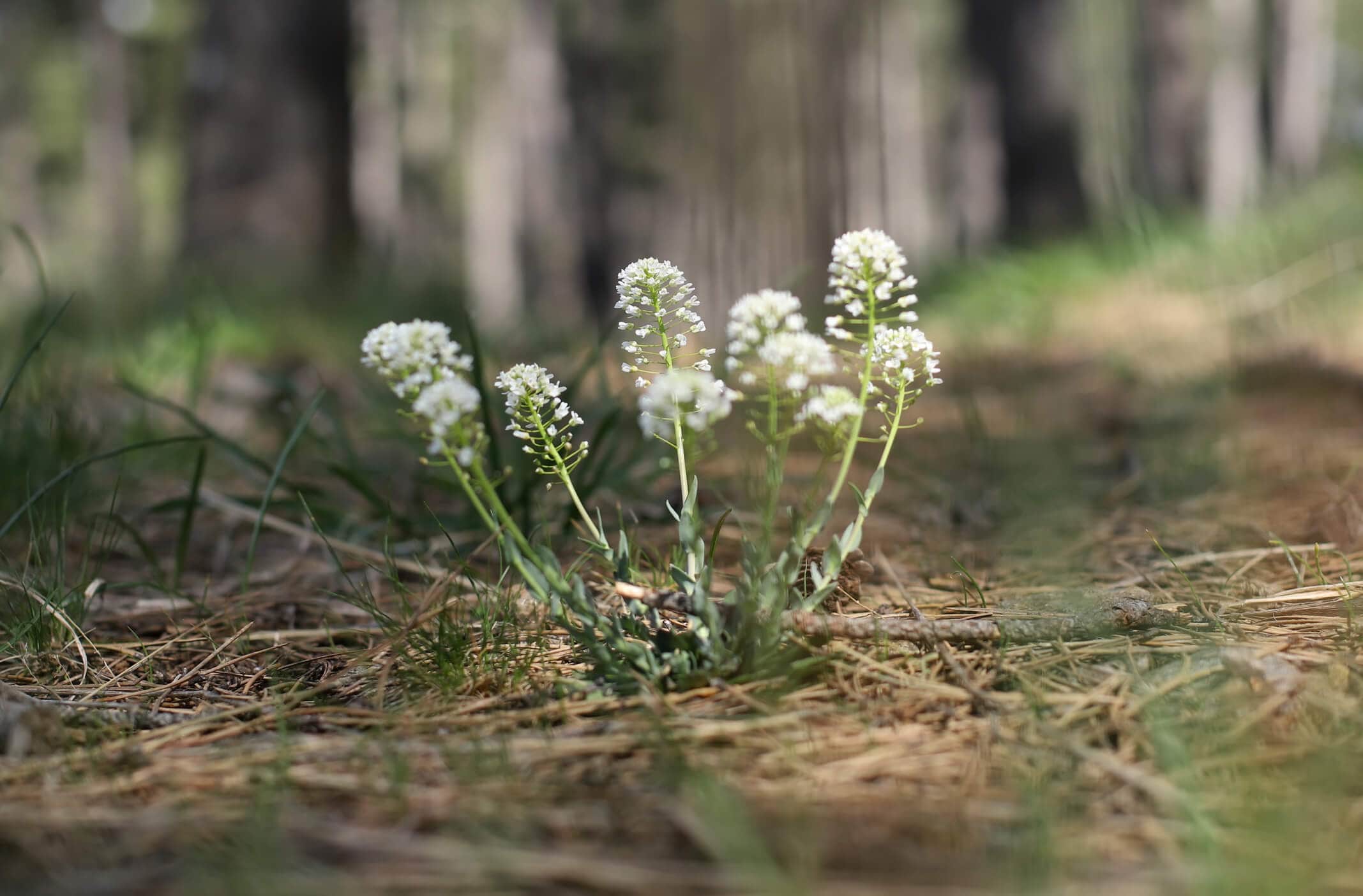
The plant can be recognized by its small white flowers, round seed pods, and its strong garlic-like odor when crushed. [1][2]
Field pennycress contains glucosinolates, naturally occurring compounds that can release irritant substances when plant tissues are damaged. Consumption of large quantities has been associated with gastrointestinal disturbances and other toxic effects in livestock, particularly cattle. [3]
The ASPCA classifies field pennycress as toxic to horses and lists colic, diarrhea, and dermatitis as clinical signs. However, species-specific clinical evidence remains limited, and the toxic dose in horses has not been established. [9]
Horses generally avoid eating this plant, particularly when they have access to adequate forage, because it is unpalatable. However, the risk of ingestion increases when the plant grows abundantly in pastures or contaminates hay or feed. [3][4][5]
Although consuming small amounts does not always cause poisoning, horse owners should take precautions to prevent horses from eating large quantities or consuming the plant over an extended period. [4][5]
Common Names of Field Pennycress
Field pennycress is also known by several common names, including:
- Stinkweed
- Fanweed
- Frenchweed
- Dish mustard
- Wild garlic
- Bastard cress
Table 1. Field pennycress poisoning in horses at-a-glance
| Category | Key Information |
|---|---|
| Definition |
|
| Primary Cause |
|
| Onset |
|
| Symptoms |
|
| Severity |
|
| Treatment |
|
| Recovery Time |
|
| Prognosis |
|
| Prevention |
|
What's your top priority with your horse's health?

What's your top priority with your horse's health?
Identification
Field pennycress is a summer or winter annual that grows throughout much of North America. It is particularly common in agricultural environments, where it can establish dense populations in: [1][2]
- Cultivated fields
- Pastures
- Other areas with disturbed soil
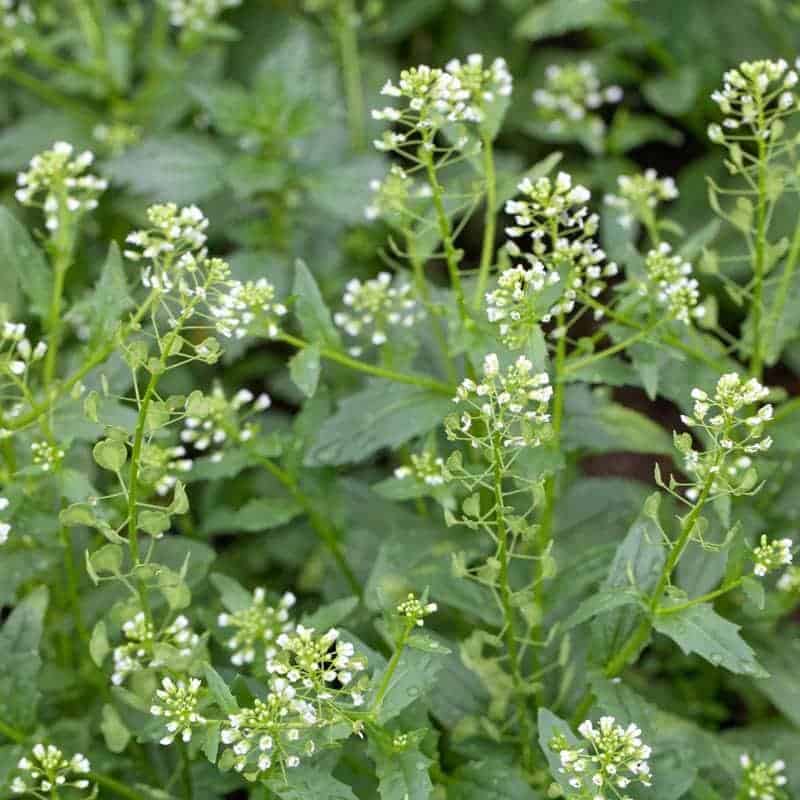 Flowers
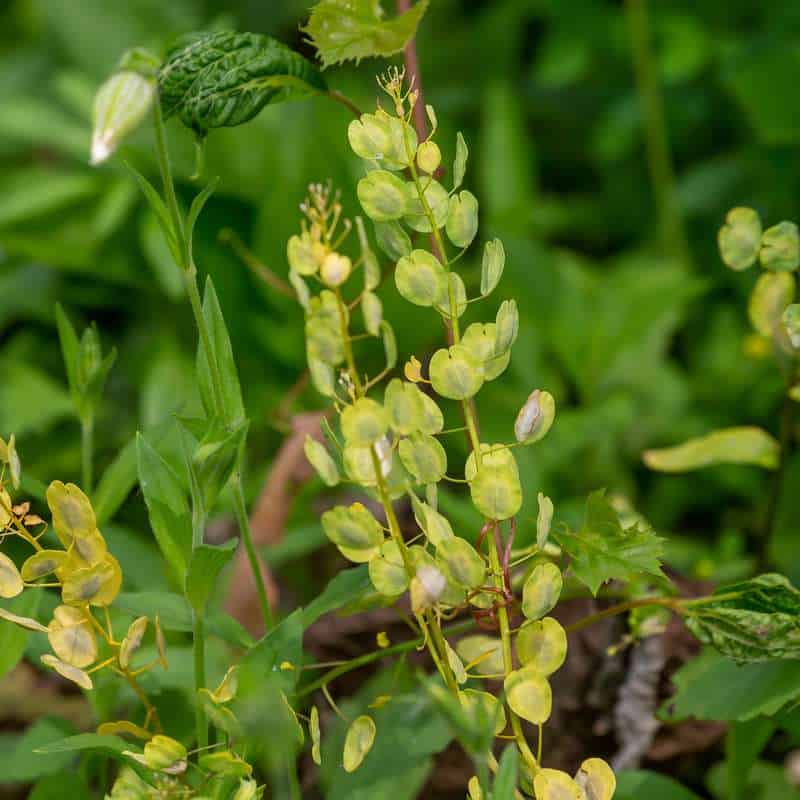 Seed pods
The plant prefers open, sunny conditions and is often found along roadsides, field margins and in weedy meadows. [1][2]
Field pennycress typically grows between 4 and 32 inches (10-80 cm) tall, depending on growing conditions. It develops an upright, hairless stem that may either remain unbranched or produce several lateral branches, particularly toward the upper portion. The plant has a slender taproot surrounded by smaller fibrous roots.
Field pennycress has several identifying characteristics, including: [1][2][3][6]
- Leaves: Young plants develop a basal rosette of oval to elongated leaves with slightly wavy margins. As the plant matures, the lower leaves begin to wither, while the leaves along the flowering stem remain. These upper leaves are narrow, alternately arranged and irregularly toothed, with pointed lobes at the base that clasp the stem.
- Flowers: Small white flowers develop in clusters at the ends of the stems, usually during spring or early summer. Each flower measures approximately 1/8 in (3 mm) across and has four petals arranged in a cross-like pattern, characteristic of the mustard family. Flowering clusters gradually elongate as the plant develops.
- Seed pods: One of the most distinctive features of field pennycress is its flattened, nearly circular seed pods, which measure approximately 1/2 in (1.3 cm) across. Each pod has a papery, winged margin and a small notch at the tip, giving it a coin-like appearance. This resemblance to an old English penny gives the plant its common name. The pods contain two chambers, each holding several seeds.
- Seeds: The small, brown to purplish seeds have a characteristic ridged surface. A single plant can produce thousands of seeds under favorable conditions, contributing to its ability to establish persistent populations.
- Smell: When crushed, leaves and other plant material release a strong odor often compared to garlic. This characteristic is responsible for the common name stinkweed.
Field pennycress can germinate in autumn or spring, although autumn germination is more common. Plants that emerge in autumn form a basal rosette that survives the winter and resumes growth when temperatures rise. [1][6][7]
Flowering and seed production typically occur in spring, often before many surrounding pasture plants have reached full growth. Spring-germinating plants develop flowering stems without forming a distinct overwintering rosette. [1][6][7]
Field pennycress is often confused with shepherd’s purse (Capsella bursa-pastoris), another member of the mustard family. The two plants are distinguished most easily by their seed pods. Shepherd’s purse produces distinctly triangular or heart-shaped pods, while field pennycress has round, flattened pods with broad, winged margins.
Field pennycress may also resemble certain peppergrass species (Lepidium spp.), although its clasping stem leaves and comparatively large seed pods provide useful distinguishing features. [1][6][7]
Toxicology of Field Pennycress
Field pennycress contains glucosinolates, naturally occurring sulfur-containing compounds found in many plants belonging to the mustard family (Brassicaceae).
These compounds are not necessarily harmful in their original form, but when an animal chews or digests the plant, glucosinolates can break down into substances that irritate the digestive tract. [3]
In addition to digestive problems, field pennycress has been associated with photosensitization in cattle and pigs. Photosensitization causes the skin to become unusually sensitive to sunlight, potentially resulting in painful inflammation and skin damage. Areas with little pigmentation are particularly vulnerable. [3]
The primary glucosinolate in field pennycress is sinigrin. When enzymes break down sinigrin, they can produce allyl isothiocyanate, a compound that gives some mustard plants their pungent taste and smell. [3]
Consuming large quantities of field pennycress may expose horses to enough of these irritating compounds to cause inflammation of the digestive tract and disruption of normal digestive function. [3]
The amount of substances released during digestion depends partly on conditions within the digestive system. Research in cattle and other ruminants suggests that sinigrin breaks down more readily in the relatively neutral environment of the rumen, a specialized compartment of their stomach. More acidic conditions can slow this process. [3]
These differences may help explain why some animal species are more susceptible to glucosinolate poisoning than others. Research has not established how these findings apply to horses, which have a different digestive system. [3]
Toxin Concentrations
The concentration of glucosinolates also varies throughout the field pennycress plant: [3]
- Seeds: Generally contain the highest concentrations of glucosinolates
- Flowers: Typically contain lower concentrations than seeds but higher levels than vegetative tissues
- Leaves and stems: Generally contain lower concentrations than the reproductive parts of the plant
Growing conditions and the stage of plant development can also influence glucosinolate concentrations. As a result, the risk of poisoning depends on how much plant material an animal consumes and the concentration of toxic compounds it contains. [3]
Most research on field pennycress poisoning comes from cattle and other experimental animals. Information about its toxic effects in horses remains limited, and researchers have not established how much plant material a horse must consume to develop poisoning. [3]
Although field pennycress contains compounds that could harm horses, occasional ingestion does not necessarily cause illness. Nevertheless, horse owners should prevent substantial or prolonged consumption to reduce the risk of poisoning.
Symptoms of Field Pennycress Poisoning in Horses
The ASPCA lists colic, diarrhea, and dermatitis as clinical signs of field pennycress poisoning in horses. However, published clinical evidence in horses remains limited, so the onset, frequency, and severity of these signs have not been established. [9]
Gastrointestinal irritation is a principal toxic effect associated with field pennycress consumption. Other effects have been reported in livestock, although their occurrence in horses remains uncertain.
The ASPCA lists the following clinical signs in horses: [9]
Other potential effects include excessive salivation and photosensitization, which have been reported in livestock. Reproductive complications, including abortion, have also been associated with field pennycress and other mustard plants, but these effects have not been established specifically for field pennycress poisoning in horses. [3][5][8]
When to Call the Veterinarian
Veterinary assessment is warranted when a horse develops colic, persistent diarrhea or other unexplained clinical signs following suspected field pennycress ingestion. [5][8]
Although the risk of poisoning from incidental consumption is not well established, owners should discuss substantial exposure with a veterinarian, particularly when the horse has consumed contaminated forage over an extended period. [3][5]
Signs that a horse requires immediate veterinary attention after consuming field pennycress include:
- Severe abdominal pain
- Signs of dehydration
- Sudden deterioration
Pregnant mares with suspected significant exposure also warrant veterinary consultation, given the potential reproductive effects reported in the available literature.
Exposure Risk Factors
Field pennycress is unpalatable to horses due to its strong odor and pungent taste, making substantial consumption less likely when horses have access to adequate, good-quality forage. However, certain pasture conditions and feeding practices may increase exposure, particularly when the plant becomes abundant or alternative forage is limited.
Factors that may increase the risk of exposure include: [3][4][5][6]
- Poor pasture conditions: Overgrazing, drought and limited forage availability may increase the likelihood of horses consuming plants they would otherwise avoid. Heavy field pennycress infestations can further reduce the availability of desirable forage.
- Seasonal growth: Field pennycress tolerates cold conditions and can begin growing in early spring, before many pasture grasses become established. This may increase its relative abundance during periods of limited forage growth.
- Hay contamination: Field pennycress may be harvested alongside desirable forage and incorporated into hay. Drying does not necessarily eliminate the toxic compounds found in mustard plants, particularly those concentrated in the seeds
- Plant maturity: Glucosinolate concentrations are generally highest in the seeds, making mature plants and seed-contaminated forage a potential concern when consumed in substantial quantities.
- Heavy infestations: Dense populations may develop in disturbed areas and poorly competitive pastures. Horses grazing heavily infested fields may encounter greater quantities of the plant, particularly where desirable vegetation is sparse.
Although these conditions increase the opportunity for ingestion, they do not indicate that poisoning will absolutely occur.
The amount of field pennycress required to cause toxicity in horses is unknown, and the available evidence does not establish a clear relationship between exposure and clinical disease.
Diagnosis
Diagnosis of suspected field pennycress poisoning in horses is challenging due to the limited species-specific clinical evidence and the absence of an established diagnostic test.
Clinical signs such as colic and diarrhea are nonspecific and can occur with numerous gastrointestinal disorders, making it difficult to attribute illness directly to ingestion of the plant. [4][8]
Veterinary assessment for field pennycress poisoning in horses may include: [4][8]
- History of exposure
- Plant identification
- Physical examination
- Diagnostic testing
Given the absence of a specific confirmatory test, a diagnosis of field pennycress poisoning would generally rely on compatible clinical findings, evidence of meaningful exposure and exclusion of more established causes of illness. [4][8]

Treatment & Management
There is currently no specific antidote or established treatment protocol for field pennycress poisoning in horses. [4][8]
If a horse consumes field pennycress and shows signs of poisoning, treatment focuses on preventing further exposure and providing supportive veterinary care. The veterinarian assesses the horse’s condition and determines what treatment is necessary based on the symptoms present. [4][8]
Because researchers have not documented clinical cases or treatment outcomes in horses, there is limited information about which treatments are most effective for this type of poisoning. [4][8]
Prognosis
The prognosis for field pennycress poisoning in horses remains unknown because researchers have not documented enough clinical cases or treatment outcomes to determine how the condition progresses. [4][8]
Although field pennycress can cause poisoning in other livestock species, there is insufficient evidence to predict how severely it may affect horses or how likely they are to recover. [8]
Prevention
Prevention of field pennycress poisoning is primarily based on good pasture and forage management. Although the risk to horses remains poorly characterized, limiting exposure to potentially toxic plants is a sensible precaution and contributes to maintaining a safe, healthy grazing environment. [4][5][6]
Providing adequate, good-quality forage is particularly important. Horses with consistent access to suitable pasture or hay are less likely to consume unfamiliar or unpalatable vegetation when alternative forage is available. Maintaining an appropriate feeding program also supports digestive health and helps prevent excessive grazing pressure on pasture vegetation. [4][5]
Maintaining healthy, competitive pasture vegetation can help limit the spread of field pennycress, while regular monitoring allows developing infestations to be identified before the plants produce seeds. [5][6]
Practical prevention measures for horse owners and barn managers include: [3][4][5][6]
- Maintaining adequate forage availability
- Avoiding overgrazing
- Regularly inspecting pastures
- Managing infestations
- Inspecting hay and forage
- Encouraging competitive pasture vegetation
Field pennycress seeds can remain viable in the soil for many years, making prevention of seed production an important aspect of long-term management.
Owners can remove small populations of field pennycress manually before seed production. Larger infestations may require targeted weed management, such as herbicide use, as mowing alone is typically an insufficient method. [2]
Pastures with a history of infestation may require continued monitoring, even after mature plants have been removed. [2]
Good pasture management cannot eliminate every potentially toxic plant, but it can reduce unnecessary exposure while supporting forage availability and overall equine welfare.
Frequently Asked Questions
Here are some frequently asked questions about field pennycress poisoning in horses:
Field pennycress is considered potentially poisonous to horses because it contains compounds that can release irritating substances during chewing and digestion. However, its effects in horses are not well characterized, and the amount required to cause poisoning has not been established. Incidental ingestion does not necessarily cause illness, but substantial or prolonged consumption should be avoided. [3]
Field pennycress can be identified by its upright, hairless stems, small white flowers and flattened, nearly circular seed pods with broad, papery margins. Mature plants typically stand 4 to 32 inches (10 to 80 cm) tall and have narrow upper leaves with pointed lobes that clasp the stem. Crushing the plant releases a strong garlic-like odor, which is why field pennycress is also called stinkweed. [1][2][6]
Field pennycress can be distinguished from shepherd's purse most easily by examining the seed pods. Field pennycress produces round, flattened pods with broad, winged margins, while shepherd's purse has distinctly triangular or heart-shaped pods. The clasping stem leaves and relatively large seed pods of field pennycress can also help distinguish it from similar peppergrass species. [1][6][7]
Field pennycress is potentially toxic because it contains glucosinolates, including a compound called sinigrin. When plant tissue is damaged during chewing or digestion, sinigrin can break down and release allyl isothiocyanate, a pungent substance capable of irritating the digestive tract. Seeds generally contain the highest glucosinolate concentrations, followed by flowers and vegetative tissues. [3]
Possible symptoms of field pennycress poisoning in horses include colic, diarrhea and excessive salivation. Photosensitization and reproductive complications have also been associated with field pennycress or related mustard plants, although their occurrence in horses is uncertain. Because clinical signs in horses are poorly documented and can have many other causes, suspected poisoning requires veterinary assessment. [3][5][8]
A small amount of field pennycress does not necessarily harm a horse, particularly because the plant is generally unpalatable and horses may avoid it when adequate forage is available. The amount required to cause poisoning in horses is unknown, so a precise safe exposure level cannot be given. Risk is more concerning when a horse consumes a substantial quantity or remains exposed through heavily infested pasture or contaminated forage. [3][4][5]
A veterinarian should be called when a horse develops colic, persistent diarrhea or other unexplained signs after suspected field pennycress exposure. Severe abdominal pain, dehydration or sudden deterioration requires immediate veterinary attention. Veterinary consultation is also warranted after substantial or prolonged exposure, especially when contaminated forage has been eaten over an extended period.
Field pennycress may be a concern for pregnant mares because reproductive complications have been reported in association with this plant and other members of the mustard family. However, evidence directly linking field pennycress consumption to abortion in mares is limited. A veterinarian should be consulted if a pregnant mare may have consumed a significant quantity.
A horse's risk of eating field pennycress increases when desirable forage is limited by overgrazing, drought or poor pasture conditions. Exposure may also be greater in early spring, when cold-tolerant field pennycress can grow before many pasture grasses are well established. Dense infestations, mature seed-bearing plants and contaminated hay further increase the opportunity for substantial consumption. [3][4][5][6]
Field pennycress can remain a potential concern after it has been incorporated into hay because drying does not necessarily eliminate the toxic compounds found in mustard plants. Mature plants and seed-contaminated hay may present a greater concern because glucosinolate concentrations are generally highest in the seeds. Hay should be inspected before feeding, especially when it comes from fields known to contain field pennycress.
Field pennycress poisoning is diagnosed by combining the horse's clinical findings with evidence of meaningful exposure and the exclusion of more established causes of illness. A veterinarian may review the exposure history, identify plant material, perform a physical examination and use diagnostic testing to investigate other possible conditions. There is no specific confirmatory test for field pennycress poisoning, and signs such as colic and diarrhea are not unique to this plant.
Suspected field pennycress poisoning is treated by stopping further exposure and providing supportive veterinary care based on the horse's clinical signs. There is no specific antidote or established treatment protocol for affected horses. Treatment decisions depend on the horse's condition because species-specific clinical cases and treatment outcomes have not been documented.
The prognosis for a horse exposed to field pennycress cannot be predicted reliably because documented clinical cases and outcome data are lacking. Toxic effects have been reported in other livestock, but these findings do not establish how severely an individual horse may be affected. The likely outcome depends on factors such as the amount consumed, the duration of exposure and the horse's clinical condition.
Field pennycress poisoning can be prevented by maintaining adequate forage, avoiding overgrazing and regularly inspecting pastures and hay. Healthy, competitive pasture grasses can reduce the open and disturbed areas where field pennycress readily becomes established. Infestations should be addressed before plants produce seeds, as the seeds can remain viable in soil for many years. [2]
Mowing alone may not eliminate field pennycress because the plant can regrow and continue producing seeds. Small infestations may be removed manually before seed production, while larger populations may require targeted weed management, including appropriate herbicide use. Continued monitoring is important because dormant seeds can persist in the soil and produce new plants in later seasons.
Summary
Field pennycress is a potentially toxic mustard-family plant, but its clinical effects and toxic dose in horses remain poorly established. Risk management focuses on preventing substantial or prolonged consumption and seeking veterinary care when illness develops.
- Field pennycress contains glucosinolates that can produce compounds capable of irritating the digestive tract.
- Potential signs include colic, diarrhea, and excessive salivation, but direct clinical evidence in horses is limited.
- Horses are more likely to consume the plant when desirable forage is scarce or contaminated hay is provided.
- Diagnosis relies on evidence of meaningful exposure, compatible clinical signs, and exclusion of more established causes of illness.
- Treatment is supportive because no specific antidote or established treatment protocol is available.
- Providing adequate forage and controlling pasture infestations can help prevent substantial or prolonged exposure.
References
- Mahr. S. Field Pennycress, Thlaspi arvense. University of Wisconsin–Madison Extension, Wisconsin Horticulture. Revised 2026.
- Andersen. B., Bradley. K. and Perez-Hernandez. O. Weed of the Month: Field Pennycress. University of Missouri, Integrated Crop and Pest Management News. 2016.
- Burrows. G. E. and Tyrl. R. J. Toxic Plants of North America. 2nd ed. Wiley-Blackwell. 2013.
- Menendez. H. and La Manna. F. M. 2025 Field Pennycress Management Considerations. South Dakota State University Extension. 2025.
- Goetz. R. J., Jordan. T. N., McCain. J. W. and Su. N. Y. Indiana Plants Poisonous to Livestock and Pets. Purdue University Cooperative Extension Service. n.d.
- Mohler. C. L., Teasdale. J. R. and DiTommaso. A. Field Pennycress. In Manage Weeds on Your Farm: A Guide to Ecological Strategies. Sustainable Agriculture Research and Education (SARE). 2021.
- Kosto. A. Weed of the Month: Field Pennycress. Montana State University Extension, Broadwater County. 2024.
- Field Pennycress Poisoning in Horses. HorseDVM. n.d.
- ASPCAField Pennycress. Accessed Nov 18, 2026.