English

Learning how to ride flying lead changes is one of the most important milestones in a dressage rider’s journey up the levels.
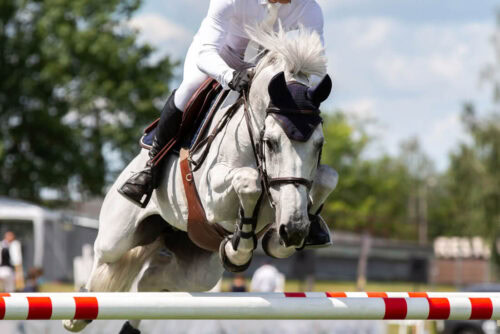
Flying lead changes are an advanced dressage movement that is beautiful to watch and exhilarating to ride. In a single stride, the horse switches from one canter lead to the other, mid-air, without breaking rhythm or taking a step of walk or trot.
Loose in the field, horses naturally adjust their balance and change leads freely at the canter whenever they shift direction. Under saddle, producing that same ease takes preparation, precise timing, and a strong foundation.
Keep reading to learn what a flying lead change is, how to train toward it progressively, how to execute the aids, and how to work through common problems.
What Is a Flying Lead Change?
A flying lead change is a maneuver in which the horse switches canter leads in a single stride without breaking into a trot.
The canter is a three-beat asymmetrical gait. This means the horse’s footfall sequence differs depending on the lead.
On the right lead, the footfall sequence is left hind, then right hind and left fore landing together as a diagonal pair, then right fore. After the right fore leaves the ground, all four feet are momentarily airborne. This moment of suspension is the only window in which a flying change can occur.
During a flying lead change, the horse reorganizes the footfall sequence so the new outside hind lands first, initiating the opposite lead. When executed properly, the canter rhythm continues without interruption.
This seamlessness distinguishes a flying change from other lead changes, in which the horse passes through trot or walk between leads.
In USDF and USEF dressage competition, single flying changes appear at Third Level. At higher levels, horse-and-rider combinations perform multiple flying changes in a row, also known as tempi changes.
Changes every four strides appear at Fourth Level, every three and two strides at the FEI levels, and finally every stride at Grand Prix. One-tempi changes, where the horse alternates leads with each canter stride, represent the highest expression of the movement.
Table 1. Flying change progression in dressage competition
| Level | Flying Change Requirement | What It Demonstrates |
|---|---|---|
| Third Level |
|
|
| Fourth Level |
|
|
| FEI levels |
|
|
| Grand Prix |
|
|
Prerequisites for Flying Lead Changes
Introducing flying changes before the foundation is ready is a common training mistake.
By mastering key prerequisite milestones before attempting a flying change, riders can help set their horses up for success.
Quality Collected Canter
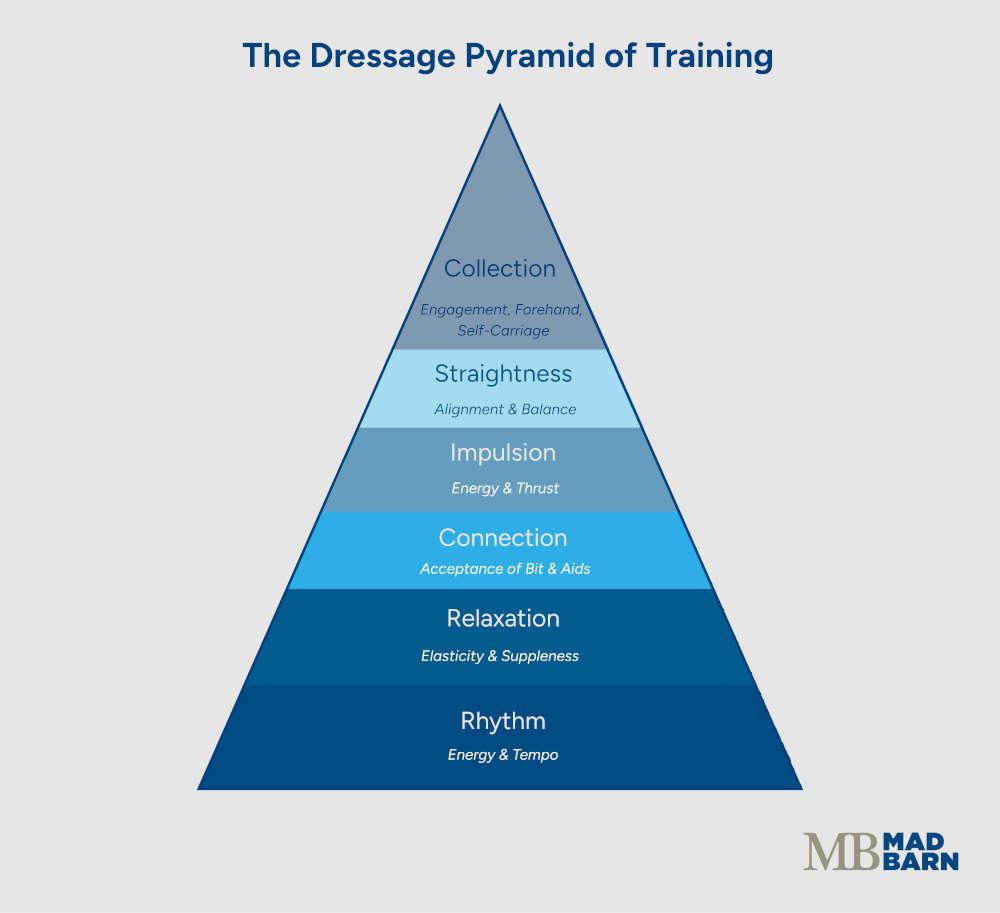
Correct flying changes are impossible without a quality canter. The canter must remain a clear three-beat gait with consistent rhythm, uphill balance, and lightness in the forehand.
Research on canter kinematics in highly trained dressage horses shows that as collection increases, speed changes are driven entirely by reductions in stride length, while stride duration stays constant. [1]
Given this, collection is the first prerequisite for flying changes. The stride shortens, balance shifts toward the hindquarters, and the movement becomes more compact and engaged.
Research comparing extended canter kinematics in advanced dressage horses with those of racehorses found significant differences in stride variables between the two groups, indicating that training over time shapes distinct canter qualities. [2]
A canter developed through dressage training tends toward greater engagement and uphill tendency, both of which support flying changes and other demanding canter work.
A flat, running, or four-beat canter cannot produce a clean change. Neither can a horse that stiffens through the back when asked to compress the stride.
Confirmed Counter-Canter
Counter-canter is cantering on the outside lead relative to the direction of travel. It is the most important single preparatory exercise for flying changes.
A horse that can hold the outside lead through loops, serpentines, and corners while maintaining rhythm and soft bend has already demonstrated the balance required for changes. Horses that break from counter-canter under pressure are likely not ready.
Simple Changes
Simple changes through walk should also be confirmed before attempting flying changes.
A simple lead change is a deliberate interruption of the canter. The horse transitions down to walk, travels straight for a few steps, then departs on the new lead. It changes the lead but does not maintain continuity of canter throughout.
This movement sharpens the canter departure and teaches the horse to wait for an instruction rather than anticipate one, proving that the horse can reorganize its balance quickly in both directions.
Adjustability & Throughness
The horse needs to lengthen and shorten within the canter at the rider’s request to demonstrate the adjustability needed for flying changes.
Research has found that canter quality is the attribute in young horse performance evaluations most strongly correlated with future success in dressage competition. [3] This finding shows how central the canter is to the entire dressage education, not just to flying changes.
A horse that runs against the contact, ignores subtle aids, or accelerates when asked to collect lacks the throughness that flying changes demand.
What's your top priority with your horse's health?

What's your top priority with your horse's health?
The Mechanics of a Flying Lead Change
Understanding what happens in the horse’s body during a flying change helps riders time their aids and catch problems early. The movement takes a fraction of a second, but it follows a clear biomechanical sequence.
The Canter Lead
Unless performing counter-canter, riders typically ride the canter on the same lead as the direction of travel.
The footfall sequence determines the canter lead. On the left lead, the sequence begins with the right hind and ends with the left fore. On the right lead, the sequence begins with the left hind and ends with the right fore.
From the saddle, riders can usually feel which lead they are on through the subtle swing and roll of the movement beneath them. From the ground, the lead foreleg is visible as the one reaching furthest forward in each stride.
Because each side does different muscular work, horses trained unevenly on one lead can develop corresponding asymmetries over time.
Footfall Pattern & Suspension Phase
In collected canter, the suspension phase follows the landing of the leading foreleg. It is the briefest part of the stride, but it is the only moment when a flying change can happen.
A kinematics study of elite dressage horses at the Olympic Games found that canter strides containing a lead change had lower velocity, shorter stride length, and longer duration than regular canter strides. [3]
These findings reflect the momentary reorganization of balance and limb sequence as the horse shifts from one lead to the other during that window of suspension. The first foot to land after the change is the new outside hind, which becomes the trailing hind in the footfall sequence.
Research comparing muscle activation between the leading and trailing hindlimbs during canter found that the trailing hindlimb generates significantly greater gluteal activation during the stance phase, stabilizing the new lead and powering the push-off into the next stride. [4] This activation is why hind limb engagement in the strides leading into the change matters so much.
What a Clean Change Looks Like in Dressage
A clean change is one in which the front and hind limbs switch within the same moment of suspension. A delay between the front and hind legs, where the front changes first, is penalized as being late behind.
USDF training guidelines specify that the horse must remain straight, light, calm, and impulsive throughout the change, with no disruption to rhythm or contact. [5]
In dressage, cleanness is not the full picture. The change should also be expressive. A change where the forehand jumps forward and upward into the new direction, the hindquarters step clearly under the body, and the topline stays elastic will score well.
When preparation is thorough and timing is correct, the change itself tends to feel quiet from the saddle.

How to Ask for Flying Changes
Once the training prerequisites are solid and riders understand the biomechanics of the change, learning the aids becomes more straightforward. However, every horse and rider combination is different, and developing reliable changes requires patience.
Arena Placement
The long diagonal is the standard starting point for a first flying change. It gives the horse room to prepare, a clear reason to change direction, and the rider a long line to work with.
As training develops, riders can perform changes in more precise locations and on more difficult lines.
Flying Change Aids
The aids for a flying change mirror the aids for a canter departure to the new lead. From within the canter, the rider is asking for a new canter.
In the stride before the change, a half-halt organizes the balance, engages the hind legs, and prepares the horse. The change aid comes next.
To ask for a change, the rider shifts weight to the new inside seat bone, brings the new outside leg behind the girth while easing the old outside leg forward, and softly changes the horse’s flexion toward the new direction. [5]
The new outside rein holds contact to prevent the horse from losing lateral balance through the change. The new inside leg stays active at the girth, asking the new inside hind to step forward and under.
Timing
It often takes practice to develop the feel necessary to time the aid correctly. Ask for a flying change just before the moment of suspension in the canter stride. Ideally, the aids should arrive as the horse’s inside leading foreleg is coming forward.
Keep the aids clear without making them large. An exaggerated weight shift or dramatic leg movement disrupts balance at exactly the moment horses need it most.
Common Problems and How to Fix Them
Even horses with confirmed flying changes can show problems when there is a gap in the training foundation. Drilling the change to fix those gaps almost always makes things worse.
Late Behind
A late change behind is the most common fault. The front switches to the new lead while the hindquarters follow one or more strides later. This mistake nearly always reflects insufficient hind limb engagement, a canter that has lost collection, or an aid given too late in the stride.
A horse that is weak, asymmetrical, or disengaged behind will default to changing in front first, where the mechanical load is lower.
To address a late change, return to canter-walk-canter transitions on a circle. These require active hind leg engagement and a sharp, light response to the departure aid. Also check that the rider’s seat is not blocking the horse’s back from swinging through the stride.
Swinging Haunches
During crooked changes, the horse swings the haunches to one side rather than stepping cleanly under the body. Swinging haunches is a straightness problem, often worsened by a naturally dominant hind leg or by asymmetry in the rider’s seat.
Research comparing leading- and trailing-limb kinematics at the canter documents consistent asymmetries in joint angles and limb movement between the sides. [6]
Those natural differences mean horses tend to be crooked through the change without targeted work to improve straightness. When crookedness is consistently worse in one direction, a physical asymmetry may be contributing and is worth investigating.
Shoulder-fore in the strides before the change is the primary correction, aligning the horse’s shoulders and haunches on the same track and preventing the hindquarters from drifting.
Tension, Rushing, or Anticipation
Some horses start making changes without being asked, rush the stride before the change, or become anxious near the diagonal. These issues nearly always mean riders have practiced the change too many times or introduced it before the horse was ready.
Stop practicing flying changes entirely for several rides. Ride the diagonal in counter-canter, ask for simple changes through walk at different, unpredictable points in the arena, and vary the session so the horse cannot predict what comes next.
This approach supports clearer rider aids and helps reduce anticipation by returning the horse’s focus to the rider’s instruction.
Table 2. Common flying change problems and corrections
| Problem | Likely Cause | Best Correction |
|---|---|---|
| Late behind |
|
|
| Swinging haunches |
|
|
| Rushing before the change |
|
|
| Anticipation |
|
|
| Tension through the change |
|
|
| Loss of rhythm or balance |
|
|
What Judges Look For
At Third Level, flying changes carry a coefficient of 2 in USDF and USEF tests. That weight reflects how much the movement reveals about the quality of the underlying training. Judges evaluate flying changes based on cleanness, straightness, rhythm, impulsion, expression, obedience, and balance. [5][7]
Front and hind must switch within the same stride of suspension, and the horse’s spine should stay on the line of travel, with no haunches swinging to either side. The canter should not flatten, quicken, or lose energy through the change.
The horse should also look willing and forward, with no tail swishing, resistance, or tension. A high-scoring change should remain uphill. A horse that falls onto the forehand during the change loses the very collection that made the movement possible.
Research on the temporal kinematics of elite dressage horses confirmed that advanced canter movements, such as collected canter and canter pirouettes, preserve the gait’s fundamental rhythm. [8]
At the international level, the FEI requires that flying changes maintain consistent rhythm, lightness, and straightness, whether performed as a single change or in a series of tempi changes. [9]
Horses that score highest are not always those with the most spectacular natural canter. Judges reward accuracy, obedience, and quality across both directions. A horse with an average canter that delivers clean, straight, balanced changes consistently in both directions can score well.
Frequently Asked Questions
Here are some frequently asked questions about riding flying lead changes in dressage:
A flying lead change in dressage is a movement where the horse switches canter leads during the moment of suspension without passing through trot or walk. The front and hind limbs should change within the same stride so the canter rhythm continues without interruption. A correct flying change should stay clean, straight, balanced, and uphill.
Flying lead changes are introduced in USDF and USEF dressage tests at Third Level as single changes. At higher levels, horses perform multiple changes in sequence, called tempi changes. Changes every four strides appear at Fourth Level, while three-, two-, and one-tempi changes are introduced through the FEI levels up to Grand Prix.
The difference between a flying change and a simple change is whether the canter rhythm is interrupted. In a simple change, the horse transitions from canter to walk, takes a few walk steps, and then departs on the new lead. In a flying change, the horse changes leads within the canter during suspension, with no walk or trot steps between leads.
A horse is ready for flying changes when the canter is collected, rhythmic, adjustable, and balanced in both directions. The horse should also have confirmed counter-canter, clean simple changes through walk, and prompt canter-walk-canter transitions from light aids. If the horse rushes, loses rhythm, breaks from counter-canter, or becomes heavy in the hand, the foundation likely needs more time.
Collected canter is important for flying changes because the horse must shorten the stride, shift balance toward the hindquarters, and stay light in the forehand. A flat, running, or four-beat canter does not give the horse enough balance or engagement to reorganize the lead cleanly. The better the collected canter, the easier it is for the horse to make the change without losing rhythm or straightness.
Counter-canter is important before teaching flying changes because it proves the horse can stay balanced on the outside lead while changing direction. A horse that can hold counter-canter through loops, serpentines, and corners has developed the control and balance needed for clean changes. If the horse breaks from counter-canter or swaps leads without being asked, flying changes should wait.
To ask a horse for a flying lead change, prepare the canter with a half-halt, then give the aids for a new canter lead. The rider shifts weight to the new inside seat bone, brings the new outside leg behind the girth, allows the old outside leg to come forward, and softly changes the horse's flexion toward the new direction. The new outside rein maintains balance while the new inside leg asks the horse to step forward and under.
The aid for a flying change should be given just before the moment of suspension in the canter stride. Ideally, the rider gives the aid as the horse's inside leading foreleg is coming forward. Clear timing matters more than large aids, because exaggerated seat or leg movements can disrupt the horse's balance at the exact moment the change needs to happen.
The best place to teach a first flying change is usually on the long diagonal. The diagonal gives the horse a clear reason to change direction, gives the rider time to prepare, and provides enough space to ride forward after the change. As the horse becomes more confirmed, changes can be placed more precisely on different lines.
A horse is late behind in a flying change when the front legs switch to the new lead before the hind legs follow. This is one of the most common flying change faults and usually reflects insufficient hind limb engagement, loss of collection, or an aid given too late. Returning to canter-walk-canter transitions on a circle can help rebuild the engagement and quick response needed for a cleaner change.
A horse swings the haunches during flying changes when straightness is not confirmed through the stride. This often happens when the horse drifts behind the rider's aids, relies more on one hind leg, or is influenced by asymmetry in the rider's seat. Riding shoulder-fore in the strides before the change can help align the shoulders and haunches so the horse changes on a straighter line.
A horse may rush or anticipate flying changes when the movement has been practiced too often in the same place or introduced before the horse is mentally ready. Anticipation often shows up as quickening, tension, or offering the change before the rider asks. Riding the diagonal in counter-canter, using simple changes at varied points, and avoiding repeated drilling can help rebuild calm obedience.
The best exercises for preparing a horse for flying changes include counter-canter loops, serpentines, simple changes through walk, and canter-walk-canter transitions. These exercises develop balance, straightness, adjustability, and quick responses to the canter aids. Shoulder-fore before the change is also useful when the horse tends to swing the haunches or lose alignment.
Teaching flying changes without a trainer is possible for some experienced riders, but professional guidance is strongly recommended. Small mistakes in timing, seat position, or balance can quickly create habits such as late changes, rushing, or crookedness. An experienced eye on the ground can also tell whether the problem is the change itself or a gap in the canter foundation.
Dressage judges look for flying changes that are clean, straight, rhythmic, balanced, expressive, and obedient. The front and hind legs must switch within the same stride of suspension, and the horse should stay on the line of travel without swinging the haunches. The canter should remain uphill and forward, with no loss of rhythm, tension, resistance, or falling onto the forehand.
Flying changes are scored based on cleanness, straightness, rhythm, impulsion, expression, obedience, and balance. At USDF and USEF Third Level, flying changes carry a coefficient of 2, so errors affect the final score more than a standard movement. A horse with an average canter can still earn good marks if the changes are accurate, balanced, and consistent in both directions.
You should not keep drilling flying changes if your horse repeatedly makes mistakes. Late changes, rushing, crookedness, or anticipation usually point to a weakness in the canter, straightness, engagement, or timing. Returning to preparatory work such as counter-canter, simple changes, transitions, and shoulder-fore is usually more effective than repeating the change itself.
A clean flying change should feel quiet, balanced, and organized from the saddle. The horse should stay in the same rhythm, change leads smoothly, and continue forward without rushing, dropping the back, or falling onto the forehand. When the preparation and timing are correct, the change often feels less dramatic than it looks from the ground.
Summary
Flying lead changes are an advanced dressage movement that requires the horse to switch canter leads cleanly during suspension. Reliable changes depend on collection, straightness, correct timing, and a progressive training foundation.
- A clean flying change happens when the front and hind limbs switch leads within the same moment of suspension
- Horses should have a balanced collected canter, confirmed counter-canter, simple changes, adjustability, and throughness before starting flying changes
- The rider's aids should mirror a canter departure to the new lead while preserving rhythm, balance, and straightness
- Late changes behind usually indicate insufficient hind limb engagement, loss of collection, poor straightness, or aid timing that comes too late
- Judges look for flying changes that remain clean, straight, rhythmic, expressive, obedient, uphill, and balanced in both directions
References
- Clayton. H. M. Comparison of the Collected, Working, Medium and Extended Canters. Equine Veterinary Journal. 1994.
- Clayton. H. M. The Extended Canter: A Comparison of Some Kinematic Variables in Horses Trained for Dressage and for Racing. Acta Anatomica. 1993.
- Deuel. N. R. and Park. J. Canter Lead Change Kinematics of Superior Olympic Dressage Horses. Journal of Equine Veterinary Science. 1990.
- St George. L. B. et al. Electromyographic and Kinematic Comparison of the Leading and Trailing Fore- and Hindlimbs of Horses during Canter. Animals. 2023.
- Changes of Lead and Flying Change of Lead. United States Dressage Federation.
- Back. W. et al. Kinematic Comparison of the Leading and Trailing Fore- and Hindlimbs at the Canter. Equine Veterinary Journal. 1997.
- USEF Dressage Division Rules. United States Equestrian Federation. 2026.
- Burns. T. E. and Clayton. H. M. Comparison of the Temporal Kinematics of the Canter Pirouette and Collected Canter. Equine Veterinary Journal. 1997.
- FEI Dressage Rules. Federation Equestre Internationale. 2026.