

 English
Identify gaps in your horse's nutrition program to optimize their well-being.



Omneity® Pellets
All-In-One Vitamin & Mineral Pellet
Vitamins are organic compounds required in small amounts to support various physiological functions in horses. They are classified into two categories: fat-soluble vitamins (A, D, E, and K) and water-soluble vitamins (B-complex vitamins and vitamin C). Each vitamin plays a distinct role in metabolism, growth, immune function, and overall health.
Horses typically obtain vitamins from fresh forages, but they are often added to feeds and supplement formulations to ensure adequate intake when horses are consuming preserved forages such as hay.
The following equine feeds, supplements and products contain Vitamins as an ingredient.
 Hoof Health
 Metabolic Syndrome
 Organic Trace Minerals
 Vitamins
 Calming
 Exercise
 StressVitamins
 Hoof Health
 Ingredient
 Muscle
 Nutrition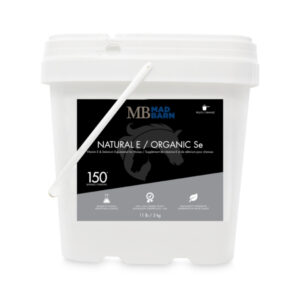
 AntioxidantOrganic Trace Minerals
 RecoveryVitamins
 Antioxidant
 HealthMuscleVitamins
 Gut HealthHoof Health
 Mineral BalanceOrganic Trace Minerals
 Ration Balancer
 Hoof HealthMineral BalanceOrganic Trace MineralsVitamins
 Competition Horses
 Electrolyte
 Performance
 Stamina
 DigestionGut Health
 Immunity
 Probiotic
 Ulcers
 Yeast
Yeast
 Coat Quality
 Fat
Fat Joints
 Omega 3-6-9
 HealthImmunityMineral BalanceVitamins
 Amino AcidMineral BalanceRation BalancerVitamins
 Broodmare
 Caloric Energy
 Foal
Foal Stallion
 Caloric Energy
 Complete Feed
 FlavorNutrition
 ExerciseFatPerformance
 Protein
 EnergyMineral BalanceProteinVitamins
 FatHealthNutritionPerformance
 EnergyHealthMineral Balance
 Nutrients
 Complete FeedCompetition HorsesExercisePerformance
 Caloric EnergyCompetition HorsesProteinStamina
 Caloric EnergyComplete FeedHealthNutrition
 Fat
Fat FiberRation BalancerVitamins
 Energy
 GrainsNutrientsProtein
 Complete FeedHealthNutrientsProtein BroodmareHealthNutritionPerformance
 HealthImmunityNutrientsNutrition
 Complete Feed
 Easy KeeperNutritionProtein
 Complete FeedEasy KeeperFlavorNutrition
 Easy KeeperHealthNutrientsNutrition
 Easy Keeper
 GrowthHealthPerformance
 EnergyFatMineral BalanceVitamins
 Caloric EnergyComplete FeedNutritionProtein
 Caloric EnergyComplete FeedGrainsNutrition
 Complete FeedHealthNutritionOrganic Trace Minerals
 Caloric EnergyComplete FeedNutritionProtein
 Caloric EnergyComplete FeedFiberFlavor
 DigestionHealthNutrition
 Senior
 Complete FeedFlavorHealthNutrition
![120-6 Horse Pellet (Bartlett Milling) [Discontinued]](/wp-content/uploads/2021/08/120-6-Horse-Pellet-Bartlett-Milling-Horse-Feed-300x300.jpg) ExerciseHealthNutritionProtein
ExerciseHealthNutritionProtein Complete FeedFatFiberFlavor
 Caloric EnergyCompetition HorsesNutritionPerformance
 Caloric EnergyComplete FeedFlavorNutrition
 FiberHealthNutritionProtein
 BroodmareFoalGrowth
 Lactation
 FatHealthNutritionPerformance
 EnergyFoalPerformanceStallion
 Complete FeedGrowthLactationPerformance
![14% Performance Formula (Triple Crown) – [Discontinued]](/wp-content/uploads/2019/12/Triple-Crown-14-Performance-Formula-Southern-States-300x300.jpg) ExerciseFlavorPerformance
ExerciseFlavorPerformance Weight Issues
![14% Racing Formula (Triple Crown)-[Discontinued]](/wp-content/uploads/2021/09/14-Racing-Formula-Triple-Crown-Discontinued-Horse-Feed-300x300.jpg) EnergyExerciseNutritionPerformance
EnergyExerciseNutritionPerformance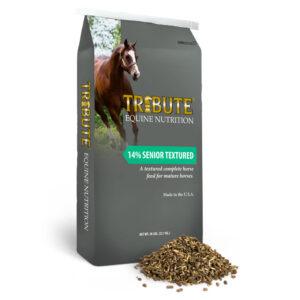 Complete FeedFatNutritionSenior
 Caloric EnergyComplete FeedHealthNutrition
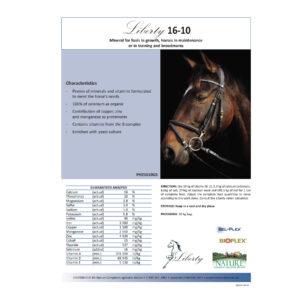 Mineral BalanceNutrientsNutritionVitamins
 Complete FeedMineral BalanceNutritionVitamins GrowthHealth
 MareNutrition
 FatRation BalancerSeniorWeight Issues
 HealthMineral BalanceNutritionVitamins
 DigestionHoof HealthVitaminsYeast
 Fiber
Fiber ForageFlavorNutrition
 ElectrolyteMineral BalanceNutritionVitamins
 Omega 3-6-9ProteinRation BalancerVitamins
Horses need vitamins in their diet to support normal metabolism, immune function, reproduction, tissue maintenance, and nerve and muscle function. Vitamins do not provide calories, but they are required for the body to use energy, build and repair tissues, and maintain normal health. Horses get some vitamins from fresh forage and can produce some B-vitamins in the hindgut, but intake is not always adequate. This becomes more important when horses are eating stored hay, have limited pasture access, or are not getting enough fortified feed to balance the diet. For many horses, a product such as Mad Barn’s Omneity® provides comprehensive daily support by combining vitamins with trace minerals and other nutrients commonly lacking in the diet.
Forage provides some of the vitamins required by horses, but it does not always supply everything a horse needs in optimal amounts. Fresh grass is a rich source of vitamin E and beta-carotene, which the horse converts to vitamin A. Once forage is cut and stored as hay, these compounds begin to break down through exposure to oxygen, light, heat, and time in storage, so the hay contains less vitamin E and less beta-carotene than the original fresh forage. That means horses eating mostly hay usually get less vitamin E and vitamin A activity from forage than horses grazing fresh pasture. Even horses on good pasture may not get optimal amounts of all B-vitamins, especially in situations involving hard work, stress, illness, or impaired hindgut function. Biotin is one example, since horses often benefit from 20 mg of supplemental biotin to support hoof health even though there is no NRC requirement for biotin. Forage should remain the foundation of the diet, but vitamin supplementation is often needed to fully balance the ration.
The vitamins most often worth supplementing in a horse’s diet are vitamin E, vitamin A when pasture access is limited, and B-vitamins in horses with higher demands or impaired hindgut function. Vitamin E is especially important to assess because fresh pasture is the horse’s main natural source, and levels drop substantially once grass is cut and stored as hay. Vitamin A can also become limiting when horses have no access to fresh pasture for long periods because beta-carotene declines over time in stored forage. Horses in hard work, under stress, after illness, or with digestive disruption may also benefit from added B-vitamins to support energy metabolism, appetite, and overall health. Mad Barn’s Omneity® is a complete equine vitamin and mineral supplement that ensures your horse gets everything needed to balance the diet.
The difference between fat-soluble and water-soluble vitamins for horses is how they are absorbed, stored, and excreted. Fat-soluble vitamins include vitamins A, D, E, and K. These vitamins are absorbed along with dietary fat and can be stored in the body, which means deficiencies may take longer to develop but oversupplementation is also more likely to cause toxicity over time. Water-soluble vitamins include the B-vitamins and vitamin C. These are not stored to the same extent and excess amounts are more readily excreted, so horses need a more consistent supply from the diet or supplementation to maintain adequate intake, especially when demand is increased or hindgut production is compromised.
Yes, a horse can get too many vitamins in the diet, especially fat-soluble vitamins such as vitamins A and D. Because these vitamins can be stored in the body, feeding excessive amounts over time increases the risk of oversupplementation and toxicity. This is one reason it is important to evaluate the full ration, including forage, fortified feeds, and supplements, rather than layering multiple products without checking what each one provides. Water-soluble vitamins are less likely to accumulate to harmful levels, but they should still be fed appropriately as part of a balanced diet.
The best complete vitamin supplement for horses is one that provides broad nutritional support in a concentrated form and helps fill common gaps in the diet. A useful product should suppy essential vitamins such as vitamin E and B-vitamins, along with trace minerals and other nutrients required for overall health. This is especially important for horses eating mostly forage or small amounts of fortified feed, since those diets do not always provide enough micronutrients to fully balance the ration. For many horses, Mad Barn’s Omneity® is recommended by nutritionists because it provides 1,000 IU of vitamin E, 20 mg of biotin, full B-vitamin fortification, and balanced trace minerals in one concentrated supplement.
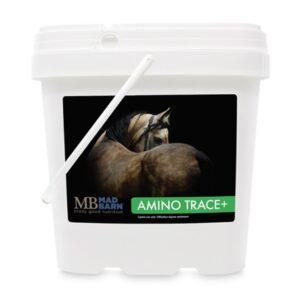
A high quality vitamin supplement for horses should provide adequate amounts of essential vitamins such as vitamin A, vitamin E, full B-vitamin fortification, and enough biotin to support hoof health. It should also include trace minerals, because vitamins and minerals work together to support metabolism, immune function, hoof growth, coat quality, and overall health. Ingredient form matters as well, since some forms are more bioavailable than others. For example, higher quality supplements such as Mad Barn’s AminoTrace+ use natural vitamin E, which is more bioavailable than synthetic vitamin E. Mad Barn’s Omneity® is another example of a complete daily formula, providing 1,000 IU of vitamin E, 20 mg of biotin, full B-vitamin fortification, and balanced trace minerals in one product.
A horse supplement should contain enough vitamin E to make a real contribution to daily intake, typically at least 1,000 IU per day for an adult horse. This matters most for horses on hay with little or no pasture access because fresh grass is the main natural source of vitamin E. Horses in work, breeding horses, and horses with muscle or neurological concerns may need more than this depending on the rest of the diet. Mad Barn’s Omneity® provides 1,000 IU of vitamin E per serving as part of a complete daily balancing formula.
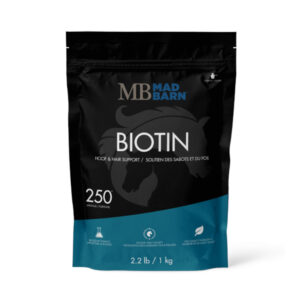
To support hoof health, a horse supplement should provide 20 mg of biotin per day, along with other nutrients that are important for hoof health. This is the level of biotin supplementation that has been shown in research to improve hoof growth and hoof horn quality when fed consistently over time. Because hooves grow slowly, supplementation usually needs to be maintained for several months before the full benefit is visible. Mad Barn’s Omneity® and AminoTrace+ both provide 20 mg of biotin per serving, alongside copper, zinc, methionine, and other nutrients that are important for building strong, healthy hooves.
The best vitamin supplement for horses with metabolic issues is one that provides concentrated nutrition without adding excess energy, sugar, or starch. These horses still need adequate vitamins, trace minerals, amino acids, and antioxidants, but those nutrients have to be supplied within a diet that keeps non-structural carbohydrates low. For horses with insulin dysregulation or other metabolic concerns, the total diet is often formulated to contain less than 10% NSC on a dry matter basis to reduce post-feeding glucose and insulin responses. Vitamin E is also important in these horses because it helps support antioxidant status, particularly when pasture access is limited and the diet relies heavily on stored forage. For horses with metabolic concerns, Mad Barn’s AminoTrace+ is the best supplement because it provides concentrated vitamin and mineral support in a low-calorie pellet.
Horses in work need a supplement that supports the higher nutritional demands of training, competition, and recovery. Exercise increases the need for antioxidants and B-vitamins, and sweat losses also increase the need for electrolyte replacement to support hydration, muscle function, and post-exercise recovery. Vitamin E is especially important because it helps protect muscle cells from oxidative stress, while B-vitamins support energy metabolism. For many horses in work, Mad Barn’s Omneity® is a good choice because it provides full B-vitamin fortification, 1,000 IU of vitamin E, 20 mg of biotin, and balanced trace minerals in one concentrated formula. Horses in moderate to heavy work may also need a separate electrolyte supplement.
Many horses on commercial feed still need additional vitamin and mineral support because fortified feeds are only designed to balance the diet when fed at the recommended rate. Many horses are fed much less than the recommended amount of complete feeds, especially easy keepers, horses on restricted diets, or horses getting grain only as a carrier for supplements. When feed is underfed, the horse may not receive meaningful amounts of the vitamins and minerals listed on the tag. A concentrated product such as Mad Barn’s Omneity® can help fill those gaps without adding excess calories or starch.
This statement appears on many horse supplements because it is part of Canadian feed labelling guidance for horse feeds and supplements that guarantee vitamins beyond A, D, and E. CFIA’s labelling guidance specifically uses this note for horse products with guarantees for additional vitamins such as riboflavin, pyridoxine, and thiamine.
It does not mean those other vitamins are useless or should never be fed. It means the benefit of adding extra vitamins beyond that group may be less predictable, more dependent on the horse’s overall diet and hindgut function, and not always clearly demonstrated under all feeding conditions. This is especially relevant for B-vitamins, because horses can synthesize some of them in the hindgut, but intake may still be worth supporting in horses under stress, in hard work, after illness, or with impaired digestive function.
From a practical feeding standpoint, this label statement should not be interpreted to mean that vitamin supplementation is unimportant. Horses on stored forage can still fall short in key vitamins such as vitamin E and vitamin A activity, and some horses benefit from additional B-vitamin support for hoof quality, energy metabolism, or overall health. The more useful question is whether the supplement helps balance the full ration at the intended feeding rate and supports the horse’s individual needs.
All-In-One Vitamin & Mineral Pellet

Advanced Gut Health Supplement

DHA-Enriched Fat Supplement
All-In-One Vitamin & Mineral Pellet

All-In-One Vitamin & Mineral Powder

Enhanced Vitamin & Mineral Pellet
Advanced Gut Health Supplement

Probiotic & Prebiotic Supplement

High-Potency 5-Strain Probiotic
All-In-One Vitamin & Mineral Pellet
Enhanced Vitamin & Mineral Pellet

Hoof, Skin & Coat Support
DHA-Enriched Fat Supplement
All-In-One Vitamin & Mineral Pellet

Organic Trace Mineral Blend
Enhanced Vitamin & Mineral Pellet

Mood & Hormone Support

Metabolic Health Formula
Mood & Hormone Support

Muscles & Nerve Support
Advanced Gut Health Supplement
Advanced Gut Health Supplement

Respiratory & Performance Supplement

Essential Amino Acid Blend
Essential Amino Acid Blend
Muscles & Nerve Support

Performance & Muscle Support
Respiratory & Performance Supplement
DHA-Enriched Fat Supplement

Immune & Respiratory Support


