English
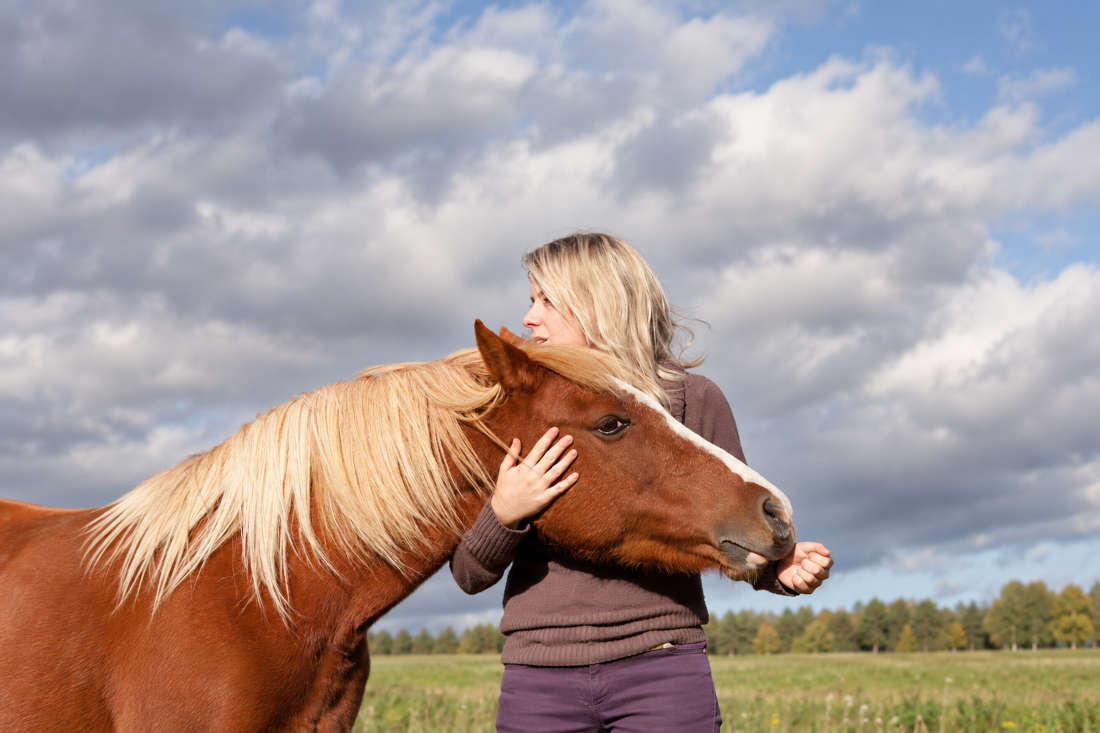
Nuzzling is an equine behavior that some riders interpret as a sign of affection. Sometimes this behavior is part of a relaxed social interaction, but horses also use their muzzles to explore, communicate, request attention, or test boundaries.
The horse’s muzzle is one of their main tools for exploring the world. Horses use their sensitive lips, nostrils, and whiskers to find food and interact with other horses.
A horse may nuzzle a person because they are curious or simply investigating them. Some horses also learn to nudge people because doing so has resulted in treats, scratches or another rewarding response in the past. [1]
To understand what it means when your horse nuzzles you, it’s important to consider the whole interaction. The horse’s ears, eyes, facial expression, posture and behavior before and after the contact can all provide clues about what they are communicating.
What Does a Horse Nuzzling You Mean?
Nuzzling in horses describes a broad range of muzzle-directed behaviors. These behaviors may include a brief touch with the muzzle, repeated nudging, investigation of a person’s hands or pockets, or sustained pressure against the body.
Horses use their highly-sensitive muzzle to gather information about their surroundings. [1] Their lips are prehensile, enabling them to grasp and manipulate forage, carefully select food while grazing, and investigate unfamiliar objects through touch.
Their nostrils provide olfactory information, allowing them to detect and investigate odors in the environment. Their whiskers or tactile hairs also help them understand where their face is relative to people, animals and the environment.
When a horse brings their nose toward a person, it is often to explore them as they would any other part of their environment. This can make muzzle contact look socially meaningful even when the horse is merely investigating something that has caught their attention.
Nuzzling behavior is also influenced by the horse’s previous experiences. A horse who has received treats, scratches or attention after nudging may learn to repeat the behavior because it reliably produces a rewarding response. [2]
Given this, the meaning behind a horse’s nuzzle depends on the situation, the horse’s body language, what happened immediately before the contact, and what usually happens afterward. [2][3] A relaxed horse briefly touching a familiar person is communicating something different from a horse repeatedly searching pockets, crowding a handler or combining muzzle contact with tense or defensive body language.
What's your top priority with your horse's health?

What's your top priority with your horse's health?
Nuzzling Between Horses
Horses use the muzzle extensively during social interactions. When approaching another horse, they may orient toward the head, sniff, touch muzzles, or briefly investigate the face and neck. This close-range contact allows horses to gather olfactory and tactile information while also assessing the other horse’s response.
Muzzle contact can occur during affiliative interactions, particularly between familiar horses. Horses may stand in close proximity, touch noses, investigate one another, or transition into mutual grooming. These behaviors are generally associated with low social tension and voluntary contact between individuals.
Horses also use their lips and incisors during mutual grooming, most often along the neck, withers, back, and other areas that are difficult to reach independently. Grooming is often reciprocal, with one horse grooming while the other responds in kind.
It is most common between preferred social partners and is considered an important behavior for maintaining social bonds. [2][8]
Muzzle contact between horses is not always friendly or affectionate. The same part of the body is also used during threats, displacement, and aggression. A horse may extend the head and neck, wrinkle the muzzle, pin the ears, snap the teeth, or bite to increase distance from another horse.
Why Do Horses Nuzzle?
Horses nuzzle handlers and other people for a variety of reasons. A gentle nuzzle may occur during a calm social interaction, while repeated or forceful nudging may be associated with food-seeking, attention, investigation, or a learned response that has been reinforced over time.
Nuzzling behaviors can also have different meanings depending on the context. The sections below outline several common forms of nuzzling and the situations in which they may occur.
Greeting & Social Interaction
Some horses gently investigate familiar people with their muzzle by sniffing hands or briefly touching clothing.
When a horse approaches a person voluntarily and remains calm, this indicates they are comfortable with the interaction. It might also mean the horse associates the human with positive experiences, such as feeding, turnout, grooming or scratching. [4][5]
However, a nose touch does not necessarily mean the horse is greeting you in the same way a person would greet a friend. Consider the behavior alongside the horse’s overall posture and the situation.
Curiosity & Investigation
Curious nuzzling is typically brief. Horses often use their nose and lips to investigate the unfamiliar. A new jacket, grooming tool, backpack or other object may quickly attract a curious muzzle.
Horses also investigate unfamiliar people in the same way, sniffing or lightly touching them to gather information.
Mugging
Mugging is food-seeking behavior directed toward a person, such as nudging, searching pockets, crowding, or persistently investigating the hands or clothing for treats.
Food commonly attracts horses to a person’s hands or clothing. Horses quickly learn where treats come from, so if food regularly appears from a particular pocket or hand, they may begin checking the same place the next time. [6]
Food-seeking behavior may include: [6]
- Sniffing or nudging your hands
- Searching pockets
- Pulling at clothing
- Following the movement of your hands
- Repeatedly pushing their muzzle toward you
- Becoming more persistent when food is not provided
This does not necessarily mean the horse is being aggressive or deliberately “rude.” In many cases, the horse has learned that investigating or nudging people sometimes results in food. [6]
Seeking Attention
Nuzzling is also a way for horses to ask for attention. For example, if a horse nudges your arm and you respond by scratching their neck, the horse may learn that nudging is an effective way to start an interaction. [7]
Over time, they may repeat the behavior when they want scratches, grooming or attention. Even talking to the horse or pushing their nose away provides a response, which can sometimes encourage the behavior to continue. If you notice a horse’s nudging behavior increases after you push their nose away, you can discourage the behavior by stepping out of the horse’s space so the behavior does not escalate.
Seeking Scratches or Grooming
Horses regularly groom one another using their teeth and lips, particularly around areas such as the neck and withers. This behavior, known as mutual grooming or allogrooming, is an important part of social interaction between horses. [8]
Some horses learn to seek scratches from people through nuzzling. They often position their withers, neck or another favorite area close to you and remain there while you scratch them.
A horse may touch you with their muzzle during these interactions, but this does not mean they are trying to groom you. Behaviors horses use with one another do not always have the same meaning when directed toward people.
Table 1. What your horse’s nuzzling means
| Type of nuzzling | Context and body language | Interpretation | How to respond |
|---|---|---|---|
| Brief, gentle contact |
|
|
|
| Investigating a person or object |
|
|
|
| Searching hands or pockets |
|
|
|
| Seeking scratches |
|
|
|
| Repeated or forceful nudging |
|
|
|
| Tense or defensive contact |
|
|
|
| Sudden change in nuzzling |
|
|
|
Is Nuzzling a Sign Your Horse Likes You?
Many horse owners interpret gentle nuzzling as a sign of happiness, affection or trust. However, nuzzling does not have one fixed meaning. The same type of muzzle contact can occur in different situations and may reflect different motivations depending on the context.
Nuzzling can be part of a positive interaction between a horse and a person. If your horse chooses to approach you, gently touches you with their muzzle and remains relaxed nearby, these behaviors suggest they are comfortable and interested in interacting with you.
Horses are social animals that form relationships with other horses and the people who regularly care for them. Gentle handling, grooming, scratching, feeding and other positive experiences all influence how a horse responds when they see you. [4][8]
Signs that a horse is relaxed and comfortable around you include:
- Soft, relaxed facial muscles
- Calm, regular breathing
- Ears resting in a neutral or gently attentive position
- A relaxed neck and body posture
- Choosing to approach you
- Remaining nearby when free to move away
- Staying relaxed during grooming or handling
Horses experience emotions and form preferences for particular social partners, but one behavior is rarely enough to know exactly what a horse is feeling. A nuzzle during a friendly interaction can reflect curiosity, an expectation of food, or a desire for attention. [3][9]
For this reason, nuzzles are best interpreted as one aspect of a larger interaction. When evaluating your horse’s emotional state, consider:
- What your horse was doing before they approached
- How they behaved during the contact
- What they did afterward
Horses show they are comfortable with and interested in particular people in many different ways. Rather than looking for one specific sign of affection or trust, consider how your horse interacts with you over time. [10]
Reading Your Horse’s Body Language
Interpreting a horse’s nuzzling requires consideration of the complete behavioral context, including the horse’s posture and other body language, the situation in which the behavior occurs, and the horse’s previous experiences and reinforcement history.
Their facial expression, ears, posture and movements can help you understand whether they are relaxed and curious, focused on finding food or becoming uncomfortable or pushy.
Relaxed Nuzzling
A horse that gently touches you with their muzzle while standing quietly may be investigating you or enjoying the interaction. Look for relaxed posture and calm, unhurried movements. The horse may move their muzzle gently and show no obvious signs of tension or concern.
The horse’s ears provide additional clues, but they should not be interpreted on their own. Horses regularly move their ears toward sounds and activity around them, so an ear that briefly turns backward does not necessarily mean the horse is upset or aggressive.
Food-Seeking Behavior
Nuzzling related to food is often more focused and persistent. Instead of briefly touching you and moving on, the horse may repeatedly return to your hands, investigate your pockets or search your clothing with their lips.
You may notice this behavior more often around feeding time or when you normally offer treats. The circumstances help distinguish food-seeking from a brief, curious nuzzle.
When Nuzzling Becomes Pushy
A gentle touch with the muzzle is different from a horse repeatedly using their head or body to move a person. Nuzzling can turn unsafe if the horse starts to:
- Nudge with increasing force
- Push into your body
- Crowd your space
- Grab or pull at clothing
- Mouth your hands or arms
- Pin their ears alongside other signs of tension
- Attempt or threaten to bite
These behaviors do not necessarily mean the horse is trying to hurt you, but owners should not ignore these actions. A horse’s size and strength mean that persistent pushing or mouthing can become unsafe even when it begins as food-seeking, curiosity or excitement.
Nuzzling in Combination with Biting
Some horses use their lips to explore people and objects, sometimes progressing from gentle investigation to mouthing or nibbling. Horses may also investigate clothing, lead ropes, grooming equipment and other objects within reach using their lips and muzzle.
A horse that expects treats may become more persistent about investigating hands, pockets and clothing, particularly if nudging or mouthing has resulted in food before. [11] In these situations, biting may develop gradually as the horse becomes more forceful in trying to obtain the expected reward.
Excitement or frustration can also make mouthing more persistent. A horse that becomes impatient or highly engaged during an interaction may use their muzzle, lips or teeth more forcefully.
Watch for escalation from light investigation to repeated nudging, grabbing clothing, pushing into your space, or increasingly forceful contact with the lips and teeth.
Horses also use biting as a warning. A horse that is uncomfortable, irritated or asking for more space may show changes in body language before attempting to bite.
Warning signs can include:
- Pinning or flattening the ears
- Tightening the muzzle or lips
- Turning the head quickly toward a person
- Moving away from or resisting touch
- Tensing the neck or body
- Threatening with an open mouth or exposed teeth
These signals are particularly important when biting occurs during grooming, saddling, veterinary care or handling of a specific part of the body. A sudden defensive response to touch can indicate pain or physical discomfort.
If a horse repeatedly threatens to bite, begins biting without an obvious trigger, or suddenly becomes aggressive during handling, stop the interaction and consider what may be contributing to the behavior. Persistent or newly developed biting warrants closer assessment, particularly when it occurs alongside signs of pain, sensitivity or changes in the horse’s normal behavior.

Interpreting Changes in Nuzzling Behavior
Every horse has their own way of interacting with people. Some frequently investigate people with their muzzle, while others prefer less physical contact. A sudden change in your horse’s normal behavior deserves attention, particularly when it occurs alongside other changes.
A horse that suddenly becomes unusually persistent about seeking contact, restless, mouthy or irritable may be responding to changes in their: [12]
- Environment
- Feeding routine
- Training
- Social situation
Pain or discomfort can also affect how a horse behaves around people. [12] Consider whether the horse has changed in any other ways, including their appetite, movement, posture, willingness to be handled, or interactions with other horses.
Contact your veterinarian if a significant behavioral change occurs alongside signs of pain, illness or other physical abnormalities.
Encouraging Safe Interactions with Your Horse
Repeated pushing, searching pockets, or mouthing hands and clothing are behaviors that can become difficult or unsafe if they are not addressed.
Consistency is important when addressing a horse’s behavior. Horses learn from the consequences of their actions, so if nudging sometimes results in a treat or attention, they may continue the behavior because it is occasionally reinforced. [2]
To encourage calm, safe interactions with your horse:
- Reward your horse when they are standing calmly rather than immediately after pushing or nudging
- Avoid rewarding persistent nudging, searching or mouthing with food or attention
- Offer treats in a bucket or feed pan if hand-feeding encourages unwanted food-seeking behavior
- Maintain appropriate personal space when your horse becomes pushy
- Respond consistently so your horse can learn which behaviors are appropriate during interactions with people
If a horse frequently bites, strikes, crowds handlers or shows other potentially dangerous behavior, consider working with an experienced equine behavior professional or trainer to identify what is contributing to the behavior and develop a safe approach.
Changes in nuzzling behavior should always be considered within the broader picture of the horse’s health and routine. Contact a veterinarian when a significant behavioral change occurs alongside signs of pain, illness, altered movement, appetite changes, or resistance to handling.
By observing the whole interaction instead of relying on a single gesture, owners can better understand their horse’s communication while encouraging calm, safe, and rewarding contact.
Frequently Asked Questions
Here are some frequently asked questions about horse nuzzling:
When a horse nuzzles you, they may be investigating you, looking for food, seeking attention or taking part in a relaxed social interaction. Horses use their sensitive muzzles, lips, nostrils and whiskers to explore their surroundings. Consider the horse's body language, the circumstances and what happens before and after the contact to better understand the behavior.
Horses may nuzzle people they like or feel comfortable around, particularly during calm, voluntary interactions. However, nuzzling can also indicate curiosity, an expectation of food or a desire for attention. Look for other positive signs, such as relaxed body language, choosing to approach and remaining nearby when free to leave.
You can tell that a horse may like or feel comfortable with you when they voluntarily approach, remain nearby and stay relaxed during interactions. They may also seek scratches or grooming and return to interact after moving away. These behaviors are most meaningful when they occur consistently over time rather than as a single gesture.
A horse may nuzzle your face to investigate your smell, seek attention or repeat a behavior that has previously resulted in a reward. Face-to-face contact should still be handled carefully because a horse can move their head quickly and unexpectedly. Maintaining appropriate personal space helps keep the interaction safe, even when the horse appears relaxed.
A horse may nuzzle you and then bite because curiosity or food-seeking has progressed into mouthing, or because the horse is excited, frustrated or uncomfortable. Relaxed investigation can look different from a warning that includes tension, pinned ears or a quick turn of the head. Regardless of the cause, mouthing and biting should be taken seriously because they can become unsafe.
A horse may push you with their nose because nudging has previously resulted in food, scratching, attention or movement from you. Repeatedly receiving a desired response can turn gentle nudging into persistent pushing. Rewarding calm behavior and responding consistently can help establish safer personal-space boundaries.
A horse often searches your pockets because they have learned that treats may be stored there. Horses can quickly associate particular people, hands or clothing with food. If pocket searching has produced treats before, the behavior may continue and become more persistent.
You can discourage a horse from nudging or searching for treats by rewarding calm behavior instead of responding immediately after pushing, mouthing or investigating your pockets. Avoid giving food or attention when the unwanted behavior occurs, since even occasional rewards can encourage it to continue. If hand-feeding increases food-seeking behavior, offering treats in a bucket or feed pan may help.
Horse nuzzling becomes unsafe when gentle contact develops into forceful nudging, crowding, clothing pulling, mouthing or biting. Warning signs can also include increasing tension, pinned ears or attempts to move the handler with the head or body. A horse's size and strength make these behaviors potentially dangerous even when they begin as curiosity or food-seeking.
Horses nuzzle and investigate each other with their noses and muzzles during a variety of social interactions. They may sniff or briefly touch noses when meeting, and they use their lips and teeth during mutual grooming. Muzzle contact is not always affectionate, so facial expression, posture and the surrounding circumstances should also be considered.
Whether a horse likes being kissed or hugged depends on the individual horse and how comfortable they are with close physical contact. Horses do not naturally kiss or hug in the same way people do, and some may find restraint or face-to-face contact uncomfortable. Respect the horse's personal space and let relaxed or tense body language guide the interaction.
Horses may show affection and trust toward humans by approaching voluntarily, remaining nearby and maintaining relaxed body language. Some horses also seek scratching, grooming or gentle physical contact, while others prefer simply standing close. Trust is best assessed through consistent patterns of calm, willing interaction rather than one specific behavior.
A sudden increase in nuzzling may be concerning when it occurs with restlessness, irritability, persistent mouthing or other changes in the horse's normal behavior. Changes in feeding, training, environment or social conditions may influence how a horse interacts, while pain or discomfort can also affect behavior. Contact a veterinarian if the change is significant or appears alongside altered appetite, movement, posture, handling tolerance or other signs of illness or pain.
You should seek professional help when nuzzling repeatedly progresses to biting, striking, forceful crowding or other behavior that puts handlers at risk. An experienced equine behavior professional or trainer can help identify what is reinforcing the behavior and develop a safer handling approach. Veterinary guidance is also important when the behavior changes suddenly or occurs with signs of pain, illness or physical discomfort.
Summary
Horses nuzzle people for several reasons, including curiosity, food, attention, and social interaction. The horse's body language, past learning, and the surrounding context help determine what the behaviour means.
- Horses use their sensitive muzzles, lips, nostrils, and whiskers to investigate people, objects, and their environment
- Gentle nuzzling may accompany a relaxed interaction, but it does not always indicate affection
- Providing food, scratches, or attention after nudging can teach a horse to repeat or intensify the behavior
- Persistent pushing, crowding, mouthing, or biting can become unsafe and should be addressed consistently
- A sudden behavioural change accompanied by pain, illness, or physical abnormalities should be discussed with a veterinarian
References
- Rørvang. M. V. et al. Sensory Abilities of Horses and Their Importance for Equitation Science. Frontiers in Veterinary Science. 2020.
- Sankey. C. et al. Reinforcement as a mediator of the perception of humans by horses (Equus caballus). Animal Cognition. 2010.
- Maurício. L. S. et al. How to Understand Them? A Review of Emotional Indicators in Horses. Journal of Equine Veterinary Science. 2023.
- Brubaker. L. et al. Horse Behavior towards Familiar and Unfamiliar Humans: Implications for Equine-Assisted Services. Animals. 2021.
- Sankey. C. et al. Do Horses Have a Concept of Person?. PLOS ONE. 2011.
- Hockenhull. J. and Creighton. E. Unwanted oral investigative behaviour in horses: A note on the relationship between mugging behaviour, hand-feeding titbits and clicker training. Applied Animal Behaviour Science. 2010.
- Nishimuta. M. et al. Equines do not live for grass alone: Training equines using social interaction as a reinforcer. Journal of the Experimental Analysis of Behavior. 2022.
- Wolter. R. et al. Parameters for the Analysis of Social Bonds in Horses. Animals. 2018.
- Kieson. E. et al. Tend and Befriend in Horses: Partner Preferences, Lateralization, and Contextualization of Allogrooming in Two Socially Stable Herds of Quarter Horse Mares. Animals. 2023.
- Sankey. C. et al. Positive interactions lead to lasting positive memories in horses, Equus caballus. Animal Behaviour. 2010.
- Kieson. E. et al. The effects of a choice test between food rewards and human interaction in a herd of domestic horses of varying breeds and experiences. Applied Animal Behaviour Science. 2020.
- Gleerup. K. B. and Lindegaard. C. Recognition and quantification of pain in horses: A tutorial review. Equine Veterinary Education. 2016.