English
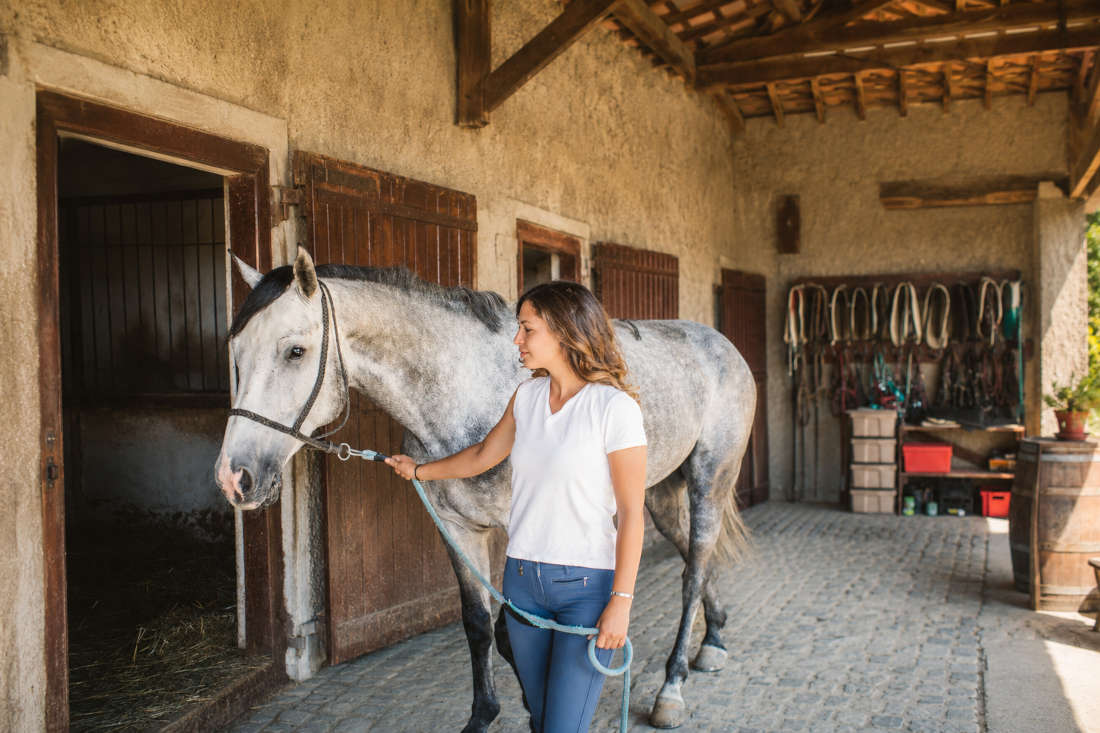
Following best practices for basic horse handling helps owners have safer, clearer interactions with their horses. Skills such as approaching, haltering, leading, tying, and handling the feet are foundational for routine care, training, and veterinary or farrier procedures.
Because horses are prey animals, they are highly alert to potential threats and may react quickly to sudden movement, unfamiliar stimuli, or restraint. Reading body language and recognizing early signs of tension allow handlers to adjust before a horse becomes fearful or reactive. [1][2]
Effective handling relies on consistent cues, appropriate positioning, and well-timed reinforcement. It also requires owners to consider pain or discomfort when a horse suddenly resists a familiar task.
Keep reading to learn how equine behavior and learning principles can guide safer approaches to haltering, leading, restraint, grooming, desensitization, and handling young horses.
What Is Basic Horse Handling?
Basic handling skills for horses are trained behaviors that must be taught and reinforced consistently.
When a horse has a solid foundation in basic handling, or “ground manners,” they are safer and more reliable while learning more advanced skills. [3]
Table 1. Basic horse handling skills summary
| Handling Skill | Technique | Safety Priority | Signs to Watch For |
|---|---|---|---|
| Approaching |
|
|
|
| Haltering |
|
|
|
| Leading |
|
|
|
| Standing and Tying |
|
|
|
| Grooming and Foot Handling |
|
|
|
| Desensitization |
|
|
|
| Handling Young Horses |
|
|
|
Ground Handling: The Foundation of Equestrian Activities
Ground handling skills underlie every discipline, training program, and management routine. A horse that is difficult to catch, resistant to haltering, or unable to stand tied creates risk for both the horse and the handler. [1]
Handling problems do not stay on the ground. Horses that struggle with restraint, foot handling, or being touched may carry those difficulties into ridden work. [4]
Ground Manners vs. Ground Handling Skills
Modern equine welfare specialists have largely moved away from the traditional term “ground manners” in favor of ground handling skills. Traditional terms like “manners” imply that horses understand concepts such as respect or politeness.
Horses behave according to their evolutionary adaptations and learned associations, not because of a conscious choice to cooperate or resist during horse-handler interactions. How a handler interprets horse behavior may shape their response, which influences training outcomes. [1]
Basic Handling & Human Safety
Horses can cause serious injuries to the people who work around them, and a substantial proportion of these injuries happen on the ground. [1]
Kicks are among the most frequent causes of injury for stable workers and handlers, followed by bites and entanglement in lead ropes or reins. [1] Following established safe horse-handling practices can help reduce these risks.
Education in equine behavior is a documented protective factor. Research on horse-related injuries shows that knowledge of equine learning and behavior reduces both the likelihood and severity of incidents. In contrast, a lack of this knowledge is consistently associated with higher rates of serious injury. [1]
What's your top priority with your horse's health?

What's your top priority with your horse's health?
Equine Behavior & the Flight Response
Good handling starts with understanding how horses perceive the world. Techniques that work well with other species like cats and dogs may not work for horses because they are prey animals. [1][5]
Horses have highly sensitive nervous and sensory systems that prioritize threat detection and survival. For example, approaching a horse with the directness of a predator can trigger deeply embedded flight instincts. [1][5]
Understanding the horse’s perspective during a handling interaction makes it possible to work with these responses instead of against them. [1][5]
Horses as Prey Animals
Horses evolved on open grasslands, and their primary defense against threats is to flee. Their nervous systems are tuned to detect potential threats before those threats get close. When triggered, the instinctive flight response can override previously learned behavior. [5]
A horse that stands calmly in cross-ties every day may still pull back violently if something unexpectedly crashes nearby. This reaction reflects a deep survival instinct, not disobedience. [1][5]
By taking steps to anticipate and accommodate the horse’s prey instincts, handlers can reduce the risk of injury while helping habituate the horse to basic handling routines.
Equine Perception
The equine field of vision provides excellent peripheral detection but limits depth perception at many angles. Horses have two primary blind spots: directly in front of the muzzle and directly behind the hindquarters. A handler approaching from behind may startle a horse that does not first see or hear them coming. [6][7]
Horses also have considerably more acute hearing than humans and can rotate each ear independently to track the source of a sound. New sounds, sudden movements, and unfamiliar objects are assessed quickly and often trigger alert or fearful behavior before the horse settles. [8]
Reading Horse Body Language
Horses communicate primarily through posture and movement. Learning to read horse body language and facial expressions is a practical safety skill. Handlers who recognize early signs of tension have time to adjust, while those who miss them often do not. [2]
Relaxed horses carry their heads at or below wither height. The muscles around the eyes are soft, the lower lip may hang slightly, and the ears move loosely without snapping or pinning. One hind leg may be cocked at rest. The overall impression is of a settled, relaxed horse with no immediate interest in moving away. [9]
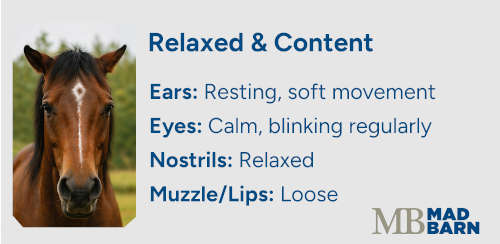
Tension looks different. The head rises, the eyes widen, and the whites of the eyes may become visible. The jaw tightens, the nostrils may flare, and the ears may flatten back or fix forward. Muscles over the neck and hindquarters also become tense. [9][10]
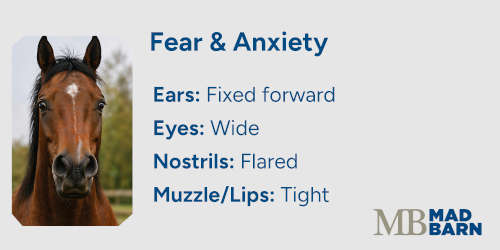
Signs of tension should prompt the handler to pause and assess before continuing. Active threat signals may require the handler to give the horse space and try a different approach. [2]
Pinned ears, a rapidly swishing or clamped tail, bared teeth, or a horse positioning its hindquarters toward a handler often precede kicks or bites. Understanding the causes and warning signs of biting behavior can help handlers respond more safely. [11][12]
The Flight Zone & Pressure Zone
Each horse has a flight zone. When a perceived threat enters this zone, it triggers the horse to move away. The size of the flight zone can vary considerably from horse to horse.
A socialized horse handled daily may have a very small one. A horse with limited handling experience, or one that has learned to associate humans with discomfort, may begin moving away at a much greater distance. [5][13]
Just outside the flight zone is the pressure zone, where the horse is aware of the handler’s presence and begins to respond without yet being committed to fleeing. [5][13]
Working at the edge of the pressure zone, entering it gently, and retreating when the horse begins to respond is the basis of effective approach work and introducing new things safely. This method applies equally to introducing a halter, spray bottle, farrier tools, or anything else the horse finds uncertain. [5][13]
Entering the flight zone directly causes the horse to move, which may not be the goal. Entering and retreating from the pressure zone teaches the horse that the approaching person or object does not pose a threat. [5][13]
Applying Learning Theory to Horse Handling
Each handling interaction a human has with a horse involves learning. Horses constantly form associations between what they experience and what follows it. [3][5]
Handlers who understand the basic principles of equine learning theory can use routine interactions to reinforce desired behavior. Those who do not may inadvertently reinforce the behavior they are trying to change. [3][5]
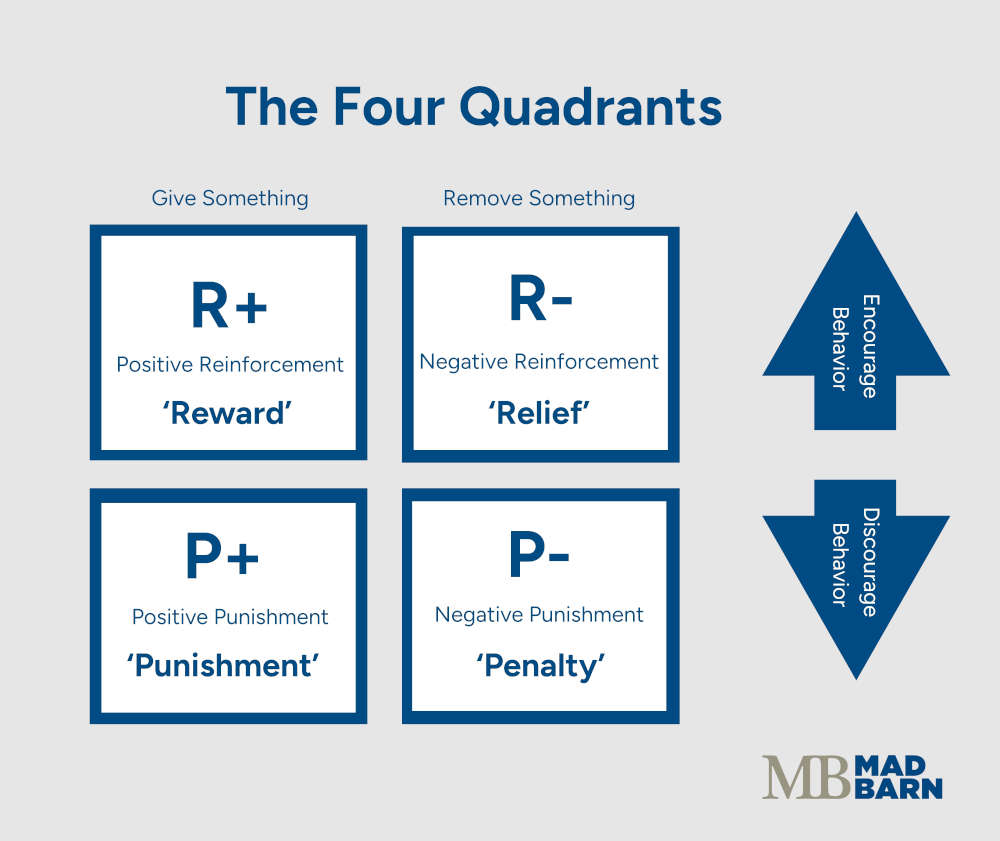
Negative Reinforcement
Negative reinforcement means removing or reducing something the horse finds aversive when the horse performs the desired behavior. [3][5]
The word “negative” refers to removing an aversive stimulus to reinforce a behavior, not punishment or harm. Most traditional ground handling relies on this principle. Halter pressure is applied, and when the horse steps forward or yields its head, the pressure is released. The release teaches the horse the desired response. [3]
Timing is the most important aspect of training horses to respond to cues. Releasing pressure too late lead the horse to associate the release with a separate behavior from the one intended by the handler, resulting in confusion for the horse later on. An incomplete release, in which the handler maintains tension throughout a session, may habituate the horse to pressure and the horse will be less likely to respond to pressure in the future. [5]
Research on applying learning theory to horses shows that incorrectly applied negative reinforcement, including poor timing or excessive pressure, can produce hyperreactive, evasive, and conflict responses. [5] Light, well-timed pressure followed by a clear, complete release provides the most effective learning outcomes, resulting in a more responsive horse. [5]
Positive Reinforcement
Positive reinforcement involves adding something the horse values, most often a food reward or a scratch in a preferred location, when the horse performs a desired behavior. In recent years, researchers have increasingly studied how positive reinforcement can be used during ground handling.
A small pilot study compared standard pressure-and-release handling with a combined approach that added food rewards while horses learned to walk over a tarp, a task that horses may perceive as frightening. More horses in the negative reinforcement-only group refused to walk over the tarp compared to horses in the combined positive and negative reinforcement group. This suggests that adding rewards is a more effective method of training. However, given the small sample size, the study’s conclusions should be interpreted with caution. [14]
The broader body of research on equine learning supports positive reinforcement as a valuable complement to negative reinforcement, particularly when horses are navigating novel or frightening situations. [5][14]
Positive reinforcement also requires appropriate timing. If food is provided to horses at inappropriate times, they can demonstrate mugging behavior, such as pushing or pawing to solicit treats. Mugging is typically the result of horses receiving food rewards inconsistently or without a clear cue structure. With consistent handling, horses learn that food follows a cue to perform a specific behavior, not simply their proximity to the handler. [3][5]
Timing, Consistency & Clarity
Timing, consistency, and signal clarity determine how quickly and reliably a horse learns a handling skill. [3][5]
Timing refers to how soon the reward or release follows the desired behavior. Short gaps produce clearer learning, while waiting too long to release pressure or provide a reward slows the lesson considerably. [3][5]
Consistency means applying the same cues in the same way across handlers and sessions. A horse allowed to crowd one person’s space but corrected by another receives contradictory information. The predictable result is the horse may try varying behaviors with new people, some of which may be undesirable or dangerous. [5]
Signal clarity means starting with the lightest cue likely to work and escalating only when there is no response. Beginning every request with high pressure creates horses that become dull to light cues and dependent on strong signals. [5]
Habituation vs. Desensitization
Habituation is the gradual, natural decline in a horse’s response to a stimulus over time. With enough repetition and lack of negative consequences, most horses eventually stop reacting strongly to something that initially concerned them. Habituation occurs without deliberate structure from the handler. [5][8][13]
Systematic desensitization is a structured method that intentionally manages this process. The stimulus is introduced below the horse’s fear threshold, then increased incrementally only as the horse demonstrates tolerance. The handler controls the intensity. [5][13]
A study comparing habituation, desensitization, and counterconditioning found systematic desensitization to be more effective than the alternatives. Horses in the desensitization group showed fewer flight responses, required fewer training sessions, and eventually responded calmly to the target stimulus. [13]
In the habituation group, some horses never fully settled. The study also found that some horses’ heart rates remained elevated even after their visible behavior appeared calm. This suggests that a horse may appear still or quiet while still feeling stressed. [13]
Follow-up research on sound habituation found that once horses habituate to a particular category of sound, the response tends to persist. However, horses clearly distinguish familiar from novel sounds, and habituation to one sound category does not automatically transfer to another. Each new type of stimulus warrants its own deliberate introduction. [8]
The Approach-and-Retreat Method in Practice
Approach and retreat is the practical expression of systematic desensitization. It applies to any stimulus a horse is uncertain of, from a plastic bag to a pair of clippers.
To begin desensitization: [5][13]
- Show the object or item from far enough away that it does not overwhelm the horse
- If the horse notices the object but stays still, pause for a moment
- Move the item away before the horse becomes more worried or tries to leave
- Let the horse relax before bringing the item a little closer and repeating the process
Over multiple repetitions, the horse learns that the stimulus appears, nothing harmful follows, and the stimulus retreats. Tolerance builds systematically and at the horse’s pace. [5][13]
Most importantly, horse owners should never increase the intensity or proximity of the stimulus while the horse is actively trying to escape. Pushing through peak arousal is called flooding, and evidence shows that it frequently worsens fear responses instead of resolving them. [5][13]
A flooded horse may learn to suppress flight behavior through helplessness rather than genuine comfort. This outcome is fundamentally different from the calm response that desensitization produces. [5]
Desensitization & Basic Handling Skills
Certain objects and procedures are predictably challenging for horses. Owners can build tolerance in low-pressure settings before these stimuli are encountered during routine management. [5][8][13]
Clippers and other electric tools produce both sound and vibration. Owners can take steps to ensure their horse is comfortable with these machines. Start by running clippers in the horse’s general environment, then decrease the distance gradually over multiple sessions before bringing the tool near the horse’s body. [5][8][13]
Spray bottles and hoses prompt spooky behavior, in part because the hissing sound captures the horse’s attention and also because the direction of water is unpredictable. Begin by spraying away from the horse, then toward the legs, and finally toward the body over several sessions. [5][8][13]
Veterinary and farrier equipment, including syringes, hoof picks, and rasps, may benefit from proactive exposure outside active procedures. Familiarity in a neutral setting can make these objects less significant when a procedure is underway. [5][13]
Using Grooming as a Training Opportunity
Daily grooming is one of the most underused training tools available. It involves full-body contact, handling sensitive areas, exposure to tools and novel sensations, and a consistent opportunity to assess the horse’s physical and emotional state before each ride or work session. A structured horse-grooming routine can support both care and training.
Horses have a mutual grooming response. Scratching a preferred spot, such as the base of the mane or the withers, often prompts the horse to extend its neck and groom in return. This response can serve as positive reinforcement. [14]
Grooming also provides an opportunity to identify early signs of pain. A horse that consistently pins their ears during curry combing, or is reluctant to pick up a particular foot, may be signaling pain worth investigating before the next farrier visit or ride.
Basic Skill #1: Approaching & Haltering a Horse
When training a horse, approach and haltering set the tone for every task that follows. When haltering goes smoothly, the horse begins the next task already settled. When the process is rushed, the horse begins tense.
Taking time at this stage pays off in every later interaction.
How to Safely Approach a Horse
Approach from the front and side of the horse, within its visual field, angling toward the shoulder rather than walking head-on. This angle keeps you within the horse’s field of vision, out of the blind spot directly in front of the muzzle, and away from the kick zone at the hindquarters. [7][12]
Speak before making contact to avoid startling the horse. A quiet, familiar voice gives the horse time to identify you. [2]
Walk at a consistent, unhurried pace. A fast, direct approach may activate the same instincts as a predator closing the distance. Slowing as you enter the horse’s pressure zone, or pausing briefly, gives the horse time to register your presence and settle before contact. [5][13]
Watch the horse throughout your approach. A horse that turns away, begins to move, or raises its head sharply is likely communicating discomfort. Pausing or retreating a step allows the horse to relax before you continue. [2][13]
Fitting & Placing a Halter Correctly
A halter that is too loose can catch on fencing or stall hardware. One that is too tight causes sustained pressure on sensitive facial bones and may create head-shyness over time. [15][16]
A correctly fitted halter has the noseband positioned approximately two finger-widths below the projecting cheekbones, with room to slide two stacked fingers comfortably beneath the noseband. The crownpiece should allow similar clearance behind the ears when buckled. [7]
When placing the halter, keep the process quiet and deliberate. Guide the noseband gently onto the nose, draw the crownpiece over one ear and then the other, and fasten the buckle at the side. Check the fit once the halter is in place. [7]
For horses that wear halters during turnout, breakaway or leather halters are essential. Standard nylon halters do not release under pressure, and horses can sustain serious neck and facial injuries if they become caught. [15][16]
Teaching Halter Acceptance to a Resistant Horse
A horse that swings away, backs up, or raises its head when the halter appears has learned to associate the equipment with something aversive. Instead of blaming the horse’s attitude, handlers should address the negative association with the halter. [3][5]
Use approach and retreat to train your horse to accept the halter. Show the halter at a distance, retreat before the horse moves into active avoidance, then return and step closer.
Over multiple short sessions, progress toward resting the halter on the horse, placing it without fastening it, and then securing the buckle. Pair each step with a food reward or a scratch. A structured halter-training program can help owners build these skills safely. [5][14][13]
Chasing or cornering a horse to halter it confirms the instinct that haltering is something to escape. Sessions take longer with a head-shy horse, but a horse that learns to stand and accept the halter willingly is safer and more manageable throughout life. [5][7]
If a previously easy-to-halter horse suddenly becomes resistant, rule out physical causes before assuming a training problem. Pain in the poll, ears, jaw, or teeth can make even a gently placed halter feel threatening. [17][18][19]
Basic Skill #2: Leading
Leading is the most frequently performed ground-handling task and the one with the widest variation in handler technique. Many experienced horse people develop habitual leading practices without examining whether those practices are clear, consistent, and safe.
A large-scale survey found that horses that were easier to handle and lead on the ground were also less likely to bolt or buck when ridden. The survey’s findings suggest that a horse’s leading behavior can provide useful information about their training, confidence, and responsiveness to cues. [4]
Correct Handler Position
Correct positioning helps the handler guide the horse clearly while reducing the risk of being pulled, stepped on, or caught in the lead rope.
To assume correct handler position: [5]
- Stand beside the horse’s shoulder, slightly to the outside
- Avoid standing ahead of the horse, where you would be pulling them, or behind the shoulder, where you may be less effective in communicating with the horse
- Hold the lead rope 10 to 18 inches below the snap with your dominant hand. Fold the remaining length in your non-dominant hand rather than leaving it to drag on the ground
- Never wrap the lead rope around your hand, wrist, or fingers. Lead-rope entanglement is among the most common causes of serious hand and finger injuries in equestrian settings
- Walk together, with the handler shaping direction and pace without maintaining constant pressure on the halter
Teaching a Horse to Lead Willingly
Clear, consistent cues help a horse learn to lead willingly and reliably.
To teach and reinforce this skill: [3][5]
- Begin with a verbal cue paired with a light forward signal from the lead rope
- Release the rope pressure as soon as the horse steps forward. This release signals that the horse responded correctly
- Practice the same cue-and-release sequence until the horse responds consistently
- Gradually practice in different environments, introducing unfamiliar settings and distractions only when the behaviors can be cued reliably in familiar settings
- Use the same clear cues in every setting rather than expecting the horse to remain equally focused in a new or distracting environment
Solving Common Leading Problems
A horse that lags while leading may be inexperienced, but they may also be in pain. Before escalating training pressure on a horse that consistently resists forward movement, check for hoof soreness, back pain, or hindlimb discomfort. Sudden changes in behavior may warrant a broader equine pain assessment. [20][21]
If soundness is not an issue, use a driving cue or a tap from a whip held in the non-leading hand instead of sustained pulling from in front. [5]
A horse that rushes ahead or barges has learned that the handler cannot enforce personal space. Brief backward pressure through the lead rope, applied consistently whenever the horse gets ahead of the handler’s shoulder, can re-establish the boundary over time. [5]
Opposition reflex, or the tendency for horses to pull against sustained pressure, is well documented in equine learning research. A horse held tightly often pulls more, not less. Yielding the lead rope slightly and reapplying pressure rhythmically tends to be more effective than continuously bracing. [5]
Basic Skill #3: Standing & Tying
Horses that stand quietly on a lead rope or in cross-ties while being groomed, trimmed, or examined are easier to manage and safer to handle. [4]
This skill may also relate to safer behavior in other handling and riding situations. Equine behavior survey data shows that horses with greater tolerance of restraint on the ground are associated with fewer reports of dangerous ridden behaviors, including rearing and bolting. [4]
Safe Tying Principles
Tie horses at or above wither height. Tying too low creates mechanical leverage that allows a panicking horse to exert tremendous force on the rope, potentially injuring the neck, face, or legs if the horse falls.
Use a quick-release knot or breakaway mechanism, such as a tie ring, at every tie point. A horse that panics when tied and cannot free itself may sustain severe injuries while fighting against a fixed point.
Cross-ties provide useful positional stability for grooming and tacking but carry their own risks. A horse that pulls back in cross-ties is restrained from both sides simultaneously, which can produce severe panic. Fit a breakaway piece or load-release clip to every cross-tie setup.
Building Tolerance for Restraint & Procedures
Owners should train for tying progressively. To build your horse’s tolerance for being tied: [5][13]
- Ask the horse to stand on a lead rope for short periods before expecting them to stand tied to a fixed point
- Reward stillness frequently during early sessions
- Build duration gradually, adding time only after the horse is consistently quiet for shorter intervals
Owners can apply the same progressive approach to specific tasks. A horse that accepts limb and foot handling during daily grooming is usually calmer for the farrier. A horse that is comfortable having the ears, mouth, and face touched will also be easier to examine.
Handling Young Horses & Foals
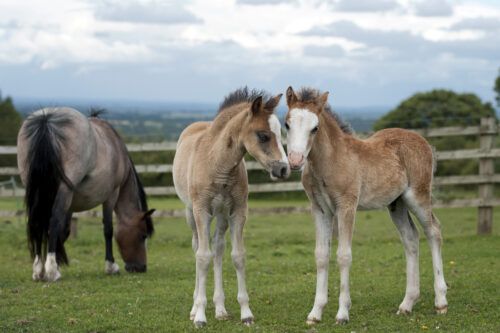
Early experiences shape how a horse responds to handling throughout life, but research on the effects of early handling is more nuanced. [22][23]
Intensive imprint training, the practice of handling a foal extensively during the first hour or two of life, has been promoted for decades as a way to produce permanently calm, human-friendly horses. However, the evidence has not consistently supported this claim. [22][23]
One study found that foals intensively handled during the first hour after birth exhibited patterns of insecure attachment to their dams, strong dam dependence, reduced play behavior, and impaired social competence with other horses compared with foals left undisturbed after birth. The researchers noted that these patterns persisted into adolescence. [22]
What has shown consistent benefit is the mare’s relationship with humans. Foals of mares that are calm and comfortable with people demonstrate greater tolerance of handling, regardless of the early intervention the foal receives. In effect, the mare teaches the foal how to respond to humans by modeling calm behavior in their presence. [23]
Practical skills worth introducing early include accepting approaches from multiple people, wearing and accepting a halter, leading with light rope contact, and standing for foot handling. These skills are best introduced in short, positive sessions that end on a successful response. [23]

Building Safer Basic Horse Handling Skills
Basic horse handling is the foundation of safe, reliable interactions during everyday care, training, veterinary treatment, and farrier work. Approaching, haltering, leading, tying, grooming, and handling the limbs and feet are learned skills that improve through clear cues, consistent expectations, and regular practice. [1][3][4][5]
Effective handlers pay attention to the horse’s perspective throughout each interaction. Changes in posture, facial expression, or movement can reveal tension before it escalates into avoidance, flight, biting, or kicking. Responding to these early signals by pausing, reducing pressure, or adjusting the task helps protect both horse and handler while supporting more confident behavior. [1][2]
Learning theory provides a practical framework for teaching handling skills. Light pressure followed by an immediate release can clarify the desired response, while appropriately timed rewards can strengthen cooperation and help horses form positive associations with unfamiliar tasks. [3][5][14]
Safe horse handling develops through observation, preparation, and repetition. By reading body language, using well-timed reinforcement, and building tolerance gradually, handlers can create clearer communication and more dependable responses. These habits make routine care easier while supporting the horse’s welfare, confidence, and long-term ability to work safely with people. [1][2][3][13]
Frequently Asked Questions
Here are some frequently asked questions about safe and effective horse handling:
Basic horse handling includes the everyday skills needed to care for and manage a horse safely. These skills include approaching, catching, haltering, leading, tying, grooming, and handling the feet. They also prepare a horse to stand calmly for veterinary examinations, farrier visits, and other routine procedures. Consistent handling builds clearer communication and makes future training safer and more reliable.
Good horse handling skills are important because many horse-related injuries occur during activities on the ground. Kicks, bites, and entanglement in lead ropes or reins can cause serious harm to both horses and handlers. Understanding equine behavior and learning principles helps handlers recognize risks early and respond more safely. Strong ground handling skills may also support safer behavior during ridden work.
Safety equipment for handling horses should include closed-toe footwear with a solid heel, preferably purpose-made riding or barn boots. Gloves can protect the hands when working with lead ropes or lunge lines, while fitted clothing reduces the risk of fabric catching on equipment or the horse. An ASTM-SEI certified safety helmet is strongly recommended when handling young, unfamiliar, or reactive horses. Lead ropes should always be folded loosely and never wrapped around the hand, wrist, or fingers.
To safely approach a horse, move toward the front side at an angle to the shoulder so the horse can see you. Speak quietly before making contact and walk at a steady, unhurried pace. If the horse raises its head, turns away, or begins to move, pause or retreat slightly until it settles. Avoid approaching directly from behind or straight toward the muzzle because these are blind spots.
A stressed horse may raise its head, widen its eyes, flare its nostrils, tighten its jaw, or tense the muscles of the neck and hindquarters. The ears may pin back, snap rapidly between positions, or become fixed on a perceived threat. A clamped or rapidly swishing tail, bared teeth, or hindquarters turned toward the handler can indicate a more immediate risk of biting or kicking. When these signs appear, pause, create space, and reassess the situation before continuing.
The safest position when leading a horse is beside the shoulder and slightly to the outside, keeping at least 1 foot of space between you and the horse. This keeps the handler within the horse's visual field while providing control over direction and pace. Hold the lead rope about 10 to 18 inches below the snap and fold the remaining rope loosely in the other hand. Do not walk directly in front of the horse, fall behind its shoulder, or maintain constant tension on the halter.
Teaching a horse to lead willingly begins with a verbal cue and a light forward signal through the lead rope. Release the pressure completely as soon as the horse steps forward so the correct response is reinforced. Practice the same cue-and-release sequence in gradually more distracting environments. If a horse consistently resists moving forward, investigate possible hoof, back, or limb pain before increasing training pressure.
A horse's halter should fit securely without placing constant pressure on sensitive facial structures. Position the noseband about two finger widths below the projecting cheekbones, with enough room to slide two fingers underneath it. The crownpiece should provide similar clearance above the ears. Horses wearing halters during turnout should use properly fitted leather or breakaway halters because standard nylon halters may not release if caught.
Teaching a head-shy horse to accept a halter requires gradual approach and retreat rather than chasing or cornering the horse. Present the halter at a comfortable distance, retreat before the horse actively avoids it, and slowly progress toward touching and placing it. Reward calm responses with food or a scratch in a preferred location. If a previously cooperative horse suddenly becomes head-shy, investigate possible pain involving the poll, ears, jaw, or teeth.
Both positive and negative reinforcement can be useful when handling horses if they are applied clearly and consistently. Negative reinforcement uses light pressure followed by an immediate and complete release when the horse responds correctly. Positive reinforcement adds something the horse values, such as a food reward or scratch, after the desired behavior. Avoid providing horses with food immediate following undesirable or dangerous behaviors, including pushing on a human, pawing, or searching a human for treats (i.e., mugging).
Basic horse handling sessions should generally be short enough for the horse to remain attentive and calm. For an adult horse learning a new ground skill, 10- to 20-minute sessions with a clear, positive endpoint are often productive. Young or anxious horses may benefit from even shorter sessions with gradual progress across multiple days. Continuing after the horse becomes tired, fearful, or frustrated can create conflict and weaken learning.
The difference between habituation and desensitization is the amount of structure used to introduce a stimulus. Habituation is the natural decline in a horse's response after repeated exposure to a stimulus without a negative consequence. Systematic desensitization introduces a stimulus below the horse's fear threshold and increases its intensity only when the horse demonstrates calm behavior. A horse that stands still may remain emotionally aroused, so handlers should assess more nuanced behaviors and body language rather than relying on stillness alone.
Desensitizing a horse to clippers, sprays, or unfamiliar equipment should begin with the stimulus at low intensity and a comfortable distance. Retreat before the horse escalates into active avoidance, allow it to settle, and then repeat the introduction gradually. Different types of sound, movement, and physical sensation may need to be introduced separately. Do not increase the intensity while the horse is attempting to escape, as overwhelming exposure can worsen fear instead of resolving it.
Teaching a horse to stand tied safely begins with short periods of quiet standing on a lead rope before attaching them to a fixed point. Reward stillness and increase the duration gradually only when the horse remains relaxed. When the horse is ready to be tied, use a quick-release knot or breakaway mechanism at or above wither height. Cross-ties should also include load-release clips or breakaway components in case the horse panics.
If a horse pulls back when tied, stay calm and avoid pulling forward against the horse. Sustained opposing pressure can intensify panic and cause the horse to pull harder. The tying system should allow an emergency release through a quick-release knot, breakaway component, or suitable tie ring. Afterward, return to progressive restraint training in a controlled setting before asking the horse to stand tied in a demanding environment.
Grooming can improve a horse's handling skills by providing regular practice with touch, tools, foot handling, and contact around sensitive areas. Scratching a preferred area, such as the withers or base of the mane, can also reinforce calm behavior. Grooming gives handlers an opportunity to notice changes in physical comfort and emotional state. Ear pinning during back grooming or reluctance to lift one foot may indicate discomfort that warrants investigation.
Handling a foal can begin with gentle contact after the mare and foal have had time to establish their bond, typically 24 to 48 hours after birth. Intensive handling during the first hours of life is not necessary and may interfere with normal bonding and social development. Short, calm sessions can gradually introduce approach, haltering, leading, and foot handling. A mare that is relaxed around people can also help teach her foal that human contact is safe.
Summary
Basic horse handling combines equine behavior knowledge with consistent cues, well-timed reinforcement, and safe positioning. Progressive training helps horses respond calmly during routine care, veterinary procedures, and farrier work.
- Approaching, haltering, leading, tying, grooming, and limb and foot handling are learned skills that improve with consistent practice
- Posture, facial expression, ear position, and movement can reveal tension before a horse becomes reactive
- Light pressure should be released immediately when the horse gives the desired response
- Safe leading depends on correct handler position, controlled rope handling, and awareness of sudden behavior changes
- Systematic desensitization builds tolerance by introducing unfamiliar stimuli below the horse's fear threshold
- Young horses benefit from short, positive handling sessions that respect healthy mare-foal relationships
References
- Hawson. L. et al. The roles of equine ethology and applied learning theory in horse-related human injuries. Journal of Veterinary Behavior. 2010.
- Ladewig. J. Body language: Its importance for communication with horses. Journal of Veterinary Behavior. 2019.
- Cooper. J. Comparative learning theory and its application in the training of horses. Equine Veterinary Journal. 1998.
- Romness. N. et al. Associations between owners' reports of unwanted ridden behaviour and in-hand behaviour in horses. Animals. 2020.
- McLean. A. and Christensen. J. The application of learning theory in horse training. Applied Animal Behaviour Science. 2017.
- Young. A. Equine Vision and Performance. UC Davis School of Veterinary Medicine. 2024.
- Jones. S. Basic Horsemanship Principles. Extension Horses, University of Arkansas Cooperative Extension Service. 2019.
- Janicka. W. et al. Persistency of horse habituation to distracting sounds. Journal of Veterinary Behavior. 2024.
- American Society for the Prevention of Cruelty to Animals. Interpreting Horse Body Language. ASPCA. 2024.
- Fitch. M. Treating the Difficult Horse and Mule. Proceedings of the 60th Annual Convention of the American Association of Equine Practitioners. 2014.
- Landsberg. G. and Denenberg. S. Behavior Problems in Horses. MSD Veterinary Manual. 2026.
- Porr. C. et al. Do You Have Horse Sense!. Virginia Cooperative Extension. 2016.
- Christensen. J. et al. Training methods for horses: Habituation to a frightening stimulus. Equine Veterinary Journal. 2006.
- Heleski. C. et al. Evaluating the addition of positive reinforcement for learning a frightening task: A pilot study with horses. Journal of Applied Animal Welfare Science. 2008.
- Marlin. D. et al. An online survey of equestrian headcollar use and safety. Equine Veterinary Education. 2021.
- Jousan. D. Basic Horse Safety. Mississippi State University Extension. 2023.
- Easley. J. Dental Disorders of Horses. MSD Veterinary Manual. 2024.
- Torres. S. Disorders of the Outer Ear in Horses. MSD Veterinary Manual. 2026.
- UC Davis Equine and Comparative Neurology Research Group. Trigeminal Nerve Pain/Headshaking. UC Davis School of Veterinary Medicine.
- Adams. S. Overview of Lameness in Horses. MSD Veterinary Manual. 2025.
- American Association of Equine Practitioners. Learn to Recognize the Signs of Laminitis. AAEP. 2021.
- Henry. S. et al. Neonatal handling affects durably bonding and social development. PLOS ONE. 2009.
- Lansade. L. et al. Effects of neonatal handling on subsequent manageability, reactivity and learning ability of foals. Applied Animal Behaviour Science. 2005.