English
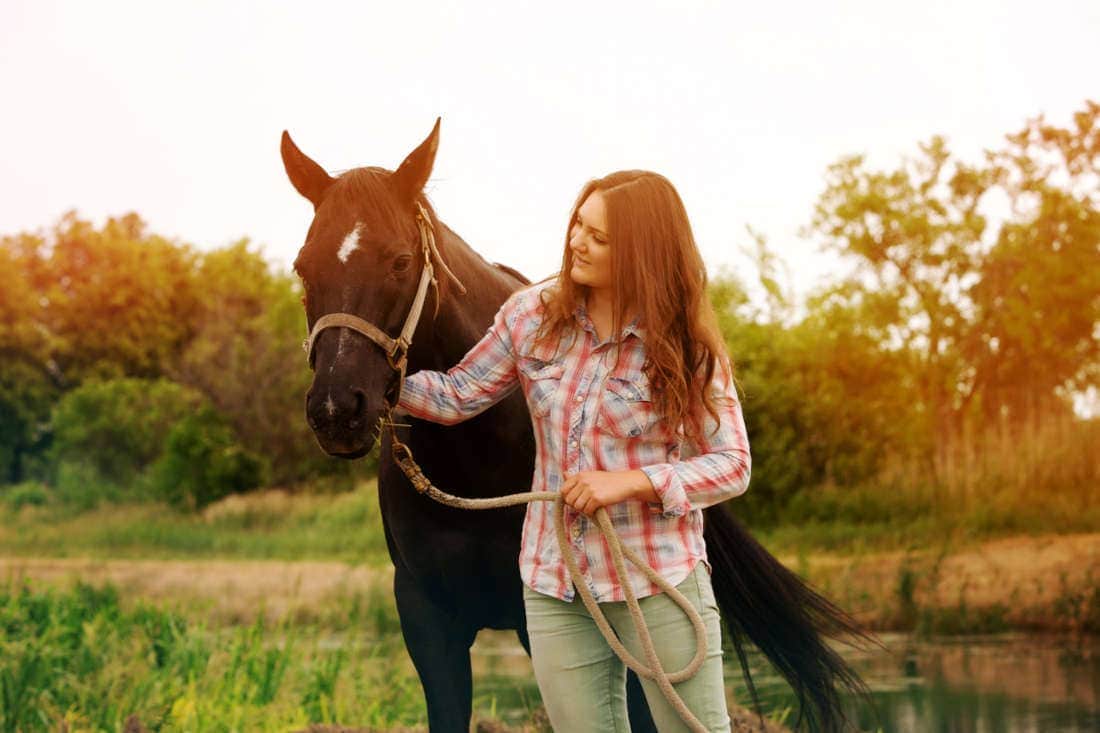
Learning how to lead a horse is one of the first skills of good horsemanship. A horse that leads calmly and confidently is easier to groom, load, tie, and train. Horses who pull, drag, or crowd the handler can turn routine tasks into a safety concern.
Almost every part of a horse’s daily routine requires some degree of leading. That’s why it’s important to ensure your horses are comfortable with leading and that all human handlers involved in their care are following consistent practices.
The principles of effective leading apply whether you are preparing a young horse for further training or correcting a habit that has developed over time. Staying calm and responsive to the horse’s body language can help caretakers anticipate sudden movements and adjust their tactics as needed.
Keep reading to review everything you need to know about how to lead a horse, including equipment, training methods, and troubleshooting tips.
What Does It Mean to Lead a Horse?
Leading is the act of guiding a horse from the ground using a halter and lead rope. The handler controls the horse’s speed and direction, using position, pressure, and body language to ask the horse to stop or change direction.
Leading is a fundamental horsemanship skill required for numerous routine tasks, including:
- Hitching or tying
- Loading
- Grooming
- Farriery
- Veterinary procedures
- Lungeing
Leading involves constant communication between horse and handler. The handler asks for a change in pace or direction, and the horse responds based on what they have learned to expect from that cue.
Because leading happens so often during basic care and handling, small habits are reinforced quickly. For example, if a horse drags their handler toward the gate a few times, they may keep testing that boundary.
A horse who is consistently asked to walk quietly beside their handler is more likely to settle into that pattern in the long-term.
What's your top priority with your horse's health?

What's your top priority with your horse's health?
Understanding Horse Behavior While Leading
Learning about horse behavior is the first step to effective leading. By understanding why horses behave the way they do, handlers and caretakers can anticipate sudden movements and possible sources of stress in advance.
Adjusting techniques proactively helps ensure safety for horses and handlers alike.
Prey Animal Instincts
Horses evolved as prey animals, meaning they are naturally adapted to detect and escape from potential threats. This strong flight response influences their behavior on the lead. They instinctively stay alert to their surroundings and are prepared to move quickly if something feels unsafe.
Their vision is one of the main ways they monitor the environment for possible threats. A horse’s eyes sit on the sides of the head, providing a wide, panoramic field of view that covers most of the area around the body. [1]
This broad field of view helps a horse detect movement from almost any direction, but it also leaves two blind spots: one directly in front of the nose and one directly behind the tail. [2]
Because horses can react quickly when startled, handlers should avoid standing in or approaching directly through these blind spots. The traditional leading position, near the shoulder and slightly ahead of the front legs, keeps the handler in the horse’s field of view and out of their direct path.
Being visible to the horse is only part of safe handling. Even when you are within the horse’s field of vision, your movement and body language can affect how the horse responds.
Research shows horses respond more calmly to handlers who approach with steady, attentive body language than to those who appear distracted or erratic. [3]
Reading Body Language on the Lead
Changes in body language often occur before a horse becomes more reactive. Handlers should monitor the horse’s ears, eyes, head and neck position, tail, and overall muscle tension while leading.
The ears provide useful information about a horse’s mood and attention. Horses adjust their ears and gaze in response to nearby people and activity. [4] Ears pinned flat back, especially with a tense jaw or swishing tail, often indicate discomfort or frustration.
Occasional tail swishing may just mean that flies are bothering the horse. Repeated or clustered signs, such as neck tension combined with a raised head and wide eyes, suggest a more significant concern. [5]
A horse with soft eyes, loosely carried ears, and a relaxed neck is generally comfortable with what is being asked. Recognizing this relaxed baseline makes changes easier to notice, giving the handler time to adjust position or offer reassurance.
Essential Equipment for Leading a Horse
As with other equestrian activities, the equipment you use for leading can make a big difference in reducing risk and improving outcomes.
Horses should be allowed to see, smell, and touch unfamiliar equipment before it is used. This gives the horse time to investigate the object and can reduce hesitation or startle responses before additional handling demands are introduced.
Halters
A halter is a piece of headgear used to catch, lead, tie, and handle a horse from the ground. A properly fitted halter should sit comfortably on the horse’s head without being loose enough to slip or tight enough to rub. An overly loose halter can catch on gates or fencing, while an overly tight halter places constant pressure on sensitive areas of the face.
A general guideline for fitting a halter is that two stacked fingers should fit comfortably under the noseband once the halter is fastened.
Halters can be made from several materials with different handling and safety characteristics:
- Leather: More likely to break under force, which can provide a safety advantage if the horse becomes caught.
- Nylon: Durable and affordable, but generally does not break easily under force. This style should not be left on an unsupervised or tied horse.
- Breakaway: Typically combines a nylon halter with a leather crownpiece designed to provide a point at which the halter can break away.
- Rope: Commonly used for groundwork and teaching horses to lead because the narrow rope can provide more precise pressure cues. Rope halters generally do not break under force and should not be left on an unsupervised or tied horse.
Lead Ropes & Chains
Standard lead ropes are made from cotton, nylon, or another durable material. They are typically 8 to 12 feet (2.4 to 3.7 m) long, providing enough room for routine leading while allowing the handler to maintain control.
Longer lead ropes, between 12 to 15 feet (3.7 to 4.6 m), are often used during training because they provide additional working distance and more space if the horse moves suddenly. Handlers must know how to fold and carry the excess safely to avoid becoming caught or tangled in the rope.
Lead chains are a more controversial type of equipment, sometimes used to provide additional control for horses who are strong, excitable, or still learning ground manners. They are often paired with leather halters and run from the lead rope through the halter rings, typically over the nose. [6] The hard metal of the chain provides a firmer cue to the horse when the handler applies pressure using the lead rope.
While a lead chain can help maintain safety in certain situations, this equipment is not a substitute for training. Heavy-handed use can create fear or resistance. In addition, misuse or unsafe attachment to the halter can create a serious injury risk for the horse. [6]
Many horses can learn effective leading without the use of a chain. For horses where a chain is preferred for leading, caretakers should receive detailed training from an experienced handler on safe use and attachment techniques.
Handler Attire & Safety Gear
Personal protective equipment (PPE) is important during routine horse handling, including leading.
Closed-toe boots with sturdy, nonslip soles help protect the feet and improve footing on wet or uneven ground. Gloves improve grip and help protect the hands from rope burn if a horse pulls unexpectedly. When working with a young, green, or unpredictable horse, a certified riding helmet provides additional protection during ground handling as well as riding.
Avoid loose clothing, scarves, and dangling jewelry that could become caught on equipment or the horse. When handling a horse alone, make sure another person knows your location and what you are doing.
Guide to Leading a Horse
The following steps outline the basic techniques for leading a horse safely.
It’s important for horses to receive consistent handling. Follow the same methods as other handlers who work with the horse to help maintain safe behavior and reinforce their training.
1) Position & Grip
The standard leading position places the handler at the horse’s shoulder, facing the same direction as the horse. Stand close enough to maintain a light connection through the lead rope but far enough away to avoid getting stepped on. [7]
Hold the lead rope roughly six to twelve inches below the halter with one hand, and fold the remaining slack loosely in the other.
Never wrap the lead rope around a hand, wrist, or fingers. If the horse spooks or pulls back suddenly, a wrapped rope can trap and injure the handler.
Leave enough slack for the horse to move their head naturally, but not so much that the horse can drift far ahead or fall behind.
2) Starting & Stopping
To ask the horse to move forward, step ahead and apply light, forward pressure to the lead rope, paired with a consistent verbal cue such as “walk on.” Release the pressure the moment the horse steps forward. This immediate release teaches the horse that moving forward is the correct response. [8]
To stop, slow your pace first. Apply gentle backward pressure to the lead rope while saying “whoa” or using another consistent cue. Release the pressure as soon as the horse stops. Horses learn most effectively when the release of pressure follows the correct response without delay. [9]
A well-trained horse leads calmly with a slack lead rope and does not crowd the handler or get overly distracted while walking forward or trying to stop.
3) Turning & Navigating Space
To turn, guide the horse’s head gently in the intended direction while continuing to walk forward. Whenever possible, turn the horse away from the handler rather than into the handler’s space. This reduces the chance that its shoulder or hindquarters will swing into the handler’s path.
In an open area, turning is straightforward. In a busy space such as a crowded barn aisle, check the position of other horses and handlers before beginning the turn. If the horse must turn toward you, maintain enough space to prevent crowding.
Leading Through Gates, Doorways, & Tight Spaces
Doorways, gates, and narrow aisles increase risk because they leave less room to maneuver. Slow down before entering and allow the horse to adjust their stride rather than rushing through. [10]
When space allows, walk beside the horse rather than directly in front of or behind so you can see the path ahead. Continue walking for a few steps after passing through, ensuring the horse’s hindquarters have cleared the opening before stopping.
If there is not enough room to walk safely beside the horse, or if you need to hold a gate open, stand at the entrance and calmly direct the horse through. Once the horse has cleared the opening, ask it to turn and face you so it learns to wait while you follow.
Table 1. How to lead a horse: handler cues and horse response guide
| Action | Handler Cue | Desired Response | Considerations |
|---|---|---|---|
| Start walking |
|
|
|
| Walk forward |
|
|
|
| Stop |
|
|
|
| Turn |
|
|
|
| Back up |
|
|
|
| Pass through a gate or tight space |
|
|
|
Training a Horse to Lead Well
Like other horse skills, effective lead training should start as soon as the horse is ready to learn. Consistent, calm handling and reinforcement of desired behavior help ensure the horse understands what is expected, which promotes safe handling for humans and horses alike.
Foundational Groundwork for Young or Green Horses
Young horses typically begin with basic halter training before being asked to lead. Early lessons include standing quietly while being haltered, yielding to gentle pressure at the poll and nose, and taking a single step forward or backward in response to light pressure.
Once the horse understands pressure and release in a controlled setting, introduce leading gradually. Start with short distances in a familiar, low-distraction area such as a quiet paddock or round pen.
Rushing a young horse before it understands pressure and release can create leading problems that take much longer to correct. Structured groundwork exercises can reinforce responsiveness and body awareness from the ground.
Reinforcing Good Leading Skills
Your horse’s leading skills are reinforced every time you interact, not just during training sessions. Accurate timing of pressure and release cues shape what horses learn.
If a horse rushes ahead, stop and ask them to step back before continuing. If they lag or lose focus, use a light forward cue and a verbal reminder to regain their attention. The goal is not to punish small errors or miscommunications, but to reset the expectation calmly whenever the horse moves out of position.

Common Leading Problems
Common leading problems in horses include pulling ahead, crowding the handler, lagging behind, refusing to move, spooking, and bolting. These behaviors can make routine handling stressful and pose a safety risk.
Most leading problems stem from unclear pressure-and-release cues, inconsistent handling, or undesirable behavior that has been reinforced unintentionally by the handler.
Research shows that horses with better in-hand skills demonstrate fewer dangerous behaviors under saddle. [11] Leading problems should be corrected early because repeated behavior can become learned and more difficult to change over time.
Pulling Ahead or Crowding the Handler
A horse is pulling ahead when it moves in front of the handler and creates tension on the lead rope. Crowding occurs when the horse moves too close to the handler’s space, increasing the risk of being stepped on, bumped, or pushed off balance.
These behaviors may occur when the horse is anticipating a destination such as a paddock or feed area, is distracted or excited, or has learned that moving out of position is allowed.
To correct the behavior, stop as soon as the horse moves ahead or enters the handler’s space. Ask the horse to return to the correct position beside you before continuing. Consistent repetition helps reinforce the expected leading position and is more effective than a single exaggerated correction.
Lagging Behind or Refusing to Move
A horse that lags or plants their feet may be distracted, uncertain, or resistant. Before treating the response as a training problem, rule out physical discomfort, which can also make a horse reluctant to move forward.
If the horse is distracted or resistant, combine a light, rhythmic cue on the lead rope with a forward step and a clear verbal cue. Release the pressure as soon as the horse moves.
Avoid pulling or increasing force. Repeated light cues followed by an immediate release teach the desired response more clearly.
Spinning, Bolting, or Spooking on the Lead
Sudden spins, bolts, and spooks are among the most difficult leading problems to manage because they happen quickly and can be triggered by various factors. Prevention begins with monitoring the horse’s body language and surroundings for early signs of tension or distraction.
If the horse spooks, resist the instinct to pull straight back on the lead rope, which can intensify the fear response. Stay to the side rather than directly in front, give the horse room to move its feet, and redirect its attention toward you.
Once the horse settles, calmly return to the leading position and continue.
Table 2. Common horse-leading problems and corrections
| Leading Problem | Possible Cause | Correction | Consideration |
|---|---|---|---|
| Pulling ahead |
|
|
|
| Crowding the handler |
|
|
|
| Lagging behind |
|
|
|
| Refusing to move |
|
|
|
| Spooking |
|
|
|
| Spinning or bolting |
|
|
|
How to Lead a Horse Safely and Confidently
Learning how to lead a horse safely begins with a clear position, a secure grip on the lead rope, and consistent communication. Standing near the horse’s shoulder allows the handler to remain visible while avoiding the horse’s direct path. The lead rope should always be folded loosely and never wrapped around a hand, wrist, or fingers.
Effective leading also depends on well-timed pressure and release. Immediate release after giving a cue helps the horse understand which response the handler is looking for. Consistent verbal cues and body language make those expectations even clearer.
If a horse begins pulling, lagging, crowding, or spooking during leading, calmly identify the likely cause and reset the exercise. Pain, poorly fitting equipment, and an overwhelming environment should be considered before the behavior is treated strictly as a training issue.
Good leading manners develop through repetition in everyday situations. Patient, predictable handling helps horses become calmer and easier to manage across many other activities. With appropriate equipment, attentive handling, and consistent cues, leading can become a calm and cooperative exchange for both horse and handler.
Frequently Asked Questions
Here are some frequently asked questions about leading a horse:
To properly lead a horse, stand near its shoulder, face the direction of travel, and maintain a light connection through the lead rope. Ask the horse to move, stop, or turn using consistent body language, verbal cues, and gentle pressure. Release the pressure immediately when the horse responds correctly. Keep enough slack for natural head movement without allowing the horse to rush ahead or drift behind.
When leading a horse, stand near its shoulder and slightly ahead of its front legs. This position keeps you within the horse's field of view while helping you avoid being stepped on or pushed into its path. Stay close enough to guide the horse without crowding it. Avoid standing directly in front of the horse or in the blind spot behind its tail.
A horse is traditionally led from the left, or near, side because most routine handling is performed from that side. However, a well-trained horse should be comfortable being led from either side. Practicing on both sides can improve the horse's responsiveness and make handling easier in situations where the usual position is not practical.
The safest way to hold a lead rope is to grip it approximately six to twelve inches below the halter while loosely folding the remaining slack in the other hand. Never wrap the rope around your hand, wrist, fingers, or body. A wrapped rope can tighten suddenly and trap or seriously injure you if the horse pulls back, bolts, or spooks.
A lead rope should have enough slack to let the horse carry and move its head naturally. However, the rope should not be so loose that the horse can move far ahead, fall behind, or step into it before the handler can respond. Aim for a light, responsive connection rather than constant tension. Adjust the amount of slack when navigating gates, crowded aisles, or other confined spaces.
The best halter for leading a horse depends on the horse's training and the handling situation. A properly fitted leather, nylon, or breakaway halter works well for routine leading, while a rope halter can provide clearer pressure-and-release cues during groundwork. Leather and breakaway halters can offer a safety advantage because part of the halter may give way under sufficient force. Whichever type is used, it should fit securely without slipping, rubbing, or placing constant pressure on the horse's face.
A chain lead is not necessary for most calm, well-mannered horses. It may provide additional control for a horse that is strong, excitable, or still developing its ground manners. The chain should reinforce light cues rather than be used as punishment, since forceful handling can create fear or resistance. A rope halter may be a better training option when the horse needs clearer pressure-and-release aids.
A horse should not be tied or left unsupervised while wearing a rope halter. Rope halters generally do not break under pressure, which can increase the risk of injury if the horse pulls back or becomes caught. Nylon halters may present a similar concern because they also tend to resist breaking. Use equipment appropriate for tying and supervise the horse according to safe handling practices.
To ask a horse to walk forward, step in the intended direction while applying light forward pressure to the lead rope. Pair the pressure with a consistent verbal cue such as "walk on." Release the pressure as soon as the horse takes a forward step so it can connect the response with the release. With repetition, the horse should begin moving from body language and the verbal cue alone.
To stop a horse while leading, slow your own pace before applying gentle backward pressure to the lead rope. Use the same verbal cue, such as "whoa," each time. Release the pressure immediately when the horse stops. Consistent timing helps the horse learn to respond to subtle changes in your movement rather than relying on strong rope pressure.
To turn a horse while leading, gently guide its head in the intended direction while continuing to move forward. Whenever possible, turn the horse away from you so its shoulder and hindquarters do not swing into your space. Check the surrounding area before turning in a busy aisle or confined location. If the horse must turn toward you, maintain enough personal space to avoid being crowded.
To lead a horse safely through a gate or narrow space, slow down before entering and allow the horse to adjust its stride. Walk beside the horse when there is enough room, and continue forward until its hindquarters have completely cleared the opening. If the space is too narrow to pass through together safely, calmly send the horse through, then ask it to turn and face you while it waits.
A horse may pull ahead or crowd its handler because it is anticipating feed, turnout, or another desired destination. The behavior can also become established when rushing has worked in the past. Stop as soon as the horse moves ahead of the correct position, ask it to step back, and resume only when it is calm and beside you. Consistent resets teach the horse that walking quietly is the quickest way to continue.
If a horse refuses to move while being led, first consider whether pain, discomfort, or poorly fitted equipment could be causing the resistance. If the horse is distracted or testing the boundary, use a clear forward cue with light, rhythmic pressure. Release the pressure immediately when the horse steps forward. Avoid pulling continuously or escalating force, as this can increase resistance without clarifying the desired response.
If a horse spooks while being led, stay to the side and avoid pulling straight back against the lead rope. Give the horse enough room to move its feet without allowing yourself to be pulled directly into its path. Use calm, familiar cues to redirect its attention and wait for the tension to ease. Once the horse settles, return to the normal leading position and continue calmly.
A horse becoming anxious on the lead may raise its head, tense its neck or jaw, widen its eyes, pin its ears, or swish its tail repeatedly. One isolated behavior may have a simple explanation, such as tail swishing in response to flies. Several signs appearing together are more likely to indicate pain, frustration, or fear. Recognizing changes from the horse's normal relaxed posture gives the handler time to respond before the behavior escalates.
Teaching a young or green horse to lead begins with standing quietly for the halter and yielding to gentle pressure around the nose and poll. Introduce single forward and backward steps in a quiet, familiar area before asking the horse to travel farther. Release the pressure as soon as the horse gives the correct response. Increase distance and environmental distractions gradually as the horse becomes consistent and confident.
Fixing a horse that does not lead well starts with identifying whether it pulls, crowds, lags, refuses to move, or becomes reactive. Rule out physical discomfort and poorly fitted equipment before treating the problem as a training issue. Use clear cues, immediate pressure release, and calm repetition to reset the expected position and pace. Every routine leading interaction should reinforce the same boundaries used during formal groundwork.
When leading a horse, wear closed-toe boots with sturdy, non-slip soles to protect your feet and improve traction. Gloves can improve grip and reduce the risk of rope burns if the horse pulls unexpectedly. Avoid loose clothing, scarves, and dangling jewelry that could become caught. A certified riding helmet provides additional protection when handling young, green, or unpredictable horses.
Leading two horses at once is generally not recommended because it limits the handler's ability to control each horse and maintain safe spacing. The horses may crowd one another, kick, bite, or become tangled in the lead ropes. An unexpected reaction from either horse can also place the handler in a dangerous position. Leading horses individually improves human-horse communication and allows the handler to respond promptly to changes in behavior.
Summary
Leading a horse safely depends on appropriate equipment, correct handler positioning, and clear, consistent cues. Attentive handling and well-timed pressure and release help establish calm, responsive leading behavior.
- A properly fitted halter and safely folded lead rope help the handler maintain control without restricting the horse's natural movement
- The handler should walk near the horse's shoulder, remain visible, and avoid standing directly in front of or behind the horse
- Pressure should be released as soon as the horse gives the desired response so the cue is clear and consistent
- Young or inexperienced horses should begin with short lessons in a familiar, low-distraction environment
- Pulling, lagging, crowding, and spooking should be addressed calmly after checking for pain, equipment problems, and environmental stress
References
- Rørvang. M. et al. Sensory Abilities of Horses and Their Importance for Equitation Science. Frontiers in Veterinary Science. 2020.
- Saslow. C. Understanding the Perceptual World of Horses. Applied Animal Behaviour Science. 2002.
- Merkies. K. and Franzin. O. Enhanced Understanding of Horse-Human Interactions to Optimize Welfare. Animals. 2021.
- Barrera. G. et al. Exploring Horses' (Equus Caballus) Gaze and Asymmetric Ear Position in Relation to Human Attentional Cues. Animal Cognition. 2024.
- Torcivia. C. and McDonnell. S. Equine Discomfort Ethogram. Animals. 2021.
- Mitchell-Matheson. H. The Role of the Chain in Horse Handling and Training. Horse Journals. 2024.
- Bickel. B. Safe Horse Handling. Penn State Extension. 2024.
- Peerstrup Ahrendt. L. et al. Development of a Standard Test to Assess Negative Reinforcement Learning in Horses. Applied Animal Behaviour Science. 2015.
- McLean. A. and Christensen. J. The Application of Learning Theory in Horse Training. Applied Animal Behaviour Science. 2017.
- Loch. W. Safe Ground Handling of Horses. MU Extension. 2017.
- Romness. N. et al. Associations between Owners' Reports of Unwanted Ridden Behaviour and In-Hand Behaviour in Horses. Animals. 2020.
- Thompson. K. et al. A Critical Review of Horse-Related Risk: A Research Agenda for Safer Mounts, Riders and Equestrian Cultures. Animals. 2015.