English
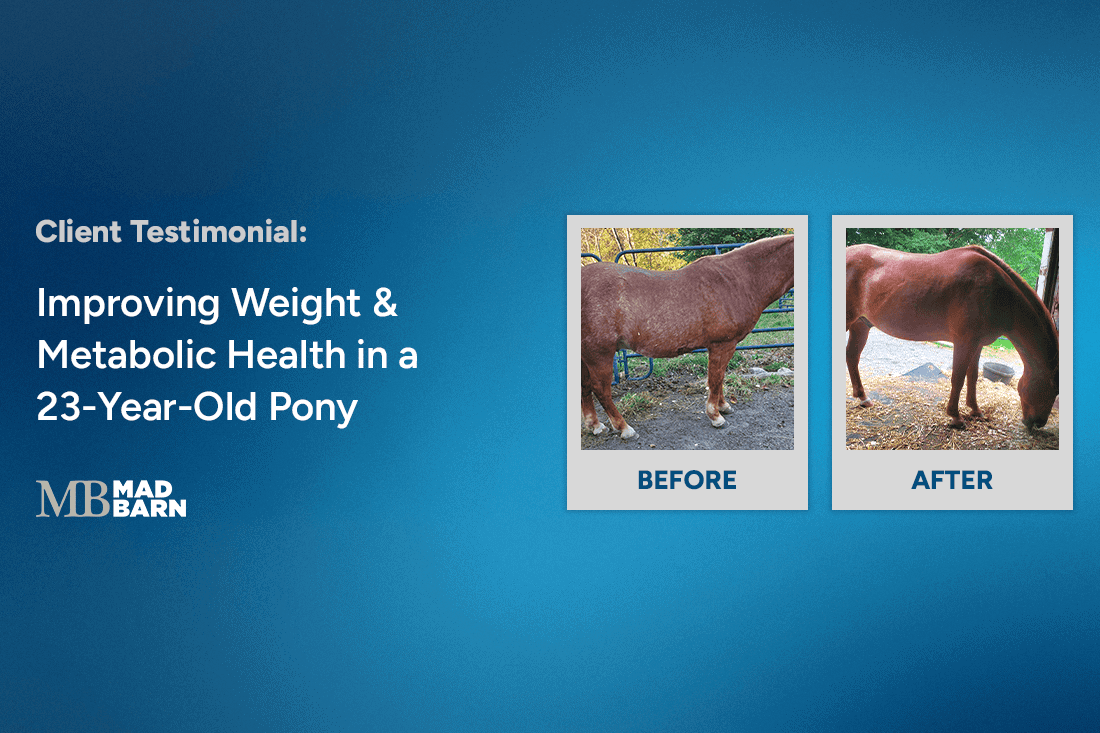
In October 2024, Hubble, a 23-year-old pony, returned to his owner after a one-year lease. During the lease, he was housed with a senior Thoroughbred.
Due to the high caloric needs of his companion, Hubble was managed on a much richer diet than he had at home. As a result, he gained weight rapidly and developed laminitis and severe hoof health issues.
At the time of his lease ending, Hubble weighed 780 lb (353 kg), which was approximately 200 lb (90 kg) above his ideal body weight. His owner reported several concerns including low energy levels, stiffness, obesity, metabolic health, and chronic laminitis that lasted for over 6 months.
Once Hubble’s lease ended and he returned home, his owner’s goal was to support healthy weight management, metabolic health, and hoof health by replacing commercial grain and free-choice hay with a more controlled diet.
Presentation Prior to Diet Intervention
At the end of Hubble’s lease, his owner’s main concerns about his health were:
- Equine metabolic syndrome
- High insulin
- Laminitis
- Obesity
- Hoof health deterioration
In January 2024, Hubble’s blood insulin level was >200 µIU/mL, suggesting impaired insulin sensitivity. Combined with his weight exceeding ideal, and presence of significant fat deposits on his neck, shoulders, and hindquarters, these findings were consistent with Equine Metabolic Syndrome (EMS).
Due to high insulin levels combined with an uncontrolled diet, Hubble experienced acute laminitis in spring 2024 that continued into chronic laminitis over the next six months. This resulted in hoof health issues, including:
- Bruising
- Bleeding
- Rotation in both front feet
- Mild hind-foot laminitis
- Later signs of a stretched white line
- Poor hoof quality
The following photos were provided of Hubble in October 2024, prior to a diet evaluation:
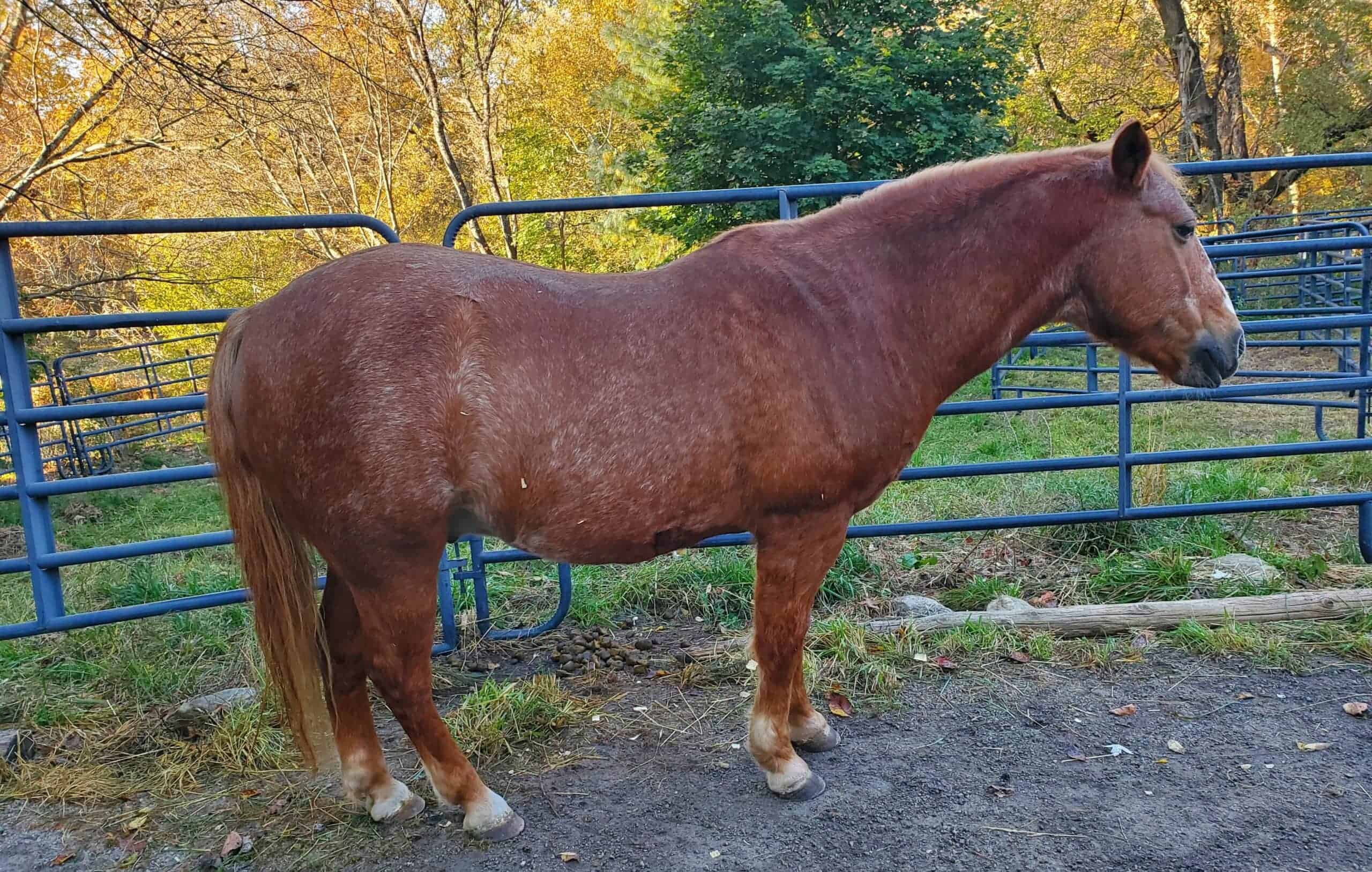 Hubble, Before
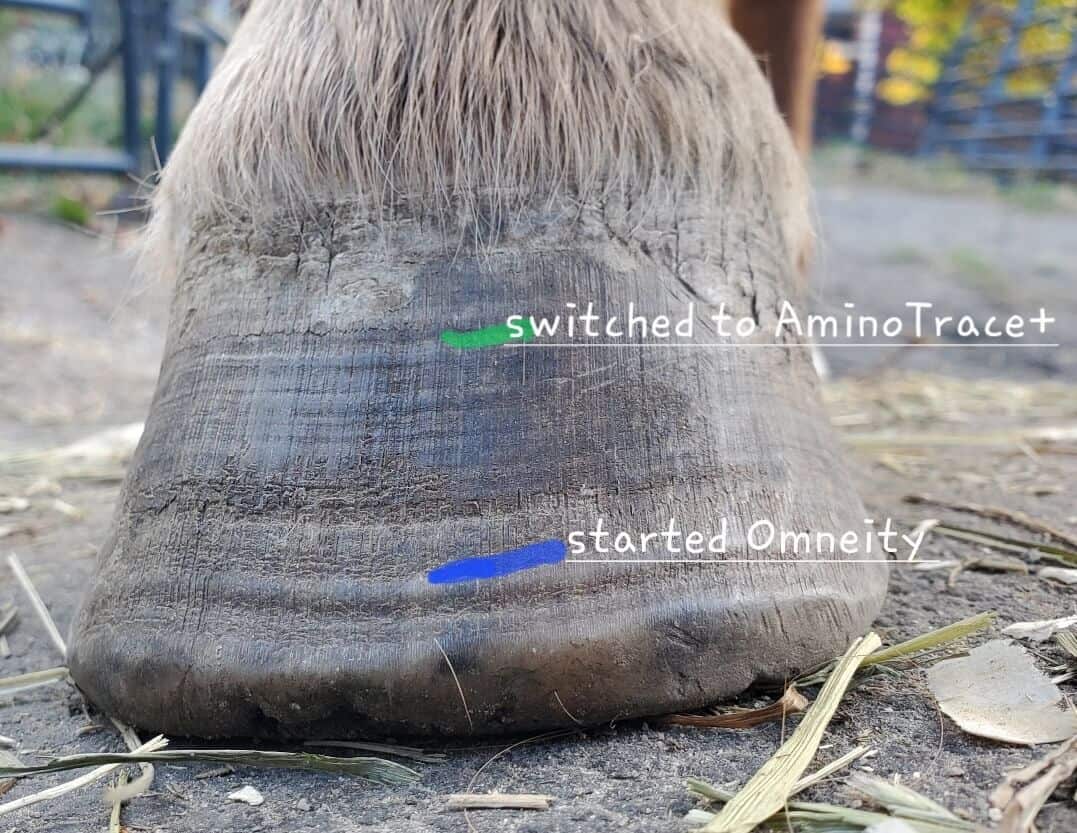 Hubble’s Hoof
Horse History
Although Hubble had always been an easy keeper, his weight was well-managed before the lease. In September 2023, he was sent out on lease.
At the new barn, his diet and management changed significantly because he was housed with a hard keeper Thoroughbred on a richer feeding program. His hay access increased from a more controlled forage system, using slow feeders or hay puzzles, to free-choice loose hay, and the quality of hay also appeared to be higher.
His grain intake also changed. Previously, Hubble only received a minimal grain ration to carry his vitamin and mineral supplement, but at the new barn he was given larger grain meals and additional grain-based treats between feedings. He also managed to eat some of the feed given to his companion.
Following these changes, he gained weight rapidly and developed a hard crest, along with visible fat deposits on his shoulders and hindquarters.
In January 2024, Hubble experienced mild laminitis and lethargy, prompting a veterinary visit. Bloodwork showed insulin levels over 200 µIU/mL, leading to a diagnosis of EMS. Over the following months, he remained chronically laminitic, continued to gain weight, and developed worsening metabolic symptoms along with very poor hoof health.
The owner reached out to Mad Barn for dietary support. After reviewing Hubble’s diet and health concerns, a Mad Barn equine nutritionist recommended:
- Removing grain and high sugar treats from the diet
- Adding Mad Barn’s Omneity® Premix to the diet to supply minerals and vitamins
- Submitting a hay test to determine sugar content in the forage
- Restricting Hubble’s hay access to reduce intake
Omneity® Premix was subsequently introduced to Hubble’s diet and led to visible improvements in hoof health. Omneity provides 20 mg of biotin and balanced vitamin and mineral content to support faster growth of strong hooves.
Omneity® is an all-in-one nutritional supplement formulated to balance forage-based diets and provide essential nutrients that support healthy hoof growth, skin and coat quality, immune function, and overall well-being.
However, the individuals leasing Hubble were unable to implement all recommendations made by the nutritionist, such as restricting access to hay. His caretakers prioritized keeping hay available for their hard keepers.
They also continued feeding treats, and Hubble continued to have access to the higher-calorie grain Triple Crown Senior was provided to his senior companion.
Although this senior feed is lower in non-structural carbohydrates (NSCs) than other grain feeds, it exceeds the recommended 10% maximum of starch and sugar for horses with insulin resistance.
As a result, dietary factors contributing to Hubble’s laminitis and metabolic dysfunction remained unaddressed. His veterinarian prescribed Thyro-L during this period, but Hubble did not lose weight while his calorie intake and dietary starch and sugar remained uncontrolled.
In the summer of 2024, Hubble did not shed his coat normally, raising concerns about PPID alongside his chronic laminitis. Hubble was reluctant to move, very stiff, and uninterested in his environment.
In October 2024, Hubble’s lease ended, and he returned home to his owner, Robin. This marked a major turning point in his case and the beginning of his recovery.
What's your top priority with your horse's health?

What's your top priority with your horse's health?
Weight Issues
Horses experience weight gain when their calorie intake exceeds their calorie use. Easy keepers can maintain weight on relatively little feed, making unrestricted forage and additional concentrate meals challenging for these horses.
For overweight horses with metabolic concerns, reducing calorie intake is necessary to support weight loss and improve insulin sensitivity. [1][2]
Weight management benefits from a controlled, forage-based feeding program that reduces excess calories while continuing to meet nutritional needs.
Key feeding strategies include: [1][2]
- Removing unnecessary grain and calorie-dense treats
- Measuring hay rather than offering it free-choice
- Providing adequate protein, vitamins, and minerals despite the reduced feed intake
Gradually replacing part of the hay ration with straw can help lower calorie intake while preserving forage bulk. Slow feeders can also extend eating time when forage quantities are restricted. These strategies require individual assessment, including consideration of dental health and monitoring for digestive problems. [1]
In Hubble’s case, free-choice hay and access to additional grain contributed to substantial weight gain during his lease. Once he returned home, his owner could control his feeding program more closely.
Removing grain and high-sugar treats, managing access to hay, and incorporating straw became central components of Hubble’s weight loss plan.
Metabolic Health
Equine Metabolic Syndrome (EMS) is a condition characterized by metabolic changes that increase a horse’s risk of laminitis.
Its central feature is insulin dysregulation, which can include persistently elevated insulin, an excessive insulin response after eating, or reduced tissue sensitivity to insulin. Insulin normally helps regulate blood sugar by supporting the uptake of glucose (sugar) into cells. [1]
Horses with EMS often have recognizable weight and body condition changes, although the condition can also occur without obesity. Common features of EMS include: [1]
- A tendency to gain weight easily
- Difficulty losing weight
- A cresty neck or other abnormal fat deposits
- A history of laminitis
Managing insulin dysregulation requires attention to the diet’s sugar and starch content as well as total calorie intake.
Testing forage helps guide feed selection, while regular veterinary monitoring helps assess whether insulin regulation is improving. These measures remain important even after visible weight loss. [1]
Older horses with metabolic concerns may also need evaluation for Pituitary Pars Intermedia Dysfunction (PPID). Horses with PPID may or may not also have insulin dysregulation.
Delayed shedding or a persistently long coat can indicate PPID, but veterinary testing is needed to assess suspected cases. [1][3]
In Hubble’s case, markedly elevated insulin, excess body fat, and recurrent laminitis made metabolic management a priority. His failure to shed normally in summer 2024 also raised concern about PPID, although the available history does not confirm a diagnosis.
As a result, Hubble’s updated feeding program focused on controlling dietary sugar and starch exposure alongside the calorie restriction needed for weight loss.
Laminitis & Hoof Health
Laminitis is a painful hoof condition that damages the laminae, the tissues connecting the coffin bone to the hoof wall. When these tissues weaken, they can lose their ability to support the bone within the hoof capsule. Severe damage can allow the coffin bone to rotate or sink. [4]
Laminitis can develop through several different processes, including: [4]
- Metabolic disorders that involve elevated insulin, including EMS and PPID
- Severe illness involving widespread inflammation, such as sepsis
- Prolonged excessive weight bearing on one limb when the opposite limb is injured
Endocrinopathic laminitis, associated with hormonal or metabolic dysfunction, is particularly relevant to horses with elevated insulin. Prolonged high insulin levels can damage the laminae, making insulin regulation an important consideration in managing affected horses. [4]
Laminitis can also cause lasting changes in hoof structure and growth. These may include uneven growth rings, a widened or stretched white line, and flattening or bulging of the sole. Identifying and managing the underlying cause is essential to reducing the risk of further episodes. [4]
 Illustration: Dr. Ana Mesa, PhD
In Hubble’s case, chronic laminitis accompanied markedly elevated insulin and substantial weight gain. His reported hoof changes included rotation in both front feet and a stretched white line.
Although his owner observed improvements in hoof quality after introducing Omneity® Premix, laminitis persisted while his feeding program remained uncontrolled.
After he returned home, dietary management and a more frequent trimming schedule became central parts of his recovery plan.
Initial Diet
Toward the end of the lease, Hubble’s diet consisted of:
- Free-choice access to hay
- Access to Triple Crown Senior
- Alfalfa pellets
- Thyro-L
- Treats, including whole apples and other high-sugar items
- Omneity® Premix
Hubble’s initial feeding program provided more calories than he needed, based on his substantial weight gain and excess body fat. Free-choice hay, access to his companion’s senior feed, and high-sugar treats made it difficult to control his calorie, sugar, and starch intake.
Although Omneity® Premix was introduced to address vitamin and mineral gaps, supplementation alone did not resolve other concerns associated with his feeding program. Reducing excess calorie intake and managing sugar and starch exposure remained priorities.
Because feed quantities and hay analysis results were not available, his total energy intake, vitamin and mineral coverage, and dietary sugar and starch content could not be reliably calculated.
Instead, estimates were based on regional averages for hay nutrient composition and approximate feed quantities.
Interventions
Following the consultation with Mad Barn equine nutritionists, an updated diet was proposed to address Hubble’s concerns.
Table 1. Summary of Diet Intervention
| Horse Issue | Nutrition Goal | Intervention | Notes |
|---|---|---|---|
| Chronic laminitis | Reduce starch and sugar in diet |
|
|
| Obesity | Reduce calories in the diet |
|
|
| Hoof health issues | Improve hoof quality and growth |
|
|
Balancing the Diet
After Hubble returned home, his updated diet was designed to reduce his calorie and sugar intake. Grain was removed completely.
Hay remained the foundation of the ration, but intake was now carefully managed using troughs, hay nets, natural hay puzzles and Hay Pillows rather than being offered in a way that allowed fast, less regulated intake.
Hubble’s owner intentionally sourced more mature hay with reduced calorie content. Straw, which has lower NSC content than grass hay, was mixed into the hay nets to slow consumption and decrease total sugar intake.
Adding straw increased the bulk of Hubble’s forage ration and helped reduce the stress associated with being on restricted forage diet.
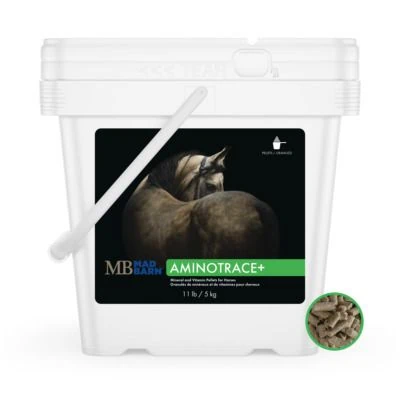
Hubble’s owner also switched from Omneity® Premix to Mad Barn’s AminoTrace+ to provide more advanced vitamin and mineral support.
Although Omneity® Premix had already improved Hubble’s hoof health, his chronic laminitis warranted additional nutritional support for hoof growth and repair. AminoTrace+ provides enhanced levels of essential nutrients that support hoof health, including zinc, copper, and vitamin E.
AminoTrace+ also provides elevated levels of key amino acids, particularly methionine, to support hoof health in horses with EMS on a restricted diet.
While straw is useful for reducing overall calorie intake, it has a lower nutritional value than grass hay, particularly in protein and essential amino acids. When horses consume more straw as part of a restricted diet, they may need additional amino acids to support healthy hoof growth.
AminoTrace+ helped address this concern by supplying essential amino acids and other nutrients needed for strong hoof growth.
Updated Diet
After Hubble returned home, his owner implemented the controlled feeding program recommended by Mad Barn nutritionists. His updated diet consisted of:
- Restricted quantities of mature grass hay, offered through slow-feeding systems
- Straw mixed with hay in hay nets
- AminoTrace+, replacing Omneity® Premix
- 1 handful of soaked alfalfa pellets
- Loose salt
- Low-sugar treats, such as pumpkin seeds, replacing apples and other high-sugar treats
Hubble’s owner used hay nets, troughs, and natural hay puzzles to help slow forage consumption. Commercial grain, including access to his former companion’s senior feed, was removed.
The updated feeding program focused on reducing calorie, sugar, and starch intake while maintaining forage access throughout the day. AminoTrace+ provided vitamin, mineral, and amino acid support as part of his restricted feeding plan.
Outcome
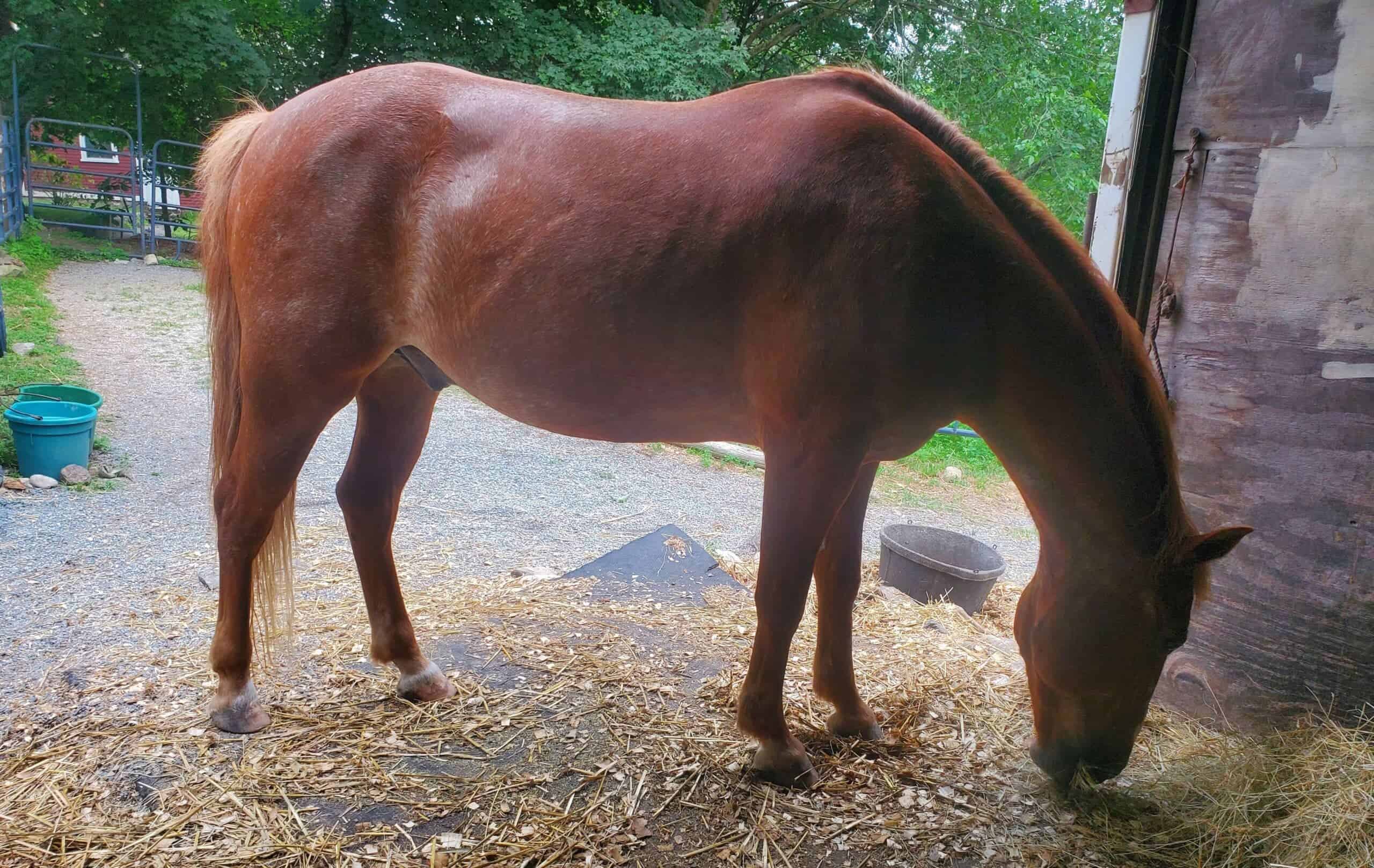
Hubble’s improvement following his return home was gradual but substantial. He began losing weight and his hoof health noticeably improved over the following months.
By December 2024, Hubble’s hooves began to regain concavity around the frog, and the chronic thrush he developed over his lease was rapidly clearing.
In January 2025, repeat bloodwork showed that his insulin was still elevated, but it had decreased significantly compared to the high levels seen in the previous year. This suggests that while he was still recovering, his metabolic status had improved.
Some of the most dramatic changes were seen in his feet. Midway through the lease, in February 2024, Omneity® Premix was introduced to a diet previously deficient in vitamins and minerals, and improvements in hoof health were observed. However, the unchecked laminitis prevented full resolution of the hoof health issues.
Switching from Omneity® Premix to AminoTrace+ provided additional nutritional support for both metabolic and hoof health. This was especially important because Hubble’s updated diet included more straw, which is lower in calories and sugar but also lower in overall nutritional value compared to hay.
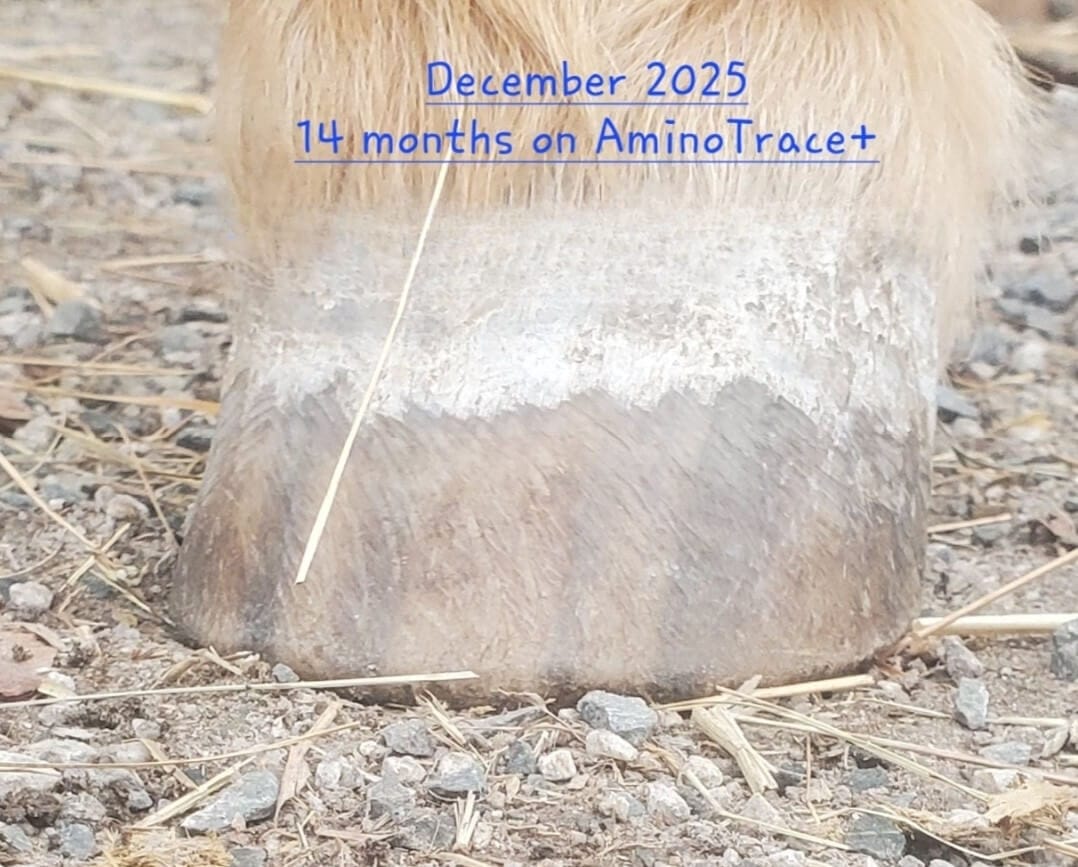
Once Hubble’s diet and metabolic health were better managed, his hoof health continued to improve steadily. By December 2025, over one year after his new diet was implemented, his farrier said his hooves had greatly improved.
 Hubble, After
 Hubble’s Hoof
Hubble’s body condition and comfort also improved substantially. His cresty neck and fat pads around the tail disappeared, and he lost an estimated 200 lb (90 kg). He also regained his willingness to move.
One especially meaningful sign of his recovery occurred when Hubble enthusiastically trotted across stone dust and gravel on frozen ground to greet his owner. This represented a substantial improvement in comfort and mobility compared to the height of his chronic laminitis, when he experienced severe hoof pain.

Discussion
Hubble’s case highlights how quickly an easy keeper can develop serious metabolic and hoof health problems when calorie, sugar, and starch intake are not carefully controlled.
Although Hubble had been managed successfully before his lease, the combination of free-choice access to richer hay, larger grain meals, high-sugar treats, and access to his companion’s senior feed contributed to rapid weight gain and worsening equine metabolic syndrome.
His very high insulin levels, obesity, hard crest, and fat deposits all indicated that his diet and management were not supporting healthy metabolic function.
These issues were closely connected to his chronic laminitis. In insulin-resistant horses, diets that are too high in calories or hydrolyzable carbohydrates can increase laminitis risk and make recovery more difficult.
In Hubble’s case, adding vitamin and mineral support with Omneity® Premix helped improve hoof quality visually, but it could not fully resolve the underlying problem while the diet remained too calorie- and sugar-dense.
The turning point came when Hubble returned home and his owner was able to implement a more controlled feeding program.
Removing grain and high-sugar treats, restricting forage intake, and diluting grass hay with straw helped reduce total calorie and sugar intake while still allowing Hubble to consume forage throughout the day. Using hay nets, troughs, natural hay puzzles, and Hay Pillows also helped slow intake and reduce the stress of dietary restriction.
“His farrier said his hooves officially are no longer growing like a metabolic pony. There are no more event rings showing, no more bruising, and the white line is no longer stretched. His hoof capsule is nice and tight with no heat.”
— Feedback From OwnerMad Barn’s AminoTrace+ provided elevated levels of key nutrients and amino acids, including methionine, to support hoof growth and quality while Hubble remained on a restricted diet.
Over time, these changes led to substantial improvements in Hubble’s condition, comfort, and hoof health. His insulin levels decreased significantly, his hard crest and fat pads resolved, and he lost approximately 200 lb.
Most notably, his hooves improved from showing signs of chronic laminitic damage to growing with a tighter, healthier hoof capsule and no remaining heat, bruising, stretched white line, or event rings.
This case emphasizes that hoof supplements alone cannot overcome the effects of an uncontrolled diet in a metabolically compromised horse. For horses with EMS and chronic laminitis, lasting improvement depends on addressing the root causes through controlled calorie intake, reduced sugar and starch exposure, appropriate forage management, regular hoof care, and targeted nutritional support.
References
- Durham. A. E. et al. ECEIM consensus statement on equine metabolic syndrome. Veterinary Internal Medicne. 2019. View Summary .
- Geor. R. J. and Harris. P. Dietary Management of Obesity and Insulin Resistance: Countering Risk for Laminitis. Veterinary Clinics of North America: Equine Practice. 2009. View Summary .
- Spelta. C. Equine pituitary pars intermedia dysfunction: current perspectives on diagnosis and management. VMRR. 2015. View Summary .
- Patterson-Kane. J. C. et al. Paradigm Shifts in Understanding Equine Laminitis. The Veterinary Journal. Elsevier. 2018. View Summary .