English
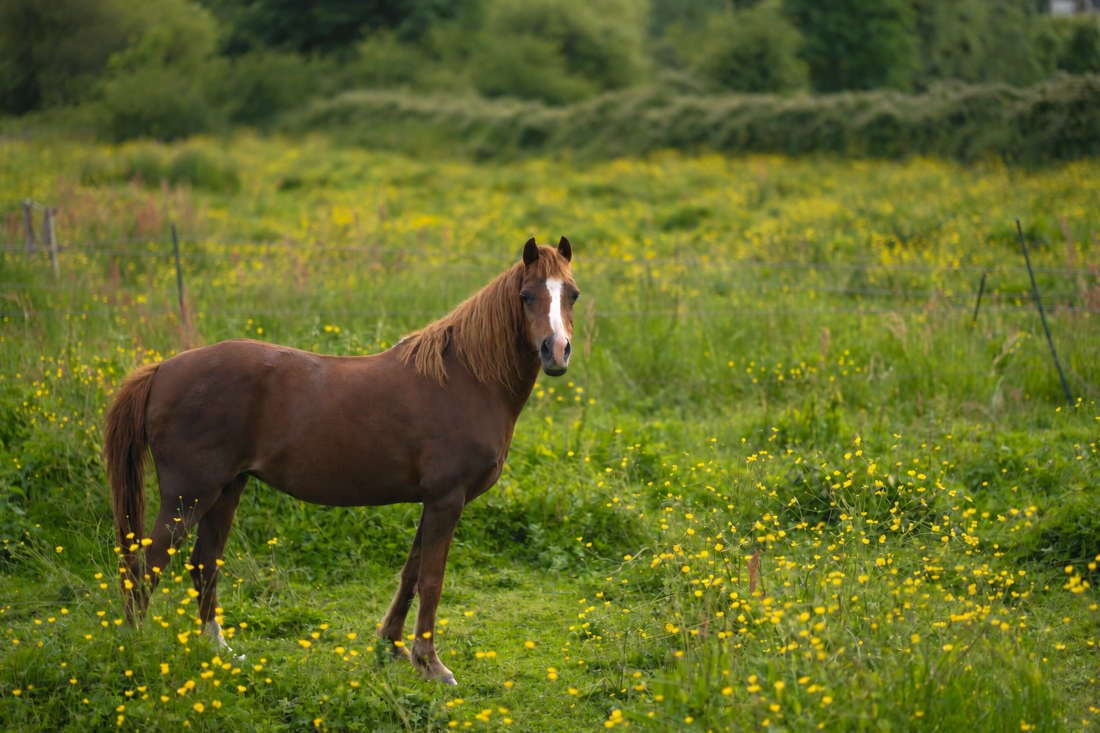
Corns in horses are areas of bruising that develop near the heel of the hoof, usually where the hoof wall meets the bar.
Corns are most common in the front feet of shod horses. They develop when repeated or excessive pressure damages the sensitive tissues beneath the hoof horn. Shoe fit, hoof growth, uneven loading and hoof conformation all contribute to increased pressure in this area. [1]
Some corns are discovered during routine hoof care and cause little or no discomfort. Others are painful and can result in noticeable lameness. If the damaged tissues become infected, an abscess can develop and cause more severe pain.
Treatment focuses on relieving pressure from the affected heel and addressing the factors that contributed to the injury. Appropriate trimming, shoeing and regular hoof care can support recovery and help prevent corns from returning.
What are Corns in Horses?
A corn is a localized bruise of the sensitive tissues beneath the sole of a horse’s hoof. Corns develop at the heel, in the angle where the hoof wall meets one of the bars.
This region is referred to seat of corn and is most commonly affected on the inner side of the front hooves. [1]
The hoof bars are extensions of the hoof wall that turn inward toward the frog at the heels. Excessive or repeated pressure in this area can damage small blood vessels in the sensitive tissues beneath the hard hoof horn.
Bleeding from these vessels can cause discoloration of the sole, which becomes visible as the affected horn grows toward the surface. [1]
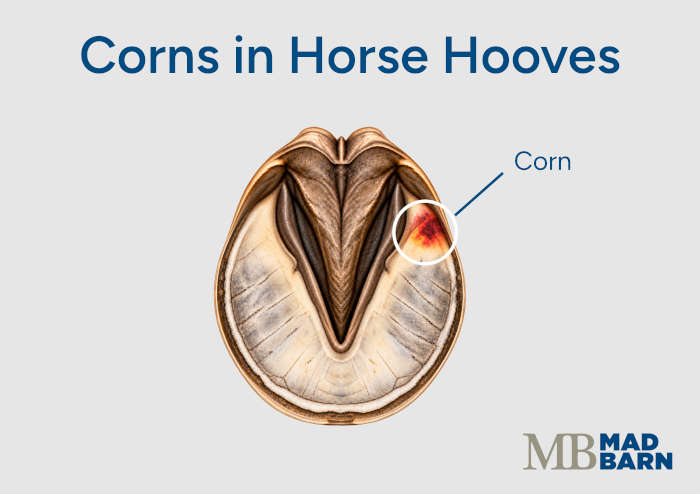
Corns are often identified during routine farrier care and may appear as red, pink, yellow or darker areas of the sole near the heel. The color does not reliably indicate the severity or age of the injury. Discoloration may remain visible as the hoof grows, even after the underlying tissues have healed.
The severity of a corn depends on the extent of tissue damage. Mild bruising may cause little or no discomfort, while more significant injuries can produce inflammation, pain and lameness.
If bacteria enter the damaged tissues, an infection or hoof abscess may develop. [1]
Table 1. Corns in horses at-a-glance
| Category | Key Information |
|---|---|
| Definition |
|
| Primary Cause |
|
| Common Causes |
|
| Onset |
|
| Symptoms |
|
| Severity |
|
| Treatment |
|
| Recovery Time |
|
| Prognosis |
|
| Prevention |
|
Types of Corns
Corns are classified as dry, moist or suppurating based on the changes within the hoof and whether infection is present. [1][2]
- Dry corns are areas of bruising that appear as red or dark discoloration within otherwise dry hoof horn.
- Moist corns involve more extensive tissue damage, with fluid collecting beneath the horn.
- Suppurating corns develop when bacteria enter the damaged tissues and cause infection, resulting in pus or abscess formation.
The type of corn does not always reflect how painful it is to the affected horse. Lameness, sensitivity and other findings during examination provide a better indication of whether the area is actively causing discomfort.
Table 2. Comparison of dry, moist and suppurating corns
| Type | Features | Typical Findings | Significance |
|---|---|---|---|
| Dry Corn |
|
|
|
| Moist Corn |
|
|
|
| Suppurating Corn |
|
|
|
Infected Corns
Corns can get infected when bacteria enter through damaged hoof horn and reach the sensitive tissues underneath. Once infection develops, pressure from accumulating fluid or pus can cause significant pain. [1]
Horses with infected corns often show marked lameness and develop increased hoof warmth or a stronger digital pulse. Fluid or pus may also be found beneath the horn or drain from the affected area. [1]
What's your top priority with your horse's health?

What's your top priority with your horse's health?
Signs of Corns in Horses
Corns do not always cause obvious signs, and routine hoof care sometimes reveals subtle changes owners have missed.
When a corn is actively painful, the horse may change how they bear weight on the affected foot to avoid pressure on the heel. Lameness can range from subtle to severe and may be more noticeable on firm ground.
Signs associated with a painful corn can include: [2]
- Mild to severe lameness
- A shortened or cautious stride
- Reluctance to bear full weight on the affected heel
- Sensitivity around the heel
- Pain when hoof testers are applied over the affected area
- Red, pink, yellow or dark discoloration in the hoof horn
- Increased warmth in the hoof
- A stronger digital pulse when inflammation is significant
Severe or rapidly worsening lameness can indicate infection or another painful condition within the hoof and warrants veterinary assessment.
Causes of Corns in Horses
Corns develop when repeated or excessive pressure damages the sensitive tissues at the heel. This pressure is often related to the way the hoof is trimmed, supported and loaded during movement. [1][2]
Several factors may contribute at the same time. Hoof conformation can influence how the foot lands and loads, while normal hoof growth gradually changes hoof shape and its relationship with the shoe (if applicable) between farrier appointments. [3][4]
Identifying these contributing factors is an important part of managing recurrent corns. Removing discolored horn may reveal the bruise, but it does not correct the pressure that caused it.
Shoe Pressure
Corns are commonly associated with pressure from a horseshoe, particularly when the heel is not adequately supported or pressure is concentrated over the seat of corn. [1]
A shoe that is too short or narrow may place excessive pressure on the heel. Similar problems can occur if the shoe shifts or if part of the shoe bears directly beneath the affected area. [1]
Shoe fit can also change as the hoof grows. A shoe that fit appropriately when it was affixed to the hoof may provide less support several weeks later as the hoof grows and changes shape. [4]
For this reason, the presence of a corn does not necessarily indicate that a shoe was poorly fitted at the time it was attached. Hoof growth, conformation and the length of time between farrier appointments all influence how the hoof loads over time.
Hoof Conformation
The shape of the hoof puts some horses at a higher risk of corns by concentrating pressure in certain areas of the heel. [5]
Low or underrun heels can change how the back of the foot is loaded, while contracted heels can affect the structure and function of the heel region. Uneven or imbalanced feet may also place more weight on one side of the hoof than the other. [6][7]
When the same area is repeatedly overloaded, the tissues beneath the hoof horn can become bruised. [5]
Horses with recurrent corns may require an individualized trimming and shoeing plan that accounts for their hoof conformation and promotes more even weight distribution. [6]
Hoof Growth & Farrier Intervals
Excessive overgrowth between farrier appointments can also contribute to changes in balance and loading.
Maintaining an appropriate farrier schedule helps limit these changes and provides regular opportunities to assess hoof shape and shoe fit. [4][8]
Concussion & Footing
The type of footing a horse works on can contribute to the development of corns by affecting how the hoof absorbs impact and distributes pressure during movement.
Hard surfaces provide less cushioning when the hoof strikes the ground, increasing concussion and potentially contributing to bruising of the sensitive tissues at the heel.
Uneven or rocky ground can cause the hoof to land unevenly or place concentrated pressure on the heel, increasing the risk of tissue damage. [9]
Footing is not usually the primary cause of corns, but it can be a contributing factor. When heel bruising occurs repeatedly, shoe fit, hoof balance, conformation and farrier intervals should also be evaluated.
Other Causes of Heel Pain
Several conditions can produce heel or hoof pain similar to that caused by a corn. Depending on the horse’s symptoms and examination findings, other possible causes include:
- Hoof abscesses
- Sole bruising
- Puncture wounds
- Injuries to deeper structures within the hoof
- Navicular region pain
- Fractures involving the hoof or lower limb
- Conditions affecting the frog, bars or heel
Identifying a corn on a horse’s hoof does not necessarily mean it is responsible for the horse’s lameness. Persistent, severe or unexplained lameness requires veterinary assessment to identify the source of pain and guide appropriate treatment.
When to Call the Veterinarian
A corn identified during routine hoof care does not necessarily require veterinary treatment if the horse is sound and shows no signs of inflammation or infection.
However, changes in your horse’s movement or other signs of hoof pain should be investigated to identify the underlying cause. Contact your veterinarian if your horse develops:
- Moderate to severe lameness
- Sudden or rapidly worsening hoof pain
- Marked hoof warmth
- A strong digital pulse
- Swelling or drainage from the foot
Veterinary assessment is also recommended when heel pain repeatedly returns or lameness does not improve after appropriate hoof care. These cases may require further investigation to determine whether infection, another hoof injury or a different source of pain is involved.
Prompt veterinary attention is particularly important for a horse that becomes severely lame or shows signs that an infection may have spread beyond the superficial tissues of the hoof.
Diagnosis of Corns in Horses
Diagnosing a corn involves examining the hoof and determining whether the affected area is responsible for the horse’s lameness. A visible corn may reflect an older injury and is not always the source of current pain.
A veterinarian examines the hoof for discoloration, damaged horn and localized tenderness, often after removing the shoe. A farrier may assist by assessing hoof balance, wear patterns and shoe fit to identify factors contributing to excessive pressure on the heel. [2]
Hoof testers can help locate areas of sensitivity. A horse with a painful corn may react when the veterinarian applies pressure over the affected heel. However, this response does not confirm the corn is the only source of lameness. [1]
The veterinarian or farrier may pare the hoof to expose discolored or damaged horn and check for fluid or signs of infection. During this process, they remove only enough horn to evaluate the area while preserving the healthy sole that protects the sensitive tissues underneath.
If the cause of lameness is unclear, your veterinarian may perform diagnostic nerve blocks to help localize the source of pain. Radiographs (x-rays) or other diagnostic imaging may also be recommended for persistent or severe lameness, particularly if a deeper hoof injury is suspected.

Treatment of Corns in Horses
Treatment of a corn focuses on relieving pressure from the affected heel, allowing damaged tissues to heal and correcting the factors that contributed to the injury. [1]
Mild corns can improve once pressure is relieved and hoof balance or shoe fit is addressed. More painful or infected corns require additional treatment, and a veterinarian should evaluate horses with significant lameness before they return to exercise.
Horses with recurrent corns may benefit from having their veterinarian and farrier work together to determine why the heel is repeatedly being overloaded and develop an appropriate hoof care plan. [10]
Relieving Pressure
Veterinarians or farriers typically remove the shoe to relieve pressure on the affected heel. They may also remove loose or damaged horn to assess the area and trim the hoof to improve balance. Excessive paring should be avoided because healthy sole provides important protection for the sensitive tissues underneath. [1]
The horse should rest while the heel is painful. The amount of rest required depends on the severity of the injury and how quickly the horse becomes sound after pressure is relieved. [1]
Trimming & Shoeing
Appropriate farrier care is a crucial part of treatment and long-term management, particularly for horses with recurrent corns. Trimming and shoeing aim to reduce concentrated pressure over the injured area while supporting the heel and promoting more even loading of the hoof. [8]
Depending on the horse’s foot, your farrier may adjust the fit or position of the shoe or recommend a different shoeing approach. The best option depends on the horse’s hoof conformation, heel structure, workload and the location of the corn. [10]
Treating Infected Corns
If a corn is infected, the veterinarian will remove the shoe to examine the area, and then drain any trapped fluid or pus, which helps relieve pressure and allows the affected tissues to heal. [1]
The foot should be kept clean and protected while it heals. Your veterinarian may recommend bandaging or a protective hoof boot to help prevent dirt and debris from contaminating the affected area.
Antibiotics are not required for every infected corn or hoof abscess. Your veterinarian determines whether they are necessary based on the extent of the infection and whether deeper structures within the hoof are involved. [11]
Infections that extend into deeper tissues are more serious and require prompt veterinary treatment. [1][11]
Pain Management
Pain from an uncomplicated corn tends to improve quickly once pressure on the heel is relieved. More painful cases require additional treatment while inflammation subsides.
Your veterinarian can prescribe a non-steroidal anti-inflammatory drug (NSAID) to help control pain and inflammation when appropriate. Horses that remain lame should not return to work if pain medication reduces signs of discomfort.
Work with your veterinarian to develop an appropriate return to work plan once the underlying problem has been addressed and the horse is moving normally. [2]
Recovery & Prognosis
Most horses with uncomplicated corns have a good prognosis, particularly when the source of pressure is identified and corrected. Mild bruising can improve quickly once the heel is no longer being overloaded, while more painful corns require additional time away from work. [1]
Discoloration from the bruise may remain visible after the pain and inflammation have resolved. As the hoof grows, the affected horn gradually grows out and is removed during routine trimming. [12]
Recovery can take longer if infection develops. These cases require adequate drainage and protection of the affected area while the tissues heal. [13]
Corns can return if the same area of the heel continues to experience excessive pressure. For horses with recurrent corns, addressing shoe fit, hoof balance, heel support and farrier intervals is important for reducing future episodes.
Preventing Corns in Horses
Preventing corns focuses on reducing excessive pressure on the heel and maintaining good hoof balance. Regular farrier care is especially important because hoof growth gradually changes how the foot is supported by the shoe.
Steps that can help reduce the risk of corns include: [1]
- Maintain a regular farrier schedule appropriate for your horse’s rate of hoof growth
- Use properly fitted shoes that provide adequate heel support
- Check shoes between appointments for shifting, loosening or excessive wear
- Avoid allowing the feet to become excessively overgrown
- Address underrun, contracted or uneven heels with an appropriate trimming and shoeing plan
- Investigate repeated heel bruising or lameness rather than simply removing discolored horn
Farrier intervals are best individualized rather than following the same schedule for every horse. Hoof growth varies between horses and can change with the season, environment and management.
Horses that repeatedly develop corns may need more frequent reassessment of hoof balance and shoe fit. Working with your veterinarian and farrier to identify where excess pressure is coming from can help reduce repeated bruising and lameness.
Nutrition & Hoof Health
A balanced diet provides the nutrients required for strong hoof horn production, supporting the growth of new hoof tissue as damaged areas grow out.
Healthy hoof growth depends on your horse being fed adequate energy and protein, including essential amino acids, as well as vitamins and minerals. Trace minerals such as zinc and copper are involved in the formation and maintenance of hoof tissue, while biotin plays a role in keratin production. [12][14][15]
For comprehensive nutritional support, Mad Barn’s Omneity® provides complete vitamin and mineral coverage for most horses, including a full serving of biotin. It also supplies organic zinc and copper and essential amino acids to support normal hoof growth, keratin formation, and hoof horn quality.
A forage analysis can help identify deficiencies or imbalances and determine whether additional supplementation is needed.
Mad Barn’s equine nutritionists provide free diet evaluations and can develop a balanced feeding program to support your horse’s healthy hoof growth and overall hoof quality.
Frequently Asked Questions
Here are some frequently asked questions about corns in horses:
A corn in a horse's hoof is an area of bruising near the heel, usually where the hoof wall meets the bar in a region called the seat of corn. It develops when repeated or excessive pressure damages the sensitive tissues beneath the hoof horn. Corns are most common in the front feet of shod horses, although not every corn causes pain or lameness.
A corn on a horse's hoof often appears as a red, pink, yellow or dark area in the horn near the heel. This discoloration results from bleeding or tissue damage beneath the hoof horn. The color does not reliably indicate when the injury occurred or whether it is currently painful because an older bruise can remain visible as the hoof grows out.
The different types of corns in horses are traditionally classified as dry, moist or suppurating. Dry corns appear as discoloration within dry hoof horn, while moist corns involve more extensive damage and fluid beneath the horn. Suppurating corns occur when bacteria infect the damaged tissues, resulting in pus or abscess formation.
Corns can cause lameness in horses when the tissues beneath the heel are actively bruised, inflamed or infected. Affected horses may have a shortened stride, avoid placing full weight on the heel or show more obvious lameness on firm ground. However, visible discoloration may represent an older injury, so a corn should not automatically be assumed to be the source of current lameness.
A corn is diagnosed by examining the hoof and determining whether the affected heel is responsible for the horse's pain. The shoe may be removed so a veterinarian or farrier can assess discoloration, damaged horn, uneven wear and areas of concentrated shoe pressure. Hoof testers, careful removal of loose horn, diagnostic nerve blocks or imaging may be used when the source of lameness remains unclear.
Whether a horse can be ridden with a corn depends on whether the heel is actively painful and whether the underlying pressure has been corrected. A lame horse should not be worked until the source of pain has been evaluated and appropriately managed. Exercise can be resumed gradually when the horse is moving normally and the veterinarian and farrier are satisfied with the horse's recovery.
How long a corn takes to heal depends on the severity of the tissue damage, the source of pressure and whether infection is present. Mild bruising may improve quickly after pressure on the heel is relieved, while painful or infected corns can require a longer period away from work. Discolored horn may remain visible after the sensitive tissues have healed and will gradually grow out with the hoof.
A corn can turn into a hoof abscess if bacteria enter through damaged horn and infect the sensitive tissues underneath. Accumulating fluid or pus increases pressure within the hoof and can cause marked or rapidly worsening lameness. Drainage, increased hoof warmth or a stronger digital pulse are warning signs that require prompt assessment.
A horse may keep getting corns when the same part of the heel continues to experience excessive pressure. Contributing factors can include hoof imbalance, low or contracted heels, uneven loading, inadequate heel support, shoe fit and overly long farrier intervals. Recurrent cases warrant a joint assessment by the veterinarian and farrier so the source of pressure can be identified and the hoof care plan adjusted.
Horses without shoes can develop bruising and pain in the heel, but these lesions should not automatically be classified as corns. Corns are classically associated with shod horses and concentrated pressure at the seat of corn. Persistent heel pain in a barefoot horse should be evaluated for sole bruising, puncture wounds, abscesses and other possible causes.
A corn should not be aggressively cut out of a horse's hoof. A veterinarian or farrier may carefully remove loose or damaged horn to examine the area, relieve pressure and check for fluid or infection. Excessive removal of healthy sole can leave the sensitive tissues less protected, and removing discoloration alone does not correct the pressure that caused the corn.
Poor shoe fit or placement can contribute to corns by concentrating pressure over the heel, but a corn does not necessarily mean the horse was poorly shod. A shoe that is too short, narrow or displaced may overload the seat of corn. Even a properly fitted shoe can provide less heel support as the hoof grows and changes shape between farrier appointments.
A veterinarian should assess a suspected corn when the horse develops moderate to severe lameness, sudden or rapidly worsening hoof pain, marked warmth, a strong digital pulse, swelling or drainage. Veterinary assessment is also recommended when heel pain repeatedly returns or does not improve after appropriate hoof care. These signs can indicate infection, a deeper hoof injury or another source of pain that requires further investigation.
Preventing corns involves reducing excessive heel pressure through balanced trimming, adequate heel support and properly fitted shoes. Maintain a farrier schedule suited to the horse's rate of hoof growth, and check between appointments for loose, shifted or excessively worn shoes. Repeated heel bruising should be investigated so problems involving hoof conformation, balance or shoe fit can be addressed rather than allowing the same tissues to be injured again.
Nutrition cannot directly prevent or heal corns because it does not correct excessive pressure on the heel. However, a balanced diet provides the energy, protein, vitamins and minerals required to produce healthy hoof horn as damaged areas grow out. A forage analysis and complete diet evaluation can help identify deficiencies or imbalances before individual hoof supplements are considered.
Summary
Corns are bruised areas near the heel of the hoof caused by repeated or excessive pressure. Treatment and prevention depend on relieving pressure, correcting contributing hoof-care factors and addressing infection when present.
- Corns commonly affect the front feet of shod horses and may cause discoloration, heel sensitivity or lameness
- Dry, moist and suppurating corns are classified according to tissue damage and whether fluid or infection is present
- Shoe fit, hoof growth, conformation and uneven loading can concentrate damaging pressure at the heel
- Diagnosis requires determining whether the visible corn is actively painful or represents an older injury
- Treatment may include shoe removal, careful trimming, improved heel support, rest and drainage of infected tissue
- Regular individualized farrier care helps maintain hoof balance and reduce recurrent heel bruising
References
- Stephenson. R. Part 3: Corrective Farriery - Dealing with Corns. UK Vet Companion Animal. 2008.
- Menzies-Gow. N. J. Corns. Vetlexicon.
- Mokry. A. et al. Dynamic Evaluation of Toe–Heel and Medio-Lateral Load Distribution and Hoof Landing Patterns in Sound, Unshod Standardbred Horses with Toed-in, Toed-out and Normal Hoof Conformation. The Veterinary Journal. 2021.
- Van Heel. M. C. V. et al. Changes in Location of Centre of Pressure and Hoof-Unrollment Pattern in Relation to an 8-Week Shoeing Interval in the Horse. Equine Veterinary Journal. 2005.
- Hinterhofer. C. et al. The Effect of Flat Horseshoes, Raised Heels and Lowered Heels on the Biomechanics of the Equine Hoof Assessed by Finite Element Analysis (FEA). Journal of Veterinary Medicine Series A. 2000.
- Hunt. R. J. Farriery for the Hoof with Low or Underrun Heels. Veterinary Clinics of North America: Equine Practice. 2012.
- Oosterlinck. M. et al. Pressure Plate Analysis of Toe–Heel and Medio-Lateral Hoof Balance at the Walk and Trot in Sound Sport Horses. The Veterinary Journal. 2013.
- Van Heel. M. C. V. et al. Dynamic Pressure Measurements for the Detailed Study of Hoof Balance: The Effect of Trimming. Equine Veterinary Journal. 2004.
- Aoun. R. et al. Horseshoe Effects on Equine Gait—A Systematic Scoping Review. Veterinary Surgery. 2025.
- Dabareiner. R. M. and Carter. G. K. Diagnosis, Treatment, and Farriery for Horses with Chronic Heel Pain. Veterinary Clinics of North America: Equine Practice. 2003.
- Hardefeldt. L. et al. Antimicrobial Prescribing Guidelines for Horses in Australia. Australian Veterinary Journal. 2025.
- Josseck. H. et al. Hoof Horn Abnormalities in Lipizzaner Horses and the Effect of Dietary Biotin on Macroscopic Aspects of Hoof Horn Quality. Equine Veterinary Journal. 1995.
- Cole. S. D. et al. Factors Associated with Prolonged Treatment Days, Increased Veterinary Visits and Complications in Horses with Subsolar Abscesses. Veterinary Record. 2019.
- Burns. T. A. "Feeding the Foot": Nutritional Influences on Equine Hoof Health. Veterinary Clinics of North America: Equine Practice. 2021.
- Buffa. E. A. et al. Effect of Dietary Biotin Supplement on Equine Hoof Horn Growth Rate and Hardness. Equine Veterinary Journal. 1992.