English
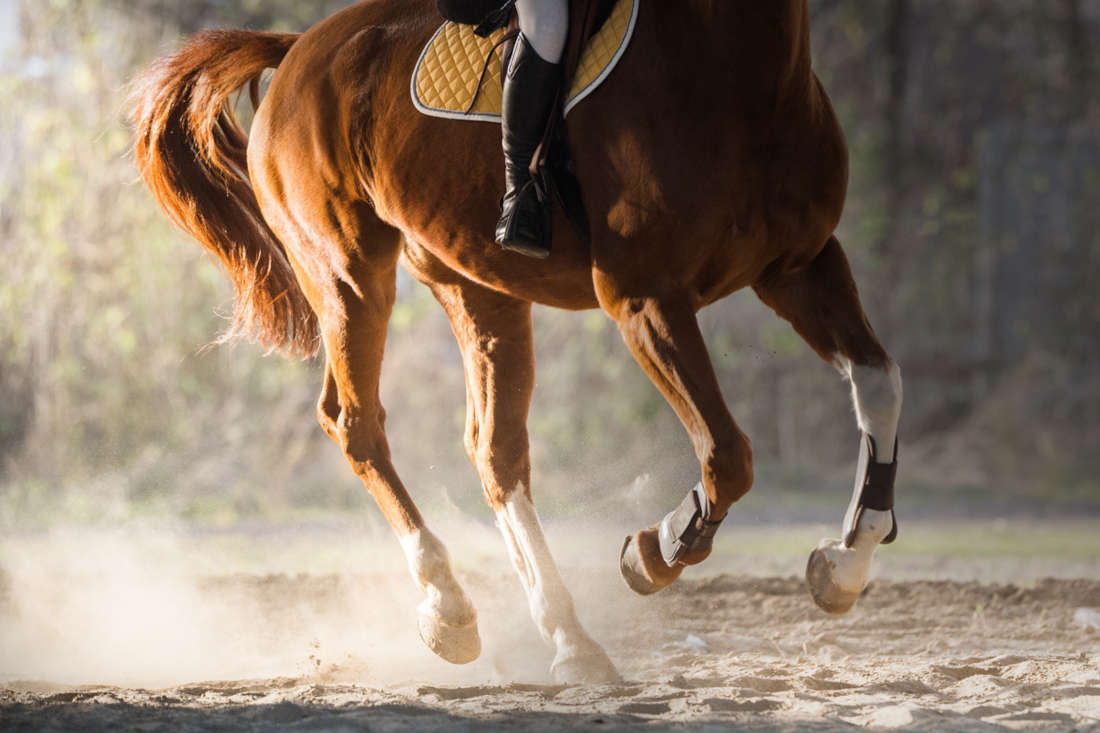
Lead changes occur whenever a horse switches from one canter lead to the other. Horses perform them naturally at liberty when changing direction, adjusting their balance, or responding to the terrain and movement around them.
Under saddle, riders use lead changes across many disciplines, including dressage, show jumping, eventing, and Western performance. Depending on the horse’s training and the demands of the activity, the change may be performed through another gait or completed as a flying change without interrupting the canter.
Training makes these natural movements reliable and responsive to the rider’s aids. A well-prepared horse can change leads at the appropriate moment while maintaining balance, rhythm, straightness, and forward movement.
Correct lead changes help the horse follow a new direction, stay organized through turns, and prepare for the next movement or obstacle. Keep reading to learn more about the biomechanics of lead changes, the flatwork foundation, simple and flying changes, common training exercises, and expectations across the jumping disciplines.
What Is a Lead Change in Horses?
A lead change is the act of switching from one canter lead to the other. Horses use different leads to organize their movement when changing direction, turning, or adjusting their balance.
Under saddle, a correctly timed lead change allows the horse to continue in the new direction while maintaining rhythm, balance, and forward movement. [1][2][3]
In most riding situations, the appropriate lead corresponds to the horse’s direction of travel. A horse turning to the left normally canters on the left lead, while a horse turning to the right normally uses the right lead. This helps the horse follow the bend, remain balanced through the turn, and maintain a consistent rhythm. [2][4]
A horse cantering on the incorrect lead may have more difficulty balancing through a turn. The horse may lose impulsion, shorten their stride, lean, or drift while navigating the bend, which can disrupt the rhythm and quality of the canter. [3]
Cantering on the lead opposite the direction of travel is not always a mistake. In counter-canter, the rider intentionally asks the horse to maintain the outside lead while travelling on a curved line. [4][5]
How to Identify the Canter Lead
The canter is an asymmetrical three-beat gait that can be performed on either the left or right lead. Each lead has a different footfall pattern, with the limbs taking on distinct leading and trailing roles during the stride. [6]
A rider can identify the canter lead by looking at the horse’s forelegs. During each stride, one foreleg lands last and appears to reach ahead of the other. This leading foreleg indicates the lead. On the left lead, the left foreleg is the leading limb. On the right lead, the right foreleg is the leading limb. [6]
Because the leading and trailing limbs move differently during the canter, the left and right leads produce different movement patterns. With practice, riders can learn to recognize the canter lead by feel as well as by watching the horse’s forelegs. [6][7]
Riders should check the lead promptly after every canter departure or lead change. A quick glance at the forelegs can confirm whether the horse picked up the requested lead before the rider continues onto a turn, circle, or other exercise. [8]
What's your top priority with your horse's health?

What's your top priority with your horse's health?
Types of Lead Changes
Riders can change a horse’s canter lead through the trot, through the walk, or with a flying change that keeps the canter continuous.
Each method has a different purpose and requires a different level of balance, coordination, and training. [1][2][4]
Change of Lead Through Trot
In a change of lead through trot, the horse transitions from canter to trot, takes several trot steps, and then departs into canter on the opposite lead. This method interrupts the canter but gives the horse time to rebalance before picking up the new lead. [1][2][3][4]
Changes through trot are commonly used with green horses and during early training. They allow the rider to establish straightness, organize the horse’s balance, and confirm that the horse responds correctly to the aids for each canter departure. [1][2][4]
Because the horse breaks gait, a change through trot interrupts the canter rhythm and takes more time than a flying change. However, it is sometimes preferable to asking for a rushed or unbalanced flying change before the horse is ready. [2][3][4]
A change through trot is sometimes informally called a simple change, but the two terms do not have the same formal meaning. A formal simple lead change is performed through the walk, not the trot. [1][3]
Simple Lead Change
In a formal simple lead change, the horse transitions directly from canter to walk without taking trot steps. The horse then takes clear walk steps before the rider asks for a new canter departure on the opposite lead. [1][3][4]
The walk phase gives the horse an opportunity to rebalance and allows the rider to prepare the new canter aids. The goal is a calm, straight transition in which the horse remains responsive and departs cleanly on the requested lead. [1][4]
Like a change through trot, a simple change interrupts the continuous canter. Given this, it takes more time than a flying change, but it can help horses and riders develop control, balance, and accurate canter departures before progressing to more advanced changes. [1][2][4]
Flying Lead Change
A flying lead change is a lead change that occurs during the moment of suspension in the canter, when all four hooves are briefly off the ground. Unlike a simple change or a change through trot, the horse switches from one canter lead to the other without breaking gait or transitioning through walk or trot. [1][9]
During the change, the horse’s leading and trailing limbs exchange roles so the opposite foreleg and hind leg become the leading limbs. The horse then begins the next canter stride on the new lead while maintaining forward movement. [1][9]
In a correct flying change, the front and hind limbs change within the same stride. This allows the horse to remain coordinated and continue cantering without becoming disunited. [1][3][9]
Clean, Late & Disunited Flying Changes
In performance disciplines, flying changes are evaluated by whether the horse changes leads cleanly in front and behind while maintaining the canter rhythm.
A clean flying change occurs when the horse’s fore limbs and hindlimbs switch leads within the same stride. The horse completes the change without breaking gait and continues in a united canter on the new lead. [1][3][9]
A late change occurs when the front and hind limbs do not change at the same time. One pair of limbs changes first, while the other pair follows later instead of switching within the same stride. [3][4][9]
A horse is described as late behind when the fore limbs change first but the hindlimbs remain on the original lead for one or more additional strides before changing. This creates a temporarily uneven or disunited canter. [3][4][9]
If the fore limbs change but the hindlimbs fail to change, the horse remains in a cross-canter. In this disunited canter, the fore limbs follow one lead while the hindlimbs follow the other, which can interfere with balance, rhythm, and coordination. [1][3][4][9]
Table 1. Comparison of lead change types in horses
| Lead change type | How it works | Common uses | Main advantages | Main limitations |
|---|---|---|---|---|
| Change through trot |
|
|
|
|
| Simple change through walk |
|
|
|
|
| Flying change |
|
|
|
|
How Lead Changes Work
Understanding how the horse moves during the canter can help riders coordinate their aids more effectively. It can also help riders and trainers recognize problems with balance, straightness, or coordination when a lead change does not occur correctly. [1][6]
Canter Leads & Footfall Sequences
The canter follows a three-beat footfall sequence: [6]
- The trailing hind leg lands first
- The leading hind leg and trailing foreleg land together as a diagonal pair
- The leading foreleg lands last
A brief moment of suspension follows, during which all four hooves leave the ground. [6]
On the left lead, the right hind leg lands first and the left foreleg lands last. On the right lead, the left hind leg lands first and the right foreleg lands last. The suspension phase separates one canter stride from the next and provides the opportunity for the horse to reorganize the footfall sequence during a flying change. [1][6]
The leading and trailing limbs perform different roles during the canter. Research indicates the trailing hind leg contributes more strongly to forward propulsion than the leading hind leg. [6] This difference helps explain why regularly working a horse on both leads supports more balanced muscular development.
How Rider Timing Influences the Change
The rider begins preparing for the lead change during the canter stride immediately before the change occurs. The rider must coordinate the aids with the rhythm of the canter so the horse has time to respond as the next stride begins. [1]
Correct timing helps the horse remain straight, balanced, and organized while changing leads. The rider should prepare without interrupting the forward rhythm or causing the horse to lose balance before the change. [1]
Aids that are poorly timed, abrupt, or disruptive can contribute to a rushed, crooked, late, or incomplete change. Clear preparation and consistent timing make it easier for the horse to understand the request and coordinate the new footfall sequence. [1][9]
Preparing a Horse for Lead Changes
Reliable lead changes begin long before the rider asks the horse to switch leads. They depend on the same foundation that supports good canter work in any discipline. When the basics are well-established, the horse is better prepared to change leads smoothly, stay coordinated, and remain confident through the movement. [1][4][9]
Canter Quality & Transitions
The horse should pick up the requested canter lead promptly in both directions from walk or trot. The departure should remain calm and organized, without rushing, falling through the inside shoulder, drifting, or anticipating the rider’s aid. [1][4]
Once in canter, the horse should maintain a consistent rhythm and remain balanced in both directions. A horse that becomes hurried, falls onto the forehand, or loses coordination on one lead may have difficulty producing an even and reliable change. [1][4][9]
The horse should also respond promptly to the rider’s half-halts and adjust the length of the canter stride without losing balance or rhythm. The ability to lengthen and shorten the stride gives the rider greater control of the canter before, during, and after a change. [1][2]
Smooth downward transitions are equally important. The horse should be able to return from canter to a shorter, more balanced stride and transition calmly into trot or walk while remaining straight and responsive. [1][4]
Many flying-change problems are traced to weaknesses in the basic canter rather than the change itself. Before repeatedly schooling flying changes, riders should confirm that the horse can depart promptly, maintain an organized rhythm, adjust the stride, and perform balanced upward and downward transitions. [1][4]
Counter-Canter
Counter-canter is cantering on the outside lead relative to the direction of travel. For example, a horse travelling on a left circle in counter-canter maintains the right lead. [1]
Counter-canter helps develop the balance and coordination required for flying changes. It tests whether the horse can maintain the lead selected by the rider while travelling on a curved line or changing direction. [1][4]
The exercise also teaches the horse to wait for a clear aid rather than automatically changing leads whenever the direction changes. This control can help reduce anticipation when flying changes are introduced. [1][4]
Counter-canter may also appear as a required movement in dressage and equitation tests, where it demonstrates balance, obedience, and the rider’s control of the requested lead. [1][5]
Straightness & Suppleness
Many horses show natural differences between their left and right sides. These differences may appear as a shorter or less even stride on one lead, reduced confidence in one direction, or difficulty maintaining the same balance and rhythm on both reins. [10][11]
Because the leading and trailing limbs perform different muscular and biomechanical roles during the canter, regularly working the horse on both leads can support more balanced muscular development. Equal work on both reins can also help the horse develop similar coordination and confidence in each direction. [1][6][9]
Straightness is especially important during canter departures, transitions, and lead changes. A horse that drifts, falls through a shoulder, or swings the hindquarters may struggle to change leads evenly and may become crooked or late during the change. [1][4][9]
Lateral work, including shoulder-fore and leg-yielding, can improve suppleness, straightness, responsiveness to the rider’s leg, and control of the shoulders and hindquarters. These qualities can help the horse change leads without rushing, drifting, or becoming crooked. [12]
How to Teach Lead Changes
Lead-change training should progress from controlled transitions through trot or walk to flying changes that maintain the canter. At every stage, the priority is a balanced, straight, and responsive horse rather than completing the change as quickly as possible. [1][4][9]
Teaching a Change Through Trot
A change through trot gives the horse time to rebalance and allows the rider to organize the aids for the new canter lead. This method is often useful for a green or inexperienced horse that is still learning to associate the rider’s aids with each lead. [1][2][4]
To ride a change through trot: [1]
- Establish a balanced working canter on the current lead
- Use a half-halt to rebalance the horse
- Make a smooth downward transition to trot
- Ride several straight, balanced trot steps
- Ask for a canter departure on the opposite lead
The trot steps should remain calm, straight, and organized. A horse that rushes, drifts, falls through a shoulder, or swings the hindquarters may need more work on basic transitions before progressing to more advanced changes. [1][4]
A change through trot is not formally the same as a simple lead change. A formal simple change is performed through walk, while a change through trot includes several trot steps between the two canter leads. [1][3][4]
Across riding disciplines, a smooth and balanced change through trot is preferable to repeatedly asking for a rushed or uncoordinated flying change before the horse is ready. [2][4]
Teaching a Simple Change Through Walk
A formal simple lead change asks the horse to transition directly from canter to walk, take several clear walk steps, and then depart into canter on the opposite lead. [1][3][4]
To ride a simple change through walk: [1]
- Establish a balanced canter on the current lead
- Prepare the horse with a half-halt
- Transition directly from canter to walk
- Maintain several clear, straight walk steps
- Ask for a canter departure on the opposite lead
The horse should remain balanced, attentive, and straight through the downward transition, walk steps, and new departure. The rider should avoid allowing the horse to rush through the walk, insert unplanned trot steps, or anticipate the new canter aid. [1][4]
Drifting, swinging the hindquarters, falling through a shoulder, or rushing into the new departure can reveal weaknesses in balance and straightness. These same problems may later contribute to crooked, late, or incomplete flying changes. [1][4][9]
Teaching a Flying Change
Flying changes are generally introduced during controlled flatwork, where the horse can learn the aids without also managing more complex patterns, obstacles, or rapid changes of direction. [1][9][13]
Early flying-change exercises should be simple and organized. Straight lines and familiar patterns allow the horse to focus on the rider’s aids while remaining relaxed, balanced, and responsive. [1][9][13]
Repeated attempts should not replace work on the underlying quality of the canter. If the horse rushes, becomes crooked, loses rhythm, or anticipates the change, the rider should return to basic transitions, counter-canter, and changes through trot or walk. [1][4][9][14]
Flying Change Aids
The rider prepares the canter with one or more half-halts and begins applying the change aids during the stride immediately before the intended change. The aids should follow the rhythm of the canter rather than interrupting the horse’s forward movement. [1]
The new outside leg moves slightly behind the girth to influence the new outside hind leg. The reins support straightness and balance as the horse changes, while the flexion changes toward the new lead. [1]
The rider should keep the upper body quiet, centered, and balanced. Throwing the upper body, leaning, or making an exaggerated weight shift can unbalance the horse and contribute to a rushed, crooked, late, or incomplete change. [1][9][13]
Rider symmetry helps keep the aids clear and reduces uneven forces through the change. The rider should remain centered rather than collapsing through one side or shifting dramatically toward the new lead. [1][9][13]
The application of the aids may vary between trainers and riding programs. However, the shared principles are clear timing, balanced preparation, straightness, and quiet rider movement. [15]
Exercises for Teaching Flying Changes
Flying changes can be introduced through a variety of arena exercises that help the horse maintain rhythm, balance, straightness, and responsiveness to the rider’s aids. Riders should begin with simple changes or changes through trot, then progress to flying changes only when the horse can complete each pattern calmly and consistently. [1][9][12]
When practicing these exercises: [1][4][9][14]
- Prioritize a calm, balanced response over a quick change
- Allow the horse time to reorganize between attempts
- Avoid drilling repeated flying changes
- Return to simpler transitions if the horse becomes tense, rushed, crooked, or anticipatory
Long Diagonal
On a long diagonal, the rider establishes a balanced canter and keeps the horse straight while crossing the arena. The rider prepares the horse with a half-halt, applies the change aids near the end of the diagonal, and continues in the new direction on the opposite lead. [1]
The straight line allows the rider to assess whether the horse can change without drifting, swinging the hindquarters, or losing rhythm. [1][9]
Figure Eight
A figure eight links two large circles that meet at the center of the arena. Riders can first practice the pattern using changes through trot or simple changes through walk before progressing to a flying change at the center. [12]
To use a figure-eight exercise: [12]
- Ride a large circle on one canter lead
- Approach the center of the arena and straighten the horse
- Perform a change through trot or walk, or ask for the flying change
- Continue onto a large circle in the new direction
- Keep the circles large enough for the horse to regain balance and rhythm before the next change
The rider should prioritize a brief moment of straightness at the center of the pattern rather than asking for the change while the horse remains strongly bent around the first circle. [12]
Teardrop Exercise
A teardrop pattern can help the horse practice changing leads while remaining straight and relaxed. Begin by riding a short rollback away from the rail and then straighten the horse along the return line toward the track. [9]
At first, perform a change through trot or a simple change through walk on the straight return line. Once the horse completes the exercise calmly and responds promptly to the canter aids, the rider can ask for a flying change in the same location. [9]
Serpentine
A canter serpentine allows the rider to practice changing leads each time the horse crosses the center line. Begin with a change through trot on each loop, progress to simple changes through walk as the horse gains control, and eventually introduce flying changes. [16]
The rider should briefly straighten the horse across the center line before asking for the change. Asking while the horse remains strongly bent in the previous direction may make it harder to keep the shoulders and hindquarters aligned. [16]
Counter-Canter to True Canter
The rider can establish counter-canter on a shallow loop, diagonal line, or another suitable arena pattern and then ask the horse to change into true canter when straight and balanced. [1][4][12][17]
The horse should first be able to maintain counter-canter without automatically changing when the direction changes. Riders can initially return to true canter through trot or walk before asking for a flying change from the same exercise. [1][4][12][17]
Common Lead Change Problems
Lead-change problems often reflect weaknesses in the underlying canter, transitions, straightness, or response to the rider’s aids. Identifying what happens before, during, and after the change can help the rider determine which foundational skill needs more attention. [1][4][9]
Horse Changes in Front but Not Behind
In an incomplete flying change, the horse’s fore limbs may change to the new lead before the hind limbs. The hind limbs may follow one or more strides later or fail to change altogether, leaving the horse temporarily cantering on different leads in front and behind. [1][3][4][9]
This problem may reflect weaknesses in the horse’s balance, straightness, coordination, hindquarter engagement, or underlying canter quality. It may also occur when the rider’s aids are unclear, poorly timed, or disruptive to the canter rhythm. [1][4][9]
Rather than repeatedly asking for the flying change, the rider should evaluate whether the horse can maintain an adjustable canter, respond promptly to half-halts, remain straight through transitions, and move the hindquarters without drifting or rushing.
Changes through trot, simple changes through walk, lateral work, and balanced transitions can help rebuild these foundational skills. [1][4][12]
Rushing Through the Change
A horse may rush before, during, or immediately after a lead change. The canter may become faster and flatter, the stride may lose rhythm, or the horse may hurry through the exercise without waiting for the rider’s aid. [1][4][9][18]
Rushing may occur when the horse becomes tense, anticipates the exercise, or lacks the balance and strength needed to remain organized through the change. Abrupt aids, exaggerated rider movement, leaning, or throwing the upper body can also disturb the horse’s balance and contribute to a hurried or incomplete response. [1][9][13]
Riders should first re-establish a calm and adjustable canter. Quiet half-halts, balanced transitions, and a steady rhythm can help prepare the horse without creating additional tension. [1][2][4]
A raised pole or cavalletti may help some horses coordinate the hindlimbs, but it should not be used repeatedly if the horse becomes tense, rushes the pole, or begins anticipating the change. [14]
Riders should ask for only a few organized attempts, allow the horse time to recover and reorganize, and return to simpler transitions if the horse becomes hurried. Repeatedly drilling flying changes can teach the horse to anticipate a change whenever the direction changes. [9][14]
Crooked or Drifting Changes
A correct lead change should occur while the horse remains aligned and travels on the intended line. A horse that falls through a shoulder, drifts sideways, swings the hindquarters, or changes while crooked may struggle to coordinate the front and hind limbs within the same stride. [1][4][9]
Crookedness is sometimes associated with uneven rein contact, an unequal response to the rider’s legs, reduced control of the shoulders or hindquarters, or natural differences between the horse’s two sides. Rider leaning or asymmetry can further disrupt the horse’s straightness. [1][10][11][13]
The rider should first confirm that the horse can perform straight canter departures and balanced upward and downward transitions. The reins should support the horse without pulling the shoulders off the intended line, while the rider’s legs should guide the shoulders and hindquarters without causing the horse to swing sideways. [1][4]
Lateral exercises such as shoulder-fore and leg-yielding can improve suppleness, responsiveness to the rider’s leg, and control of the shoulders and hindquarters. These exercises are best used to develop the horse’s overall alignment between change attempts rather than as an immediate correction during every flying change. [12]
The rider should also maintain a quiet, centered position. Rider symmetry and balanced movement can help the horse remain straight and coordinated through the change. [9][13]
Horse Anticipates the Change
Some horses begin to anticipate flying changes whenever they change direction, cross a diagonal, or approach a familiar location where changes are usually practiced. A horse may also anticipate after landing from a fence, when seeing an upcoming turn, or when feeling the rider adjust their position in preparation. [1][4][14]
Experienced jumping horses may develop an automatic change and land on or switch to the lead that suits the direction of the course. This response can be useful, but the horse should remain attentive and responsive rather than changing solely because they expect a turn. [14]
Counter-canter can test whether the horse will maintain the lead selected by the rider instead of automatically changing when the direction changes. The horse should remain on the requested lead until the rider asks for a transition or change. [1][4]
To reduce anticipation, riders can vary the location of changes, ride through familiar change points without asking for a flying change, and include transitions through trot or walk within the same patterns. Maintaining counter-canter on suitable lines can also reinforce the expectation that the horse should wait for the rider’s aid. [1][4][14]
Avoiding repetitive drilling and rewarding the horse for remaining calm can help preserve responsiveness. If anticipation increases, the rider should return to basic canter work and ask for fewer flying changes during each session. [9][14]
Horse Changes Easily in Only One Direction
Many horses show differences in movement, strength, and coordination between their left and right sides. One flying change may therefore develop more easily than the other. [6][10][11]
Difficulty changing in one direction may reflect uneven muscular development, reduced suppleness, poorer balance on one lead, or a weaker canter departure. Crookedness, rider asymmetry, and uneven leg or rein aids may also make one change less reliable. [6][10][11][13]
Before concentrating on the flying change itself, riders should compare the horse’s basic canter work in both directions, including: [1][2][4][10][12]
- Reliability and straightness of canter departures
- Rhythm and balance on each lead
- Ability to lengthen and shorten the stride
- Quality of counter-canter
- Balance during changes through trot or walk
- Response to half-halts and the rider’s leg
Regular work on both reins and both canter leads can support more balanced muscular development and improve the horse’s confidence and coordination. The goal is to make the two directions more comparable without assuming that every horse will become perfectly symmetrical. [6][10]
Lead Changes Across Riding Disciplines
Lead changes are used differently across riding disciplines. Depending on the activity, riders may use them to demonstrate training and obedience, maintain balance through turns, prepare for obstacles, follow a prescribed pattern, or meet specific judging requirements.
Dressage
Dressage training develops lead changes progressively through increasingly advanced canter work. Early exercises may include changes of lead through trot, simple changes through walk, and counter-canter to improve balance, willingness, and control of the requested lead. [1][12]
As the horse advances, training may progress to single flying changes and then to tempi changes performed at prescribed intervals. These movements appear only at appropriate competition levels and are not required in every dressage test. [15][19]
Depending on the movement and competition level, dressage judges consider the horse’s straightness, balance, rhythm, calmness, impulsion, and accuracy through the change. [19]
Hunters
Correct leads and lead changes contribute to the overall quality of a hunter course. USEF rules identify completely missing a lead change and striking off on the incorrect lead during the courtesy circle among the faults that judges may penalize. [20]
Horses that repeatedly miss changes, cross-canter, or travel through corners on the incorrect lead are unlikely to place above horses that produce smoother and more consistent rounds. [3][20]
The ideal hunter lead change is smooth and unobtrusive. Landing on the appropriate lead and performing a clean flying change are both acceptable, but landing on the needed lead can create a smoother overall picture because the horse does not need to make a visible correction afterward. [3]
Equitation
Jumping seat equitation classes assess how effectively the rider organizes and influences the horse. The horse’s performance matters, but the emphasis remains on the rider’s position, control, use of the aids, and ability to complete the required test accurately. [5]
USEF equitation tests may require riders to demonstrate simple changes, flying changes, counter-canter, or a specified lead, depending on the class and the test selected by the judge. [5]
The rider’s aids should remain quiet, precise, and effective. A well-executed change demonstrates control while allowing the rider to maintain a balanced position and keep the horse organized. Visible, disruptive aids or a loss of rider balance can detract from the performance. [5]
Show Jumping
Lead changes do not normally receive a separate style score in show jumping, where results are generally determined by faults and time. [21][22]
Correct lead management can nevertheless support balanced, rhythmic, and efficient turns. A horse may land on the lead that corresponds with the next direction or perform a flying change before entering the turn. [2][3][23]
Eventing
Lead changes play different roles in each of the three phases of eventing.
During the dressage phase, riders may be required to demonstrate counter-canter, simple changes, or flying changes depending on the level and the specific test. These movements should reflect balance, straightness, rhythm, and responsiveness to the rider’s aids. [24][25]
During cross-country, riders manage the canter lead according to changes of direction, terrain, balance, and the approach to each obstacle. The appropriate lead can help the horse remain organized through turns and bending lines while the rider adjusts the stride and line for the next question. [26][27]
Cross-country riders may prioritize a balanced and accurate approach over producing a polished or highly visible flying change. [25][26][27]
During the show jumping phase, lead changes serve a similar purpose to those in regular show jumping. Landing on or changing to the appropriate lead can help the horse prepare for turns, related lines, and the next fence while maintaining an organized canter. [23]
Western Riding & Reining
Flying lead changes are required elements in some prescribed Western riding and reining patterns. The horse may be asked to change leads while crossing the center of the arena or at another designated point within the pattern. [28]
In Western performance riding, patterns may include a series of lead changes performed at specific locations. The horse is expected to remain controlled, straight, and consistent in cadence and speed while completing each change. [28]
In reining, flying changes are commonly associated with circles and changes of direction. The horse should change leads at the designated point without altering the intended speed, line, or rhythm of the pattern. [29]
In both disciplines, late, missed, incorrect, or disunited changes may result in penalties or lower scores, depending on the applicable rules and the severity of the error. [28][30]

Building Better Lead Changes Through Better Canter Work
Lead changes are easiest to understand as part of the horse’s overall canter training. A clean change depends on the same qualities that make any canter work correct: rhythm, balance, straightness, adjustability, and clear communication from the rider.
Whether the horse changes through trot, through walk, or in the air during a flying change, the goal is an organized response that helps the horse continue in the new direction without losing coordination. [1][4][9]
Progress should be based on the horse’s readiness rather than on the rider’s desire to produce a flying change quickly. If the horse becomes rushed, crooked, or anticipatory, returning to simpler work is often the most productive next step. [1][9]
Riders should also pay attention to changes in the horse’s comfort and willingness. Persistent difficulty with one lead or marked resistance may point to pain, tack fit problems, or another factor that deserves professional assessment. Treating every mistake as a training problem can delay appropriate care. [13][18][31][32][33]
The most reliable lead changes come from patient, systematic schooling. By prioritizing the horse’s balance, responsiveness, and physical comfort, riders can develop changes that are correct and sustainable in the horse’s work. [1][4][9][34]
Frequently Asked Questions
Here are some frequently asked questions about lead changes in horses:
A lead change in horses is the act of switching from one canter lead to the other. Horses naturally change leads when turning, changing direction, or adjusting their balance, and riders use the movement under saddle to keep the horse organized through new lines or patterns. A correct lead change helps the horse maintain rhythm, balance, straightness, and forward movement. [1][2][3]
You can tell which canter lead a horse is on by looking at the foreleg that reaches farther forward during the canter stride. On the left lead, the left foreleg reaches farther ahead; on the right lead, the right foreleg reaches farther ahead. Riders should check the lead promptly after a canter departure or lead change so they can confirm the horse is on the requested lead before continuing into a turn, circle, or exercise. [4][8]
Horses need the correct canter lead because the lead helps them stay balanced and coordinated when travelling in a particular direction. In most riding situations, the horse canters on the lead that matches the direction of travel, such as the left lead when turning left. A horse on the incorrect lead may have more difficulty balancing through a turn and may lose impulsion, shorten the stride, lean, or drift. [2][3][5]
The difference between a change through trot, a simple change, and a flying change is the gait used between the two canter leads. In a change through trot, the horse transitions from canter to trot, takes several trot steps, and then departs on the opposite lead. In a formal simple change, the horse transitions directly from canter to walk before taking the new canter lead, while a flying change keeps the canter continuous without breaking to trot or walk. [1][2][3][5]
A flying lead change is clean when the horse changes the front and hind limbs within the same stride. The canter remains continuous, and the horse continues on the new lead without becoming late, disunited, or cross-cantered. If the fore limbs and hind limbs change at different times, the horse may become temporarily uneven or remain on different leads in front and behind. [1][3][9]
A horse is ready to learn flying changes when the basic canter is balanced, rhythmic, straight, and adjustable in both directions. The horse should reliably pick up both canter leads, respond to half-halts, lengthen and shorten the stride, and perform calm changes through trot or walk. Counter-canter, lateral responsiveness, and straight transitions also help show that the horse can wait for the rider's aids instead of anticipating the change. [1][2][5][9][12]
Riders should start teaching lead changes by building reliable canter departures, balanced transitions, straightness, and responsiveness before asking for flying changes. Changes through trot and simple changes through walk give the horse time to rebalance and understand the aids for each new lead. Flying changes should be introduced only when the horse can stay calm, organized, and adjustable without rushing, drifting, or losing rhythm. [1][5][9]
The aids for a flying lead change begin with preparation through the canter stride before the intended change. The rider uses one or more half-halts to rebalance the horse, then applies the change aids in rhythm with the canter while keeping the horse straight and forward. The new outside leg moves slightly behind the girth, the reins support balance and alignment, and the rider's upper body should remain quiet, centered, and symmetrical. [1][9][13][15]
A horse may change in front but not behind when the fore limbs switch to the new lead before the hindlimbs complete the change. This can happen when the horse lacks balance, straightness, coordination, hindquarter engagement, or an adjustable canter. It may also reflect unclear or poorly timed rider aids, so repeatedly asking for the same flying change is usually less helpful than returning to balanced transitions, lateral work, changes through trot, and simple changes through walk. [1][3][5][9][12]
If a horse rushes or anticipates lead changes, the rider should return to a calmer, more adjustable canter before asking again. Rushing can come from tension, anticipation, weak balance, or disruptive rider movement, while anticipation often develops when changes are drilled in the same place too often. Varying the location of changes, using counter-canter, riding through familiar change points without changing, and returning to trot or walk transitions can help the horse wait for clear aids. [1][5][9][14]
Lead change problems can indicate pain or discomfort when they are sudden, persistent, or paired with changes in the horse's willingness, coordination, or canter quality. Warning signs include losing a previously reliable change, repeated cross-cantering, new difficulty with one lead, marked resistance, bucking, tail swishing, or reluctance to engage one hind limb. These signs do not confirm one specific condition, but they may warrant assessment of lameness, back soreness, saddle fit, hoof balance, rider imbalance, or other sources of discomfort. [18][19][20][21]
Lead changes over fences help the horse land, turn, and prepare for the next line or obstacle in an organized canter. An experienced rider may influence the landing lead with the appropriate canter aids while the horse is airborne, but the horse's balance, jump, direction, and response to the aids all affect the landing. If the horse lands on an unsuitable lead, the rider should first restore rhythm, straightness, and control before asking for a change or using a transition through trot or walk. [2][3][35]
All riding disciplines do not expect the same type of lead change, because the purpose and presentation vary by discipline. Dressage emphasizes progressive training, accuracy, straightness, and obedience; hunters value smooth and unobtrusive changes; show jumping uses lead changes to support efficient turns and approaches; and Western riding or reining may require changes at specific locations in a pattern. In every discipline, the change should support the movement, course, or test without disrupting the quality of the canter. [6][22][24][27][32][34]
Summary
Lead changes allow a horse to switch canter leads while maintaining balance and preparing for a new direction. Reliable changes develop through balanced canter work, accurate transitions, straightness, and correctly timed rider aids.
- Changes through trot allow the horse to rebalance before departing on the opposite canter lead
- A simple lead change transitions directly from canter to walk before the horse departs on the new lead
- Counter-canter, lateral work, and adjustable transitions help develop the balance and responsiveness required for flying changes
- Rushing, crookedness, anticipation, and late changes often indicate weaknesses in the underlying canter or rider aids
- Persistent difficulty on one lead or marked resistance may warrant assessment for pain, tack fit problems, or other physical factors
References
- Changes of Lead and Flying Change of Lead. United States Dressage Federation. 2009.
- McQuay. C. Flying Lead Changes After Fences. Practical Horseman. 2013.
- White-Mullin. A. J. Pace, Impulsion, Bending Lines, and Lead Changes. Horse Sport. 2022.
- Rohlf. K. Demystifying Lead Changes. Equine Wellness Magazine. 2015.
- Equitation Division Rules. United States Equestrian Federation. 2026.
- St. George. L. B. et al. Electromyographic and Kinematic Comparison of the Leading and Trailing Fore- and Hindlimbs of Horses during Canter. Animals. 2023.
- Silver Riding Flat: Session Plan for Recognising the Canter Lead. British Horse Society.
- Miller. D. and Boatwright. A. How to Cue a Horse for the Correct Lead. American Quarter Horse Association. 2020.
- Bauersachs. J. Take the Stress Out of Flying Lead Changes. Practical Horseman. 2026.
- Byström. A. et al. Equestrian and Biomechanical Perspectives on Laterality in the Horse. Comparative Exercise Physiology. 2020.
- Gurney. H. Sequential Schooling of the Dressage Horse: The Dressage Prospect. USDF Connection. 2018.
- Teaching Flying Changes on a Schooled Horse. United States Dressage Federation.
- Clayton. H. M. et al. Riders' Effects on Horses: Biomechanical Principles with Examples from the Literature. Animals. 2023.
- Falkingham. L. How to Teach Your Horse Flying Changes. Horse & Hound. 2024.
- Lesson Topic: Tempi Changes. USDF.
- Lesson Topic: Simple Change of Lead. USDF.
- Lesson Topic: Counter-Canter—Plan A. USDF.
- Dyson. S. The Ridden Horse Pain Ethogram. Equine Veterinary Education. 2022.
- FEI Dressage Judging Manual. FEI. 2025.
- Hunter Division Rules. United States Equestrian Federation. 2026.
- FEI Jumping Rules 27th Edition. FEI. 2024.
- USEF Rulebook. United States Equestrian Federation. 2024.
- The Five Rider Responsibilities in Show Jumping: 2023 ECP Symposium Day Two. United States Eventing Association. 2023.
- 2026 FEI Eventing CCI3* Dressage Test B. FEI. 2026.
- 2026 FEI Eventing CCI5* Dressage Test A. FEI. 2026.
- Dawson. P. Fieldwork for Eventers. United States Eventing Association. 2024.
- Dawson. P. A Good Quality Canter Is the Essence of Cross-Country Riding. United States Eventing Association. 2023.
- Western Riding. AQHA.
- NRHA Handbook 2026–2027. NRHA. 2026.
- 2026 AQHA Official Handbook of Rules and Regulations. AQHA. 2026.
- Dyson. S. and Pollard. D. Application of the Ridden Horse Pain Ethogram to 150 Horses with Musculoskeletal Pain Before and After Diagnostic Anaesthesia. Animals. 2023.
- Ellis. K. L. et al. Poor Performance in the Horse: Diagnosing the Non-Orthopaedic Causes. Equine Veterinary Education. 2023.
- Kjærulff. L. N. R. and Lindegaard. C. Performance and Rideability Issues in Horses as a Manifestation of Pain: A Review of Differential Diagnosis and Diagnostic Approach. Equine Veterinary Education. 2022.
- Checklist: Is Your Dressage Horse Ready to Learn Flying Changes?. Fédération Equestre Internationale. 2021.